


Latest Update: February 13, 2026
The best crm for startups is simple enough that your team uses it every day, but strong enough to grow with you. Look for clear pipelines, easy setup, solid integrations, and pricing that won’t hurt when you scale.
Whether you need a free option like HubSpot's starter CRM or an all-in-one sales CRM like Instantly, these picks ensure your leads never fall through the cracks.
Running a startup is exciting. And for most, the moment that actualizes the dream is finding leads, reaching out, and onboarding your first clients. But many focus too much on the prospecting and outreach and forget the thing that holds everything together: the CRM.
They help you get a handle on every customer interaction to foster stronger relationships and higher sales performance. The problem is, not all CRMs are built for the fast-paced world of startups.
Choosing wrong can do more harm than good. To help with that, we present our 5 best CRM picks to help your startup stay organized, boost productivity, and accelerate growth in 2026.
Why Do Startups Need CRM Software?
Scaling should focus on structure rather than volume. CRMs give startups a single source of truth for leads, conversations, and next steps, so growth doesn’t turn into dropped follow-ups and forgotten warm prospects.
They also create visibility into the pipeline, make sales processes repeatable, and improve forecasting so founders can scale with clarity. But the benefits don’t stop there.
Startups that have CRMs also get the following benefits:
- Cut new hire ramp time by keeping deal history, context, and playbooks in one place.
- Improve lead routing and prioritization by scoring, tagging, and segmenting prospects.
- Boosts retention by tracking onboarding milestones, renewals, and upsell opportunities.
- Helps accountability with activity tracking that supports growth without micromanaging.
- Integrates marketing, outreach, and support tools into a single, automated workflow.
CRM Features Checklist for Startups
Today's CRM market is filled with options, yet many aren't ideal for startups. Without testing them out, it's hard to discern which are too complex, too simplistic, or just right. To help with that, consider whether these CRM features are present before selecting a CRM for your startup:
- All-in-One CRM Functions: Any good CRM should include the basics: contact management, sales pipeline tracking, analytics, marketing automation, and customer support. All are crucial for managing relationships and driving growth.
- Cloud-Based Accessibility: Cloud-based CRMs give you and your team access anytime, anywhere. Perfect for startups with remote teams or those always on the go.
- Mobile Support: Speaking of on-the-go, another great feature to look for in a CRM is mobile support. You and your team can simply update deals from your phone while waiting for your latte.
- Customization Features: No two startups are alike. Your CRM should adapt to fit your needs, not the other way around. Whether it’s custom fields, workflows, or dashboards, flexibility is key.
- Scalability: A solid CRM handles an increasing number of contacts and more complex processes as your startup grows. What works for your five-person team should remain capable when your team hits 100.
- Integration: Your CRM should also play nice with other tools. Look for easy integrations with your email, calendar, and other essential apps.
- Budget-Friendliness: Startups operate on relatively small budgets. Fortunately, CRMs are generally not expensive. Still, it's important to ensure your chosen CRM is reasonably priced with no hidden fees.
5 Best CRM Software to Drive Startup Growth in 2026
Looking through today’s CRM options to find the best ones for your startup can quickly get overwhelming. Below, we present our top picks for 2026 to save you the trouble.
Instantly CRM
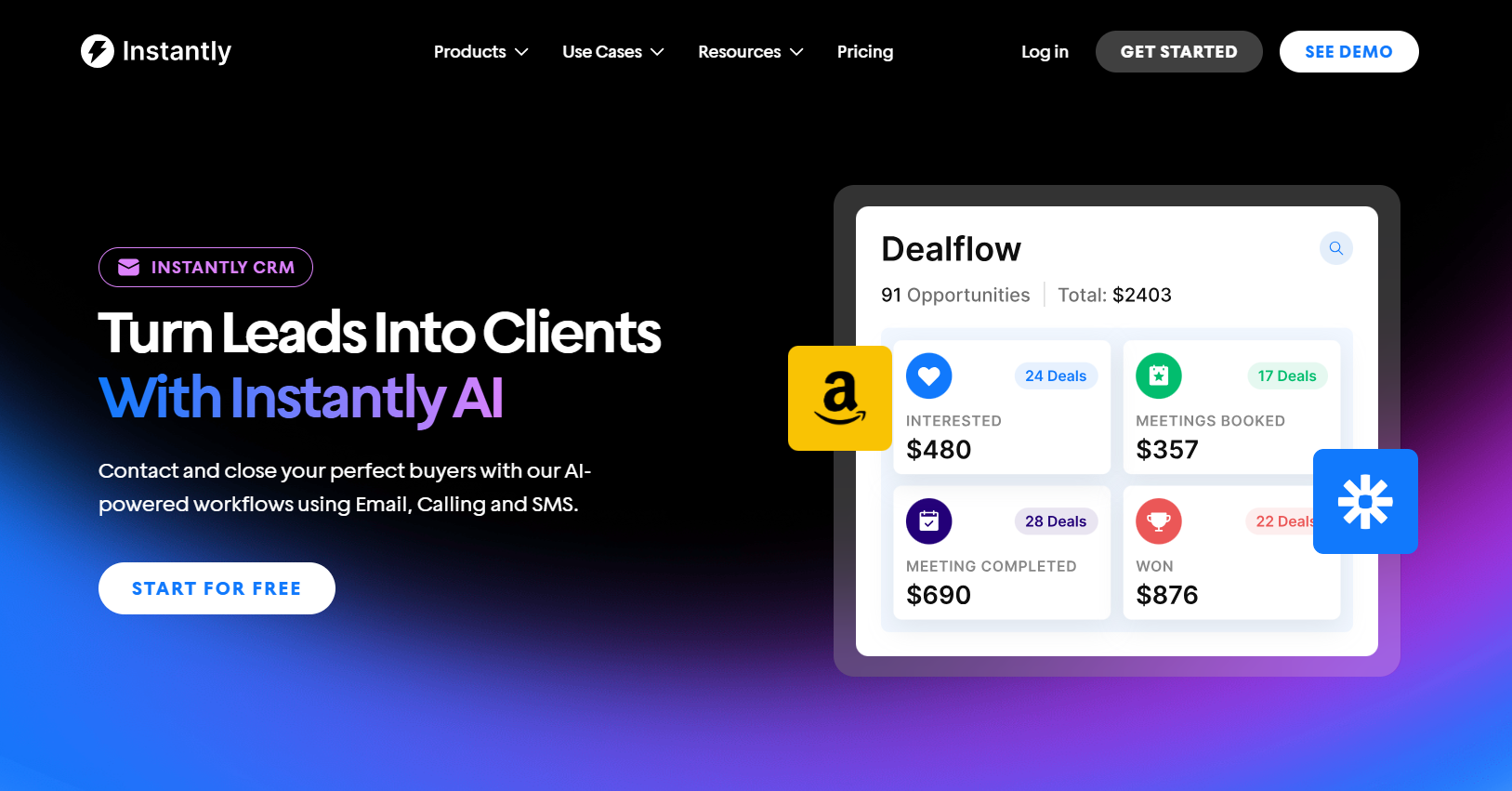
G2 Rating: 4.9/5 ⭐ from 4,002 reviews
The main benefit of a CRM is that it supports your scaling efforts. And there’s no better growth channel than cold email marketing, especially if you’re a startup. That’s exactly what Instantly CRM was designed for.
Instantly CRM is built for cold outreach teams that need multi-channel outreach in one place. You can handle emails, calls, SMS, tasks, and LinkedIn connections in a single platform, then manage everything from a unified inbox that centralizes conversations and follow-ups.
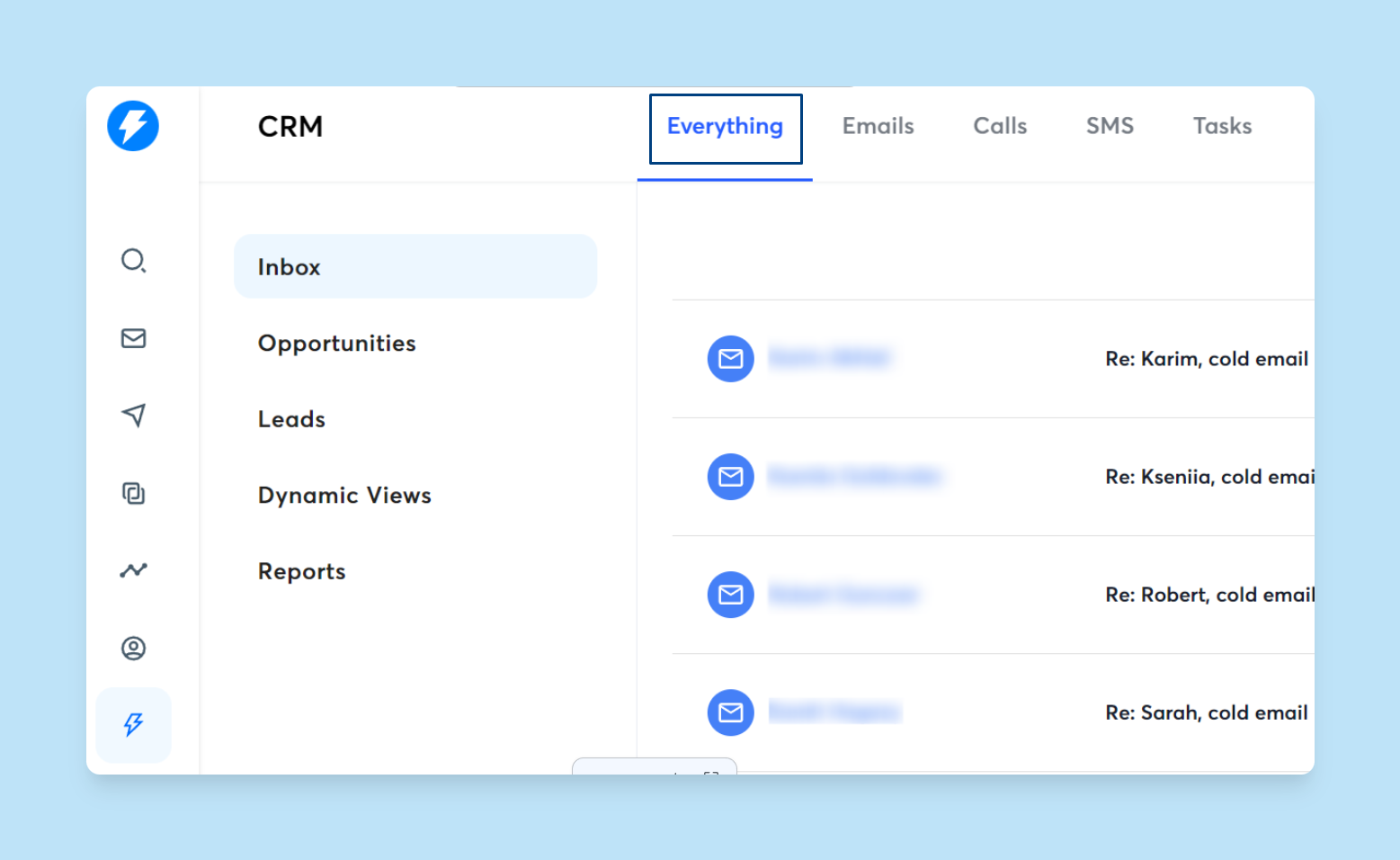
Key Features:
Instantly CRM gives you real pipeline control with opportunity management, so you can track lead stages like interested, opened, replied, meetings booked, won, and custom statuses that match your sales process.
On top of that, AI-personalized messaging helps you generate company insights like descriptions, competitors, and pain points, so your outreach can be tailored for each lead.
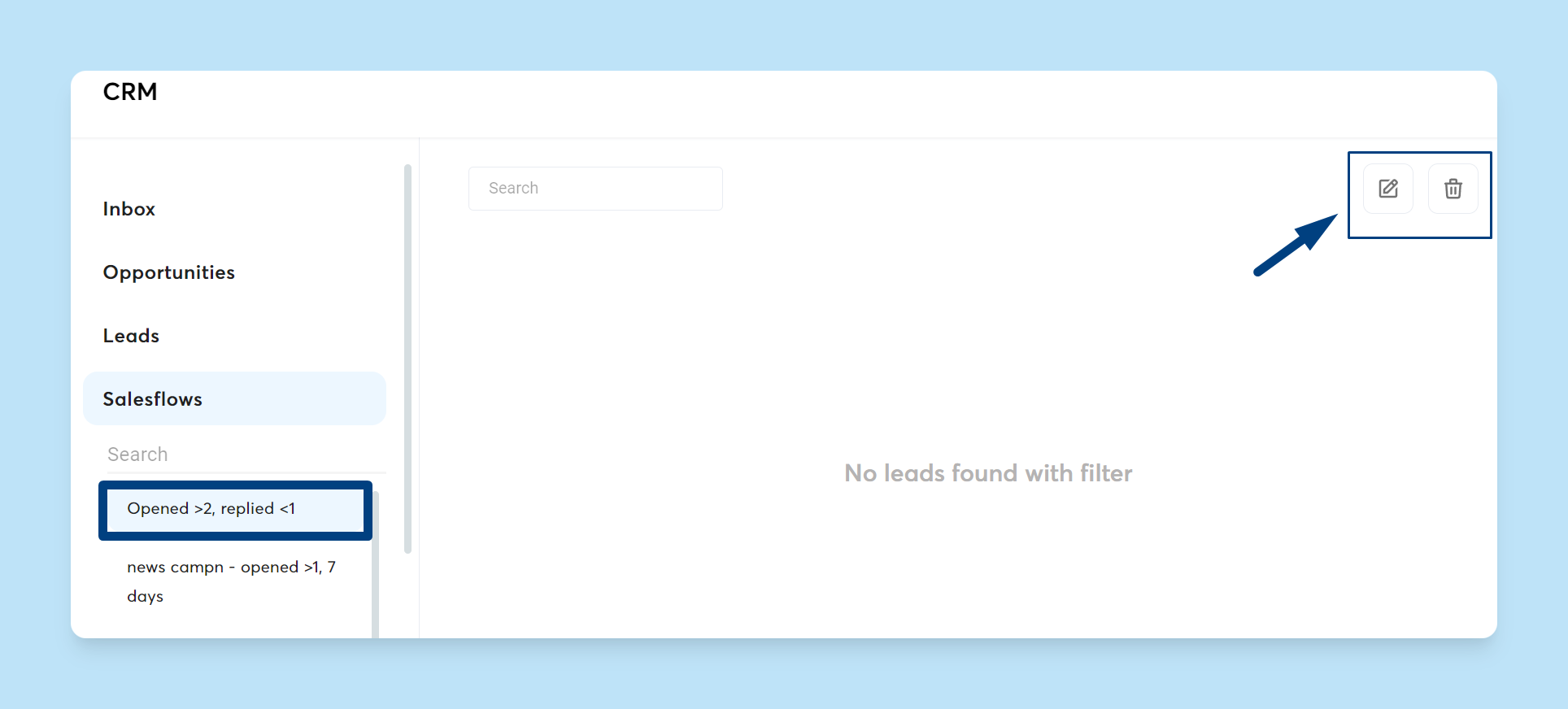
If your team has specific workflows, Instantly CRM supports custom sales flows based on conditions, plus advanced reporting and goals tracking so you can measure performance beyond basic campaign analytics.
And because Instantly CRM integrates with tools like Google Calendar, Slack, and Zapier, it plugs into the systems you already use instead of forcing a full rebuild.
Pricing:
Instantly CRM starts at $47/month for Growth CRM and $97/month for Hyper CRM, and both plans include unlimited seats for a flat fee, which can be a big win versus per-seat CRMs as your team grows.
HubSpot CRM
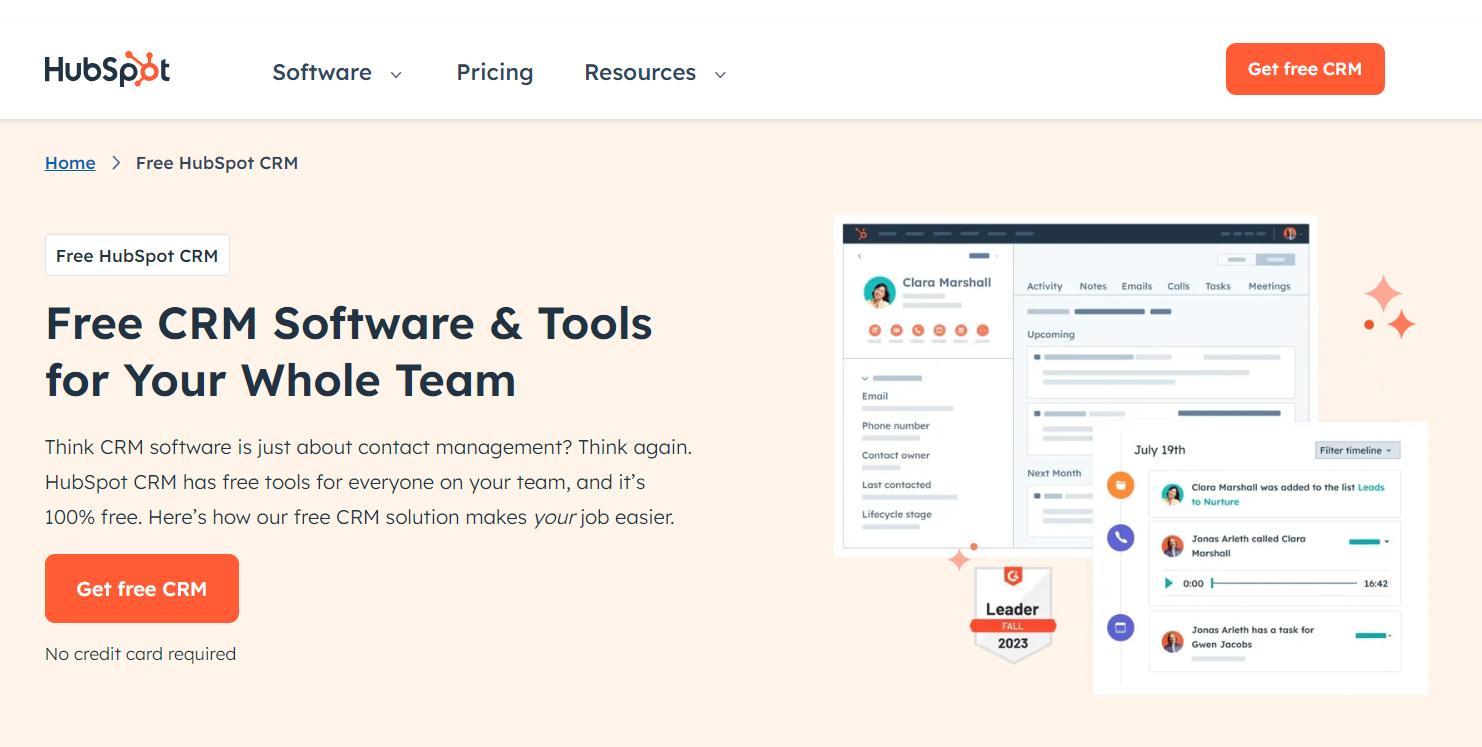
HubSpot is a popular CRM for startups because you can start for free, then add sales functionality as your pipeline matures. The trade-off is that scaling inside HubSpot is typically seat-driven, so adding more reps usually means adding more paid seats, and costs rise fast as the team grows.
Key Features:
HubSpot CRM gives you a structured pipeline and deal stages. Your team can manage every opportunity with clear ownership, notes, tasks, and next steps tied to each lead. It also has built-in meeting scheduling, email tracking, and logging.
As you move into higher tiers, HubSpot adds workflows and sales automation that can rotate leads, enroll contacts into sequences, create tasks, update deal stages and properties, and trigger internal notifications based on rep activity or buyer behavior.
Pricing
HubSpot Sales Hub lists Free at $0/month, Starter starting at $15/month per seat, Professional at $100/month per seat, and Enterprise at $150/month per seat, so the biggest pricing jump is typically when you move from Starter into Professional.
Salesforce Starter & Essentials
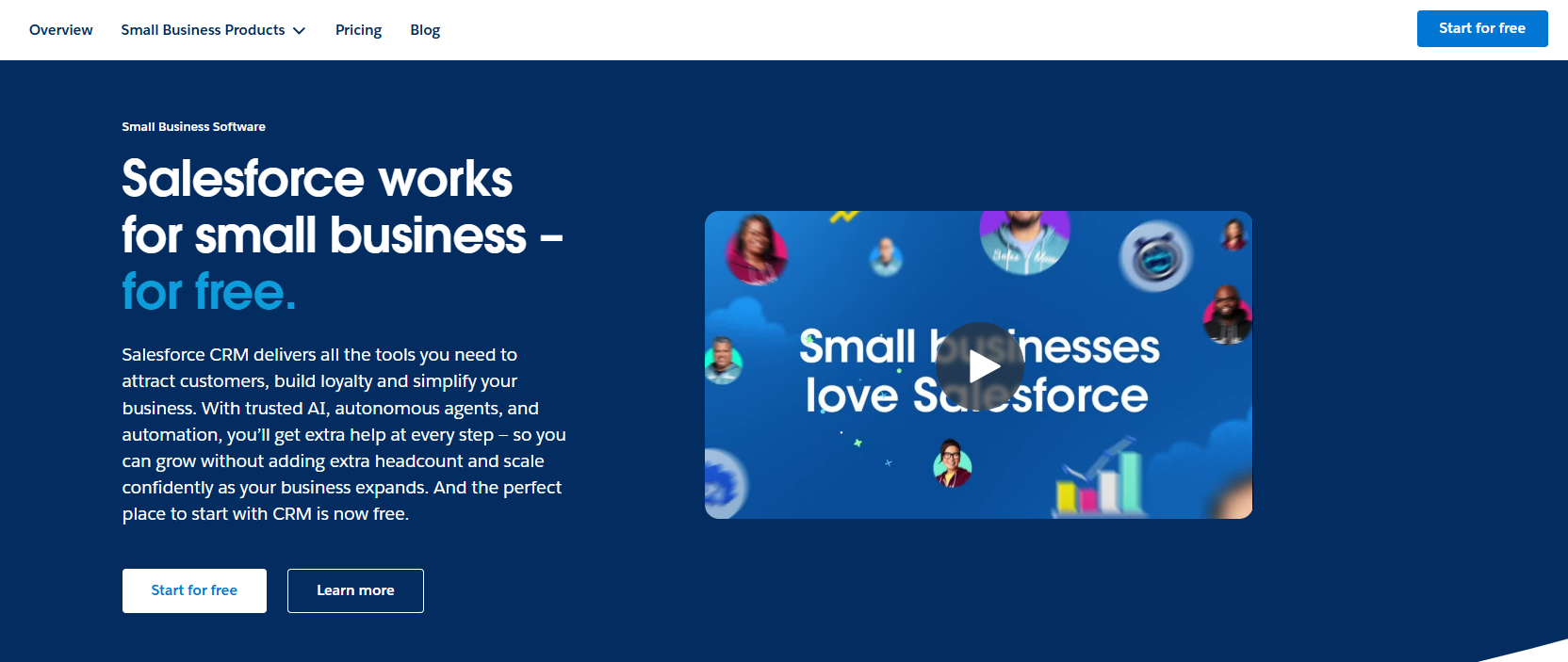
Salesforce’s entry-level option for small teams is Starter Suite, which Salesforce launched as a simplified, all-in-one CRM for sales, service, and basic marketing in a single app.
If you’ve heard of Salesforce Essentials, that was Salesforce’s earlier small-business package, and Starter Suite is widely positioned as its successor as Salesforce shifted its SMB lineup toward the “Suite” model.
Key Features:
Salesforce Starter Suite covers the core CRM foundation with account, contact, lead, and opportunity management, plus task management and an activity feed so your team can track follow-ups inside the record.
It also includes email integration with Gmail or Outlook, as well as Salesforce Meetings, which keeps communication and scheduling tied back to the pipeline.
On the sales side, Starter includes products and price books, quote creation and management, and forecast management, which is useful if you need quoting and basic forecasting without moving up to the heavier editions.
For service workflows, Starter supports integrated email support, case management, and knowledge management, so you can track customer issues alongside deals. Where the limits show up is customization and automation.
Pricing
Starter Suite costs $25 per user per month, and Salesforce also lists a 30-day trial for up to 10 users. If you need the bigger jump in customization and automation, Salesforce lists Pro Suite at $100 per user per month (billed annually).
FreshSales CRM
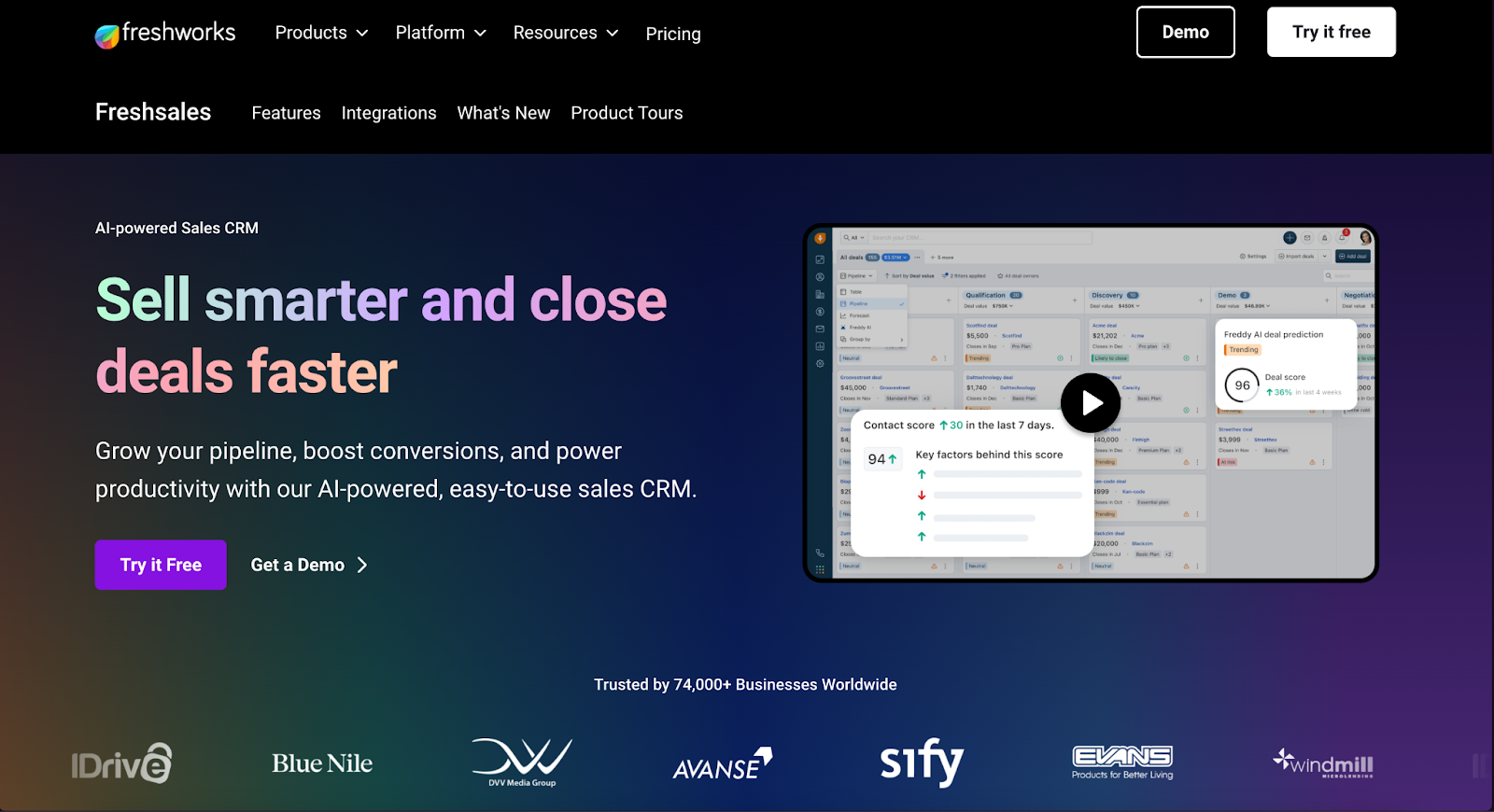
Freshsales is an AI-powered sales CRM that’s easy to start with and simple to grow into, which is why the forever-free plan works well as a stepping stone for early-stage teams. You can get your pipeline, contacts, and basic outreach workflow organized first, then upgrade only when your process needs more automation and control.
Key Features:
Freshsales gives you a sales-first workspace with Kanban views for contacts, accounts, and deals, plus contact lifecycle stages that keep your pipeline clean as leads move from new to qualified to active opportunities.
It supports built-in chat, email, and phone, and includes email templates and custom fields, which help teams keep outreach consistent while still capturing the details that matter for qualification.
When you move up tiers, Freshsales adds sales ops features such as auto-assignment rules, territory management, and sales sequences, as well as Freddy AI capabilities like contact scoring and AI-assisted sales emails.
Pricing:
Freshsales offers a Free plan for up to 3 users at $0. Paid plans (billed annually) start at $9/user/month, with a 21-day free trial.
Monday Sales CRM
Monday Sales CRM is a flexible CRM built on top of Monday.com’s work management system, so it’s a good fit for startups that want a pipeline tracker and an internal workflow tool in the same place. It’s especially useful when your “sales process” includes many steps outside the deal itself, such as onboarding handoffs, implementation tasks, or internal approvals.
Key Features
Monday Sales CRM gives you customizable pipelines, deal stages, and dashboards, so you can track opportunities the way your team actually sells instead of forcing a rigid structure. It also supports automations like lead assignment, reminders, and status updates..
Because it’s part of the Monday ecosystem, you can connect sales activity to execution workflows, such as automatically creating onboarding boards or tasks when a deal moves to 'won'. And it integrates with common startup tools across email, calendars, and collaboration apps, so your CRM stays connected to the rest of your stack.
Pricing:
Monday Sales CRM starts at $12/seat/month on the Basic plan (billed annually), then scales to $17/seat/month for Standard and $28/seat/month for Pro, with Enterprise priced on a custom basis. Paid plans require a multi-seat minimum.
Key Takeaways
Startup operations feature many moving parts. Attracting leads with effective marketing. Converting leads to customers. Keeping customers happy with exceptional support. It's a lot to handle. Thankfully, CRMs can shoulder most of the gruntwork. Here are our best picks for 2026:
- Instantly CRM: Best for scaling cold email outreach campaigns.
- HubSpot CRM: Best free CRM for small teams (but can be expensive when scaling).
- Salesforce Starter & Essentials: Best tracking and customer support.
- FreshSales CRM: Best for basic outreach and Kanban-style boards.
- Monday Sales CRM: Best for users leveraging Monday’s work management system.
The best way to grow a startup is to be proactive with prospecting and outreach, and there’s no better channel than cold email marketing. Instantly CRM is designed to help you scale through cold outreach. See how it simplifies your campaigns. Sign up with Instantly today.


