TL;DR: What we discovered
In 2026, cold email is about resonance, not reach. Reply rates remain stable despite growing volume proving that relevance, not quantity, drives conversations.
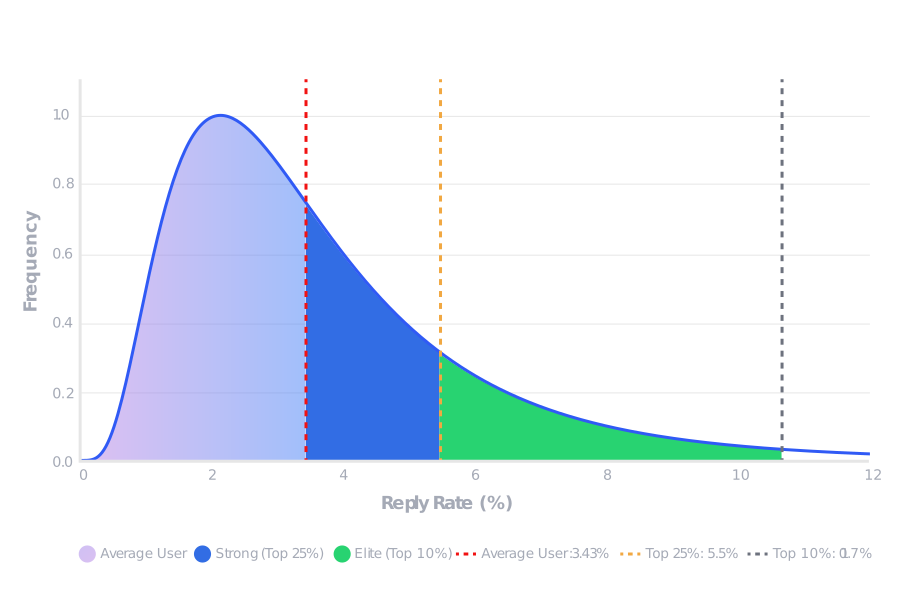
- The overall average reply rate is 3.43% with top-performers of users exceeding 10% reply rates (2-4x higher)
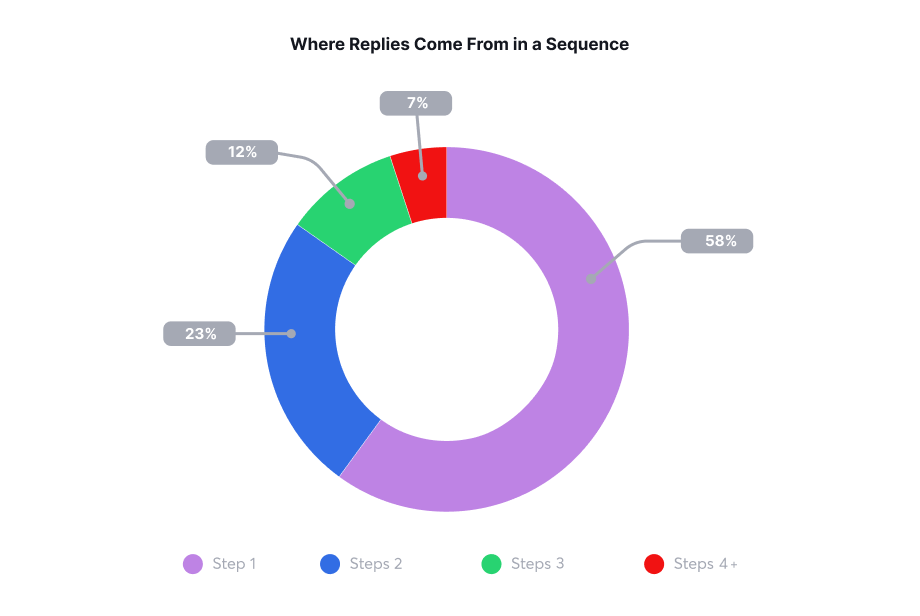
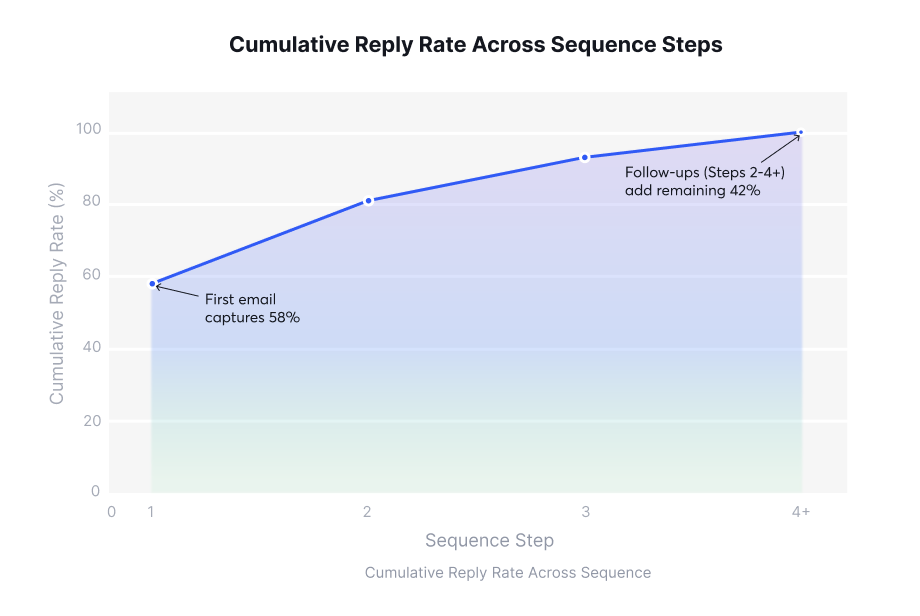
- 58% of all replies are generated from step one in a cold email campaign
- Remaining follow-ups contribute 42% of total replies proving follow-ups are worth the effort
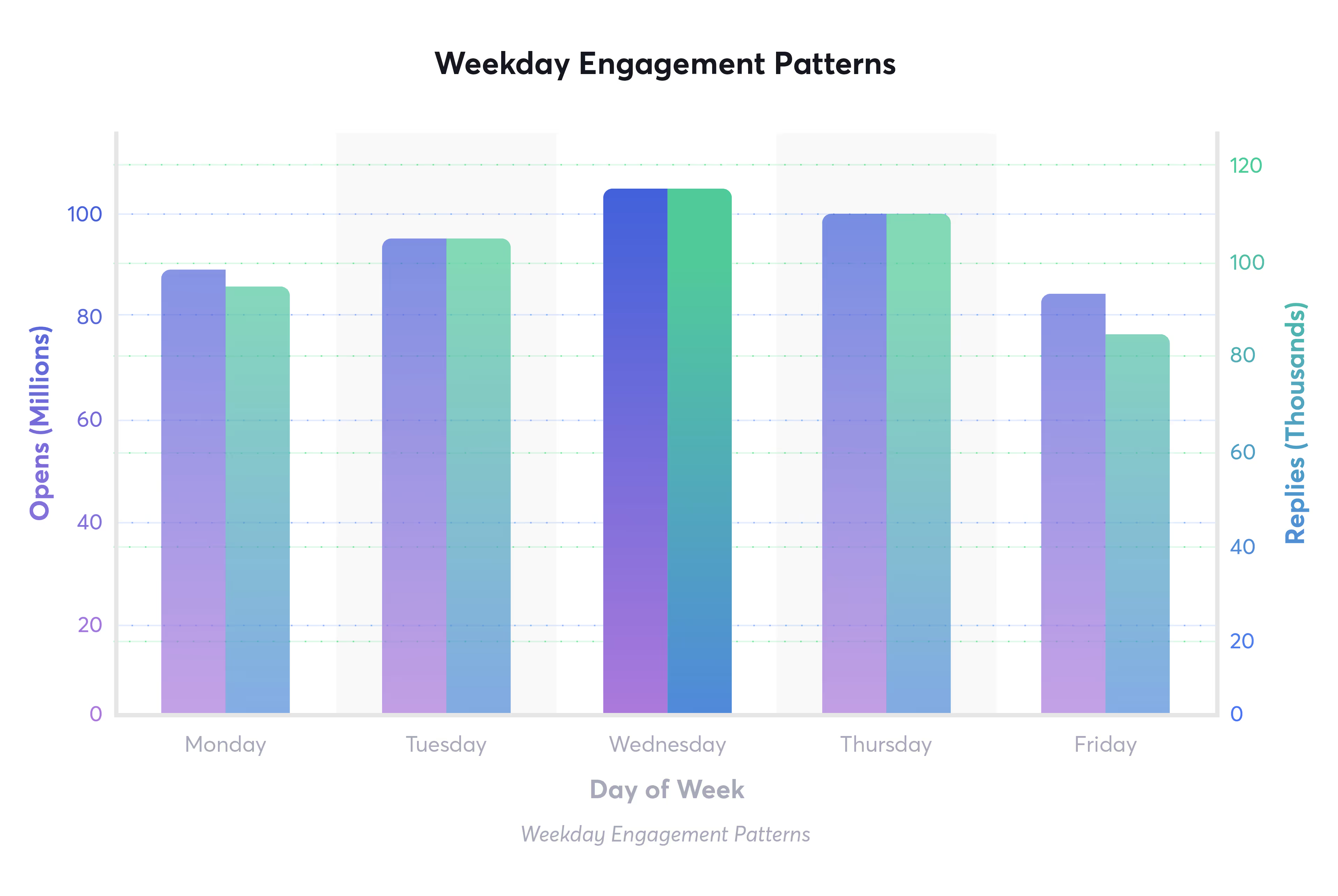
- Tuesday-Wednesday see peak reply rates, Wednesday is highest
- Best performing email campaigns maintain <80 word emails and A/B test new messaging weekly
Key performance metrics for cold email campaigns
.png)
Our data methodology
This benchmark report analyzes billions of cold email interactions across thousands of active workspaces to provide you with recent cold email statistics. All metrics have been aggregated and anonymized to ensure benchmark accuracy while protecting user privacy.
Data Sources
- Email send and reply events tracked across the platform
- Sequence performance data from active campaigns
- Timing and engagement pattern analysis
- Top-quartile and elite performer benchmarks
How to improve your reply rate
Elite senders (2-4x higher reply rates) earn out-sized replies combining hyper-relevant subject lines, emails under 80 words, a single call-to-action and problem-first positioning.
Your first email sets the ceiling for the whole cold email sequence. In our dataset, the first email captures 58% of the replies with the remaining 42% being captured by follow-ups.

Use these tactics to improve your reply rates:

How important are follow-ups and what’s the optimal sequence length?
58% of replies arrive on Step 1, the remaining steps contribute another 42% replies, proving follow-up persistence can improve campaign results. The sweet spot for sequence length is 4-7 touchpoints: under four gives up too early and beyond seven diminishes returns unless each touch adds genuine new value.

When is the best time to send cold emails?
Align sends to natural weekly engagement patterns: launch on Monday, push follow‑ups on Wednesday (peak engagement), and triage Friday auto‑replies so conversations restart on Monday. Timing matters almost as much as copy, our data shows teams that respect these windows compound replies across the week.

Best days to send cold emails (what our data shows)
Our weekday analysis shows a clear mid‑week sweet spot. Wednesday consistently delivers the highest engagement, Monday is the ideal day to launch new sequences, Friday produces an auto‑reply surge as prospects set OOO. Use these patterns to decide what to send on each day, not just when.
Cold email campaign schedules enable you to control when your emails are sent. You can also use subsequences that trigger follow-up emails based on keywords (like “Out of office”) or lead statuses to ensure better lead coverage.
Weekly cadence framework for maximum replies

Domain Health & Deliverability for cold email
Why deliverability improves cold email performance (the engagement loop)
Inbox placement is governed by engagement signals (opens, replies, reading). High engagement → better placement → even more engagement, creating a positive feedback loop, whereas low engagement works in reverse. This is why reply rate matters beyond conversion.
- Consistency pays: Teams that keep domain health stable and send consistently see +15–20% higher replies in our dataset.
- Optimize for engagement, not sends: Target better, write shorter, and pace outreach to protect infrastructure health.
Deliverability Fundamentals (what to fix first)
Here are some non‑negotiables to protect sender reputation and inbox placement.to “how precisely can we target?”
Cold email trends to consider for 2026
In 2026, the winners shift from volume to precision. Elite cold email teams run intelligence‑led outbound, hit prospects at the right moments using intent signals, and optimize for engagement‑first metrics.
Key facts
- AI agents handle ~80% of research & sequencing work for elite teams.
- “Right‑time” outreach blends hiring, funding, product‑launch, and website‑visit signals.
- ESPs increasingly weight engagement quality: time spent reading, reply depth, and conversation length for inbox placement.
Trend #1: Intelligence-led outbound
Elite cold emailers replace volume with precision. AI agents now handle ~80% of research and sequencing work, freeing humans to focus on positioning, messaging strategy, and high‑value conversations. The question shifts from “how many emails?” to “how precisely can we target?”
Trend #2: Intent-Driven Timing
Blend campaign data with buyer signals such as hiring patterns, funding events, product launches, and website visits to reach prospects when they actually care, not at arbitrary intervals.
Trend #3: Engagement-First Metrics
Providers increasingly weight engagement quality such as time spent reading, reply depth, and conversation length for reputation and placement. This is a shift from quantity to quality.
The Prediction

Next steps for you to improve cold email performance
FAQ (Frequently Asked Questions)
What is a good cold email reply rate in 2026?
Our research found that “elite” cold emailers exceed a 10% reply rate with 3.43% being the average.
How many follow-ups should I send for a cold email?
4-7 emails is an ideal sequence length to maximise reply rate. Our research found that 58% of replies arrive on Step 1 of a cold email campaign with Steps 2-4 contributing another 42% replies. Our advice would be to have at least 4 emails in your campaign.
What’s an acceptable bounce rate for cold email?
A bounce rate under 2% is ideal. Any higher than this and you may see cold email campaign performance drop. If you’re seeing high bounce rates, pause your campaign and clean your lead list before continuing.
How long should a cold email be (word count)?
Our research found the best performing cold email campaigns to have a word count of less than 80 words, indicating this to be the sweet spot for performance. It’s enough to get your point across without wasting the reader’s time. The key is to be concise, personalized, and focused on a single message/ask.
Data reflects platform-wide performance
January 1 – December 18, 2025