


AI agent frameworks abstract away the hard parts of building autonomous systems (tool integration, memory, orchestration, and debugging).
LangChain offers flexibility with complexity, AutoGPT emphasizes autonomy with guardrails, CrewAI structures multi-agent collaboration, OpenAI’s Agents SDK favors predictable workflows, and n8n powers visual automation. The right framework depends on your team’s technical depth, required autonomy, and production needs.
You can build AI agents from scratch (wiring up LLMs, managing memory, handling orchestration and edge cases, etc.), but you'll spend more time maintaining infrastructure instead of shipping something useful.
AI agent frameworks give you the instructions—and most of the pre-cut pieces. They provide ready-made components for connecting LLMs to external tools, managing memory, and orchestrating multi-step workflows, so you can focus on what your agent does, not how every moving part fits together.
These frameworks power the AI agents behind many sales and marketing tools. Instantly.ai, for example, uses agentic AI to automate prospecting, cold outreach, reply management, and campaign optimization at scale.
This guide breaks down what AI agent frameworks do, how to evaluate them realistically, and which options make sense depending on your goals and tolerance for complexity.
What Is an AI Agent Framework?
An AI agent framework is a collection of tools, libraries, and abstractions that help developers build AI systems capable of operating autonomously.
These frameworks handle the complexity of connecting large language models (LLMs) to external tools, managing memory across interactions, and orchestrating multi-step workflows. Most frameworks include the following core components:
- Agent architecture (how the AI reasons and decides)
- Tool integration (APIs, databases, external services)
- Memory management (short-term and long-term context)
- Orchestration logic (how tasks get sequenced and executed)
You can certainly build agents without a framework, but you'll have to rebuild common functionality every time. Frameworks provide ready-made modules for common tasks, standardized patterns for agent communication, and tools to test and resolve issues more efficiently.
What Should You Look for in an AI Agent Framework?
Not every framework fits every use case. Choosing the wrong one means either overcomplicating a simple project or hitting walls when you need to scale. Here's what to consider before making a choice:
- Complexity of your use case: Simple chatbots need different tooling than multi-agent systems coordinating across departments. Some frameworks specialize in multi-agent collaboration, while others offer flexibility for a wider range of applications.
- Your team's technical depth: Some frameworks require solid Python experience. Others offer visual interfaces for faster prototyping and lower barriers to entry. Pick one that matches what your team can actually work with.
- Integration requirements: Check how well the framework connects with your existing tech stack: APIs, databases, CRMs, and cloud infrastructure. A framework that doesn't play well with your systems will slow you down.
- Scalability and production readiness: Prototyping is one thing. Running agents in production with real users is another. Look for solid documentation, active community support, and features like logging and access controls.
A common piece of advice from developer communities: frameworks reduce the time from idea to working prototype, but understanding what's happening under the abstractions will make you better at debugging and scaling your agents over time.
At a Glance: Top AI Agent Frameworks
AI Agent Frameworks Comparison
| Framework | Best For | Strengths | Weaknesses | Use Cases |
|---|---|---|---|---|
| LangChain | Custom AI workflows with broad integration needs | 600+ integrations, modular architecture, large community | Steep learning curve, can feel bloated for simple tasks | Conversational assistants, document analysis, recommendation engines |
| AutoGPT | Autonomous execution of multi-step goals | Graph-based orchestration, checkpoints, visual flow design | May loop or drift without oversight needs human checkpoints | Research automation, content workflows, lead generation |
| CrewAI | Team-based agent collaboration | Breaks down goals into subtasks, browses web, writes and runs code | Less flexible for fluid, autonomous decision-making | Research and content workflows, multi-agent task delegation |
| OpenAI Agents SDK | Teams already building on OpenAI's stack | Lightweight, built-in tracing, handoffs between agents, works with other providers | Best experience within OpenAI ecosystem | Customer support automation, content generation, code review, sales prospecting |
| n8n | Visual workflow automation with AI capabilities | No-code/low-code builder, 600+ templates, self-hostable | Less suited for highly custom or complex agent logic | Lead generation, content automation, customer support routing, data processing |
LangChain
Best for: Teams building custom AI workflows that need flexibility and broad integration options.
LangChain is one of the most widely adopted frameworks for building LLM-powered applications. It provides modular components for chaining prompts, managing memory, integrating tools, and connecting to external data sources.
Teams use it to build conversational assistants, automate document analysis, and create personalized recommendation engines. Its flexibility makes it a good fit for both startups experimenting with AI and enterprises scaling production systems.
It’s worth noting, though, that LangChain's depth comes with a learning curve. Managing dependencies and keeping up with rapid updates can be time-consuming, especially for smaller teams.
AutoGPT
Best for: Developers who want agents that execute multi-step goals autonomously.
Most frameworks still require you to define each step an agent takes. AutoGPT works differently. You give it a high-level goal, and it breaks that goal into subtasks, figures out the sequence, and executes without constant prompting. It can browse the web, write and run code, and refine its approach based on results.
It’s a strong fit for research automation, content workflows, lead generation, and any task where you'd otherwise spend time manually chaining prompts together.
However, AutoGPT's autonomy can backfire. It may loop, hallucinate, or drift off-task without proper oversight. It works best with human checkpoints rather than being fully hands-off.
CrewAI

Best for: Teams building collaborative AI systems where multiple agents need to work together on defined tasks.
CrewAI organizes agents into teams, where each one has a specific role and responsibility. One agent might handle research, another writes content, and a third reviews the output. This maps well to how real teams work and makes it easier to see who does what.
It's also beginner-friendly, with a gentler learning curve than most frameworks on this list. Over 100,000 developers have gone through CrewAI's community courses, and the documentation includes an AI-powered search to help you find answers fast.
Just note that CrewAI's structured approach can feel rigid for tasks requiring more fluid, autonomous decision-making.
OpenAI Agents SDK

Best for: Teams already building on OpenAI's stack who want a streamlined way to add agentic capabilities.
OpenAI's Agents SDK is a lightweight, open-source framework for building multi-agent workflows. The SDK keeps things simple: agents, handoffs between agents, validation checks for input and output, and built-in tracing for visibility into your workflows. It supports both Python and TypeScript.
Another reason to consider it is how well it fits common use cases like customer support automation, content generation, code review, and sales prospecting. It also works with both OpenAI's APIs and other providers.
That said, you'll get the best experience if you're already in OpenAI's ecosystem. Stepping outside of it means losing some of the tighter integrations.
n8n
Best for: Teams that want a visual, flexible tool for building AI-powered workflows without heavy coding.
n8n is an open-source workflow automation platform that has evolved into a capable AI agent builder. Unlike many other frameworks on this list, it offers a visual, node-based interface for creating workflows.
It's designed with flexibility in mind, letting you connect LLMs, APIs, databases, and external tools through drag-and-drop. Teams use it for lead generation workflows, content automation, customer support routing, and data processing pipelines that incorporate AI decision-making.
One thing to keep in mind: n8n handles most automation and AI workflows well, but highly custom or complex agent logic may require moving to a more code-centric framework.
How Instantly Uses AI Agents to Scale Outreach
AI agent frameworks are great in theory, but what do they look like in practice? Instantly.ai is a prime example.
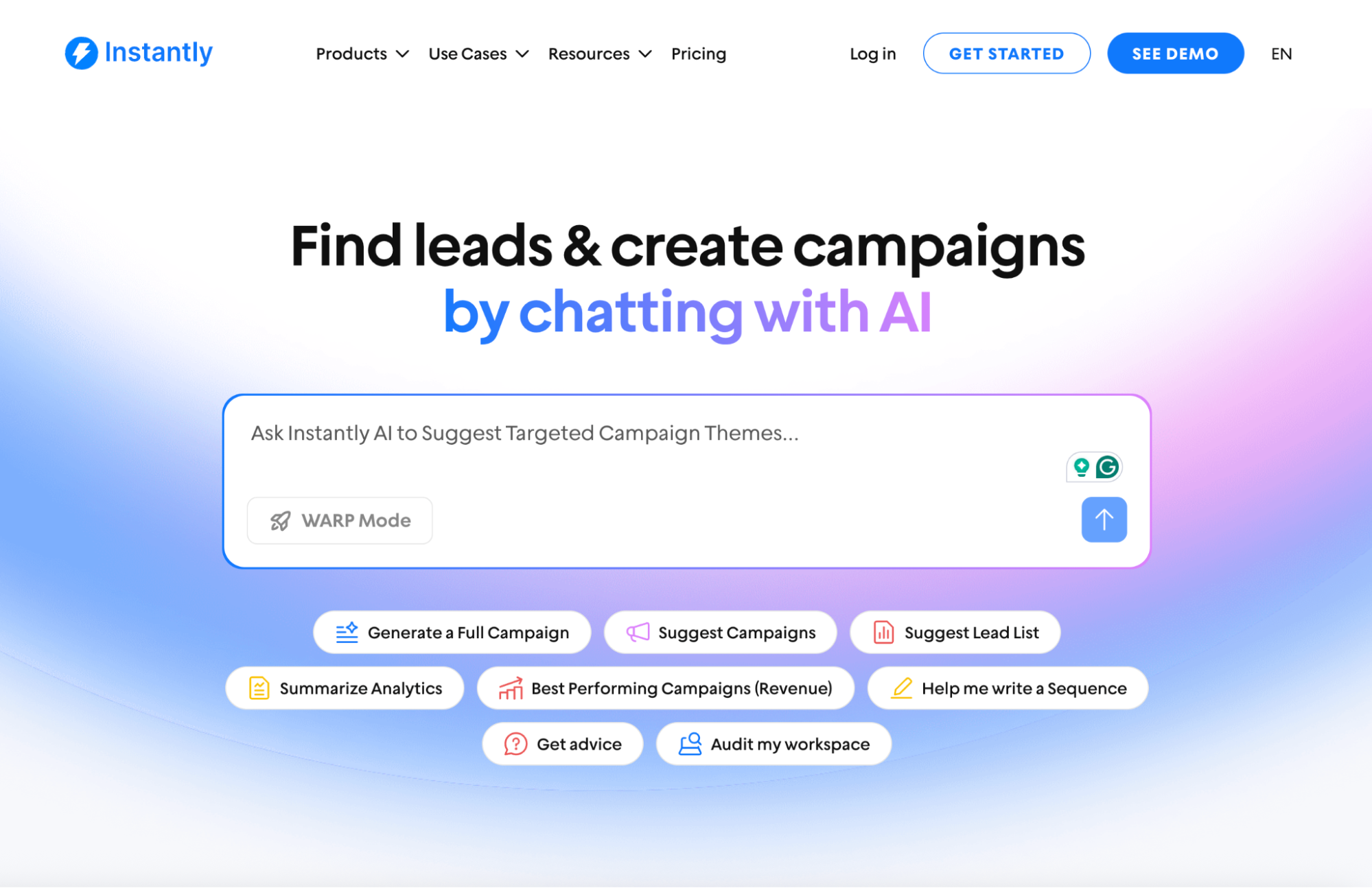
The platform uses agentic AI to handle prospecting, reply management, and campaign optimization without adding headcount.
Instantly Copilot is a fully embedded AI sales agent. You can use it to find leads from a 450M+ verified contact database, generate personalized email copy, and launch campaigns in seconds. All through a simple chat interface.
Once campaigns are running, Instantly's Reply Agent takes over. It classifies incoming replies, drafts contextual responses, handles objections, and routes qualified leads to sales reps.
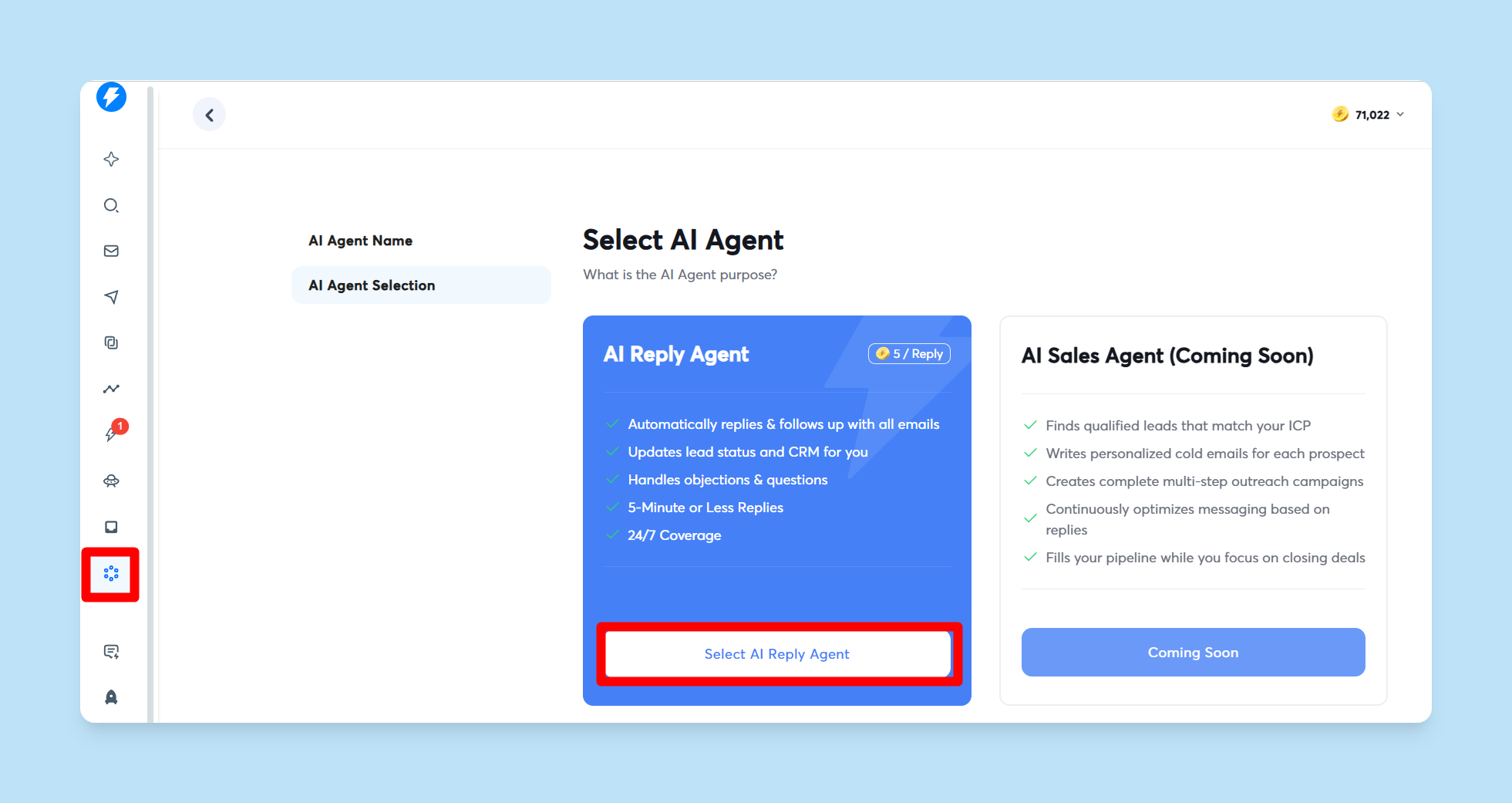
You can choose between full autopilot mode or human-in-the-loop review for sensitive conversations. This is what production-ready AI agents look like: not just generating insights, but executing the full workflow from lead discovery to booked meetings.
Key Takeaways
AI agent frameworks can help you automate complex workflows, but they work best when you know what each one does well and where it falls short for your use case.
To recap, here's what to keep in mind when evaluating AI agent frameworks:
- Match the framework to your team's technical depth. LangChain and AutoGPT offer flexibility but require solid coding skills. CrewAI and n8n lower the barrier for faster prototyping.
- Consider how much autonomy you need. AutoGPT executes goals with minimal prompting but needs guardrails. CrewAI and OpenAI Agents SDK offer more structured, predictable workflows.
- Think beyond the prototype. Frameworks that feel great in demos can break in production. Look for built-in tracing, debugging tools, and active community support.
- Start with one use case. Don't try to automate everything at once. Pick a specific workflow, build it, test it, then expand.
If you're looking to see AI agents in action for sales outreach (from lead discovery to reply handling), Instantly has you covered. Start your free trial today.


