


AI sales prospecting is the application of machine intelligence to systematically identify, prioritize, and engage the most promising potential customers. It turns prospecting from a manual, volume-based grind into a precision operation.
The core applications are identifying intent-rich leads through deep data filters, enriching records with actionable context, personalizing outreach at scale, and scoring leads based on fit and engagement.
For the best results, use specialized AI tools (like lead finders, enrichment platforms, and outreach copilots) in a cohesive, repeatable playbook grounded in a clear Ideal Customer Profile (ICP).
AI now sits at the center of modern sales prospecting. Teams use it to accelerate lead research, enhance enrichment, and uncover insights that directly impact reply rates and revenue. But what most teams struggle with most in prospecting is focus.
There are too many tools, not enough strategy. This playbook will help you select the right AI for your prospecting, integrate it into your day-to-day operations, and build a scalable and sustainable B2B outreach engine around it.
What is AI for Sales Prospecting?
AI for sales prospecting is any technology that helps you find, understand, and prioritize potential customers faster than a human could do alone.
It takes on the repetitive work of research, data enrichment, and list building so your team can spend more time talking to the right people with the right message.
Core Prospecting Fundamentals That Still Matter
Before you plug in any AI tool into your workflow, the basics need to be clear. This includes an understanding of the following concepts:
- ICP clarity: You still need to know who you are selling to and why. That means clear firmographics (industry, size, location), roles and titles, pain points, and buying triggers. AI can help you find more of these individuals, but you must first define what they are.
- Clear offer and value: Prospects respond to outcomes, not tech. You need a simple reason for them to care: what problem you solve, what changes for them, and how this is different from others. AI helps personalize emails, but it can’t build a genuine offer out of thin air.
- Clean data and contact accuracy: Good prospecting still depends on accurate, up-to-date data. Duplicates, dead domains, bounced emails, and incorrect titles will waste your sequences, regardless of how “smart” your stack is. AI works best when it’s fed with clean, structured data.
Where AI Plugs Into Those Fundamentals
Once the foundations are solid, AI can start scaling your efforts. Remember, if your process is already ineffective, AI will just accelerate that further. So, ensure that you follow sales prospecting fundamentals. Once you do, you can focus on the following:
- Faster research and list building: AI-powered tools can scan large datasets, filter by your ICP criteria, and surface accounts and contacts that actually match your target profile. What used to take hours of manual LinkedIn and Google digging can be compressed into minutes.
- Better enrichment and segmentation: AI can enrich records with job titles, seniority, tech stack, hiring signals, and more. With richer data, you can segment lists by persona, stage, or intent and send more relevant sequences, rather than a single generic campaign for everyone.
- More context for messaging and follow-ups: AI can summarize company news, recent activity, or website behavior and turn it into talking points. That context helps you write intros specific to the prospect, adjust the offer, and choose smarter follow-ups based on engagement.
Best AI Tools for B2B Sales Prospecting
There is no single “best” AI tool for every team. What matters is how well each tool supports a specific part of your prospecting flow. A lean stack typically encompasses four key functions:
- Identifying leads
- Enriching and validating data
- Prioritizing accounts
- Executing outbound campaigns that are easy to track and scale.
Below are categories and example tools that fit into an AI-powered B2B prospecting system. You can mix and match based on your volume, budget, and motion.
AI Lead Finders and List Builders
AI lead finders help you search the market, filter by your ICP, and build targeted lists with far less manual research. The strongest tools here provide deep filtering based on firmographics, role, tech stack, and buying intent, then export data in a format that integrates seamlessly into your outreach platform or CRM.
Instantly SuperSearch is one of the best tools for this because it lets you apply specific filters that match your ICP, pull clean contact data, and send it straight into your Instantly campaigns without endless CSV data entry.
Enrichment and Research Tools
Once you have a basic list, enrichment tools fill in the details and add context. You want reliable enrichment for job titles, seniority, tech stack, social links, and company insights, plus an easy way to sync those fields back into your outreach platform.
Clay stands out here because it combines enrichment, research, and workflow logic in a single location. You can pull data from multiple sources, standardize fields for your ICP, and have Clay generate concise company summaries or snippets that you can insert directly into your cold emails.
AI-Powered Outreach Platforms
Outreach platforms handle the sending, sequencing, and tracking aspects of your outbound lead generation. For B2B teams, you want strong deliverability features, sane sending limits, smooth list imports with custom field mapping, and transparent reporting on opens, replies, positive replies, and meetings booked.
Instantly is built for cold email at scale. It provides domain and inbox management, warm-up, and campaign controls that enable you to ramp up volume without compromising your sender reputation.
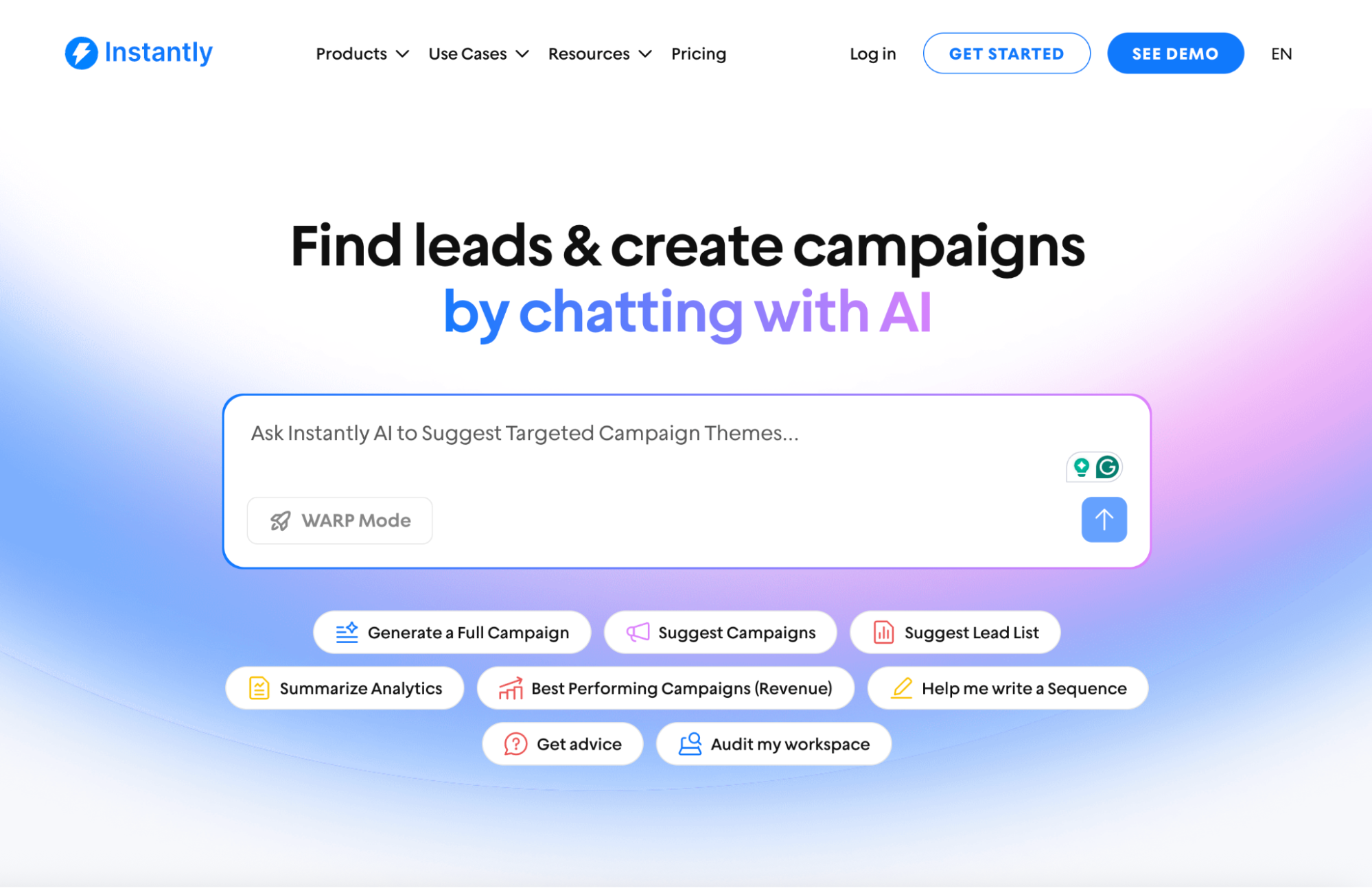
Instantly is also perfect for small businesses, starting at $37/month for the Growth plan.
Lead Scoring and Pipeline Intelligence
Lead scoring and pipeline intelligence help you decide who to focus on first instead of treating every lead the same. The most valuable tools let you build scoring models that match your ICP, keep scores easy to interpret, and integrate cleanly with your CRM and outreach stack.
Breadcrumbs is a strong option here because it connects to the tools you already use, then applies a co-dynamic scoring model that blends fit (ICP, firmographics) with activity (opens, clicks, product usage) in real time.
Nurture and Follow-Up Automation
Not every prospect will book a meeting after the initial contact, so nurturing and following up are crucial for securing or losing revenue. You need a way to stay ahead of interested leads, handle replies promptly, and keep conversations moving without turning your inbox into a chaotic mess.
Instantly is a great fit here because it already sits at the heart of your outbound. You can keep leads within the same environment from first touch to booked call, eliminating the need to bounce between multiple tools.
On top of that, Instantly’s AI Reply Agent and Copilot help you automate a large chunk of the process. The AI Reply Agent can draft, suggest, or automate email replies based on the context of the thread.
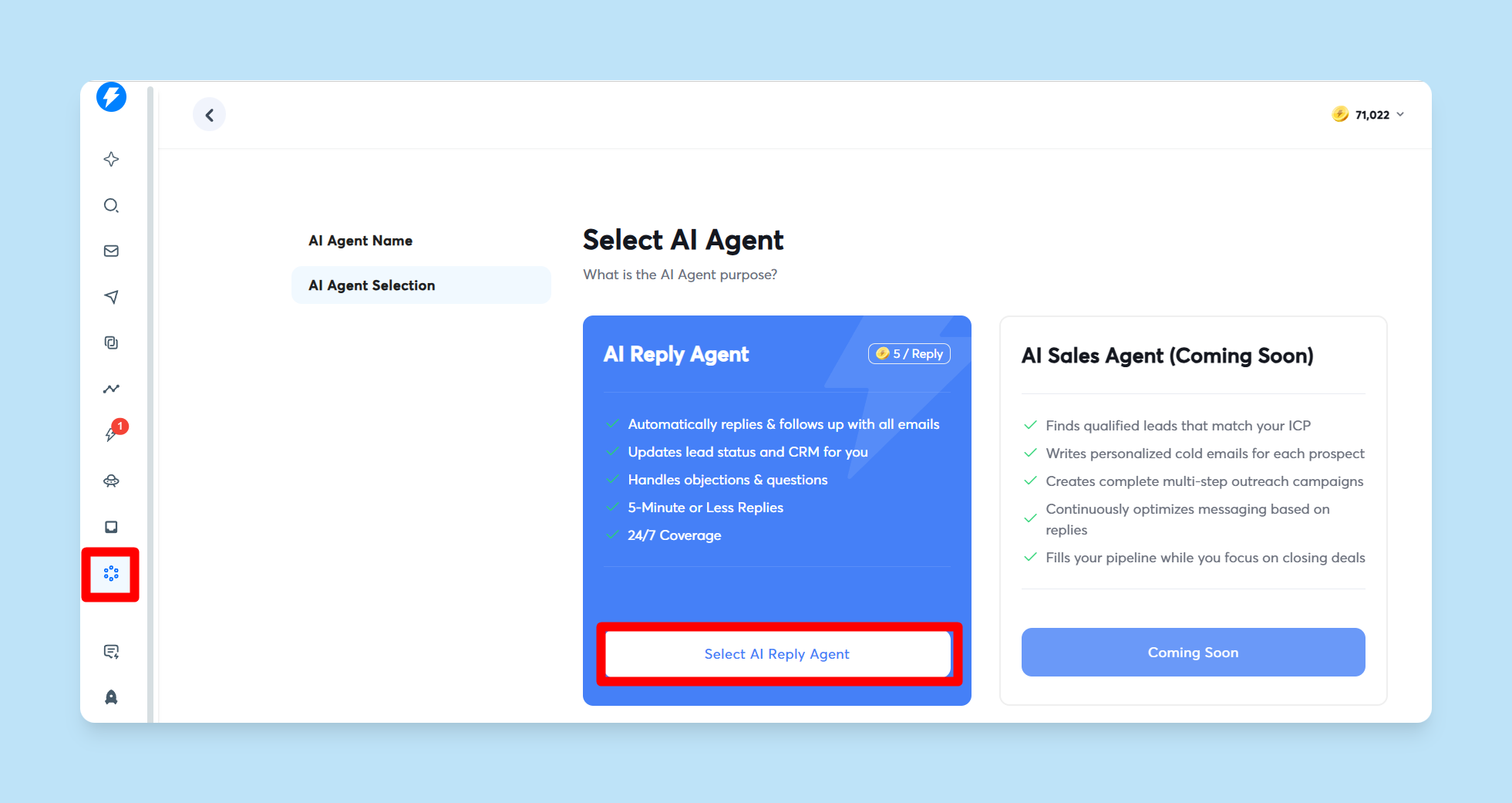
Copilot helps you analyze performance, identify which messages or segments are effective, and determine what to test next.
Proven AI Prospecting Playbooks You Can Adapt
These playbooks turn “AI for prospecting” from theory into simple, repeatable workflows. Each one spells out when to use it, the data you need, the AI capabilities involved, and the metrics that indicate whether it is working.
Playbook 1: Net New Outbound for Cold Accounts
Start by tightening your ICP and offer. Define the industries, sizes, roles, and key triggers that make someone a strong fit for a particular position.
Use Instantly SuperSearch to pull accounts and contacts that match those filters, then run them through Clay to enrich titles, seniority, tech stack, and a bit of company context.
Playbook 2: Warm Inbound + Outbound Follow Up
Centralize inbound activity in your CRM or scoring layer. Combine form data, traffic source, and key page views to determine who is simply browsing and who is seriously evaluating. Use AI scoring to rank these leads by fit and urgency, then feed the highest priority ones into Instantly sequences built for inbound follow-up.
Playbook 3: Expansion and Upsell to Existing Customers
Gather information on product usage, current plan, contract dates, and the adoption of key features. Use AI or your scoring layer to flag accounts that are approaching or exceeding limits, utilizing high-value features heavily, or exhibiting behavior that typically precedes an upgrade.
Playbook 4: Reactivation of Closed Lost or Stale Leads
Pull old opportunities and leads from your CRM, including the reason for loss if available, the last touch date, and any notes on timing or objections.
Use Clay and Instantly SuperSearch to refresh the records: update company, title, and email, and remove people who no longer fit your ICP. Add a light AI scoring step to prioritize those who still match your best customer profile.
Key Takeaways
Prospecting is the engine behind every outbound campaign. AI can multiply your results, but it cannot fix a weak offer, a fuzzy ICP, or messy data. Strategy comes first, automation second.
- Get the fundamentals right: clear ICP, a firm offer, clean data, and messaging that addresses real problems.
- Treat AI as an accelerator for research, enrichment, prioritization, and personalization, rather than a replacement for human thinking.
- Keep your stack lean: a lead finder, enrichment, outreach, scoring, and simple nurture is enough for most teams.
- Run prospecting with playbooks, not random experiments. Define inputs, steps, and metrics, then iterate.
- Measure what matters: list quality, replies, positive replies, meetings, and revenue created from each motion.
If you want to put this playbook into action, Instantly gives you the core pieces in one place: SuperSearch for finding leads, Outreach for campaigns, AI Reply Agent for handling responses, and Copilot for optimization. Try Instantly for free today.


