


TL;DR: Agencies can scale email reply classification by using AI to automate triage, saving hours and improving response times while avoiding per-seat pricing traps through flat-fee platforms like Instantly, which support unlimited email accounts. By pairing API-based AI models such as GPT or Gemini with orchestration tools like n8n or Make.com, or using Instantly's native features, agencies can adopt usage-based pricing that scales with email volume rather than headcount. Establishing clear reply categories (e.g., Interested, Question, OOO, Spam), training AI with labeled data, and integrating everything into a unified inbox streamline operations. Maintaining a human-in-the-loop for high-value replies preserves quality while automating 70–80% of routine classifications. Flat-fee models turn software into a fixed cost, allowing agencies to onboard more clients without increasing per-inbox expenses.
Updated November 16, 2025
Your agency's growth depends on cold email, but manual reply handling and per-seat software costs are killing your margins. Every new client means more inboxes, more replies to triage, and often more per-user licenses to buy. You can automate reply classification without those costs scaling linearly with your team.
Agencies handling 10-150+ inboxes face mounting pressure as manual triage consumes hours and per-seat tools tax every new hire. This guide shows how to use AI for automated email reply classification and triage, focusing on flat-fee platforms and usage-based API pricing that protect agency margins while scaling client outcomes.
Why is email reply classification important for agencies?
Managing replies at scale creates both operational bottlenecks and profitability issues. Agencies running campaigns across dozens of client domains face mounting pressure as manual triage consumes hours and per-seat tools tax every new hire.
The agency operator's challenge: Managing high reply volumes
When you run campaigns across dozens of client domains, reply volume quickly exceeds what any human team can process consistently. Each inbox might generate 50-200+ replies weekly, ranging from "interested" to "out of office" to outright rejections. Clients expect consistent follow-up and fast time-to-meeting, but manual processes cannot keep pace as you scale from 10 to 100+ inboxes.
Impact of manual triage: Time drain and missed opportunities
Manual reply classification creates three core problems.
- First, it drains 5-10+ hours daily across a team. AI automates 70-80% of this work, freeing your team for high-value conversations.
- Second, human triage is inconsistent. One rep might flag a lukewarm reply as "interested" while another marks it "not interested," affecting reporting and client trust downstream.
- Third, qualified replies buried in full inboxes for 24 hours often turn cold, directly impacting your reply-to-meeting conversion rate.
How does AI automate email reply classification?
AI-powered classification uses natural language processing and machine learning to read, understand, and categorize email replies automatically. This eliminates manual sorting and ensures consistent, fast triage across all client inboxes.
Understanding AI Reply Agents: What they are and how they work
AI Reply Agents analyze incoming email replies and perform actions based on predefined rules and learned patterns. Instantly's AI Reply Agent handles lead replies in under 5 minutes, configurable for either human-in-the-loop review or full autopilot mode.
The agent uses large language models to understand reply intent, sentiment, and required action, then routes it appropriately or drafts a response. The system learns from your reply history, recognizing patterns like "Can we schedule a call?" as high-intent and "Not interested" as a sequence stop trigger.
Watch the AI Reply Agent in action below:
Key AI capabilities: Sentiment, intent, and categorization
Modern AI models excel at three core tasks. Sentiment analysis identifies whether a reply is positive, negative, or neutral, helping prioritize enthusiastic leads over polite declines. Intent detection parses the underlying goal, whether the sender wants a meeting, needs more information, or is asking to unsubscribe.
Categorization groups replies into predefined classes like spam, important, promotion, or personal, and determines if a response is needed. For example, set your AI to route replies with positive sentiment and meeting-related intent directly to your calendar tool, while neutral or negative replies pause the sequence automatically.
Instantly's AI categorizes all incoming emails and you can tune it to your specific categories.
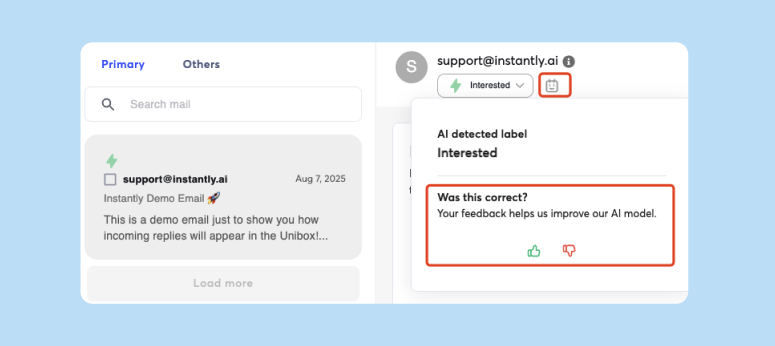
Setting up classification rules: Customizing AI to your campaign goals
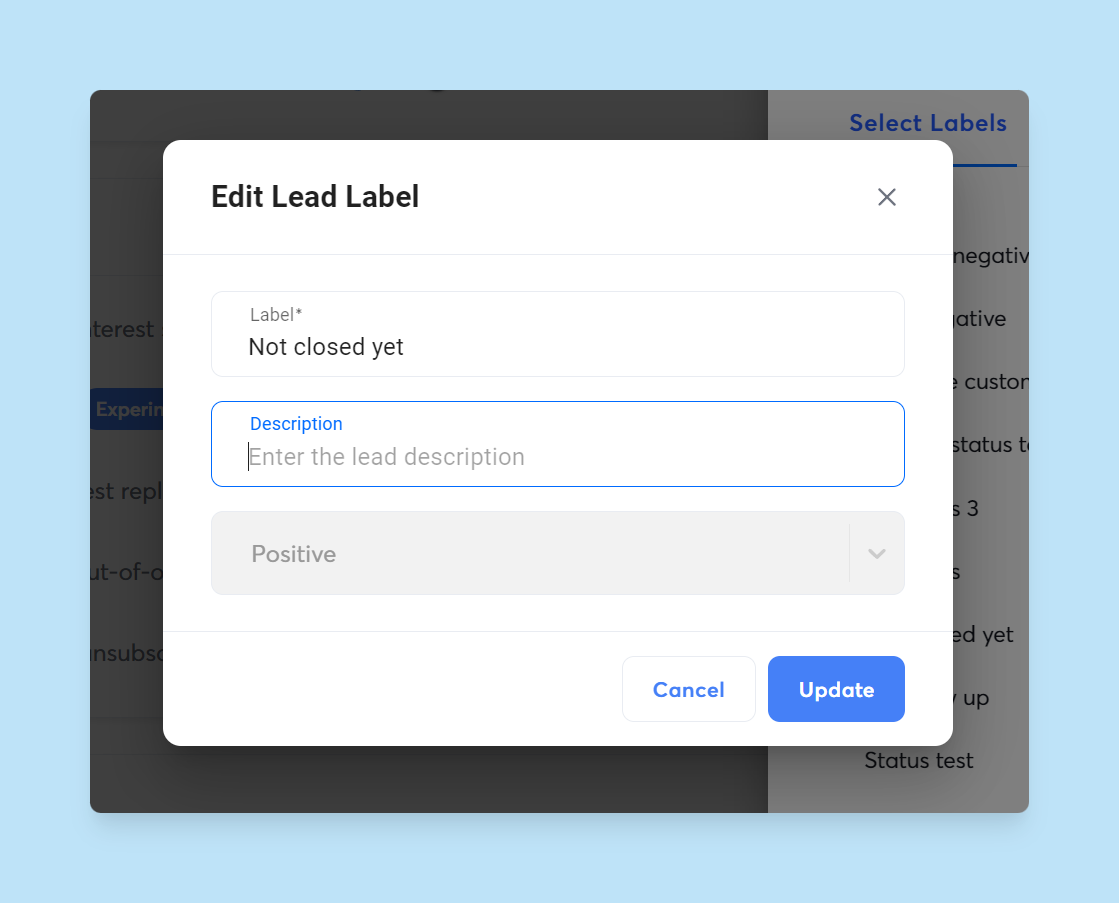
Begin by defining reply categories that map to your agency's workflow. Common categories include "Demo Request," "Pricing Question," "Not Now," "Referral," and "Hard Bounce."
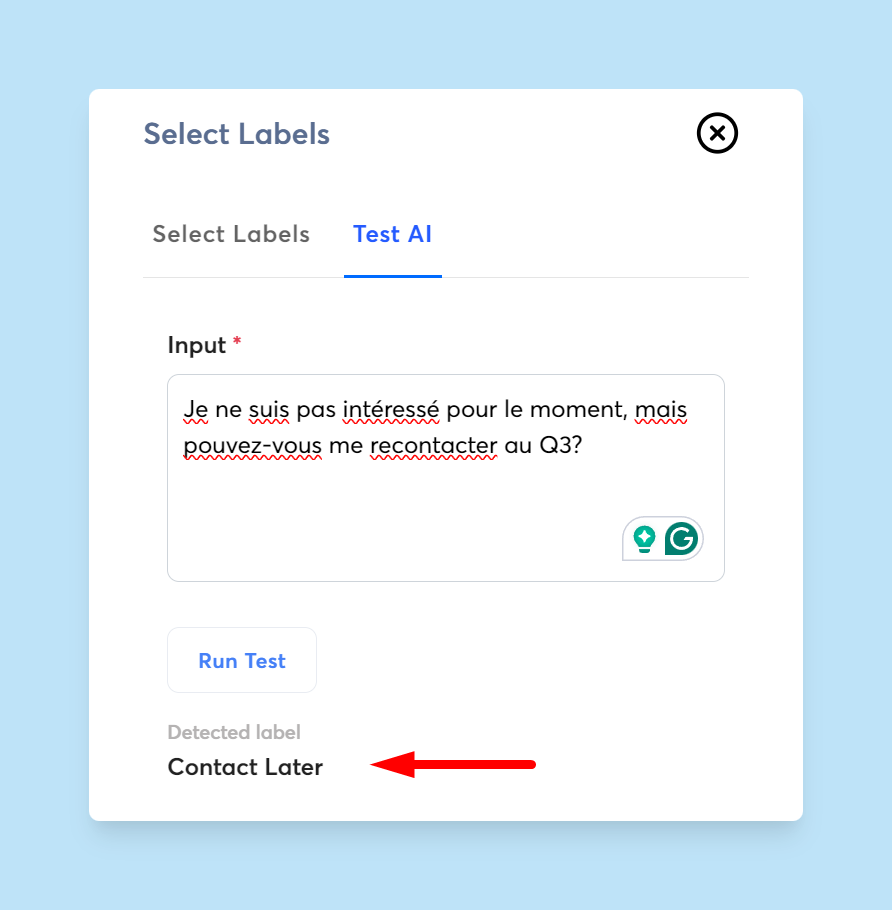
Train your AI by labeling 50-100 sample replies per category from past campaigns. Most platforms let you upload this training data as a CSV or review sample classifications to improve accuracy over time. Fine-tuning AI models on your proprietary data improves accuracy for domain-specific language. With Instantly this is super simple, add and create labels, test live in realtime so you setup your robust labelling pipeline in just a few minutes.
Human-in-the-loop vs. Autopilot: Balancing automation with oversight
The best systems offer both modes. Human-in-the-loop means AI classifies and drafts responses, but a human reviews and approves before sending. This ensures quality and catches edge cases like sarcasm or highly nuanced requests.
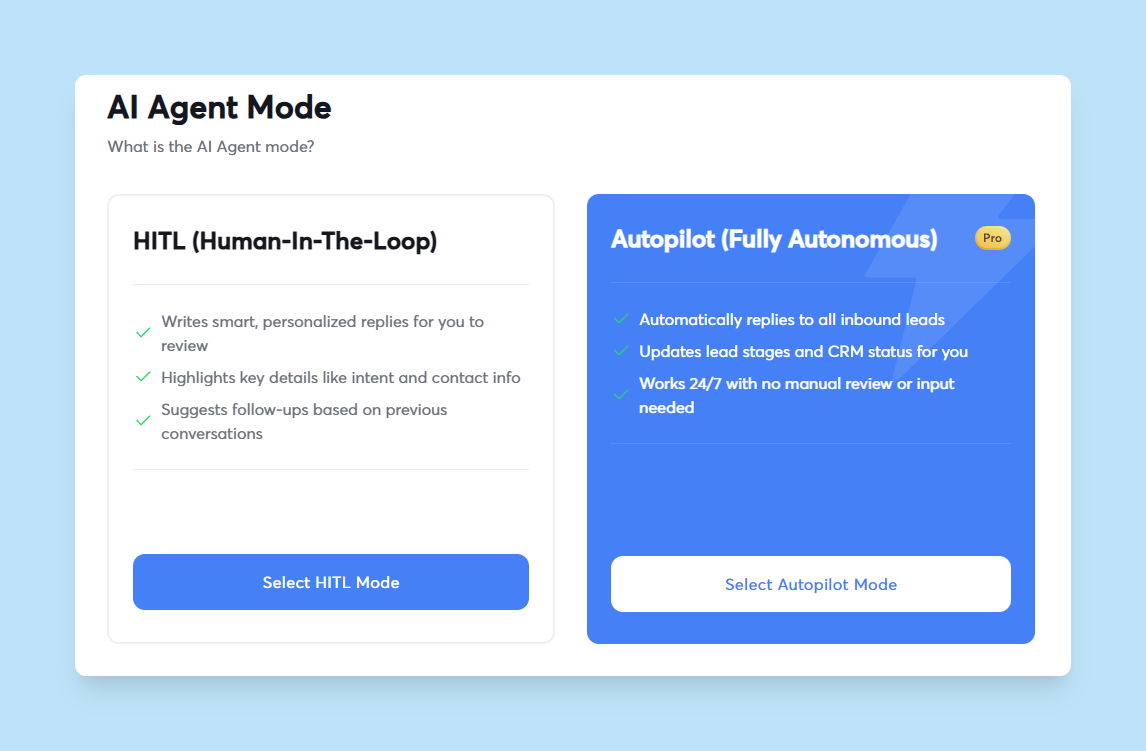
Autopilot mode sends AI-generated replies automatically, ideal for high-volume, low-risk interactions like out-of-office responses or basic FAQs. Run autopilot for simple classifications like "OOO" or "Unsubscribe," but route "Interested" and "Question" replies through human review for personalized follow-up.
What are the common per-seat pricing traps for agencies?
Per-seat pricing models are widespread in sales engagement platforms, but they punish agencies that scale by adding clients or team members. Understanding these traps helps you pick tools that align cost with value, not headcount.
How per-seat models punish growth and create tool sprawl
Traditional platforms charge per user or per sending email account. Your software spend grows linearly or exponentially as you add clients. If you manage 50 inboxes across 10 clients and your tool charges $50 per inbox, that is $2,500 monthly before any email volume or AI usage.
Per-seat pricing often forces agencies to piece together multiple tools: one for sending, one for warmup, one for data, one for CRM. Each tool has its own per-user fee, integration complexity, and support headaches. This tool sprawl increases total cost of ownership and creates workflow friction.
Agencies face a dilemma: pass per-seat costs to clients, risking price objections, or absorb them, shrinking your margin on every account. Calculating the total cost of ownership including software, data, AI, and labor is essential to understand true ROI.
Why flat-fee models align cost with value
Flat-fee pricing turns software into a fixed cost, which is easier to budget and scales with revenue, not headcount. Instantly offers unlimited accounts and warmup starting at $37 per month, with annual billing saving roughly 20%.
This means you can onboard a new client, spin up 10 new inboxes, and your software cost does not change.
"Wish I found this platform sooner! It has all the tools needed for cold outbound in one place. Previously, I was running 3 different systems to get a fraction of the results." - James L., G2 review
Flat-fee economics let you scale accounts through performance, not by increasing software spend.
How to build an efficient email reply triage system
A well-designed triage system combines clear categories, AI classification, centralized management, automated workflows, and ongoing optimization. Follow these five steps to scale reply handling without adding headcount.
Step 1: Define reply categories and actions
Start by auditing your current reply types. Common categories include:
- Interested: Wants a demo or meeting
- Not Interested: Polite decline
- Question: Needs clarification
- Out-of-Office: Temporary unavailability
- Referral: Suggests another contact
- Unsubscribe: Opt-out request
- Spam: Irrelevant or automated
Map each category to a specific action. Example playbook entry: "Interested" = contains keywords "demo," "call," "meeting," "schedule" + positive sentiment. Action: Send calendar link via AI Reply Agent, create CRM task, tag as SQL.
Step 2: Implement AI for initial classification
Choose an AI solution that integrates with your email system and CRM. Large language models via API like OpenAI's GPT offer token-based pricing that scales with usage, not user count. Expect $1-5 per month for 10,000 classifications, depending on the model.
If you build custom workflows, you can use orchestration platforms like n8n or Make.com to connect your email to AI APIs. For an integrated solution, Instantly's AI Reply Agent automates this end-to-end, handling replies in under 5 minutes at 5 credits per AI reply.
Step 3: Integrate with a unified inbox
A unified inbox aggregates replies from all sending accounts into one interface, eliminating inbox-hopping. Instantly's Unibox lets your team see every reply regardless of client domain, ensuring no lead slips through the cracks.
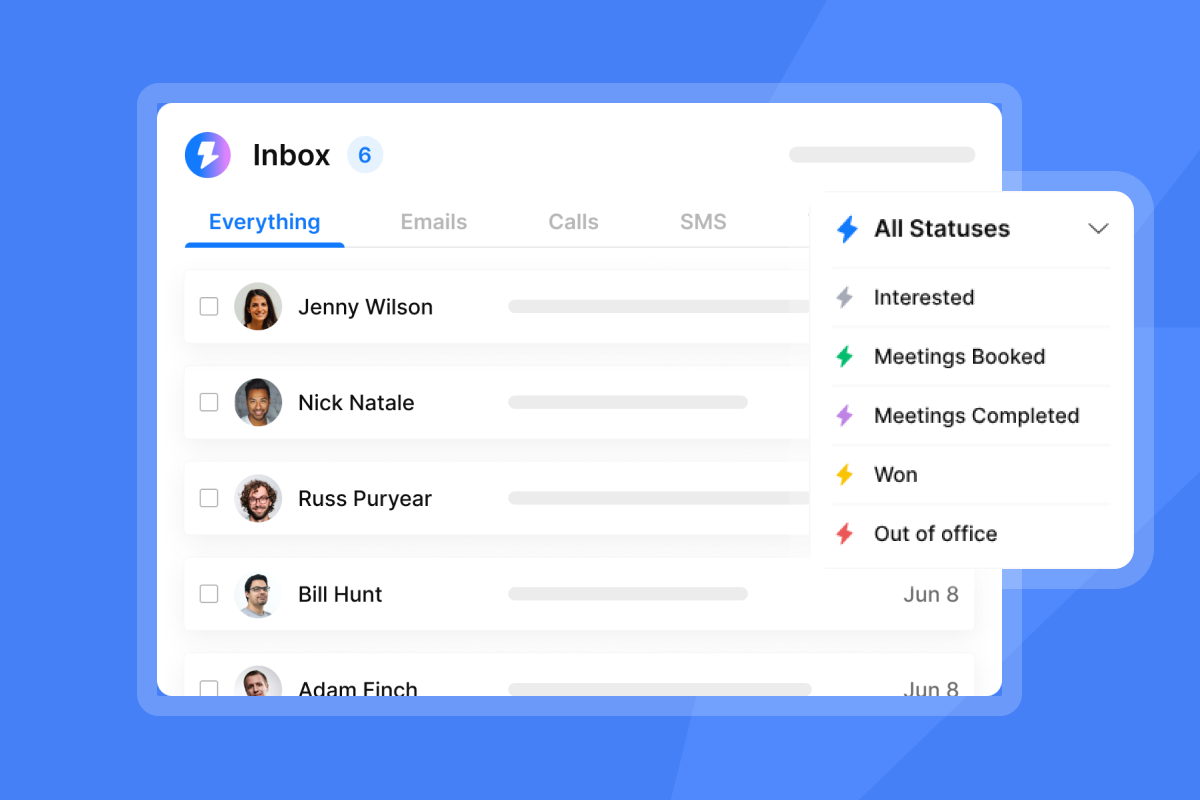
Integration with your CRM means classification updates contact records automatically. When AI tags a reply as "Interested," it updates the contact's status in your CRM, triggers a task for follow-up, and logs the interaction.
Integrated Platform Features
| Tool | Unlimited Accounts | Built-in Warmup | Unified Inbox | Lead Database |
|---|---|---|---|---|
| Instantly | Yes | Yes (4.2M+ network) | Yes (Unibox) | Yes (450M+ leads) |
| OpenAI API | N/A (API only) | No | No | No |
| n8n | N/A (orchestration) | No | Via integrations | Via integrations |
| Make.com | N/A (orchestration) | No | Via integrations | Via integrations |
My take: leverage Instantly's advanced AI agents like our AI Reply Agent and AI Copilot while also connecting your data sources with our integrations to ensure the agents have the best quality data to act on.
Step 4: Establish clear follow-up workflows
Once AI classifies a reply, your system should trigger predefined actions:
- "Interested" replies: Send calendar link or booking confirmation automatically
- "Question" replies: Route to a human with an AI-drafted response for review
- "Not Interested": Pause the sequence and update CRM status
- "OOO": Pause for 7 days, then resume sequence
Instantly's AI Reply Agent handles these workflows natively. When it classifies a reply as "Interested," it triggers your predefined action like sending a calendar link or creating a CRM task, no additional tools required.
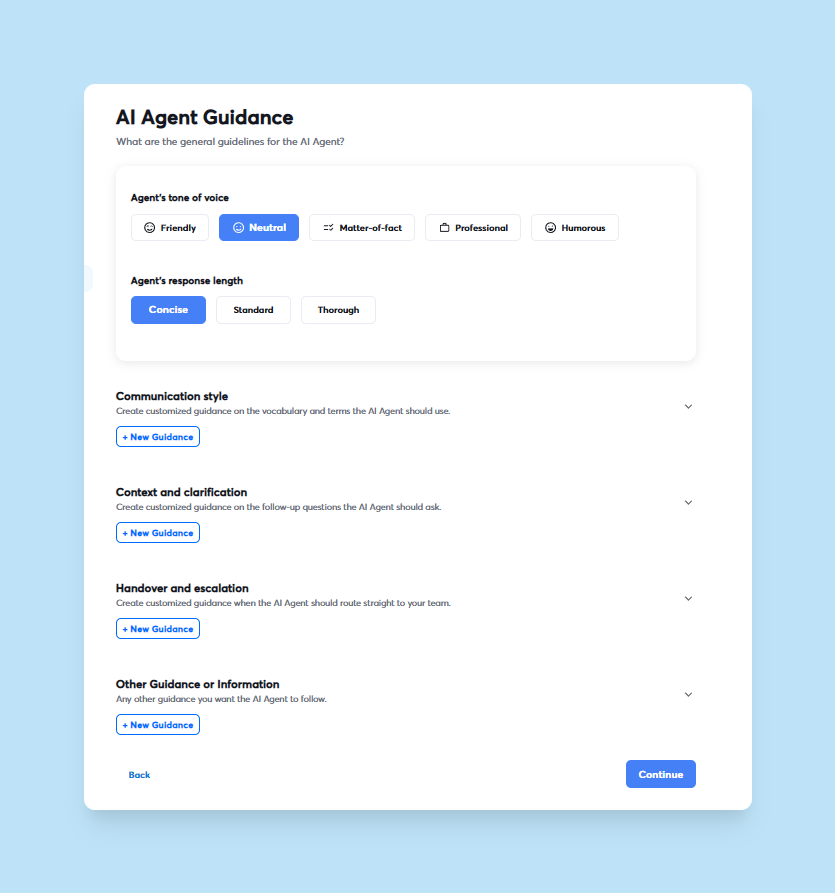
You can even tune the agent to your exact tone of voice and style with our guidance settings.
Step 5: Monitor and optimize
Track accuracy rate (target 90%+), response time (classify within 5 minutes), and conversion rate (5%+ reply-to-meeting). Set up a weekly review where your team flags misclassifications and feed corrected data back to retrain the AI.
Regular model retraining adapts to evolving language patterns. Track bounce rate (should stay at or below 1%), reply rate (target 5%+), and deliverability metrics. If performance dips, pause, re-verify your list, and adjust your AI's classification rules.
Comparison Table: AI Reply Classification Tools for Agencies
| Tool | AI Classification Capabilities | Pricing Model | High-Volume Cost (10k replies/mo) |
|---|---|---|---|
| Instantly | AI Reply Agent handles replies in <5 min, human-in-the-loop or autopilot | Flat-fee, unlimited accounts: $37-$358/mo; 5 credits per AI reply | Growth $37/mo + minimal credits |
| OpenAI API (GPT) | GPT-4o, GPT-5 nano for sentiment, intent, categorization; fine-tunable | Token-based: $0.050-$10 per 1M tokens depending on model | ~$1-5/mo for API |
| n8n | Classifies spam, important, promotion; orchestrates AI workflows | Execution-based: $24-$50/mo (2,500-10k executions) | $50/mo platform + API costs |
| Make.com | Visual workflows with ChatGPT 4o for categorization | Operation-based: $9-$16/mo (10k-40k ops) | ~$16/mo platform + API costs |
How Instantly helps agencies scale reply classification without per-seat fees
Instantly is built for agencies that need to scale cold email without per-seat pricing, tool sprawl, or deliverability headaches. It combines flat-fee unlimited accounts, AI-powered reply handling, and centralized inbox management into one platform.
Unlimited accounts, flat-fee: Scale without penalty
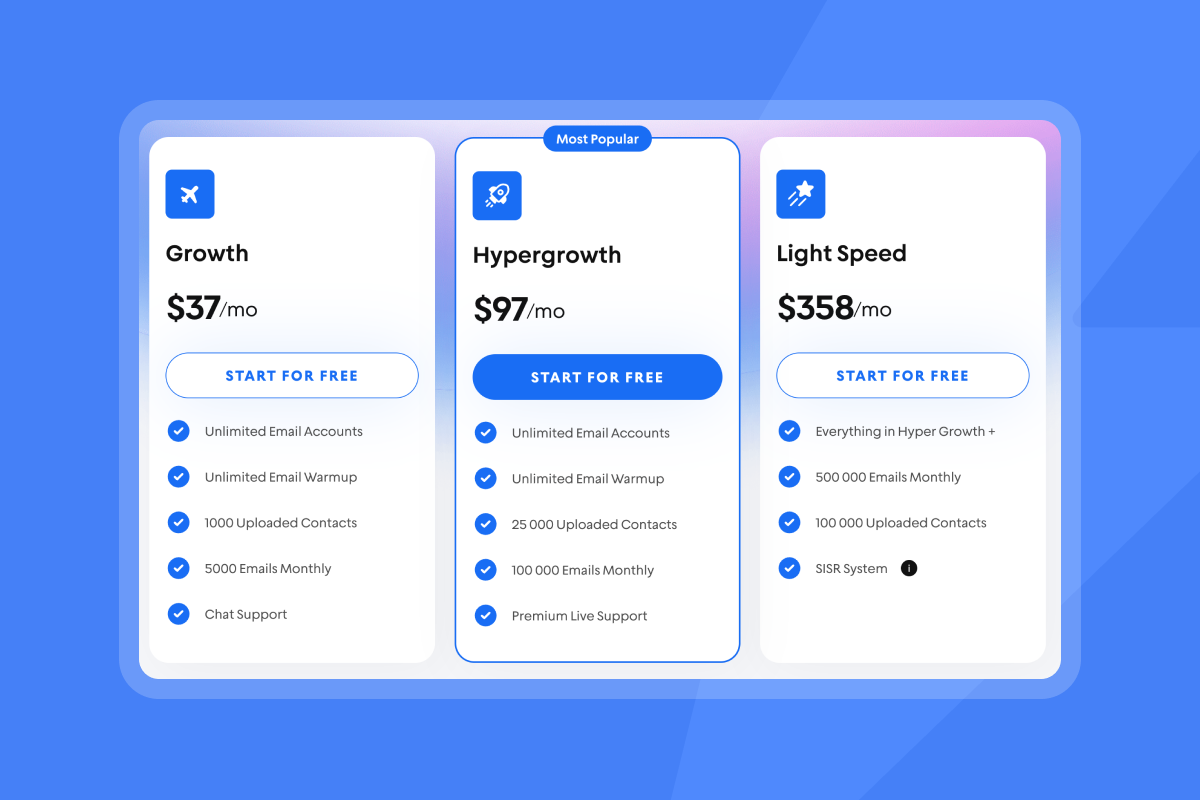
Instantly's pricing model charges a flat monthly fee regardless of how many email accounts you connect. Growth plan starts at $37 per month, Hypergrowth at $97, and Light Speed at $358, with annual billing saving roughly 20%. This means you can manage 10 inboxes or 100 inboxes on the same plan.
"Best email sending tool ever. Good deliverability, easy spin tax, can add in lots of personalization clean and simple UI, one click email responses using tags, smooth Zapier integration, and powerful tracking with subsequences. Everything works really well & can't fault this tool." - Joshua Blacklidge, Trustpilot review
Flat-fee economics let you add clients without worrying about software costs scaling with inboxes.
AI Reply Agent in action: Automating triage and follow-up
Instantly's AI Reply Agent processes incoming replies in under 5 minutes, classifying them and optionally drafting responses. You configure it for human-in-the-loop (review before send) or autopilot (auto-send for certain categories). The agent uses Instantly credits, charging 5 credits per AI reply.
The AI integrates with Slack for review and approval, so your team can approve or edit drafts without leaving Slack. This keeps high-value replies moving while automating routine "OOO" and "Unsubscribe" classifications.
Checkout this deep dive workshop I did recently on how to get the most out of Instantly's AI Reply Agent and Copilot in your workflows.
Integrated platform: Unibox, SuperSearch, and deliverability
Unibox aggregates replies from all your sending accounts. You can filter by campaign, client, or classification tag to prioritize high-intent replies. When a reply comes in, it updates the contact record, triggers follow-up tasks, and logs the interaction.
SuperSearch provides access to 450M+ B2B leads with waterfall enrichment from 5+ providers. Verified contacts reduce bounce rates below 1%, which protects sender reputation and ensures your outreach lands in the primary inbox, not spam.
Instantly operates a 4.2M+ account deliverability network for automated warmup, gradually increasing send volume from 5 to 15 to 30 emails per day over 30 days. Advanced plans add dedicated private IP pools and server rotation for granular deliverability control when managing 100+ inboxes.
Agencies report measurable results using Instantly's integrated platform.
"Instantly is an excellent platform for email marketing outreach. I've been using it for over two years, have recommended it to many clients, and we've all had great results. The features are powerful, the platform is easy to use, and the support team is always responsive. Overall, I'm very satisfied." - Muhammad Auoon, Trustpilot review
Automate for agency growth and profitability
Build a scalable reply classification system by combining AI automation, flat-fee platforms, and clear workflows. Define categories, train AI with your historical data, integrate a unified inbox, and maintain human oversight for high-value replies. This approach lets agencies handle 10x the volume without 10x the cost.
Instantly offers the complete package for agencies: unlimited email accounts on a flat-fee, AI Reply Agent for sub-5-minute triage, Unibox for centralized management, SuperSearch for quality leads, and a 4.2M+ deliverability network to ensure your emails land.
Ready to scale your agency's reply classification without per-seat fees? Try Instantly free and experience AI Reply Agent, unlimited accounts, and flat-fee economics that grow with your client roster, not your software bill.
FAQs
How accurate is AI email reply classification?
AI classification accuracy typically ranges from 85-95% depending on training data quality and model sophistication. Fine-tuned models trained on your historical reply data achieve higher accuracy for domain-specific language. Run a human-in-the-loop process for the first 2-4 weeks to build a correction dataset, then retrain your model for 90%+ accuracy.
Can AI handle complex or nuanced replies?
AI handles 70-80% of straightforward replies automatically. For sarcasm, ambiguous intent, or multi-part questions, implement human-in-the-loop review where low-confidence classifications get flagged for human judgment.
What is the typical cost of AI reply classification tools?
Costs vary by model. OpenAI's GPT-5 nano costs $0.050 per 1M input tokens, ideal for classification. Instantly charges 5 credits per AI reply, with flat-fee plans starting at $37/mo for unlimited accounts, avoiding per-seat penalties.
How does AI reply classification improve deliverability?
AI classification enables faster, more consistent follow-up, which improves engagement rates and sender reputation. Instantly's warmup and deliverability network of 4.2M+ accounts helps maintain inbox placement, while proper classification reduces manual errors that could trigger spam signals.
Is human oversight still needed with AI reply agents?
Yes, human oversight is essential for high-value or sensitive replies. Configuring human-in-the-loop for "Interested" and "Question" categories ensures personalized responses while letting AI handle routine classifications like "Out-of-Office" or "Unsubscribe" on autopilot.
Key terminology for email reply classification
AI Reply Agent: An automated system that analyzes incoming email replies, classifies them by intent and sentiment, and either drafts responses or triggers predefined actions. Most modern AI Reply Agents process incoming messages within 5 minutes.
Reply Classification: The process of automatically categorizing email replies into predefined groups (e.g., "Interested," "Not Interested," "Question") using AI-powered natural language processing and machine learning models.
Reply Triage: The systematic process of sorting, prioritizing, and routing email replies to appropriate team members or automated workflows based on their classification, urgency, and required action.
Unified Inbox (Unibox): A centralized interface that aggregates email replies from multiple sending accounts into one view, enabling efficient management across client domains. Instantly's Unibox supports agencies managing 10-150+ inboxes.
Per-Seat Pricing: A software licensing model where cost scales with the number of users or email accounts, often creating a profitability trap for agencies. Flat-fee models like Instantly's avoid this by charging based on features, not account count.


