


Updated March 30, 2026
TL;DR: If your growth depends on cold email at scale, choose the platform that treats deliverability as a system, not an add-on. We offer unlimited sending accounts on a flat fee starting at $47/month, a 4.2M+ account warmup network, and agency-grade infrastructure without per-seat penalties. Apollo excels at prospecting with 210M+ verified contacts but charges per user and caps mailboxes at 15 per seat. Outreach delivers enterprise governance for Fortune 500 teams but requires $1,000-$8,000 in setup fees and runs $100-$160 per user monthly. HubSpot's acceptable-use policy explicitly prohibits cold outreach, making it dangerous for outbound. The bottleneck is not workflow complexity but inbox placement and cost-to-scale.
What defines enterprise-grade email sequence software?
Enterprise-grade email sequence software is not just a tool that sends emails. It is a deliverability system that manages sender reputation, inbox rotation, warmup protocols, follow-up cadences, and compliance at scale.
The shift from "blasting" to "deliverability intelligence" happened because mailbox providers (Gmail, Outlook) now judge every domain on engagement patterns, bounce rates, and complaint signals. Google Workspace caps daily sends at 2,000 emails per inbox, and Microsoft 365 limits you to 10,000 recipients per day. If you scale volume through a single domain, you burn it fast.
Modern platforms solve this by spreading sends across multiple warmed accounts, monitoring health in real time, and pausing campaigns when spam signals rise. Legacy tools like Outreach and HubSpot were built for different jobs (enterprise workflow governance and inbound marketing), so deliverability often feels like an afterthought. We treat inbox placement as the core product, offering features such as unlimited account rotation and built-in warmup pools that legacy suites charge extra for or ignore entirely.
"I like how easy it is to warm emails and the unified inbox. Instantly makes email warming easier and cheaper than any other site I've looked into." - Chris C. on G2
Core evaluation criteria for sales leaders
When you compare email sequence platforms, five decision variables matter more than feature count.
Deliverability systems
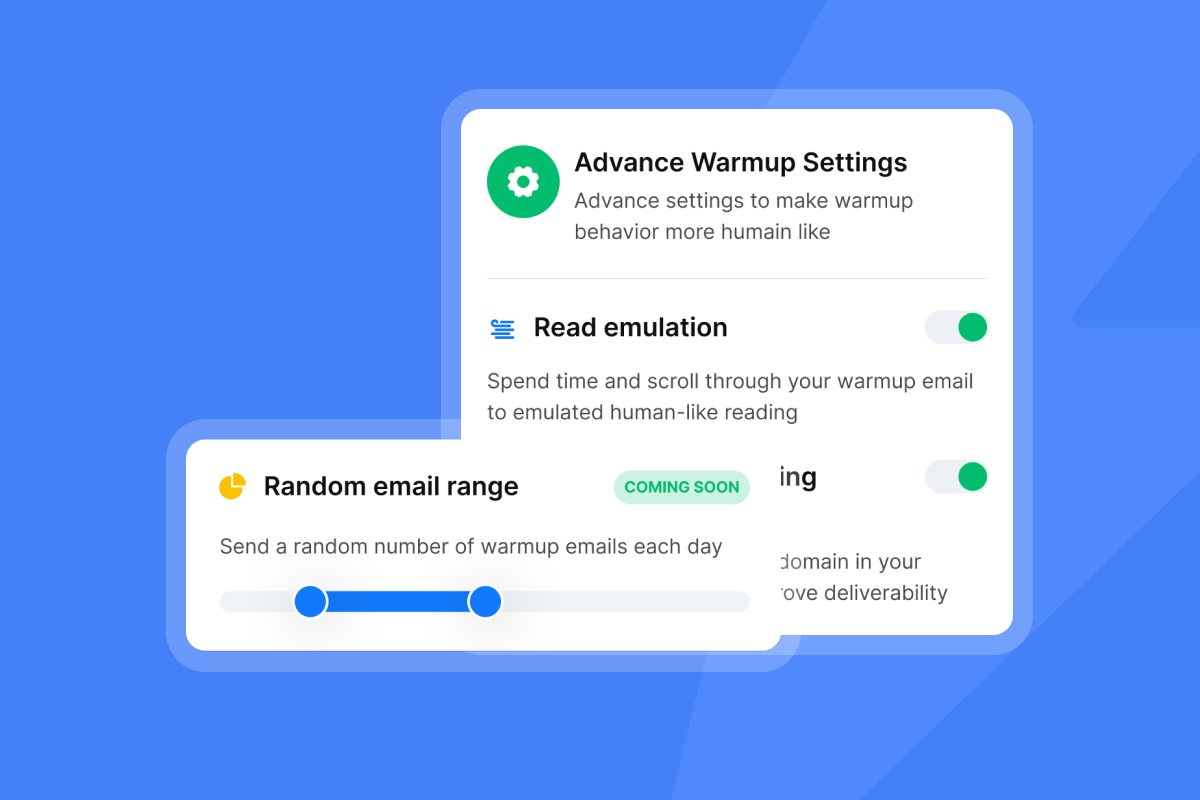
Deliverability is the difference between real pipeline and wasted effort. We provide free warmup across all plans using a network of 4.2M+ accounts that exchange positive signals to build sender reputation before you launch a campaign. Apollo includes warmup on paid plans but requires upgrades for full access. Outreach does not offer native warmup, forcing you to bolt on third-party tools. HubSpot prohibits cold email entirely under its acceptable-use policy, which means using it for outbound can get your account suspended.
"I really like the straightforward nature of Instantly's warm-up feature for email accounts. It's incredibly easy to use with just one click, enabling us to warm up unlimited email accounts without any worries about usage limits." - Ashish T. on G2
Cost efficiency
Per-seat pricing punishes you for scaling volume. If you pay $100 per user monthly and need 10 seats to hit 50,000 sends, you spend $1,000 monthly before adding data, CRM integrations, or support. We use a flat-fee model where the Growth plan costs $47/month per workspace (not per user), and you can connect unlimited sending accounts without additional charges. Apollo's Basic plan starts at $49/user/month annually, meaning a 10-user team pays $490 monthly. Outreach runs approximately $100-$160 per user per month with implementation fees ranging from $1,000 to $8,000, making it a heavy lift for lean teams.
Team governance and rep standardization
Sales leaders need admin controls that prevent reps from burning domains with unsafe practices. Look for platforms that offer team workspaces, template libraries, send-cap enforcement, and activity audit logs. We provide workspace-level controls where admins set daily send limits, approve sequences before launch, and monitor rep activity across all accounts in one dashboard. Apollo and Outreach offer similar governance layers but tie them to per-seat pricing, meaning you pay more for each admin or manager role. HubSpot locks governance features behind the Professional tier ($90/user/month). Our flat-fee model gives the entire team access to admin tools without seat penalties, so you can standardize processes and run QA checks without budget bloat.
Team adoption
UI speed and ease of use determine whether reps actually adopt the tool. Our setup can be completed in hours, with users reporting they configured campaigns and started warmup quickly. Apollo onboarding typically takes 30-60 minutes for basic setup. Outreach implementations often take weeks or months due to enterprise governance layers and professional services requirements. One reviewer noted that Outreach is "a bit dense, tough to figure out how to derive all the value possible," while our users consistently mention the "intuitive" interface and "easy setup."
"I like that Instantly is intuitive and everything is done in one place, from lead sourcing to writing campaigns to reaching out to them." - Nouredinne K. on G2
Risk management
Compliance, domain safety, and data transparency prevent brand damage. Sending cold email from your primary HubSpot domain can poison your entire marketing infrastructure because HubSpot uses shared servers. If your campaign triggers spam complaints, the reputation hit carries over to marketing nurtures and service emails, weakening the entire customer lifecycle. We isolate outbound on separate domains with rotating IPs and sending algorithms that protect your core brand. Apollo offers similar isolation but caps mailboxes at 15 per user, limiting your ability to spread risk.
Head-to-head comparison: Instantly vs. competitors
Here is how the platforms stack up on the variables that matter to sales leaders booking meetings at scale.
Feature | Instantly | Apollo | Outreach | HubSpot Sales Hub |
|---|---|---|---|---|
Pricing Model | Flat fee per workspace | Per user/seat | Per user/seat | Per user/seat |
Starting Price | $47/mo (workspace) | $49/user/mo (annual) | ~$100/user/mo | $20/user/mo |
10-User Monthly Cost | $47 (same price) | $490 (Basic) | ~$1,000-$1,600 | $200-$900 + fees |
Unlimited Sending Accounts | ✅ Yes (all plans) | ❌ No (15 max/user) | ❌ No (limited) | ❌ No |
Built-in Warmup | ✅ Free, integrated | ⚠️ Paid plans only | ❌ No (3rd party) | ❌ N/A (prohibited) |
B2B Lead Database | ✅ 450M+ contacts (separate plan) | ✅ 210M+ contacts (integrated) | ❌ No | ❌ No |
Setup Time | Hours | Hours to days | Weeks | Days to weeks |
Implementation Fee | $0 | $0 | $1,000-$8,000 | $0-$3,500 |
Primary Use Case | High-volume cold outreach at unlimited scale, deliverability-first | All-in-one prospecting + light outreach | Enterprise governance, multi-channel | Inbound marketing, warm leads only |
Quick verdict: We win on cost-to-scale and deliverability infrastructure. Apollo wins on integrated prospecting data. Outreach wins on enterprise workflow governance. HubSpot should not be used for cold email.
For a full walkthrough of campaign setup, watch this tutorial on YouTube.
Deep dive: Instantly vs. Apollo
The data vs. delivery debate
Apollo built its reputation on prospecting. The platform offers 210M+ verified contacts with Bombora-powered intent signals, robust filters for title, company size, and tech stack, and native CRM sync to Salesforce and HubSpot. If your bottleneck is finding the right people, Apollo excels.
We approach the market differently. Our SuperSearch lead database provides access to 450M+ contacts using a credit-based system with multiple data providers, but we sell it separately from the outreach engine. The core product is the sending infrastructure, unlimited account rotation, free warmup, and deliverability monitoring that keeps emails out of spam. This separation prevents you from locking into a single data source and keeps deliverability isolated from prospecting.
Deliverability gap
Some Apollo users report deliverability challenges. One user on G2 noted they saw "zero results from email campaigns ... Even with very light email volume, emails go to spam." Others mention that deliverability in Apollo is a known pain, with users hitting spam folders even after warming up.
Our warmup network exchanges positive signals across 4.2M+ accounts, building sender reputation through real human-like interactions. Users report improved inbox placement because we treat deliverability as the core product, not a feature bolt-on.
"The best thing that i liked about Instantly is the email warmup feature that it provides. I can just link my email from any email service provider and it start warming it up." - Adarsh K. on G2
Recommendation
Use Apollo for data enrichment, intent signals, and CRM-integrated prospecting. Export verified contacts to us for sending. This combination gives you Apollo's data depth without deliverability risk or per-seat penalties. Many operators run this exact stack to separate research from execution.
Deep dive: Instantly vs. Outreach
Complexity vs. speed
Outreach was built for enterprise sales teams managing multi-touch, multi-channel sequences across large organizations. The platform offers advanced governance (manager approvals, team templates, A/B testing at scale), deep Salesforce integration, and reporting dashboards that satisfy CFO-level scrutiny.
The cost is complexity. Implementation fees range from $1,000 to $8,000 depending on customization needs, and onboarding often takes weeks or months. We remove the complexity layer. You can set up your first campaign in hours, connect unlimited accounts with one click, and start warming inboxes the same day. There are no implementation fees, no professional services contracts, and no manager approval workflows unless you choose to add them.
Deliverability blindspot
Outreach does not include native email warmup. Users must integrate third-party tools to build sender reputation, adding another subscription and another integration to manage. Our warmup is free, integrated, and runs automatically across all connected accounts.
When inbox placement drops, Outreach users troubleshoot across multiple tools. Our users see health scores, bounce rates, and spam signals in one dashboard with recommended fixes.
"Instantly has been a solid tool for managing cold email at scale. The warm-up feature works well, the interface is easy to use, and it helps protect inbox deliverability across multiple domains." - Bobur Dada on Trustpilot
Ideal user
Choose Outreach if you manage a Fortune 500 sales org, need multi-channel orchestration (email, phone, LinkedIn, video), require strict governance and audit trails, and have budget for $1,500+ monthly software spend plus professional services. Choose us if you run a lean, growth-focused team where speed, deliverability, and cost efficiency matter more than enterprise workflows.
For a detailed comparison of cold email tools, check out this side-by-side review.
Deep dive: Instantly vs. HubSpot
Inbound vs. outbound
HubSpot built the gold standard for inbound marketing and nurture automation. The platform excels at capturing website visitors, scoring leads, triggering behavior-based email sequences for contacts who opted in, and tracking the buyer experience across marketing, sales, and service.
Cold outbound is a different job. HubSpot's acceptable-use policy explicitly prohibits unsolicited, bulk cold outreach to protect customers on shared infrastructure. The policy states that "reaching out to contacts who have not agreed to receive emails is forbidden," and violations can result in warnings, account suspension, or termination.
We built our platform for cold email. We assume you are reaching prospects who do not know you yet, so we isolate campaigns on dedicated domains, provide warmup automation to build trust with mailbox providers, and offer tools like A/Z testing and personalized lines to improve reply rates.
The danger zone
Sending cold sequences from your primary HubSpot domain creates two risks. First, if your campaign generates bounces and spam complaints, the reputation damage spreads to all emails sent through that domain, including marketing nurtures, transactional messages, and service follow-ups. Second, HubSpot uses shared servers, meaning other senders on the platform can be negatively affected by blocklisting. HubSpot's policy exists to prevent "bad neighbor" effects where one customer's aggressive outbound damages deliverability for others.
We eliminate this risk by isolating outbound on separate domains with rotating IPs and sending algorithms designed for cold outreach. You protect your core brand, scale volume safely, and avoid platform policy violations.
Recommendation
Use HubSpot for inbound marketing, lead scoring, CRM, and nurturing contacts who opted in. Use us for cold outbound. Integrate the two platforms via Zapier or webhooks so positive replies from our campaigns sync back to HubSpot CRM as warm leads. This separation protects your brand and gives each tool the job it was designed for.
Why deliverability is the hidden cost of legacy tools
Deliverability is not a feature. It is the foundation of every cold email program. If your emails land in spam, reply rates drop to zero, meetings evaporate, and pipeline stalls.
Modern sending engines treat deliverability as a system with multiple layers. Domain warmup builds sender reputation by exchanging positive signals (opens, replies, moves to primary inbox) with real accounts before you launch campaigns. Our warmup network includes 4.2M+ accounts that automatically interact with your emails to establish trust with Gmail, Outlook, and other mailbox providers.
Inbox rotation spreads volume across multiple accounts so no single domain exceeds safe sending limits. Google Workspace caps sends at 2,000/day per inbox, and Microsoft 365 limits you to 10,000 recipients/day. We offer unlimited account connections on all plans so you can rotate volume across inboxes and stay under safe limits.
Our dashboard tracks bounce rates, spam complaints, and inbox placement in real time, recommending pauses if signals degrade. Legacy tools like Outreach require third-party integrations to monitor health, adding complexity and cost.
"I like how easy it is to configure multiple mailboxes and have them warmed up with Instantly. It also allows me to check if emails are landing in spam, which is really helpful." - Ajay K. on G2
Industry benchmarks show average cold email reply rates range from 3.4% to 8.5%, with top performers exceeding 10%. If inbox placement drops from 90% to 70%, you lose 20% of potential replies and 20% of pipeline.
Our users maintain stable inbox rates because we built the platform for deliverability first. Our warmup runs automatically, health monitoring is native, and unlimited account rotation is included at no extra cost.
"I really like how Instantly has revolutionized my email marketing efforts... the warmup email option, which prepares inboxes for high deliverability, and the ability to send follow-up emails on a timely basis, ensuring no lead is left untended." - Sachin J. on G2
For a visual walkthrough of how to use our CRM to manage deals and track performance, watch this CRM tutorial.
Pricing analysis: Flat fee vs. per-seat models
Pricing models reveal product philosophy. Per-seat pricing optimizes for enterprise contracts and sales team headcount. Flat-fee pricing optimizes for volume and scale.
Scenario: Scaling to 50,000 sends monthly
A mid-market SaaS company wants to scale cold outreach to 50,000 prospects monthly. Assuming 30 emails per inbox per day (recommended safe limit) across a 20-day sending month, each inbox handles 600 sends monthly. To hit 50,000 sends, you need approximately 84 inboxes rotating volume.
Apollo Professional: $79/user/month annually. If you assign 10 users and each connects 15 mailboxes (the maximum), you have 150 total mailboxes but pay $790/month. Add data credits, and the cost rises to approximately $1,000/month.
Outreach: Estimated $100-$160/user/month. For 10 users at $130/user, you pay $1,300/month plus $1,000-$8,000 implementation fees upfront. Outreach also limits mailboxes per seat, forcing you to add more users (and more cost) to scale volume.
Our Hypergrowth plan: $97/month flat fee with unlimited sending accounts. You connect 84 inboxes, warm them all for free, and pay $97 total. Add the Hyper Credits plan at $197/month for lead data, and your total cost is $294/month.
Cost difference over 12 months:
- Apollo: $790/month x 12 = $9,480
- Outreach: $1,300/month x 12 + $1,000 setup = $16,600
- Instantly: $294/month x 12 = $3,528
We save you $5,952 annually compared to Apollo and $13,072 compared to Outreach. That delta funds domain purchases, A/B testing tools, copywriting support, and admin time.
Predictable vs. ballooning costs
Per-seat models punish growth. As you hire SDRs, add contractors, or scale campaigns, costs compound. If you grow from 5 to 15 users, Apollo's bill jumps from $395/month to $1,185/month (a $790 increase).
Our flat fee stays fixed. Whether you have 1 user or 50 users managing campaigns, you pay $47/month (Growth), $97/month (Hypergrowth), or $358/month (Light Speed). The only variable cost is lead data credits, which you control based on campaign volume.
"Instantly.ai is honestly one of the best outreach tools I've used. Setup is quick, the interface is super clean, and it just works... way better results than most alternatives." - Olympus Media Lamps on Trustpilot
For an updated pricing breakdown comparing our Growth, Hypergrowth, and Light Speed plans, visit our pricing page.
Verdict: Which tool fits your growth stage?
Your ideal platform depends on your bottleneck, budget, and growth model.
Choose us if: You run a lean sales team (1-50 reps) focused on booking meetings through high-volume cold email. Your bottleneck is deliverability, cost-to-scale, or per-seat penalties that punish growth. We give you unlimited account rotation, free warmup, predictable pricing, and workspace-level admin controls to standardize templates and enforce send caps across reps. You value speed over enterprise governance and want a tool reps can master in hours. Use us for the sending engine and integrate Apollo, Clay, or ZoomInfo for data.
Choose Apollo if: You need an all-in-one prospecting and light outreach platform with integrated lead data, intent signals, and native CRM sync. Your team is small (1-10 users), and you prefer simplicity over specialization. You can tolerate 15-mailbox-per-user limits and per-seat pricing in exchange for combined prospecting and sending. Budget for $500-$1,500 monthly depending on users and data needs.
Choose Outreach if: You manage a large enterprise sales org (100+ reps) with strict governance requirements, multi-channel orchestration (email, phone, LinkedIn, video), and deep Salesforce integration. You have budget for $10,000+ monthly software spend plus $1,000-$8,000 implementation fees. You need manager approvals, team templates, and audit trails that satisfy compliance teams.
Choose HubSpot if: Your growth model is inbound-first (content, SEO, paid ads) and you need marketing automation, lead scoring, and CRM for contacts who opted in. Do not use HubSpot for cold outbound. Integrate us via Zapier or webhooks to sync positive replies back to HubSpot as warm leads.
Ready to test the difference? Try us free and use the automated warmup, unlimited account rotation, and Unibox reply management that keep campaigns out of spam while you focus on live conversations. Start your free trial at instantly.
Frequently asked questions about email sequence tools
What is the difference between email marketing and email sequences?
Email marketing targets subscribers who opted in (newsletters, promotions). Email sequences are automated follow-up cadences for cold outreach or sales conversations with prospects who did not opt in.
Does Instantly integrate with Salesforce and HubSpot?
Yes. We connect to Salesforce, HubSpot, and Pipedrive via native integrations, Zapier, and webhooks to sync positive replies and update contact status.
How many emails can I send per day safely?
Google Workspace limits you to 2,000 emails daily per inbox. We recommend starting at 10-30 cold emails per day per account, ramping to 60-100 only after reputation and engagement are strong.
Why does Instantly cost less than Apollo or Outreach?
We use a flat-fee pricing model per workspace (not per user) with unlimited sending accounts. Competitors charge per seat and cap mailboxes, which increases cost as you scale volume.
Can I use HubSpot for cold email outreach?
No. HubSpot's acceptable-use policy prohibits unsolicited, bulk cold outreach. Violations can result in account suspension and damage your domain reputation across all email types.
Key terms glossary
Sender reputation: A score mailbox providers (Gmail, Outlook) assign to your domain and IP based on engagement, bounce rates, and spam complaints. Low reputation sends emails to spam.
Email warmup: The process of gradually increasing send volume and exchanging positive signals (opens, replies) with real accounts to build sender reputation before launching cold campaigns.
Inbox rotation: Distributing email volume across multiple sending accounts to avoid exceeding daily limits and spreading deliverability risk across domains.
Primary inbox: The main tab in Gmail or the focused inbox in Outlook where important emails land. Cold email success depends on reaching the primary inbox, not spam or promotions tabs.
Unified inbox (Unibox): A centralized dashboard that consolidates replies from all connected sending accounts into one view for faster response times and deal management.
Per-seat pricing: A subscription model that charges a fixed monthly fee for each user account, which increases total cost as teams grow.
Flat-fee pricing: A subscription model that charges a fixed monthly fee per workspace or organization regardless of user count, which keeps costs predictable as teams scale.


