


Updated November 29, 2025
TL;DR: B2B cold calling remains a viable, cost-effective lead generation strategy for startup founders with limited resources when approached systematically. Success hinges on tight ICP definition, thorough prospect research, script flexibility, and consistent follow-up. Realistic conversion benchmarks sit between 2% and 5% for booked meetings, with persistent follow-up pushing rates to 8% or higher. Smart automation like Instantly's SuperSearch for list building and the AI Reply Agent for email follow-ups can reduce manual effort by 80% while keeping your focus on high-value conversations.
You need leads and meetings. Fast. But does B2B cold calling still work in 2025 when you're operating with limited resources and no dedicated sales team?
The short answer is yes. When done correctly, modern B2B cold calling is a powerful tool to bypass gatekeepers and connect directly with decision-makers. Forget the outdated image of aggressive telemarketers. Today's approach blends systematic research, personalized scripts, and smart automation to turn cold conversations into booked meetings.
We provide a practical roadmap for launching effective B2B cold calling campaigns. We'll explore current success rates, essential strategies, and how integrated platforms can automate tedious tasks so you can focus on closing deals and accelerating growth.
Is B2B cold calling still effective for startups?
Yes. B2B cold calling remains effective when you target the right prospects with a structured approach. A well-timed phone call adds another opportunity alongside cold email to create a genuine connection and bring your ICP to the table.
Cold calling works because it forces real-time dialogue. You learn about pain points immediately, adjust your pitch on the fly, and book meetings faster than a multi-touch email sequence. For founders with limited resources, this speed matters. You cannot afford to wait weeks for an email campaign to mature when you need meetings this month.
Key statistics at a glance
Understanding realistic benchmarks helps you set achievable goals and avoid discouragement during the early calls. Here are the numbers that matter:
| Metric | Benchmark | Source |
|---|---|---|
| Connection rate | ~5% | EBQ |
| Average conversion rate (call to meeting) | 2% to 5% | Cleverly |
| Average B2B cold call success rate | ~4.8% | Sales Hive |
| Conversion after 5+ follow-ups | 8%+ | AnyBiz |
Connection rate measures how often you reach a live human willing to talk beyond a quick hang-up. Conversion rate tracks calls that result in a booked meeting or qualified opportunity. If you make 100 dials, expect roughly 5 conversations and 2 to 5 booked meetings when your process is dialed in. Persistence compounds results, with at least five follow-ups often pushing conversion rates higher.
Why buyers still respond to cold calls
Decision-makers answer cold calls because they need solutions to real problems. A cold call that lands at the right moment, addresses a genuine pain point, and respects their time can open doors that emails cannot. Buyers appreciate brevity and relevance. If you can articulate a clear value proposition in under 60 seconds, you earn the right to continue the conversation.
Cold calls also create accountability. In my experience working with early-stage founders, prospects who agree to a follow-up meeting on the phone show up more often than those who passively click a calendar link in an email. The human connection builds trust faster. For founders, this trust accelerates your path from first contact to signed deal.
How B2B cold calling compares to other outreach methods
Cold calling is not the only lead generation channel, and it should not be. Smart founders use a blend of tactics to fill their pipeline. Here is how cold calling stacks up against email and social selling:
| Method | Effectiveness | Buyer Preference | Lead Gen Potential | Best Use Case |
|---|---|---|---|---|
| Cold calling | Immediate feedback, high engagement | Moderate | High for decision-makers | Urgent needs, high-value deals |
| Cold email | Scalable, async | High (less intrusive) | Very high at scale | Volume plays, warming lists |
| Social selling (LinkedIn) | Builds long-term trust | High | Moderate to high | Relationship building, inbound |
Cold calling delivers immediate feedback. You know within 30 seconds if your pitch resonates or needs adjustment. Cold email scales better because you can send hundreds of personalized messages per day with the right platform, but response rates can be lower and replies take longer. Social selling on LinkedIn builds credibility over time but requires consistent content creation and engagement.
For founders with limited resources, the best strategy combines all three channels. Use LinkedIn to warm up prospects before a call, follow up cold calls with email summaries, and nurture long-term prospects with helpful content.
Do dig further into what makes a great cold email with high reply rates, watch our cold email tutorial for 2025 below:
Your step-by-step plan for effective B2B cold calling
Success in B2B cold calling comes from following a repeatable system. Here are the six steps that turn cold dials into booked meetings.
1. Define your ideal customer profile (ICP)
Start by identifying who needs your product most, who makes buying decisions, and who will champion your solution internally. Your ICP should include firmographic details like company size, industry, and revenue, plus role-specific information such as job title, seniority, and pain points. A tight ICP prevents wasted calls to prospects who will never buy.
Ask yourself:
What does my best customer look like? Review your existing customers or beta users. What industries are they in? What size companies? Which roles signed the contract? Document these patterns. Your ICP is a living document. Refine it as you learn which prospects convert fastest.
Use free tools like LinkedIn Sales Navigator trial version or Instantly's SuperSearch to test your ICP assumptions. Search for companies and roles that match your criteria. If you find hundreds of potential targets, your ICP is viable. If you find ten, narrow your filters or broaden your scope.
2. Build a high-quality lead list
Once you know your ICP, you need contact details for prospects who match it. Low-quality data kills cold calling campaigns. Wrong phone numbers waste your time, and inaccurate contact details mean you never reach decision-makers. Invest in accurate, verified contact data from the start.
For founders with limited budgets, Instantly's SuperSearch offers access to 450M+ B2B leads with waterfall enrichment across 5+ providers. You can filter by industry, company size, role, and location to build a list that matches your ICP. While SuperSearch delivers email addresses as your primary contact data, many records include phone numbers or LinkedIn profiles you can use to find direct-dial numbers through additional research.
Here are three low-cost research tactics to supplement your lead list:
- Company website and blog: Visit the prospect's website and review their "About Us" page, recent blog posts, and news updates. This research takes under 15 minutes per prospect and uncovers pain points like new product launches or market expansions.
- LinkedIn profile: Examine the company's LinkedIn page and the individual's profile. Look for recent activity, shared connections, and hiring patterns. Engaging with their content can warm up the lead before you call.
- Quick Google search: Conduct a brief Google search for the company name and prospect. Look for press releases, acquisitions, or recent funding rounds. This context gives you relevant talking points.
SuperSearch saves hours of manual research by delivering enriched contact records with verified emails and phone numbers. Export your list directly to your CRM or Instantly's Outreach platform to start your campaign immediately.
3. Craft compelling cold call scripts
A cold call script is not a word-for-word teleprompter. It is a flexible framework that keeps you on track while allowing natural conversation. Your script should include a strong opening, a clear value proposition tied to a pain point, discovery questions, objection responses, and a specific call to action.
Here is a concise cold call script template under 60 seconds:
- Opening (5-10 seconds): "Hi [Prospect's Name], this is [Your Name] from [Your Company]. I know you are busy, so I will be quick."
- Value proposition (20-30 seconds): "Many [Industry/Role] leaders I speak with struggle with [Specific Pain Point]. We help businesses like yours [Benefit/Solution]."
- Social proof (optional, 5-10 seconds): "For instance, we recently helped a company in your sector achieve [Specific Result]."
- Call to action (10-15 seconds): "Would you be open to a brief 15-minute chat next week to explore if this approach could be valuable for your team?"
Customize this template based on your research. If you noticed the prospect recently raised funding, mention it in your opening. If their LinkedIn post discussed a specific challenge, reference it. Personalization based on prospect research improves connection rates dramatically.
Practice your script with a peer or mentor before going live. Role-playing simulates real-world scenarios and builds confidence. Record yourself to identify filler words, awkward pauses, or areas where you lose energy.
4. Master your delivery and handle objections
Your tone, pacing, and confidence matter as much as your words. Speak clearly and enthusiastically without sounding robotic. Aim for the prospect to do 70% of the talking by asking open-ended discovery questions. This approach uncovers their real needs and builds rapport.
Objections are not rejections. They are requests for more information or signals that your timing or approach needs adjustment. Here are responses to the most common objections:
- "I'm not interested": "I completely understand. Many of our clients initially felt the same way, but they later realized how much time and money our solution could save them. Can I ask what your main priorities are right now?"
- "Send me more information": "I would be happy to send some information over. To make sure I send you the most relevant details, what specific aspects are you most interested in learning about?" It is generally better to get more details on the call if possible.
- "It's too expensive" / "No budget": "I understand budget concerns. While the upfront cost might seem high, many of our clients see a significant ROI within the first few months. Would it be helpful if I explained how our solution could save you money in the long term?"
Listen actively to understand the underlying concern. Ask clarifying questions to dig deeper into objections. If a prospect is genuinely uninterested after multiple attempts, politely end the call. Persistence is important, but so is respecting their time.
5. Follow up strategically
Most deals require multiple touchpoints. The key is to follow up with value, not just checking in.
Here are the three most critical follow-up elements for founders with limited time:
- Prompt, personalized summary email: Send an email within a few hours of the call. Summarize key discussion points, reiterate agreed-upon next steps, and express gratitude. Use a basic template pre-written so you can quickly fill in personalized details from your call notes.
- Calendar invite: If you agreed to a follow-up meeting, immediately send a calendar invitation with all essential details like date, time, virtual meeting link, and a brief agenda.
- Value-driven nudge: If no firm next step was established, send a brief email with a relevant piece of content like a blog post from Instantly's blog or an industry report that addresses a pain point discussed during the call.
If you're running cold email campaigns in parallel, which we recommend, Instantly's AI Reply Agent handles email replies in under 5 minutes. This frees you to focus on live phone conversations while the AI manages routine email responses. The combination of phone calls for urgency and automated email follow-up creates a powerful one-two punch.
For a detailed walkthrough of follow-up strategies, watch this full Instantly tutorial on YouTube.
6. Track, analyze, and optimize your performance
You cannot improve what you do not measure. Track these key performance indicators from day one:
- Dials made: Total outgoing calls attempted
- Connects: Actual conversations with decision-makers
- Meetings booked: Follow-up meetings or demos successfully arranged
- Sales qualified leads (SQLs): Prospects who meet predefined fit criteria
- Objection rate: How often specific objections arise
If you use call recording software with prospect permission, track your talk-to-listen ratio. Aim for 70% prospect talking, 30% you talking.
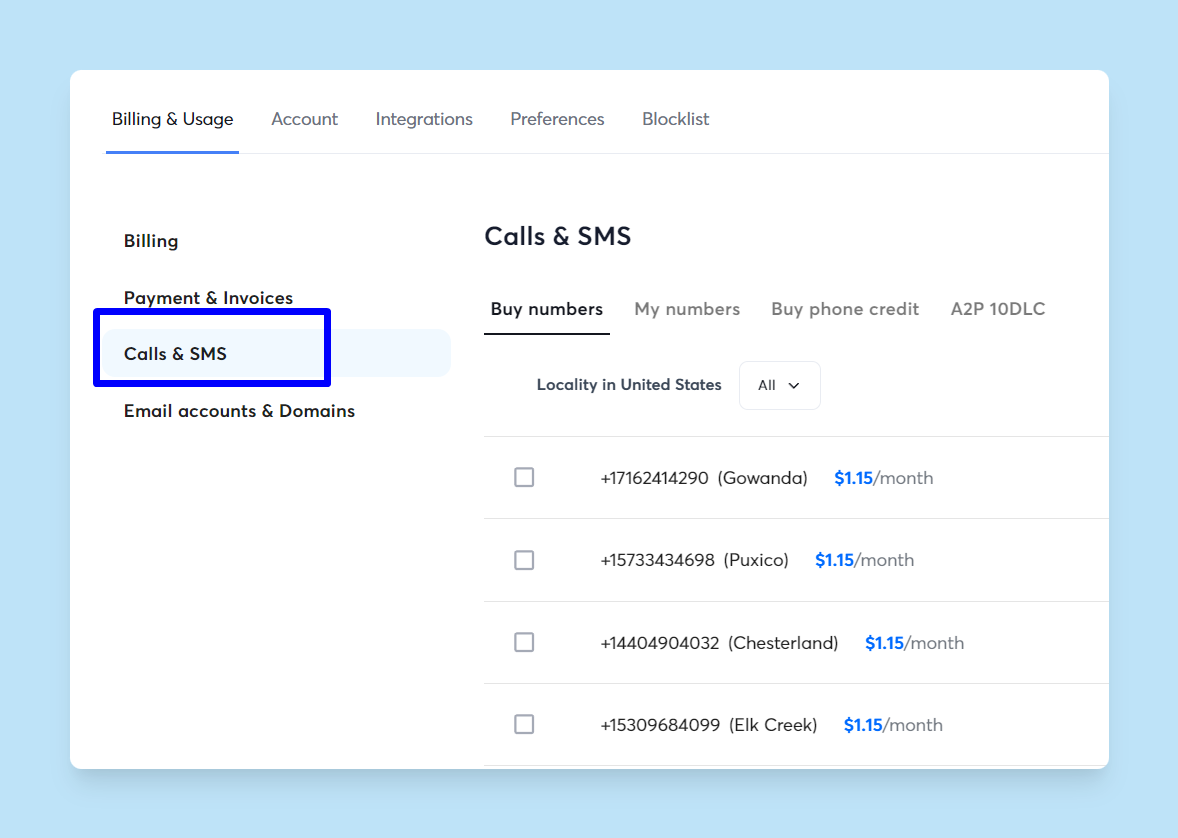
Instantly's analytics dashboard tracks reply rates and booked meetings across all your campaigns. Use this data to identify which scripts, industries, or personas convert best. Double down on what works and cut what does not. Tracking all of this is made easy with Instantly's integrations and you can even , directly from the Instantly platform if you like:
After your first 50 calls, review your recordings or notes. What patterns do you see? Are prospects confused about your value proposition? Do they ask the same questions repeatedly? Adjust your script and try again for the next 50 calls. This iterative approach compounds improvements over time.
Essential attributes of successful cold callers
Effective cold callers share four core skills that founders can develop with practice:
- Research discipline: Successful callers invest time upfront to understand the prospect's company, role, and pain points. This personalization earns respect and attention.
- Multi-touch persistence: One call rarely converts. Build a sequence of 5-8 touchpoints over 3-4 weeks combining calls, emails, and social touches.
- Objection handling: View objections as insights rather than personal rejections. Prepare concise, empathetic responses to common concerns.
- Metrics accountability: Review your KPIs weekly. Track connection rates, conversion rates, and time-to-first-meeting to identify bottlenecks and optimize your process.
These skills compound over time. Your first 10 calls will feel awkward. Your first 100 calls will teach you patterns. By call 500, you will sound confident and natural.
Integrating cold calling into your broader sales strategy
Cold calling works best as part of a multichannel strategy. Before calling a prospect, connect on LinkedIn and engage with their content. Warming leads on social platforms before a call significantly increases positive interactions.
After every call, send a follow-up email summarizing your message and offering additional resources. For prospects who are not ready now, add them to a nurture sequence with valuable content. Learn more about content marketing tactics for B2B lead generation. Call them again in 3-6 months when their situation may have changed.
The role of AI in modern cold calling
AI changes cold calling by automating tedious tasks. Instantly's Copilot summarizes prospect pain points and suggests personalized talking points, cutting research time from 15 minutes to under 2. After calls, the AI Reply Agent reads incoming emails, classifies them as interested, objection, or out-of-office, and auto-responds with personalized messages. This frees you to focus on high-intent leads while AI handles routine work.
Watch this video to see how AI agents can replace repetitive sales tasks and free up your time for strategic conversations.
AI does not replace human judgment. It amplifies your effectiveness by handling routine work so you can focus on building relationships and closing deals. For startup founders with limited time and no sales team, this automation is a force multiplier.
Ready to launch your first B2B cold calling campaign?
B2B cold calling remains a powerful, cost-effective lead generation strategy for startup founders when approached with discipline and the right tools. Start with a tight ICP, build a verified lead list, craft a flexible script, practice your delivery, and follow up consistently. Track your KPIs from day one and refine your approach based on real data.
The most successful founders you're competing against blend cold calling with email outreach and social selling to create a multichannel engine. Instantly provides the platform to scale this approach without per-seat penalties or tool sprawl. Unlimited email accounts, Calls & SMS direct from the platform, SuperSearch for 450M+ leads, built-in warmup, and AI agents for reply handling all live in one flat-fee platform.
Try Instantly free and apply the playbook in this guide. Use SuperSearch to build your first lead list, set up automated follow-ups with the AI Reply Agent, and track your booked meetings in real time. The first few calls will feel uncomfortable. By call 100, you will sound confident. By call 500, cold calling will be your most reliable lead generation channel.
For a complete walkthrough of setting up your first campaign, watch this full Instantly AI tutorial.
FAQs
What is a realistic B2B cold call conversion rate for a startup founder with no sales experience?
Expect 2% to 5% conversion from calls to booked meetings. Persistent follow-up over five or more touches can push this to 8% or higher.
How many cold calls should I make per day as a startup founder?
Start with 20 to 30 dials per day. This allows time for research, calls, and follow-up. Scale to 50+ dials once your script and process are refined.
What is the best time to make B2B cold calls?
Midweek afternoons, particularly Wednesday and Thursday between 4 p.m. and 5 p.m. in the prospect's local time zone, tend to work well. Early mornings from 8 a.m. to 10 a.m. also show good connection rates.
Should I cold call or cold email first as a startup founder?
Start with cold email to test your messaging and build a baseline of data. Once your email conversion rate stabilizes above 2%, layer in cold calls to high-intent prospects who opened but did not reply.
How can I find accurate phone numbers for B2B prospects without a huge budget?
Use Instantly's SuperSearch for access to 450M+ B2B leads with verified phone numbers and waterfall enrichment across 5+ providers at a flat monthly fee.
What CRM should I use to track cold calling activity as a startup founder?
HubSpot CRM offers a free tier that tracks calls, logs notes, and manages follow-ups. Instantly integrates with HubSpot for smooth data syncing.
Key Terms Glossary
B2B cold calling: Directly contacting potential business clients by phone who have not previously expressed interest in your product or service.
Ideal Customer Profile (ICP): A detailed description of the company and role that gets the most value from your solution, used to focus prospecting efforts.
Connection rate: The percentage of cold calls that result in a live conversation with a decision-maker or relevant contact.
Conversion rate: The percentage of cold calls that result in a desired outcome, such as a booked meeting or a sales-qualified lead.
Sales qualified lead (SQL): A prospect who meets predefined criteria indicating they are a good fit and have high potential to become a customer.
Objection handling: The process of responding to prospect concerns or pushback during a cold call in a way that clarifies value and moves the conversation forward.
Multi-touch cadence: A sequence of 5-8 outreach attempts including calls, emails, and social touches over 3-4 weeks designed to increase response rates through consistent follow-up.


