


One of the most challenging aspects of running a small business is overcoming growth plateaus. Most go to social media, SEO, or paid ads. However, email marketing remains the most cost-effective growth channel when executed correctly.
Let’s say you run a small B2B SaaS consulting agency and send 20,000 cold emails per month. Here’s what your typical setup might look like:
- Instantly Hyper Growth Plan: $97/month
- 10 DFY sending accounts: $50/month
- 5 sending domains: $6/month (averaged from $15/year each)
- Lead data credits: $100/month
The total estimated monthly costs are approximately $250. Now let’s look at the numbers. From 20,000 emails, you might see a 0.3% positive reply rate (about 60 replies). If 40% of those book a call (24 calls) and 20% convert, that’s roughly five new clients.
If each client is worth $3,000 to $5,000 in monthly retainers, even a single conversion can pay for your entire year of outreach. That’s the power of understanding and optimizing your cold email outreach ROI.
Why Email Marketing Matters for Small Businesses
Email is still one of the most reliable ways to reach your audience directly. Unlike social media platforms, where algorithms determine who sees your posts or ads, and these cease when you stop paying, email allows you to stay in control of your communication.
Every message you send goes straight to someone’s inbox, not a feed or timeline that’s already crowded with things that keep people incentivized to scroll more.
For small businesses, that direct connection is invaluable. It lets you build trust, stay top-of-mind, and nurture relationships long after a purchase or consultation.
Regular email touchpoints can turn one-time customers into repeat buyers and brand advocates who actually look forward to hearing from you.
With AI, running campaigns no longer requires a full team. There are dozens of fair-priced AI sales software that let small businesses access the same advanced automation reserved for enterprise teams, leveling the playing field without breaking the budget.
How Small Businesses Should Build Email Marketing Campaigns
There are two types of email marketing campaigns a small business can do: cold and warm email outreach. The main difference between the two is how you do lead prospecting. But, both use the same fundamentals:
The Cold Email Stack for Small Businesses
Many email outreach campaigns fail due to a lack of proper tools or overusing them, resulting in excessive spending. For most small businesses, here’s a quick look at what you need to run strong email marketing campaigns.
Cold Email Tech Stack Components & Costs
| Component | Purpose | Example | Est. Cost/Month |
|---|---|---|---|
| Sending Platform | Send & track campaigns | Instantly Hyper Growth | $97 |
| Warmup Accounts | Protect reputation | 10 DFY inboxes | $50 |
| Alternate Domains | Keep main domain safe | 5 sending domains | $6 |
| Lead Finder | Verified B2B contacts | Instantly SuperSearch | $100 |
| Personalization Tool | Variables & spintax | Built-in AI or ChatGPT | Free–$20 |
G2 Rating: 4.8/5 ⭐ from 3,952 reviews
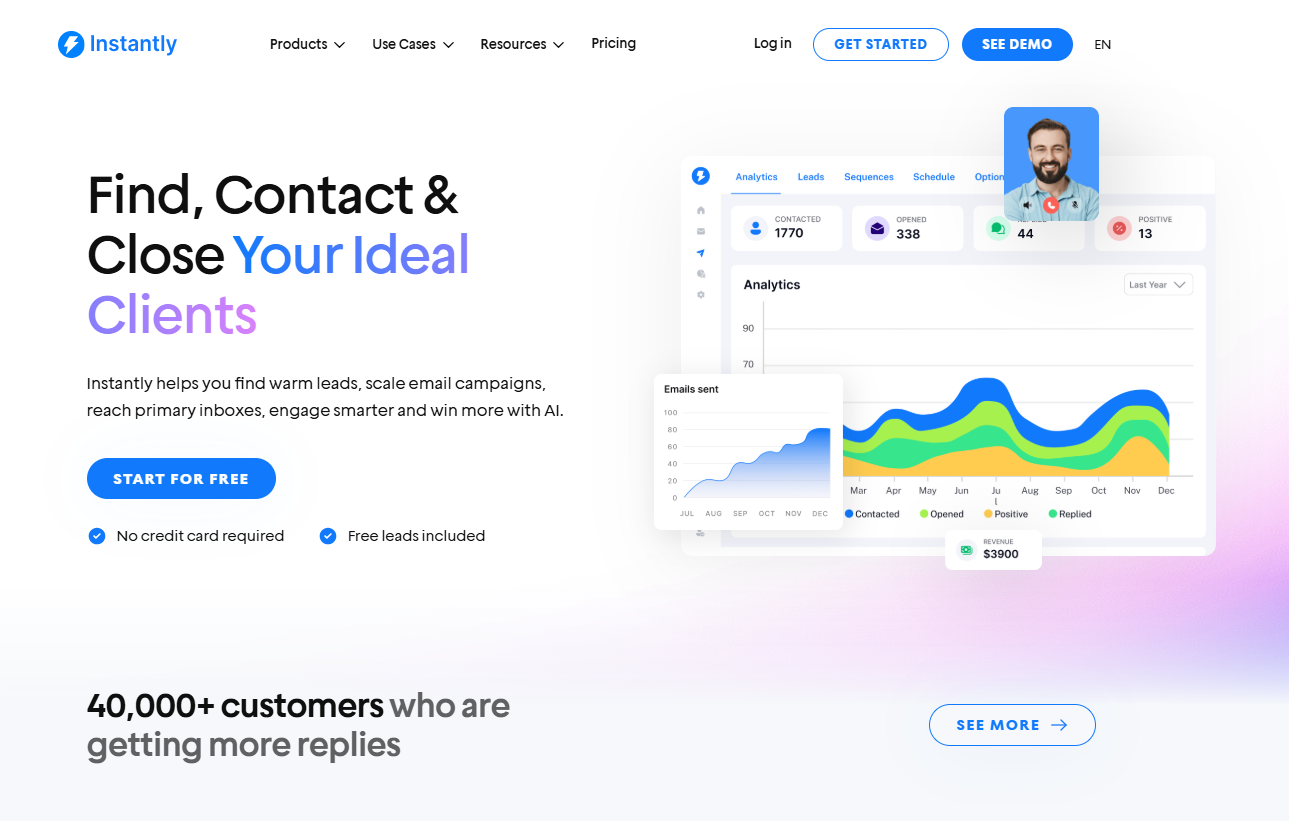
Instantly has all these features in one platform. It’s simple for small business owners to learn quickly, powerful for advanced users who want to scale, and supported by an active community of cold email beginners, pros, and teams ranging from small to enterprise businesses.
Set up Cold Email Infrastructure
Before sending a single email, small businesses need a clean email infrastructure. Start by using separate sending domains dedicated to outreach. This keeps your primary business domain safe and gives you room to scale without risking your brand’s inbox reputation.
Next, authenticate your setup with SPF, DKIM, and DMARC. These DNS records verify that you’re a legitimate sender. Without them, even well-written emails are more likely to land in spam or get blocked entirely.
Finally, run continuous warmups. Warmups generate positive opens and replies in the background, helping your inboxes build trust with email providers. They act like a buffer, keeping your deliverability strong even when you send higher volumes.
How Small Businesses Can Find Leads
If you don’t have a big brand or a well-known entity in your industry, you’ll have a hard time building an inbound lead list. The good news is that you don’t need to create a brand first before getting new prospects.

Small businesses seeking new customers can use lead finder tools to compile a list of contacts that align with their ideal customer profiles (ICPs). Instantly SuperSearch is a great example. Every lead is pre-verified. You can find lookalikes, use advanced filters, or even enrich lead lists.
How to Write Subject Lines, Intros, Offers, and CTAs
Warmed-up domains and the right email infrastructure give you the best chance of landing inside primary inboxes. However, once you’re there, you still need to personalize your email copy and provide enough value to make prospects take the next steps. Here’s how:
Subject lines
- Keep them short, natural, and specific. Aim for 2–5 words that hint at the topic or value.
- Avoid overused lines like “Quick question” that now feel spammy and generic.
- Use simple, relevant angles instead, such as:
Idea for {{company}}
Is {{company}} ready to get more booked calls?
About your {{topic}} post
Small experiment for {{company}}
- Test 2–3 variations per campaign and double down on what consistently wins. You can learn how to do that in more detail in the subject line A/B testing for cold Email.
Intros
- Use {{custom variables}} so the opener feels written for one person, not a list.
- Reference something specific about the prospect (a post, case study, role, or metric).
- Keep it to 1–2 sentences that clearly answer, “Why are you emailing me in particular?”
Offers
- Lead with outcomes, not your bio. Explain how you help, in simple language.
- Stick to one clear value proposition per email so the reader is not overwhelmed.
- Add a light-proof point if you have it (a quick result, type of client, or metric).
CTAs
- Make the ask low-pressure and easy to say yes to.
- Examples:
- “Would you be open to a short call next week?”
- “If this sounds relevant, I can send a roadmap plan for {{company}}.”
- Offer options when possible (a call or a quick reply) so leads can choose what feels easiest.
Ramping Up Sending Volume
To ensure high deliverability, have one alternate domain with three inboxes. Let each inbox send 50 emails split between warmups and outreach. Most marketers warmup accounts for at least two weeks before using them in a campaign.
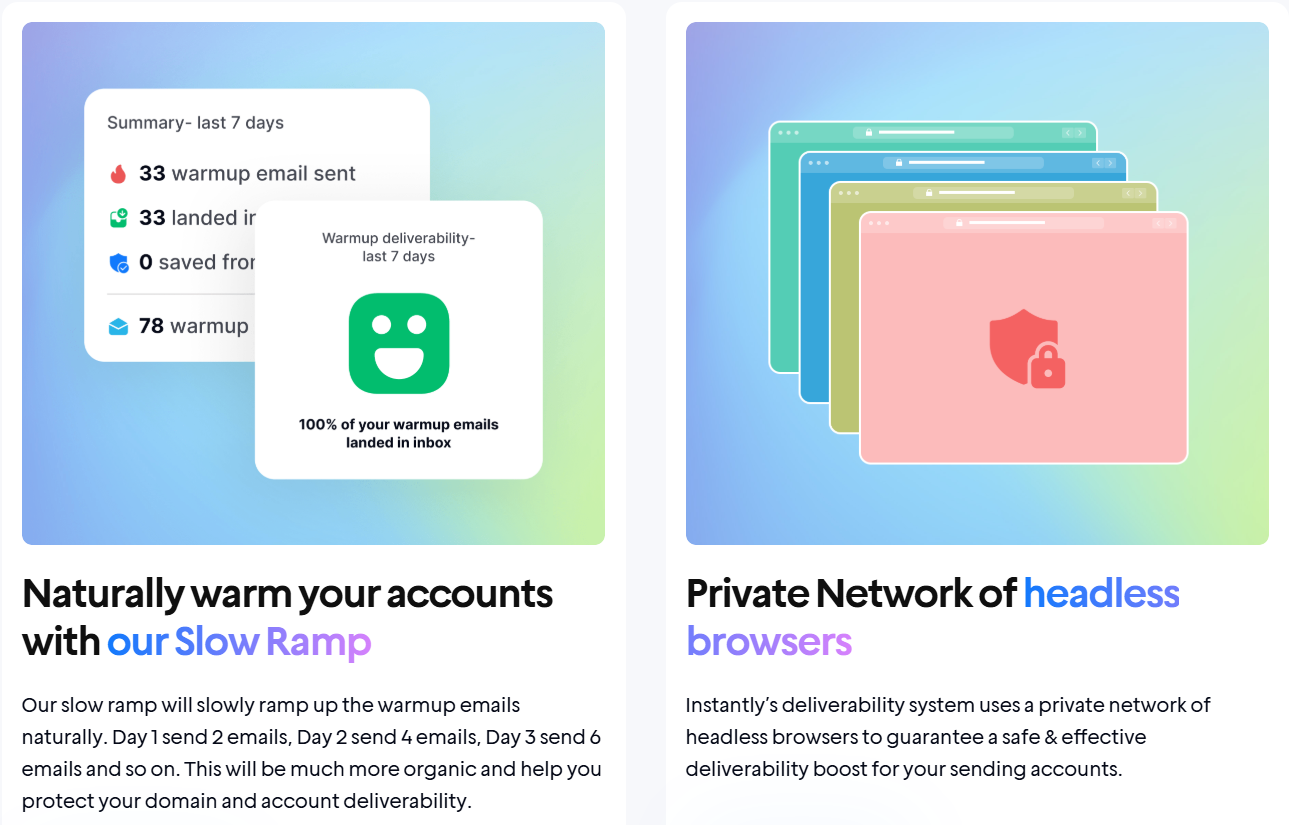
When warmup is done, don’t stop warming up accounts. Some do 20 warmups and 30 cold emails per inbox. Others choose a more conservative route and go for 10 outreach emails and 40 warmups. The best way to know which one works best for you is to test metrics yourself.
Monitor Key Email Metrics
There are three key email metrics to look into if you want to be objective with your cold email campaigns: Open, Click, and Reply rates. The most important of these will be your reply rates. However, there are other key metrics you must considered such as the following:
- Bounce rates: Keep bounces below 3% across any campaign.
- Inbox placement tests: Shows the percentage of emails in the inbox, spam, or promotions.
- Spam filter score: Should be as low as possible; any score above five is an issue.
- Blacklist reports: Monitors your IPs and domains against 94 email blacklists.
- Email Placement: Detailed deliverability information per sending account
Instantly has all of these built directly into the platform. We have all the tools small businesses need to scale sending volume while keeping deliverability and conversion rates high. More importantly, users get all the features needed to fix deliverability issues asap once they surface.
Fixing Poor-Performing Campaigns
If you don’t have a dedicated email stack for monitoring and managing deliverability and campaign performance, fixing poorly performing campaigns gets complicated.
To help keep you on the right track, here’s how to identify and fix the issues of poor-performing email campaigns.
Very Low Open Rates (under 30%)
When almost no one is opening your emails, the problem usually starts before the message itself. This is often a sign of deliverability issues or subject lines that are not compelling enough to earn a click. Try adjusting things like:
- Confirm SPF, DKIM, and DMARC are set up correctly and that warmups are running on all sending accounts.
- Reduce your daily sending volume for a few days so your domains can rebuild a healthier reputation.
- Test 2-3 new subject lines that are short, specific, and natural instead of generic or clickbait.
Decent Opens, Very Few Replies
If people are opening but not replying, your emails are getting seen but not sparking interest. That usually means your intro, offer, or CTA is not connecting with what they care about. You can improve this by:
- Rewriting your intros to be more personal using {{custom variables}} and a clear reason you chose to reach out.
- Leading with a simple outcome you help achieve instead of a long paragraph about your company.
- Using softer CTAs like “Would you be open to a quick chat?” or “Is this worth exploring for {{company}}?” instead of pushing for a big commitment.
High Bounce Rates
A high bounce rate is almost always a list quality problem. It means too many of the addresses you are emailing are invalid, outdated, or never should have been on your list in the first place. To get back on track:
- Pause sending to that list to avoid damaging your domain reputation further.
- Run your contacts through an email verification tool and remove any that come back invalid or risky.
- Rebuild your list using verified, targeted leads that match your ideal role, industry, and company size.
High Unsubscribe or Spam Complaints
When people unsubscribe or mark you as spam, they are telling you the outreach feels irrelevant or too pushy. This is less about volume and more about fit and tone. You can reduce this by:
- Tightening your targeting so you only email people who are likely to benefit from what you offer.
- Making your messaging more educational and less aggressive, with a focus on helping rather than “closing.”
- Clearly explaining why you are reaching out and always including an easy way to opt out.
Key Takeaways
Email marketing is the fastest and most cost-effective way for small businesses to grow. To make the most out of every campaign, have the right email stack with you. This includes alternate domains, sending platforms, warmups, lead finders, and deliverability monitoring.
If you want everything in one platform, there’s no better tool on the market for cold email than Instantly. Start sending at scale for free today.


