


Updated March 30, 2026
TL;DR: Open rates are unreliable in 2026 because Apple Mail accounts for 49.29% of opens and preloads tracking pixels automatically. The metrics that matter are primary inbox placement,reply rates (5-10% is good, 10-15% is excellent), and cost-per-meeting.Cold email delivers $152.73 per meetingversus $2,777.78 for calling. To hit these numbers, you need SPF/DKIM/DMARC, a2-4 week warmup period, andsend caps under 100 per inbox daily. This guide provides industry-segmented benchmarks so you can audit your team against 2026 standards.
If you are aiming for a 20% open rate in 2026, you are already behind. The top performers see 60%+ opens because they treat deliverability as a system, not a setting. When your CFO asks for cost-per-meeting analysis and your CRM conflicts with your email tool, you need benchmarks grounded in B2B sales reality, not marketing newsletter stats.
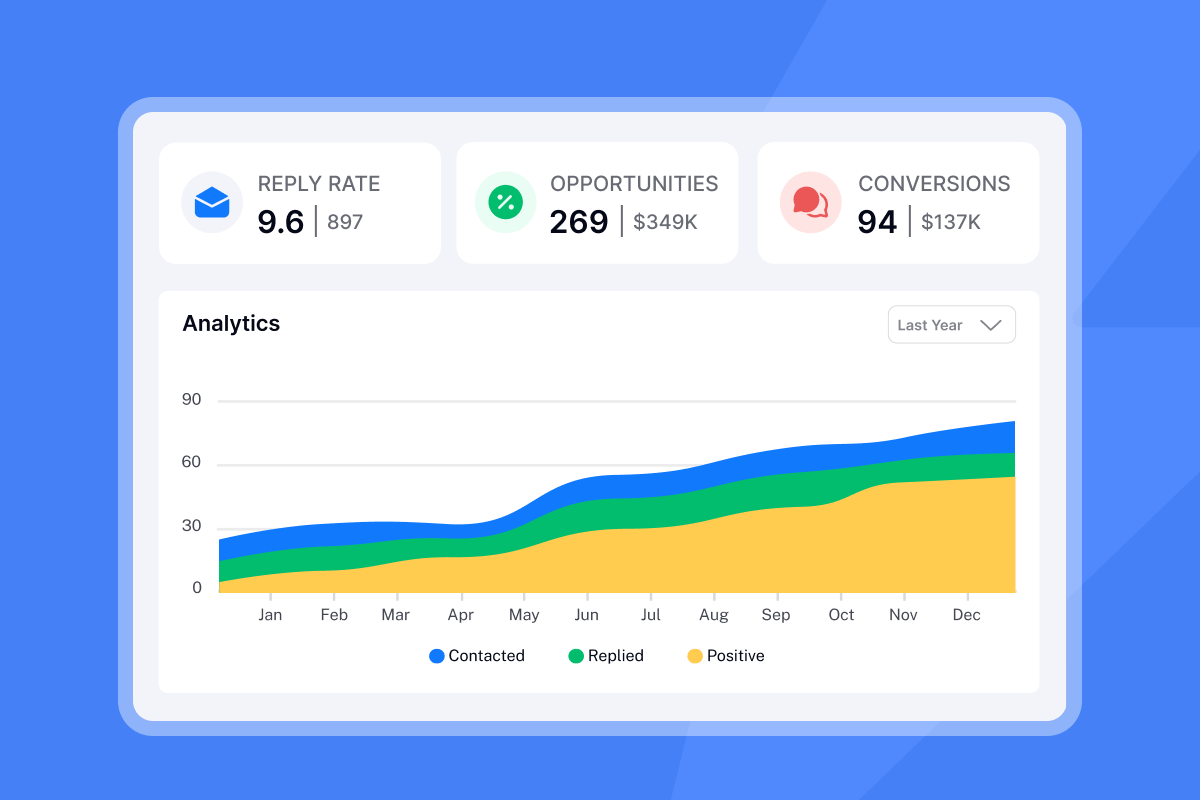
The state of cold email in 2026: Why rates are declining
The macro trend is clear. Stricter spam filters, AI inboxes, and pixel blocking have changed the game. Gmail, Yahoo, and Microsoft now reject messages lacking SPF, DKIM, and DMARC insteadof simply filtering to spam. Apple Mail accounts for 49.29% of email opens and preloads tracking pixels automatically, creating "opens" that never happened.Open rates have nearly doubled due tothis technical change, making them unreliable as a performance metric.
Marketing benchmarks from Mailchimp or HubSpot track newsletter engagement such as clicks and unsubscribes. B2B cold email tracks replies and meetings. Using marketing stats to measure sales performance is like using a speedometer to measure distance.
"Instantly has been a game-changer for our cold email campaigns. We're launching an intensive outreach campaign, and the platform makes it incredibly easy to manage multiple email accounts, warm them up properly, and track performance across campaigns." - Natalie on Trustpilot
The shift is structural. If your team is still celebrating vanity opens, you are measuring the wrong thing. Our cold email deliverability guide on YouTubewalks through thetechnical changes and how to adapt your infrastructure.
Cold email open rate benchmarks: The reality check
The average B2B cold email open rate is 44% across all campaigns in 2026.Good performance is 40-60%, whiletop campaigns achieve 65%+. In 2025, the average sat around 39%, with recruiting and energy sectors nearly doubling SaaS and IT services.
Industry Open Rate Benchmarks (2026)
Industry | Average Open Rate | Notes |
|---|---|---|
Religious Organizations | Highest documented average | |
Nonprofits | Mission-driven messaging performs well | |
Energy Management | Technical relevance drives opens | |
B2B SaaS | Crowded inboxes reduce visibility | |
Financial Services | Aggressive spam filtering |
"Deliverability tools that actually move the needle: warmup, inbox rotation, and smart sending windows help us land in Primary instead of Promotions/Spam." - Anthony V. on G2
Subject line length matters. Our analysis shows thatsubject lines between 6-10 words perform best. Mobile screens typically display 30-43 characters, cutting off after 6-9 words. Test your audience. Instantly's A/Z testing feature lets you run subject line variants to find what works for your list.
The takeaway is simple. Stop optimizing for opens. Optimize for replies. Opens are a lagging indicator of inbox placement, not engagement. If your open rate is high but reply rate is low, you are landing in Promotions or your copy is weak.
Average reply rate benchmarks by industry (2026)
Reply rate is the percentage of recipients who respond to your email. This is different from marketing's "response rate," which often counts clicks. For B2B sales, a good cold email reply rate is 5-10%.Top performers hit 15%+ on focused, well-timed campaignswith verified contacts and strong inbox placement.
Our analysis of Instantly's 2026 benchmark report found thatelite cold email campaigns exceed a 10%reply rate, top quartile achieve 5.5% reply rates, and the average reply rate is 3.43%.
Reply Rate Benchmarks by Industry (2026)
Industry | Average Reply Rate | Source |
|---|---|---|
Nonprofit/Religious | Mission-driven messaging | |
Entry-Level Professionals | Career-focused recipients | |
E-Learning/EdTech | Education sector engagement | |
General B2B | Standard cold outreach |
Nonprofit organizations and religious institutions lead with reply rates exceeding 16.5%. Their success often stems from mission-driven messagingand less crowded inboxes. Entry-level professionals see an 8% average reply rate with a 50% open rate.
Personalization drives these numbers. Highly personalized campaigns (using multiple custom fields) boost replies by 142% compared to generic blasts. Only 5% of senders personalize every email, and those who do get 2-3X better results.
Spintax is the technical enabler. Spintax creates structured copy variations for uniqueness, making every campaign email unique. This helps avoid spam filters that flag identical messages sent to multiple recipients.
"I like that instantly can handle large scale email campaigns without worrying about deliverability. the automation for inbox rotation, warm up and sending limits makes outreach very smooth and saves a lot of manual work." - Anjali T. on G2
The math is simple. If you send 1,000 emails at a 5% reply rate, you get 50 replies. If you send 1,000 emails at a 10% reply rate, you get 100 replies. Same volume, double the output. Reply rate is the lever. Our cold email strategy guide walks through the technical and copy tactics to improve this metric.
Cost-per-meeting and ROI targets
Cost-per-meeting is total campaign costs (software + data + labor) divided by meetings booked. This is the metric your CFO cares about.Cold email delivers 18x lower costper meeting ($152.73 vs $2,777.78) and 10x higher ROI than cold calling.
The formula is straightforward:
Cost-Per-Meeting = (Software Cost + Data Cost + Rep Time) / Meetings Booked
Benchmark Ranges by Market Segment
Market Segment | ACV Range | Cost-Per-Meeting Target |
|---|---|---|
SMB | <$25K | <$150 |
Mid-Market | $25K-$100K | <$250 |
Enterprise | >$100K | <$350 |
The structural advantage of flat-fee pricing becomes clear at scale. Most sales engagement platforms charge per seat, increasing costswith headcount. Instantly offers flat monthly pricing with unlimited sending accounts, allowing sales leaders to scale outreach withpredictable costs.
Compare the economics.A 10-rep team using a per-seat tool at $120 per user per month costs about $1,200 monthly. Instantly's Growth plan costs $47 per month and covers unlimited emailaccounts. The cost advantage compounds as you scale.
"As a non-technical person, it is so easy to setup cold email campaign, the people at instantly the do a full done-for-you email box setup so u dont have to worry about SPF, DKIM, DMARC all that jazz." - Haris on Trustpilot
Watch our cold outreach masterclass for a full ROI breakdown and scaling playbook.
Inbox placement and deliverability benchmarks
You cannot get replies if you land in spam. Inbox placement is the foundational metric.Target a bounce rate under2%. Anything below 2% is considered normal, with under 1% being ideal. Bounces above 5% signal serious list quality problems.
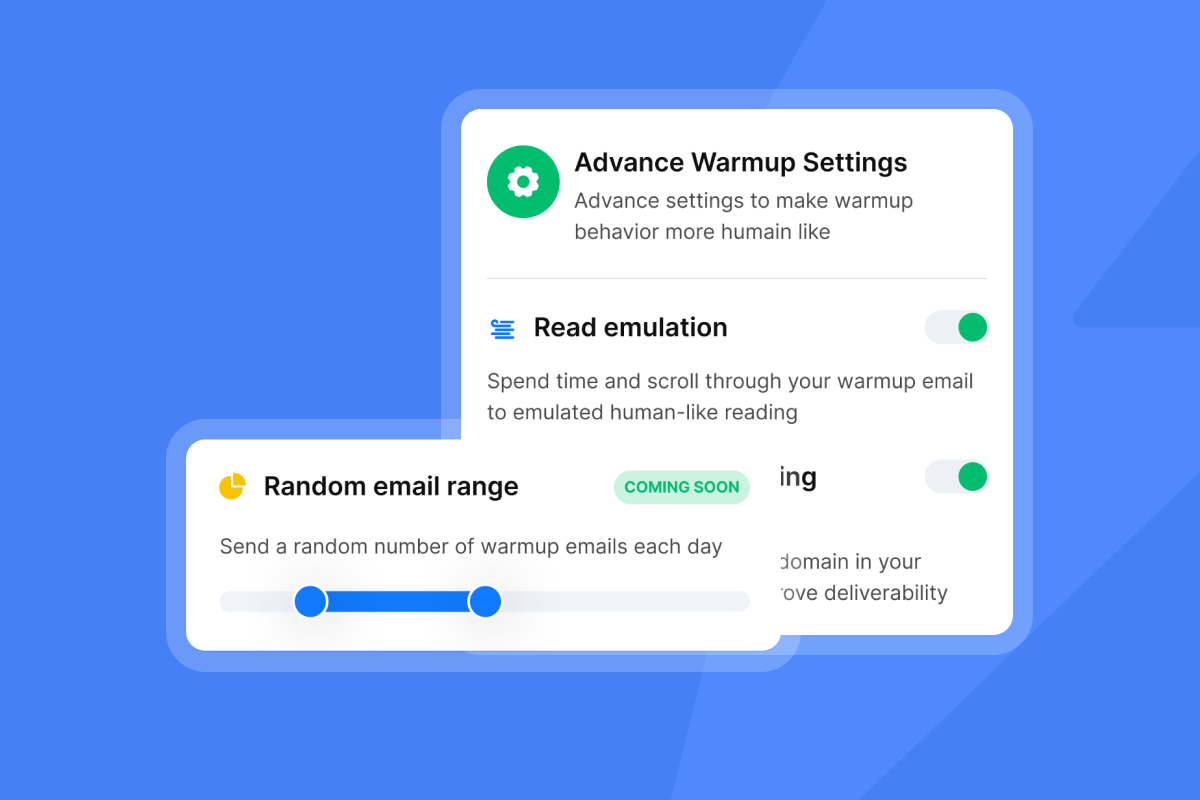
Emailwarmup is the driver of this benchmark. Email warmup improves the reputation of new or inactive email accounts through graduallyincreasing send volume, positive engagement signals (opens, replies), and interaction with high-reputation inboxes. Proper warmup takes 2-4 weeks minimum.
The key activities include:
- Send warmup emails from your accounts to a private network of high-reputation B2B inboxes
- Simulate positive engagement: opens, replies, marking as important, removing from spam
- Gradually increase volume from 5-10 emails per day to 20-30 by week four
Instantly's Warmup Inbox builds sender reputation gradually witha network of 4.2M+ high-reputation accountsand shows you health scores in real time.
"Super easyto use and quick to launch campaigns. Inbox warm-up, rotation, andanalytics are all built in, which saves a ton of time. Deliverability has been solid and reply rates improved pretty quickly with homeowners." - Jonalodie M. on G2
Technical setup is non-negotiable. SPF verifies that the email comes from an authorized server with an IP address listed inthe domain's SPF record. DKIM digitally signs important elements to ensure the message remains unaltered. DMARC tells receiving servers what to do after checking SPF and DKIM.
Our SPF, DMARC, and DKIM setup guide walks through the exact DNS records for Google Workspace and Microsoft 365. Our IP rotation andsending algorithms help article explains how we distribute sends to avoid fingerprinting.
Sequence structure benchmarks: Length, timing, and follow-ups
Most high-performing sequences use 4 to 7 emails over 14-21 days. Our research found that 58% of replies arrive on Step 1, which is why we recommend at least 4emails per campaign to capture the remaining 42%.
The best practice is 3 emails total perprospect: 1 initial email,1 follow-up after 3 days, and 1 follow-up 6-7 daysafter the first follow-up. After that, stop and wait 2-3 months before re-engaging.The optimal timing between follow-ups starts with 2-3 days for the first follow-up,extending to 4-7 days for later emails.
Sequence Timing Benchmarks
Sequence Element | Benchmark Range | Notes |
|---|---|---|
Total emails | Most replies come in first 4 steps | |
First follow-up | Balance persistence and patience | |
Later follow-ups | Longer intervals reduce friction |
The best days to send vary by audience. Thursday mornings between 9 to 11 a.m. had the highest open rate at 44.0%,followed closely by Tuesday mornings. Test your specific audience to find optimal windows.
Send windows matter.Set the send window to 8:30 to 10:30 a.m. local time. This mimics human behavior and increasesthe chance your email is near the top of theinbox. Instantly's campaign options let you configure send windows by timezone.
"The automation of outreach and centralized inbox management means that I can handle multiple domains, track performance in real time, and manage warm-up processes efficiently... helped us boost reply rates rapidly." - Nathan D. on G2
Watch our follow-up strategy video for the exact templates and timing we use to get 5%+ reply rates. Our cold email script for 2025 shows the structure that works in the current deliverability environment.
How to beat the benchmarks: A 4-step audit
Most teams fail at benchmarks because they skip the technical foundation. Here is the four-step audit to fix your system.
1. Fix technical setup
Verify your SPF, DKIM, and DMARC records are configured correctly. Gmail, Yahoo, and Microsoft now reject non-compliant messages outright. Use MXToolbox or Google's Email Header Analyzer to check your records. Our technical setup guide has the exact DNS entries.
Set up domain forwarding and custom trackingdomains. Fingerprinting can affect deliverability when sending high volume. Using secondary sendingdomains spreads the load. Our secondary domainstrategy guide shows how to implement this.
2. Scale volume safely
The safe limit is about 100 cold emails per day perwarmed inbox.Start much lower (20-30 per day) on new domains. To scale beyond 100daily sends, use multiple warmed addresses across different domains.
Google Workspaceallows up to 2,000 emails daily, while Office 365 permits 10,000recipients, but cold outreach should stay under 100 per inbox to protect deliverability. Instantly's sending algorithm distributes sends across your send window to avoid spikes that trigger filters.
3. Clean your data
Use verified contacts only. Bouncesabove 2% signal list quality problems. Run your listthrough an email verification service before upload. Remove role addresses (info@, sales@, admin@) and catch-all domains that often bounce.
Instantly's SuperSearch provides access to 450M+ verified B2B contactswith email verification built in. Our B2B lead finder lets you build targeted lists by role, company size, industry, and technology stack, reducing bounce rates and improving reply rates.
Segment your campaigns. One campaign for cold prospects, another for warmer referrals. Different segments require different messaging and timing. Our 600+ email templates cover use cases from lead generation to follow-ups.
4. Reconcile analytics
Verify your email tool data matches CRM data. Set up webhook integrations to push replies and positives into your CRM automatically, eliminating manual reconciliation.
Track the metrics that matter: bounce rate (target <2%), reply rate (target 5-10%), meetings booked, and cost-per-meeting. Ignore open rate unless diagnosing inbox placement issues. One G2 user noted:
"The most helpful part is the detailed reporting. It shows clear data like open rates, replies, and bounce rates, which I can easily use for analysis and integrate with other BI dashboards." - Anjali T. on G2
Review performance weekly.If bounce rate spikes above 2%, stop sending and clean your list. Our low open rate troubleshooting guide walks through diagnostic steps.
Watch our 1 million cold emails study to see what actually works. Our 10 years of cold email advice video condenses a decade of lessons into 41 minutes.
Ready to see where your team stands? Try Instantly free and use built-in warmup, health monitoring, and analytics to measure your performance against 2026 benchmarks. Our cold email strategy documentation walks you through exact setup, and our email outreach plans scale from first campaign to enterprise volume.
Frequently asked questions about email benchmarks
What is a good cold email open rate in 2026?
A good open rate for B2B cold email is 40-60%, with top performers achieving 65%+. However, open rates are less reliable due to Apple MPP and should be treated as a secondary metric behind reply rate.
What is the difference between reply rate and click rate?
Reply rate measures the percentage of recipients who respond to your email with a message. Click rate (used in marketing emails) measures the percentage who click a link. For B2B sales, reply rate is the relevant metric.
How does subject line length affect open rates?
Subject lines between 6-10 words perform best. Mobile screens typically display 30-43 characters, cutting off after 6-9 words. Test your audience to find optimal length.
What is a good bounce rate limit for cold email?
Target a bounce rate under 2%. Anything below 2% is considered normal, with under 1% being ideal.Bounces above 5% will damage your sender reputationand should trigger an immediate pause.
Key terms glossary
Primary Inbox: The main, default inbox tab in services like Gmail (as opposed to Promotions, Social, or Spam folders). Landing in Gmail's Primary Inbox instead of Promotions improves your email open rate dramatically.
Spintax: A syntax that rotates words or phrases to create unique email variations and avoid spam filters. Structured copy variations for uniqueness.
Reply Rate: The percentage of email recipients who respond with a message. For B2B sales, 5-10% is solid performance.
Warmup: A process that improves the reputation of new or inactive email accounts to increase deliverability through gradually increasing send volume and positive engagement signals.


