


Updated February 01, 2026
TL;DR: If you stop after one cold email, you leave 42% of potential replies on the table. Analysis of billions of emails shows the first message captures only 58% of all replies, while follow-ups generate the rest. Campaigns with 4-7 emails achieve reply rates three times higher than 1-3 email sequences. Silence does not mean "no," it usually means "busy." Set up a 3-4 step sequence with 2-3 day spacing after the first send, then 3-5 days between subsequent touches, and let automation handle the persistence.
Your reps send a cold email. No reply. They move on.
That single decision costs you 42% of your potential pipeline. Analysis tracked throughout 2025 proves that while the first email captures 58% of replies, follow-ups generate the remaining 42%. Yet 44% of salespeople give up after just one follow-up, even though 80% of sales require five or more touches after the initial contact.
This is not a motivation problem. It is a systems problem. Your team needs automated persistence, not pep talks.
The data-backed case for sending follow-up emails
When Belkins analyzed 16.5 million cold emails, they found that while single emails achieved the highest individual reply rate at 8.4%, campaigns with systematic follow-ups generated dramatically more total responses. The first follow-up alone increased overall replies by up to 49% in high-performing campaigns, and in the top 20% of sequences, responses doubled after the first nudge.
We can see the math clearly. A single email is a lottery ticket. A sequence is a business strategy.
| Metric | Single-Email Campaign | Multi-Touch Sequence (4-7 emails) | Performance Gap |
|---|---|---|---|
| Average reply rate | 8.4% | 27% | 3.2x higher |
| Replies captured from first email | 58% | 58% (email 1 only) | Baseline |
| Additional replies from follow-ups | 0% | 42% | Left on table without follow-ups |
| First follow-up impact | N/A | +49% total replies | Highest ROI touch |
Research tracking over 20 million sales emails confirms that campaigns with 4-7 emails achieve a 27% reply rate, compared to just 9% for sequences with 1-3 emails. The same research shows the fourth email in a sequence still generates meaningful replies, though diminishing returns kick in hard after that point.
Here is what follow-ups actually do. They keep your solution visible during the chaotic window when buyers are gathering information, juggling priorities, and managing a dozen other fires. Business professionals receive 121 emails per day on average, and your first message competes with 120 others for attention. A well-timed follow-up catches prospects when they have bandwidth to engage.
The value proposition is simple. Follow-ups increase your surface area with prospects during the evaluation phase. They demonstrate reliability. They create multiple decision windows instead of one.
The psychology of professional persistence
Prospects stay silent for dozens of reasons that have nothing to do with interest. They saw your email during a meeting and meant to reply later. They forwarded it to a colleague for input. They opened it on mobile and forgot to follow up at their desk. Research shows that busy executives often accumulate thousands of unread messages.
Treat silence as a logistics issue, not a rejection.
Professional persistence works because it aligns with how B2B buyers actually behave. The psychological principle called the mere exposure effect shows that people develop more favorable views of things they encounter repeatedly, and applied to marketing, repeated exposure creates familiarity and reduces perceived risk.
Consistent follow-ups demonstrate the same attention to detail and reliability that buyers want in a vendor. If you give up after one email, what does that signal about your follow-through after the sale?
Optimal timing and frequency for B2B follow-ups
The 48-hour trap kills more campaigns than bad copy. Sending a follow-up 12 or 24 hours after your initial email signals desperation and violates professional communication norms. Prospects notice the lack of patience, and email providers notice the aggressive send pattern. Both hurt you.
Industry research analyzing millions of cold emails found that waiting 3 days before the first follow-up can increase reply rates by 31% compared to next-day follow-ups. The ideal timeframe for B2B cold email follow-ups is 3-7 business days, enough time for the initial message to sink in without becoming irrelevant.
Recommended cadence for cold outreach:
- Day 1: Initial email
- Day 4: First follow-up (wait 72 hours minimum)
- Day 8-9: Second follow-up (4-day gap)
- Day 14-15: Third follow-up (5-6 day gap)
If you are new to cold email, the simplest rule is to wait three business days between each touch.
Context matters. Post-demo follow-ups operate on a faster clock. If a prospect attended your demo, follow up within 24-48 hours with the promised deck or next steps, then shift to a 3-5 day cadence for subsequent nudges.
The same benchmark data shows Thursday pulls the highest reply rate at 6.87%, with Wednesday and Tuesday as strong contenders. Monday lags at just 5.29%. Schedule your follow-ups to land mid-week when attention is higher and inboxes are less chaotic.
For a detailed walkthrough of follow-up timing and cadence strategy, watch this video on best cold mail follow up strategies:
How to automate follow-ups without sounding robotic
Manual follow-ups fail because humans forget, hesitate, and get busy. Automation removes the emotional friction that kills persistence.
Instantly solves this with campaign sequences that stop automatically when a prospect replies, preventing the embarrassing scenario where a follow-up lands after someone already responded. The platform makes it easy to add as many follow-up steps as you need, though we recommend a maximum of 3-4 steps for most cold outreach campaigns to balance persistence with deliverability.
"I love how simple Instantly is to use... The ability to schedule emails at specific times and zones is incredibly convenient, especially for cold outreach in multiple regions... the analytics provided by Instantly extremely valuable as they lead to a well-informed follow-up strategy." - Verified User on G2
Setting up a smart sequence:
- Create your campaign in the Campaign Builder and write your first email.
- Add follow-up steps by clicking "Add step" and setting the delay (we recommend 3 days, then 4 days, then 5-6 days).
- Enable threading so each follow-up appears as a reply to the previous message, maintaining context in a single thread.
- Configure stop-on-reply in campaign options to pause the sequence when a prospect responds.
- Set send windows to control when emails go out, respecting time zones and business hours.
Personalization at scale keeps automation from feeling robotic. Use variables like {{firstName}} and {{companyName}} in your follow-ups so they feel handwritten. Custom variables let you pull in any data from your list, from job titles to recent company news.
Spintax adds another layer of variation. By generating multiple versions of your text with randomized alternatives, Spintax helps prevent emails from being flagged as spam and improves deliverability. An example: {{RANDOM |Hi | Hello | Hey}} {{firstName}}, I'd love to {{RANDOM |learn | hear | find out}} more about how you {{RANDOM|handle | manage | deal with}} outbound at {{companyName}}. Each prospect receives a unique variation.
"Deliverability tools that actually move the needle: warmup, inbox rotation, and smart sending windows help us land in Primary instead of Promotions/Spam. Intuitive campaign builder: setting up multistep sequences with conditional logic is fast, even for non-tech teammates." - Anthony V on G2
The Unibox feature consolidates all replies from your sequences into one unified inbox, even if you send from hundreds of accounts. This means no more context-switching between mailboxes to track conversations.
For a step-by-step setup guide, check out this perfect campaign guide:
Common follow-up mistakes that kill deals
The "just checking in" error: These three words add zero value and actively annoy prospects. "Just checking in!" or "Bumping this to the top of your inbox!" emails show zero effort and provide zero value. They are easy to ignore and sometimes trigger unsubscribes.
Instead, every follow-up should add something new: a short case study, a link to a relevant article, a mention of a recent company trigger event, or a different resource angle (webinar instead of a demo).
Breaking the thread: When you change the subject line or send a completely new email instead of replying, you force prospects to rebuild context. Threading keeps all your interactions in one conversation, making it easy for prospects to see your full value proposition and reducing cognitive load.
Aggression and over-persistence: While professional follow-ups build trust, crossing the line into harassment destroys it. Industry data shows that excessive follow-ups significantly increase unsubscribe and spam complaint rates. Respect the cadence, add value each time, and know when to send a polite break-up email.
The cost of no follow-ups
Let me show you the real math. If your team sends 2,000 cold emails monthly with no follow-ups, you might generate 100-150 replies depending on list quality and targeting. Add three well-timed follow-ups, and the same 2,000-email investment can generate 180-250 replies, an 80-100% increase with zero additional list-building effort.
The gap is your follow-up tax. You already built the list, wrote the copy, set up the domains, and warmed the accounts. Follow-ups cost you nothing except the discipline to set up the system once.
"The platform allows me to efficiently get in touch with hundreds, if not thousands, of business owners daily... It simplifies the process... automatically integrating these steps with their records in the account. This eliminates the need for manual intervention, saving me significant hours." - Thomas D on G2
The alternative is leaving half your pipeline on the table because your reps feel awkward or forget to follow up. Fix the system, not the people.
How Instantly turns persistence into process
We give you unlimited email accounts on a flat fee so you can scale follow-up sequences without hitting send caps or paying per-seat penalties. Spin up as many inboxes as you need, rotate them across campaigns, and let automation handle the persistence while you focus on live conversations.
The built-in warmup feature protects deliverability by gradually increasing send volume and engaging with our 4.2M+ account deliverability network. This keeps your follow-ups landing in the primary inbox instead of spam, where they are worthless.
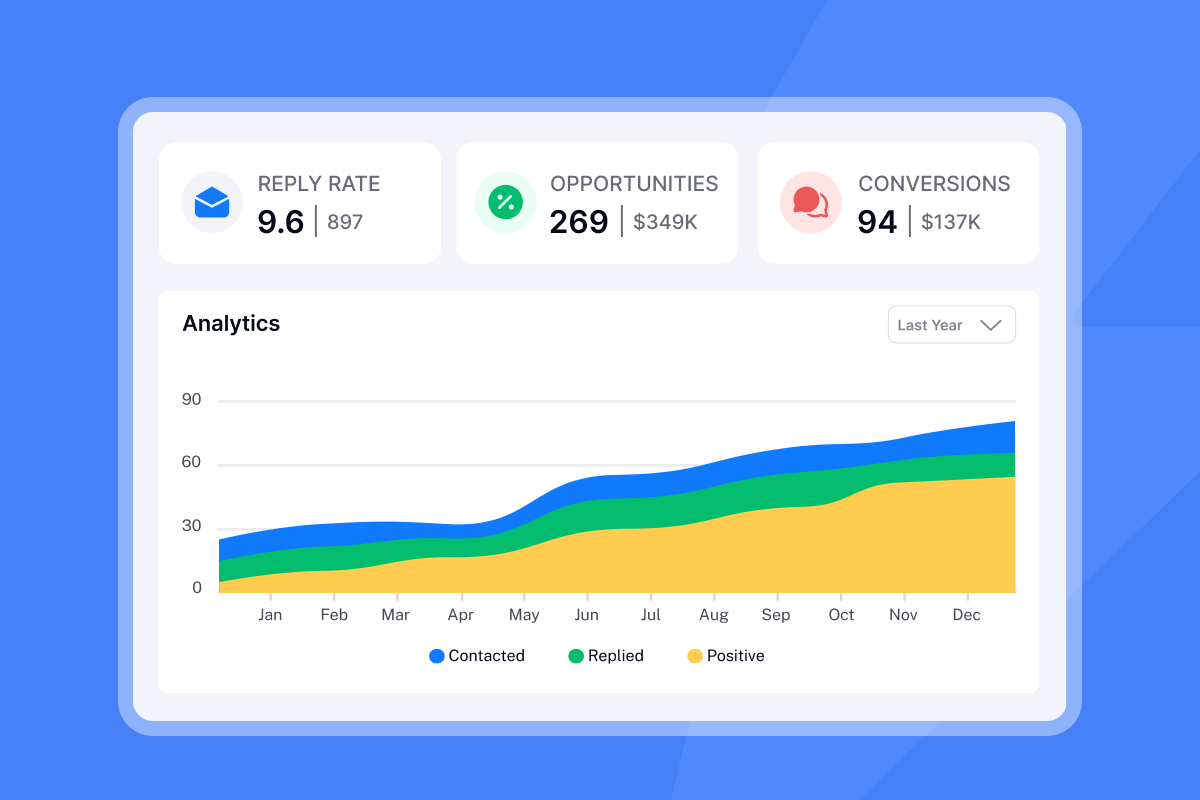
Campaign analytics show you exactly which follow-up steps generate replies, so you can optimize cadence and copy based on real performance data. Track open rates, reply rates, and step-by-step conversion to prove ROI and refine your sequences.
"Instantly has been a game-changer for our outbound. The inbox management is clean, the sending setup is straightforward, and scaling campaigns feels smooth. Great deliverability tools, great UX, and it just works." - Jesse on Trustpilot
For teams managing multiple clients or campaigns, inbox rotation distributes follow-ups across accounts to protect sender reputation and increase throughput. The platform handles the complexity so your ops stay simple.
Follow-ups are not optional. They capture 42% of potential replies that single emails leave on the table, triple your reply rates when executed systematically, and prove to buyers that you are reliable enough to trust. The difference between ad-hoc persistence and automated sequences is the difference between hoping your reps remember and knowing your system executes. Set up your first automated follow-up sequence, measure the lift in meetings booked, and let the data prove what discipline can do for your pipeline.
Ready to stop leaving pipeline on the table? Try Instantly free and build your first automated follow-up sequence in under 10 minutes. Use the 3-step template (Day 1, Day 4, Day 8) and let data prove what persistence can do for your meetings booked.
Frequently asked questions
Should you always send follow-up emails in B2B cold outreach?
Yes. Research shows 42% of replies come from follow-ups, and campaigns with 4-7 emails achieve reply rates 3x higher than 1-3 email sequences.
How many follow-ups should you send before giving up?
3-4 follow-ups is optimal for cold outreach based on industry data showing diminishing returns after the fourth touch. Send a break-up email as your final touch.
What is the best time gap between cold email follow-ups?
Wait 3 days minimum before your first follow-up, then 4-5 days between subsequent touches. Sending within 24 hours signals desperation and hurts reply rates.
Do follow-up emails hurt deliverability or increase spam complaints?
Properly spaced follow-ups with value-adding content do not hurt deliverability. However, excessive follow-ups can increase spam complaints, so limit sequences to 3-4 steps and respect opt-outs.
How do you keep automated follow-ups from sounding robotic?
Use personalization variables like firstName and companyName, add Spintax for variation, enable threading to maintain context, and ensure each follow-up adds new value instead of repeating the first email.
Key terms glossary
Sequence: A pre-written series of automated emails sent based on specific timing, where each step triggers after a set delay unless the prospect replies.
Threading: Setting up your sequence so each email sends as a reply to the previous message with the same subject line, providing conversation context in one thread.
Break-up email: A final follow-up where you politely say goodbye to the prospect, often creating urgency through loss aversion and removing pressure simultaneously.
Reply rate: The percentage of unique recipients who responded to any message in your sequence, excluding auto-replies and bounces.
Spintax: A method of creating multiple text variations using randomized alternatives (e.g., {{RANDOM |Hi | Hello | Hey}}) to improve deliverability and prevent spam flags.


