


Updated January 16, 2026
TL;DR: Running outsourced sales for 15+ clients without a unified inbox means missed replies, burned domains, and margin erosion from per-seat pricing. B2B sales outsourcing requires systematic lead generation, appointment setting, and reply management at scale. Our Unified Inbox gives you a single command center to manage replies from 100+ email accounts across separate client workspaces, combined with unlimited sending accounts on flat-fee pricing. The result is faster reply triage, protected sender reputation, and predictable cost per meeting instead of compounding per-seat costs.
Managing one client campaign is straightforward. You open Gmail, check replies, mark interested leads, and book meetings each week.
Managing 15 campaigns simultaneously is chaos. You toggle between 60 Gmail tabs across different Google Workspaces, miss hot replies, and watch deals vanish because you responded three days late instead of three hours.
Tab fatigue causes agencies to miss an average of two qualified meetings per week when replies get lost across dozens of open browser tabs. The physical act of logging into different workspaces and manually triaging replies burns 3.5 hours daily. At $75 per hour, that is $262.50 in daily labor cost. Over a month, $5,775 vanishes into manual inbox management.
Running outsourced sales at scale requires military-grade organization. You need a command center that centralizes replies, monitors deliverability, and scales volume without context switching all day.
What is B2B and B2C sales outsourcing?
Sales outsourcing means delegating sales functions to a third-party agency or specialist team. This strategic partnership gives businesses access to external expertise and resources to handle sales activities from prospecting through closing. The primary goal is to enhance sales efficiency, reduce costs, and accelerate business growth.
Inside sales representatives sell products remotely using email, phone, and video conferencing rather than meeting clients face-to-face. This remote-first model has become the standard in B2B and technology sectors. Inside sales teams rely heavily on CRM systems, email automation, and video conferencing to manage interactions and close deals.
SDRs and BDRs focus primarily on lead generation and qualification, though many inside sales professionals handle the entire cycle from prospecting to closing.
Key benefits of sales outsourcing for scaling agencies
You gain speed to market first. When you outsource sales operations, you bypass the months required to hire, train, and ramp an in-house team. An outsourced SDR team can be prospecting and booking meetings within weeks.
Cost efficiency follows directly. Building an internal sales team means salaries, benefits, office space, technology stack, and ongoing training. Outsourcing converts fixed costs into variable costs that scale with results.
Agencies running multiple client campaigns avoid the compounding expense of hiring new reps for each client. This model allows companies to focus internal resources on closing deals while the agency handles pipeline generation.
For agencies managing outsourced campaigns, flat-fee platforms with unlimited email accounts become critical infrastructure. Per-seat pricing models punish growth because every new client inbox adds recurring cost. We eliminate that friction with unlimited sending accounts and warmup on every plan, meaning your cost per client remains predictable as you scale from 10 to 100+ inboxes.
The operational advantage compounds when you pair unlimited accounts with centralized reply management. We let you manage everything from one unified dashboard instead of logging into 15 different Gmail inboxes. This cuts reply triage time by 60 to 70 percent and prevents the missed-reply leakage that kills conversion rates.
What outsourcing providers offer
Sales outsourcing providers offer services designed to support businesses at various stages of the sales funnel. These services can be customized to meet specific client needs, whether augmenting an existing team or managing the entire process.
Core services:
- Lead generation: Identifying and attracting potential customers
- Appointment setting: Scheduling qualified meetings for internal sales teams
- Cold outreach: Email and phone campaigns to generate interest
- Lead qualification: Assessing prospect fit against client criteria
- CRM management: Tracking and updating sales activities
Advanced services:
- Account-based outreach: Targeted campaigns for high-value accounts
- Market research: Gathering competitive intelligence
- Data enrichment: Enhancing lead records for better targeting
- Multi-channel campaigns: Coordinated outreach across email, phone, and social
When running these services for multiple clients simultaneously, tool sprawl kills productivity. We consolidate warmup, enrichment, sending, and reply management into one platform with SuperSearch for lead generation, built-in warmup across unlimited accounts, and a unified inbox.
For a complete setup walkthrough, watch this full tutorial covering cold email campaigns.
B2B vs. B2C sales outsourcing: A detailed comparison
B2B and B2C outsourcing require fundamentally different approaches. Understanding these distinctions helps agencies choose the right tools and workflows for each client type.
| Factor | B2B Sales Outsourcing | B2C Sales Outsourcing |
|---|---|---|
| Target Audience | Businesses, decision-makers, committees | Individual consumers |
| Sales Cycle | Longer (weeks to months) | Shorter (hours to days) |
| Deal Size | Higher ticket ($5,000 to $500,000+) | Lower ticket ($50 to $5,000) |
| Outreach Channel | Email, LinkedIn, phone | Email, SMS, social ads |
B2B sales outsourcing focuses on relationship building and consultative selling. B2B buyers spend only about 17% of their buying time with all suppliers combined, which means your outreach must land cleanly and provide immediate value. Personalization is non-negotiable because generic pitches get ignored or marked as spam.
The longer sales cycle demands sophisticated follow-up sequences. Best-performing B2B campaigns include five to seven touchpoints over 14 days, mixing educational content with social proof. Well-executed campaigns typically achieve 5 to 8 percent reply rates.
B2C sales outsourcing operates on volume and speed. Individual consumers make faster decisions with less information. Messaging focuses on benefits, urgency, and emotional triggers rather than ROI calculations. The transactional nature means higher throughput requirements but shorter sequences.
We built our platform primarily for B2B agencies because of features like AI Reply Agent for nuanced conversation handling and unlimited email accounts for scaling personalized outreach. However, our platform handles high-volume B2C outreach effectively when you target correctly and respect the 30-email-per-inbox daily limit.
For agencies managing both client types, the ability to create separate workspaces for each client keeps data partitioned for privacy while maintaining centralized operational control. Learn more about workspace management in this CRM tutorial.
How to manage multiple campaigns with a Unified Inbox
Running 15+ campaigns without a unified inbox creates three specific problems: the login shuffle, reply leakage, and inconsistent triage.
The problem: The login shuffle
Managing campaigns for 15 clients means monitoring 60 to 90 individual Gmail inboxes when each client uses four to six sending accounts. The traditional workflow requires logging into each inbox, checking replies, categorizing leads, and logging out. You repeat this process 60 times daily.
Reply leakage compounds the cost. When you check 60 inboxes manually, you miss replies. A qualified lead responds with interest, but their email sits unread for two days because it arrived in inbox 47 and you only made it to inbox 32 before a client call interrupted your workflow.
Inconsistent triage is the third killer. Different team members classify replies differently. One person marks "Tell me more" as interested. Another marks it as neutral. Your pipeline data becomes unreliable.
The solution: Our Unified Inbox
Our Unified Inbox solves these problems by creating a single command center for all replies across all campaigns and all workspaces. Instead of logging into 60 Gmail inboxes, you open one dashboard that aggregates every reply from every sending account.
The master view shows all replies from all workspaces in real time. You can toggle between viewing all campaigns simultaneously or filtering down to a specific client workspace. This flexibility lets you perform bulk triage across all clients during morning operations, then drill into individual client performance during afternoon review calls.
See all replies in one view
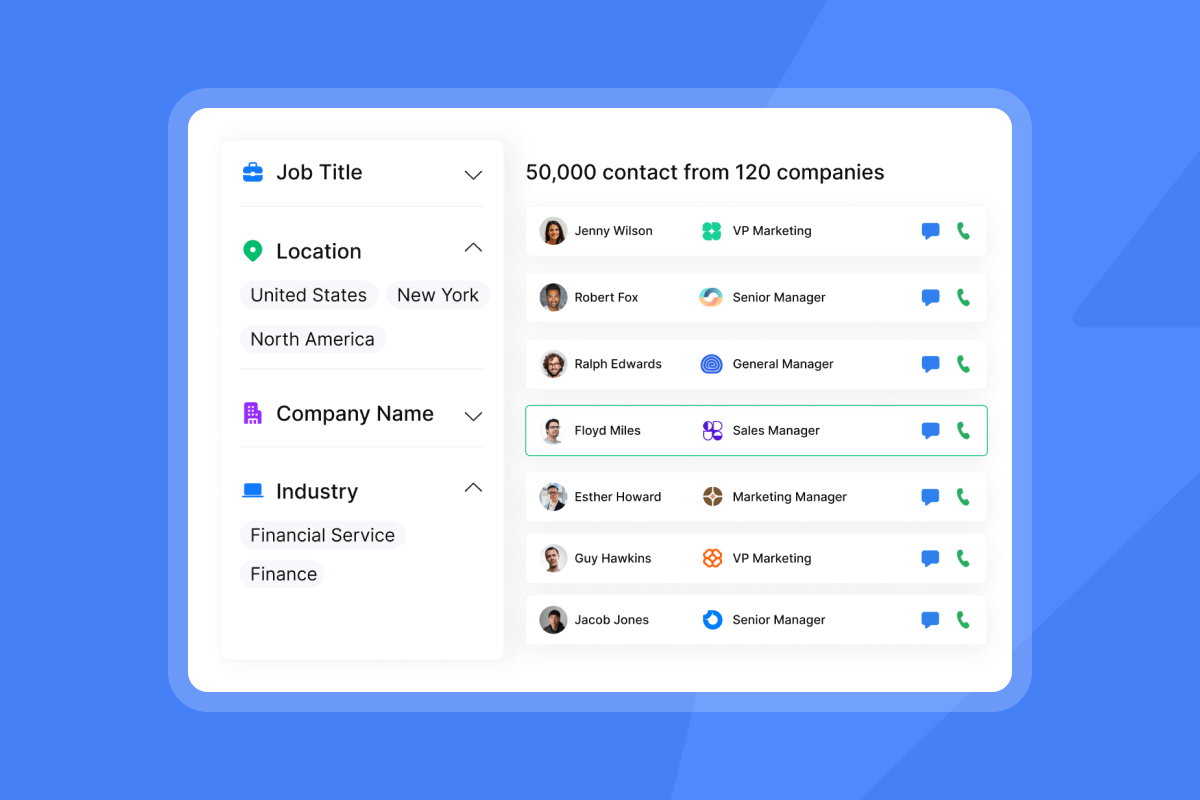
The Unibox displays replies in a unified thread view with context from the original campaign. Each reply shows the prospect's name, company, the campaign that generated the response, and the specific sequence step that triggered it.
Filtering options let you view replies by status (new, interested, meeting booked, not interested), by workspace, by campaign, or by sending account. One agency operator uses the workspace filter to prepare for client calls, reviewing all new replies in 10 minutes before joining with accurate pipeline data.
The search function works across all workspaces, letting you find specific prospects instantly. If a client asks about a particular lead, you type the company name and pull up the entire conversation history in seconds.
Learn the complete workflow in this tutorial on inbox placement and reply management.
Triage replies in under 15 minutes
We provide a classification system to triage replies quickly. The default categories are Interested, Meeting Booked, Not Interested, and Do Not Contact. You can customize these categories to match your sales process.
Keyboard shortcuts speed up triage. Press "I" to mark a lead as interested, "M" for meeting booked, "N" for not interested. Experienced operators triage 100 replies in under 15 minutes using these shortcuts.
The Do Not Contact category is critical for deliverability and compliance. When someone replies with unsubscribe language, marking them as Do Not Contact automatically prevents future emails to that address across all campaigns in all workspaces. This protects your sender reputation and ensures compliance.
Bulk actions let you process multiple replies simultaneously. Select 10 neutral replies and mark them all as not interested with one click.
For agencies that need systematic reply handling, this guide to cold email reply management covers classification frameworks that convert conversations into booked meetings.
Automate responses to common objections
Our AI Reply Agent automates responses to common objections and questions. The agent classifies incoming replies, drafts appropriate responses, and can either send automatically (Autopilot mode) or route to a human for review (Human-in-the-Loop mode).
The agent responds in under five minutes, which is critical for maintaining lead temperature. A prospect who receives an immediate, relevant answer is far more likely to continue the conversation.
You configure the agent at the campaign level by defining personality, providing context about your client's offer, specifying common objections, and setting guardrails for when to escalate to a human.
Pricing is credit-based at five credits per AI reply, giving agencies predictable cost per client regardless of reply volume. This model scales better than per-seat pricing because cost aligns with actual usage rather than team size.
Integration with Slack lets you review and approve AI-drafted replies before they send. The agent posts proposed responses to a designated Slack channel. Team members review, approve, or edit with one click. This workflow maintains quality control while reducing manual response time by 80 percent.
Watch this walkthrough showing the AI Reply Agent in action or see how to generate 200 calls per month using these workflows.
Choosing the right partner and technology stack
Evaluating an outsourced sales partner or building your own agency infrastructure requires systematic assessment across pricing, deliverability, data quality, and operational transparency.
Provider evaluation checklist
Use this checklist when vetting outsourced sales agencies or technology platforms:
- Pricing model: Is it flat-fee or per-seat? Calculate total cost at 10 clients, 25 clients, and 50 clients.
- Email account limits: Does the platform cap sending accounts? Unlimited accounts are non-negotiable for agencies scaling multiple clients.
- Deliverability infrastructure: What is the warmup process? Is placement testing automated? Does the platform offer dedicated IP pools or SISR at higher tiers?
- Lead database: Is data sourcing included? What is the waterfall enrichment process and how many providers does it use?
- Reply management: Can you manage all client replies from one dashboard? Are there keyboard shortcuts and bulk actions?
- Integration depth: Does the platform connect to your CRM (HubSpot, Salesforce)? Are integrations native or require Zapier?
- Reporting transparency: Can you generate client-specific reports? Are these white-label capable?
Gap analysis: Deliverability and data hygiene
Deliverability is the foundation of outsourced sales success. Agencies must prioritize platforms with proven deliverability infrastructure.
We operate a deliverability network of 4.2 million accounts for warmup and engagement. This network allows new sending accounts to build sender reputation through natural email activity before launching campaigns. Plan for at least two weeks of warmup, gradually ramping daily sends to build positive history.
Automated inbox placement tests verify deliverability across Gmail, Outlook, and Yahoo before campaign launch. The test sends emails to seed addresses and reports whether messages landed in primary inbox, promotions, or spam. This early warning system prevents burning client domains.
Keep bounce rates at or below 2 percent to maintain sender reputation. SuperSearch includes waterfall enrichment across five-plus providers to verify email validity before adding contacts to campaigns.
Our platform includes built-in tools to monitor sender health and placement rates across all your client campaigns from a single dashboard.
Agency pricing: Flat-fee vs per-seat models
Pricing structure determines agency profitability as you scale. Per-seat models punish growth because every new client inbox increases software cost. Flat-fee models maintain margin because cost remains constant regardless of account volume.
Compare two scenarios at 50 client inboxes. A per-seat platform charging $50 per inbox costs $2,500 per month. Our Hypergrowth plan at $97 per month includes unlimited accounts, meaning $2,403 in monthly savings. Over a year, that is $28,836 preserved margin.
The gap widens as you scale. At 100 inboxes, per-seat cost is $5,000 per month. We remain $97 per month. The annual difference is $58,836. This preserved margin funds team expansion, marketing, or profit distribution.
For agencies adding AI automation, credit-based pricing scales predictably with usage rather than team size. Understanding how to calculate cost per meeting across your entire client portfolio helps you price agency services competitively.
For agencies choosing between platforms, this comparison of Instantly and Apollo highlights the pricing and scalability differences relevant to multi-client operations.
Your agency deserves infrastructure that scales with clients instead of compounding complexity.
We give you unlimited email accounts, a unified inbox for all client replies, AI automation to handle responses in under five minutes, and flat-fee pricing that protects margins as you grow. Create your command center by exploring our platform today, or watch the best cold email marketing setup to see the full system in action.
For agencies ready to scale past 50 client inboxes, discover the laziest way to get 10+ clients monthly with automated workflows.
Start using Instantly free today and turn your cold email outreach into a fully automated growth engine, unlimited accounts, AI reply handling, and flat-fee pricing included.
Frequently asked questions
What is B2B sales outsourcing?
B2B sales outsourcing means delegating business-to-business sales functions to a third-party agency or team. The outsourced team handles lead generation, appointment setting, and sometimes closing deals.
How does sales outsourcing work?
A company contracts with an outsourcing provider to perform specific sales activities. Payment structures vary from flat retainer to per-meeting to hybrid models.
What are the benefits of outsourcing inside sales?
Inside sales outsourcing provides faster time to market, lower fixed costs, and access to specialized expertise without hiring and training an internal team.
How many email accounts do I need for outsourced campaigns?
For B2B outsourced campaigns, plan four to six sending accounts per client to maintain safe sending volume. We include unlimited accounts on all plans, eliminating per-inbox costs as you scale.
What is a good reply rate for outsourced cold email?
Well-executed B2B campaigns typically achieve 5 to 8 percent reply rates with proper targeting, personalization, and deliverability infrastructure.
Key terminology
Sales outsourcing: Delegating sales functions to a third-party agency. Includes lead generation, appointment setting, and pipeline management.
Inside sales: A sales model where representatives sell remotely using phone, email, and video instead of in-person meetings.
SDR: Sales Development Representative focused on lead generation and qualification. SDRs typically book meetings for account executives.
Lead generation: Identifying and attracting potential customers through prospecting, data enrichment, and initial outreach.
Unified inbox: A centralized dashboard displaying replies from multiple email accounts and campaigns. Eliminates logging into separate inboxes.
Sender reputation: A score mailbox providers assign to email sending domains and IP addresses. Maintained through warmup, low bounce rates, and engagement.
Deliverability: The percentage of sent emails that reach recipient inboxes instead of spam folders. Requires warmup, authentication, and clean data.
Flat-fee pricing: A subscription model charging a fixed amount regardless of user count or email account volume.
Cost per meeting: Total campaign cost divided by meetings booked. Key metric for measuring outsourced sales efficiency.
Workspace: A partitioned environment within a platform for managing individual client campaigns while allowing centralized management.


