


Marketing is often the first budget to get slashed when things go wrong. When sales dip or a product stalls, most business leaders default to asking, “Why keep investing in marketing?” But thanks to AI, that thinking is starting to change.
AI is making marketing more measurable, efficient, and undeniably valuable. Tools now exist that score leads, write personalized cold email copy, and even predict which customers are likely to churn, all in real time.
And they don’t just sound impressive; they deliver results marketers can prove. Campaigns that used to take weeks can now launch in a day or two. Testing is faster, targeting is sharper, and decisions are backed by more accurate data.
Simply put, AI is making marketing less of an "instinct game" and more of a predictable growth machine. Below, we briefly explore how AI is changing marketing right now and what it means for your team’s strategy moving forward.
Is AI The Death of Creativity in Marketing?
Not even close. It makes sense to ask: "Why spend money on someone writing ad copy or Facebook posts when you can get something decent from ChatGPT in seconds?" The answer is humanization.
Trends shift faster than AI models can train. Cultural moments, slang, and tone don’t just require data. They require instinct, so marketers who rely too heavily on automation risk missing the mark.
Yes, AI is undeniably helpful and can make your marketing voice consistent. But without a strong human brand behind it to orchestrate strategy, values, and relevance, you'll find there’s nothing truly worth amplifying.
AI Isn’t Replacing Marketers, But It Might Change How We Grow

The truth is, a lot of the hype is overblown. AI’s main party trick is generating confident, articulate responses that sound impressive and sometimes hit the mark. But things start to fall apart once nuance, context, or unpredictability enter the mix. That doesn’t mean it’s useless.
It's great at stripping away the repetitive tasks marketers have always hated, like summarizing reports, cleaning data, or preparing first dratfs of nurture email sequences. But humans still lead when it comes to creativity, navigating stakeholder dynamics, and making judgment calls with limited information.
The bigger concern isn’t job loss. It’s talent development. Many marketers built skills from the ground up by learning through trial and error and doing the unglamorous work.
If AI shortcuts that process, we risk a situation where the next generation of marketing professionals never develops those hard-worn strategic instincts that make marketing effective to begin with.
Use Cases That Show How AI Is Changing Marketing
AI is quickly becoming the backbone of modern marketing teams' operations. But its real value is eliminating the busywork that clogs up workflows.
Here are the areas of marketing where AI delivers the most value when integrated into day-to-day operations:
Accelerating Data Analysis for ABM
For account-based marketing, AI generates insight by analyzing past performance data and surfacing patterns that would take hours to uncover manually. This makes refining ICPs, identifying high-converting segments, and building better campaigns easier.
AI can process years of opportunity data to uncover trends like win rates by account size, industry, geography, or even sales cycle length. It can also highlight overlooked segments that show unexpected potential, giving marketers a clearer picture of where to focus their efforts.
Content Repurposing and Summarization
One of the most time-consuming tasks in content marketing is squeezing more value out of existing sales enablement assets. AI makes this easy. In minutes, long-form articles/blog posts can be turned into social snippets, email summaries, or video scripts, or even mini case studies.
Instead of rewriting everything from scratch, marketers can use AI to extract key points, reframe content for different channels, and even adjust tone depending on the audience. This not only saves time but also ensures that the core message stays consistent across platforms.
Personalizing Emails at Scale
The most time-consuming part of personalization in email marketing is the research. If you do the work and find something relevant to your prospects that aligns with your value proposition, you have the formula for an email that just can’t be ignored.
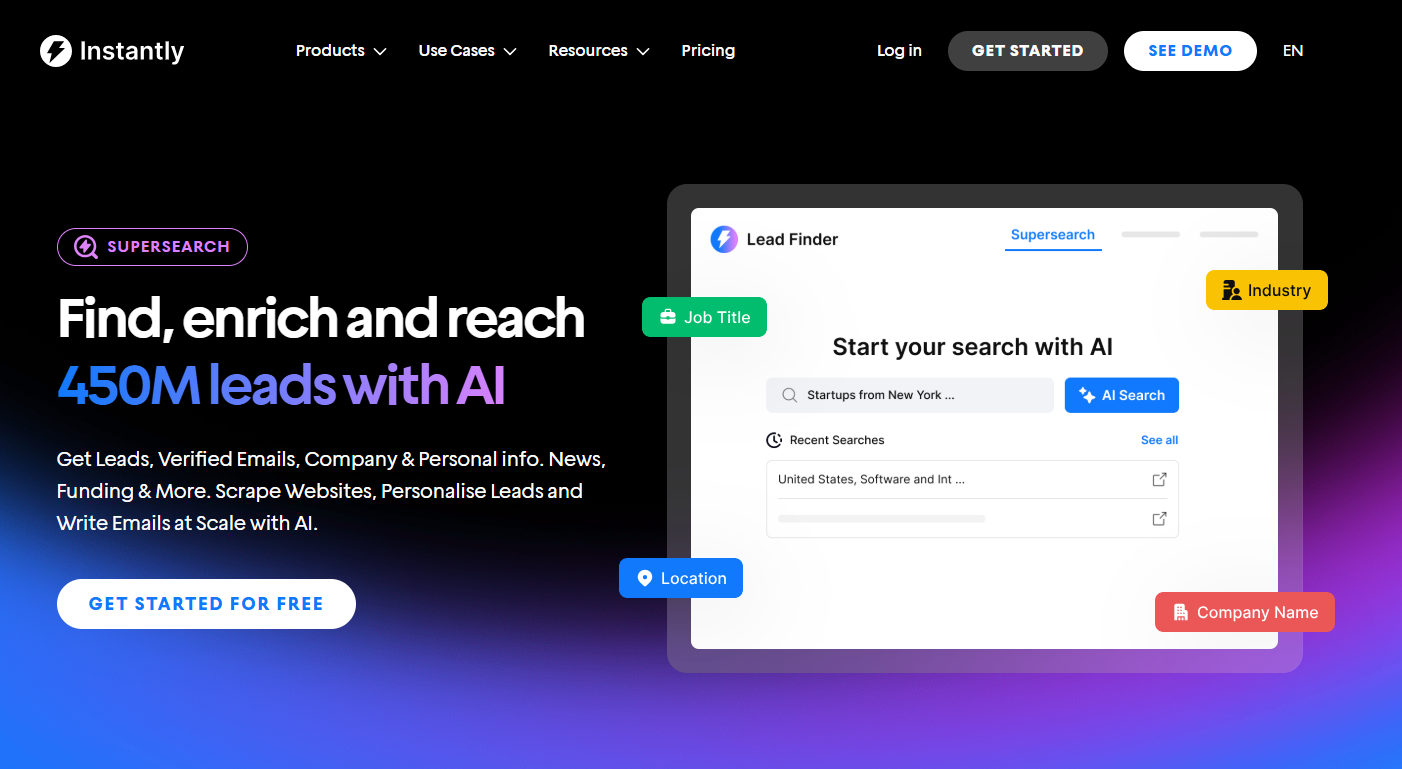
AI cuts hours of research into just a few clicks. For example, Instantly SuperSearch can find prospects who fit your ICP, enrich lead data to include columns you can use for personalization, and you can do this at scale with every lead on your list.
A/B Testing and Optimization
A/B testing has always been a key part of determining what works in marketing. But it’s also been slow. Running one test at a time, waiting on results, and analyzing everything manually can stall momentum. AI speeds this up and makes optimization a continuous process.
For social media, AI helps identify what type of content gets the most engagement and recommends the best times to post. Based on previous posts' performance, it can also suggest tone, caption style, and format variations.
AI can simultaneously test subject lines, email bodies, CTAs, and just about every element you can optimize in email marketing. And with a platform like Instantly, for instance, you can automate the entire process in a few clicks.
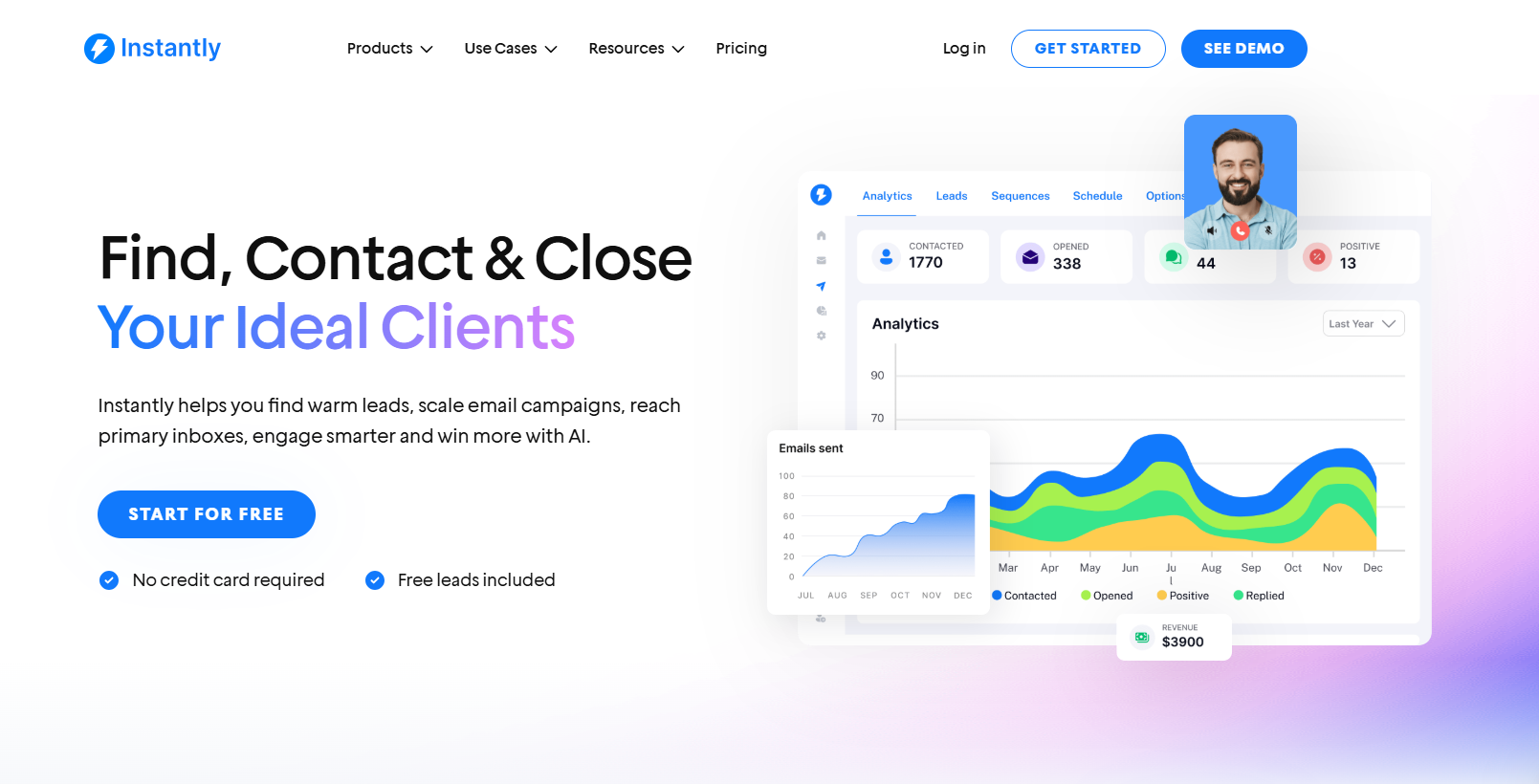
Instantly identifies your top-performing email variation, stops sending the underperforming versions, and automatically rolls out the winner to the rest of your list.
Audience Segmentation and Predictive Lead Scoring
Different leads require different approaches, and not every prospect is ready to buy. AI helps marketing teams get more precise by automatically sorting leads into segments based on behavior, firmographics, and engagement history.
Instead of relying on static lists or outdated filters, AI can analyze patterns across your CRM and marketing tools to group leads by intent level, product interest, or funnel stage. This allows teams to tailor outreach more effectively and prioritize high-potential accounts.
Predictive lead scoring takes it a step further. AI evaluates which characteristics and actions are most common among closed deals, then assigns a score to each new lead based on how well they match. This helps teams focus their time and resources on contacts most likely to convert.
AI Chatbots for Lead Capture
Chatbots have become one of the most effective ways to capture leads across different channels. Whether on your website, via social media DMs, or through SMS, a well-placed chatbot can engage visitors, answer questions, and guide them toward conversion, no matter what time.
That’s the key. Most leads don’t convert because no one responds fast enough. If a potential customer has a question at 11:30 PM and your team is offline, that lead is likely gone by morning. The first to respond usually gets the sale; chatbots ensure you’re always first. It’s one of the best strategies for getting B2B clients.
Modern chatbots aren’t limited to basic FAQ responses, either. They can qualify leads, route inquiries to the right team, and schedule appointments.
While many still use rule-based flows, more advanced systems are evolving into AI agents that can understand context, use tools, and take actions like sending follow-up emails or logging CRM entries.
Website Visitor Identification
Not every lead is going to engage with your chatbot. Some visitors will browse your site, check your pricing, maybe even read a few blog posts, then leave without saying a word. But that doesn’t mean they’re not interested. They often just need a little push.
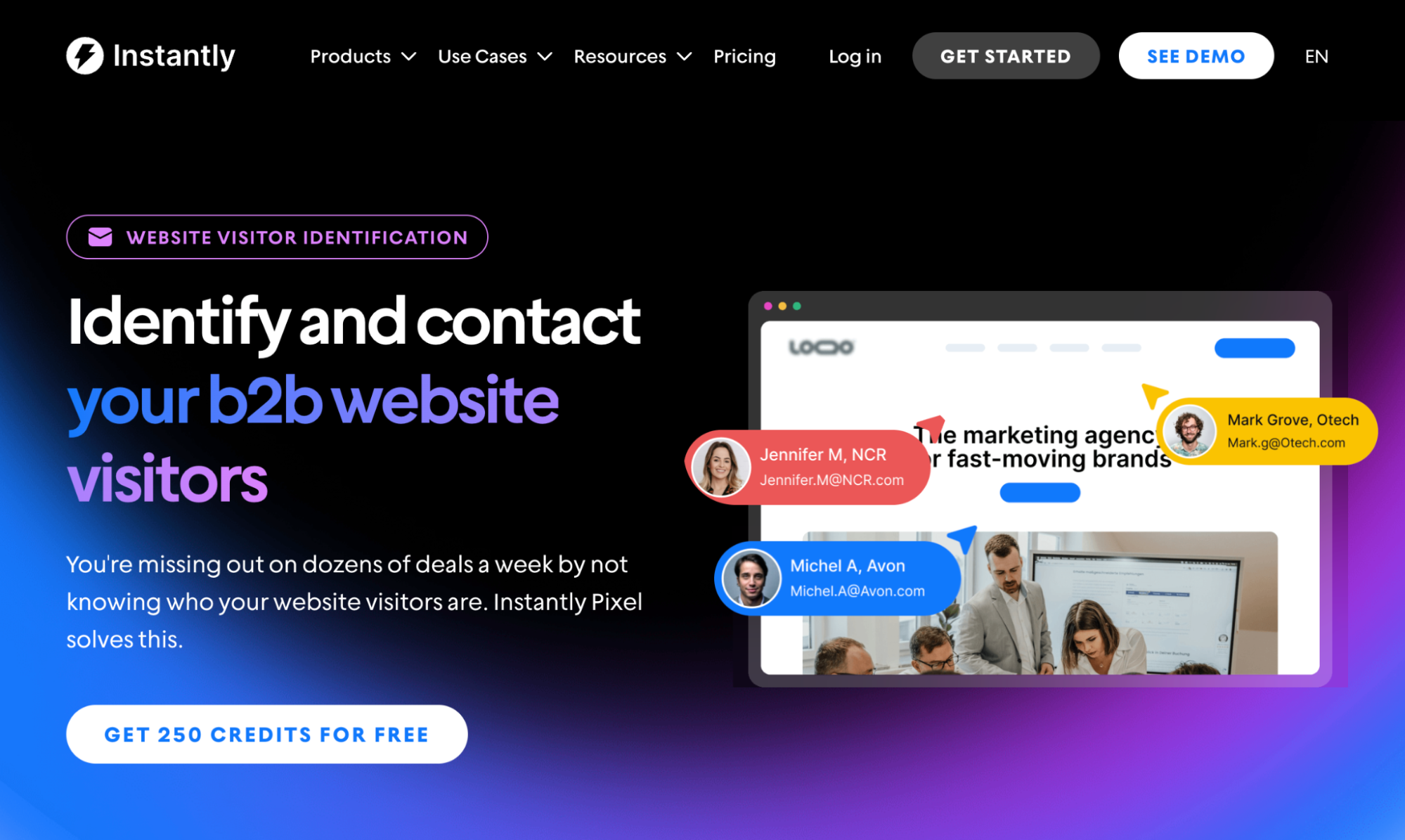
Instantly’s Website Visitor Identification tool can reveal which companies are visiting your site, show their contact information, track which pages they viewed, and notify your team when someone with high intent is on-site.
Dynamic Ad Targeting
AI has completely changed how ad campaigns are managed. Instead of relying on static audiences or manual adjustments, AI can analyze user behavior in real time and make instant decisions that improve sales performance.
It can adjust ad placements based on where your target audience is most active, switch out creatives depending on engagement patterns, and shift budget toward the campaigns or segments that are converting best.
This is especially useful on platforms like Google Ads, Meta, and LinkedIn, where targeting rules and competition change constantly.
AI also helps identify micro-signals that humans might miss, like scroll depth, session time, or multi-touch behavior across devices. These signals indicate buying intent even if a user hasn’t clicked, allowing the system to prioritize higher-value impressions.
Automated Reporting and Dashboards
Reporting is essential, but it’s also one of the most repetitive parts of marketing. Gathering data from multiple platforms, cleaning it, building charts, and packaging it into something that makes sense takes time and often gets pushed to the end of the week.
AI tools can pull data from ad platforms, CRMs, email tools, and web analytics, then auto-generate clean, easy-to-read dashboards. Instead of jumping between platforms and spreadsheets, marketers get a centralized view of performance that updates automatically.
This saves time and makes stakeholder reporting much smoother. AI can tailor dashboards to different audiences, highlight what executives care about most, surface trends, and even write plain-language summaries of what changed and why it matters.
Real-time Social Listening and Sentiment Analysis
Your audience is talking. Are you listening? AI-powered social listening tools enable monitoring conversations across platforms like X, Reddit, YouTube, TikTok, and even review sites or niche forums. Instead of relying on keyword alerts or manual scanning, AI can track brand mentions, competitor chatter, product feedback, and industry trends at scale.
More importantly, it understands context. Sentiment analysis can tell whether people react positively or negatively. It can detect sarcasm, frustration, and urgency—things traditional keyword-based tools miss. You can spot emerging trends before they go mainstream, respond to issues before they blow up, and tailor messaging based on how your audience is feeling.
Product Recommendation Engines
Most businesses don’t grow by constantly finding new customers. They grow by getting more value from the ones they already have. That’s where AI-powered product recommendations come in. They help companies cross-sell and upsell more effectively by showing the right offer at the right time.
You’ve already seen this in action. On Amazon, adding an item to your cart often triggers a carousel of related products that people “also bought.” It’s not random. AI looks at what similar customers purchased, what you’ve browsed in the past, and how long you looked at a product.
For SaaS companies, recommendation systems can suggest feature upgrades, integrations, or training resources based on how customers use the product. It’s all about nudging users toward more value, which often leads to more revenue.
Campaign Planning and Tracking
Behind every successful marketing campaign is a well-organized plan, and for many, that plan lives in a spreadsheet. Tools like Excel and Google Sheets are still the go-to for planning content calendars, tracking ad spend, managing timelines, and coordinating across teams.
They give marketers a clear, flexible way to map out multi-channel campaigns and monitor real-time progress. Where AI makes a big difference is in setup and analysis. Instead of manually building trackers or updating sheets, AI can automate the structure for you.
Paste in your goals, budget, and timeline, and AI can generate a ready-to-use campaign tracker complete with formulas, date dependencies, and conditional formatting. It can also help with performance reviews.
By pulling data from tools like Google Ads, Meta, or email platforms, AI can highlight what’s working, flag anomalies, and suggest adjustments without advanced spreadsheet skills.
Customer Journey Mapping and Trigger-Based Campaigns
Marketing teams are always looking for ways to reach people when it matters most. AI helps by tracking how users interact with your brand across multiple touchpoints and identifying the moments that signal interest, hesitation, or churn risk.
For example, if someone visits your pricing page several times without signing up, an automated discount offer can be sent to help close the deal.
If a user hasn’t engaged with your product or emails for a while, a re-engagement campaign can be triggered with personalized content. If someone completes an action in your app, it could prompt an upgrade offer.
AI Agents Throughout the Marketing Funnel
Unlike traditional workflows that follow simple “if this, then that” logic, AI agents can make decisions, interact with tools, and carry out tasks with more context and flexibility. What makes them powerful is their ability to operate at every stage of the marketing funnel.
At the top, they can research leads, qualify traffic, and personalize outreach. In the middle, they can respond to emails, nurture prospects, or handle common questions through chat. And at the bottom of the funnel, they can follow up with warm leads, schedule demos, or flag opportunities.
Platforms like Make, Zapier, and n8n make it possible to build these agents visually, without needing to write code. You can connect tools, feed in prompts, and assign tasks to different points in your funnel. One agent might handle lead enrichment. Another could write follow-ups or update your CRM based on behavior.
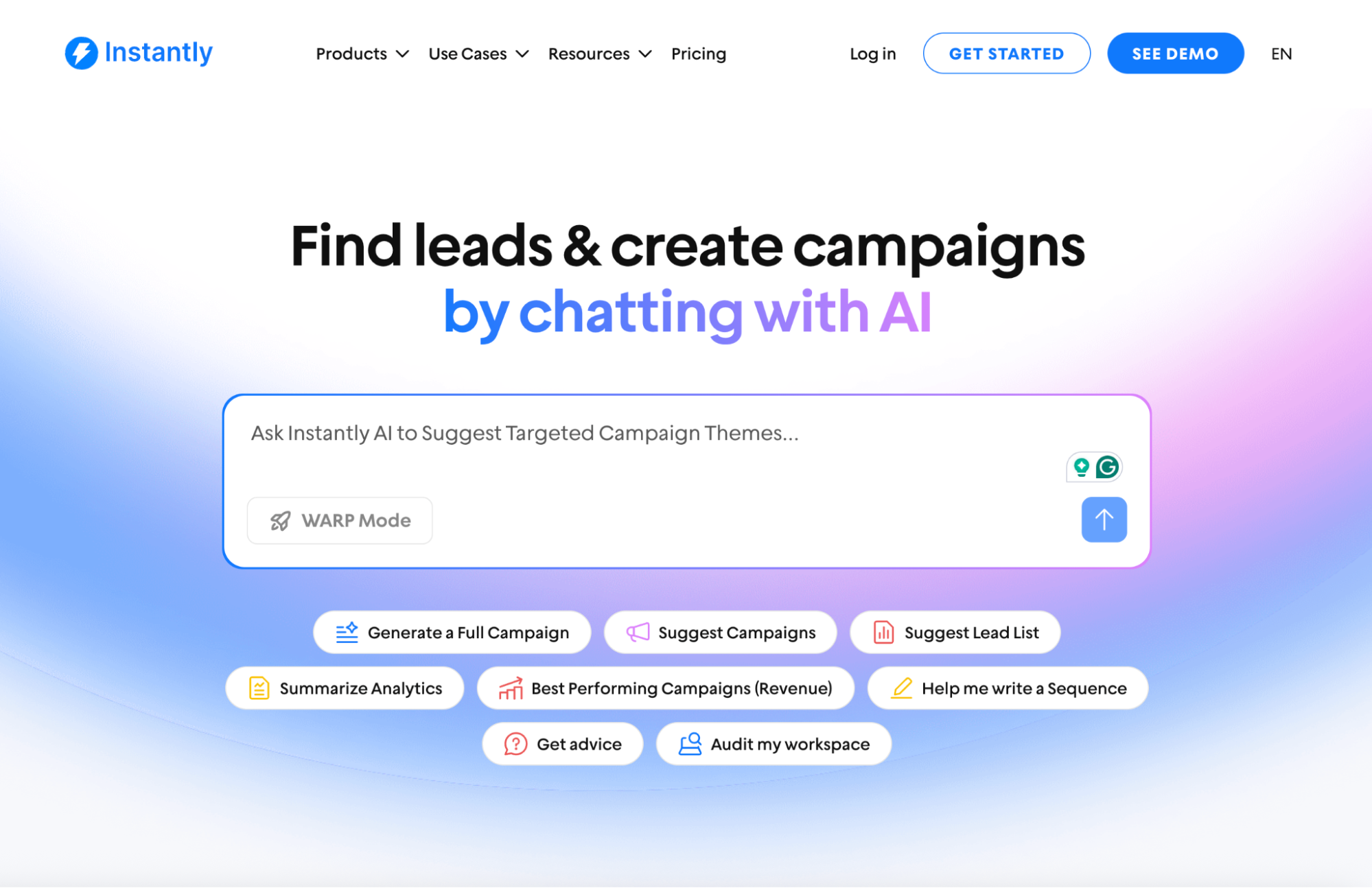
Instantly Copilot and Reply Agent are already doing this for email outreach. Copilot handles research, prospecting, and personalized first-touch emails.
Once someone replies, Reply Agent takes over—managing the back-and-forth, asking qualifying questions, and handing off the lead when it's ready.
Key Takeaways
AI is already changing how businesses approach marketing. It helps teams cut costs, save time, and create better, more efficient campaigns.
From automating repetitive tasks to personalizing outreach at scale, AI is becoming a core part of every stage in the funnel.
The tools are already here, and the teams that learn to use them well are the ones that move faster and grow smarter. If you want an AI agent designed specifically for cold email marketing, try Instantly for free today.


