


Updated on 08 May 2026
TL;DR: 44% of salespeople give up after one follow-up, yet 80% of sales require at least five touches. That gap is where revenue dies. Prospects aren't ignoring you, they're busy. Polite persistence works because of cognitive biases like the mere exposure effect and recency bias. Instantly automates this persistence across unlimited accounts so you can hit the optimal 5-8 touch cadence without manual tracking, domain burnout, or forgetting who got what message when.
You have a strong offer. Your copy tests well. Domains are warmed, lists are verified, and your first email hits the primary inbox. Then nothing. Zero replies. The problem isn't your pitch. The problem is you stopped at email one.
Most salespeople fail not because their message is weak, but because they quit before the buyer is ready to engage. The data is unforgiving: 48% of salespeople never make a single follow-up attempt after initial contact, and 92% give up after the fourth call. Meanwhile, the same research confirms that 80% of non-routine sales happen only after at least five follow-ups.
This guide explains why persistence pays, how psychology drives buyer behavior, and how to build a system that follows up for you.
Why most salespeople give up too soon
Fear of rejection stops more deals than bad products. When you send a second or third email without a reply, your brain assumes the prospect hates you. Psychologists call this the spotlight effect, the belief that others are paying far more attention to you than they actually are. In reality, your follow-up got two seconds of attention or none at all.
The sender feels judged. The recipient is just overloaded. When your first email arrived, the prospect was managing a product launch, a budget review, or a hiring crisis. Their brain was already at capacity with competing priorities. Your message didn't get ignored out of malice. It got lost in the noise.
The result is predictable: 44% of reps quit after one follow-up, and pipeline stalls.
"I love how Instantly has revolutionized my email marketing efforts... the ability to send follow-up emails on a timely basis, ensuring no lead is left untended." - Sachin J on G2
The agencies winning at scale know this. They treat follow-ups as a system, not a feeling. When you automate the cadence, you remove the emotional friction that kills persistence.
What the data says about optimal follow-up frequency
The case for multiple touches is airtight. Backlinko's study of 12 million emails found that average response rates sit at 8.5%, and a single follow-up lifts replies by 65.8%. First follow-ups increase reply rates by up to 49%, compounding through touches two to four.
After the fifth touch, returns diminish but don't disappear. Most high-performing sequences land between 5 and 8 total emails.
Here's the reality check: only 8% of salespeople follow up more than five times, yet that's exactly where 80% of deals close. The gap is a competitive advantage for anyone disciplined enough to persist.
Timing matters as much as frequency. Early touches should sit 2-3 days apart. Later touches can stretch to 4-7 days. The goal is to stay present without triggering spam filters or annoying the recipient. For a visual walkthrough of how to structure this timing, check out our YouTube guide on follow-up strategy.
How to structure a high-converting sales cadence
A sales cadence is a scheduled sequence of touchpoints designed to move a prospect from cold to conversation. The best cadences balance persistence with value, using spacing and content variation to maintain engagement without feeling robotic.
Start with four core components:
- Clear goal: Book a meeting, qualify interest, or trigger a reply. Every touch should move toward this.
- Persona fit: Match message tone and value props to your buyer. An agency operator cares about deliverability and cost per meeting. A VP cares about team efficiency and ROI.
- Channel mix: Email is the anchor, but consider adding a LinkedIn view, a phone call, or a short video at touch 3 or 5.
- Spacing logic: Front-load touches early (Day 1, Day 3, Day 6), then extend (Day 10, Day 15). This mirrors how recency bias works: people remember and prioritize the most recent information.
The mere exposure effect explains why repeated, neutral exposure builds preference. Your name and brand become familiar. Familiarity reduces friction. Reduced friction increases reply rates.
A proven 5-step pattern looks like this:
- Day 1: Initial email (value-focused, short, clear ask)
- Day 3: Follow-up email (reference first email, add new insight)
- Day 6: Follow-up email (share case study or result)
- Day 12: Follow-up email (video or screenshot, address objection)
- Day 24: Break-up email (graceful exit with door open)
This structure keeps you top-of-mind without overwhelming the inbox. It also protects sender reputation because you're spacing sends and varying content. For domain health best practices, review our guide on scaling with secondary sending domains and follow proper list hygiene practices.
"The platform is super intuitive, easy to set up, and makes it simple to manage multiple domains and inboxes at scale." - Shaiei P on G2
Research from Zendesk and industry studies consistently points to cadences of 8-12 attempts over 3-4 weeks as effective for B2B sales. Anything shorter leaves opportunity on the table. Anything longer risks diminishing returns and deliverability strain.
What to write to add value in every touch
The worst follow-up starts with "Just checking in." It signals you have nothing new to offer and you're filling time. Prospects delete these instantly.
Every follow-up must add value or advance the conversation. Here are four proven approaches:
1. Share a relevant case study or result. Reference a client outcome that mirrors the prospect's situation. "You mentioned scaling outreach without adding headcount. Here's how one agency used cold email to book 113 sales calls in 30 days."
2. Offer a resource, insight, or data point. Send a template, calculator, or report that solves a specific problem. Example: "I pulled together reply-rate data by industry. Your vertical averages 6% reply rate, which means a small copy tweak could shift pipeline fast. Want a copy?" Or link to a 3-minute explainer video on rotating IPs and sending algorithms that improve deliverability.
3. Address a common objection. "Most agencies worry that more follow-ups hurt deliverability. The opposite is true if you warm domains properly and cap daily sends at 30 per inbox." Link to our email warmup guide for proof.
4. Ask a specific question or offer a quick win. "I noticed you're hiring SDRs. Want a copy of the cold email framework we use to get 400+ replies monthly?"
The through-line is simple: every follow-up should give the prospect a reason to engage beyond guilt or politeness. Value builds trust. Trust converts to meetings. For 600 pre-written templates built on this principle, check our template library.
"I also appreciate the AI labels, which help us instantly spot the leads we need to act upon quickly, understanding that speed to lead is crucial." - Johan S on G2
How to automate follow-ups with Instantly
Manual follow-ups die at scale. When you manage 10, 50, or 150 inboxes across multiple clients, tracking who got email three on Tuesday and who needs a break-up on Friday becomes impossible. Automation solves this, but only if the tool handles logic, timing, and deliverability in one place.
Instantly's Sequence Builder lets you design multi-step campaigns with precise wait periods between touches. You set the delay (2 days, 4 days, 7 days), write the copy for each step, and turn on the campaign. The system handles the rest.
The killer feature is stop on reply. The moment a prospect responds, Instantly pulls them out of the sequence. You avoid the nightmare of sending "Did you see my last email?" after they already booked a meeting. This logic is built into every campaign by default (learn more in our campaign options guide).
Spintax keeps deliverability high across touches. Instead of sending identical follow-ups from 50 accounts (which triggers spam filters), you rotate phrases. "Hope this helps" becomes "{Hope this helps|Let me know if useful|Happy to clarify}". Mailbox providers see variation. Your sender reputation stays clean.
A/B testing helps you optimize cadence length and message variants. Run a 5-step sequence against an 8-step sequence. Measure reply rates at each step. Double down on what works. For agencies running hundreds of campaigns, this data compounds fast.
The gap widens when you add personalized first lines and proper domain warmup.
"The automated warm-up, unlimited email sending, and smart campaign management saved me hours every week." - Saleph on G2
For a step-by-step walkthrough, watch:
Sales vs. interview follow-ups: Understanding the difference
The psychology of follow-ups shifts depending on who holds leverage. In B2B sales, you initiate. In job interviews, they initiate. This changes frequency, tone, and when to stop.
| Context | Frequency | Tone | When to Stop |
|---|---|---|---|
| B2B Sales Outreach | 5-8 touches over 2-4 weeks (it takes an average of 8 touchpoints to close a sale) | Professional, value-driven, problem-solving | After 15-24 days with a polite break-up email |
| Job Interview Follow-ups | 1-3 touches over 1-2 weeks | Appreciative, reaffirming interest, concise | After final decision is communicated or after final check-in with no response |
In sales, persistence signals confidence and professionalism. In interviews, too many follow-ups signal desperation.
When to stop following up
Even the best follow-up strategy has an expiration date. The break-up email closes the loop without burning the relationship.
A strong break-up sounds like this: "I haven't heard back, so I'll assume the timing isn't right. Totally understandable. I'll close the loop for now, but if priorities shift or if revisiting this makes sense, I'm always just a reply away."
Another example from Highspot's research tailored to a sales-tool pitch: "I've reached out a few times because you're hiring so many new reps. I thought our email coach could help. I'm going to chalk it up to my timing being off. Let me know if I'm wrong, but I'll stop my outreach for now."
The break-up achieves three goals:
- Respects the prospect's time. You acknowledge they're not interested or not ready.
- Leaves the door open. Prospects often reply to break-up emails because the pressure is off.
- Protects your brand. Graceful exits build long-term reputation.
After 7-8 touches with no reply, it's time to recycle the lead. Add them to a nurture list or mark them for re-engagement in 90 days. Pushing past this point hurts deliverability and wastes send capacity.
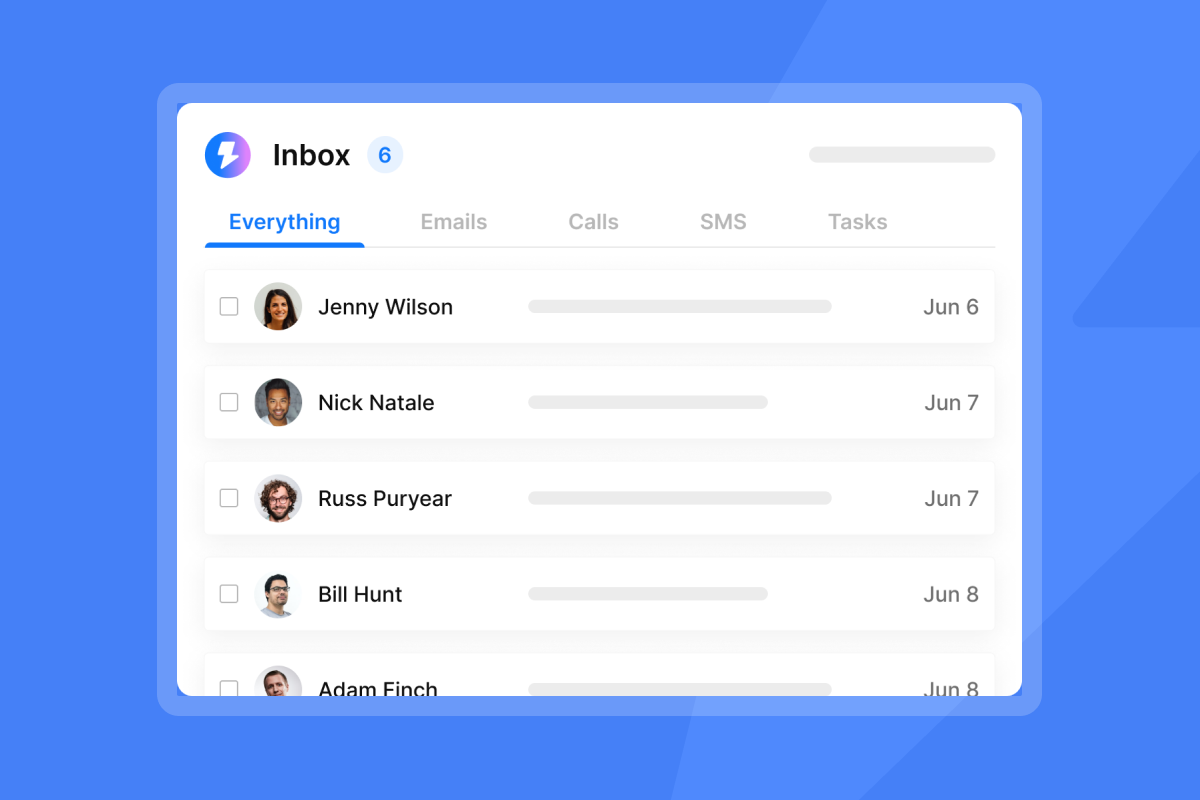
For agencies managing hundreds of sequences, Instantly's Unibox consolidates all replies in one place so you can spot break-up responses instantly and act fast.
"Unibox is exceptional as it consolidates replies in one place from over 1000 inboxes, streamlining..." - Daksh K on G2
Persistence without a system is just noise
The research is clear. The psychology is proven. The gap between 44% of reps quitting after one touch and 80% of deals closing after five touches is where you win or lose.
Polite persistence works because prospects are busy, not hostile. The mere exposure effect builds familiarity. Recency bias puts you top-of-mind when they finally have bandwidth. But none of this matters if you rely on memory, spreadsheets, or manual tracking.
What follow-up cadence works best for your team? Drop your experience in the comments below.
Build a system. Use Instantly's Sequence Builder to automate 5-8 touches with stop-on-reply logic, spintax variation, and deliverability guardrails. Let the tool handle timing while you handle conversations.
Scale follow-ups across unlimited accounts without per-seat penalties. Protect sender reputation with built-in warmup and rotation. Manage replies from 10, 50, or 150 inboxes in one unified view.
The difference between a failed campaign and a record month sits between the fourth and eighth email. Don't rely on willpower. Start your free trial and build your first automated cadence today.
Frequently asked questions about follow-up frequency
How many days should I wait between follow-up emails?
Wait 2-3 days between early touches (steps 1-3), then extend to 4-7 days for later touches. This spacing maintains presence without overwhelming inboxes or triggering spam filters.
Is it illegal to follow up multiple times via email?
No. The CAN-SPAM Act requires accurate headers, honest subject lines, and a functioning unsubscribe link, but does not limit follow-up frequency.
Does following up too much hurt email deliverability?
Only if you skip warmup, send from a single account, or blast high volumes without variation. Use email warmup, cap sends at 30 per inbox per day, and rotate copy with spintax.
What's the best number of follow-ups for cold email?
5-8 total emails over 2-4 weeks. Research shows 80% of sales require at least 5 touches, and reply rates compound through the first four steps.
When should I send a break-up email?
After 7-8 touches with no reply, typically around day 20-24. A polite break-up closes the loop gracefully and often triggers a response because the pressure is off.
Key terms glossary
Sales Cadence: A scheduled sequence of touchpoints (emails, calls, social touches) designed to move a prospect from initial contact to a booked meeting or qualified conversation.
Mere Exposure Effect: A psychological phenomenon where people develop a preference for things simply because they are familiar with them, proven in Robert Zajonc's 1968 study.
Recency Bias: The cognitive tendency to give greater weight to the most recent information or events when making decisions or recalling details.
Spotlight Effect: The psychological bias where people overestimate how much others notice or judge their actions, leading to excessive self-consciousness about follow-ups.
Reply Rate: The percentage of email recipients who respond to your message, calculated as (total replies / total delivered emails) × 100.
Break-up Email: A final, polite follow-up that acknowledges the lack of response, states you will stop contacting them, and leaves the door open for future engagement.


