


Learning how to gather referrals effectively comes down to timing, clarity, and reducing friction. Ask right after wins, be specific about who you want introductions to, and frame your request around helping, not selling.
Also, use simple prompts, offer light incentives when appropriate, and bake referral CTAs into your existing workflows. Done right, referrals become a predictable growth channel rather than a lucky accident.
Referrals work because trust transfers faster than any pitch ever could. When someone credible vouches for you, most of the selling is already done. The problem is that most people don’t have a repeatable way to ask for these votes of confidence.
To help, we'll briefly unpack how to ask for referrals at the right moments, what to say so it feels natural, and how to build a lightweight system that turns happy clients and warm relationships into a steady source of qualified opportunities.
Who You Should Be Asking for Referrals
You can get referrals from almost anyone in your orbit, even people who have never paid you. Sometimes those referrals come in on their own.
But if you want results, you need to ask for them. Here are a few key groups you should be reaching out to for referrals:
Current and Past Clients
Current and past clients are your best source of referrals because they are familiar with your work and the results it produces. They know what it feels like to work with you, which makes it easier for them to vouch for you with confidence.
One of the best times to ask for a referral from current and past clients is right after you deliver a project or hit a significant milestone. In that moment, even something as simple as “Who do you know that might need this? Would really appreciate a referral” goes a long way.
Warm Network (Friends, Peers, Collaborators)
Your warm network includes friends, peers, and collaborators you're familiar with and who believe in your work, even if they have never been your client.
Instead of asking them to “send you leads,” give them a simple, specific picture of who you help. For example, you can say, “If you know any marketing agencies that struggle with website copy, I’d love an intro.”
Complementary Service Providers/Partners
Complementary service providers serve the same people you want to work with, but solve a different part of the problem.
Think of designers, developers, ad managers, or agencies that work with your ideal clients. When you reach out, position it as a collaboration/partnership. You might say:
“Our services fit well together. Who else do you know that needs help with X? I can help support them, and I am always happy to send people your way when they need Y.”
Main Types of Referrals You Need to Know About
When someone says “referral,” it can mean very different things in practice. Some referrals come with a strong, direct recommendation. Others are closer to a warm version of cold outreach. Knowing the difference helps you set realistic expectations and adjust accordingly:
- Full Intro Referral: This type of referral carries the most trust and typically receives the fastest responses. Your client or contact introduces you directly, usually in a group email, DM, or chat. They vouch for you in their own words and make it clear why you are awesome to work with.
- Name-Drop Referral (Warm, No Live Intro): Your client gives you a list of people who might be a good fit and tells you it is okay to reach out and mention their name. It's still a referral because you are borrowing their relationship and credibility.
When you contact these people, it helps to lead with that connection. For example: “{{Client}} suggested I reach out because you might be working on X.”
Best Strategies For Asking Referrals
There are many ways to ask for referrals, but the most effective ones share three traits: good timing, clear context, and a low-effort ask. Below are the referral strategies that consistently work across clients, partners, and warm networks, along with templates you can adapt without sounding scripted.
1:1 Email After a Project or Clear Win
A direct email is one of the highest-converting ways to ask for referrals, especially right after you’ve delivered a tangible result. At that moment, trust is high, the outcome is fresh, and the ask feels earned.
You don’t need a long explanation or sales pitch. The goal is to anchor the request to the result you just created and make the introduction easy.
Subject line: Quick referral request
Hi {{name}},
Really glad we were able to {{specific result you delivered}}. I appreciate the trust you put in us.
Quick question. Who do you know that might be dealing with something similar right now? I’m opening a few spots and would really value an introduction if anyone comes to mind.
Either way, thanks again. Loved working on this with you.
{{your name}}
For past clients, this works just as well as a re-engagement email. Share a brief update on what you’re working on now, then add the same referral ask at the end. Keep it light and respectful.
Social Media DMs (LinkedIn, Instagram, Slack, etc.)
Social DMs work best when there’s already an existing relationship or regular interaction. The informal setting lowers friction and often makes the request feel more human than email.
For existing contacts (clients, peers, partners):
Hey {{name}}, quick heads up. I’m opening a couple of spots over the next month for {{ideal client type}} who want to {{specific result}}.
If anyone in your circle comes to mind, I’d really appreciate an intro. No pressure at all.
For name-drop referrals (people your client suggested):
Hi {{name}}, {{referrer name}} mentioned you might be working on {{specific problem}} and thought it could be useful for us to connect.
If you’re open to it, I’d be happy to share a few ideas on how {{company}} could {{specific outcome}} and see if it’s relevant.
The key here is tone. You’re opening a door, not forcing a conversation.
Light Referral CTAs in Newsletters or Client Updates
If you already send newsletters, client updates, or nurture emails, referrals can be baked in quietly and consistently. This works especially well over time.
Add a short line near the end of the email. It should feel optional, not transactional.
Example:
"P.S. If you know someone who’s struggling with {{specific problem you solve}}, feel free to forward this or introduce us. Always appreciated."
You can rotate variations like:
“Happy to help anyone in your network dealing with {{problem}}.”
“If this sparked someone you know, I’m always open to intros.”
These friendly reminders compound without putting anyone on the spot.
Referral Posts on Social Media
Public referral posts work when you’re specific and measured. Vague asks (“Looking for clients!”) rarely convert. Clear descriptions do.
Example:
"I’m looking to connect with 2–3 {{ideal client type}} who want to {{specific outcome}} over the next few months.
If someone comes to mind, I’d really appreciate an intro or a quick DM."
This works well in Slack communities, LinkedIn, private groups, or even platforms like X and Threads. Post sparingly (every few months or when capacity opens) and keep the tone calm, confident, and grounded.
Adding Referral CTAs to Your Forms and Pages
You can also bake referrals into your existing systems. For example:
- A small referral question on your project wrap-up form
- A line on your thank-you page after someone books a call
- A short note in your onboarding or offboarding documents
Something as simple as “If you know someone else who might benefit from this, feel free to introduce us,” keeps referrals visible without extra manual effort. Over time, these small prompts can turn into a steady trickle of warm opportunities.
How to Incentivize Referrals
You can get referrals without offering anything in return, but the right incentive makes people more intentional about sending opportunities your way. An incentive does not always have to be cash.
It can be a small gift, a discount, a bonus service, or even extra support that feels valuable to the person making the referral. The point is to show appreciation and make it feel like a win for them, not just for you.
This works even better when you segment your list. Different groups care about other things, so “one-size-fits-all” incentives usually land flat. Existing clients might value a discount or bonus work. Partners might prefer revenue share or a finder’s fee.
Warm network contacts might just appreciate a thoughtful gift card or a donation made in their name. When you understand what matters to each segment, you can craft a referral ask that sounds like:
“Here's how I can help your contacts, and here is how I will take care of you for sending them my way,” which is a much easier yes.
Crafting the Perfect Referral: How to Write Referral Requests
A reasonable referral request is not a long pitch. It is a simple, structured moment: show appreciation, ask clearly, and make it easy for the other person to come up with names. Here’s a framework that helps them get referrals from almost every meaningful conversation:
Start With Gratitude And A Smooth Transition
Instead of jumping straight into “who do you know?” start by acknowledging the relationship. Thank them for their time, the work you just did together, or the conversation you had.
Then use a simple bridge, such as “With that in mind…” or “By the way, before we wrap up…” to transition into your ask. Here’s an example:
“Really appreciate you taking the time to walk through everything today. With that in mind, I have a quick question for you.”
Ask “Who Do You Know That…” (Not “Do You Know Anyone?”)
The key shift from the thread is to avoid yes-or-no questions. “Do you know anyone?” invites a quick “no” or “not right now.” Instead, use an open prompt: “Who do you know that…”. This forces the brain to scan for people instead of deciding yes or no. For example:
“Who do you know that's also trying to achieve {{result}} or struggling with {{specific problem}}?”
Use “Memory Joggers” To Help Them Think Of Names
Most people want to help but draw a blank. Having a list of “memory joggers” ready: small prompts that point them to specific groups, roles, or situations. For example:
“Who do you know that runs a small agency?”
“Who do you know that just hired their first SDR?”
“Who do you know that is redoing their website this year?”
Collect “Golden Nuggets” And Contact Info
Before you finish, ask for a couple of little details you can use as icebreakers with each referral. Something they respect about the person, a topic they love talking about, or a story you can mention. Then, get the best contact information you can, ideally an email address or number.
For example, you might ask, “What are the things people should know about {{referral first name}}?” and your client says, “He's obsessed with bootstrapped SaaS and runs ultra marathons.” You can use that info in your icebreaker:
“{{client name}} said you’re the go-to person for bootstrapped SaaS and ultra marathons, so I knew I had to reach out.”
Make The Next Step Low Pressure
Finally, set clear expectations for what you will actually do with those names. You will reach out, mention the connection, and see if they are open to a conversation. You're not assuming you can help everyone. You could say something like:
“I'll just reach out, mention you, and see if they are open to a quick chat. If it is not a fit, no worries at all.”
Turn Referrals Asks Into a Repeatable System With Instantly
G2 Rating: 4.8/5 ⭐ from 3,926 reviews
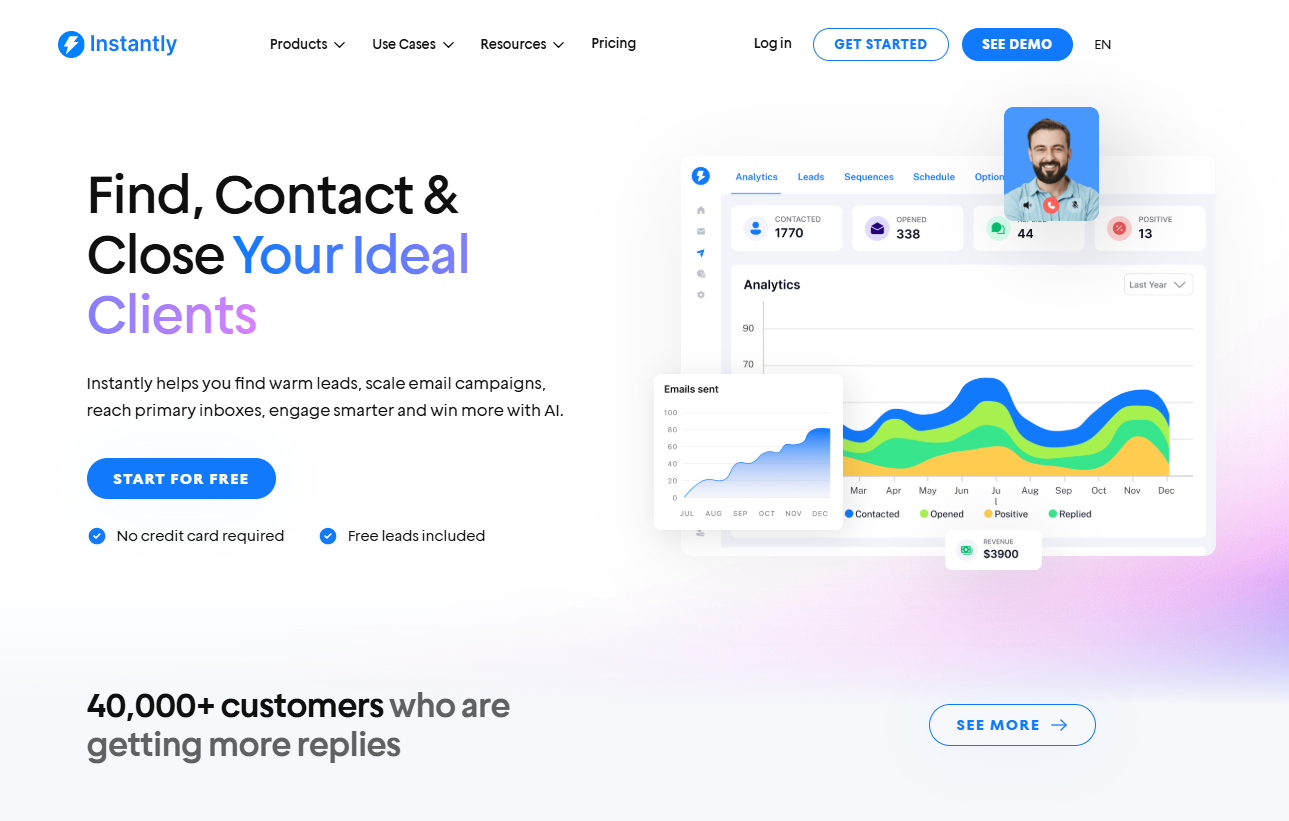
Referrals work best when they’re timely, specific, and easy to follow up on. That’s hard to do manually once your network grows. Instantly helps you turn referral outreach into a lightweight system without losing the personal touch.
You can segment past clients, partners, and warm contacts, personalize referral asks with real context, and automate follow-ups that don’t feel awkward or salesy.
Whether you’re checking in after a win, re-engaging past clients, or nurturing partners over time, Instantly makes sure referral requests go out consistently, land at the right moment, and stay genuinely human.
Key Takeaways
If you have clients, partners, or an audience, asking for a referral is as easy as a quick email. However, you need to time your request, write a referral email, and consider what you can offer as an incentive. To recap, here’s how you can ask for referrals:
- Ask for referrals from clients after a project or milestone
- Add light CTAs for referrals in newsletters or client updates
- Ask for referrals from people in your network through social media DMs
- Add referral CTAs in your landing pages
- Create referral emails when nurturing clients, customers, or your audience
A scalable referral pipeline starts with a scalable outreach process. The more clients you work with and the larger your network becomes, the more referrals you can generate.
But first, you need a reliable way to win those clients and grow that network consistently. That’s where Instantly comes in. Start your free trial.


