


Updated December 18, 2025
TL;DR: If you run an agency and need to book 10+ meetings in two weeks, combine B2B cold calling with automated, personalized cold email sequences. This guide provides a practical 2-week ramp plan that protects sender reputation while scaling across unlimited inboxes. We give you unlimited email accounts, built-in warmup across our 4.2M+ deliverability network, SuperSearch with 450M+ verified contacts, unified inbox with calling and SMS, and AI reply handling. When you run integrated multi-channel campaigns, you see response rates 63% higher than single-channel approaches, helping you scale client pipelines without per-seat penalties or five disconnected tools.
Multi-channel outreach combines cold calling and cold email into a systematic process that books 10+ B2B meetings within two weeks. The method layers email sequences with phone calls, using each channel to cover gaps the other leaves open.
What a 10+ meeting system actually looks like
A structured 14-day ramp that coordinates email and phone across verified prospects. You start with 400 verified contacts, warm 2 to 3 sending inboxes for 30 days, then run sequences that pair email touchpoints with timed calls. The system uses email to educate and calls to convert, tracking reply rates, connects, and meetings booked as your core scorecard. B2B buyers spend only about 17% of their buying time with all suppliers combined, so your message must land cleanly across every touchpoint.
Who uses multi-channel outreach to book B2B meetings
Agency operators managing 10 to 150 sending inboxes, lean sales teams scaling without per seat penalties, and founders who need meetings without hiring full SDR teams. These teams prioritize repeatable systems over random activity. They track deliverability, reply rates, and cost per meeting as primary metrics. The approach fits anyone who needs predictable pipeline without burning domains or budgets.
Why combining cold calling and email outperforms single-channel approaches
Cold email and cold calling each have distinct strengths. Email scales to hundreds of prospects daily and delivers detailed information that waits in the inbox.
Calls create immediate rapport and allow real-time objection handling. Together, they cover gaps the other leaves open.
Does cold calling still book B2B meetings in 2025
Cold calling remains relevant in 2025, but the context has changed. While 70-85%% of cold calls go to voicemail, the success rate for having a conversation with a live prospect ranges from 30% to 65% once connected.
More importantly, 82% of buyers are open to accepting meetings from sales professionals who reach out proactively.
The key difference in 2025 is that cold calling works best as part of a coordinated strategy. Different prospects prefer different communication methods.
Email allows them to engage when convenient, while calls provide immediate dialogue. A combined approach increases visibility and creates multiple touchpoints, with B2B buyers requiring an average of 6-10 touchpoints before making a decision.
Coordinated efforts involving email, LinkedIn, and phone calls boost response rates by over 30-50% compared to email alone.
What are the benchmarks for B2B cold calling and email performance
Here is what current benchmarks tell us about B2B cold calling and email performance in 2025:
| Metric | Cold Email | Cold Calling | Combined Approach |
|---|---|---|---|
| Average open rate | 15-27% | N/A | N/A |
| Reply/conversation rate | 1-5% typical, 8-12% with targeting | 28-65.6% once connected | 63% higher than single-channel |
| Meeting booked rate | 0.2-2% of sends | 1-3%, up to 5% for top performers | 40%+ lift vs. email alone |
| Time to first touch | Immediate | 3-8 attempts to connect | Faster overall pipeline velocity |
Cold email reply rates typically average around 3-8% in recent benchmark studies, with quality targeting yielding 8-12% and advanced personalization sometimes reaching 15-18% in highly targeted campaigns.
The meeting booked rate from cold calls typically falls between 1-3%, with top performers reaching 5% or higher through strong targeting.
The takeaway is clear. Multi-channel outreach allows you to play to the strengths of each channel while mitigating their weaknesses.
How to book 10+ B2B meetings in 14 days: Step-by-step execution plan
This ramp plan assumes you are launching outreach from already warmed inboxes or after completing a warmup phase, with the goal of moving from zero to 10+ booked meetings in 14 days by combining email automation with strategic cold calling.
Week 1: Foundation and initial outreach
Week one focuses on building the infrastructure, warming up your sending accounts, and launching your first coordinated touchpoints.
Step 1: Build your ideal client profile (ICP) and persona
Define your target audience by industry, company size, geography, and specific pain points. For example, if you target HR tech buyers, specify companies with 200-500 employees, HR Directors or VPs, in the Mid-Atlantic region, struggling with high turnover.
Our outbound lead generation guide walks through ICP validation in detail.
Step 2: High-quality lead generation with SuperSearch
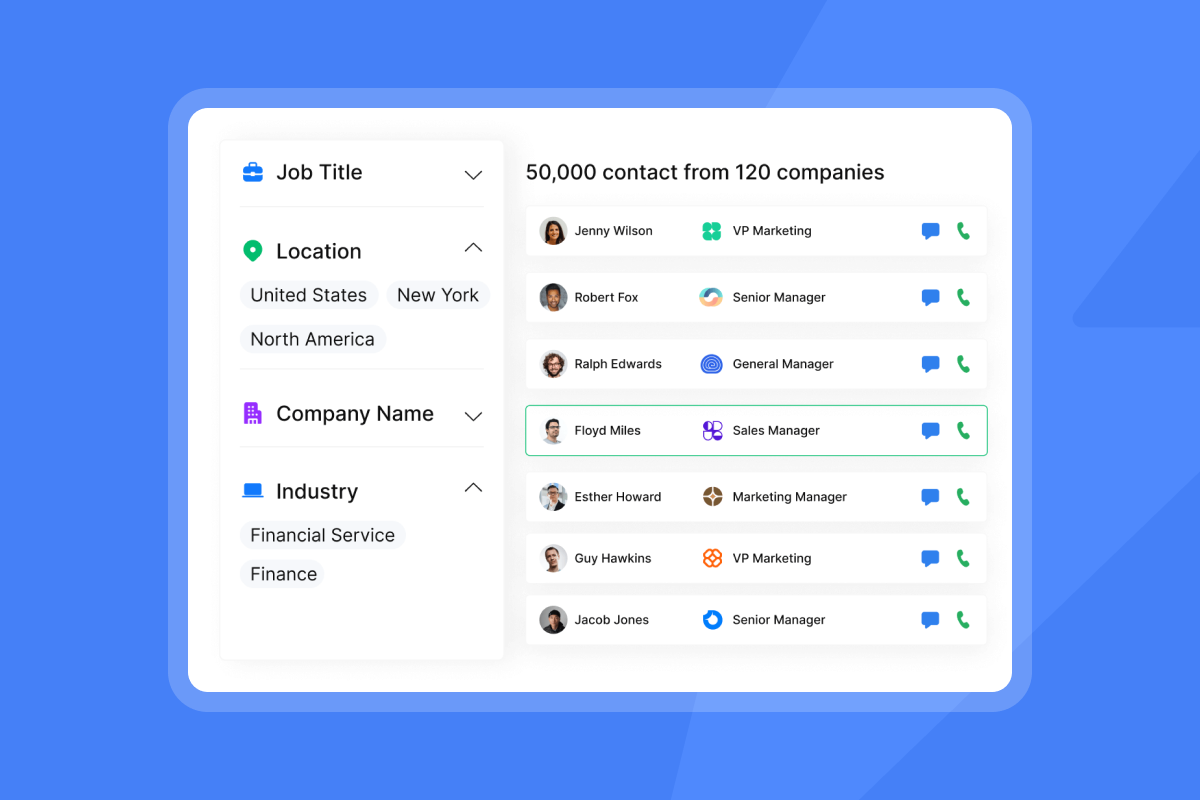
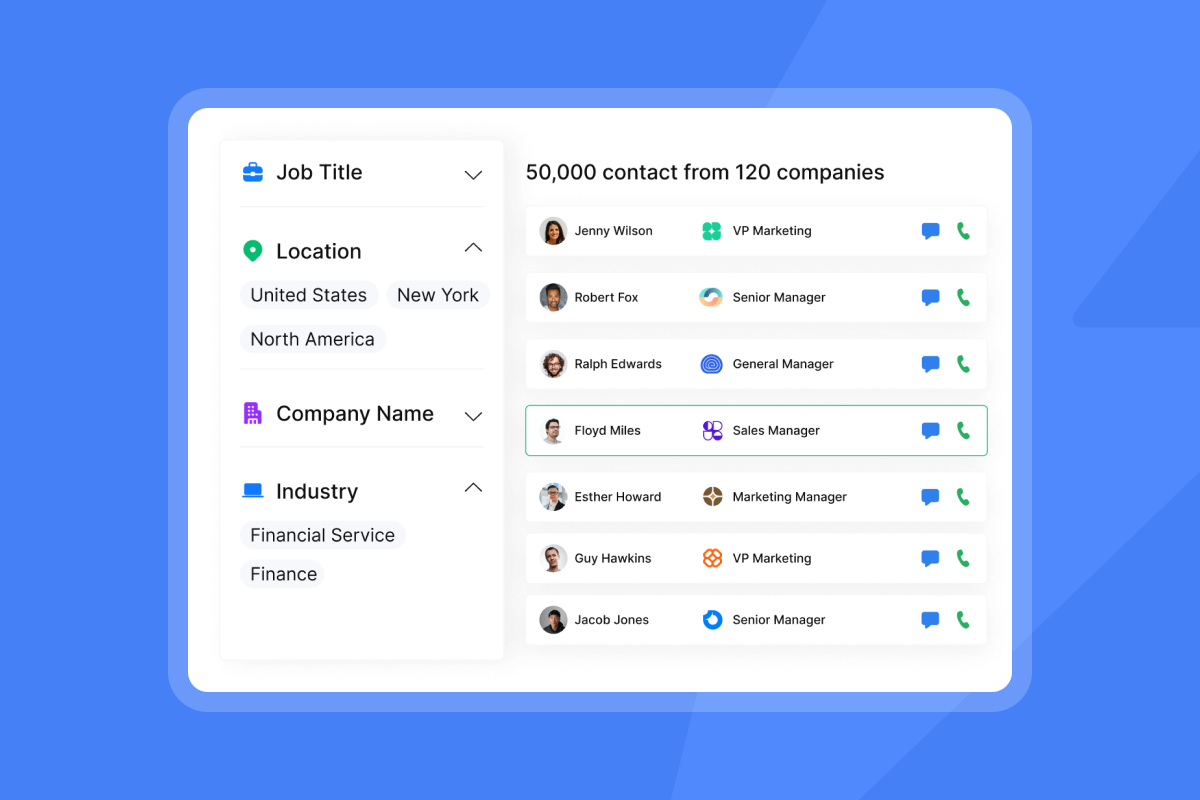
Clean, accurate data is the foundation of deliverability and response rates. Instantly's SuperSearch provides access to 450M+ verified B2B contacts with real-time email verification, reducing bounce rates and protecting your sender reputation from day one.
Use SuperSearch's advanced filtering (50+ criteria including job titles, technologies used, and buyer intent signals) to build hyper-targeted lists that match your ICP. The platform offers a 95% data accuracy guarantee, which is crucial for maintaining inbox placement during a rapid ramp-up.
Step 3: Domain warmup and inbox health
Deliverability is non-negotiable. Before sending a single campaign email, warm up your inboxes for at least 14-30 days.
Start with 5 emails per day, gradually increasing to 15, then 30 per inbox over the warmup period.
Our automated warmup uses a 4.2M+ account deliverability network to build your sender reputation organically. The platform includes Inbox Placement tests that show exactly where your emails land (primary, promotions, or spam) across Gmail, Outlook, and other providers.
Run an Inbox Placement test before launching your campaign and monitor it weekly. If placement drops below 80% primary inbox, pause sends, re-verify your list, and adjust your copy to remove spam triggers.

Our domain health guide provides detailed troubleshooting steps.
One user highlighted the warmup feature:
"The warmup feature is really awesome that I loved the most as it helps my emails to land directly into the inbox." - Faheem on Trustpilot
Step 4: Crafting your cold email sequences
Effective cold email copy is short (50-125 words), personalized, and focused on a single, clear call to action. Start with a compelling subject line that references a specific pain point or recent company achievement.
Your email structure should follow this pattern:
- Personalized opening: Reference something specific to the prospect (recent LinkedIn post, company news, industry challenge).
- Value proposition: State clearly how you solve their pain point in one sentence.
- Social proof: Include a brief, relevant client success metric.
- Low-commitment CTA: Ask an interest-based question like "Are you open to learning more?" rather than immediately requesting a 30-minute meeting.
Follow-up emails should add new value each time. The first follow-up can increase reply rates by 40-50%, so plan a 5-7 touch sequence that includes email, calls, and LinkedIn messages.
Instantly's AI Copilot can generate personalized email sequences based on your ICP and value proposition, dramatically speeding up this step.
Step 5: Initial cold calling strategy
Your cold calling script should mirror the structure of your email: personalized opening, clear value, and a low-commitment ask.
Prepare three core elements:
- Opening hook: "Hi [First Name], this is [Your Name] from [Company]. I noticed your company recently [specific observation]. I'm calling because we help [their role] at companies like yours overcome [specific pain point]."
- Value statement: "Our clients typically see [quantifiable result, e.g., 30% reduction in hiring time] within [timeframe]."
- Ask: "Does that resonate with any challenges you're experiencing right now?"
Have objection responses ready. If they say "not interested," ask "Is it the timing or the fit?" to understand whether to follow up later.
Plan to attempt calls 2-3 times over the two-week period, spacing them 2-3 days apart. It typically takes 3-8 call attempts to connect with a lead.
Week 2: Optimization and scaling
Week two shifts focus to optimizing what is working, handling replies efficiently, and scaling safely across more inboxes.
Step 6: Integrating email automation with calling follow-ups
The power of multi-channel outreach comes from strategic sequencing. Here is a sample 2-week cadence combining email and calls:
- Day 1: Personalized email + LinkedIn connection request
- Day 2: Cold call attempt #1 (reference the email in voicemail)
- Day 3: Follow-up email (add case study or industry insight)
- Day 4: Cold call attempt #2
- Day 5: LinkedIn message (share relevant content)
- Day 7: Email #3 (social proof focus)
- Day 8: Cold call attempt #3
- Day 10: "Breakup" email (acknowledge no response, ask if timing is wrong)
- Day 12: Final call attempt
Each touchpoint should deliver fresh value and build on the last. The multi-channel cadence creates consistent visibility without overwhelming prospects on a single channel.
Our sequence builder allows you to automate email sends while adding manual tasks (like "make cold call") at strategic intervals.
Step 7: A/B testing and performance monitoring
Track these KPIs daily:
- Email open rate: Target 15-25%, with 45%+ achievable through strong subject lines and clean lists.
- Reply rate: Target 5%+, with 8-12% for well-targeted campaigns.
- Call connect rate: Target 28-65% once you reach a live prospect.
- Meeting booked rate: Target 1-3% from calls and 0.2-2% from email sends, with multi-channel lift pushing combined rates higher.
A/B test one variable at a time with at least 100-200 recipients per variant. Personalized subject lines can boost open rates 26-50%, so start there if opens are below 20%.
Our 7 essential KPIs guide breaks down exactly how to calculate and improve each metric.
Step 8: Handling replies and booking meetings
Speed matters. Instantly's AI Reply Agent handles lead responses in under 5 minutes, automatically categorizing them (interested, not interested, out of office) and drafting contextual replies.
You can run the AI Reply Agent in two modes:
- Human-in-the-Loop: AI drafts replies and sends them to your Slack for approval before sending.
- Autopilot: AI sends replies automatically based on rules you configure.
The AI Reply Agent costs 5 credits per automated reply and integrates directly with Instantly's Unibox, which consolidates all prospect conversations across unlimited inboxes.
One G2 reviewer noted:
"Their Fin-Bot is very fast, useful and accurate. I don't have to constantly look up FAQ or mail customer support." - Poushali D. on G2
Step 9: Scaling safely with Instantly's unlimited accounts
Once you validate your ramp plan with one or two clients, scale by adding more sending inboxes. Our unlimited email accounts and warmup on all plans mean you can grow without per-seat penalties.
The Light Speed plan adds SISR (Server & IP Sharding & Rotation), which uses dedicated private IP pools to further protect deliverability as you scale to 10+ inboxes per client.
Keep each inbox at or below 30 sends per day, as this is the safe ceiling for maintaining sender reputation. If a client needs 300 emails per day, use 10-15 warmed inboxes rather than pushing 100+ sends through three accounts.
How to execute effective B2B cold calls that book meetings
Cold calling remains a high-impact channel when executed with preparation, personalization, and persistence.
Attributes of successful B2B cold callers
Top performers share these traits:
- Research-driven: They know the prospect's company, recent news, and specific pain points before dialing.
- Value-focused: They lead with outcomes, not features, and tie their pitch to the prospect's goals.
- Resilient: They treat rejection as data, not defeat, and iterate on their approach based on objections heard.
Crafting compelling cold call scripts
Your script should be a flexible guide, not a word-for-word script. Prepare:
- Opening hook: "Hi [First Name], this is [Your Name] from [Company]. I noticed your company recently [specific observation]. I'm calling because we help [their role] at companies like yours overcome [specific pain point]."
- Value statement: "Our clients typically see [quantifiable result, e.g., 30% reduction in hiring time] within [timeframe]."
- Ask: "Does that resonate with any challenges you're experiencing right now?"
Practice delivering your script conversationally. If it sounds robotic or rehearsed, prospects disengage.
Overcoming common objections
- "Not interested." → "I understand. Is it the timing or the fit that doesn't work?" This question often reveals whether to follow up in 3-6 months or remove them from your list.
- "Send me some information." → "Absolutely. To make sure I send you the most relevant material, can I ask one quick question about [specific pain point]?" This keeps the conversation going and qualifies interest.
- "We already have a solution." → "That's great. Are you seeing the results you need, or are there gaps we might help fill?" This uncovers dissatisfaction without attacking their current vendor.
Legal and compliance considerations
Respect Do Not Call (DNC) lists and honor opt-out requests immediately. In the U.S., scrub your lists against the National Do Not Call Registry.
For GDPR regions, ensure you have legitimate interest or consent documented before cold calling.
Cold calling vs cold email vs LinkedIn: Which books more B2B meetings
How does cold calling stack up against email and social selling?
| Criteria | Cold Calling | Cold Email | Social Selling (LinkedIn) |
|---|---|---|---|
| Reach & scalability | Limited (30-50 calls/day) | High (300-1,000+ emails/day) | Medium (50-100 messages/day) |
| Buyer preference | 59% prefer phone | Lower preference, but high tolerance when personalized | Growing preference, especially for research |
| Lead generation potential | 1-3% meeting rate | 0.2-2% meeting rate | Moderate, builds warm pipeline |
| Speed to feedback | Immediate | Hours to days | Days to weeks |
Cold calling provides immediate feedback and builds trust faster, but it does not scale like email. Email reaches hundreds daily and delivers detailed content, but lacks the real-time dialogue of a call.
Social selling warms prospects but requires longer timelines.
The best results come from combining all three. Use LinkedIn to research and connect, email to deliver value and nurture, and calls to close the gap and book meetings.
What are realistic B2B meeting conversion rates from cold outreach
Clarifying conflicting conversion rate statistics
You will see cold call conversion rates reported anywhere from 2% to 4.8%. The variance comes from how "conversion" is defined.
Some sources measure calls that lead to a booked meeting (1-3%), while others measure calls that eventually lead to a closed deal (typically 2-4% depending on industry and sales cycle).
The metric that matters most for a 2-week ramp is meeting booked rate. Aim for 1-3% from cold calls and 0.2-2% from email sends, with the combined multi-channel approach boosting overall pipeline by 40%+ compared to email alone.
Calculating your multi-channel ROI
Here is a simple formula:
Cost Per Meeting = (Total Outreach Costs) / (Meetings Booked)
Track these inputs:
- Platform costs: Instantly's flat-fee plans start at $131/month for Outreach + SuperSearch + CRM, avoiding per-seat markups as you scale.
- Time costs: Hours spent on research, list building, copywriting, and calling.
- Lead costs: SuperSearch credits for verified contacts.
Compare Cost Per Meeting to your client's average deal size and close rate to calculate ROI. Our cost per meeting calculator provides a step-by-step breakdown.
How to scale B2B meeting outreach across unlimited inboxes
We built Instantly for agency operators who need to scale outreach across multiple client accounts without compounding costs or deliverability risks.
Unlimited email accounts & warmup
Every plan includes unlimited email accounts and automated warmup. Add 10, 50, or 150 inboxes for a single client without per-seat penalties.
Our Growth plan starts at $37/month with unlimited accounts, making it the most cost-effective option for agencies managing multiple client campaigns.
Complete multi-channel stack
Instead of juggling five tools, you get everything in one platform:
- SuperSearch: 450M+ verified B2B contacts with waterfall enrichment from 5+ providers
- Automated warmup: 4.2M+ account deliverability network
- Hyper CRM: Unified inbox with calling, SMS, and email
- AI Reply Agent: Sub-5-minute response handling with contextual drafts
- Deliverability toolkit: Inbox Placement tests, SISR, and blacklist monitoring
One G2 reviewer summarized the advantage:
"They specialize in getting emails delivered at a much higher rate than our previous email provider, and make it generally easy to find contacts, and use AI to assist in writing emails." - Verified User in Internet on G2
For a full platform walkthrough, watch this Instantly.ai tutorial.
Ready to apply this 2-week ramp plan
A combined cold calling and email strategy consistently outperforms single-channel outreach. By following this 2-week ramp plan, you build the infrastructure, touchpoints, and optimization loops needed to book 10+ meetings without burning domains or breaking your budget.
The key steps: define your ICP, warm inboxes for 14-30 days, craft personalized emails and call scripts, execute a multi-touch cadence, track KPIs daily, automate reply handling, and scale safely across unlimited inboxes.
We provide the complete stack to execute this plan: unlimited accounts, automated warmup, 450M+ verified leads, unified inbox with calling and SMS, and AI-powered reply handling. All on a flat-fee plan that scales with your agency, not against it.
Ready to launch your 2-week ramp? Start your free trial and use this playbook to book your first 10+ meetings.
Frequently asked questions
How long does it take to book 10+ B2B sales meetings using multi-channel outreach?
Expect 14-21 days from start to 10+ booked meetings. This includes 14-30 days of email warmup, 7-10 days of active outreach execution, and 3-5 days for prospect response and scheduling. Top performers hit 10+ meetings within 14 days by running tight ramp plans and multi-touch sequences.
How many prospects do I need to contact to book 10+ B2B meetings?
Plan to contact 300-500 prospects for 10 meetings. With a 1-3% meeting booking rate from multi-channel outreach, 400 prospects typically yields 10-12 meetings. Use 5-7 touch sequences across email and calls to maximize response rates.
What is the best multi-channel cadence for booking B2B sales meetings quickly?
A 7-touch sequence over 14 days works best: email (Day 1), call (Day 2), email follow-up (Day 4), call (Day 6), LinkedIn message (Day 8), final email (Day 10), breakup call (Day 14). Spread touches 24-72 hours apart and alternate channels to stay top of mind without burning the prospect.
Can you book 10+ B2B meetings with cold calling alone or do you need email?
Multi-channel outreach outperforms single-channel by 40%+. Cold calling alone requires 500+ prospects for 10 meetings due to low connect rates. Email alone faces deliverability constraints. Combining both lets you warm prospects via email before calls, which increases pickup rates and booking conversion.
What are the biggest mistakes that prevent teams from booking 10+ B2B meetings?
Skipping warmup (causes spam blocks), poor list hygiene (high bounces kill deliverability), inconsistent follow-ups (80% of meetings come from touches 5-7), generic messaging (kills reply rates), and scaling too fast (crashes domain health). Stick to the ramp plan and monitor KPIs daily to avoid these traps.
Key terms glossary
B2B cold calling: Outbound phone outreach to prospects who have no prior relationship with your company, focused on booking discovery meetings or qualifying interest.
Cold call conversion rate: The percentage of cold calls that result in a desired outcome, typically a booked meeting (1-3%) or a closed deal (around 2-4%).
Deliverability: The ability of your emails to land in the primary inbox rather than spam or promotions, measured by Inbox Placement tests.
List hygiene: The practice of verifying email addresses, removing bounces, and scrubbing duplicates to maintain sender reputation and deliverability.
Multi-touch cadence: A sequence of outreach attempts across multiple channels (email, phone, LinkedIn) designed to increase visibility and engagement over a defined period.
Reply rate: The percentage of email sends that result in a response from the prospect, with 5%+ considered good for B2B cold email.
Sender reputation: A score assigned by email providers based on your sending history, bounce rates, spam complaints, and engagement, which determines inbox placement.
Warmup: The process of gradually increasing email sending volume from a new inbox or domain to build sender reputation and avoid spam filters.


