


Cold emailing executives shouldn’t feel like shouting into the wind, never expecting a real reply. Still, most advice on this topic is made for junior sales reps chasing “thought leaders,” not for people who need a real answer from someone with actual decision power.
If you’ve been told to be “personal,” “add value,” or “cut through the clutter,” you’re probably rolling your eyes by now. Fair. None of that tells you what to write, when to send it, or how to avoid the ignored pile.
This guide isn’t about becoming the cleverest person in someone’s inbox. You need to be the one person who makes sense for them to reply to—because you picked the right moment and said something that matters.
So, if you want a way to actually reach executives (and boost your chances of getting a response), keep reading.
Why Most Cold Emails to Executives Fail
Most cold emails to CEOs and executives don’t get ignored because of some great firewall or a secret blacklist. They fizzle out because they read like they were written by someone who’s never had to make a high-stakes decision, or frankly, never googled the person they’re writing to.
Here’s the uncomfortable truth: if your email could go to anyone with a LinkedIn profile, it’s going straight to the archive. If your first sentence is about yourself, your quotas, or how “excited” you are, you may as well be waving a flag that says, “I have no idea what matters to you.”
Executives reply for one reason: relevance. If you make it unmistakably clear within two sentences why they should care, they’ll at least keep reading. If you don’t, you become the white noise they filter out before their second sip of coffee.
Put simply, getting a response has nothing to do with how hard you try and everything to do with how well you understand their world.
Anatomy of a Cold Email That Gets Read
Think of every executive’s inbox as a high-security airport. Your email is just trying to get through customs quickly, politely, and without making anyone suspicious or bored.
The structure that works isn’t complicated, but every piece matters. Here’s how it breaks down:
Email Best Practices Guide
| Section | What to Do | What to Avoid |
|---|---|---|
| Subject Line | Be direct. State what the email is about, as if you were saying it in person. | Teasers, clickbait, or empty "quick question" lines. |
| Opening Line | Lead with something specific about them or their company. | Your biography, a weather report, or "hope you're well." |
| Body | Keep it to three or four sentences max. Show you understand their world, and tie your point to something they care about. | Explaining everything you do, or listing features. |
| The Ask | Ask for the next logical, smallest commitment—reviewing a data point, answering a yes/no, or pointing you to the right person. | Generic requests for "a quick call to connect" or "pick your brain." |
| Signature | Real name, clear title, and a link to a legit company page. | Inspirational quotes, wall of legal text, or canned "Sent from my iPhone." |
If you get each of those right, you’re not guaranteed a reply, but you’re one of the few who will earn a real shot at it.
The “This, Not That” Playbook (with Templates)
Templates shouldn’t be one-size-fits-all or stuffed with “personalization” that’s just a mail merge gone wild. Below, you’ll find real examples—each with a “this” (what works) and a “not that” (what to skip), written with {{curly brackets}} so you can drop in your details without losing your voice.
Under each, I’ll explain why it works (or flops).
Subject Line
This: Q3 roadmap question — quick check
Not That: Quick question or Following up on my previous email
Why?
Clarity beats mystery. The first example hints at timing and intent. The second could be from anyone selling anything.
Opening Line
This: Saw your team just expanded into {{region}}—noticed your LinkedIn post about {{initiative or event}}.
Not That: Hope this email finds you well. I wanted to reach out and introduce myself.
Why?
Your cold email opening line proves you’ve bothered to look them up and found something real. The second is a template for being ignored.
Body Copy
This: We’ve helped {{company_b}} and {{company_c}} cut onboarding time by {{percentage}} as they grew their {{region}} offices—noticed your open {{role or department}} roles, so figured timing might be right to share a quick data point.
Not That: We provide innovative solutions for companies worldwide. If you’re interested in learning more about our services, I’d love to set up a call.
Why?
The “this” version is specific, brief, and tied to their immediate reality. The “not that” is for the spam folder.
The Ask
This: If you’re open to it, I can send a one-pager on {{topic or benefit}}—no follow-up unless you reply. Sound fair?
Not That: Do you have 30 minutes next week to discuss potential synergies?
Why?
Minimum effort, no pressure, and a clear next step. The “not that” is a time commitment with no reason given.
Signature
This:
Sam Lee
Head of Sales Automation, {{company}}
{{company_website}}
Not That:
Sam
“Success is a journey, not a destination.”
Sent from my Galaxy Ultra
Why?
Keep it grown-up and verifiable. No quotes, no drama, just facts.
Try your next round with these structures and see what happens. Not every exec will reply, but those who do will know you’re not just another {{hope you’re well}} sender.
Best Times to Cold Email Executives (And When Not To)

You can write the world’s sharpest email and still get nowhere if you send it at the wrong time. Executives aren’t chained to their inbox, but they do have habits.
The best windows?
- Early mornings (think 6:30–8:30 am local time), when inboxes are quiet and energy is fresh. Some execs treat email like a warm-up before their first meeting.
- Late evenings after meetings end and calendar invites stop buzzing.
- Sunday evenings also work. Many execs prep for the week, so your message might be one of the few they read.
What to skip:
- Monday mornings (everyone’s catching up)
- Friday afternoons (countdown to the weekend)
- Right before any major holiday (those messages get buried, or worse, deleted in bulk)
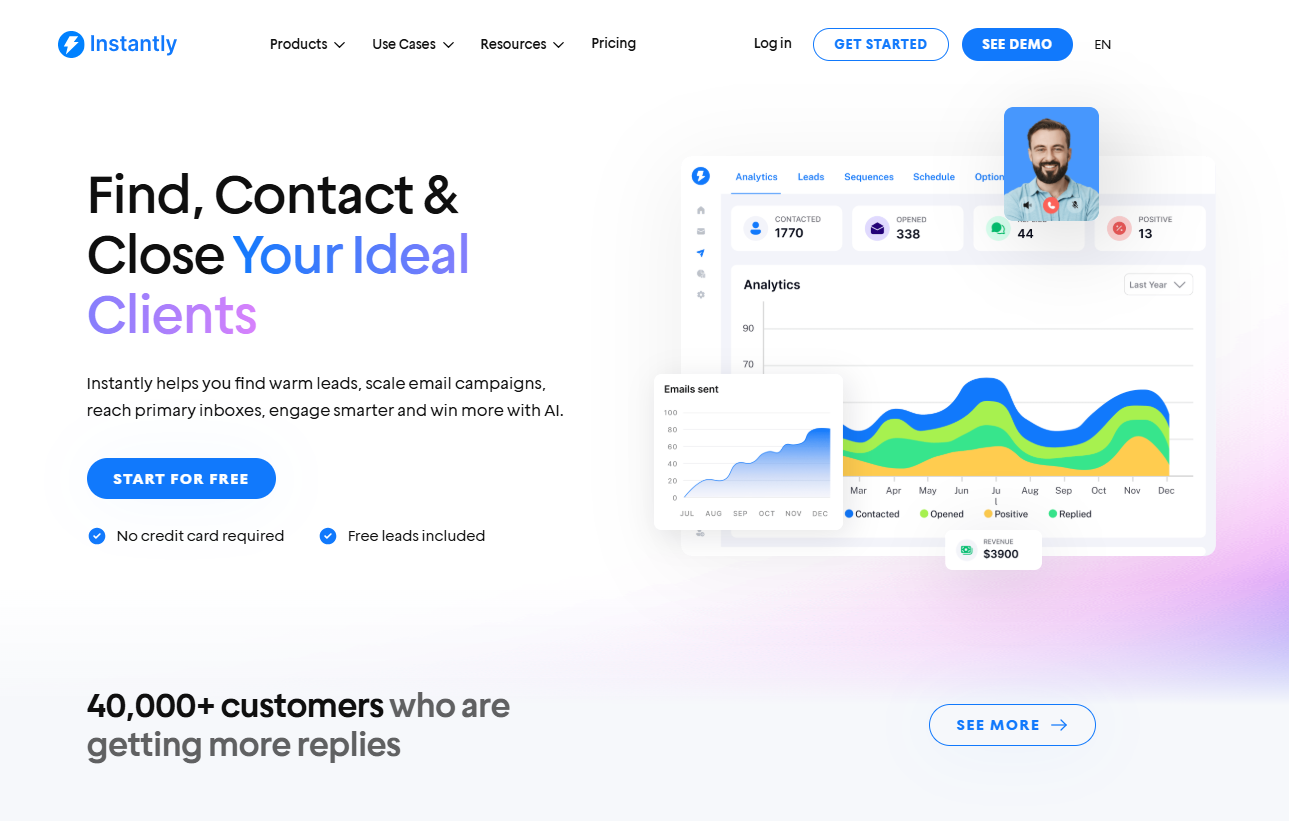
With Instantly, you don’t have to guess about timing. Use built-in analytics to see exactly when your open and reply rates spike (and when they flatline).
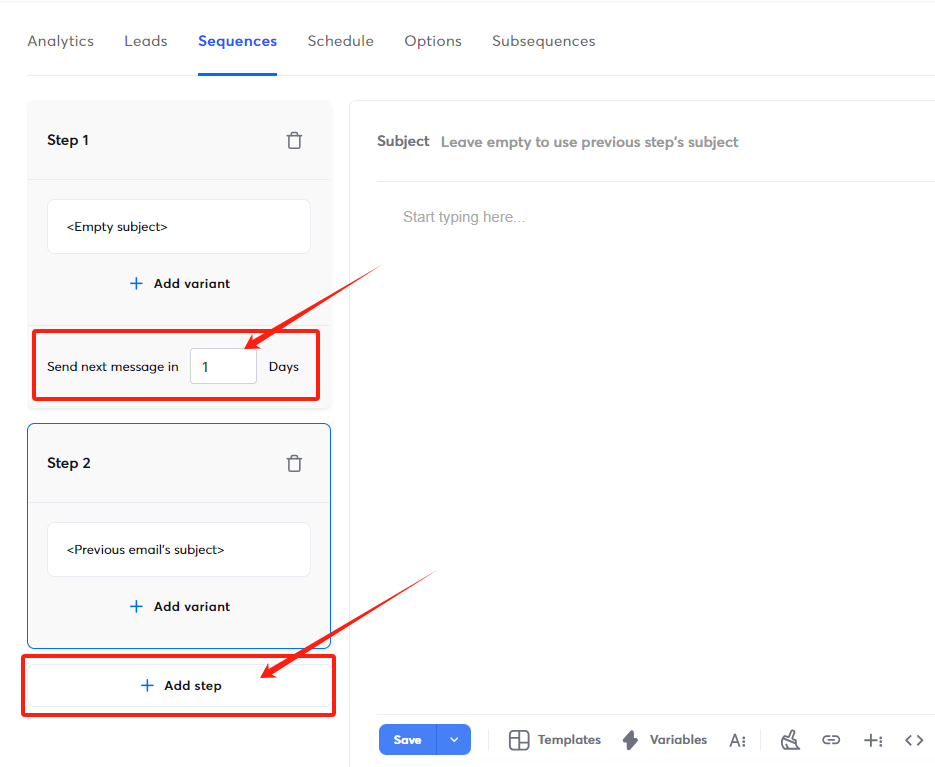
You can also schedule your cold email outreach messages for the exact windows that work, thanks to our AI-powered email sequences. No hoping, no hunches.
Sure, there’s always room for trial and error, but if you want a reply, start with these windows and pay attention to what gets opened. Then iterate and refine over time to achieve the best outcomes.
Checklist Before You Hit Send
Before you press send (or schedule), run your email through one last filter:
- Does your subject line say something a real person would open, or does it look like marketing from ten paces away?
- Is your first line about their world—something they’d stop and nod at?
- Are you getting to the point without padding? Cut every sentence that doesn’t pass the “would I say this out loud?” test.
- Are you asking for the smallest next step, not the biggest? If you wouldn’t say yes to your own ask, shrink it.
- Is your signature unmistakably yours, without borrowed slogans or unnecessary clutter?
- Finally, read it out loud. If you stumble, so will your reader.
If you can answer yes down the list, your email is ready. If not, draft again. That’s how you get sharp.
Tip: Automate pre-send checks with Instantly, so no rushed send slips through, giving you another layer of quality control (and fewer cringe-worthy mistakes).
Key Takeaways
Cold emailing executives boils down to being clear, relevant, and above all, respectful of their time. The best emails sound like they came from someone who understands what execs care about, not someone trying to sell a product at all costs.
If you want to stand out, write like a peer, not a bot. Make your ask simple. Be specific. Send it at a time when a real person is likely to read it. Edit until every word earns its place.
You don’t need a secret template or some “breakthrough” sales move. We cover this topic further in our get cold email tips for successful outreach resource. You just need to sound like someone whose email is worth opening.
Ready to put these insights into practice and see what Instantly can do for your cold outreach campaigns. For more on this, see our find top cold email outreach tools for research guide. Start your free Instantly trial today.


