


Updated April 6, 2026
TL;DR: The best proposal response is not written from scratch. It is built on a repeatable framework. Responding to a business proposal within 24-48 hours protects deal momentum, and the right structure (acceptance, negotiation, or decline) determines whether you move forward or burn a bridge. Every response needs a clear acknowledgment, a direct message, and defined next steps. For founders managing inbound proposals at scale, Instantly's Unibox centralizes all replies in one place and the AI Reply Agent drafts context-aware responses in under five minutes, so no proposal goes cold.
Most founders obsess over sending the perfect pitch while ignoring the days their capital sits locked in slow, manual proposal responses. By the time you draft a reply, the other side has already started talking to someone else. Speed and structure together are what close deals, protect your brand, and keep your pipeline moving.
This guide gives you copy-paste frameworks for every scenario: acceptance, negotiation, information requests, and professional declines, along with the practical reasoning behind each approach.
The cost of a poor proposal response
A slow or poorly framed reply does not just feel unprofessional. It can damage your competitive position. While proposal responses operate on a longer cycle than inbound leads, the same psychological principle applies: every hour of delay signals disinterest or disorganization to the other party.
Crafting the partnership's foundation
Your first response to a proposal sets the tone for the entire relationship. Whether you are accepting, negotiating, or declining, the other party reads your reply for signals about how you operate. A clear, considered reply signals a reliable partner. A vague or delayed one signals a difficult working relationship before it has even started.
Frame every proposal response as a trust-building moment, not just an administrative task.
Build brand trust with every reply
Polite, timely communication has a compounding effect on brand reputation, especially for bootstrapped founders who rely on referrals and word-of-mouth. Even a rejection communicated clearly and respectfully keeps the door open for future opportunities. Your reply is a public-facing signal about how your company treats partners and vendors, so it counts.
Accelerate decisions with clarity
Ambiguous replies create follow-up cycles that drain time on both sides. A response that states your intent, references the proposal details, and specifies the next step removes unnecessary back-and-forth. The goal is to move the deal forward or close it cleanly, and you do that through specificity, not pleasantries.
Core elements of every proposal response
An effective proposal reply generally includes six elements: a clear subject line, a professional salutation, an acknowledgment of the proposal, the core message (acceptance, negotiation, or decline), explicit next steps, and a professional close.
Core elements checklist:
- Subject line: Reference the original proposal title and your intent (e.g., "Re: Partnership Proposal - Moving Forward" or "Re: Service Proposal - Follow-up Questions")
- Salutation: Match the formality of the original sender
- Acknowledgment: Confirm receipt and reference a specific detail from the proposal
- Core message: State your position clearly, whether that is acceptance, a counter, an information request, or a decline
- Next steps: Define what happens next, who does it, and by when
- Professional close: Warm but brief
Three strong subject line formats:
- "Re: [Proposal Title] - Ready to move forward"
- "Re: [Proposal Title] - A few questions before we proceed"
- "Re: [Proposal Title] - Not the right fit at this time"
Confirm proposal receipt quickly
Send an acknowledgment within 24 hours even if you have not made a decision. A one or two sentence note that confirms receipt and gives a timeline for your full response can help reduce repeated follow-ups or assumptions that silence means rejection.
Reference specific proposal details
One of the clearest signals of a professional response is that you actually read the proposal. Generic replies that could apply to any vendor communicate disrespect. Mention a specific figure, timeline, deliverable, or approach from the document.
This distinction matters more when responding to a formal Request for Proposal (RFP) versus a direct inbound proposal. The table below shows the structural differences.
Element | RFP response | Direct proposal response |
|---|---|---|
Format and structure guidance | Dictated by the issuing document's format and requirements | Guided by the sender's tone and style |
Structure | Often addresses each RFP section in order | Often focuses on key terms and next steps |
Timeline | Follows stated deadline | Typically 24-48 hours |
Detail required | More comprehensive coverage | More concise, confirms key points |
As Consulting Success notes, an RFP response should address every question in the document in detail because the issuer has published exactly what they need. A direct proposal response, by contrast, should be quick, polite, personalized, and action-oriented.
Prevent delays: state next steps
Every reply should end with a clear statement of what happens next. If you are accepting, define the onboarding step. If you are negotiating, propose a call or a revised terms document. If you are declining, close politely and wish them well. Leaving next steps undefined forces the other party to follow up, which costs both sides time.
Match sender's professional tone
Read the proposal's tone before you write your reply. A formal RFP from a procurement team requires a structured, professional response. A direct email from a small agency or individual founder warrants a warmer, more conversational tone. Mismatching tone reads as tone-deaf and can stall deals that were otherwise moving forward. Focus on making your response customer-centric by addressing their specific challenges and goals rather than simply matching formality levels.
Confirming proposal acceptance and next steps
When you are ready to accept, move fast and be specific. Vague acceptances delay contracting, scope confirmation, and project kick-off. Your acceptance email should confirm your enthusiasm, validate the key terms, and define the immediate next action.
The AI Reply Agent classifies inbound replies by intent, including "interested" signals, and drafts a response in under five minutes. That means acceptance emails go out while the momentum is still high, without requiring a founder to stop everything and draft from scratch.
Frame your acceptance positively
Opening with a clear statement of acceptance helps the other party see your decision immediately. Burying the decision in pleasantries can slow comprehension and create unnecessary follow-up.
Verify proposal details for accuracy
Before finalizing an acceptance, confirm the key terms that will govern the engagement: start date, deliverables, pricing, payment schedule, and any dependencies. Catching misalignments at the acceptance stage prevents disputes later.
Action steps for project launch
Define who sends the contract or next document, the expected timeline, and the first meeting or milestone. If you need a signed agreement before work begins, say so in this email.
Professional acceptance email guide
Use these templates as starting points and adapt the specific details. Choose the template that matches your response type: acceptance templates (1-4) for moving forward, negotiation templates for counter-proposals, clarification templates when you need more information, and decline templates when the fit is not right.
Template 1: Straightforward acceptance
Subject: Re: [Proposal Title] - Moving forward
Hi [Name],
Thank you for the detailed proposal. We're ready to move forward on the terms outlined, including the [specific deliverable] at [price] with a start date of [date].
Please send over the contract or agreement for review. We'd like to sign by [target date] so we can begin on schedule.
Looking forward to working with you.
[Your name]
Template 2: Acceptance with minor clarification
Subject: Re: [Proposal Title] - One quick clarification before we confirm
Hi [Name],
We're excited to move ahead with your proposal. Before we confirm everything formally, could you clarify [specific point, e.g., the payment schedule for milestone 2]?
Everything else looks aligned. Once we have that confirmed, we're ready to sign and get started.
Best,
[Your name]
Template 3: Acceptance with revised start date
Subject: Re: [Proposal Title] - Accepted, adjusted start date
Hi [Name],
We've reviewed the proposal and want to move forward. One adjustment on our end: our preferred start date is [new date] rather than [original date], as our team needs [reason, e.g., two weeks to complete a current project].
If that works for you, please confirm and send over the next steps document. We're committed to this engagement.
[Your name]
Template 4: Enthusiastic acceptance with stakeholder intro
Subject: Re: [Proposal Title] - We're in, introducing the team
Hi [Name],
Great news: we're ready to move forward with your proposal as outlined. I'm copying [team member name], who will be your primary point of contact throughout the project.
We'd like to schedule a kick-off call for the week of [date]. [Team member name] will follow up with a calendar invite.
Looking forward to building something great together.
[Your name]
How to negotiate your deal structure
Negotiating a proposal by email requires a specific balance: you want to push back on terms without cooling the relationship or signaling that you're difficult to work with. The goal is to reach an agreement, not to "win" the negotiation.
For founders working with limited resources, this section is critical. Every dollar you negotiate back extends runway, and every deal you walk away from due to poor communication is pure loss. Leading with appreciation before stating your counter keeps the conversation collaborative and makes the other side more receptive to your position.
Build rapport before negotiation
Start your negotiation reply by acknowledging the quality of the proposal and the time the other party invested. This is not flattery; it's a practical tactic that signals you are engaged and serious, which makes the other side more receptive to your counter-offer.
Clarify and refine proposal details
Before presenting a counter, confirm your understanding of the current terms. This step prevents negotiating against a misread proposal and demonstrates thoroughness. Use a single sentence to summarize the terms as you understand them, then pivot to your adjustments.
Crafting your counter-proposal
In most cases, counter-proposals work best when they focus on one or two specific points. Proposing changes across every line item can read as a rewrite rather than a negotiation, which may frustrate the other party. Identify your two highest-priority adjustments (typically price and timeline or scope) and address those specifically.
For lean startup founders, your unique value proposition typically includes speed, focus, and direct founder involvement. Consider naming those explicitly when justifying a revised offer. "We can deliver this faster with a smaller scope and direct access to our technical team" is a compelling counter that offers something of value in exchange for a price adjustment.
Ready-to-send negotiation email
Template 5: Price counter with scope adjustment
Subject: Re: [Proposal Title] - Proposed adjustment to scope and pricing
Hi [Name],
Thank you for the thorough proposal. The overall approach is aligned with what we need, and we're genuinely interested in moving forward.
One area we'd like to discuss: the current pricing at [price] is above our current budget for this phase. We'd like to propose [revised price] for a slightly adjusted scope, specifically [describe reduced scope, e.g., removing deliverable X from phase 1].
Would you be open to a 20-minute call this week to align on the details?
Best,
[Your name]
Template 6: Payment terms negotiation
Subject: Re: [Proposal Title] - Payment schedule question
Hi [Name],
We're ready to move forward with the core terms of your proposal. One adjustment we'd like to request is a payment schedule structured as [e.g., 30% on signing, 40% at midpoint, 30% on completion] rather than [their proposed terms].
This keeps our cash flow aligned with project milestones. If that works for you, we can proceed to contracting immediately.
Looking forward to your thoughts.
[Your name]
Template 7: Scope reduction counter
Subject: Re: [Proposal Title] - Starting with phase one
Hi [Name],
We reviewed your proposal carefully and see strong alignment on approach. Given our current stage, we'd like to start with [specific phase or deliverable] before expanding to the full scope.
This would bring the initial investment to approximately [estimate] and give both teams a chance to validate the working relationship. Are you open to structuring it this way?
[Your name]
Template 8: Timeline negotiation
Subject: Re: [Proposal Title] - Adjusted timeline request
Hi [Name],
Thank you for the proposal. We'd like to move forward but need to request a modified timeline. Our team can be ready to begin on [date], which is [X weeks] later than your proposed start date.
Everything else in the proposal works for us. Please let us know if this adjustment is feasible and we'll confirm from there.
[Your name]
How to secure crucial missing information
Sometimes a proposal is strong in concept but thin on specifics. Before you accept, negotiate, or decline, you need the data to make an informed decision. Requesting clarification is professional and expected; it is not a rejection signal.
Validate proposal fit with questions
Frame your information request as due diligence rather than skepticism. Acknowledging the proposal's quality before asking questions can help maintain rapport while getting you what you need.
Request a pricing breakdown
If the proposal includes a single lump-sum price without line items, ask for a breakdown by deliverable or phase. This lets you identify where the budget is concentrated and gives you more precise data for a counter-proposal or approval process.
Get proof: request case studies
If a vendor claims specific outcomes (e.g., "we reduced churn by 40% for a SaaS client"), ask for the case study. This is standard due diligence and most reputable vendors will provide it readily.
Template for proposal specifics
Template 9: General clarification request
Subject: Re: [Proposal Title] - A few questions before we proceed
Hi [Name],
Thank you for sending this over. The proposal covers the key areas well and we're interested in exploring this further.
Before we confirm, we have a few questions:[Question 1, e.g., Can you break down the pricing by deliverable?][Question 2, e.g., What does the onboarding timeline look like in weeks 1-2?][Question 3, e.g., Do you have a case study from a similar engagement?]
Once we have those answers, we can move to a decision quickly.
Best,
[Your name]
Template 10: Pricing breakdown request
Subject: Re: [Proposal Title] - Pricing detail request
Hi [Name],
We're reviewing the proposal and would like to request a detailed pricing breakdown by deliverable or phase before we confirm. This helps our internal approval process move faster.
Could you send that over by [date]? We want to keep this moving.
[Your name]
Template 11: Case study and reference request
Subject: Re: [Proposal Title] - Reference request
Hi [Name],
We're interested in moving forward and want to complete our due diligence. Could you share one or two case studies from clients in a similar space, along with a reference contact if available?
We aim to make a decision by [date], so the sooner you can share these, the better.
[Your name]
Template 12: Timeline clarification
Subject: Re: [Proposal Title] - Timeline and dependency question
Hi [Name],
Thank you for the proposal. One thing we'd like to clarify before confirming: the timeline shows delivery by [date], but we'd like to understand what dependencies or assumptions that is based on from our side.
Could you walk us through the key milestones and what you'd need from us at each stage?
[Your name]
How to decline a proposal professionally
Declining a proposal is one of the most important communication skills a founder can develop. A poorly handled decline wastes goodwill and closes doors permanently. A well-handled one leaves the relationship intact and often earns more respect than the original proposal did.
Decline promptly and professionally
Do not delay a decline out of discomfort. Waiting weeks to reject a proposal can waste the other party's time and often signals a lack of respect. Acknowledge the work they put in, be direct, and close clearly.
Offer concise, relevant reasons
You do not owe a detailed explanation, but a one-sentence reason (budget, timing, fit, or direction change) helps the other party understand and move on. Vague declines feel dismissive; specific ones feel honest.
Strategically decline, stay open
If the proposal is genuinely good but the timing or budget is wrong, say so explicitly. "This is not the right time for us, but we'd like to revisit in Q3" keeps the relationship alive and creates a real future opportunity rather than a polite brush-off.
Quick rejection email template
Template 13: Decline due to budget
Subject: Re: [Proposal Title] - Not moving forward at this time
Hi [Name],
Thank you for the detailed proposal and the time you invested in putting it together. After review, we've decided not to move forward at this stage. The investment is above what we can allocate to this area in our current budget cycle.
We appreciated the quality of your approach and may revisit this in a future period. Best of luck with the project.
[Your name]
Template 14: Decline due to fit
Subject: Re: [Proposal Title] - Not the right fit currently
Hi [Name],
Thank you for sending this over. We reviewed the proposal carefully and determined it's not quite the right fit for where we are right now. Our priorities have shifted toward [brief, vague description] and this engagement doesn't align with that direction at this time.
No reflection on the quality of what you've outlined. We wish you well with the work.
[Your name]
Template 15: Decline with future opening
Subject: Re: [Proposal Title] - Timing isn't right, but let's stay in touch
Hi [Name],
We appreciate the proposal. The approach is solid and we can see the value, but the timing is not right for us in Q1. We're focused on [brief reason] and won't be in a position to move on new engagements until [timeframe].
Would you be open to reconnecting around [month]? We'd like to keep this on the table.
[Your name]
Template 16: Decline with no explanation
Subject: Re: [Proposal Title] - Passing for now
Hi [Name],
Thank you for the proposal. After internal review, we've decided not to move forward with this engagement.
We appreciate your time and effort. Best of luck with the project.
[Your name]
Prevent costly proposal reply mistakes
Most proposal response errors are avoidable. Five common mistakes consistently damage professional relationships: ignoring the proposal entirely, being too vague, overloading the response with information, missing stated deadlines, and mismatching tone.
Here is how each one plays out and how to avoid it:
- Ignoring the proposal: Even a "not right now" response is better than silence. No response forces the other party to follow up repeatedly.
- Being too vague: Replies like "We'll think about it" give no actionable information and waste everyone's time.
- Information overload: A negotiation email that rewrites the entire proposal can signal poor prioritization. Keep counters to two or three specific points.
- Missing the timeline: If the proposal states a decision deadline, honor it or request an extension proactively.
- Wrong tone: A casual reply to a formal RFP reads as dismissive; an overly formal reply to a friendly proposal reads as cold.
Slow responses kill proposal momentum
Research shows that responding within one hour increases qualification rates sevenfold compared to longer delays in sales contexts. While proposal decisions operate on longer cycles, every day of delay still shifts momentum to a competing option. For founders managing multiple inbound proposals alongside outbound campaigns, the challenge is not knowing what to write; it is having the bandwidth to write it fast enough.
"The fact that emails actually land in main inboxes as well as the unibox with its alerts that allow my team to focus only on positive replies - this saves so much time and human labor." - Idan S. on G2
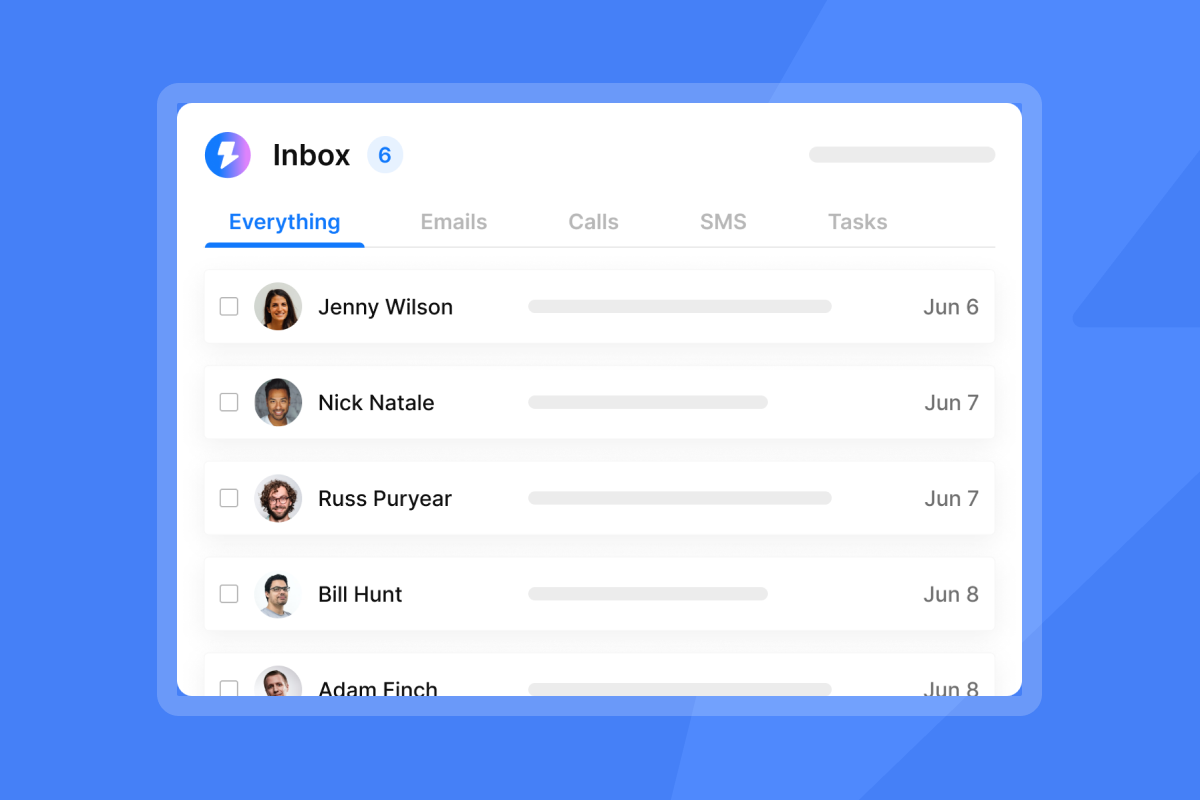
The Instantly Unibox solves this directly. Instead of checking multiple inboxes or scanning campaign dashboards, every inbound proposal reply surfaces in a single centralized view with the original campaign context attached.
Avoiding unclear response pitfalls
Clarity is a sign of respect. Proposals contain significant effort from the sender, and a vague reply fails to honor that. Before you send, read your draft and ask: does this reply tell the other party exactly where things stand and what happens next? If not, revise it.
"I use Instantly for cold emailing for my company, and I really appreciate the deliverability it offers. I like the 'interested leads' feature because I get notified when somebody is interested, so I don't have to check it manually." - Laura R. on G2
Risking your professional reputation
Domain health directly affects whether your proposal reply lands in the primary inbox or gets flagged as spam. Since February 2024, Google and Yahoo have required all bulk senders to have SPF, DKIM, and DMARC configured, with Microsoft following in May 2025. Even for one-to-one proposal replies, poorly configured domains create delivery risk.
Organizations that enforce DMARC experience a 3-10% improvement in inbox placement for legitimate emails, and senders who implement inbox placement monitoring can achieve sustained inbox rates above 98%, compared to the global average of 85%. If your reply to a time-sensitive proposal ends up in the sender's spam folder, the deal is effectively dead before they see your response.
Instantly's SPF, DKIM, and DMARC setup guide covers domain authentication for new email accounts, and the Inbox Placement tool lets you test where your messages land before you send.
Risking hidden proposal costs
Agreeing to vague terms in an acceptance email creates liability. Always confirm pricing, payment schedule, scope, and revision limits in your written response, even if a call preceded the email. Your email is the paper trail.
Avoiding proposal response mistakes
Good process prevents most of these errors. A repeatable checklist, combined with centralized inbox management and AI drafting tools, can help maintain consistent proposal response quality.
Optimal proposal response time
The industry benchmark is 24-48 hours for a substantive response to any business proposal. For inbound proposals where timing is competitive, responding faster can help signal responsiveness and professionalism.
Instantly's AI Reply Agent handles inbound reply classification and drafting in under five minutes. The agent classifies replies as interested, not interested, out of office, or requesting more information, then drafts a personalized response referencing the lead's specific question. The result: founders can review and approve a context-aware draft instead of writing from zero. The 30-day test by Faris Bio on YouTube explores the real-world output of this workflow in detail.
Requesting a proposal decision extension
If you need more time to evaluate a proposal, request the extension proactively before the stated deadline. A one-sentence email that acknowledges the deadline, explains you need [X additional days], and confirms you are seriously evaluating the proposal keeps the relationship intact.
Template 17: Extension request
Subject: Re: [Proposal Title] - Request for additional review time
Hi [Name],
We're actively reviewing your proposal and want to give it the evaluation it deserves. Could we have until [new date] to provide our full response? We're committed to getting back to you by then.
Thank you for the flexibility.
[Your name]
When to negotiate via email or call
Email negotiation works well when the points are specific and can be documented clearly (pricing changes, scope adjustments, timeline shifts). A call is better when the proposal is complex, the relationship is new and fragile, or the counter-proposal requires significant explanation and context.
A practical approach: start the negotiation via email to establish the written record, then offer a call if the back-and-forth becomes more than two rounds. "I'll send this over in writing, and let's jump on a 20-minute call to align" is a framework that gives you both.
Template 18: Follow-up after no response
Subject: Re: [Proposal Title] - Quick follow-up
Hi [Name],
I wanted to follow up on the email I sent on [date] regarding your proposal. We're still working through our evaluation and wanted to confirm you received our note.
If our timeline has shifted or you have any questions, we're happy to connect. Otherwise, we'll send our full response by [date].
[Your name]
For automated follow-up management across multiple proposal threads, the Instantly email threading guide explains how to keep sequences in the same thread so replies stay in context.
How to decline a proposal without explanation
You do not always owe an explanation for a decline. Template 16 above covers this scenario. Use it when you want to close the conversation cleanly without creating an opening for a counter-pitch. Keep it brief, polite, and final.
For follow-up strategy across active proposal threads, the Instantly YouTube series on cold email follow-up strategy covers sequencing logic that applies equally to proposal response workflows.
Founders managing five or more active proposals at once benefit from the AI reply suggestions feature inside Instantly, which surfaces draft responses based on the content of each incoming message, cutting manual drafting time significantly.
"I really appreciate how Instantly saves me a significant amount of time, particularly in sending emails to my clients without them ending up in spam." - Adnan K on G2
Proposal replies are one-to-one messages, but they deserve the same deliverability attention as outbound campaigns. The Instantly copywriting framework covers reply rate optimization tactics that apply to both outbound and response scenarios.
Managing multiple inbound proposal threads without a centralized system means missed responses, lost context, and stalled deals. Instantly's flat-fee Outreach plans starting at $47 per month include the Unibox and unlimited email accounts, so you handle all inbound and outbound email from one place without a per-seat cost that scales against you as your pipeline grows. Per-seat tools like Lemlist's Multichannel Expert at $109 per user reach $1,090 per month for a 10-person team, while Instantly's Hypergrowth plan at $97 per month covers unlimited accounts and all users at a flat rate.
Start managing all your proposal replies in one place. Try Instantly free and let the AI Reply Agent draft responses while you focus on the conversations that matter.
FAQs
How quickly should you reply to a business proposal email?
Respond within 24-48 hours for most proposals. Research shows the odds of qualifying a lead drop by 400% if you wait longer than five minutes for inbound leads, and the same urgency principle applies to proposal momentum.
What is the difference between replying to an RFP and a direct proposal?
An RFP response typically addresses every section of the request document in structured order, while a direct proposal reply often focuses on confirming intent, referencing key terms, and defining next steps in a concise email. RFPs typically have a fixed deadline; direct proposals expect a reply within 24-48 hours.
How do you politely decline a business proposal without burning bridges?
Acknowledge the proposal's quality, state one brief reason for declining (budget, timing, or fit), and leave the door open if appropriate. A two or three sentence decline sent within 48 hours preserves more goodwill than a detailed reply sent two weeks late.
How does domain health affect proposal reply deliverability?
Poorly configured SPF, DKIM, and DMARC records risk sending your reply to the recipient's spam folder. Fully authenticated senders achieve inbox placement rates of 95-98% compared to the 85% global average, meaning a missing DMARC record can get your accepted proposal flagged as spam.
When should you negotiate a proposal by email versus on a call?
Use email when negotiating specific, documentable points like price and timeline. Move to a call when the proposal requires significant explanation, the relationship is new, or the email exchange has exceeded two rounds without resolution.
How does Instantly's AI Reply Agent help with proposal responses?
The AI Reply Agent classifies incoming replies by intent (interested, not interested, requesting more info) and drafts a personalized response in under five minutes, including scheduling links when a lead signals readiness. It supports both Human-in-the-Loop review and full Autopilot modes.
Read More
Key terms glossary
RFP (Request for Proposal): A formal document issued by a company that invites vendors or partners to submit detailed proposals against a defined set of requirements. RFP responses must address each requirement in the document in order.
Unibox: Instantly's centralized inbox that aggregates all replies from all sending accounts and campaigns into a single dashboard, so you manage proposal threads without switching between email accounts.
AI Reply Agent: Instantly's AI tool that classifies inbound email replies by intent and drafts context-aware responses in under five minutes, supporting both supervised review and fully automated reply workflows.
Inbox placement: The percentage of sent emails that land in the recipient's primary inbox rather than spam or promotions folders, directly affected by domain authentication (SPF, DKIM, DMARC) and sender reputation.
SPF / DKIM / DMARC: Email authentication protocols required by Gmail, Yahoo (since February 2024), and Microsoft (since May 2025) that verify a sender's identity and reduce the chance of messages being flagged as spam.
Counter-proposal: A formal or informal written response to a proposal that accepts the concept but proposes modified terms, typically adjusting price, scope, timeline, or payment structure.
Flat-fee pricing: A pricing model where you pay one fixed amount regardless of the number of users or email accounts, as opposed to per-seat pricing that scales with headcount.


