

PR emails work best when you target the right audience, use clean lead data, highlight relevant angles, and write messages that speak to what each journalist cares about.
For even better results, segment your list, use a tool that gets personalization right, and send follow-ups that add something new instead of nudging. When you do that at scale, PR stops being guesswork and starts becoming something you can rely on week after week.
You’ve probably sent PR emails that went unanswered. It’s rarely because your story is bad. It’s because the person on the other end gets a mountain of pitches every day. And most of them sound the same. The same “exciting news.” The same “thought your audience would love this.”
When done right (with research, decent data, and a bit of empathy), PR emails remain one of the best ways to build a positive, reputable brand image. You can land backlinks, find brand ambassadors, and get the kind of press coverage money can't buy.
But you need a repeatable process that gets replies because your pitches actually deserve them. Below, we break down how to write PR emails that hit all the right notes.
Why Most PR Emails Get Ignored (and What to Stop Doing)
When PR emails don’t get replies, most teams start tweaking subject lines and email copy. Maybe swap “exciting” for “exclusive.” That’s usually the wrong place to look.
The deeper problem is treating PR like a writing exercise instead of a system. Copy matters, sure. But copy can’t save a broken setup. If you want replies to be predictable, a few habits need to go.
Sending Emails to the Wrong People
Sometimes, the reason nobody replies is that you’re emailing people who were never a fit in the first place. Are the emails in your contact list validated? Are they enriched with up-to-date and real-time data? If you are not maintaining list quality, bounce rates rise and sender reputation drops.
A tech journalist shared this exact frustration on LinkedIn. He runs a niche technology and cybersecurity publication. A PR agency sent him a mass email for a tanning moisturizer.
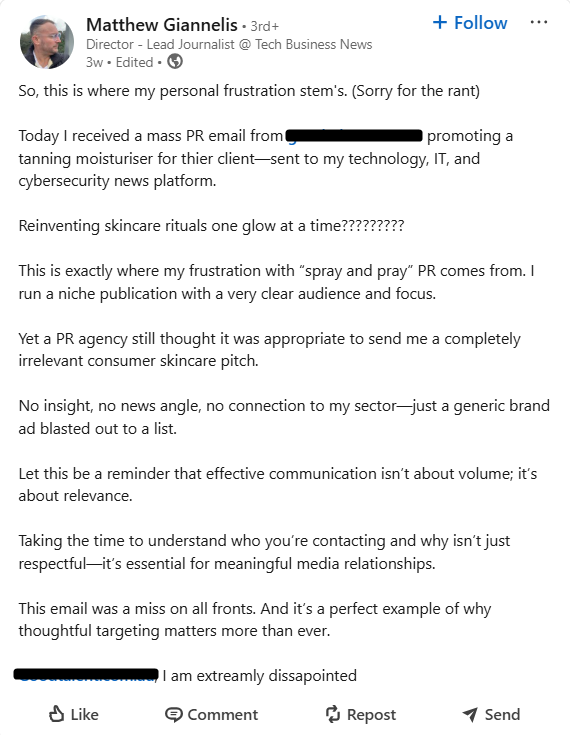
No news angle, no connection to his beat, just a skincare ad dropped into a tech inbox. That email didn’t just get deleted. It became a public example of everything reporters hate about “spray and pray” PR.
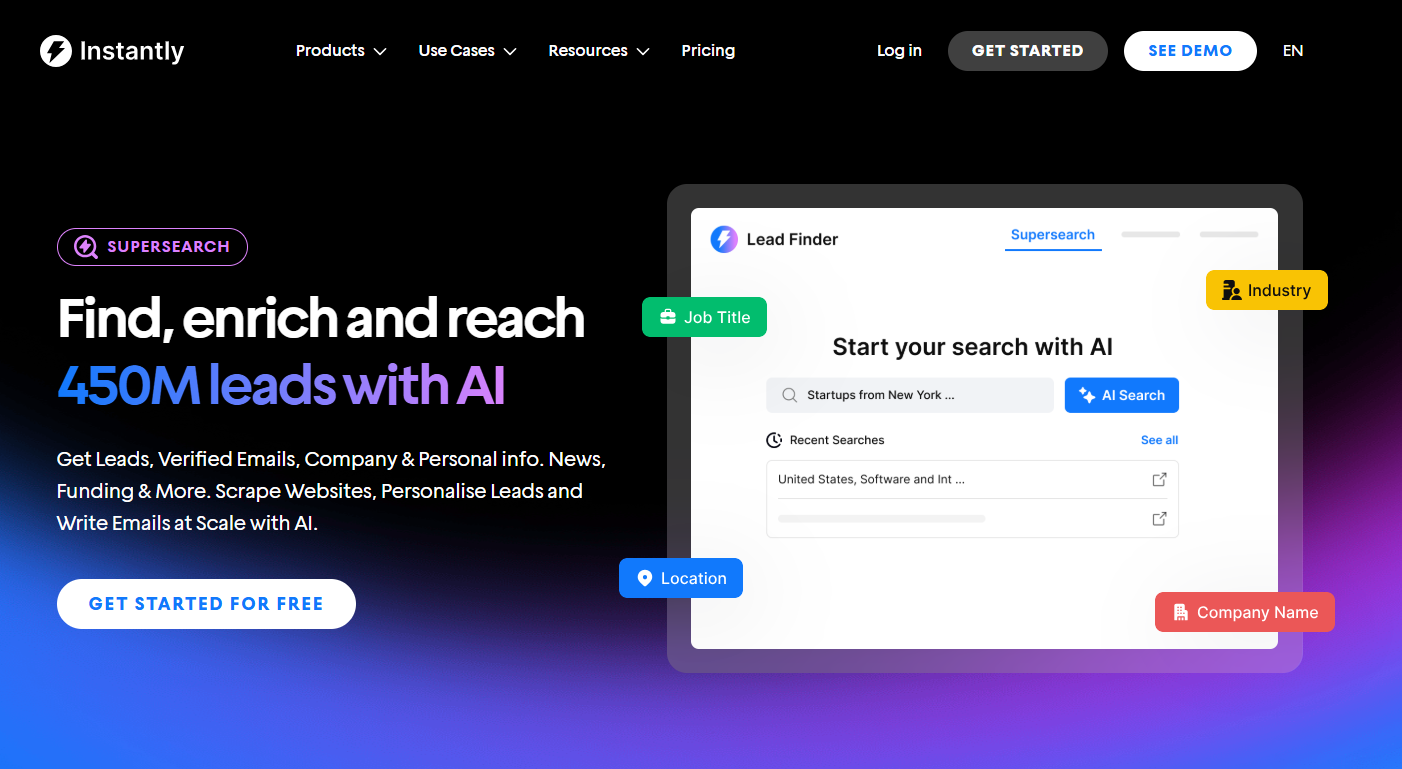
So before you send anything, fix your data. Validate emails. Enrich contacts. Make sure the person you’re emailing actually covers what you’re pitching. Tools like Instantly SuperSearch help here by giving you pre-validated, enriched leads tied to real topics and beats. That alone removes half the reasons emails die silently.
Copying Templates 1:1
Templates are fine. Blindly copying them isn't. A template that worked once, for one brand, with one journalist, is not a strategy. Context is. Journalists respond to relevance. So, if you’re using templates, remember to prioritize context.
Compare these two approaches, for instance:
Subject: Exciting News From {{company}}
“I wanted to share some exciting news about {{company}}. We recently launched {{product}} and believe it would be an excellent fit for your audience…”
The template above says nothing. Chances are, you’ve already lost your audience right from the subject line. Now, consider this one:
Subject line: Story idea for your {{recent topic covered}} piece
Hi {{journalist first name}},
I saw your recent article on {{specific topic}} and your point about {{specific insight}} stood out. We have just announced {{specific news event}}, and the timing aligns closely with the trend you highlighted. I'd be happy to share details or connect you with {{relevant person}}.
This one shows you paid attention. You reference something they wrote. You connect your news to a trend they care about. You give them a reason to keep reading. Same structure. Very different outcome.
Making the Email About You
Yes, PR is about your company. But PR emails are not. Journalists don’t wake up hoping someone will tell them how exciting your launch is. They care about their audience and their credibility.
When an email leads with “we’re thrilled to announce,” it signals that the sender hasn’t thought beyond their own news. That’s the fastest way to get ignored or filtered out entirely. Coverage isn’t a favor. It’s someone’s job. Treat it that way.
When you write PR emails, focus on what they gain by covering the story. A data point. An expert voice. A fresh angle their readers haven’t seen yet. Respect that, and replies stop feeling random.
What Goes Into Reply-Worthy PR Emails
If you want consistent replies, you can’t treat PR like a one-off writing task. It behaves much more like cold outreach. Volume matters, but only when the quality holds up.
Here’s how that usually plays out in practice:
Use an Automation Tool That Respects Context
Most tools stop at {{first name}} and {{company}}. That’s table stakes. Journalists see right through it. What moves the needle is context. What does the journalist typically cover? What did they write last week? What do they care about right now?
Instantly make this easier by letting you attach real context to each contact. You can upload your PR contact list, create custom variables (for recent articles, audience type, coverage, etc.), and reference it naturally in your copy.
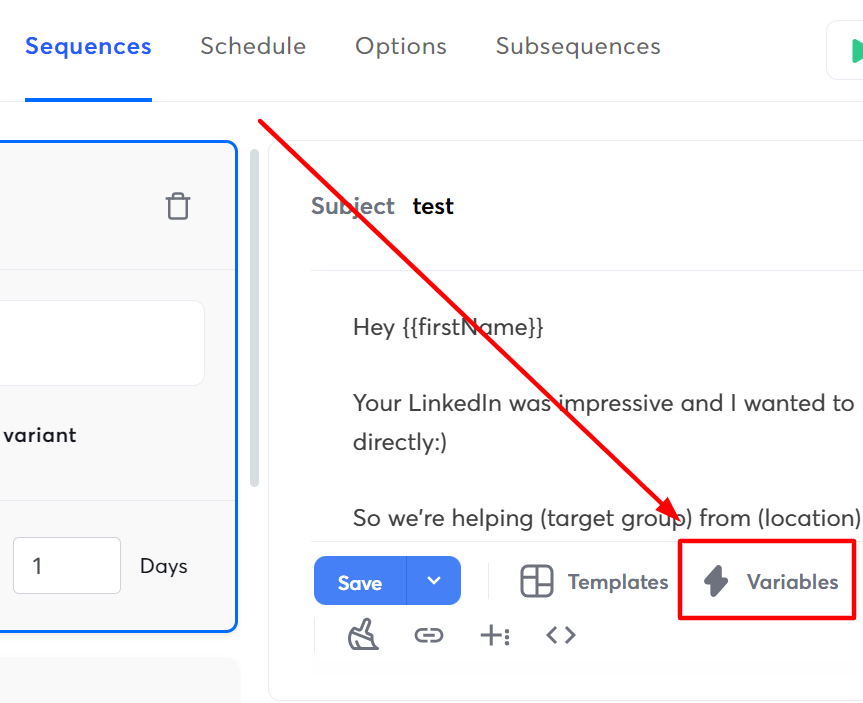
When you write your template, those variables populate with actual context. If you use SuperSearch, you can even enrich lists with fresh publication data before you hit send.
Segment Your Contact List to Offer More Relevant Value Propositions
Before you write anything, it pays to sort your list. Not everyone wants the same story, even if the story is good. Some journalists want breaking news. Others want data. Some want commentary they can slot into something they’re already working on.
Even with only basic lead information, you can still build segments that improve reply rates. Here is how to do it step by step:
- Segment by beat or topic first: Use the outlet name, job title, and recent articles to tag contacts by what they actually cover, such as SaaS, marketing, healthcare, fintech, or local business.
- Segment by content format preference: Some journalists prefer press releases and announcements over other formats. Others respond better to data or expert commentary. Look at their past work and tag them as “news,” “analysis,” or “opinion” focused.
- Segment by publication size and pace: National outlets move more slowly and want bigger stories. Local and niche publications publish more frequently and are often open to practical angles.
- Segment by relationship temperature: Tag who has replied before, who opened but did not respond, and who has never engaged. This allows you to adjust the tone, timing, and follow-up style for each group.
- Segment by timing and availability: A weekly columnist has a very different rhythm than a daily reporter. Understanding cadence helps you send messages at times that align with their workflow.
Always Send Follow-ups That Add Value
Most emails don’t get ignored because they’re bad. They get ignored because inboxes are chaos. Your follow-up shouldn’t ask if they “saw this.” It should earn a second look. Here’s the difference.
Initial email
Subject: New data on {{industry or topic}} trends
Hi {{journalist first name}},
We just released a report on {{industry or topic}} based on data from {{number of companies}} {{company type}} over {{timeframe}}. One finding stood out. {{key insight}} is changing how {{audience type}} approach {{problem or opportunity}}.
If you’re covering {{topic or trend}}, I’m happy to share the full dataset or walk through the highlights.
Best,
{{your name}}
Now, instead of a follow-up like:
Subject line: Just following up
Hi {{journalist first name}},
Just bumping this to the top of your inbox in case you missed my last email. Let me know if you are interested.
Go for this:
Subject: One data point tied to your {{recent article topic}}
Hi {{journalist first name}},
Quick follow-up with one specific stat from the report. Among {{number of companies}}, {{specific insight}} showed up consistently. It connects closely to your recent piece on {{recent story reference}}.
If that angle is useful, I can share a short summary and a quote from {{relevant person}} on what this means for {{audience type}} right now.
Best,
{{your name}}
Same story. New value. Much better odds. PR replies come from showing that you understand the person you’re emailing and that you’re not wasting their time. Everything else is just execution.
Proven PR Email Templates That Earn Replies and Coverage
PR emails work best when they match the type of value you’re offering. A data pitch, a speaking opportunity, and a product review are three very different conversations. Treating them the same is how good stories get ignored.
Below are real-world template frameworks our users adapt to generate backlinks, partnerships, and meaningful coverage. Feel free to adapt these as needed to structure emails that feel intentional, relevant, and easy to say yes to.
Benefit and Value Driven PR Email
It’s a given that your emails should be benefit-driven. But what type of value can your business or your client bring to a publication?
One Instantly user, Sameer, runs a PR agency that books speaking opportunities for consulting firms. His outreach doesn’t pitch the firm. It pitches the insight the audience walks away with. Here’s how that structure looks in practice:
Subject: Speaking idea for your {{audience type}} on {{specific topic or trend}}
Hi {{first name}},
I’ve been following {{publication/event/podcast name}} and your recent {{article/episode/session}} on {{related topic}} stood out, especially your point about {{specific insight}}.
Since you often feature voices on {{high-level theme}}, I wanted to share a speaking idea that could be genuinely useful for your {{audience type}}.
{{speaker name}} is a {{role}} at {{firm name}}, where they work closely with {{target audience}} on {{core problem or goal}}. Over the past {{time period}}, they’ve seen firsthand how {{specific challenge or trend}} is affecting {{audience type}}.
One session idea we had in mind is: “{{proposed talk title}}.”
It would cover:
{{key takeaway 1}}
{{key takeaway 2}}
{{key takeaway 3}}
If helpful, I’m happy to send a short outline and a one-page background on {{speaker name}}’s experience and past appearances.
Best,
{{your name}}
Brand Partnership Outreach: Event Sponsorship Email Template
Not every PR email is about press coverage. Sometimes your best value proposition is a partnership. That could be product sponsorships, co-branded events, or speaking engagements that put your brand in front of a specific, engaged audience.
When you pitch brand partnerships, your email has to answer three questions fast:
- Who is the audience?
- What experience are you creating?
- What does the brand get in return?
Here is a sponsorship-style email built around those points:
Subject: Partnership opportunity with {{brand name}}
Hi {{brand name}} team,
My name is {{your name}}, and I’m with {{organization name}}, a {{brief description}} based in {{location}}.
We’re currently preparing for {{event or campaign name}}, launching on {{date}}, and expect around {{expected attendee count}} {{audience description}} participants.
We’re designing a series of experiences where a partnership with {{brand name}} could add real value, whether through curated gifts, product integration, or on-site presence.
In return, we can offer visibility across {{channels}}, including {{primary platform}} with {{follower count}} engaged followers, along with brand mentions and content throughout the event. We expect approximately {{daily attendee estimate}} attendees per day.
If this sounds aligned, I’d be glad to share a few specific ideas tailored to your brand goals.
Best regards,
{{your name}}
Product Review PR Outreach Template
Product review outreach sits in a nice middle ground between PR and influencer marketing. Rather than just “coverage,” you're offering something specific that your contact can use to create content and value for their audience: a product to test, a story to tell, and often a giveaway to make things more engaging.
Subject: Interested in testing {{product descriptor}} for your {{audience type}}?
Hi {{first name}},
I’m {{your name}} from {{brand name}}. We’ve been following your {{channel type}}, and your recent piece on {{specific topic or post}} was especially relevant to what we’re building.
We’ve been working on {{product name}}, a {{brief product description}} designed for {{who it helps}}. Based on your focus on {{audience interest}}, it felt like a natural fit.
If you’re open to it, we’d love to send {{number of units}} for you to test, plus a few extras for a giveaway if that’s useful for your audience. We’re flexible on format and timing and happy to collaborate in a way that fits your style.
Let me know if you’re interested, or if there’s a better way to structure this so it works well for you and your audience.
Best,
{{your name}}
Key Takeaways
PR emails work when they respect attention, context, and craft. To build a system that consistently earns replies and coverage:
- Treat PR like a system, not a one-off send. Fix data quality, deliverability, and sending patterns first.
- Segment contacts by beat, format preference, audience, and relationship stage.
- Lead with a clear, audience-first value proposition: data, insight, access, or experience.
- Follow up with new angles or assets, not generic nudges.
Instantly helps manage the operational side, from organizing contact data to supporting thoughtful follow-ups, so the strategy and storytelling don’t get lost in the mechanics.
More specifically, you can automate personalization with {{custom variables}}, use SuperSearch to gather deeper insights, and create follow-up sequences that feel timely and relevant. Start your free Instantly trial.


