


Updated March 12, 2026
TL;DR: Generic subject lines fail C-suite recipients because they ignore role-specific pressures. Founders typically respond to growth and competitive signals. CFOs typically respond to cost savings and risk reduction. CTOs typically respond to technical precision and security. Build subject lines from modular parts (pain point + relevance + specificity), then use A/Z testing to validate what actually opens before you scale volume. Target a 40-60% open rate by matching copy to the decision-maker's real KPIs, not just their job title.
SDRs use the same subject lines for a CFO that they use for a Founder. That mistake doesn't just hurt open rates. It burns your domain reputation every time a recipient ignores, deletes, or marks your email as spam. To break through at the C-suite level, you need a composable strategy that maps each subject line to the specific pressures and goals of the role you're targeting. This guide gives you that playbook: the psychology behind each persona, 5-8 subject line examples per role, and a repeatable testing process to find what works before you scale.
Why generic hooks fail at the executive level
We see a cold email open rate of 44% across B2B campaigns in 2026, but that number hides a wide gap between teams that match subject lines to persona and teams that don't. A CFO receiving "Quick question" for the tenth time this week isn't just unlikely to open it. They're likely to hit "Report spam," which damages your sender reputation for every future send.
Modern spam filters make this worse. Major email providers use AI models trained on billions of messages to evaluate subject lines in context. Low engagement on patterns like "quick question" or "just checking in" tells those models your email isn't wanted, which affects inbox placement on every future campaign.
The deeper problem is the mental spam filter. C-suite executives see dozens of unsolicited emails daily. A subject line that could apply to anyone at any company signals immediately that no research went into the outreach. Overusing clickbait tactics also trains recipients to distrust your brand, compounding deliverability damage with reputational damage.
A single weak campaign doesn't just waste your TAM on a bad message. It erodes months of sender reputation built through consistent warmup and healthy sending patterns. That's why subject line strategy connects directly to deliverability infrastructure. Our cold email strategy guide walks through how domain health and sending behavior interact in detail.
"I appreciate Instantly for its intelligent handling of domain and mailbox rotation as well as provider matching, which is critical for ensuring that my emails land directly in the primary inbox instead of getting caught in spam filters." - Richard E. on G2
The gap between average and top quartile comes down to how well your subject line matches the recipient's actual concerns, not clever wordplay or tricks.
How to build a composable subject line system
Build your composable subject line from three modular parts you can swap and optimize independently:
- Pain point or desire: What this role is measured on or worried about right now.
- Relevance signal: Why you're contacting them specifically (company name, recent news, industry trigger).
- Specificity hook: A number, a named tool, a named competitor, or a named metric that shows you did your research.
This structure scales because you teach your SDRs a system, not a static list of templates. When they understand what a CFO actually cares about, they can write new variants without starting from scratch.
Generic vs. composable: a direct comparison
Generic | Composable |
|---|---|
"Quick question" | "{{companyName}}'s ARR efficiency gap" |
"Checking in" | "Compliance gap in your {{toolCategory}} stack" |
"Can we chat?" | "API latency in {{currentTool}}: what we've seen" |
Character count matters, but relevance beats length. Email tool tester data shows the maximum visible characters range from 33 on Gmail Android to 48 on Apple Mail iPhone. Research and a Marketo study both point to 41 characters or 7 words as the sweet spot, with the core message ideally inside the first 33 characters since that's all most mobile users see before deciding to open.
Practical target: 4 to 7 words, with the most important word or phrase in positions 1 through 3.
The anatomy of a cold email masterclass video covers how to structure a cold email from the first word, and our framework for 400+ monthly replies shows how the subject line connects to the opening line and CTA.
Role | Core fear | Core desire | Subject line keyword triggers |
|---|---|---|---|
Founder | Losing competitive position, burning capital | Sustainable growth, capital efficiency | Scale, CAC, ARR, competitor, market |
CFO | Budget overruns, compliance failures, waste | Cost reduction, profitability, NRR | Cut, reduce, ROI, audit, spend, compliance |
CTO | Technical debt, security breaches, downtime | System reliability, AI governance, developer velocity | API, SOC 2, latency, technical debt, integration |
Subject lines for founders: focus on growth and speed
Founders get evaluated on product-market fit, unit economics and acquisition model. In 2026, macroeconomic pressures are pushing SaaS founders to prioritize sustainable growth backed by operational efficiency rather than headcount-heavy scaling.
Frame your subject lines around CAC payback, ARR growth per employee, and competitive positioning. Founders move fast, which means brevity and directness get rewarded. A subject line that surfaces a competitive threat or a faster path to revenue triggers the attention they're already giving in every board meeting. As Valiotti's SaaS KPI breakdown shows, CAC and LTV are the North Star metrics for founder decision-making, so any subject line referencing those terms in a concrete way lands in the right mental context.
"With Instantly, I can contact CEOs, founders, and managers in the construction niche, and they actually reply and show interest in our lifting equipment. The multi-inbox management, warm-up, and personalization tools make it easy to run campaigns across different sub-niches like HVAC, glazing, and steel fabrication." - Victor on G2
46% open rate vs. 35% without is the gap personalization creates across B2B cold email. For founders, company name personalization signals you researched their business, not just pulled a contact record.
Founder subject line examples:
Scaling {{companyName}} without headcountHow {{competitor}} is winning on CAC payback{{firstName}}, 3 ways to cut CAC at {{companyName}}{{companyName}}'s ARR efficiency gapEntering {{market}} 60 days fasterNew ARR channel for {{companyName}}What's working for {{competitor}} right now{{firstName}}, your CAC vs. top-quartile SaaS
Our personalization masterclass module covers how to inject company-specific context without making it feel templated. The 600-template library also has founder-oriented starting points you can adapt using the composable framework above.
Subject lines for CFOs: focus on efficiency and risk
CFOs get measured primarily on profitability and capital efficiency. Payhawk's CFO mandate analysis frames it clearly: profitability is now an architectural challenge touching how revenue is earned and how costs are classified
Put hard numbers, named expense categories, compliance risk, or a specific metric like NRR or burn rate in your CFO subject lines. CFOs have no patience for "nice to have" framing, so anything that sounds like a feature pitch gets deleted. What lands is a subject line that looks like a financial report header.
The Preferred CFO SaaS metrics guide notes that Net Revenue Retention has become the CFO's primary performance compass, which makes NRR a strong hook for any product that affects customer retention, billing, or workflow efficiency.
CFO subject line examples:
Reducing {{expenseCategory}} by 15% in Q3{{companyName}}'s vendor consolidation opportunityCompliance gap in your {{toolCategory}} stackCFO audit: hidden spend in {{process}}NRR improvement without headcount{{firstName}}, improving your Rule of 40 score{{companyName}} burn rate vs. top-quartile SaaSCutting software spend while scaling ARR
For research on what a specific CFO's company spends on and where waste accumulates, the research and data collection module in the copywriting masterclass walks through how to find the specifics that make these subject lines land rather than sound templated.
Subject lines for CTOs: focus on security and integration
CTOs are skeptical by training. CTO Magazine's 2026 leadership analysis describes their primary challenge as managing technical debt while simultaneously governing AI initiatives and maintaining system security. The Protiviti 2026 CTO risk survey puts cybersecurity first at 42% near-term investment priority, with data privacy at 39% and security as the top long-term challenge at 50%.
InformationWeek's analysis adds that most companies have more than 20% of their tech assets classified as technical debt, and CTOs often delay addressing it because remediation is expensive and slow. Any subject line that names a specific integration pain, a security concern tied to a tool they already use, or a developer velocity problem hits the right nerve.
Avoid marketing language dressed up as technical conversation. A subject line like "Improve your tech stack!" signals immediately that you don't understand their world. Specificity is credibility: name the tool, the protocol, the vulnerability type, or the integration pattern.
CTO subject line examples:
API latency in {{currentTool}}: what we've seenSOC 2 gap in your {{processName}} setupTechnical debt remediation at {{companyName}}How {{competitor}} cut deployment time by 40%{{currentTool}} integration alternative{{firstName}}, {{systemName}} uptime concernOpen source option for {{process}} at {{companyName}}Security audit: {{toolCategory}} risk in 2026
The 25 more strategies module in the copywriting masterclass covers additional angles for technical audiences, including how to frame security and integration concerns without sounding alarmist. Our copywriting framework guide also has CTO-specific templates built around problem-first framing.
"The campaign analytics dashboard is another feature I appreciate, as it gives clear insights into open rates, reply rates, and overall performance. Instantly also has an inbox placement feature that helps test if emails land in the inbox or spam." - Pradeep T. on G2
How to test subject lines with A/Z testing and AI
Test to find what works. Reading about best practices won't tell you what your specific audience opens. The problem with traditional A/B testing is that it limits you to two variants at a time, which means cycling through ten ideas takes five separate campaigns and weeks of calendar time.
Instantly's A/Z testing supports up to 26 variants in a single campaign step. You test all your persona-specific subject lines at once, let the algorithm identify the winner based on open rate or reply rate, and scale the winning variant across your full list. The full workflow is covered in our subject line A/B testing guide and the A/B test optimization walkthrough.
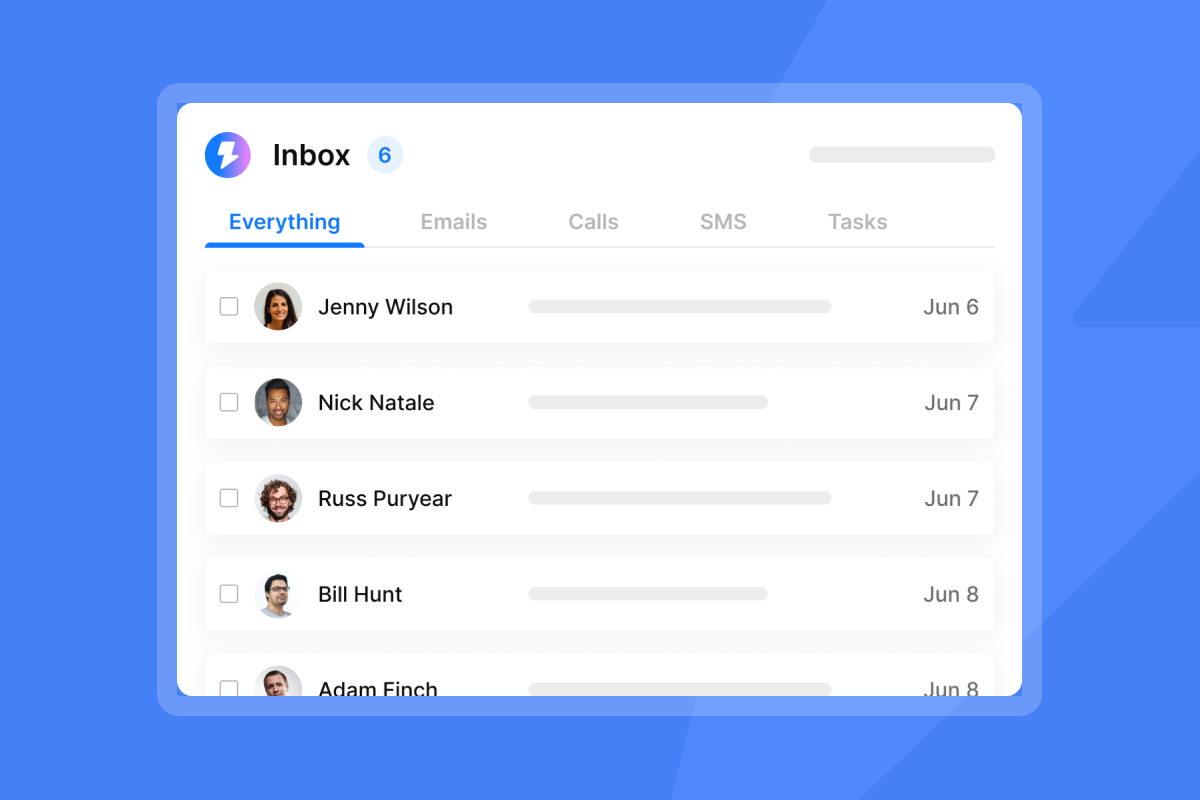
Here's the step-by-step process:
- Write variants. Use Instantly's AI Sequence Writer to generate 8-10 subject line variants per persona based on the composable framework above. Vary one element at a time: pain point, specificity hook, or relevance signal.
- Add variants in the campaign. In your sequence, click "Add variant" to create a new version. Add each subject line as a separate variant. The system distributes sends evenly across variants by default.
- Enable auto-optimize. Go to Campaign Options, then Advanced Options, then Auto Optimize A/Z Testing. Select your winning metric (open rate for subject line tests) and save. The algorithm monitors performance and automatically pauses underperforming variants.
- Run until you have confidence. Industry guidance recommends 95% confidence before declaring a winner, which is the standard for statistical significance in email testing. Avoid ending tests early when you see promising results, since first 24 hours skew results, inflating open rates before the signal stabilizes. Aim for 1,000+ sends per variant for reliable open rate signals, and run open rate tests for 48-72 hours and reply rate tests for 5-7 days.
- Scale the winner. Pause all losing variants. Increase send volume on the winning subject line, keeping daily sends at or below 30 per inbox to protect sender reputation.
"I like that I can add unlimited domains with Instantly. It also allows me to warm up new domains, which is great. Sending many cold emails to new prospects is possible without burning my domains or destroying the domain reputation, which is essential for my work." - Greg Z. on G2
For a full walkthrough of how to structure a sequence with multiple variants, the Cold Email Copywriting Masterclass intro is the right starting point. The cold email copywriting video covers how copy quality and test design connect to long-term campaign outcomes.
The decision-maker subject line checklist
Give your SDRs this checklist before any subject line goes into a campaign:
- Role match: Does this subject line reference a KPI or pain point specific to the recipient's role, not just their industry?
- Character count: Is the core message visible in the first 33 characters, and is the total length under 50 characters?
- Specificity: Does it include at least one specific element: a company name, a tool name, a competitor name, or a number?
- Clickbait check: If the recipient replied asking exactly what you meant, could you deliver on the subject line's promise? If not, rewrite it.
- Tested, not guessed: Is this subject line part of an A/Z test, or are you assuming it will perform? Check your preheader too using Instantly's preheader setup guide.
Start with the system, not the subject line
You'll outperform generic subject lines when you map yours to how executives actually filter their inboxes: by relevance to their specific job. Founders open emails about competitive growth signals. CFOs open emails that look like cost audits or compliance flags. CTOs open emails that name a specific technical pain in language they recognize.
The composable system gives your team a repeatable process for writing these subject lines, and A/Z testing tells you which version wins before you commit your full list to it. Between the framework and the feedback loop, you stop burning TAM on untested assumptions.
Try Instantly free and use the AI Sequence Writer to generate your first round of persona-specific variants. Set up your A/Z test, let the data decide, and scale from there.
FAQs
How long should a cold email subject line be for C-suite recipients?
Target 4 to 7 words or 33 to 50 characters, with the core message in the first 33 characters since that's the maximum visible on Gmail Android. Relevance to the recipient's role matters more than hitting a specific character count.
Should I use first name or company name personalization in a C-suite subject line?
Test both company name and first name personalization as A/Z variants to determine which performs better for your specific audience. Company name can signal you researched the business, while first name may feel more direct. Personalized subject lines lift open rates from 35% to 46% across B2B cold email, regardless of which personalization type you choose.
What is a good open rate for cold email outreach to decision-makers?
A good open rate for B2B cold email in 2026 is 40-60%, with top-performing campaigns reaching 65%+. Below 30% typically indicates a subject line, deliverability, or list quality issue that needs diagnosis before scaling volume.
How many subject line variants should I test per persona?
Start with 4 to 6 variants per persona per campaign step. Instantly supports up to 26 variants in a single step, so there's no technical ceiling. Aim for 500+ sends per variant before reading the data, and use the auto-optimize feature to let the system pause underperformers automatically.
What triggers spam filters in cold email subject lines?
Words like "free," "guarantee," "no risk," and "cash," combined with excessive punctuation or ALL CAPS, are primary triggers according to Verticalresponse's 2026 spam filter guide. Misleading subject lines that don't match the email body also flag AI-based filters, which now evaluate context across the full message.
Key terms glossary
A/Z testing: Running multiple subject line variants (A through Z) simultaneously within a single campaign step to identify the highest performer based on a defined metric like open rate or reply rate, rather than cycling through two variants at a time.
Composable execution: Building email copy from modular components (pain point, relevance signal, specificity hook) that can be swapped and tested independently, giving teams a repeatable system rather than a static script.
Sender reputation: A score assigned by internet service providers based on engagement signals (opens, replies, spam complaints, bounces) that determines whether your emails land in the primary inbox or are filtered to spam. Subject line quality directly affects this score through its impact on open and engagement rates.
Primary inbox: The main inbox folder in email clients like Gmail, as distinct from Promotions, Spam, or Social tabs. Landing in the primary inbox is the deliverability goal for cold email and depends on sender reputation, authentication setup, and engagement history.
CAC payback: The number of months it takes to recover the cost of acquiring a customer through revenue from that customer. A core metric for both founders and CFOs that signals whether growth is capital-efficient.
NRR (Net Revenue Retention): A metric measuring how much recurring revenue is retained and expanded from existing customers over a given period. CFOs use it as a forward-looking indicator of growth efficiency and a primary performance benchmark.


