


Updated December 6th, 2025
TL;DR: Cold calling still works in 2025, but you need a different approach than spray-and-pray. The average B2B success rate jumped to 6.7% (up from 2% in 2023) when teams combine precision targeting with multichannel sequences. Key findings: 82% of buyers accept meetings from strategic cold calls, 57% of C-level buyers prefer phone contact, and you need an average of 8 attempts to reach a prospect. Your path to meetings requires verified data, permission-based scripts, unified CRM tracking, and realistic funnel math. Stop treating calling and email as separate channels and consolidate them into one workflow.
B2B cold calling: Is it still effective?
Cold calling still works in 2025, but brute-force dialing does not. While 61% of B2B buyers prefer a rep-free buying experience and 75% favor online purchases, your team can still book meetings if you approach it correctly.
Cold calling gives you something email cannot: instant feedback. You hear the objection in real time. You adjust mid-conversation. You learn whether your value proposition resonates or falls flat. You compress weeks of A/B testing into a single afternoon of 30 calls.
Calling works best when you layer it into a sequence. Email first, call second, LinkedIn third. The channel that gets the meeting is often the call, but the context from the email makes it relevant. 69% of B2B buyers are open to accepting cold calls from new providers, and a striking 82% have accepted meetings from strategic cold outreach. If you call without research, you are part of the problem. If you call after demonstrating relevance through another channel, you are part of the 5% who consistently book meetings.
Key statistics: What the data reveals about B2B cold calling
You need benchmarks to judge your team's performance. Here are the numbers for 2025 that separate success from failure.
Cold calling benchmarks at a glance
| Metric | 2025 Average | Context |
|---|---|---|
| Success Rate | 6.7% | Calls resulting in a booked meeting, up from 2% in 2023 |
| Connect Rate | 16.6% | Percentage of dials resulting in a live conversation |
| Attempts to Reach | 8 calls | Average touches needed to connect with one prospect |
| Call Duration | 93 seconds | Average time for live conversations, up from 83 seconds in 2023 |
This 6.7% success rate represents a fundamental shift. This figure measures conversation-to-meeting conversion, not dial-to-deal. If you confuse the two, your forecast will be fiction.
Not all prospects are created equal. 57% of C-level and VP-level buyers prefer phone contact, which flips the conventional wisdom that executives hate cold calls. They hate bad cold calls. You earn meetings with prepared ones.
Your challenge is getting past the gatekeeper and earning those 93 seconds. One study analyzing over 55,000 dials found a 16.6% connection rate when working with quality data. If your connect rate is below 10%, your data source is the problem, not your reps.
The persistence factor
You need an average of 8 call attempts to reach a prospect. Most reps give up after two. This gap between average attempts and required attempts is where your pipeline lives or dies. Top performers make six or more calls and increase contact rates by up to 70%.
We found that 18% of cold calls convert into high-quality leads, while top-performing reps achieve a 15% call-to-meeting booking rate. The difference between average and elite performance is not talent. It is process, preparation, and tooling.
Timing and execution
You get 71% better results when you call between 4 p.m. and 5 p.m. compared to 11 a.m. to noon. This timing works because decision-makers are wrapping up their day, inbox pressure is lower, and they have mental space for a short conversation.
Average call duration increased from 83 seconds to 93 seconds year-over-year, suggesting that when reps connect, they are having more valuable exchanges. This tracks with the broader trend toward quality over volume.
Track the right metrics with our guide to B2B cold calling metrics for lead generation agencies.
Why B2B cold calling still works: Buyer receptiveness
You have heard that nobody picks up anymore. The data says otherwise. The real story is that buyers screen heavily but engage selectively.
The preparation gap is massive. 82% of B2B decision-makers feel that salespeople are unprepared for their calls. This is the single biggest complaint and the easiest problem to fix. Before you dial, you should know:
- What the company does and who they serve
- Recent company news, funding, or product launches
- The prospect's role and likely pain points
- Why your solution maps to their current priorities
When you demonstrate this level of research, you are no longer a cold caller. You are a relevant resource. Buyers research providers on LinkedIn before responding to outreach, which means they are vetting you while you are vetting them.
Preference does not equal rejection. While most B2B buyers prefer buying online without interaction, this preference does not eliminate the role of human conversation. It raises the bar. You must earn their time with relevance and brevity. Buyers want self-service for research and comparison. They want human interaction for complex deals, custom configurations, and relationship building.
The 69% of buyers open to cold calls are not sitting by the phone waiting. They will take a call if it is relevant, well-timed, and brief. You must earn that willingness through preparation and respect for their time.
Personalization multiplies your odds. Millennials and Gen Z now represent 71% of B2B buyers, up from 64% in 2022. These cohorts demonstrate a strong preference for self-service and digital channels, but they still accept calls when the value is clear. The difference is they have zero tolerance for generic pitches. Reference their LinkedIn post. Mention their recent blog. Acknowledge their role in a product launch. Spend 10 minutes on research and you multiply your odds of a real conversation.
Instantly's SuperSearch enables you to personalize at scale, watch how below:
"I love Instantly's deliverability tools, which are the best I've encountered. Having used Salesloft, Apollo, and other tools, Instantly gives me the highest reply rate by far." - Josh G. on G2
B2B cold calling vs. other outreach methods
You should not rely on cold calling alone. The question is how it fits into your outbound motion.
Channel comparison
| Method | Speed to Feedback | Scalability | Cost per Touch | Conversion % |
|---|---|---|---|---|
| Cold Call | Immediate | Moderate | $300-$500 per lead | 2-5% |
| Cold Email | 24-72 hours | High | $30-$50 per lead | 1-3% |
| LinkedIn Social | Days to weeks | Low | Time-intensive | 0.5-2% |
Cold calling delivers instant feedback. Email scales better. LinkedIn builds long-term brand. The cost of a B2B sales call ranges from $225 to over $1,000, depending on whether you factor in fully loaded labor costs or just direct expense.
Run a sequence like this
- Email: Establish relevance and provide value (case study, insight, or resource).
- Call: Follow up within 24 hours if they open the email.
- LinkedIn: Connect with a note referencing the email and call.
- SMS (optional): Brief text for high-value prospects who are hard to reach.
You must recognize that 83% of buyers prefer digital channels, but phone conversations close deals faster once you have built a relationship. When you integrate calling with email, the email warms the prospect and the call accelerates the decision. Separately, each channel underperforms. Together, they compound.
Use our 3-minute framework to structure these multichannel touches for 2x more meetings.
Stop paying for tool sprawl
Most sales teams juggle separate platforms for email (Outreach, Salesloft), calling (Aircall, Dialpad), and CRM (HubSpot, Salesforce). You lose context. Your managers lose visibility. Your reps waste time switching tabs.
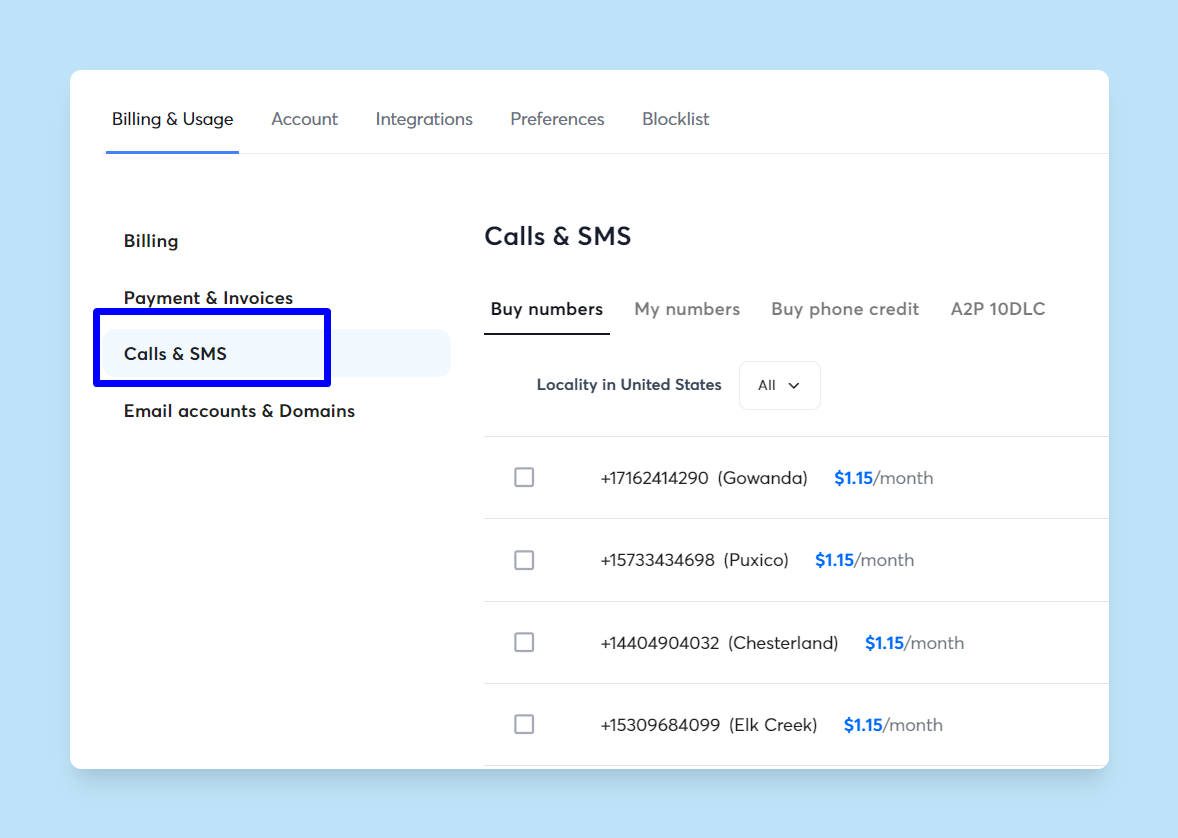
Instantly Hyper CRM consolidates calling, SMS, and email into a single interface with admin controls and audit-friendly reporting. Call tasks appear next to email replies. Follow-up sequences trigger automatically. You avoid per-seat pricing traps and brittle integrations. This saves you from handoff chaos. When your rep books a meeting, your AE sees the full thread without asking for notes.
"Instantly has transformed my outreach process. The platform is intuitive, has a ton of cool features and delivers great results." - Jon M. on G2
For a complete walkthrough of how Instantly's CRM helps you close more deals, watch our tutorial below:
Strategies for effective B2B cold calling
You need a system. Here are the four steps that separate teams booking meetings from teams burning lists.
Step 1: Build targeted lists with verified data
Start with intent. Use buyer signals like funding announcements, job changes, product launches, or content downloads. Then verify the contact data. Stale data kills connect rates. If your bounce rate is above 2%, pause and fix your source.
Instantly SuperSearch provides access to 450M+ verified B2B contacts with waterfall enrichment across five providers. The cost per verified lead is a fraction of what you pay for bad data that ruins sender reputation.
Step 2: Run the multichannel sequence
Send an email first. Use a clear subject line, one relevant insight, and a single ask. If they open it, call within the hour. Reference the email in your opening line.
This email-then-call pattern is how top teams convert strategic cold calls to meetings. You are not interrupting a stranger. You are following up on a message they engaged with.
Step 3: Use a permission-based script
Forget the hard pitch. Open with: "Did I catch you at a bad time?" or "Is this a good moment for a quick question?"
This framing respects their time and lowers resistance. If they say no, ask when to call back. If they say yes, you have permission to continue. Your next line should reference why you called: "I saw you recently launched X and thought our work with Y might be relevant."
Keep it conversational. Ask open-ended questions. Listen more than you talk. Your goal is to book the next meeting, not close the deal. Our AI-generated cold call scripts test shows how modern tools can personalize openers at scale while maintaining a human tone.
Step 4: Centralize your tech stack
Switching between tools kills momentum. You need a CRM that integrates calling, email, and task management in one screen. Instantly Hyper CRM includes built-in dialing and SMS, so you see the full conversation history before you pick up the phone.
When a rep books a meeting, the AE sees the email thread, call notes, and replies without asking for a handoff doc. Clean data flow means fewer deals slip through the cracks.
"I've been using Instantly for several months to run multi-campaign cold outreach, and it's been a game changer. Deliverability, automation, and analytics are all top-notch." - Abdulrahman on Trustpilot
For compliance and legal considerations, see our Cold Email Outreach ROI guide which covers GDPR and TCPA basics.
Addressing the nuances: Conversion rates and ROI
Not all success rates measure the same thing. This is where you get burned by vanity metrics.
Defining success
The 6.7% success rate measures conversation to booked meeting. It does not measure dial-to-meeting (which would be much lower) or meeting-to-closed-won (which depends on your sales cycle).
Some reports project 2.3% for 2025, defining success as converting a cold call into a warm lead. Others measure B2B-specific rates at 5%. The variance comes from differences in definition, industry, and deal complexity.
Here is how to reconcile the numbers:
- Dial-to-connect: 16.6% (you reach a human)
- Connect-to-conversation: 30-50% (they stay on the line long enough to hear your value prop)
- Conversation-to-meeting: 6.7% (they agree to a follow-up call or demo)
- Meeting-to-opportunity: 50% (the meeting qualifies as pipeline)
- Opportunity-to-close: Varies by sales cycle, typically 20-30%
Run your funnel math with these stages. If you make 1,000 dials, you will connect with roughly 166 people. About 50-80 will hear your pitch. Four or five will book meetings. Two will qualify as real opportunities. One might close.
The ROI calculation
The fully loaded cost ranges from $300 to $500 per lead when you factor in rep salary, tools, and overhead. Some estimates go higher, citing up to $1,000 per hour.
Compare that to cold email, where cost per lead runs $30-$50. Email is cheaper to send, but calling accelerates the deal. The ROI question is not "which channel is cheaper" but "which mix gets us to quota fastest."
If your average deal value is $20,000 and your close rate on qualified opportunities is 25%, you can afford to spend $500 per meeting and still deliver strong ROI. If your deal size is $2,000, cold calling economics break down unless you automate large parts of the process.
For detailed ROI modeling including Cost Per Meeting calculations and appointment setter economics, see our Appointment Setter Cost ROI analysis.
"The platform is super intuitive, easy to set up, and makes it simple to manage multiple domains and inboxes at scale. Deliverability is great and the analytics give us exactly what we need to optimize campaigns quickly." - Shaiel P. on G2
Watch how top teams are use AI tools in their outreach systems in our video on YouTube.
Attributes of successful B2B cold callers
Skills matter, but systems matter more. Top-performing reps share these attributes:
- Resilience: They treat "no" as data, not failure. Cold calling is rejection at scale. Strong reps track patterns: which objections repeat, which industries respond, which times of day work best. Persistent reps make six or more attempts and book the meetings that lazy reps miss.
- Active listening: When a prospect says "I'm not interested," most reps fold. Strong reps ask, "I understand. Can I ask what you are prioritizing instead?" This question reframes the objection as a discovery opportunity. Common objections include "We already have a solution" (ask what's working and what's not), "Send me some information" (offer to send it, but ask one clarifying question first), "I don't have the budget" (shift to ROI and cost of inaction), and "I'm not the decision-maker" (ask for a referral).
- Professionalism: You must respect do-not-call lists, honor GDPR rules in Europe, and maintain a courteous tone even when rejected. The first call might not convert, but a professional interaction keeps the door open for future outreach. High-performing teams are nearly 5x more likely to use AI for lead scoring, script generation, and real-time coaching.
Learn more about combining cold email and SMS for a complete multichannel motion.
Stop paying for disconnected dialers
You do not need to dial faster. You need to dial smarter with verified data, multichannel sequences, and unified tools. The data proves it: success rates are up, buyer receptiveness is real, and the teams winning are those who combine calling with email in a unified workflow.
If your current stack forces reps to toggle between three tools to see a prospect's history, you are losing deals to friction. Instantly Hyper CRM consolidates calling, SMS, email, and CRM into one interface. You get flat-fee pricing with unlimited accounts. No per-seat tax. No disconnected integrations. No reporting gaps.
Start by auditing your team's connect rates against the benchmarks above. If you are below 10%, fix your data. If you are above 10% but conversion is low, fix your scripts and multichannel sequencing. Then try Instantly free and run your first unified sequence from a single dashboard.
FAQs
Does B2B cold calling still work in 2025?
Yes. The average success rate tripled from 2% in 2023 to 6.7% in 2025, and 82% of buyers have accepted meetings from strategic cold calls.
What is a good cold call conversion rate?
A 4-5% conversation-to-meeting rate is solid. Top performers hit 15%. Anything below 2% signals bad data or poor execution.
Is cold calling legal under GDPR and TCPA?
Cold calling is legal if you respect do-not-call lists, honor opt-outs, and maintain consent records. GDPR requires legitimate interest or consent in Europe.
How many calls does it take to book one meeting?
It takes an average of 8 attempts to reach a prospect, and roughly 200+ dials to book one qualified meeting at average conversion rates.
What time of day is best for cold calling?
Calls between 4 p.m. and 5 p.m. are 71% more effective than those between 11 a.m. and noon, as decision-makers have more mental space late in the day.
How much does a B2B cold call cost?
The fully loaded cost ranges from $300 to $500 per lead when you factor in rep salary, tools, and overhead.
Key Terminology
Connect rate: The percentage of dialed calls that result in a live conversation with a human.
Decision-maker: The person with authority and budget to approve a purchase. Reaching this person is the goal of cold outreach.
Gatekeeper: An assistant or receptionist who screens calls for the decision-maker. Effective reps treat gatekeepers as allies, not obstacles.
SDR (Sales Development Representative): A role focused on outbound prospecting, lead qualification, and booking meetings for account executives.
AE (Account Executive): A closer who takes qualified meetings from SDRs and moves them through the sales cycle to closed-won deals.
Multichannel outreach: A strategy that combines email, calling, LinkedIn, and SMS to reach prospects through their preferred channels.
Success rate: The percentage of cold calls that result in a desired outcome, typically a booked meeting or qualified lead. In 2025, the average is 6.7%.
Call disposition: The outcome category for a call (connected, no answer, voicemail, gatekeeper, wrong number). Accurate disposition tracking is essential for funnel analysis.


