.svg)
%20(1).svg)


Updated October 01, 2025
TL;DR B2B waterfall enrichment is a sequential process that queries multiple data providers in order to fill missing contact and company fields with verified details. Done right, it boosts match rates, cuts bounces, and lifts inbox placement and reply rates. Use it to standardize list hygiene, protect sender reputation, and give reps reliable, compliant lead data. Try Instantly’s SuperSearch to see multi‑provider enrichment tied directly to sending, warmup, and deliverability testing.
What is B2B waterfall enrichment and why does it matter?
B2B waterfall enrichment is a process that routes each enrichment request through multiple data sources in a set order to maximize the chance of finding a verified field. Think verified emails, direct dials, job titles, firmographics, and technographics.
Why it matters:
- Better data means better deliverability. Fewer bounces protect sender reputation and keep more messages in the primary inbox. Email providers consider high bounce rates risky. A good target is under 2 percent bounces per send, according to Twilio SendGrid’s guidance on healthy ranges.
- Data decays fast. B2B contact data can decay at roughly 30 percent per year due to role changes, company moves, and domain churn. Without an enrichment system, lists go stale, bounces climb, and pipeline leaks.
Waterfall enrichment solves these problems by querying multiple providers sequentially, verifying results, and writing back to your CRM and sending tools so reps operate from one reliable record.
How B2B waterfall enrichment works: the sequential process
Here is the practical flow most teams adopt.
- Define fields to enrich
Decide what you need for your ICP and targeting. Examples: verified work email, direct dial, role, department, company size, industry, tech used. - Normalize inputs
Standardize company names, domains, and country codes. Clean obvious duplicates. Good hygiene improves match rates. - Set your provider order
Rank sources by expected coverage, field strengths, cost, and quality for your geo and industry. This is the heart of the waterfall. - Query the first provider
Send the record with known inputs. If the provider returns a verified email or phone, record the result and confidence. - Validate and score
Run verification on returned contacts. Keep fields with pass results and strong confidence. Flag risk grades, catch‑all domains, and opt‑out signals. - Fall through for gaps
If any targeted fields remain empty or unverified, route the record to the next provider. Repeat validation and scoring. - Consolidate the record
Pick the best value for each field based on verification outcome, timestamp, and source priority. Keep source lineage for audits. - Sync to systems
Write enriched fields back to your CRM and sending tool with field mapping and dedupe rules. Do not overwrite user‑confirmed fields without controls. - Monitor and optimize
Track fill rates, bounce rates, and cost per valid field by source. Reorder or replace providers that underperform.
How this looks in Instantly
Instantly’s SuperSearch routes lookups across 5+ providers behind the scenes and applies verification, so you get a single, validated contact profile with source lineage. Results land in your outreach workspace with automated Inbox Placement tests one click away to confirm domain health before you scale.
- Instantly’s SuperSearch and credits on transparent pricing models
- Inbox placement automated tests
- Instantly’s DPA and sub‑processors for compliance
The critical benefits of waterfall enrichment for B2B growth
Better inbox placement and fewer bounces.
High bounces hurt sender reputation and placement. Keeping bounces under 2 percent is a widely used deliverability guardrail. By filling gaps with verified contacts, waterfall enrichment reduces bounces and improves primary inbox placement. Takeaway: protect domain health and stabilize replies.
More opens and replies through personalization.
Emails with personalized subject lines are 26 percent more likely to be opened. You cannot personalize when job titles, industries, and tech stacks are missing or wrong. Takeaway: enriched context drives meaningful gains in opens and replies.
Less waste from stale data.
B2B data decays around 30 percent per year. Roles shift, companies rebrand, domains change. Waterfall enrichment replaces stale details with fresh, verified data, which reduces funnel leakage and rework. Takeaway: your list stays usable longer, at lower total cost.
Higher rep productivity.
Poor data quality can drag performance across sales and marketing. Gartner reports organizations lose an average of 12.9 million dollars each year due to poor data quality. With verified contacts and complete profiles, reps spend less time hunting and more time selling. Takeaway: enrichment removes friction, improves throughput, and makes reporting more trustworthy.
Standardized list hygiene across teams.
A waterfall service gives you one process to govern find rates, verification rules, and audit trails. That means fewer rogue spreadsheets, fewer one‑off tools, and cleaner reporting that reconciles with CRM.
Safer scale for deliverability.
Verified lists let you follow sane send caps and ramp plans. Keep individual inboxes under 30 cold emails per day. Pair enrichment with warmup, alignment checks, and ongoing placement tests to scale safely.
Clearer ICP signals and better scoring.
Firmographics and technographics make lead scoring sharper. You can route by headcount or industry, or prioritize accounts using key tech signals. That improves conversion rates and handoffs.
Real‑world proof points
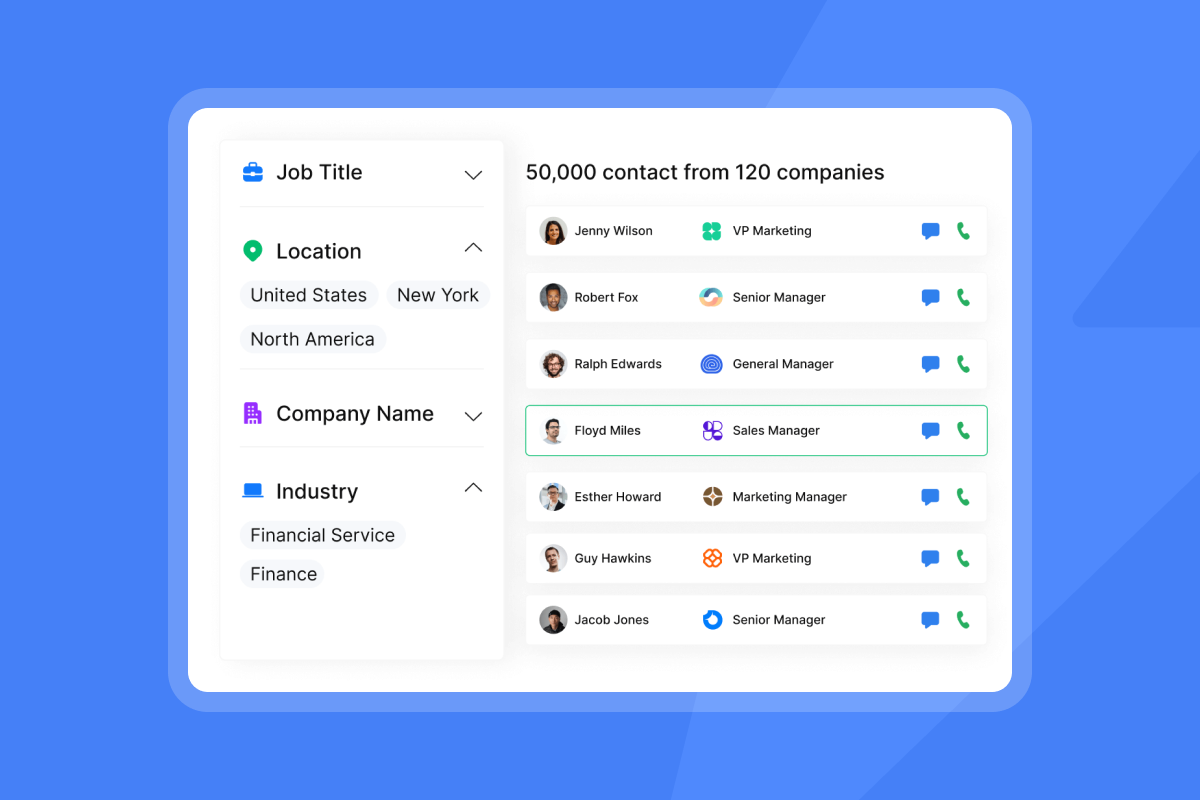
“Instantly.ai integrates a proprietary B2B lead finder with granular filters (job title, industry, revenue, domain, etc.), making it easier to identify and verify relevant prospects directly within the platform. This reduces reliance on third-party tools and supports more accurate targeting." - Customer review on G2.
“Instantly is my top tool for email deliverability, sequencing, lead enrichment and validation.” - Customer review on G2

Waterfall enrichment vs other data enrichment: a key distinction
Not all enrichment is the same.
Single‑source enrichment
You ask one provider to fill missing fields. If they cannot find a verified email or phone, the field stays empty. Match rates vary by geo and segment and often plateau when you rely on a single source.
CRM enrichment
This improves completeness and consistency of records already in your CRM. It often runs as scheduled jobs, dedupes, and field normalizers. Some CRM enrichment includes third‑party lookups, but it may still be single‑source.
Waterfall enrichment
This is a sequential, provider‑agnostic approach. Each record is routed through multiple sources in a fixed or dynamic order. You keep the first verified match per field or the best confidence after consolidation. The result is higher coverage with auditable provenance.
Takeaway: CRM enrichment keeps what you have in shape. Waterfall enrichment finds what you are missing and verifies it across multiple sources.
Checkout The Best Way To Generate Leads in 2025
Essential features and integrations of a waterfall enrichment service
Use this checklist to assess vendors.
- Data coverage and depth
Coverage by country, role, seniority, and industry. Depth across contact, firmographic, and technographic fields. Ask for current fill rates for your ICP and regions. - Verification and confidence scoring
Email verification grades, catch‑all handling, phone verification, last‑seen timestamps, and per‑field confidence. - Provider sequencing and controls
Ability to set provider order by field, geo, or cost. Fallthrough logic for unverified results. Per‑field timeouts and retry rules. - Compliance posture
Public DPA, sub‑processor list, consent and opt‑out handling, and data subject request flows. Review GDPR and CCPA obligations. - Deliverability guardrails
Native list hygiene, spam word checks, placement testing, and health alerts. This reduces risk when you scale sends. - Integrations and data sync
Native HubSpot and Salesforce connectors, CSV import/export, Zapier/Make, API and webhooks. Field mapping, dedupe rules, and write‑back controls. - Analytics and audit trails
Per‑source fill rates, cost per valid field, bounce and reply outcomes by source, and record‑level lineage. - Pricing clarity
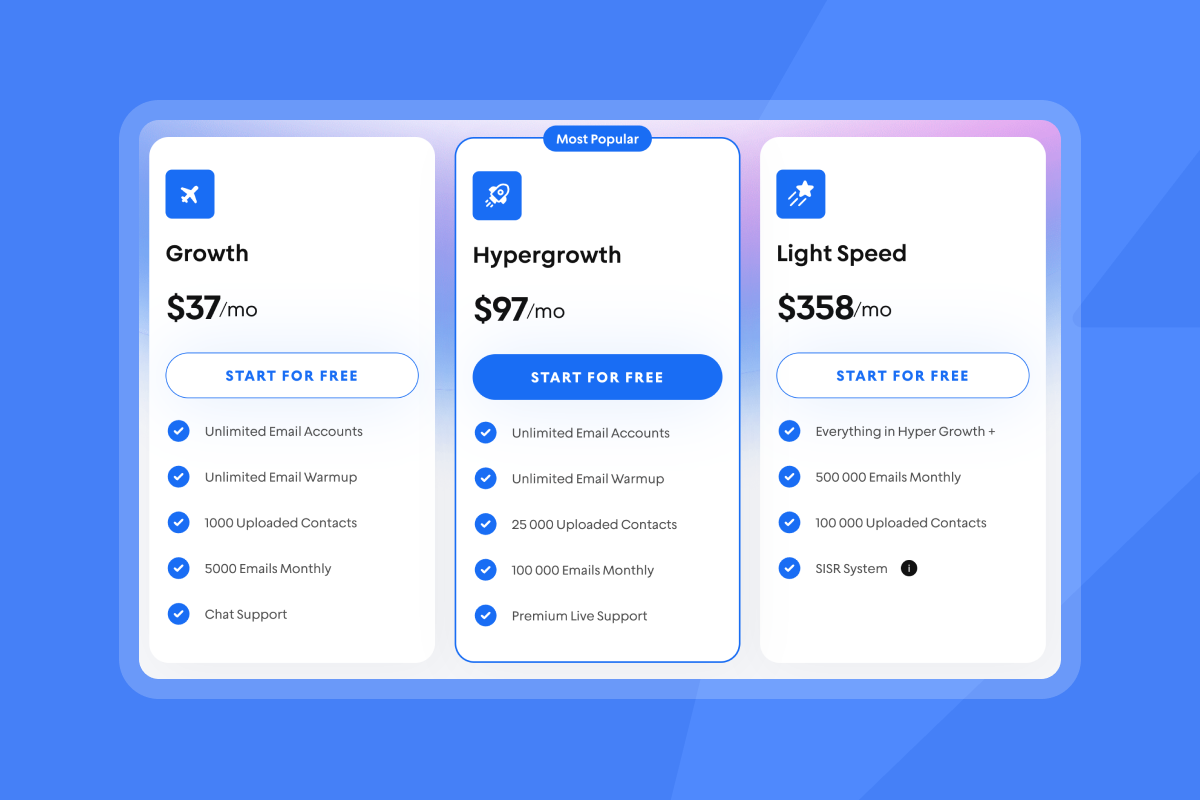
Understand credits, pay‑for‑success rules, overage rates, and any annual lock‑ins. Look for transparent pricing models.
- Support and rollout
Target SLA response times, onboarding guides, and admin controls to standardize processes across teams.
Pro tip for sales leaders: add two guardrails to your admin checklist
- Do not exceed 30 cold emails per inbox per day.
- Require Inbox Placement at or above 80 percent before you raise caps.
Choosing the right B2B waterfall enrichment service
Map choices to your goals and constraints. Start with the four checks: Fit, Budget, Constraints, Ops.
Fit
Does the vendor cover your geos, titles, and industries. Do they verify the fields you care about. Can admins standardize ramp plans, list hygiene, and audits.
Budget
What is the true cost per valid contact. Are there per‑seat penalties. Are credits pooled by team. Any annual lock‑ins.
Constraints
Is there a public DPA and sub‑processor list. Can you get an audit trail for every enriched field. Are data subject requests supported.
Ops
Are there native CRM integrations, API access, and field mapping controls. How long is a realistic rollout for your team.
Two‑part comparison table to guide evaluation
Table A: Commercials, coverage, and integrations
| Service type | Pricing model | Coverage/providers | Key integrations |
|---|---|---|---|
| Instantly SuperSearch | Credit‑based. Flat‑fee outreach plans for unlimited senders | 450M+ B2B leads with 5+ providers behind a waterfall | HubSpot, Salesforce via partners, Zapier, API |
| All‑in‑one SEP with single‑source data | Per‑seat subscriptions | Single provider or in‑house data | HubSpot, Salesforce, Salesloft, Outreach |
| Data‑only API aggregator | Pay per lookup or volume tier | Multiple sources via API | API, iPaaS, custom ETL |
Table B: Deliverability, compliance, and support
| Service type | Deliverability features | Compliance | Support |
|---|---|---|---|
| Instantly SuperSearch | Automated Inbox Placement tests, warmup, private deliverability network, SISR on higher tiers | Public DPA and sub‑processors | Live chat, docs, status page |
| All‑in‑one SEP with single‑source data | Basic list checks, some warmup | Varies by vendor | Standard enterprise support |
| Data‑only API aggregator | None native. BYO verification | DPA on request | Dev‑focused docs |
Notes:
- Instantly combines enrichment, sending, warmup, analytics, and AI agents to reduce tool sprawl while keeping pricing predictable for unlimited senders.
- Single‑source SEPs often package sending and CRM sync, but match rates plateau when a single data source cannot fill critical fields for your ICP.
- API aggregators are flexible and powerful if you have engineering resources and a separate sending stack, but you will own deliverability checks and hygiene.
Who should pick what
Sales teams that need predictable inbox placement and standardized workflows across many inboxes: Pick an all‑in‑one platform where enrichment is tied to warmup, placement tests, and admin controls. Instantly’s flat‑fee outreach plus SuperSearch credits fit this pattern.
Data teams with engineers and a mature ops stack: Pick a data‑only API aggregator to build your own waterfall and validations. Own the pipeline and deliverability stack in house.
Early‑stage teams testing outbound: Start with a lightweight plan that includes warmup, placement tests, and a credits‑based enrichment add‑on. Prove bounces under 1 to 2 percent before scaling.
Potential trade‑offs to weigh
- More providers can increase costs if you query them inefficiently. Require pay‑for‑success rules and per‑source performance dashboards.
- Enrichment does not stop data decay. Schedule refresh cycles and job change monitoring.
- Shallow CRM integrations raise ops overhead. Verify your needed field mappings and dedupe flows during a pilot.
How to implement waterfall enrichment in your team
Use this 9‑step play to ship in under two weeks.
- Define the target fields and ICP
Deliverable: a one‑page spec with fields, regions, and titles.
Done when: sales and marketing sign off. - Standardize inputs
Deliverable: cleaned CSV with normalized domains and company names.
Done when: duplicates drop by at least 20 percent. - Set provider order and rules
Deliverable: provider sequence by field and geo, with timeouts.
Done when: you can simulate a run on 100 records. - Connect integrations
Deliverable: CRM and sending tool connected with field mapping.
Done when: a test record syncs both ways. - Run a 1,000‑record pilot
Deliverable: pilot report with fill rates, cost per valid email, and bounce rate.
Done when: bounces are under 2 percent and verified emails exceed your baseline. - Validate deliverability
Deliverable: Inbox Placement tests across your warmed inboxes.
Done when: at or above 80 percent placement on seeds. - Lock admin guardrails
Deliverable: send caps, catch‑all handling, and auto‑pause thresholds.
Done when: rules exist and alerts are on. - Train the team
Deliverable: 30‑minute enablement session and a 2‑page runbook.
Done when: reps can identify a verified record and report a bad one. - Scale with a ramp plan
Deliverable: caps starting under 30 emails per inbox per day, rising only if health holds.
Done when: reply rates and bounces stay within targets for two weeks.
Power your pipeline with precision data
Waterfall enrichment turns fragmented, stale lists into reliable, verified lead data that protects deliverability and accelerates pipeline. The payoff shows up in fewer bounces, more primary‑inbox placement, cleaner analytics, and reps who spend their time on real conversations, not guesswork. Standardize the process once, then scale it safely.
Try Instantly’s SuperSearch for free to run waterfall enrichment across 450M+ B2B leads, then send from unlimited inboxes with warmup and automated Inbox Placement tests.
Frequently asked questions
- What match rate should I expect from a waterfall enrichment service
Expect a meaningful lift over single‑source. Use a pilot to set your baseline, then target at least a 20 to 40 percent improvement in verified email coverage for your ICP and region. - How often should I refresh enriched data
Quarterly for active segments. Monthly for fast‑moving roles or industries. Data can decay around 30 percent per year, so set a schedule. - What bounce rate is acceptable after enrichment
Keep hard bounces under 2 percent per send and pause if a campaign crosses that line. Investigate domains and verification grades before resuming. - How many emails per inbox per day are safe for cold outreach
Cap at 30 per inbox per day in early scale. Increase only when placement is stable and health metrics are green. - Which privacy documents should I collect from a vendor
A signed DPA, sub‑processor list, data retention policy, and details on consent and data subject request handling.
Key terms glossary
- Waterfall enrichment: Sequentially querying multiple data providers to fill verified fields.
- Data coverage: The share of records with the target fields populated.
- Verification: Technical checks that confirm an email or phone is deliverable.
- Bounce rate: Percent of emails that are rejected by the recipient’s server.
- Primary inbox: The folder people check first, not promotions or spam.
- Sender reputation: Trust signals mailbox providers use to sort your mail.
- List hygiene: Ongoing process to remove risky or stale contacts.
- CRM enrichment: Cleaning and updating existing CRM records.
- Firmographics: Attributes like industry, employee count, and revenue.
- Technographics: Software and tools a company uses.



