.svg)
%20(1).svg)


Updated January 31, 2026
TL;DR: Poor follow-up execution leaks quantifiable revenue. We know from industry research that 44% of salespeople give up after one follow-up, yet 80% of sales require 5-12 touchpoints. The gap costs B2B teams thousands in lost pipeline each month. "Poor" follow-ups go beyond weak copy. They include technical failures, spam placement, inconsistent cadence, and damaged sender reputation that prevent even strong messages from reaching the primary inbox. By shifting to an automated, deliverability-first system with Instantly's unlimited sending accounts and built-in warmup, you recover lost meetings, lower CAC, and scale without per-seat penalties or hiring more reps.
Most sales leaders see follow-ups as a rep discipline problem. Your SDRs forget to send the fourth email. They write lazy "just checking in" messages. They move on to the next hot lead. Every broken cold email outreach system has the same root cause: manual processes that cap at one or two touches, while the data consistently shows that 80% of deals close between touches five and twelve. The reality is worse. The problem is not laziness. It is a broken system that allows high-value prospects to fall through the cracks because manual processes cannot scale, generic emails destroy domain health, and your team lacks the tools to measure what is actually working.
Industry data tells a stark story. IRC Sales Solutions reports that 48% of sales teams never even attempt a follow-up after the initial interaction. Among those who do, 44% quit after just one attempt. Meanwhile, multiple studies confirm that 80% of sales require five to twelve follow-up touches. A cold email automation platform with unlimited sending accounts, built-in warmup, and automated inbox placement tests turns this broken system into a predictable pipeline engine without requiring more SDRs.
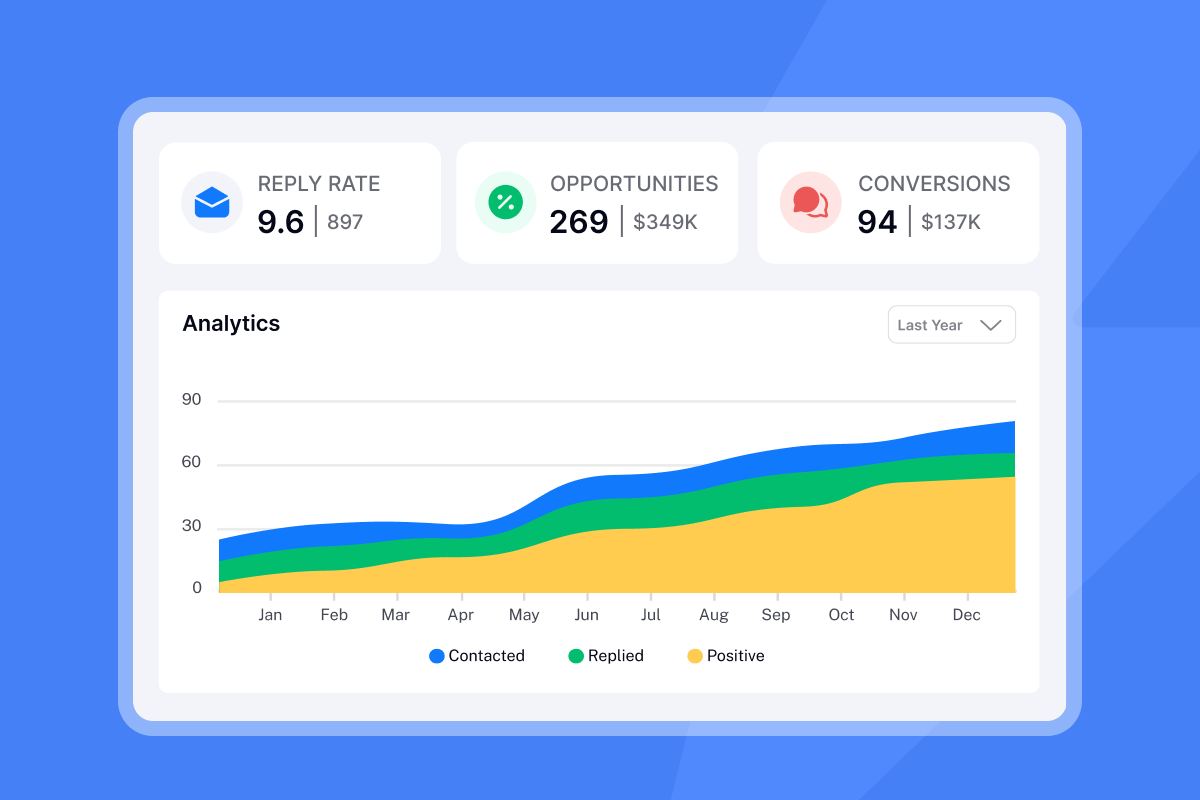
The hidden financial impact of poor follow-up emails
Let me define what counts as a poor follow-up. It goes beyond typos or weak subject lines. It includes any email that fails to reach the primary inbox, adds no value to the prospect, damages your domain reputation, or never gets sent because the rep moved on.
Poor follow-ups include:
- Generic "checking in" messages that give prospects no reason to respond
- Technical failures where emails land in spam or promotions due to low sender reputation
- Inconsistent timing where follow-ups arrive too fast or too slow
- High-volume blasts from unwarmed domains that trigger ISP filters
- Unverified contact lists that generate bounces above 2% and poison your sender score
Here is how the two approaches compare on the metrics Sales Leaders actually track:
| Metric | Ad-hoc rep follow-up | Systematic automated follow-up |
|---|---|---|
| Average touches per lead | 1-2 | 4-7 |
| Reply rate | 2-3% | 5-10% |
| Meetings booked per 100 leads | 1-2 | 4-6 |
| CAC impact | High (wasted leads) | Lower (better conversion) |
| Deliverability risk | High (manual errors) | Managed (warmup + monitoring) |
"I like that Instantly helps me handle multiple emails at a time, which saves me a lot of time and makes me more productive." - mahak K on G2
Calculating the cost of missed opportunities
Walk through this scenario with me. Your team generates 500 leads per month. Your reps send an initial email and one follow-up, then move on.
Assume 500 monthly leads, you stop at touch two, but touches 4-6 have a conservative 3% reply rate. You miss 2,000 touchpoints (500 leads × 4 missed emails), which yields 60 additional replies at 3%. With a 25% lead-to-close rate and $10,000 average deal size:
Lost monthly revenue = 15 deals × $10,000 = $150,000
That is $1.8 million in annual pipeline walking out the door because your system stops at touch two.
The average B2B sales qualified lead costs between $50 and $500 to generate, depending on industry and source. If you paid $200 per lead to acquire those 500 prospects, you invested $100,000 in lead generation. Systematic follow-up converts more from the same pool without proportionally increasing costs, which directly lowers your CAC.
Why generic follow-ups damage domain reputation
Generic "bump" emails do more than annoy prospects. They actively damage your sender reputation, which determines whether any of your emails reach the primary inbox.
According to Allegrow's sender reputation guide, email sender reputation is scored from 0 to 100 by ISPs based on sending history, engagement rates, spam complaints, and bounce rates. Good reputation means inbox delivery. Poor reputation means the spam folder or outright blocking.
The mechanism works like this:
Low engagement signals: ISPs now evaluate whether recipients actually interact with your emails. Low opens and clicks tell Gmail and Microsoft that your content is not wanted, which degrades your sender score.
Spam complaints: Gmail's threshold is 0.3% spam complaints. Cross that line and your emails get filtered automatically. Generic "just checking in" messages drive complaints because they waste the prospect's time.
Volume patterns: Erratic sending kills deliverability. Sending 500 emails Monday, nothing Tuesday through Thursday, then 1,000 Friday looks suspicious to email providers. Set campaign limits to maintain predictable daily volumes.
Bounce rates: Any day with bounces at or above 2% triggers automatic volume reductions. Unverified lists poison your domain health fast.
Once your domain reputation drops, ISPs bury even your best emails, the personalized ones with real value, in spam. You cannot recover lost reputation quickly. It takes weeks of careful warmup and reduced volume to rebuild trust with ISPs. During that recovery period, your pipeline stalls.
Instantly addresses this with a deliverability network of 4.2 million accounts used for warmup and engagement, plus automated inbox placement tests that monitor where your emails land before you launch a campaign.
ROI analysis: Multi-touch performance and CAC impact
According to Summit One's analysis, multi-touch attribution models distribute costs across all touchpoints in the customer journey, which provides a more accurate view of CAC and helps teams allocate budget to the channels and sequences that actually drive conversions.
When you invest $10,000 in lead generation and convert 20 leads without follow-up, you pay $500 CAC. Add systematic follow-up for $1,000 in automation costs, convert 40 leads from the same pool, and you cut CAC to $275, a 45% reduction. The math favors systems that extract more value from the same lead pool.
"I love how Instantly has significantly eased the process of outreach... By sending an impressive volume of 1 million emails monthly, Instantly facilitates efficient lead generation which we then convert through sales calls managed using Instantly's Unibox feature. This process greatly enhances our revenue." - Daksh K on G2
Where replies actually happen: The 4th to 7th touch
Instantly's Cold Email Benchmark Report analyzed platform data and found that 58% of replies arrive on step one, with steps two through four contributing another 42%. More importantly, replies continue beyond step four, creating a long-tail effect that justifies sequences of four to seven touchpoints.
Data from Belkins analyzing 16 million emails shows that cold email campaigns with three total emails achieve a 9.2% reply rate, compared to 8.4% from a single email. The key insight is that replies continue to arrive across multiple touches when each email adds value.
Only 10% of salespeople make the fifth call, yet 80% of sales are made after that fifth touch. This gap represents pure opportunity. The reps who persist win deals that others abandon.
Timing also matters. Prospects move through buying cycles at different speeds. Some are ready to talk after the first email. Others need three weeks to clear budget or get internal buy-in. A well-paced sequence catches prospects at different moments of readiness.
Industry benchmarks for B2B cold email show that 5-10% is a solid reply rate, 10-15% is excellent, and 15%+ is best in class on tightly segmented lists. If your current reply rate sits at 3% because you stop after two touches, moving to a six-touch sequence can realistically double your meetings booked without increasing your lead generation spend.
For a practical walkthrough, watch:

Deliverability as a system: Protecting your primary inbox
Sales leaders often treat deliverability as a technical afterthought. Wrong. Manage it as an asset, just like your CRM data or your domain reputation. If your emails do not reach the primary inbox, none of the copy, personalization, or targeting matters.
A deliverability system includes five components:
Warmup: Email warmup builds sender reputation by sending and engaging through a trusted network. Start at 20-40 emails per inbox per day, ramp over two to four weeks, keep complaints under 0.3%. Instantly recommends warming for at least two weeks before launching campaigns.
Volume control: Keep volume at or below 50 emails per day per inbox. At max capacity, split into 25 warming and 25 cold emails. This maintains natural patterns and protects sender reputation.
Rotation: Connect multiple inboxes per domain. Two to three per domain to start. Distributing volume across accounts improves deliverability by spreading load and providing redundancy. Instantly's unlimited email accounts on all Outreach plans solve the economics problem. Your base cost stays flat as you add client inboxes. For agencies running ten clients with three sending domains each, you manage 30 inboxes under one $97 monthly Hypergrowth plan. Apollo or Salesloft charge per seat, turning that into $2,910 per month.
Monitoring: Track inbox placement using automated tests. Instantly's Inbox Placement tool sends seed emails and reports where they land. Target 80%+ primary inbox. If placement drops, rest those inboxes and reduce volume. Watch bounce rate (below 1%), complaint rate (under 0.3%), and daily volume per inbox.
Authentication: Set SPF, DKIM, and DMARC. These protocols prove to ISPs you are the legitimate sender. Without proper authentication, even warmed inboxes get filtered. Check SPF, DMARC and DKIM documentation for setup.
For a comprehensive overviews, check out:
For the complete infrastructure checklist on authentication, warmup ramp schedules, and inbox placement monitoring that protects your domain as you scale follow-up volume, see this email deliverability guide.
Actionable playbooks for high-converting follow-up emails
Stop letting reps write from scratch. Standardize your follow-up sequences with proven templates that add value at each touchpoint. Lead with value, not asks. Every follow-up should offer something useful: relevant content, answers to anticipated questions, or insights specific to their situation.
The "value-add" sequence template
HubSpot's research shows that combining free resources with a self-service meeting link creates goodwill and keeps prospects engaged even when they are not ready to buy.
Subject: "Free resource for [Business Challenge]"
Body:
I've reached out a couple of times to connect regarding [business goal]. Since I haven't heard back from you, I'll assume that now isn't the right time. In the meantime, I wanted to share some free resources for brands like yours that are facing [business challenge]. If it makes sense to reconnect in the future, you can always book time on my calendar here.
Why it works: Everyone values something free. This message gives prospects who are not ready to say goodbye a reason to stay interested while respecting their timeline.
Alternative approach from Salesforce's template library:
Subject: "Thought this might help with [specific challenge]"
Body:
Saw your recent [LinkedIn post/company announcement] about [specific challenge]. We worked with [similar company] on the same issue last quarter. Here's a [case study/whitepaper/article] that breaks down what worked. No strings attached. If it's useful and you want to discuss how it applies to [their company], I'm around.
For 600 more templates covering various industries and use cases, browse Instantly's template library.
The "break-up" email strategy
The break-up email triggers loss aversion. Telling a prospect you are closing their file consistently gets the highest response rate of any follow-up type.
Subject: "Closing your file?"
Body:
I'm tidying up my pipeline for the new quarter, and since I haven't heard back regarding how we could solve [Prospect's Challenge] with [Your Solution], I'm going to assume your priorities have shifted. Before I close your file, I wanted to reach out one final time to see if you had any quick feedback on our proposed solution.
Why it works: Research from Pipedrive shows that loss aversion drives action. Prospects who were on the fence suddenly realize they are about to lose access to something that might help them.
Timing: Send the breakup email after the 5th follow-up if they have not replied at all. Space the sequence over one to two weeks.
"Instantly is for me the Apple of Cold Outreach tools. Easy to use, intuitive, minimal clicks/steps to get stuff done, and things just work... I keep coming to the same conclusion over and over again - Instantly is the best tool." - Thomas D on G2
For advice on tactical implementation, watch:
Once a break-up email generates a reply, have a dedicated meeting scheduling follow-up system ready to convert that re-engagement into a booked call before the prospect changes their mind again.
How to measure follow-up email ROI
You cannot improve what you do not measure. Set up tracking for the metrics that matter and calculate ROI using clear formulas.
Key metrics to track:
Reply rate: Total replies divided by total emails sent. Benchmark: 5-10% is solid for B2B, 10-15% is excellent, 15%+ is best in class.
Positive reply rate: Interested replies divided by total emails sent. Typically 30-50% of total replies are positive.
Meeting booked rate: Meetings scheduled divided by positive replies. Target 50%+ conversion.
Bounce rate: Bounced emails divided by total emails sent. Keep bounces below 2%.
Spam complaint rate: Spam reports divided by total emails sent. Stay below 0.3% for Gmail.
Formula 1: Lost revenue from missed follow-ups
Lost Monthly Revenue =
(Monthly Leads × Missed Follow-Ups per Lead)
× Additional Reply Rate from Those Touches
× Lead-to-Close Rate
× Average Deal Size
Example:
- 500 leads per month
- Currently doing 2 follow-ups, could do 6 (4 missed per lead)
- 2,000 missed touches total
- Conservative 3% reply rate on touches 4-6 = 60 additional replies
- 25% of replies close = 15 deals
- $10,000 average deal = $150,000 lost revenue per month
Formula 2: ROI of implementing follow-up system
Monthly ROI =
(Recovered Revenue - Tool Cost - Implementation Cost)
÷ (Tool Cost + Implementation Cost)
× 100
Example:
- Recovered revenue: $150,000 (from above)
- Tool cost: $97 per month (Instantly Hypergrowth plan)
- Implementation and labor: $500 per month
- Total cost: $597
- ROI = ($150,000 - $597) ÷ $597 = 25,025% or 251x return
Instantly's pricing model keeps costs predictable. Unlimited email accounts on every Outreach tier mean your base cost stays flat as you add client inboxes. For cost comparisons, check Instantly's cold outbound CPM calculator guide and this analysis comparing reply automation tools.
Stop treating follow-ups as a rep discipline problem
Sales statistics consistently show that persistence pays off, but manual processes cannot deliver the consistency needed to capture that value. Your reps will always prioritize the hottest lead over the warm ones. That behavior is rational given their workload. The system must compensate.
You cannot hire your way out of a bad follow-up process. Adding more SDRs without fixing the underlying system just multiplies the same errors across a larger team. The answer is automation that handles the mechanical work of scheduling, sending, and tracking while protecting your domain reputation through warmup, rotation, and health monitoring.
Instantly provides the infrastructure to run that system: unlimited sending accounts, a 4.2 million account deliverability network, automated inbox placement tests, and a unified inbox (Unibox) that prevents leads from slipping through the cracks. Instantly's Copilot feature and AI Reply Agent handle research, campaign creation, and reply triage so your reps focus on live conversations instead of manual busywork.
"Instantly has been a game-changer for our outbound. The inbox management is clean, the sending setup is straightforward, and scaling campaigns feels smooth. Great deliverability tools, great UX, and it just works." - Jesse on Trustpilot
Ready to recover the pipeline you are losing right now? Start Instantly's 14-day free trial, test the templates and cadence strategies in this guide against your current approach, use the ROI formulas to calculate your specific opportunity cost, then scale what works. Most teams see measurable lift in booked meetings within the first 30 days.
For a complete framework on step-level analytics, reply latency, and attribution across multi-touch sequences, see this email metrics tracking guide covering the KPIs that reveal exactly where your follow-up funnel is leaking revenue.
FAQs
What is the ideal number of follow-up emails?
Research shows 4-7 touchpoints is optimal. Under four gives up too early. Beyond seven diminishes returns unless each touch adds genuine new value.
How do I stop follow-up emails from going to spam?
Warm new inboxes for at least two weeks, keep daily volume at or below 50 per inbox, maintain bounce rates below 2%, and monitor spam complaints to stay under 0.3%.
What is a good reply rate for cold follow-ups?
5-10% is solid for B2B, 10-15% is excellent, and 15%+ is best in class on tightly segmented lists.
How much revenue is lost due to poor follow-up?
Using industry conversion benchmarks, stopping at two touches on 500 monthly leads with a $10,000 average deal size costs you $150,000 per month. That is $1.8 million in lost annual pipeline.
How should follow-up emails be spaced?
Space emails 2-4 days apart. Too fast looks desperate. Too slow and prospects forget who you are. Total sequence should span one to three weeks.
Key terms glossary
Primary inbox: The main folder in email clients where high-priority messages land. Achieving primary inbox placement, rather than promotions or spam, is critical for follow-up success.
Sender reputation: A score from 0 to 100 that ISPs assign based on sending history, engagement rates, spam complaints, and bounce rates. Poor reputation means spam folder or blocking.
Throughput: The volume of emails sent over a specific period. Managing throughput prevents deliverability issues caused by sudden volume spikes that ISPs flag as suspicious.
SQL (Sales Qualified Lead): A prospect vetted by the sales team as ready for direct sales engagement, typically worth hundreds to thousands of dollars depending on average deal size and close rate.
Warmup: The process of gradually increasing email send volume from a new domain or inbox to build sender reputation with ISPs before launching full campaigns.



