


Updated March 6, 2026
TL;DR: Most sales teams run subject line tests on gut feel and small sample sizes, which leads to false confidence and burned domains. A valid test isolates one variable, reaches at least 250 contacts per variant, and measures positive reply rate, not just opens. Clickbait subject lines that spike opens but kill replies actively damage your sender reputation. Instantly's A/Z testing lets you run up to 26 variants in a single campaign step, auto-pauses losers, and surfaces reply rate data in one dashboard, available on the Growth plan at $47/month across unlimited sending accounts.
Subject line testing is a statistical process, and the right cold email platform is what turns that process into a repeatable system rather than a one-off experiment. Done right, it tells you exactly which message angle books more meetings from your specific audience. Done wrong, it burns contacts, inflates vanity metrics, and erodes the domain reputation you spent weeks building. This guide gives you the framework to do it right, with specific steps for running it inside Instantly.
Why open rates are a vanity metric (and what to track instead)
Open rate tells you one thing: your subject line was compelling enough to click. It tells you nothing about whether the person had any intent to buy, respond, or meet.
The problem is that compelling and relevant are not the same thing. A subject line like "Re: your account" tricks people into opening. When the email body doesn't match the promise, recipients who feel misled don't reply. They delete, unsubscribe, or mark spam. Every one of those negative actions is a signal ISPs read. Positive actions like replies boost your reputation while spam complaints and deletions harm it directly.
Inbox providers score content reputation. If your brand becomes associated with misleading subject lines and low engagement, your deliverability degrades over time, not just on the campaign that triggered it.
The metrics that actually matter are listed below, ranked by importance:
Vanity Metric | What It Measures | Revenue Metric | What It Measures |
|---|---|---|---|
Open rate | Clicks on subject line | Positive reply rate | Interested responses |
Impressions delivered | Volume sent | Meetings booked | Calendar conversions |
Click-through rate | Link curiosity | SQLs generated | Qualified pipeline |
Sends per day | Activity level | Cost per meeting | Efficiency |
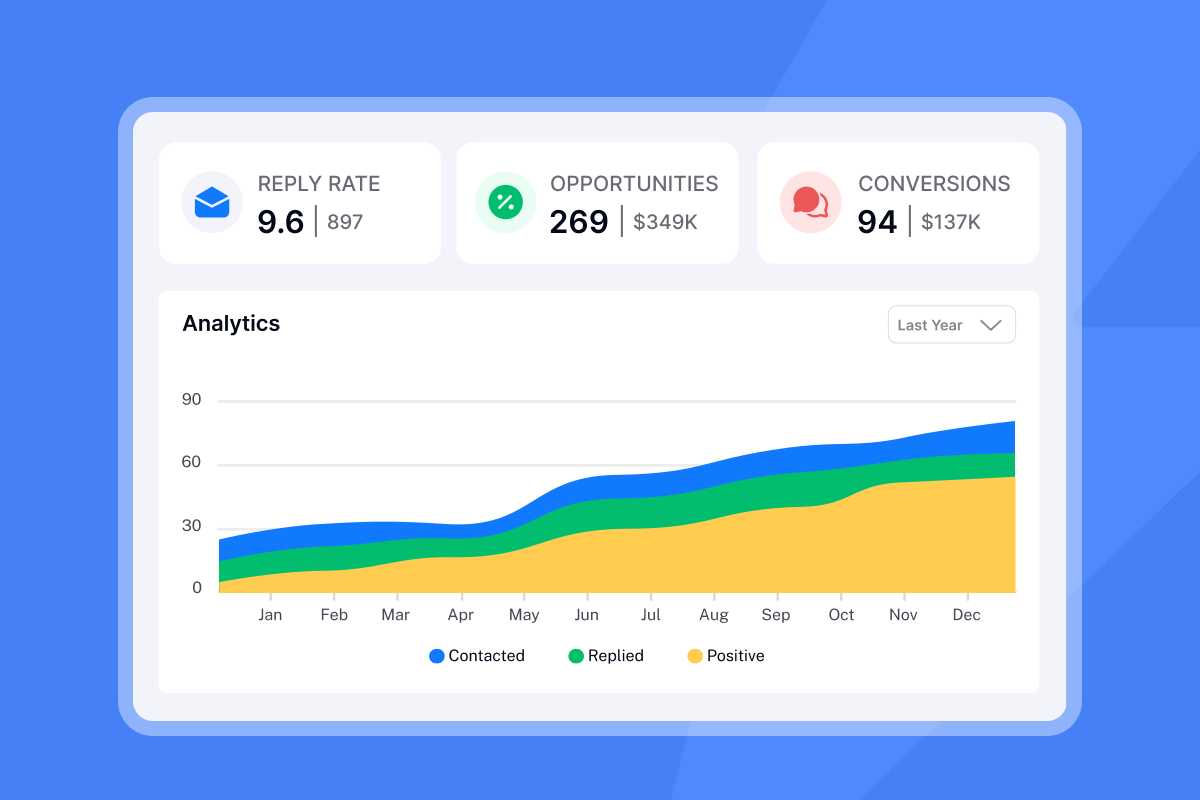
- Positive reply rate: The percentage of delivered emails that get a genuine, interested reply. Aim for 5% or higher. B2B cold email benchmarks put the average response rate at 4.0% in 2025, so 5%+ puts you ahead of the market.
- Open rate: Useful as a directional signal, not a success metric. Target 40-60% as a baseline for a warmed, healthy list. If open rates drop below 15%, check your inbox placement before blaming the subject line.
- Meetings booked and SQLs: The only numbers your CFO cares about. Link every test back to pipeline contribution.
- Bounce rate: Keep it at or below 1%. Above that signals list quality problems that will corrupt your test data and hurt domain health.
The statistical framework for valid A/B tests
A valid test has three components: a clear hypothesis, an isolated variable, and enough data to trust the result.
Define your control and variant before you send anything. The control is your current best-performing subject line. The variant changes exactly one element. If you change length, tone, and personalization at the same time, you can't know which change drove the outcome. This is the most common mistake in cold email testing.
Calculate your sample size before you launch. Many teams stop testing after 50 sends per variant. That's not enough volume to distinguish signal from noise. For detecting a meaningful difference in reply rate, start at 250 contacts per variant and push toward 500+ when you want high confidence. Detecting a 1% difference in reply rate at 95% confidence can require far more volume than most teams expect. The practical implication: use larger sample sizes when the stakes are high, and treat smaller tests as directional signals rather than declared winners.
Run your numbers through Evan Miller's sample size calculator before launching. It handles the math in seconds. Plug in your baseline reply rate (typically 4-5%), your minimum detectable effect (start with 1 percentage point), and your desired confidence level (95%). Keep statistical power at 80%.
Subject line length is a nuance, not a rule. Aim for 25 to 45 characters to avoid truncation on mobile devices, since most email clients cut off after 33-43 characters on smaller screens, according to B2B subject line research. That same research shows personalized subject lines achieve a 46% open rate versus 35% without personalization. But short doesn't automatically win over long. Start your first length test with a short variant (25-35 chars) and a longer variant (40-50 chars) that includes context, then let your own data settle the debate for your audience.
5 high-impact subject line variables to test
Test one variable per campaign. Testing two or more at once makes results unreadable. These five generate the most learning per test.
Variable 1: Length
Short subject lines create curiosity gaps. Long subject lines create context. Both can win depending on the audience.
- Short: "Quick question" or "Idea for {{CompanyName}}"
- Long: "How {{CompanyName}} can reduce CAC by 30% this quarter"
Variable 2: Personalization depth
Personalization goes beyond first name. Test which token drives the most replies.
- Name-based: "{{FirstName}}, quick question"
- Company-specific: "Idea for {{CompanyName}}'s outbound motion"
- Role-based: "For heads of sales: 15-minute conversation?"
Specificity consistently outperforms generic personalization. Subject lines tied to a prospect's published content or recent company event drive more replies than first-name-only approaches.
Variable 3: Tone (curiosity vs. urgency)
Curiosity-based subject lines leave a gap the reader wants to close. Urgency-based lines create time pressure. Question-based subject lines average a 46% open rate, outperforming most other formats in B2B cold email because they invite dialogue rather than impose pressure.
- Curiosity: "Have you tried this for [Pain Point]?"
- Urgency: "Last call {{FirstName}}... closing this week"
Test these against each other with identical body copy to isolate the tone effect.
Variable 4: Relevance trigger
Connect the subject line to something the prospect already cares about.
- Industry trigger: "Saw your post on [Topic]"
- Pain point: "Struggling with [specific challenge]?"
- Value-driven: "How [Outcome] in 30 days for teams like yours"
Addressing a specific pain point in the subject line positions your email as valuable rather than interruptive, which drives higher reply intent even at moderate open rates. Cold email response research supports this framing as a consistent driver of engagement in B2B outreach.
Variable 5: Format (question vs. statement vs. number)
- Statement: "A proven fix for {{pain_point}}"
- Question: "Need help with [challenge]?"
- Number-driven: "3 ways [Company] can close [Problem]"
Numbers create specificity that helps prospects assess relevance quickly. Keep subject lines under 60 characters for optimal mobile display.

How to set up A/B tests in Instantly (step-by-step)
A/Z testing in Instantly lets you test up to 26 subject line variants in a single campaign step and auto-pauses the weaker performers. Here's how to set it up cleanly.
- Create your campaign and write your base sequence. Set the audience, sending accounts, and send window before touching variants. Keep the same send window across all variants to avoid time-of-day skewing your results.
- Add variants. In the sequence step editor, click "Add variant" to create your second (and third, fourth, and so on) subject line. Keep the email body identical across all variants. Change the subject line only. The full setup walkthrough lives in the Instantly A/Z testing help article. Aim for 2 to 5 variants per step. More variants slow significance per variant and stretch your test window.
- Enable Auto-optimize. Go to Campaign Options, then Advanced Options, then "Auto optimize A/Z testing." Select your winning metric. For cold outreach, use reply rate. Click Save. The system will automatically deactivate weaker variants once it identifies the leader.
- Set governance rules across your team. This is where most testing programs fall apart at scale. Standardize the protocol so every rep follows the same structure: one variable changed, minimum 250 contacts per variant, reply rate as the primary metric. Use the checklist at the end of this guide as your team SOP. Require reps to log results in a shared doc with the format: Date | Variant A | Variant B | Sample Size | Winner | Insight. The Instantly cold email strategy guide covers how to build repeatable campaign structures your team can execute consistently.
- Cap sends at 30 per inbox per day. This is the safe ceiling for maintaining domain health during a test. Increasing throughput beyond that introduces a confounding variable and risks a deliverability dip that corrupts the data.
For a visual reference on campaign setup from first principles, the Instantly co-founder demo walks through sequence configuration, sending settings, and warmup in one session.
Analyzing results: When to kill a variant
Give opens at least 48 hours to stabilize. Give replies 5 to 7 days before calling a result. Instantly's subject line testing guide recommends this timeline, and it holds up across cold email campaigns where replies accumulate more gradually than opens.
Stopping a test early because one variant "looks" like it's winning is how false positives happen. A 2% gap at 50 sends can disappear entirely at 300 sends. Wait for the volume before acting.
Use this decision framework:
- Call a winner when the reply rate gap has held for at least 48 hours of replies and you've hit your minimum sample size per variant.
- Kill a loser when a variant shows higher open rate and lower reply rate at the same time. That's the clickbait signal. High opens plus low replies means the subject attracted attention without setting the right expectation.
- Extend the test when the gap is under 0.5 percentage points. That's within noise range and you need more volume.
- Document everything. Save screenshots and notes with the winning formula, sample size, and the date. That's your team's institutional knowledge.
The fix is to enable Auto-optimize with reply rate as the winning metric before you launch, not after. Users who define the winning metric upfront consistently report clearer reads from the analytics dashboard.
Checklist for A/B testing email subject lines
Use this before every test and share it with your team as the standard operating procedure.
- Hypothesis written: One clear prediction about which variant will win and why.
- One variable changed: Subject line only. Body copy, send window, and list are identical.
- Minimum sample size confirmed: At least 250 contacts per variant, ideally 500+.
- Spam words checked: Use Instantly's AI Spam Words Checker on all variants before launch.
- Send cap set: No more than 30 emails per inbox per day.
- Inboxes warmed: All sending accounts active in warmup with health score visible.
- Winning metric selected: Reply rate set as the Auto-optimize target in Campaign Options.
- Test duration planned: Opens reviewed at 48 hours, replies at 5-7 days.
- Results documented: Screenshot, sample size, and winner logged in shared team library.
- Winner deployed: Losing variants paused, winning subject line rolled out to the full sequence.
How Instantly's A/Z testing streamlines setup
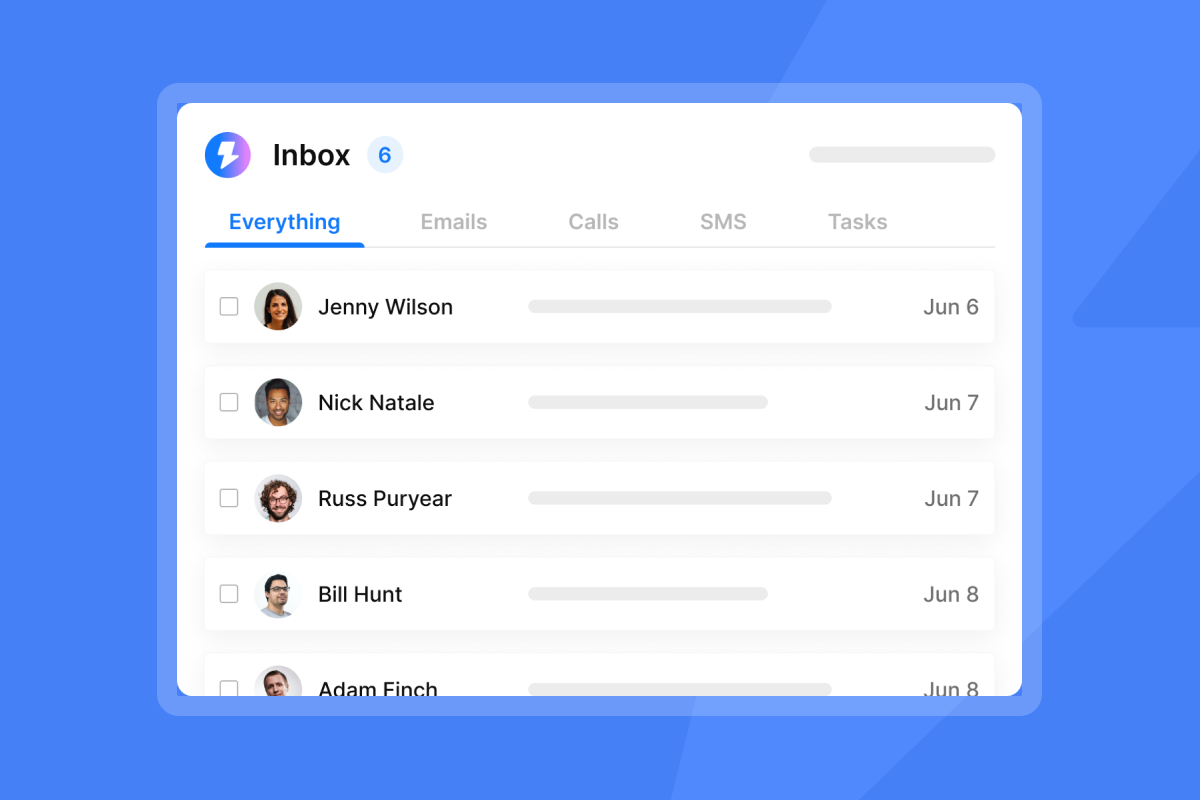
Instantly's A/Z testing differs from standard A/B testing in one critical way: you can test up to 26 variants in a single step instead of running sequential two-variant tests. That matters for speed. Standard A/B testing typically requires multiple sequential campaigns to test several subject line ideas. With A/Z, you test all your variants at once, and Auto-optimize handles the rest.
The flat-fee pricing model also matters here. Per-seat pricing adds cost linearly as you add inboxes to increase test volume. Instantly's Hypergrowth plan at $97/month (or $77.60/month on annual billing) includes unlimited sending accounts and A/Z testing across your entire team workspace. You can spread a test across multiple warmed inboxes to hit your minimum sample size faster without paying more. Check the current Instantly pricing page for the latest plan details and annual discount options.
"I really like the unlimited email accounts feature because it allows me to scale outreach safely and efficiently without hitting the sending limits, which is crucial for consistent lead generation." - Pradeep T. on G2
For a complete walkthrough of campaign setup, warmup, and analytics, the full Instantly tutorial covers each area in detail.
The framework here is straightforward: isolate one variable, reach minimum sample size, measure reply rate over open rate, and document what works so your team builds on proof rather than preference. Commit to running one clean test per week for the next month. Four statistically valid tests will teach you more about your ICP than a year of unstructured changes.
Try Instantly free for your first A/Z test using the steps above. Use the checklist as your launch standard, and let your own data settle every debate your team currently resolves by committee.
Frequently asked questions about subject line testing
Does A/Z testing cost extra on Instantly?
A/Z testing requires the Hypergrowth plan at $97/month (or $77.60/month on annual billing). It is not available on the Growth plan. Once on Hypergrowth, A/Z testing is included across unlimited sending accounts and warmup with no additional fee.
How long should a subject line test run?
Typically, run for at least 48 hours to collect open data and 5-7 days for reply data. Instantly's A/B testing optimization guide supports this timeline for cold outreach campaigns.
Does changing the subject line reset my sender reputation?
No. Subject line changes affect engagement signals going forward, not retroactively. What matters is that each variant reaches enough volume to generate meaningful signals before you analyze the results.
How many variants should I test at once?
Start with 2 to 3 variants per step. More than 5 at once means each variant gets less volume and takes longer to reach significance.
What if my open rate is high but replies are low?
That's the clickbait signal. Your subject line attracted attention but the email body didn't match the expectation it set. Fix the body-to-subject alignment, lower your send cap temporarily, and review Instantly's open tracking guide to understand how open data is recorded before scaling back up.
Key terminology
Statistical significance: The confidence level that test results reflect a real difference, not random variation. Industry standard is 95%. Use a free significance calculator to verify before declaring a winner.
A/Z testing: An extension of standard A/B testing that allows up to 26 variants in a single step. Auto-optimize identifies the best performer and pauses the rest automatically.
Spin syntax (Spintax): A formatting method using curly brackets and pipe symbols to create randomized subject line variations, for example, the syntax (Hi|Hello|Hey) {{FirstName}} creates three random opening variations. Instantly's spintax feature integrates directly into the subject line and body editor to increase variation and improve deliverability signals.
Primary inbox: The main inbox folder where emails arrive by default, as opposed to spam or promotions tabs. Aim for 80% or higher primary placement before scaling volume.
Positive reply rate: The percentage of delivered emails that receive a genuine, interested reply. Unsubscribes and out-of-office responses don't count. Use this as your primary winning metric for cold outreach tests.



