


Updated March 6, 2026
TL;DR: High open rates come from applying psychological formulas and then testing them against your specific audience, not from one-off creativity. About 43% open on subject alone, while 69% mark messages as spam purely because of it. The seven formulas below (curiosity gap, quick question, mutual connection, value-first, pattern interrupt, specificity hook, and internal update) give your team a repeatable system. Keep subject lines under 45 characters, use A/Z testing to find what works for your ICP, and make sure the body always delivers what the subject promises.
Your perfectly crafted pitch is useless if the email never gets opened, and without dedicated cold email software, most teams have no reliable way to know whether the problem is the subject line or the infrastructure underneath it. This guide covers the psychology behind why people click, seven formulas you can adapt for your niche today, and how to use Instantly's A/Z testing to validate them at scale rather than guessing.
Why subject lines determine campaign ROI
The path from subject line to revenue follows a clear sequence: open rate determines reply rate, which determines meetings booked, which determines pipeline. Low opens reduce every metric downstream.
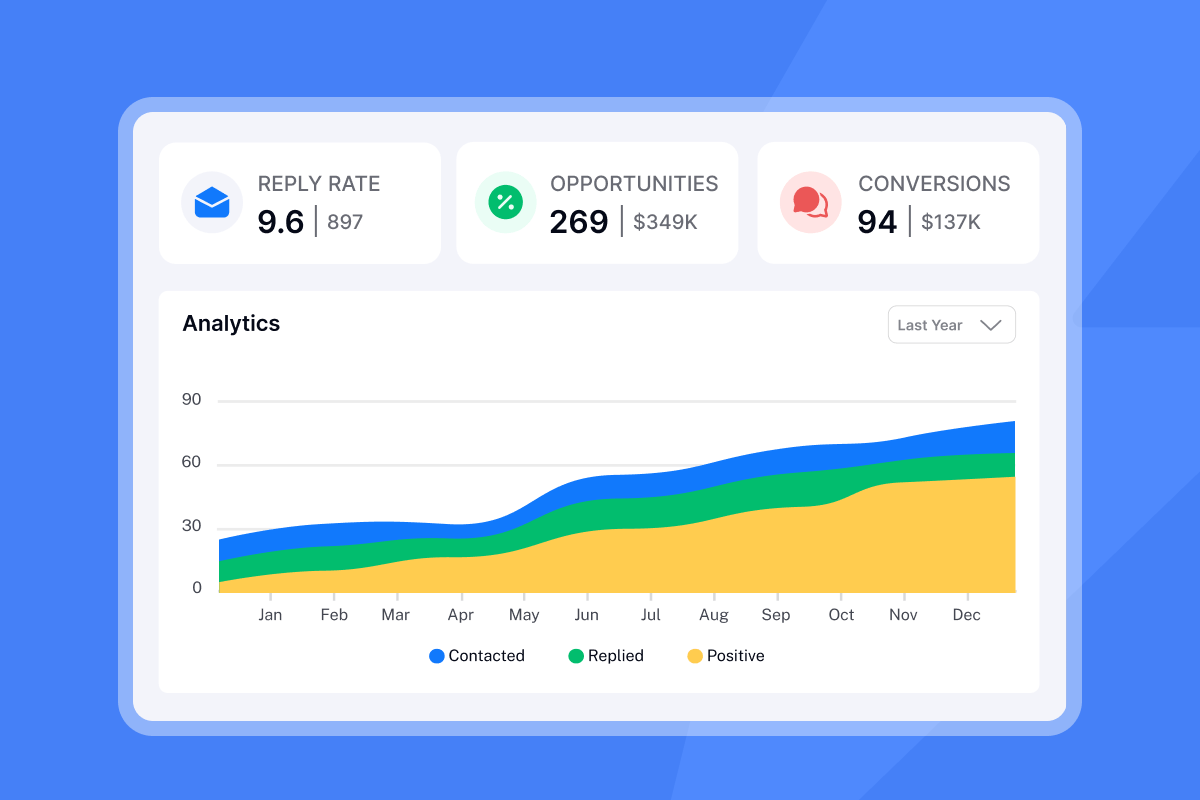
Cold email can return $36 per $1, but that only holds when emails actually get opened and engaged with. Open rates in B2B cold outreach averaged around 39%, though performance varies widely. Reply rates above 5% are considered good, and 10%+ is excellent in most sectors.
The deliverability angle matters just as much as the engagement angle. Gmail and Outlook tightened spam filters and bulk-sender rules through 2024, meaning a subject line that generates low engagement or high spam complaints doesn't just reduce opens for that campaign. It hurts your domain reputation for every campaign that follows. Open rates dropped from 46% to 31-32%as a result of those filter changes. The subject line is the gatekeeper that determines whether your domain earns trust or loses it one send at a time.
Running an Inbox Placement test before scaling any variant confirms where emails actually land across Gmail, Outlook, and Yahoo, so a subject line that earns opens in testing isn't quietly routing to spam on key providers at scale.
The psychology of the open: 3 core principles
Before applying any formula, understand why humans click. Three psychological mechanisms drive most opens in B2B cold outreach.
1. Personalization beyond the first name
Using {{firstName}} is table stakes. Real personalization means referencing something relevant to the recipient's industry, role, or company situation. This works because of a well-documented phenomenon called the Cocktail Party Effect: the brain filters out most noise automatically, but it reliably processes information that feels personally directed at you. A subject line that maps to a real pain point the prospect has right now breaks through that filter. The Instantly help center covers personalized lines at scale so your team doesn't have to do this manually.
2. Curiosity vs. clarity: finding the balance
Behavioral economist George Loewenstein's information gap theory describes curiosity as an "itch" created by the gap between what we know and what we want to know. Subject lines that hint at something without fully explaining it create that itch. The risk is going so vague that the recipient feels misled when they open the email and the body doesn't deliver on the implied promise. Demand Generation Specialist Dominique Catabay captures the balance well in the GTMnow cold email subject line guide: "Share just enough information to get them interested... Save the depth and detail for the content of the email."
3. Pattern interrupt: why unpolished often wins
Your prospects receive dozens of polished, formatted sales emails every day and their brains have learned to delete them on sight. Lowercase subject lines get better opens because they visually resemble internal messages rather than marketing campaigns, bypassing the "sales email" filter entirely. The cold email copywriting anatomy breakdown from Instantly goes deeper on this concept. Short subject lines of 3-4 words often perform well in this pattern because they feel conversational rather than promotional.
Instantly's subject line conversion guide covers how to combine pattern interrupt framing with psychological triggers like curiosity and specificity, and pairs each formula with spin syntax patterns for maintaining variation across large sends.
7 cold email subject line formulas that scale
Use each formula as a starting structure. Adapt it to your ICP's specific language and pain points, then test variants.
1. The curiosity gap
Formula: Hint at a specific insight, finding, or idea without naming it.
Psychology: You create an open loop in the prospect's mind. They need to close it. Phrases which leave details open-ended while implying value consistently outperform fully explicit headers in click-through.
Examples:
- "a thought on your recent post"
- "this might be a wild idea"
- "your competitor's strategy"
When to use it: Best when you have a genuine insight, data point, or case study to share in the body. The body must deliver on the implied promise, or spam reports will follow.
2. The "quick question" pattern
Formula: Frame the entire subject as a short, low-commitment question.
Psychology: Questions create a psychological need to respond. The "quick question" approach works because it signals low perceived commitment, making it feel like answering a question rather than agreeing to a sales call. The Instantly cold email analysis video covers how brevity in subject lines directly correlates with engagement.
Examples:
- "quick question"
- "question about {{companyName}}'s hiring"
- "content syndication question"
When to use it: Ideal for initial outreach to busy personas where brevity is non-negotiable. Pair it with a single, specific ask in the body.
3. The mutual connection
Formula: Reference a shared contact, event, or community the prospect belongs to.
Psychology: Referral sales expert Bill Cates describes this as "borrowing trust" from a third party, which HubSpot's sales email subject line guide reinforces. The relationship between you and the referral source transfers a degree of trust to the new conversation before it starts.
Examples:
- "{{mutualContact}} suggested I reach out"
- "saw you at SaaS Stockholm"
- "referral from {{referrerName}}"
When to use it: Only when the connection is genuine. Never imply a mutual contact recommended you without verifying with that contact first. Misusing this formula damages trust faster than any other pattern.
4. The value-first proposition
Formula: State a specific, quantified benefit relevant to the prospect's business.
Psychology: The benefit must target a specific aspect of the prospect's business, such as revenue growth or time saved. Generic benefits get ignored. Specific ones get clicked. This formula works best when you have a real proof point from a similar company.
Examples:
- "idea for {{companyName}}'s Q3 pipeline"
- "save 20 hours/wk on reporting"
- "10x {{companyName}}'s lead gen"
When to use it: Best when you have a quantifiable result from a comparable customer you can reference in the body as evidence.
5. The pattern interrupt
Formula: Use a single lowercase word or a short, internal-sounding phrase.
Psychology: C-level executives are conditioned to skip sales emails immediately. A subject line that looks like a message from a colleague bypasses that conditioning.Pattern interrupt doesn't look like sales. As the 10 Years Cold Email video explains, matching the way internal communication reads is one of the most durable open-rate tactics in the playbook.
Examples:
- "meeting next week?"
- "thoughts?"
- "moving forward"
When to use it: Most effective for reaching senior decision-makers. Keep the body equally conversational or the visual mismatch breaks the illusion.
6. The specificity hook
Formula: Reference a precise, researched detail about the prospect's business or situation.
Psychology: Generic subject lines signal that the email was blasted to thousands. Specific ones signal research and show you understand their industry challenges. Find 2-3 power words for your prospect through research, and fit those into the subject line.
Examples:
- "question about your Q3 hiring goals"
- "your latest podcast episode"
- "the tech stack on {{companyName}}.com"
When to use it: Built for account-based motions where you've done real research. The specificity must be accurate, not guessed.
7. The internal update
Formula: Frame the email as part of an ongoing thread or conversation.
Psychology: Heightens curiosity and anticipation. The implied continuity creates urgency without pressure words.
Examples (follow-up only):
- "Re: our conversation" (only if you've actually spoken)
- "checking in" (after established dialogue)
- "next steps" (in an active conversation)
When to use it: This formula is for genuine follow-ups only. Using "Re:" on a first email to simulate a prior conversation is deceptive, and the downstream risk is real. Spam complaints from recipients who feel misled are a well-documented driver of sender reputation damage. The follow-up strategies masterclass covers the right way to sequence follow-ups without resorting to misleading framing.
How to A/Z test subject lines in Instantly
The difference between a sales team that guesses on subject lines and one that compounds improvements week over week is a structured testing process. Instantly's A/Z testing feature lets you run up to 26 subject line variants inside a single campaign, which is a meaningfully different capability from tools that cap you at two variants.
Here's how to set it up:
- Create your campaign and open the sequence editor in Instantly.
- Add variants by clicking "Add variant" to create additional versions of the sequence step. You can test as many variants as you like, with up to 26 in one step. Use the toggle to enable or pause individual variants.
- Enable Auto-Optimize (optional but recommended) by going to Campaign Options → Advanced Options → Auto optimize A/Z testing. Select your winning metric: reply rate, click rate, or open rate. The algorithm analyzes variants automatically and deactivates lower-performing versions once a winner is identified.
- Analyze results in the analytics dashboard. Review the open rate and reply rate columns for each variant before scaling the winner.
Instantly's full A/B testing guide covers sample size requirements, statistical significance thresholds, and how to track inbox placement and bounce rate alongside open rate during testing, so a winning variant doesn't come at the cost of domain health
For subject line tests specifically, the recommended framework is: set one hypothesis per test, ship multiple variants, measure on a single metric, and iterate weekly. Testing reply rate rather than open rate as your primary metric gives you a fuller picture because a subject line that drives opens but not replies may be misleading prospects rather than attracting them.
"I've been using Instantly for my cold email campaigns and it's made a big difference... Strong deliverability and inbox rotation. Clear reporting and analytics. Easy to grow campaigns." - Taylor G. on G2
"I like how easy Instantly makes scaling outbound reach without sacrificing deliverability or personalization... Its inbox warm-up, sending limits, and reputation management features ensure my emails land in the primary inbox rather than spam." - Steven M. on G2
The Instantly cold email strategy guide pairs well with this testing framework if you want the full send-volume and ramp-up context alongside your subject line testing cadence.
Common subject line mistakes that trigger spam filters
Understanding what not to do protects your domain just as much as applying the right formula.
Misalignment between subject and body: This is a common mistake. Creating a curiosity gap that sets expectations too high leads to disappointment. When the body doesn't deliver on the subject line's implied promise, recipients report the email as spam. A misaligned campaign can reportedly take weeks to recover from deliverability-wise.
Spam trigger words and formatting:Financial and urgency-related termsare high-risk categories because they are the language of scams. ALL CAPS and excessive punctuation like "!!!!!" or "??????" are definite spam filter triggers regardless of the words used.
Spam trigger vs. safe alternative:
Spam trigger | Safe alternative |
|---|---|
"FREE TRIAL!!!" | "Try our 14-day trial" |
"Act Now or Miss Out!" | "Available this week" |
"100% Guaranteed Results" | "Proven results with [Company]" |
"Limited Time Only!" | "Offer available through [date]" |
"Click Here NOW!" | "See how [specific benefit]" |
Over-personalization: Using information the prospect hasn't made publicly available, or referencing details that feel invasive, can trigger distrust even when it doesn't trigger a spam filter. LinkedIn profiles, press releases, and company websites are generally considered fair game. Other sources typically require more caution.
The takeaway: boring lands better than hype. A flat, specific subject line that accurately previews the body converts better than a clever one that oversells. This is covered in detail in the cold email copywriting framework from Instantly's help center.
"The best thing about instantly is how easy it makes bulk and personalized email communication... after using instantly, open and reply rates improved noticeably." - Raghav S. on G2
Build your testing framework
The seven formulas above give your team a starting library. The testing framework below turns that library into a compound learning system.
Week 1: Pick two formulas that match your ICP's (Ideal Customer Profile) communication style. Write three variants of each. Launch a campaign with all six as variants in Instantly's A/Z testing setup.
Week 2: Review open rates and reply rates. Pause the bottom two performers. Write two new variants inspired by the top performers.
Week 3 onward: Keep iterating. Set one hypothesis, ship multiple variants, measure on the right metric, and iterate every week.
Pair this with clean list hygiene and consistent warmup to make sure your subject lines are actually being seen. The secondary sending domain strategy guide and rotating IPs and sending algorithm guide are worth reviewing if deliverability is currently a constraint for your team.
"We're able to scale our outreach without sacrificing personalization or risking our sender reputation... For anyone serious about B2B cold email at scale, Instantly is worth every penny." - Natalie on Trustpilot
Stop guessing on subject lines. Start A/Z testing with Instantly free and use the analytics dashboard to find what actually moves your ICP from open to reply. The templates in Instantly's help center give you a starting inventory to build your initial test variants from.
Frequently asked questions about cold email subject lines
What is a good open rate for cold email in 2026?
Open rate above 30% is solid for B2B cold outreach. Below 20% usually indicates a subject line, list quality, or deliverability problem that needs investigation before you scale sends further.
Should I use emojis in B2B cold email subject lines?
Generally no. Emojis signal marketing campaigns rather than peer-to-peer communication, which undermines the pattern interrupt and low-friction effects that drive opens in B2B outreach. Test it if you have a strong hypothesis for a specific segment, but don't use it as a default.
How long should a cold email subject line be?
Keep it under 50 characters for mobile visibility, with 33 characters ensuring full display across all devices. Gmail and Yahoo cut off subject lines between 33 and 43 characters on mobile, and roughly half of recipients check email on mobile. Subject lines with 2-4 words tend to be the best-performing range.
Does A/Z testing require a large list to be statistically meaningful?
You need enough sends per variant to see a pattern. Instantly's auto-optimize feature handles variant selection automatically once enough data exists, which removes the manual analysis burden from your team.
Can a subject line alone protect my domain reputation?
No. Subject lines are one input into your domain health. Consistent warmup, send-rate pacing, verified lists, and low bounce rates all contribute. The cold email deliverability statistics resource covers how these factors interact.
Glossary of email metrics
Open rate: The percentage of recipients who opened your email out of the total delivered. A primary signal of subject line and sender reputation health.
A/Z testing: Running multiple variants of a variable (subject line, email body, CTA) simultaneously across a campaign to identify the highest-performing version based on a defined winning metric such as open rate or reply rate. Distinct from basic A/B testing in that it supports more than two variants at once.
Preview text: The short snippet of text visible next to or beneath the subject line in the inbox before the email is opened. It functions as a secondary subject line and should reinforce, not repeat, the subject.
Sender reputation: A score assigned to your sending domain and IP by email service providers, based on engagement rates, bounce rates, spam complaints, and sending behavior. Subject lines that generate spam complaints directly damage this score.
Primary inbox: The main inbox tab in Gmail or equivalent in Outlook, as opposed to the Promotions, Spam, or Other folders. Landing in the primary inbox is the deliverability goal for all cold outreach.
Bounce rate: The percentage of emails that could not be delivered. Keeping this at or below 1% is critical for maintaining sender reputation and primary inbox placement.


