.svg)
%20(1).svg)


Updated on 08 May 2026
Email outreach tools help teams scale cold email without compromising on relevance or deliverability. The best platforms combine sequencing, segmentation, personalization, analytics, and compliance into a single workflow.
Whether you need an all-in-one platform like Instantly or a prospecting-focused tool like Apollo, the right software turns a chore into a scalable revenue engine.
Email outreach is exceptionally effective, but only when executed with structure and restraint. A solid cold email campaign guide is the foundation. Sending cold emails from a standard inbox quickly breaks down once volume and collaboration enter the picture.
Messages get missed. Threads get messy. Testing becomes guesswork. That’s where email outreach tools earn their place.
Modern email outreach tools manage sequencing, personalize at scale, protect deliverability with the best autoresponder tools, and show performance clearly. They turn outreach from a manual grind into a repeatable system you can improve over time.
This guide explains what email outreach tools do, why they matter, how to evaluate them based on real-world outbound needs, and a few of the best tools 2025 worth considering.
What Is an Email Outreach Tool?
An email outreach tool is a system for running outbound email as a repeatable, measurable process.
Instead of sending one-off emails from a personal inbox, these tools let you plan campaigns, personalize messages at scale, manage follow-ups, and track results from a single dashboard.
Many modern email outreach tools do more than send sequences. The best ones now combine:
- Prospecting and lead data
- Personalization at scale (using variables, enrichment, and AI)
- Deliverability safeguards (email warmup, sending limits, inbox rotation)
- Clear reporting on replies, not just opens
Modern email outreach tools go far beyond “send and follow up.” Most now include:
- Lead sourcing or enrichment (job titles, company data, recent activity)
- Personalization variables and AI-assisted copy
- Deliverability controls (warm-up, throttling, inbox placement safeguards)
- Sequencing logic (what sends next, and when)
- Analytics tied to real outcomes
At their best, email outreach tools sit somewhere between a marketing platform and a sales engagement system. They don’t just send emails. They help you run outbound with intent.
Why You Need an Email Outreach Tool
Using Gmail or Outlook alone might work when you send a handful of emails a week. It breaks down the moment you want consistency, testing, or scale. Here’s where modern outreach tools earn their keep.
Predictable Growth
Manual outreach relies on motivation and memory. Automated outreach relies on systems. With an outreach tool, you can:
- Send a steady volume of emails every day
- Test subject lines, angles, and CTAs in parallel
- See which messages actually lead to replies and meetings
That feedback loop is what drives real growth. You stop guessing what “might work” and start doubling down on what does.
Deliverability Protection
This is arguably the single most important feature missing from standard inboxes. If you suddenly start blasting 200 emails a day from a new account, Google, Outlook, and other email providers will flag you as spam. Instantly comes with built-in email warmup features for this exact reason.
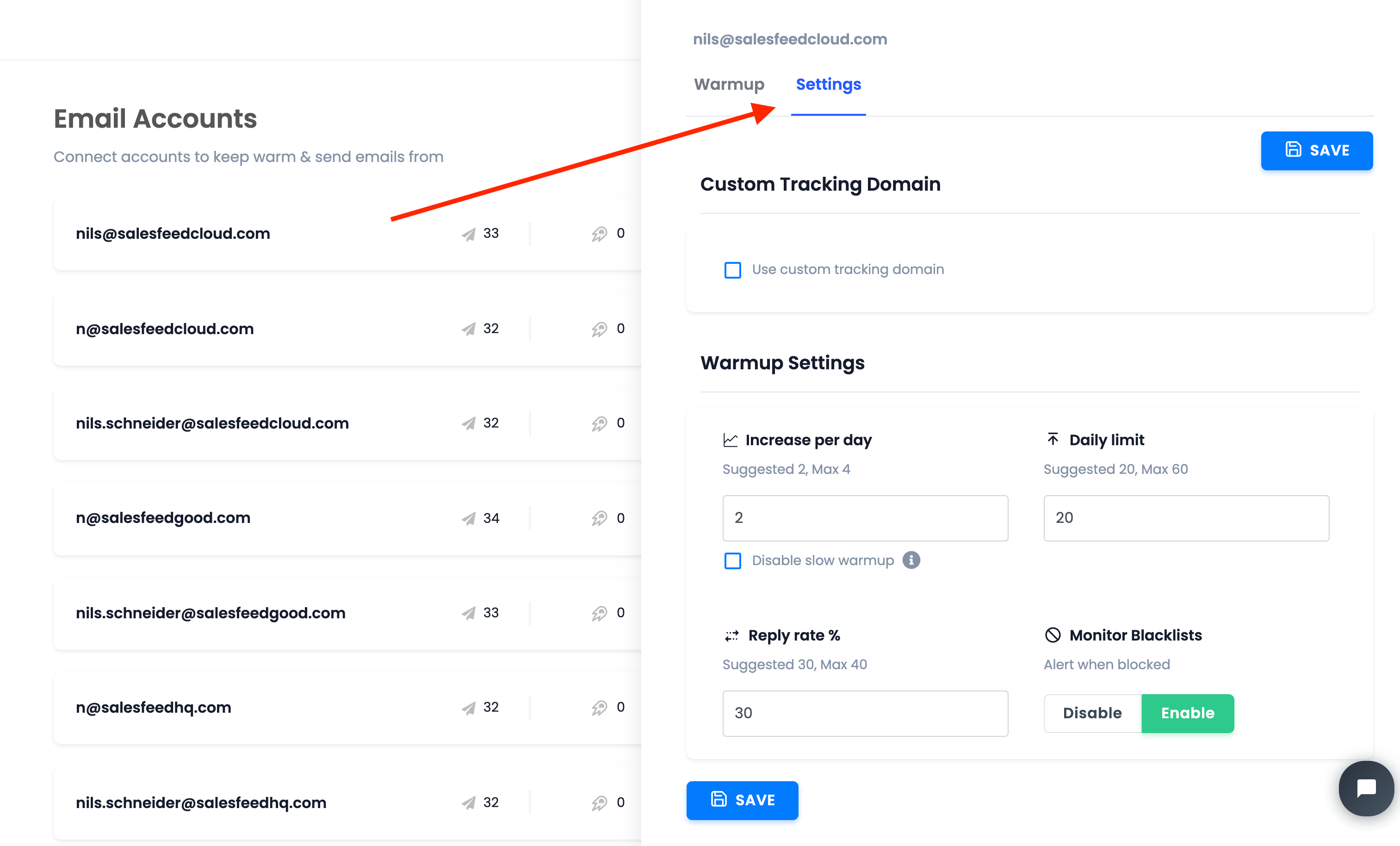
Through a network of over 1 million users in its deliverability pool, Instantly automatically sends and replies to emails in the background to build your reputation with email service providers for consistent inbox placement.
Scale Without Burnout
Let’s do the math. Manually, you can research and write maybe 10 quality emails an hour. If you want to send 50 follow-ups, that’s your entire day gone.
Outreach tools decouple your time from your volume. You can upload a list of 1,000 prospects, set a sequence to drip them out over two weeks, and go focus on closing deals. You effectively clone yourself. In practice, modern tools manage:
- Daily sending limits per inbox
- Inbox rotation across multiple accounts
- Gradual ramp-up to protect deliverability
- Automatic pauses when someone replies
This lets you scale volume without triggering spam filters or burning your primary domain.
Cleaner Workflows for Teams
Once more than one person is involved, inbox-based outreach becomes chaos. Outreach tools centralize who contacted whom, what was sent, where each prospect is in the sequence, and who owns the next action.
That means anyone on your team can step in, see the full context, and continue the conversation without awkward overlaps or dropped leads.
Reporting and Performance Visibility
Replies, positive responses, meetings booked, unsubscribes, bounces. Effective outreach tools surface these data points automatically so you can adjust quickly. You’re no longer guessing why a campaign worked or failed.
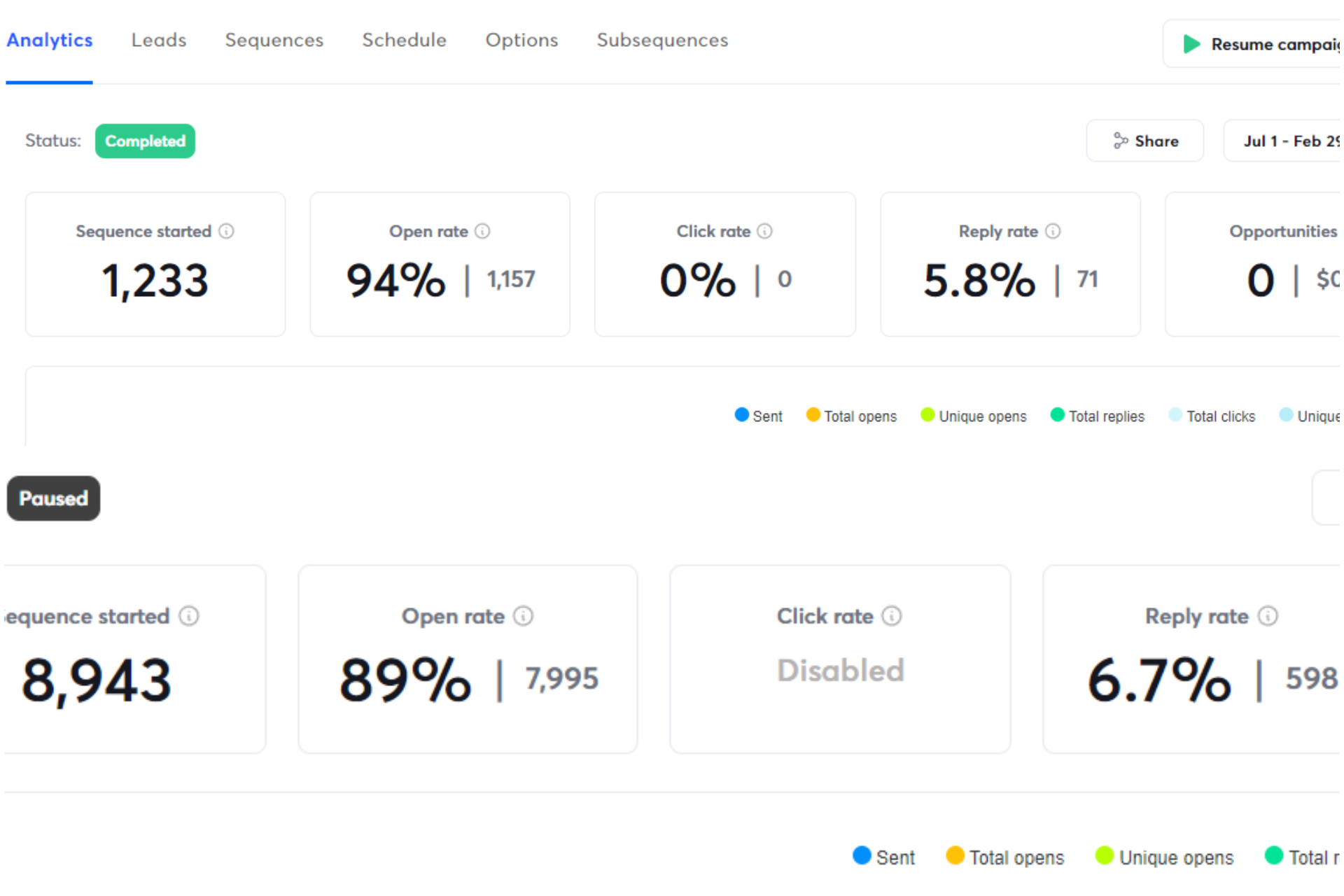
Even better, you can run various A/B tests on different email outreach aspects to see what works best (e.g., 50% of people get Subject Line A; 50% get Subject Line B). The software tells you the winner, letting you double down on the messaging that converts.
How To Use Email Outreach Tools Effectively
Email outreach tools won’t save a bad strategy. A few established principles still matter.
- Write Subject Lines That Earn the Open: Good subject lines signal relevance fast. Specific beats clever. If the email is about your recipient's world, the subject line should be too.
- Personalize With Context: First names are table stakes. Real personalization references role, industry, timing, or a visible problem. Use enrichment data to sound informed, not automated.
- Keep Emails Short and Purposeful: One idea per email. One clear reason to reply. If it takes more than a quick skim to understand your ask, it’s too long.
- Segment Before You Send: Different roles, industries, and stages require different messages. Outreach tools make segmentation easy. Broad messaging only hurts response rates.
- Respect Compliance and Consent: Follow CAN-SPAM, CASL, GDPR, and local regulations. Include proper identification, opt-out options, and responsible sending practices. Good tools help enforce this automatically.
- Follow Up Intelligently: Most replies happen after the first email. Follow-ups should add value or context, not repeat the same message. Stop when signals say stop.
- Always Include a Clear CTA: No CTA means no outcome. Ask for something small and specific, whether that's a quick opinion, a short call, or permission to send a resource. Make replying easy.

Top Email Outreach Tools (2026)
The best email outreach tools help you find the right people, land in the inbox, personalize at scale, and turn replies into meaningful sales conversations.
Below are the tools that consistently deliver results for modern B2B teams, agencies, and founders.
Instantly.ai
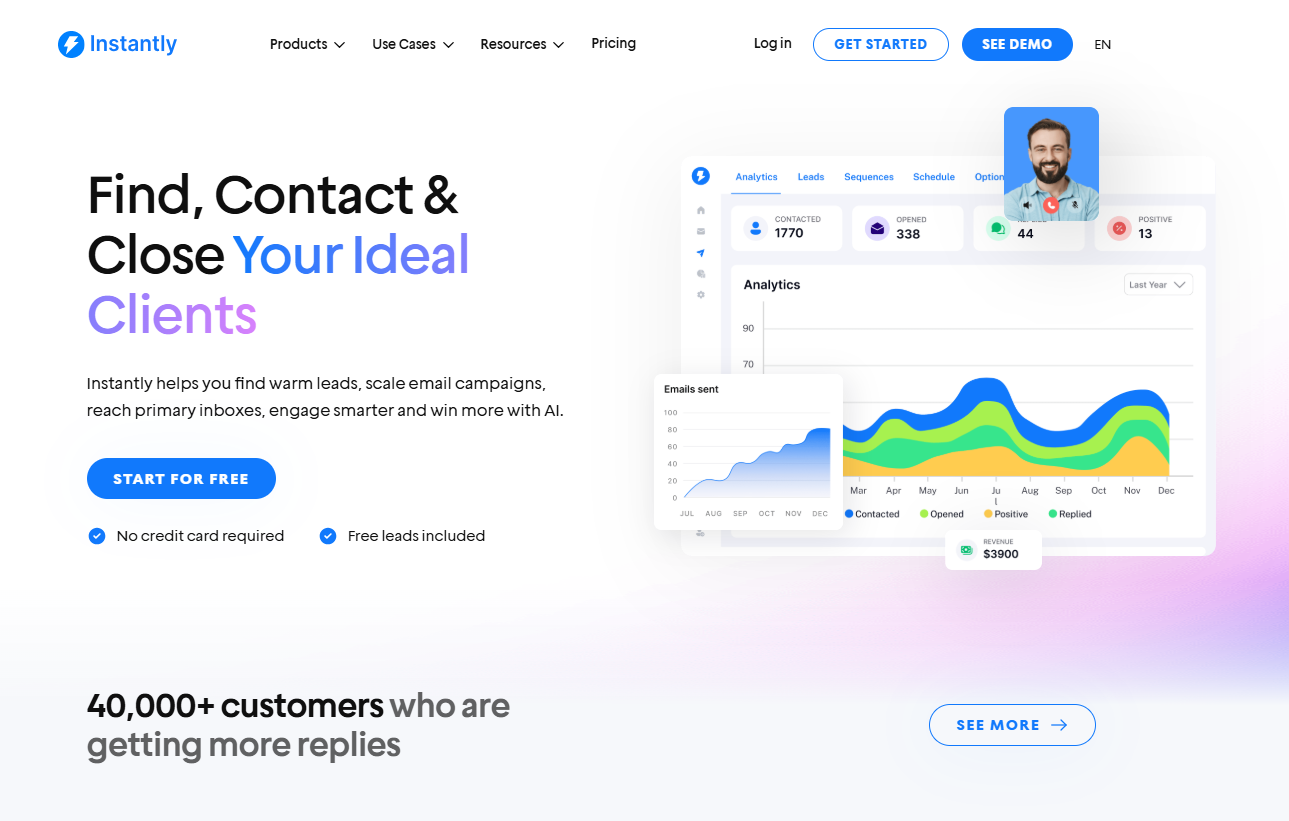
G2 Rating: 4.8/5 ⭐ from 3,939 reviews
Best for: B2B sales teams, agencies, founders, SMBs, and growth teams whose primary pipeline channel is cold email. It’s for those tired of gluing together a lead finder, a verifier, a warm-up tool, and a sender.
Instantly is an all-in-one cold email platform built for teams that need volume without compromising deliverability or personalization. It combines lead sourcing, enrichment, email infrastructure, and AI-assisted personalization in one place, which removes the need to stitch together multiple tools.
The core problem it solves: sending cold emails at scale tanks your sender reputation unless you distribute across multiple inboxes. Instantly lets you connect unlimited email accounts and rotate sends across them. Instead of one inbox blasting 500 emails and landing in spam, you have 10 inboxes, each sending 50.
A built-in automated warmup runs continuously across all your accounts. New domains get gradually introduced to email providers through reciprocal sending that builds reputation before you launch real campaigns.
An intuitive campaign management system lets you run unlimited outreach sequences with smart send patterns, merge tags, A/B tests, and real-time opens/replies.
Instantly also changed the game by pivoting from the "pay per email account" model. In a world where you need 10+ inboxes to send volume safely, our Unlimited Accounts feature is the single biggest money-saver on this list. In all, Instantly is the gold standard for "pure" cold email sending.
Why teams use it
- Deliverability-first sending: Automated warmup, inbox rotation, sending limits, and real-time health monitoring to protect inbox reputation.
- Built-in lead sourcing: SuperSearch gives access to 450 million+ verified B2B contacts with firmographic and technographic filters.
- AI-assisted personalization: Generate relevance hooks, custom openers, summaries, and full emails using enriched lead data.
- Campaign control: Smart sending, reply-based stops, auto-pausing on issues, and multi-step sequences.
- Clear analytics: Focused on metrics that matter (replies, positive replies, and conversion signals, etc.)
Pricing: Growth at $37/month (5,000 emails), Hypergrowth at $97/month (100,000 emails), Light Speed at $358/month (500,000 emails with advanced IP rotation).
Apollo
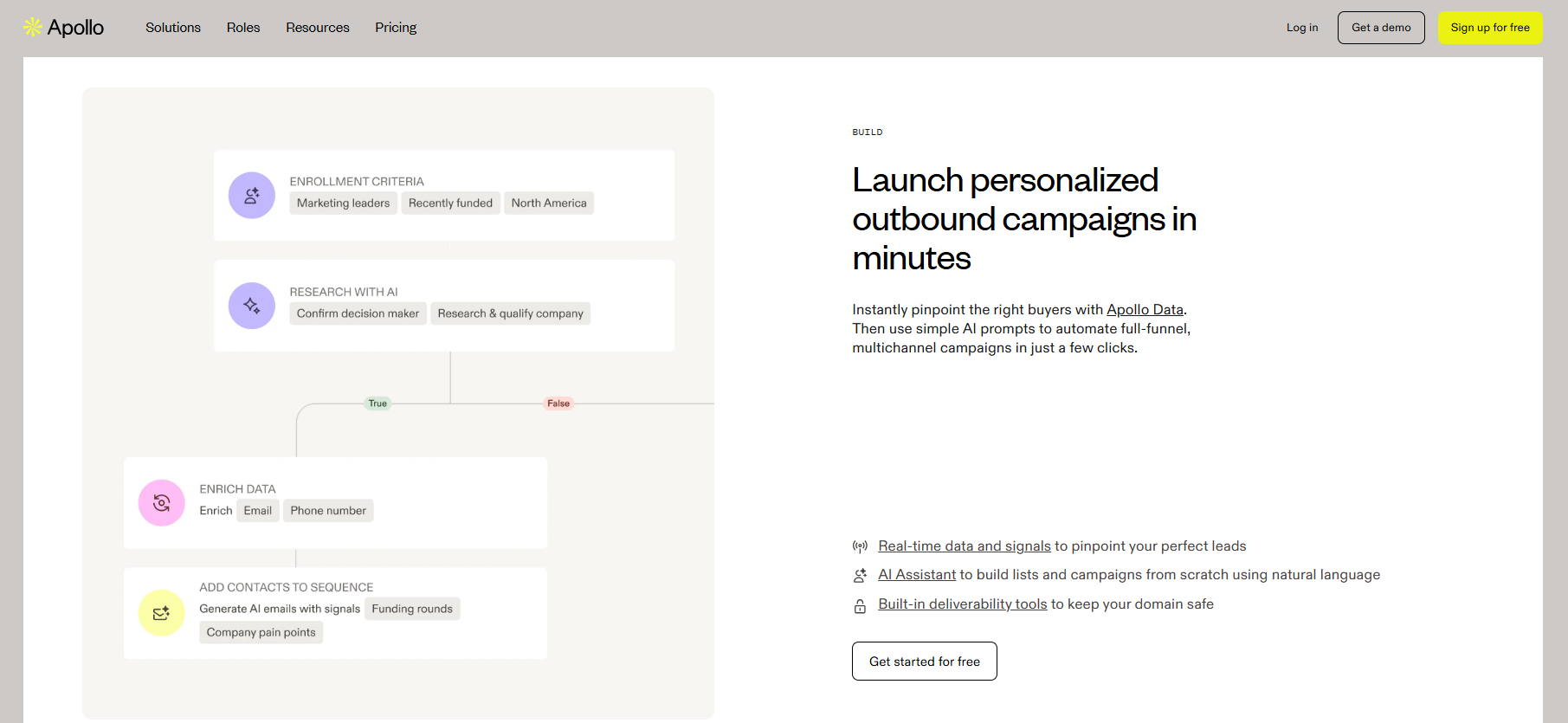
G2 Rating: 4.7/5 ⭐ from 8,838 reviews
Best for: Sales teams and solo reps that want prospecting and outreach tightly coupled and who value breadth of data and convenience over specialized deliverability features.
Apollo combines a massive B2B contact database (210 million global contacts and 35 million global companies) with email sequencing, LinkedIn outreach, and calling workflows.
The integrated database of 265M+ contacts and 70M+ companies is the heart. You build highly targeted lists using advanced filters (industry, tech stack, funding raised, headcount growth, etc.). You can then immediately launch email or call sequences to those contacts without exporting data.
It also syncs with CRMs (Salesforce, HubSpot) and gives analytics on campaign performance. It’s more of a sales engagement and intelligence platform rather than a purely email outreach tool.
Pricing: Free tier available. Basic at $59/user/month, Professional at $99/user/month, and Organization at $149/user/month.
HubSpot Sales Hub
G2 Rating: 4.5/5 ⭐ from 14,299 reviews
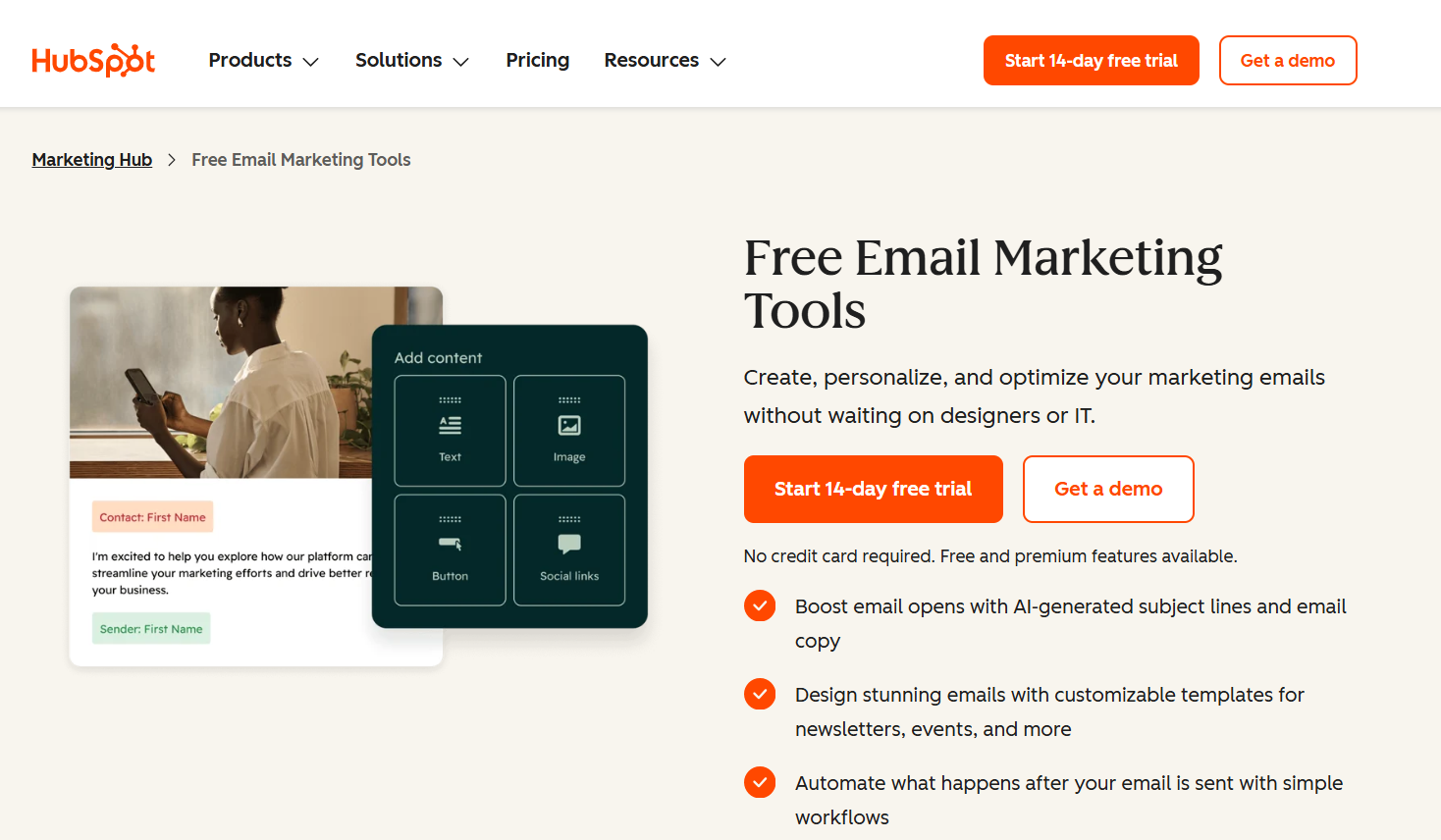
Best For: Small to mid-sized businesses already using (or planning to use) HubSpot’s marketing or service hubs. More suited for managing inbound leads and warm outbound, not for high-volume cold email.
The biggest advantage of HubSpot's email marketing software is its deep bi-directional sync with the HubSpot CRM and broader ecosystem. Every email sent, call logged, or meeting booked is automatically attached to the contact and deal record.
It offers email sequencing, meeting scheduling (HubSpot Meetings), and deal stage tracking in a refreshingly unified package. There's zero integration work or data silos. For teams using HubSpot for Marketing and Service, it creates a seamless customer journey. It’s intuitive with a shallow learning curve.
Say a marketer passes an inbound lead to a sales rep. The rep uses a pre-built sequence template from the HubSpot library, personalizes it, and enrolls the lead. The contact’s entire interaction history (website visits, form fills, past emails, etc.) is visible in the sidebar. The rep can then schedule a meeting with two clicks using the contact’s availability.
Pricing: Starts at $20/user/month (Starter). Professional plan ($100/user/month) unlocks advanced sequences and forecasting. Cost scales with the number of “marketing contacts” in your database, which can become significant.
Reply.io
G2 Rating: 4.6/5 ⭐ from 1,515 reviews
Best For: Sales teams that are active on LinkedIn and use a multi-touch approach. It’s more advanced than basic email automation but less monolithic than Outreach.
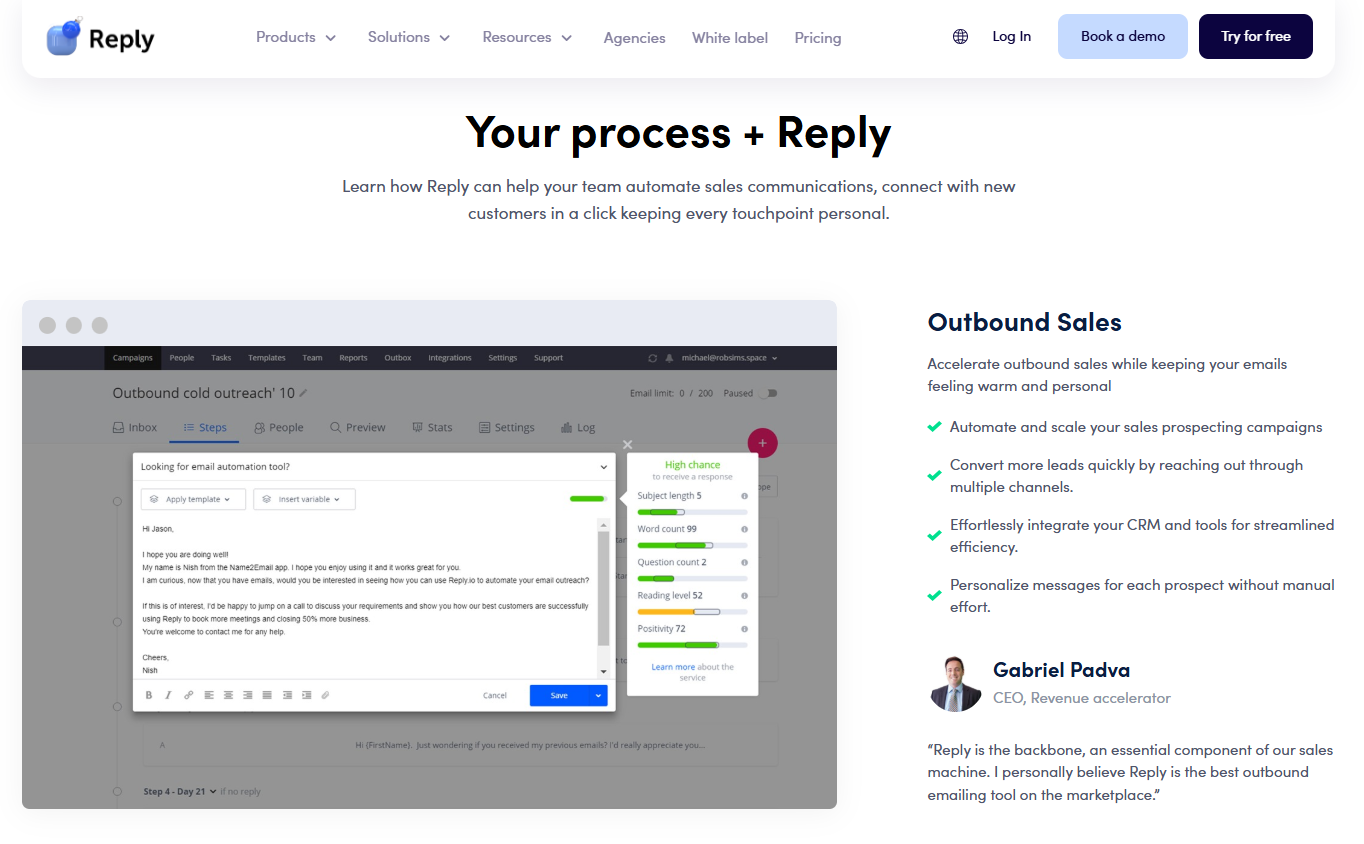
Reply focuses on automating personalized sequences across email, phone, LinkedIn, and SMS. Thanks to a multi-channel “if-this-then-that” logic, you can build sequences where, for example, if a lead opens an email but doesn’t reply, the system automatically sends a LinkedIn connection request the next day.
Its AI analyzes reply intent and scores leads. The platform also provides a unified inbox for all channel replies.
Reply.io's biggest differentiator is its sophisticated cross-channel logic. It’s designed for the modern sales rep who uses a blend of channels to break through. The API and webhooks also let you build custom workflows or connect to tools not natively supported.
Pricing: Per-user, per month. Email volume plan starts at $59 for 1,000 active contacts/month, while the multichannel plan is $99/per user/month.
Lemlist
G2 Rating: 4.5/5 ⭐ from 1,016 reviews
Best For: Sales and marketing teams targeting high-value accounts (enterprise sales, agency pitching, etc.) where the extra effort per lead is justified by the potential deal size. Also great for creative personalization.
Lemlist was built on the belief that visual, hyper-personalized emails break through the noise. With that in mind, Lemlist's signature feature lets you automatically insert a prospect’s name, company logo, or other details into an image or short video within the email body.
It also offers “email landscapes” (dynamic content blocks) and robust A/B testing for these visual elements. Put simply, the platform focuses less on raw email volume and more on making each email feel one-to-one with personalized images, GIFs, and videos that catch attention in busy inboxes.
Lemlist also has a built-in warm-up tool (Lemwarm) and workflow automations based on recipient behavior to make outreach feel bespoke, which helps improve open and reply rates in verticals where standing out matters.
Pricing: Starter plan (Email Pro) begins at $69/user/month. Multichannel Expert is set at $99/user/month. An Enterprise plan is also available with custom pricing.
QuickMail
G2 Rating: 4.7/5 ⭐ from 112 reviews
Best For: Consultants, freelancers, small SaaS teams, and experienced email marketers who want a dependable workhorse. It’s especially popular with users who send moderate volumes and need confidence that their system won’t break or harm their domain.
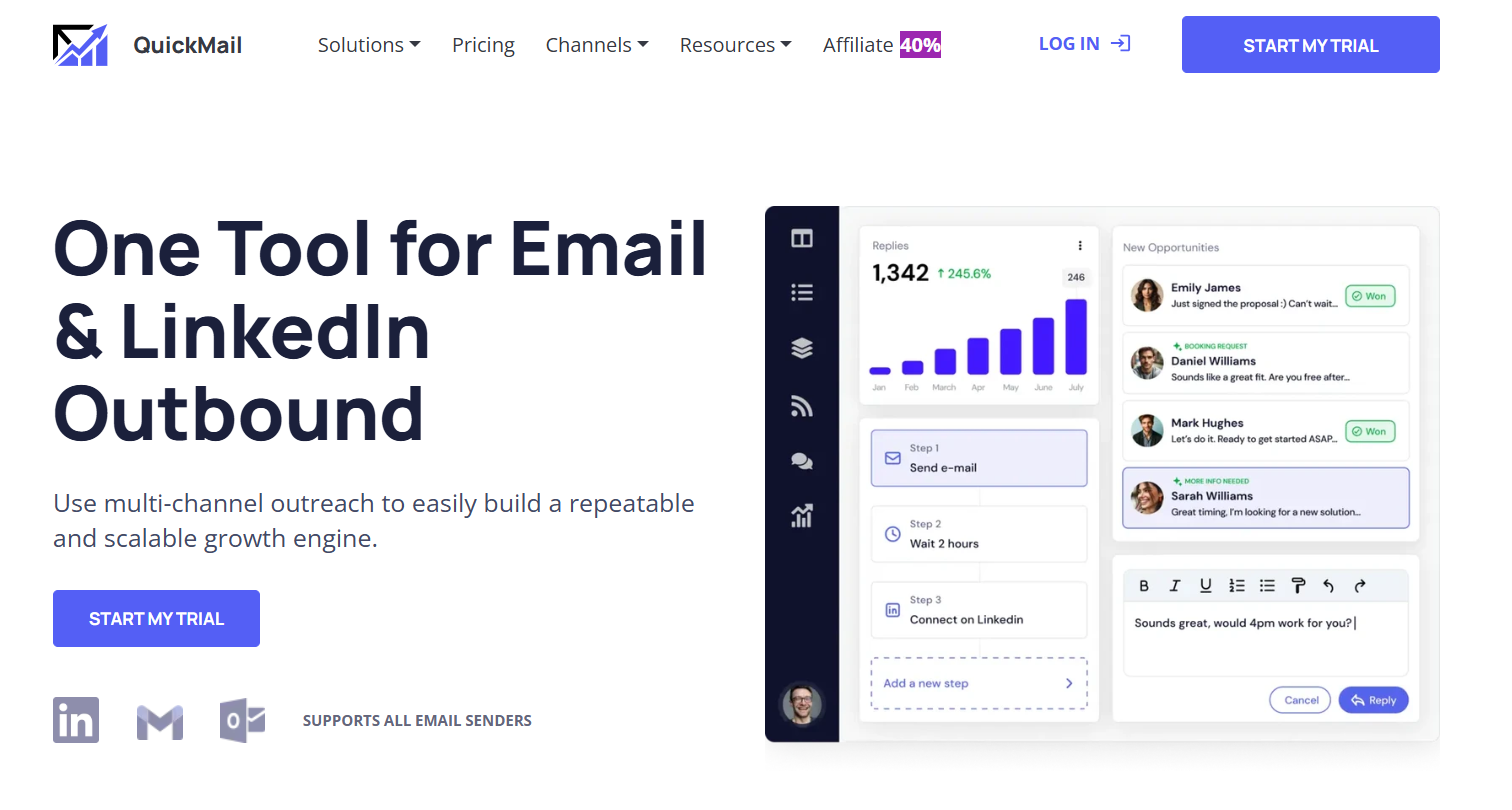
QuickMail has earned a loyal following for one reason: it’s incredibly reliable. It doesn’t have the flashiest features, but it’s known for rock-solid deliverability, straightforward automation, and excellent customer support.
It offers fine-grained control over sending schedules, follow-up logic (based on opens/clicks/replies), and inbox rotation, among others. Users particularly appreciate its “set it and forget it” reliability. Their support team is also renowned for helping troubleshoot issues smoothly.
In a space where tools can be buggy or over-promise, QuickMail is known for doing a few core things exceptionally well. It’s a no-nonsense tool for senders who prioritize inbox placement over bells and whistles.
Pricing: Starts at $9/month for 3,000 emails. The growth plan is set at $99/month for 100,000 emails, while the Agency plan is $299/month for 300,000 emails.
Outreach.io
G2 Rating: 4.3/5 ⭐ from 3,524 reviews
Best For: Mid-market to enterprise B2B sales teams (typically 25+ reps) with a dedicated sales ops function that values process rigor, forecasting accuracy, and manager-led coaching.
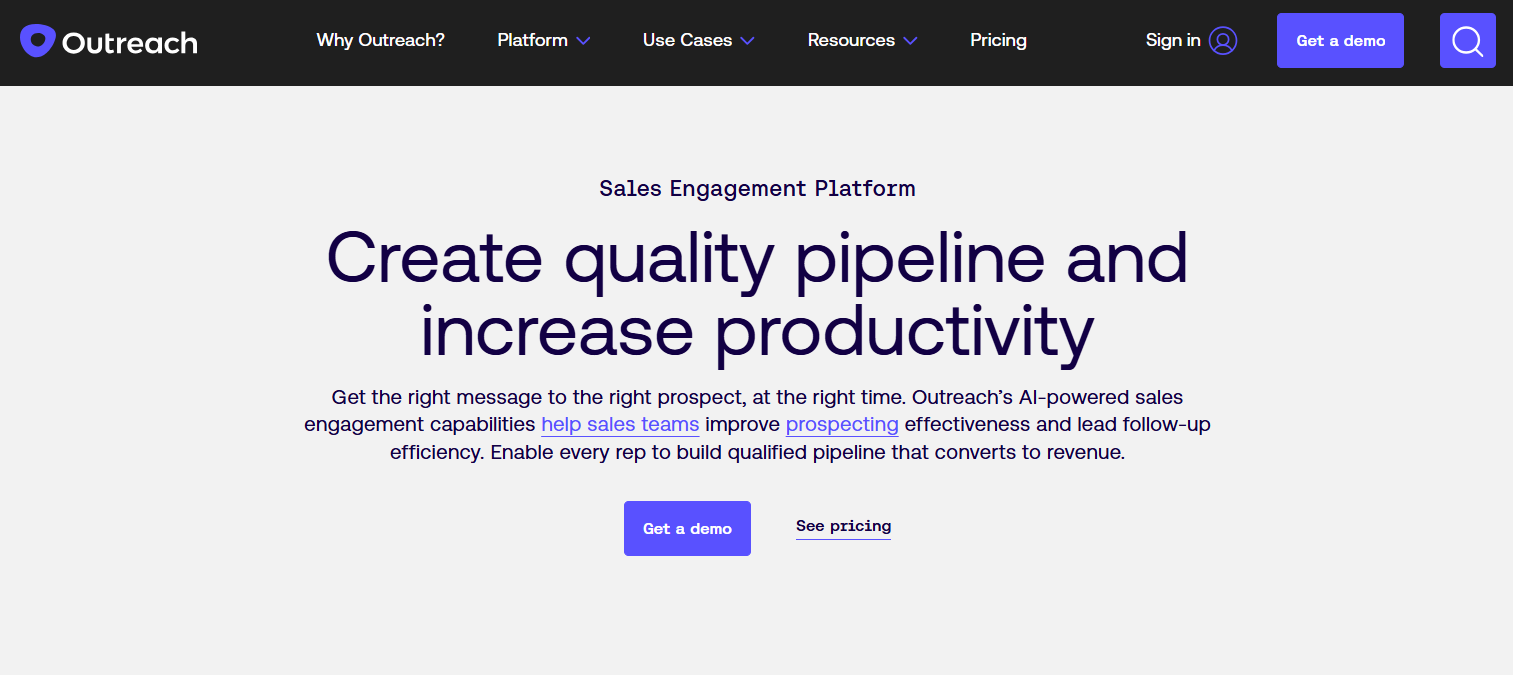
Outreach is a full sales engagement platform that goes far beyond simple sending. It manages playbooks, sequences, sales tasks, reporting, and engagement signals across email, calls, LinkedIn, and SMS.
Put differently, Outreach is the Salesforce of email outreach software. It is complex, powerful, and designed to run the entire revenue operations of a large organization beyond simply sending emails.
The platform is especially renowned for orchestrating complex outbound motions, tying activity to CRM records, and helping large teams stay aligned. Outreach’s analytics also help teams find bottlenecks in the buyer journey (e.g., first reply to booked call) and optimize playbooks systematically.
Key Takeaways
Email outreach tools are no longer just “senders.” The best platforms combine deliverability, data, personalization, and workflow control into one system.
When choosing a tool, prioritize inbox health, lead quality, personalization depth, and ease of scaling. Test with real campaigns, watch reply quality, and build a setup that supports long-term outbound, not short-term volume spikes. Start your free Instantly trial.



