


Successful graphics designers pick a clear niche, post proof of their work, use targeted outreach to start conversations, ask for referrals at milestones, and curate portfolios that speak directly to buyers. When these activities work together, client acquisition becomes smooth and predictable.
Getting graphic design clients is harder than it used to be, and pretending otherwise doesn’t help anyone. Studies show that only 17.8% of businesses hire freelance designers, while 35.5% use tools like Canva to create visuals themselves.
Fewer companies hire freelance designers, DIY tools continue to improve, and competition is increasingly global. Waiting for clients to discover your portfolio is no longer a strategy.
The designers winning in 2026 and beyond are clearer. They often choose a niche, provide visible proof, initiate direct conversations, and establish simple systems that consistently bring in work.
This guide breaks down exactly how to get graphic design clients today using strategies that reflect how modern clients hire.
Combine Content and Cold Outreach for Steady Opportunities
Most graphics designers do one or the other. They post content and hope someone reaches out. Or they send cold emails without any proof they're worth hiring. Neither works on its own.
The designers landing steady clients combine both. Visible work that builds trust, plus targeted outreach that starts conversations.
In practice, that means publishing one piece of content a week. A mini case study, a before-and-after, a quick tip for your niche. Then repurpose it across your website, LinkedIn, and portfolio platforms. When a prospect clicks your name, they immediately see proof you know what you're doing.
The outreach part used to be the slow, tedious piece. Finding the right people to email meant hours of digging through LinkedIn, company websites, and industry directories.
Instantly's Lead Finder (SuperSearch) cuts that time down significantly. You can filter by job title, industry, company size, and location to build a list of ideal clients in minutes instead of days.
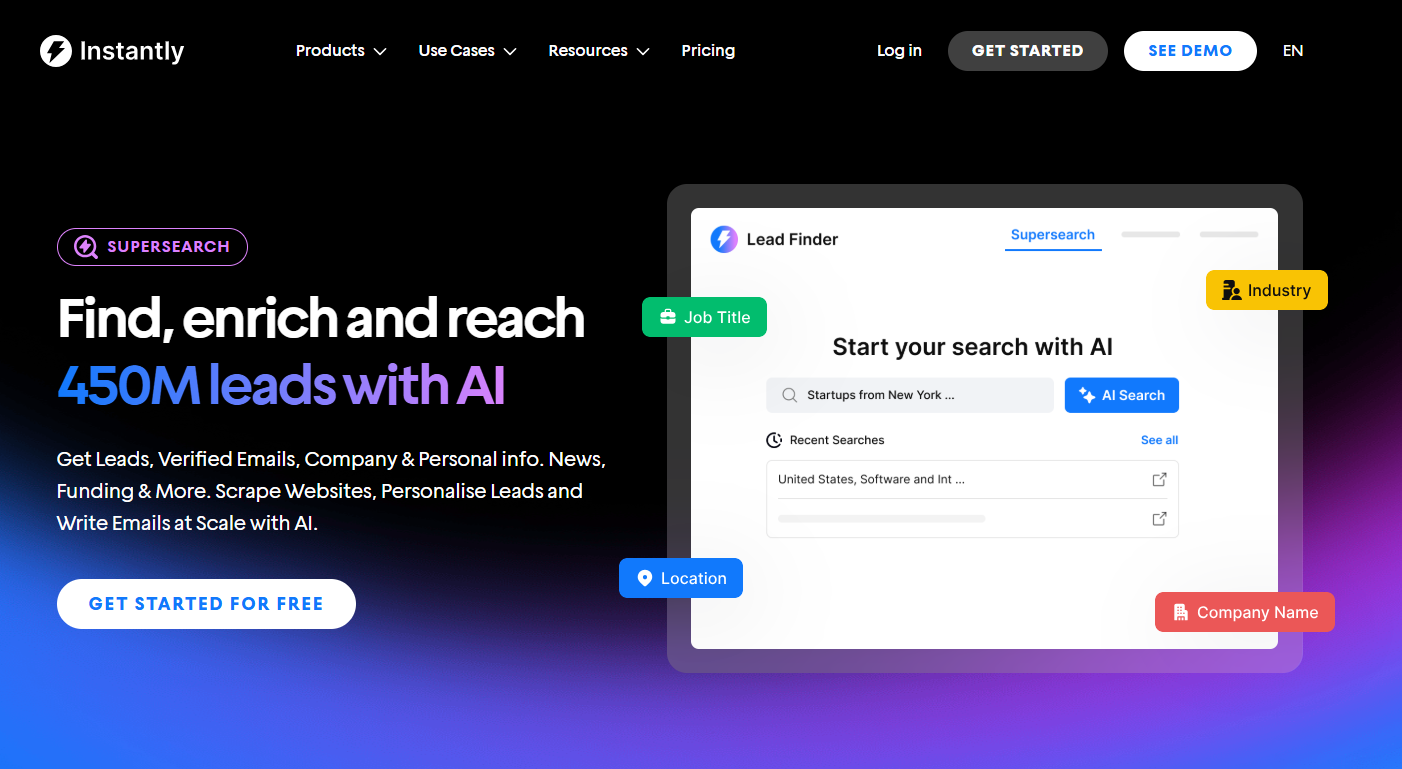
Here's how to make this system work for you:
- Publish one helpful piece of content each week.
- Repurpose that content on your website, LinkedIn, and design platforms.
- Build a small list of ideal clients each week using Instantly's Lead Finder.
- Send short, specific emails. Try something like: "I help [client type] improve [specific asset]. I noticed [something concrete about their visuals] and had one idea. Want a quick Loom walkthrough?"
- Track the basics. Emails sent, replies received, which messages lead to real conversations.
Pick a Niche (and Watch the Right Clients Find You)
Research on freelancers shows that specialists usually earn more and find it easier to market themselves than generalists. On platforms like Upwork, designers are already responding to AI competition by narrowing their focus. It helps them stand out and win more work.
The reason is simple. Clients feel more confident hiring someone who clearly understands their world. "Brand identity for local cafes" sounds more trustworthy to a cafe owner than "graphic designer for everything."
One designer on Reddit shared how their career naturally evolved from generalist to specialist, and how each niche led to deeper, longer-lasting client relationships:
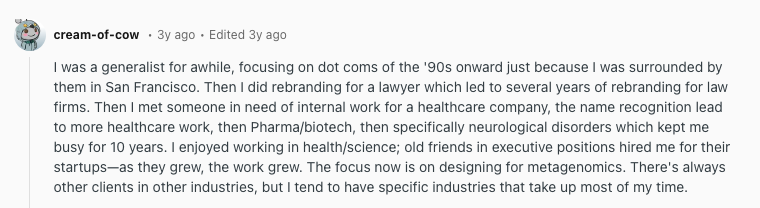
Notice how one project led to years of related work. That's the power of niching. You're not limiting yourself. You're building a reputation that compounds over time.
If you're not sure where to start, here are a few ways to put this into practice:
- Pick one main niche for the next 6 to 12 months. Coaches, e-commerce brands, SaaS startups, and local service businesses are all solid options.
- Write a simple positioning line that follows this formula: "I design [service] for [client type] so they can [result]."
- Reorganize your portfolio so the first three projects speak directly to that niche.
- Rewrite project descriptions in plain language. Explain the problem, what you did, and the outcome.
- Use the same niche message across your website, LinkedIn, Behance, and proposals. Clients should see a consistent story everywhere they look.
Double Down on LinkedIn as a Client Acquisition Channel
The people who actually hire designers (founders, marketing managers, agency owners) are already scrolling LinkedIn daily, looking for talent they can trust.
The problem is that most designers treat LinkedIn like a digital resume. They post a generic headline, add a few portfolio links, and only show up when they need work. That's not how you attract clients. You attract clients by showing up like a helpful partner, not a job seeker.
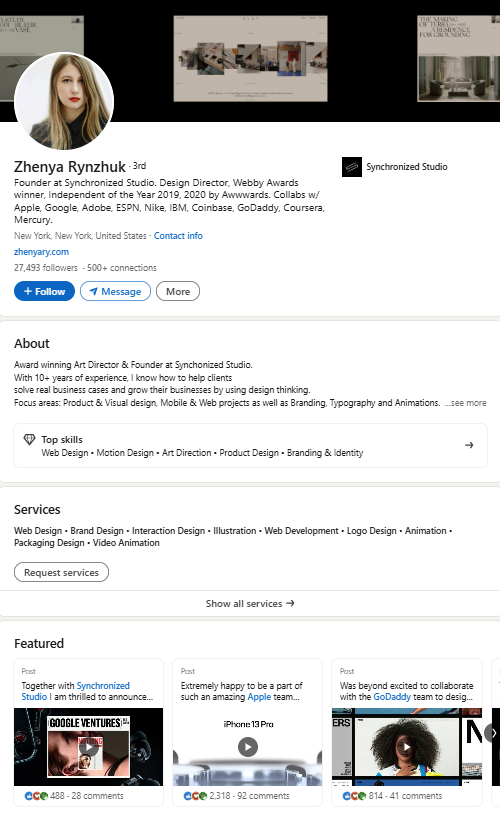
Your profile is the foundation. Your headline should be a clear offer, not a job title. "Brand identity designer for DTC skincare brands" tells a prospect exactly what you do and who you help. "Graphic Designer" tells them nothing.
Your banner image should show two or three of your best pieces with a short tagline. Think of it as a mini billboard. Once your profile is set up, visibility comes from consistency:
- Post two to three times per week. Quick process breakdowns, mini case studies, or simple visual tips for your niche all work well.
- Comment thoughtfully on posts from founders, marketers, and agencies you want to work with. This gets you on their radar before you ever send a message.
- Send a small number of personal connection requests each day. Mention something specific about their business instead of pasting generic lines.
Here’s an example of a profile that gets it right:
Prioritize Referrals: Your Most Underrated Lead Source
Referrals are still one of the strongest sources of new business. Various studies have repeatedly shown that referred customers convert three to five times better than other leads and often spend more over time.
For a designer, that means happy clients aren't just nice feedback for your portfolio; they become a channel you can actively build and rely on.
The key is asking in a way that feels natural and making it easy for clients to follow through. Most people are happy to refer good work. They just need a little nudge and a clear path to do it.
Here's how a few freelancers on Reddit approach the referral conversation:
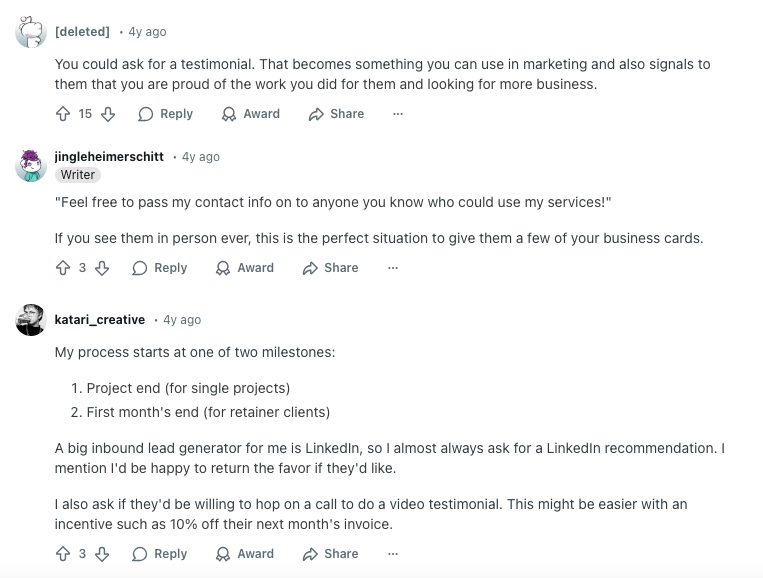
A few patterns stand out:
- Tying the ask to a milestone (project end or first month of a retainer) gives it a natural place in the workflow.
- Asking for a testimonial first signals you're proud of the work and opens the door to referrals.
- Offering something in return, whether a LinkedIn recommendation or a small discount, makes people more likely to act.
Referrals don't just come from clients, either. Copywriters, developers, and marketers who work with your type of client get asked for designer recommendations all the time. Building relationships with them is just as valuable as nurturing past clients.
Use Portfolios and Platforms That Convert
Clients still use freelance sites to find designers. Behance, Dribbble, Upwork, Fiverr, and niche job boards all remain practical ways to connect with new clients in 2025.
The mistake most designers make is uploading random work everywhere. A better approach is treating one or two platforms as focused storefronts, not dumping grounds.
Think of it this way: a showcase platform (Behance or Dribbble) displays your best work to build credibility. A job platform (Upwork or a niche board) is where you actively bid on projects. You don't need to be everywhere. You need to be strategic about where you show up.
Here's how to make your profiles work harder:
- Choose one showcase platform and one job platform. Spreading yourself thin across five sites means none of them gets the attention they need.
- Curate only your best five to eight projects that match your niche. Quality beats quantity every time.
- Write case-study style descriptions: who the client was, what they needed, what you created, and what changed for them.
- Add a clear call to action in every profile and project description. Something like "Email me at [your email] with your website and a short description of your project" works well.
- On job platforms, apply only to projects that match your niche and minimum budget. Chasing every listing wastes time and lowers your win rate.
Key Takeaways
None of the strategies above works in isolation. The graphics designers who land steady work in 2026 and beyond are the ones who treat client acquisition as a system. Here's a quick recap:
- Pick a niche and stick with it for at least 6 to 12 months. Specialists earn more and market themselves more easily.
- Treat LinkedIn like a client channel. Optimize your headline, post consistently, and engage with the people you want to work with.
- Ask for referrals at the end of every successful project. Make it easy for clients to say yes.
- Curate your portfolio around your niche. Five strong projects beat twenty random ones.
- Combine content with outreach. Visible work builds trust. Targeted emails start conversations.
If the outreach side feels like the slowest part of your system, Instantly can help. SuperSeach lets you build targeted prospect lists in minutes, and automated email sequences keep conversations going without the manual follow-up. Start your free Instantly trial.


