.svg)
%20(1).svg)

Updated on 17 Aug 2026
With hundreds of list-building tools available today, it's easy to treat list building as just another “step” rather than an actual strategy.
Just type in filters to match leads with your ICP and call it a day. But without a concrete roadmap for B2B list building, you’ll be left with noise. Segmentation, lead scoring, and intent signals are now table stakes.
To thrive in a saturated market, you need to go deeper to find actual value from your lead or demand generation efforts. So, what does it take to build a solid B2B lead list that moves the needle for your business? We break it down below and briefly discuss how Instantly helps.
What Is a B2B List Builder?
A B2B list builder is a tool used to find and organize business contacts that match specific prospecting criteria. Instead of manually researching companies and decision-makers, sales teams can search a larger contact database based on their ideal customer profile (ICP) and the types of prospects they want to reach.
A B2B email list builder goes a step further by providing or verifying the email addresses associated with those contacts. This gives outbound teams a prospect list they can segment, verify, and move into relevant cold email outreach campaigns.
The quality of the resulting list still depends on how you use the tool. Broad filters can produce thousands of contacts, but a smaller list built around a clearly defined ICP will usually give your sales team much more useful prospects to work with.
How Does a B2B List Builder Work?
Most B2B list builders start with a searchable database of companies and professional contacts. You define the type of prospect you want to reach, apply filters that match your ICP, and use the results to create a targeted lead list.
For example, a SaaS company could look for VP-level sales leaders at US technology companies with 50–500 employees. It could then narrow the list further using signals such as recent funding or hiring activity.
The resulting contact data may still need to be enriched and verified before you use it for cold email outreach. This can fill gaps in the data and remove invalid email addresses before they affect your campaigns.
Instantly brings B2B list building and outreach into the same workflow. Once you’ve found the verified contacts you want to reach, you can add them directly to an outreach campaign.
B2B List Building Fundamentals: How To Cut Through The Noise
List building is a subtractive process that moves from general to specific. More isn’t better; quality + volume is. You get this perfect combination by following these fundamentals:
Segmentation Isn’t Just About Filtering Leads
Most marketers segment to build one perfect list. But that’s missing the point. The real value of list segmentation is in creating multiple campaigns. Instead of obsessing over a single “qualified” lead list, break your segments into buckets like:
- High-value leads: Tight ICP match, high intent. These deserve custom outreach, fast follow-ups, and even sales involvement.
- Iffy leads: They might be a fit, but they are not showing strong signals yet. Queue them into a nurturing campaign or soft-touch LinkedIn outreach.
- Low-intent, long-tail leads: Not your focus right now, but still worth nurturing. Use this segment for content plays, retargeting, or newsletter automation.
Ditch the MQL Obsession
Discerning which leads are Marketing Qualified Leads (MQLs) is a largely subjective process. Especially in B2B SaaS, obsessing over ebook downloads or newsletter signups won’t build a pipeline.
For the best results, it pays to focus more on sales metrics like CAC, demo requests, trial signups, and revenue growth. If your list doesn’t help move those numbers, it’s just vanity data.
No Forms, No Spam
B2B buyers want to stay anonymous longer than most teams are comfortable with. Stop gating blog posts like they're government secrets. Build trust first.
Use intent data to track buying behavior instead of chasing emails from someone who just wanted a free email template.
Source Diversity + Enrichment = Value
Most teams rely on one lead source and call it a day. But even with accurate data, that approach limits your visibility. You only see the slice of the market that one platform gives you.
The real unlock is source diversity + enrichment. That’s where the value comes in. Use a mix of platforms, Chrome scrapers, event attendee lists, intent tools, and manual research.
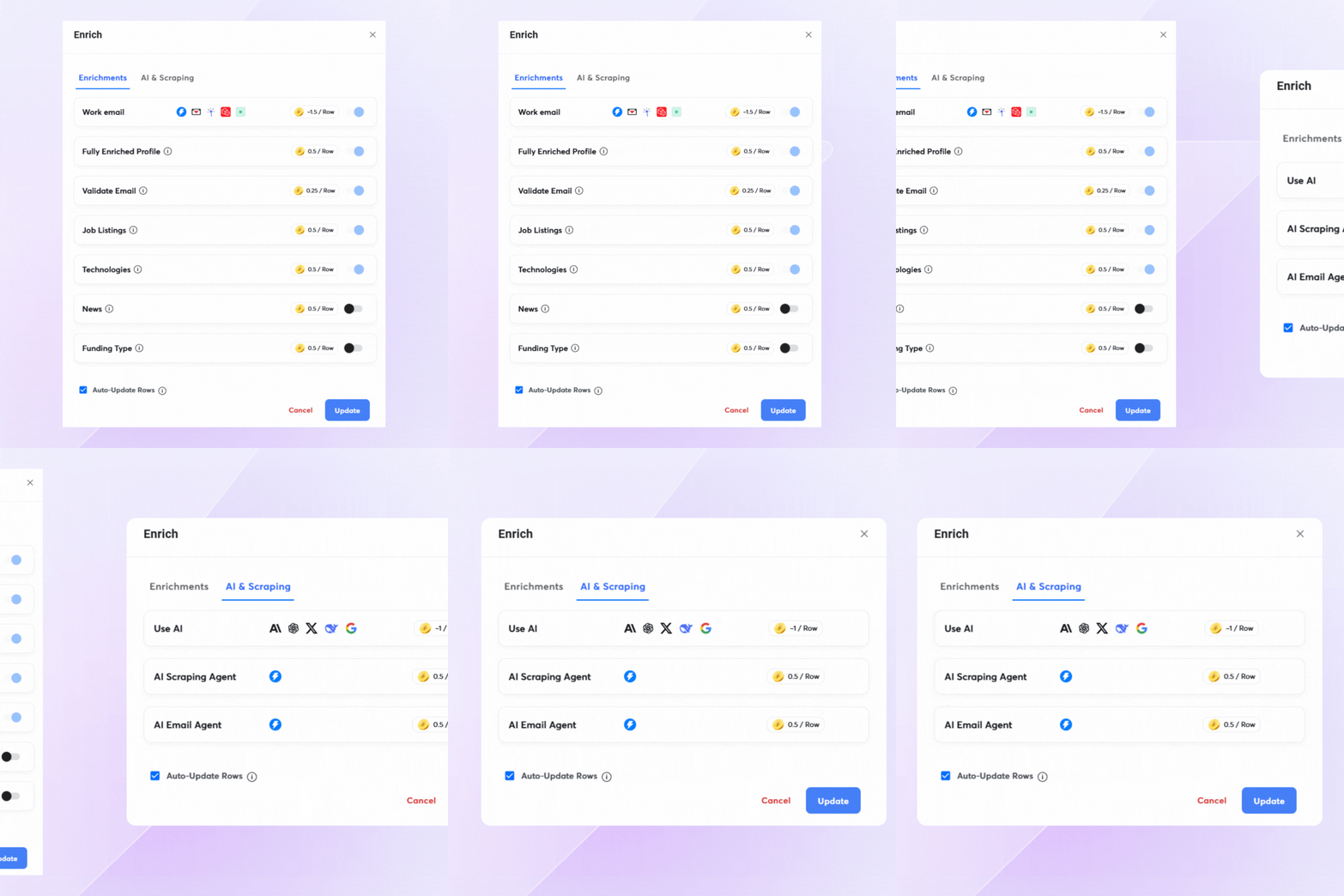
Then enrich those leads with tools like Clearbit, Clay, or Dropcontact to fill in missing details like seniority, tech stack, hiring trends, and buying signals.
Alternatively, you can simplify the process with Instantly SuperSearch. Our platform combines lead prospecting and AI-powered enrichment in one place.
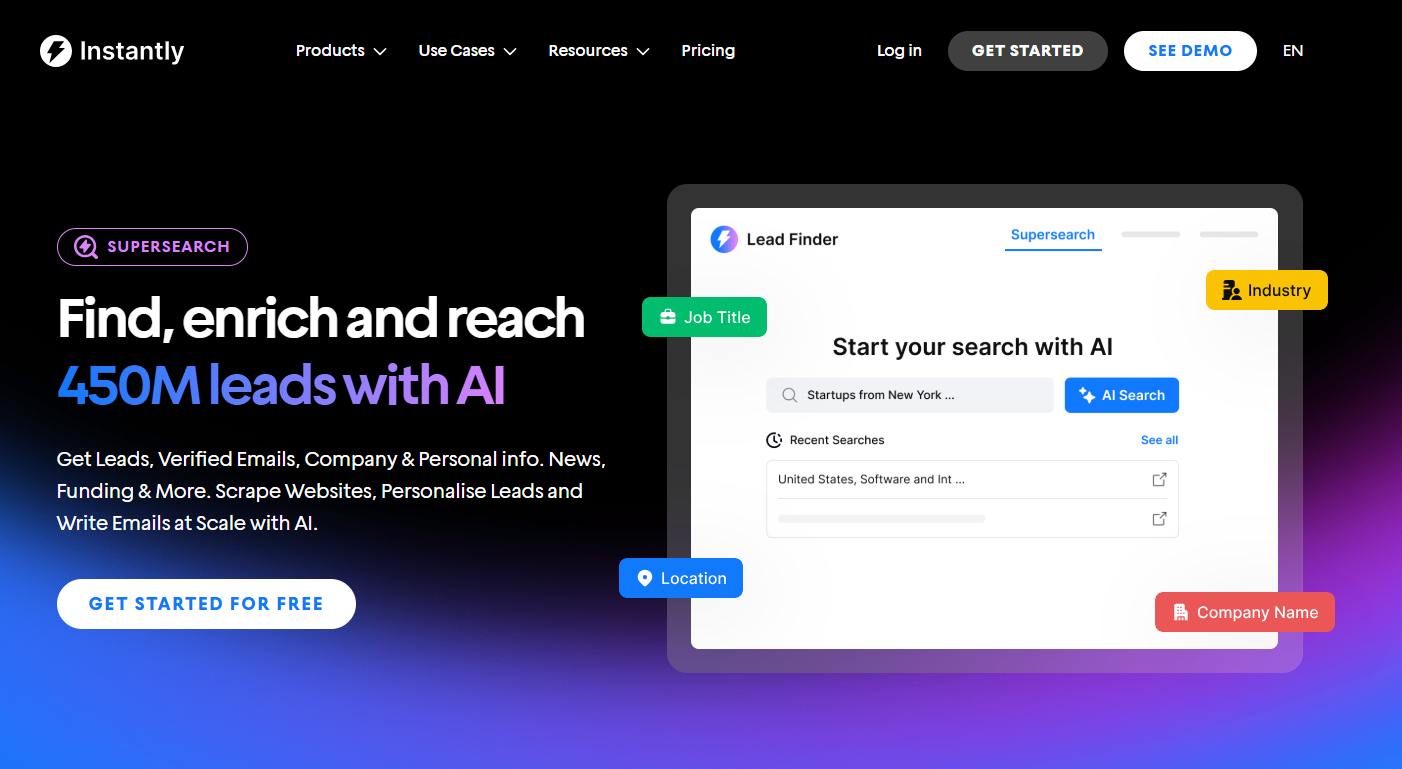
If you can’t find what you’re looking for in any database, SuperSearch has an AI Web Researcher that pulls real-time data like funding news, recent hires, and company updates.

How to Build a B2B Email List
Building a B2B email list starts with defining who should be on it. Company size and industry are useful starting points, but you’ll usually need to go deeper to find the people most likely to be relevant to your sales team.
A B2B email list builder can speed up the research by finding contacts that match your criteria and providing the information needed for outreach. Before adding them to a campaign, verify their email addresses and remove invalid data that could increase bounce rates.
From there, segment the list around the reason you’re contacting each prospect. A recently funded company, for example, shouldn’t necessarily receive the same message as a company hiring its first sales team. That context is what turns a database of email addresses into a useful prospecting list.
Somewhat Untapped B2B List Building Strategies To Try
Most teams follow the same playbook: filter by job title, export a list, send a sequence, repeat. But some of the best results often come from strategies nobody talks about.
If you're looking for new angles to build higher-converting lead lists, these untapped tactics are worth a shot:
Start with Your CRM (or What You’ve Got)
Your CRM, client tracker, or even a simple spreadsheet can help determine which leads are worth pursuing. If you’re an established team, start by reverse-engineering your top 20 to 50 clients based on revenue, retention, or sales velocity.
Look for patterns like:
- What industries do they belong to?
- What roles were involved in the sale?
- What were they struggling with before you came in?
- How long did the deal take to close?
This also works if you’re just starting, like leaving an agency or launching your own business. Start with the few clients you’ve worked with. Even three to five solid case studies are enough to identify patterns. If you don’t have clients, use your best offer to build and test an hypothesis ICP.
To streamline the process, Instantly SuperSearch includes a Lookalikes feature. Plug in a few of your ideal clients or company examples, and SuperSearch will find similar contacts and businesses using real-time filters and enrichment.
Map Lead Sources to Funnel Stages
Not every lead enters your pipeline at the same stage, and treating them all the same is a fast track to low conversions. A lead's source tells you much about their intent and what kind of outreach makes sense.
Here’s a quick breakdown:
- Cold scraped leads: Top-of-funnel. No intent yet. Focus on behavior and engagement.
- Webinar or event signups: Mid-funnel. They’ve shown interest. Focus on nurturing.
- Referrals or partner leads: Bottom-funnel. They’re warmed up. Prioritize and move fast.
- Demo requests or trials: High-intent. Skip the fluff. Focus on conversion and ROI.
- Content downloads: Varies. Use the type of content to gauge interest level.
Build a Lead Scoring System That Ties Back to Revenue
Lead scoring works if it's tied to goals. Too many teams score leads based on opens, clicks, or reply rates. While those metrics are helpful, they don’t always correlate with actual pipeline or revenue.
A better approach often seen on top sales engagement platforms (like Instantly) is to score leads based on historical conversion data from previous campaigns.
Start with metrics like:
- Past conversion data: Which segments historically turn into customers?
- Funnel velocity: Which types of leads move through the funnel fastest?
- Deal size by segment: Which industries or roles generate the most revenue?
Track Social Mentions of Competitors or Categories
You don’t need to fill out a form to find a solid lead. People are already talking on LinkedIn, Twitter, and Reddit, dropping feedback, asking for tool recommendations, or venting about what they’re using.
Set up alerts for competitor names or category keywords and just listen. Tools like Brand24, SparkToro, and Twitter Advanced Search can help you catch those posts in real time.
Someone saying, “Anyone else feel like {{Tool}} has gone downhill lately?” That’s a lead. Someone asking, “What’s a good CRM that’s not crazy expensive?” That’s another.
Use LinkedIn Carousel Engagement as a Signal
Creators in your niche are already attracting your ideal buyers. When someone likes, comments, or asks a question on a carousel about outbound, tech stacks, or scaling problems, that shows interest.
These are people already engaged with the topic and likely open to new ideas. Check the comments, scrape the likes, and build lists from those names. It’s low effort with high rewards.
Why Businesses Use Instantly for B2B List Building
Building a useful prospect list often means moving between different tools to find contacts and prepare them for outreach. Instantly brings B2B list building and cold email outreach into the same platform, reducing the amount of manual work between finding a prospect and contacting them.
You can build lists around your ICP and narrow the results based on the prospects you want to reach. Once you have the right contacts, their email addresses can be verified before they’re added to a campaign.
This makes Instantly useful as both a B2B list builder and the platform you use to turn those lists into conversations. Your team can move from prospecting to outreach without repeatedly exporting data between separate tools.
Start your 14 day free trial and use Instantly to build targeted B2B lists and turn them into personalized outreach campaigns.
Key Takeaways
Success with any form of outreach starts with quality lead lists. But building quality lists doesn’t require you to spend hours filtering, segmenting, and scoring. With the right tools and strategies, you can generate high-converting B2B lead lists in a few clicks.
If you want to grow through scalable cold email outreach campaigns, SuperSearch is a no-brainer. Start your free Instantly trial.

Frequently Asked Questions About B2B List Builders
What is a B2B email list builder?
A B2B list builder helps sales and marketing teams find business contacts that match their target audience. Rather than researching prospects individually, teams can search a larger database using criteria based on their ICP and build lists for outreach.
How do you build a B2B prospect list?
Start with your ideal customer profile and determine who you need to reach within those companies. A B2B list builder can then help you find matching prospects. Before starting outreach, check that the contact information is accurate and segment the list based on why you’re contacting them.
What information should a B2B lead list include?
At a minimum, you need enough information to identify the prospect, understand where they work and contact them. You can add more detail when it helps determine whether someone is a good fit or gives you a useful reason to personalize your outreach.
How do you verify a B2B email list?
Use an email verification tool to check addresses before adding them to a campaign. This can identify invalid or risky addresses that might otherwise increase your bounce rate and hurt deliverability.


