


Effective lead generation focuses on consistently attracting the right prospects rather than mass-gathering contacts.
Start with a clear ICP and buyer pain points based on real customer data, then layer in intent signals to qualify leads before pushing them to sales. For outbound, use ICP filters (like Instantly SuperSearch) to build lists for cold email/calling. For inbound, design content and forms to filter for fit + intent.
The goal is to build a disciplined, data-driven process and refine based on results, using tools to automate execution rather than replace strategy.
Most lead generation problems start long before a campaign goes live. Teams collect large contact lists, hoping volume will produce results, only to fill their pipelines with unqualified or low-intent leads.
A reliable lead generation system does the opposite. It starts with the clarity of knowing exactly what problems your audience is trying to solve, and which signals indicate buying intent. With those fundamentals in place, your list becomes focused, campaigns grow more relevant, and reps spend time only where it matters.
Instantly help centralize this entire process. Instead of juggling multiple tools, you can filter over 450 million verified B2B leads, refine by fit and intent, enrich missing data, and automatically push segmented lists into targeted outreach.
Whether you’re selling to startups fresh off a funding round or enterprise buyers actively showing need, this guide breaks down how to build predictable lead generation engines that deliver qualified opportunities at scale.
What are the Primary Lead Generation Categories?
Lead generation can be categorized into two main types: inbound and outbound. Inbound strategies attract leads to you through valuable content, such as:
- Blog articles that target specific problem-focused keywords
- Comparison pages that evaluate tools or solutions in your niche
- On-demand webinars that walk through a process with real examples from guests
- Case studies that show before-and-after results, including key metrics
- Landing pages with a clear lead magnet, such as templates, scripts, or checklists
Outbound lead generation, by contrast, is more proactive. Instead of attracting leads, you contact them first using channels like cold email marketing, cold calling, social selling, or paid ads.
Lead Gen Fundamentals: The Basics of Building Lead Lists
Before building any lead generation funnel, it's helpful to start with a simple question: who do you want to attract, and what is bothering them right now? What’s great here is that it works for both inbound and outbound lead generation.
What are they trying to fix, what keeps slipping through the cracks, and what kind of question would make them stop scrolling and pay attention? Say you are selling a CRM for service businesses. Instead of talking about “features,” you could test a few different angles, like:
“Why are so many of your leads slipping through the cracks?”
“How many follow-ups did your team forget this week?”
“Which leads are actually worth your time this month?”
“How much revenue are you losing from slow responses?”
Each of these questions addresses a different kind of frustration. You test a few angles, see which one gets the most clicks or replies, then build your “bait” around the winners.
That bait is a small, easy-to-consume resource people get in exchange for their attention and contact details, for example:
“{Question}? Take our 30-second pipeline health quiz.”
“{Question}? Watch this 60-second breakdown.”
“Download the follow-up checklist top-performing teams use.”
“Join a short live session with a sales ops specialist.”
The pattern is straightforward:
- Clearly state the specific problem your offer solves.
- Attach a small but valuable resource that promises a real answer.
- Ask for their details in exchange for access to that value.
Be mindful of each platform’s rules to avoid getting flagged or banned. If you boil it down, a lead is simply someone who has a problem you can solve and has chosen to make themselves visible to you.
So, the real question behind any campaign is: How do I clearly surface the pain or desire of people with this specific problem that they are willing to share their details to get a real solution? The simple answer is transitioning from lead generation to demand generation.
Outbound Lead Generation Guide
Outbound lead generation is often more challenging than inbound because most leads are cold and unfamiliar with your brand.
Yet when you look at the results businesses get from cold outreach, it is the most cost-effective and scalable way to generate new opportunities.
Outbound also has demand generation built in, since every touch introduces your brand and tests for interest and intent. Here's a step-by-step guide you can follow for the most common outbound lead generation strategies:
Building an Ideal Customer Profile
An ideal customer profile (ICP) is a template for the leads who are most likely to be interested in your products or services. The best way to build an ICP is to base it on your best existing customers + real data.
Then, you refine it with firmographics, problems, buying triggers, and negative profiles, and continue to update it as campaigns run. Let’s walk through a simple, practical process you can use for your outbound campaigns:
1. Start with your best customers
Look at 10–30 of your favorite existing customers (high LTV, low headache, good results). Identify patterns in:
- Industry/niche
- Company size and locations
- Business model and tech stack
2. Map the buyers and their problems
From your best customers list, ask the following questions:
- Who buys: Owner, CEO, Practice Manager, CMO, etc.
- What hurts: The problems they had before you (no leads, bad website, no tracking)
- What they wanted: The concrete outcomes (more patients, better reporting, faster site).
3. Define fit criteria and exclusions
A good ICP is as much about who you don’t want as it is about who you do.
- Good fit:
- Right industry
- Right size (revenue/headcount/locations)
- Has a budget and existing marketing activity
- Uses specific tools (e.g., WordPress, Google Ads)
- Bad fit (disqualifiers):
- Too small / no budget
- Only wants “something cheap/one-off”
- Past churn patterns or red flags
You can always add more to the list as you continue to refine your ICP. The more specific you go, the better your lead quality will be.
4. Add buying triggers & timing
Take a look at your current customer base and recall what was happening when they said yes to a meeting with you. For example:
- New location opened
- Website redesign
- Hiring a marketing/web person
- Started ads and realized they can’t track results
5. Turn it into a 1-pager and keep updating it
Make a clean 1-page doc that includes:
- One-sentence ICP summary (“We work best with multi-location dental groups in the US with 5–10 clinics who want predictable patient growth from their website.”)
- Firmographics (industry, size, location, tech)
- Key buyer personas
- Main problems + desired outcomes
- Fit/non-fit checklist
- Common triggers
Share this with your team and make sure everyone is using the same ICP to build lists, write copy, and qualify leads.
Then test it with real campaigns and refine it based on complex numbers, such as reply rates, positive replies, closed deals, and retention or CLTV.
Use Your ICP as Filters to Build Lead Lists
There are several platforms available for finding leads. LinkedIn is one of the best places to start, but building connections and nurturing them takes time.
If you’re targeting B2B, you can use lead finder tools to speed things up and let your ICP do the heavy lifting for you.
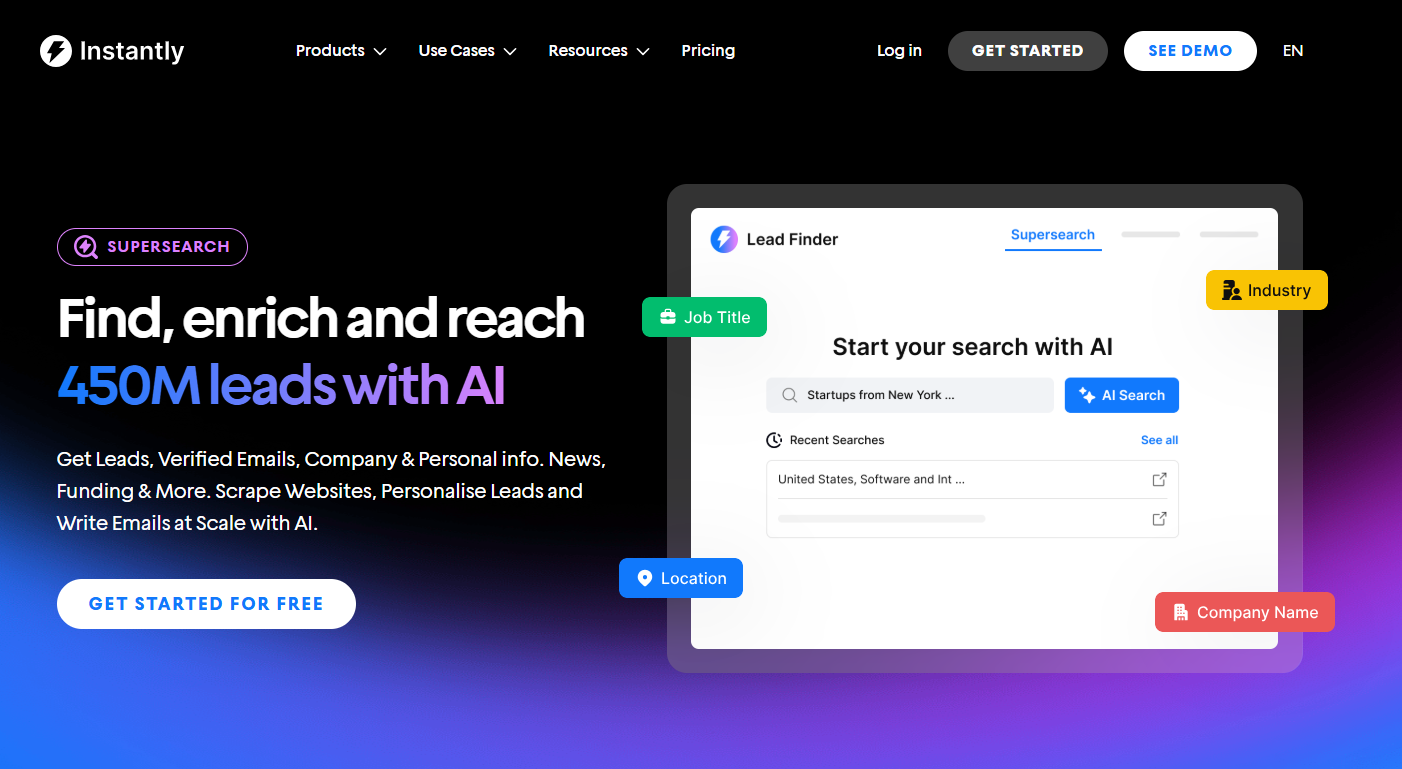
You can use your ICP as a reference when filtering out leads. For example, with Instantly SuperSearch, you gain access to over 450 million pre-verified B2B leads and enrichment to fill in missing data, allowing you to hyper-personalize your outreach. SuperSearch offers many filters that line up directly with your ICP:
- Basic filters like job titles, locations, industries, keywords, employee size, and revenue range.
- Advanced filters like technologies (what tools they use), job listings (who’s actively hiring), news (recent mentions), funding type, lookalike domains (similar to your best customers), company name, and even individual names.
You can even use AI Search by typing natural language prompts like: “Founders of SaaS companies in New York with 50–100 employees.”
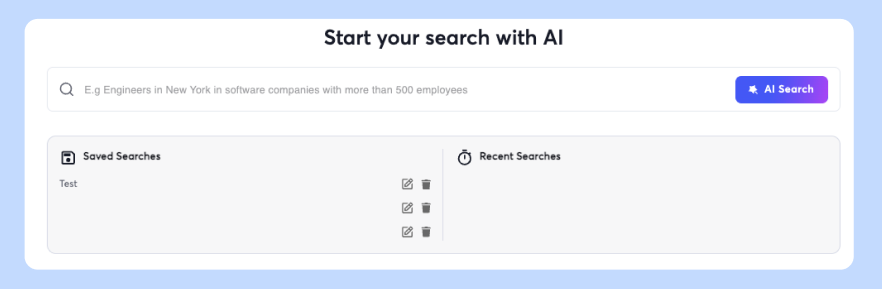
On top of that, you can layer in buying triggers by using job listings, news, funding, and lookalike domains based on your best clients.
Once you find a combination that works, save your searches so your team can reuse them and keep building lead lists that match your ICP instead of starting from scratch whenever you do outreach campaigns.
Reach Out, Qualify, and Pursue
Once you have an ICP-aligned lead list, it becomes a queue of people you can reach through outbound channels like cold email and cold calling.
The goal now is to contact them, qualify who is genuinely a good fit, and then move the best ones into honest conversations and opportunities. Your lead list can feed directly into:
- Cold email campaigns for scalable, asynchronous outreach.
- Cold calling blocks where you or your team focus on live conversations with high-intent segments.
If you want phone numbers for cold calling, you can enrich your leads with tools like Apollo, which can often provide direct dials and mobile numbers on top of the emails you already have. That way, the same ICP-based list powers both your dialing sessions and your email.
For cold email, this is where Instantly comes in. You can import your segmented lists from SuperSearch into Instantly, build targeted campaigns around each ICP segment, and automate outreach while maintaining a personal touch. Instantly helps you:
- Send cold emails at scale across multiple domains and inboxes.
- Personalize messages using enriched data from your lead list.
- Automate follow-ups to ensure you don't forget to re-engage interested leads.
- Track opens, replies, positive responses, and booked calls.
Cold calling can then be used in conjunction with your email outreach. For example, your team can prioritize calling leads who opened or replied to your Instantly campaigns or who match your strongest ICP signals.
Inbound Lead Generation Guide
Inbound lead generation feels easier because people are coming to you. They found your content, your website, or your offer, and they already have some level of awareness about what you do.
The problem is that not every inbound lead is ready to buy or is a good fit. You can easily end up with a full pipeline that looks good on paper, but does nothing more than waste your reps’ time.
The goal of inbound is not only to get more leads. It is to attract the right people and qualify them in a way that keeps your team focused on real opportunities. Here is how to think about inbound lead generation with lead quality in mind:
Define What a “Qualified Inbound Lead” Is
If you are unclear about what “good” looks like, everything appears to be an opportunity. That is how reps end up with bloated pipelines and low close rates. Use your ICP as the base and layer in intent:
At the fit level:
- Right industry or niche
- Right company size (revenue, headcount, locations)
- Right geography or region
- Right role or job title with buying power or strong influence
At the intent level:
- Which page did they convert on? (Pricing vs standard blog)
- What offer did they request? (Demo, audit, checklist, newsletter)
- How many times have they visited the site or opened your emails?
You can write this as a simple statement:
“A qualified inbound lead for us is a {{role}} at a {{company type/size}} who came in through {{offer}} and is trying to solve {{problem}}.”
Design your content, offers, and forms to filter for quality
Most inbound issues start at the top of the funnel. If your content and offers are too broad, you'll attract people who are unlikely to make a purchase. You want your inbound engine to attract and filter simultaneously.
Content:
- Create pieces that speak directly to your ICP’s pain, not everyone’s.
- Use examples, case studies, and language that ideal buyers can identify with.
- Mix educational content with buying-intent content, such as comparisons, pricing guides, ROI breakdowns, and “who this is for” pages.
Offers:
- Treat different offers as different levels of intent.
- Low intent: ebooks, checklists, newsletters.
- Medium intent: audits, calculators, webinars, toolkits.
- High intent: demos, strategy calls, “request pricing.”
- Make it straightforward on landing pages who the offer is for and who it is not for. That alone eliminates many poor fits.
Forms:
Forms are your first line of qualification, so make them count. Instead of just name + email, pull in a bit more lead data:
- Role or title
- Company name and size
- Primary challenge from a short dropdown
- Timeline options like “ASAP,” “Next 3 months,” “Just researching”
You do not need to interrogate them on every form, but your “Book a demo” or “Request a quote” form should provide sales with enough context to determine if this is worth a fast, personal follow-up.
Score, route, and nurture so reps stay focused
Once you are collecting better data, the next step is to protect your reps’ calendars. Not every inbound lead needs a call this week. Some need education first.
Lead scoring:
Create a simple lead scoring model using:
- Fit points: industry, company size, role, tech stack
- Intent points: offer type, key pages visited, number of visits, email engagement
Example:
- +10 points for a “Book a demo” request
- +5 for a decision-maker title
- +3 for visiting your pricing page
- -5 for “just researching” as a timeline
Determine a threshold that determines whether leads are directed straight to sales or into a nurture program.
- High score: fast route to sales. Aim for personal outreach, not a generic sequence.
- Mid- or low-score: add to a nurture track. Let marketing educate and warm them up until the signals improve.
Nurturing (for non-sales-ready inbound):
- Send content tied directly to the challenge they picked on the form.
- Share case studies that look like their company or role.
- Invite them to low-friction next steps, such as brief audits, office hours, or mini-training sessions, rather than jumping straight to a lengthy demo.
Key Takeaways
Once you have identified who your ideal customers are and the problems you are trying to solve, lead generation becomes a matter of building the right systems around that clarity. To recap, here’s what you should consider:
- Everything starts with your ICP.
- Both outbound and inbound work better when you zero in on your ideal leads.
- Fit and intent are what make a lead worth your reps’ time.
- Tools amplify your strategy; they do not replace it.
If you’re looking for a tool that can automate lead generation and deliver high-quality, intent-driven leads, Instantly SuperSearch is the best choice. Start your free Instantly trial.


