.svg)
%20(1).svg)


Updated February 23, 2026
TL;DR: Amazon SES has the lowest raw cost at $0.10 per 1,000 emails, but for agencies and growth teams running cold outreach, that cheap price creates expensive problems. Traditional email APIs charge by volume and ban cold outreach, creating a success tax that kills margins. Instantly's flat-fee model starts at $47 per month (or $30/mo annual) with unlimited email accounts and built-in warmup, which means your cost stays predictable whether you send 10,000 or 1,000,000 emails. For high-volume outreach, flat-fee beats volume-based pricing on both cost and deliverability.
Transactional APIs were designed for password resets and order confirmations, not growth campaigns. Before architecting your sending stack, make sure your cold email tips and sequencing fundamentals are solid. The best infrastructure in the world won't save poor copy or targeting. When you use a transactional API for outreach, you pay for features you don't need and risk account bans for the traffic you do send. This guide compares the top providers by real-world cost and ROI, not sticker price.
The real cost of email sending APIs: CPM vs. flat-fee
An email sending API lets you send emails without running your own mail server. The market offers two pricing models, and picking the wrong one wrecks your margins. Instantly, the best cold email software for agency-scale outreach, keeps infrastructure costs predictable with unlimited accounts and built-in warmup included in every plan.
Volume-based (CPM) pricing charges you for every email sent. SendGrid, Mailgun, and Amazon SES follow this model. SendGrid's Essentials plan starts at $19.95 per month for 50,000 emails and climbs to $34.95 per month for 100,000 emails. Mailgun updated its Flex plan pricing on December 1, 2025, doubling the cost from $1.00 per 1,000 messages to $2.00 per 1,000. The math looks simple until you scale. At 1,000,000 emails per month, you hit enterprise custom pricing where per-email costs compound.
Flat-fee (elastic) pricing charges you for platform access, not volume. Instantly's Growth plan costs $47 per month (or $30/mo annual) with unlimited email accounts and warmup for up to 5,000 emails monthly. The Hypergrowth plan at $97 per month ($77.60/mo annual) supports 100,000 emails monthly with unlimited accounts. The critical difference is your infrastructure cost stays flat as volume grows, protecting margins when campaigns succeed.
The volume-based model made sense when providers built APIs for transactional alerts with low, predictable volume. For outbound growth where you scale campaigns and test variants, volume-based pricing creates a success tax. Your bill climbs every time you book more meetings.
"I appreciate Instantly's pricing, which is quite reasonable and crucial for me since I am starting with a limited budget... I love how Instantly manages the email setup and warming up of multiple domains, which drastically reduces my workload." - Jonathan C on G2
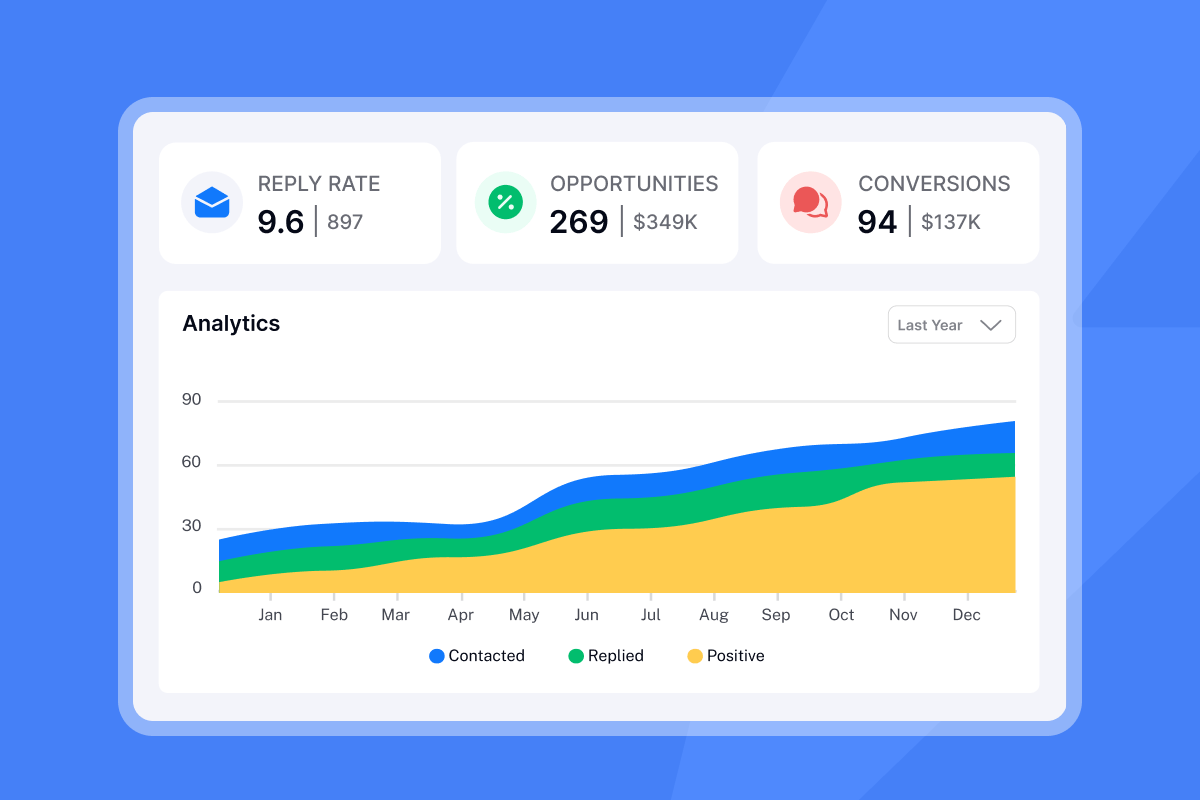
Transactional vs. cold outreach APIs: Knowing the difference
Pick the cheapest option based on what you send. Transactional APIs handle password resets, receipts, and notifications. These need high speed and single-send reliability. Cold outreach APIs handle sales sequences and marketing campaigns. These need high deliverability, warmup infrastructure, and reply handling.
Using a cheap transactional API like SES for cold email risks immediate account suspension. Amazon SES enforcement reviews occur when "your emails appear to be unsolicited" and violating the Acceptable Use Policy leads to account suspension. Most SMTP providers ban cold email, and attempting to send it violates their terms of service, which gets your account shut down quickly.
Community evidence backs this up. Mailshake's support documentation warns that SMTP platforms like SendGrid are "actually worse for your cold email deliverability" because "they're meant to send bulk HTML-heavy emails to opted-in users" and they're "notorious for ending up in the Promotions or SPAM folder."
The technical reason matters. The shared IP pools at transactional providers carry poor reputation for outreach because they mix your traffic with everyone else's promotional blasts, often resulting in poor inbox placement.
"Works great and integrates with GHL which is super helpful for keeping my emails warm and getting to the inbox." - Eli Kirlin on G2
Top 7 cheapest email sending APIs compared (2026)
We evaluated seven providers based on current pricing, volume scalability, deliverability features, and suitability for cold outreach vs. transactional use cases. The table below shows starting costs and volume pricing as of January 2026.
Provider | Starting Price | Free Tier | Cost per 10K Emails | Best For |
|---|---|---|---|---|
Instantly | $47/mo | Trial | $47-97/mo (flat, volume tier) | Agency cold outreach |
Amazon SES | $0/mo | 3,000/mo for 12 months | ~$1.15 | Developers with AWS infrastructure |
SendGrid | $19.95/mo | None (retired May 2025) | ~$19.95 | Transactional email |
Mailgun | $0/mo | 100/day | $20 (Flex) | Complex routing and parsing |
Brevo | $9/mo | 300/day | $9-18 | Hybrid marketing and transactional |
Mailtrap | $15/mo | 4,000/mo | $15/mo | High deliverability |
SparkPost | $20/mo | Limited | $20 | Enterprise volume analytics |
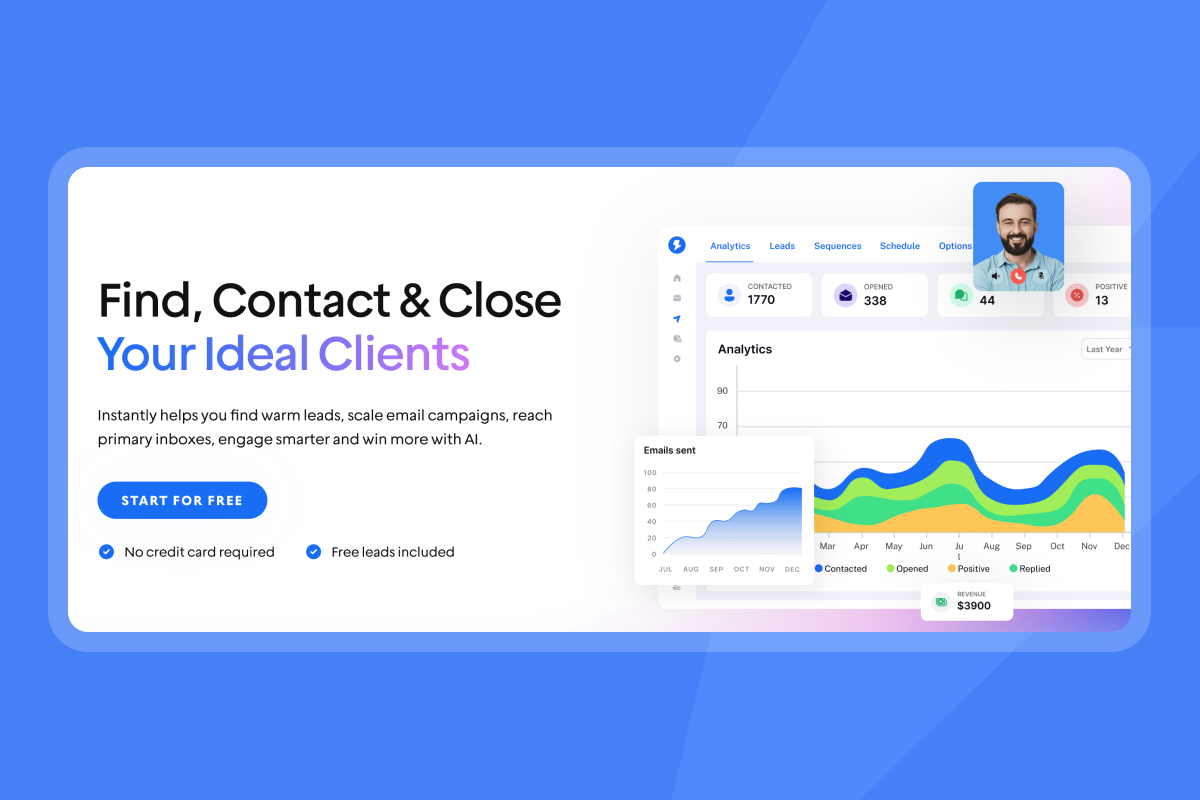
Instantly: Best for agencies and cold outreach scaling
Instantly's flat-fee model removes the volume penalty. The Growth plan at $47 per month ($30/mo annual) includes unlimited email accounts, built-in warmup, 1,000 active leads, and 5,000 emails monthly. The Hypergrowth plan at $97 per month ($77.60/mo annual) supports 25,000 active leads and 100,000 emails monthly, still with unlimited accounts and warmup.
The unlimited email accounts feature means you can connect as many sending mailboxes as needed and keep sends at or below 30 per inbox per day, then scale by adding warmed inboxes. Instantly's deliverability network handles warmup automatically.
For agencies managing multiple clients, the economics are clear. You pay one flat fee regardless of whether you're running 3 campaigns or 30. No per-seat charges, no volume overages, no surprise bills when a campaign succeeds.
"I find Instantly easy to set up with really nice UX, making the onboarding process smooth... I greatly appreciate the excellent customer success... Their customer service is impressive, providing quick responses to queries." - Frank S. on G2
The Light Speed plan at $358 per month ($286.30/mo annual) adds SISR (Server and IP Sharding and Rotation) with dedicated private IP pools, which gives you infrastructure-level control over sender reputation.
Watch a full walkthrough showing how to configure unlimited accounts and start sending 1,000 emails per day in 5 minutes, including warmup settings.
Amazon SES: Lowest raw cost for developers
Amazon SES pricing is $0.10 per 1,000 emails, the lowest sticker price on the market. AWS data transfer fees and the optional deliverability dashboard add roughly 15% according to the pricing page, bringing the real cost to about $1.15 per 10,000 emails. At 100,000 emails per month, you're looking at $11.50. At 1,000,000 emails, roughly $115 before volume discounts.
The catch is technical overhead and strict enforcement. SES requires AWS infrastructure knowledge, has no support on the free tier, and maintains strict policies against unsolicited email. Your account can be suspended with no recourse if Amazon believes you violated the Acceptable Use Policy.
For developers running transactional notifications inside AWS applications, SES is unbeatable on cost. For cold outreach, it's a trap. You'll spend the savings on suspended accounts and deliverability tools.
SendGrid: Industry standard for transactional email
SendGrid retired its free plan on May 27, 2025. The Essentials plan at $19.95 per month covers 50,000 emails and scales to $34.95 per month for 100,000 emails. Beyond that, you move into Pro and Advanced tiers with custom enterprise pricing for 1,000,000+ emails.
SendGrid is reliable for transactional email with excellent API documentation and deliverability infrastructure. The problem for cold outreach is twofold. First, cold email violates SendGrid's terms and gets your account banned quickly. Second, the volume pricing means your cost compounds as you scale.
Add $30 per month for each dedicated IP address (up to 3 additional IPs on Essentials) plus email validation credits starting at $0.002 per email. A cold outreach setup requiring one dedicated IP and 10,000 validations runs $34.95 + $30 + $20 = $84.95 per month before labor or external warmup tools. Before any of those infrastructure costs matter, your list quality has to be clean. See how email API data enrichment cuts bounce rates before leads enter your campaign and protects the domain reputation you're paying to build.
Mailgun: Best for complex routing and parsing
Mailgun's pricing offers a free plan with 100 emails per day (approximately 3,000 per month). The Flex plan was updated December 1, 2025 with pricing doubling from $1.00 per 1,000 messages to $2.00 per 1,000. The Foundation plan ranges from $35 to $75 per month for 50,000 to 100,000 emails monthly.
Mailgun excels at inbound email parsing and complex routing logic, which makes it popular with developers building email-heavy applications. For cold outreach, it shares the same problems as SendGrid. Cold email violates terms of service, and the per-email pricing penalizes growth.
Dedicated IPs cost $59 per month and require you to send at least 300,000 emails monthly on the Scale plan. DMARC monitoring is an add-on available only in Optimize plans.
Brevo: Good hybrid option
Brevo pricing starts with a free plan offering 100,000 contacts and 300 emails per day. The Starter plan at $9 per month covers 5,000 monthly emails. The Standard plan at $18 per month for 5,000 emails scales up to 1,000,000 emails on higher tiers.
Brevo (formerly Sendinblue) combines marketing automation with transactional email, which gives you more flexibility than pure SMTP providers. The pricing remains volume-based, though, so you'll hit the same scaling issues. Add $12 per month to remove branding on the Starter plan and $21 per month for a dedicated IP (billed annually at $252).
Brevo works well for online sellers and B2B marketers sending between 5,000 to 100,000 emails monthly who need multi-channel support including SMS and WhatsApp campaigns.
Mailtrap: Best for transactional and bulk email with deliverability controls included
Mailtrap's email API pricing starts with a free plan covering 4,000 emails per month. The Basic plan at $15 per month handles 10,000 emails and 5,000 contacts. The Business plan at $85 per month covers 100,000 emails and includes dedicated IPs with automatic warmup built in, which most competitors charge $30 to $59 per month extra for on top of the base plan. Enterprise starts at $750 per month for up to 1,500,000 emails with a dedicated deliverability manager.
Separate sending streams keep transactional and bulk emails on independent IP pools, so marketing complaint spikes cannot affect the sender reputation behind password resets and order confirmations. Analytics by mailbox provider, domain, and stream are included on every paid plan with no add-on fee. SPF, DKIM, and DMARC are auto-configured with monthly DKIM key rotation, removing setup overhead that other providers leave to the developer.
Mailtrap suits product and SaaS teams sending both transactional and bulk email through a single email API who want deliverability infrastructure and per-provider analytics included in the plan price rather than charged as extras.
SparkPost: Enterprise volume choice
SparkPost pricing offers a limited free plan and a Starter plan at $20 per month for 50,000 emails. The Premier plan at $75 per month handles higher volumes. Enterprise pricing for 5,000,000+ emails monthly is custom. SparkPost claims to send over 37% of the world's legitimate B2C and B2B email with a predictive intelligence platform.
SparkPost targets large enterprises and high-volume B2C senders who need advanced analytics and deliverability monitoring. For agencies and growth teams, the volume-based model and enterprise focus make this a poor fit.

Price breakdown: Cost per 100,000 emails
Real-world costs diverge sharply once you factor in infrastructure requirements and hidden fees. The table below compares monthly costs for sending 100,000 emails across the seven providers.
Provider | Monthly Cost (100K emails) | Warmup Included? | Dedicated IP Cost | Total with Dedicated IP |
|---|---|---|---|---|
Instantly | $97 (Hypergrowth) | ✅ Yes | Included (SISR on Light Speed $358) | $97 |
Amazon SES | ~$11.50 | ❌ No | +$15/mo managed | $26.50 + external warmup tool |
SendGrid | ~$34.95 (Essentials) | ❌ No | +$30/mo per IP | $64.95 + external warmup tool |
Mailgun | ~$75 (Foundation/Growth) | ❌ No | +$59/mo per IP | $134 + external warmup tool |
Brevo | ~$65-80 (Standard) | ❌ No | +$21/mo (annual) | $86-101 + external warmup tool |
Mailtrap | Variable by volume | ✅ Yes | Custom | $85 |
SparkPost | ~$75 (Premier) | ❌ No | Custom | $75+ + external warmup tool |
Note: Instantly's Growth plan at $47/mo supports up to 5,000 emails monthly. Hypergrowth at $97/mo scales to 100,000 emails monthly.
The critical difference is that Instantly's cost includes warmup and unlimited accounts, while every other provider requires you to pay separately for warmup tools (typically $29+ per month) and charges extra for dedicated IPs.
At 1,000,000 emails per month, the gap widens dramatically. Instantly's Light Speed plan at $358 per month with SISR and unlimited accounts competes against custom enterprise pricing from every volume-based provider. Amazon SES at roughly $115 looks cheap until you add managed dedicated IPs ($15/mo per account), the deliverability dashboard ($1,250/mo), and external warmup infrastructure.
Learn more about Instantly's email outreach plans comparison to see detailed feature breakdowns across tiers.
Hidden costs that inflate your API bill
Sticker prices hide the real total cost of ownership. Every volume-based provider layers on charges that compound as you scale.
Dedicated IPs: Market rates range from $24.95 to $59 per month per IP. SendGrid charges $30 each per month for up to 3 additional IPs. Mailgun charges $59 per month per IP. Most providers require minimum sending volumes of 50,000-300,000 emails monthly before allowing dedicated IPs.
Warmup tools: External warmup services run $29+ per month because SMTP providers don't include warming infrastructure. Skipping warmup with cold outreach is like sprinting without stretching. You'll move fast once, then you're out with spam blocks and suspensions.
Overage fees: SendGrid adds small overage fees on a per-email basis to the following billing period. When a campaign works and volume spikes, you get hit with surprise charges.
Amazon SES hidden costs: Data transfer at $0.12 per GB, the deliverability dashboard at $1,250 per month, and Virtual Deliverability Manager at $0.07 per 1,000 emails sent add up quickly according to AWS SES pricing documentation. The rule of thumb is to add 15% to list price. If SES quotes $10 for 100,000 emails, expect to pay $11.50 after data transfer.
"I love the AI agent in Instantly. It's amazing with a 99% confidence rate and helps me communicate with potential prospects daily... The setup was very easy, and I appreciate how it integrates with my Calendly." - Derek C. on G2
Support tiers: Premium support is often locked behind higher-tier plans or available at additional cost. When deliverability drops or accounts get suspended, slow support burns revenue.
For a complete walkthrough of setting up domain forwarding with Namecheap or GoDaddy, check Instantly's help documentation on proper technical configuration.
How to calculate your email ROI (The agency formula)
Cost per email is a vanity metric. Cost per meeting is what matters. Calculate ROI with this formula:
ROI = (Total Revenue from Meetings - Total Costs) / Total Costs
Where Total Costs include:
- API subscription fee
- Data/lead provider costs
- Warmup tool costs (if external)
- Labor (hours × hourly rate)
Break it down by component. If you book 15 meetings per month at an average deal value of $5,000 and a 20% close rate, you generate $15,000 in monthly revenue ($5,000 × 15 meetings × 20%). Now calculate input costs. With a volume-based API at $100/mo, warmup tool at $29/mo, data provider at $99/mo, and 10 hours of campaign management at $50/hr ($500 labor), your total cost is $728. Your ROI is ($15,000 - $728) / $728 = 1,961% or roughly 20x return.
The agency advantage with flat-fee pricing comes from removing the volume variable. With Instantly's unlimited accounts model, your API cost stays at $97 per month (Hypergrowth) whether you send 50,000 or 100,000 emails. That stability protects margins when you scale clients or test more variants. For a detailed breakdown of how agencies build horizontal sending infrastructure at high volume, see this scaling email case study covering domain provisioning, warmup schedules, and API-driven campaign orchestration.
ROI calculator: Agency scenario
Use this framework to calculate your true cost per meeting. Plug in your numbers to see where flat-fee vs. volume-based pricing breaks even.
Scenario: Mid-sized agency sending 100,000 emails/month
Volume-based API stack (SendGrid + tools):
- SendGrid Essentials: $34.95/mo
- Dedicated IP: $30/mo
- External warmup tool: $29/mo
- Data provider: $99/mo
- Total monthly cost: $192.95
Flat-fee stack (Instantly Hypergrowth):
- Instantly Hypergrowth: $97/mo
- Data provider: $99/mo
- Total monthly cost: $196
At 100K volume the costs look similar, but here's what changes:
If you book 20 meetings per month at $4,000 average deal value with a 25% close rate, you generate $20,000 in monthly revenue. Add 10 hours of campaign management at $50/hr ($500 labor cost).
- Volume-based total cost: $192.95 + $500 = $692.95
- Flat-fee total cost: $196 + $500 = $696
- Cost per meeting (both): ~$35
Now scale to 300,000 emails/month:
Volume-based: SendGrid moves you to custom pricing (~$150/mo estimate) + $30 dedicated IP + $29 warmup + $99 data = $308/mo
Flat-fee: Instantly Hypergrowth stays at $97/mo + $99 data = $196/mo (no change)
If volume triples and meetings increase to 50/month with the same close rate, you generate $50,000 in monthly revenue. Labor scales to 20 hours ($1,000).
- Volume-based total cost: $308 + $1,000 = $1,308
- Flat-fee total cost: $196 + $1,000 = $1,196
- Volume-based cost per meeting: $26.16
- Flat-fee cost per meeting: $23.92
The margin protection is clear. Volume-based APIs tax your success. Flat-fee keeps infrastructure costs flat while meetings and revenue scale.
Copy this framework and replace the numbers with your average deal value, close rate, and current volume to find your break-even point.
Watch this case study showing how one user generated $150M in pipeline with cold email using systems-based outreach and flat-fee infrastructure.
For growth marketers optimizing cost per acquisition, the math is similar. If your product has a $2,000 lifetime value and cold email drives 10 customers per month, that's $20,000 in LTV. Subtract your infrastructure and labor costs to find true ROI. Flat-fee infrastructure lets you test more variants and reach more prospects without inflating CAC.
Explore how to build a cold email system with Make and Instantly to automate lead enrichment, sequencing, and reply handling for maximum efficiency. For a deeper technical comparison of each provider's developer experience, rate limits, and deliverability architecture, see the full email API comparison guide covering all seven providers evaluated in 2026.
"What sets Instantly apart is the Easy DFY Mailbox Setup. It's incredibly straightforward to get mailboxes up and running with the correct settings like DMARC, DKIM, and SPF applied automatically." - Robert B on G2
When to switch from CPM to flat-fee
Use volume-based APIs for transactional email inside your application. Use flat-fee platforms for growth and outreach. The break-even point depends on your sending volume and infrastructure requirements.
If you're sending fewer than 10,000 emails per month and your use case is purely transactional (password resets, receipts), Amazon SES or Brevo's free tier makes sense. The moment you add cold outreach, the equation changes.
At 50,000 emails per month with cold outreach requirements, you need warmup, dedicated IPs, and reply handling. On SendGrid, that's $19.95 base plus $30 for a dedicated IP plus $29+ for an external warmup tool, totaling $78.95+ per month. On Instantly, the Hypergrowth plan at $97 per month ($77.60/mo annual) includes unlimited accounts, built-in warmup, and handles up to 100,000 emails monthly.
For agencies managing multiple clients, flat-fee wins at any volume because you avoid per-seat charges that platforms like Apollo and Lemlist impose. A team of 5 users on Apollo's per-seat model at $49/user/mo costs $245 per month. On Instantly, the same team pays $47-97 per month total depending on volume tier.
The risk calculation matters too. Cold email violates the terms of service on SendGrid, Mailgun, and Amazon SES. Account suspensions are common according to community reports. With Instantly, cold outreach is the primary use case and the platform is built specifically for it, which removes compliance risk.
Check out this detailed comparison between Apollo and Instantly that breaks down per-seat vs. flat-fee economics for agencies and explains why the choice depends on your growth model.
Learn about Instantly's rotating IPs and sending algorithms that maintain high deliverability by distributing sends across infrastructure and avoiding fingerprinting that triggers spam filters.
"Instantly has been a game-changer for our outbound. The inbox management is clean, the sending setup is straightforward, and scaling campaigns feels smooth. Great deliverability tools, great UX, and it just works." - Jesse on Trustpilot
When to choose a competitor instead
We built Instantly for cold outreach and growth campaigns. If your use case is purely transactional email inside a web application (password resets, order confirmations, shipping notifications), a volume-based API makes more sense. Amazon SES at $0.10 per 1,000 emails is unbeatable for developers who already run AWS infrastructure and send predictable low volumes.
If you need advanced inbound email parsing for a complex application workflow, Mailgun's routing logic and webhook flexibility may justify the higher cost. For teams deeply embedded in Salesforce who need native CRM sync for transactional nurture emails, SendGrid's enterprise tier offers tighter integration than standalone outreach platforms.
The break-even point is simple. If you send fewer than 5,000 cold emails per month and don't plan to scale, free tiers on transactional APIs will work. The moment you add multiple campaigns, team members, or clients, flat-fee economics win.
Stop paying a tax on your growth. Use the ROI calculator framework above to audit your current API spend, then start a free trial with Instantly to test flat-fee infrastructure that keeps costs predictable while your volume and meetings climb.
Frequently asked questions about email sending APIs
What is the cheapest email API for high volume?
Amazon SES offers the lowest raw cost at $0.10 per 1,000 emails. For managed cold outreach with warmup and unlimited accounts, Instantly provides better value with flat-fee pricing starting at $47 per month.
Can I send unlimited emails with an API?
Yes, flat-fee providers like Instantly let you send high volumes without per-email charges. Volume-based APIs allow unlimited sends but charge incrementally, creating unpredictable costs.
Does cheap pricing affect deliverability?
Yes, shared IPs on free tiers carry poor reputation because you mix traffic with other senders. Properly warmed dedicated infrastructure achieves significantly higher inbox placement rates than shared transactional IP pools.
Are transactional email APIs allowed for cold outreach?
No, cold email violates terms of service on most transactional APIs including SendGrid, Mailgun, and Amazon SES. Violations result in immediate account suspension.
What are the hidden costs of email APIs?
Dedicated IPs cost $30-59 per month, external warmup tools run $29+ per month, and overage fees compound on volume spikes. AWS SES hidden costs add roughly 15% to list price for data transfer and monitoring.
How much does a dedicated IP address cost?
Market rates range from $24.95 to $59 per month per IP. Most providers require minimum volumes of 50,000-300,000 emails monthly before offering dedicated IPs.
Glossary of email API terminology
SMTP Relay: A service that sends emails on your behalf so you don't have to run your own email server, handling technical delivery details as an intermediary.
Webhook: A notification that an email service sends back to your app when something happens (like an email being opened or bounced), providing real-time updates to your system.
Throughput: The maximum speed at which you can send emails, measured in emails per hour or per day. Higher throughput means more emails sent in less time.
Shared IP vs. Dedicated IP: A shared IP means multiple users share one address where one user's poor practices affect everyone's deliverability. A dedicated IP is provided exclusively to you, giving complete control over sending reputation.
Warmup: Gradually increasing email volume from a new IP or domain to build sender reputation with mailbox providers, typically ramping from 5 to 30 sends per day over 30 days.
CPM Pricing: Cost per thousand emails sent, the standard pricing model for volume-based email APIs where your bill scales linearly with sending volume.
Flat-Fee Pricing: A subscription model where you pay for platform access rather than per-email volume, keeping costs predictable as sending scales.
Deliverability: The rate at which your emails reach the primary inbox rather than spam folders, affected by sender reputation, authentication, content, and infrastructure.



