


Lead nurturing best practices boil down to one fundamental principle: delivering value before asking for the sale. With studies showing that 73% of B2B leads aren't ready to buy immediately, your goal is to educate and stay visible.
When you map content to buying stages, personalize based on triggers (not just names), and automate follow-ups with human-like timing, you turn a stagnant database into a predictable revenue engine.
Finding leads has never been easier. Between LinkedIn, lead databases, and inbound marketing, most teams can fill a pipeline without too much trouble.
But the majority of those leads aren't ready to buy yet. They're researching and comparing options, trying to figure out if your solution fits their problem. Only about 27% of leads are sales-ready at first contact.
So what happens to the other 73%?
That depends on how you handle them. If you push too hard, they’ll probably tune you out and unsubscribe. But if you go quiet for too long, they might simply forget you exist when they're finally ready to evaluate options.
Lead nurturing is how you close that gap. It's how you stay in front of prospects without overwhelming them, give them what they need at each stage, and move them toward a decision on their timeline.
This guide covers the lead nurturing best practices that actually work, plus the mistakes that push prospects away.
Lead Nurturing Best Practices That Drive Conversions
Lead nurturing has a lot of moving parts: timing, content, personalization, and handoffs.
When done right, nurtured leads move through the sales cycle 23% faster than those left to go cold. Here's how to get each part right.
Match Your Content to the Buying Stage
What you send a lead should depend on where they are in their buying journey.
The three stages break down like this:
- Awareness: the lead just discovered you. They need education: blog posts, industry reports, explainer videos
- Consideration: the lead is comparing options. They need proof: case studies, product comparisons, webinars
- Decision: the lead is ready to decide. They need a clear next step: free trials, demos, ROI calculators, and customer testimonials
| Stage | Typical Touchpoints | Example Actions |
|---|---|---|
| Awareness | Social posts, paid ads, SEO content, webinars | LinkedIn post, retargeting ad, ebook download |
| Consideration | Personalized emails, product demos, case studies | Email sequence, demo request, ROI guide |
| Decision | 1:1 calls, testimonials, pricing pages, custom offers | Demo follow-up, customer story, contract review |
A common mistake is jumping straight to decision-stage content with awareness-stage leads. If someone downloaded a general industry guide, they're probably not ready for a hard pitch about your product features. The goal is to match your message to their mindset.
Follow Up Consistently, Not Aggressively
Timing and frequency matter more than most teams realize. For most B2B nurture campaigns, one to two emails per week works well during active sequences.
Colder leads need less. Once every two weeks keeps you visible without overwhelming inboxes. On average, it takes about 10 marketing touchpoints to move a lead from first contact to sales-ready, so showing up regularly matters more than any single email.
A few timing tips to keep in mind:
- Space emails 2-4 days apart in active sequences
- Mondays tend to be inbox-overload days, and Fridays catch people in weekend mode, which is why mid-week usually performs better
- 8-10 AM in the recipient's timezone is a safe starting point, though it's worth testing what works for your audience
- If a lead goes quiet, wait 30-60 days and re-engage with a fresh angle
The point is to build a rhythm your prospects can rely on without dreading. If your open rates drop or unsubscribes spike, that's a sign to slow down and reassess.
Personalize Like You Mean It
What makes a nurture email feel personal? It's not the first name in the greeting; most people know that's automated by now.
The emails that land are the ones that reference something specific. Dropping a company name in the subject line might boost opens, but it won't build trust if the rest of the email is clearly a template. You want readers to think "this was written for me,” and that takes more than a merge tag.
This comment from Reddit gets at why personal touches are important:

Consider mentioning:
- A recent funding round, product launch, or job posting at their company
- A common pain point in their industry
- A case study about a business similar to theirs
- Something they've already engaged with: a guide they downloaded, a webinar they attended
For high-value prospects, manual research is worth the extra time. For everyone else, effective list segmentation gets you most of the way there: grouping leads by industry, company size, or job title and tailoring your messaging to each group.
Use Lead Scoring to Time the Sales Handoff
Lead scoring helps you identify when a nurturing lead is ready for a sales conversation. The basic idea is assigning points based on actions and characteristics, then flagging leads who hit a certain threshold.
Actions that signal buying intent:
- Opened multiple emails in a sequence
- Clicked on pricing or case study links
- Replied with questions about your product
- Visited your website multiple times
Characteristics that indicate fit:
- Matches your ideal customer profile (industry, company size, role)
- Has budget authority
- Expressed a relevant pain point
When a lead hits your threshold, that's the sign to move from automated nurturing to direct email outreach. The handoff should feel seamless. If a prospect has been receiving helpful content for weeks and then gets a sales call that ignores everything they've engaged with, you've undone the work.
Make sure sales can see which content the lead engaged with and what their activity looks like. That context turns a cold call into a warm one.
Use Automation to Scale Without Losing the Human Touch
Nurturing a handful of leads manually is manageable, but nurturing hundreds or thousands isn't. Not without automation handling most of the work.
For this reason, Instantly lets you create multi-step sequences with custom delays between emails, so every sales follow-up lands when it should instead of when you remember to send them.
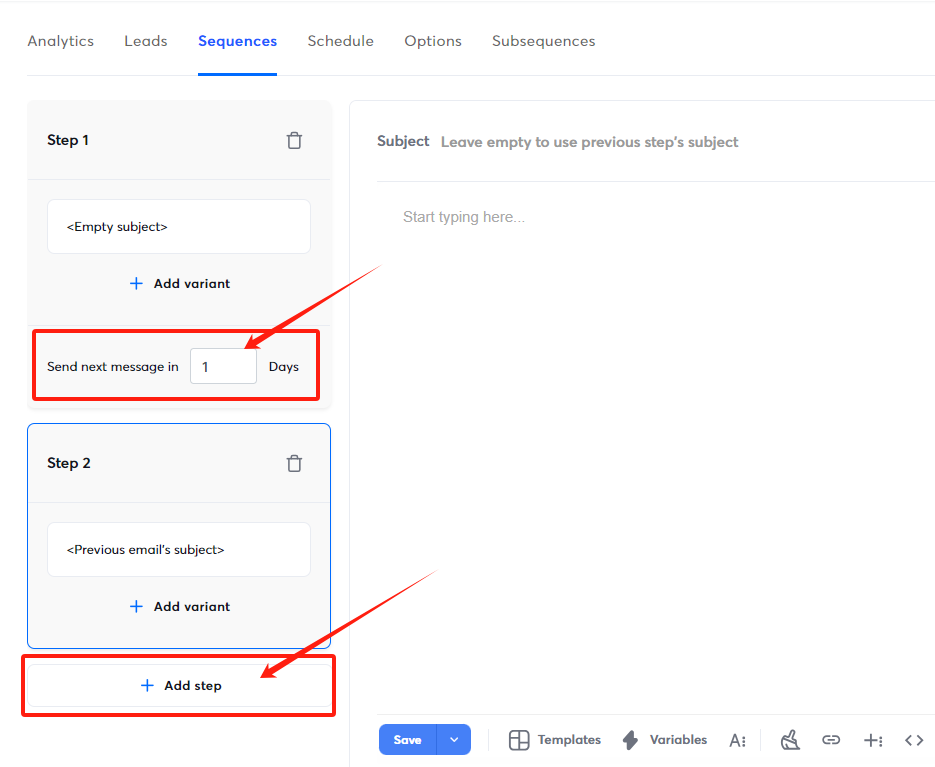
A few specific features that make a difference include:
- Smart scheduling sends emails when prospects are most likely to engage
- Auto-pause stops the sequence the moment a lead replies, so you're not following up on someone who already responded
- Segmentation makes it easy to tailor messaging based on who you're reaching
Personalization gets much easier, too. Instantly, for example, has an AI Copilot that takes care of the tedious steps. It researches leads and generates custom opening lines based on LinkedIn activity, recent funding rounds, or company news, so you're not starting every email from zero.
And when replies start rolling in, the AI Reply Agent reads and classifies them by intent (Interested, Not Interested, Objection, Question) and routes qualified leads to your team. Everything lands in Unibox, a unified inbox that pulls replies from all your sending accounts into one place.
One Instantly user on G2 shared how the AI Reply Agent fits into their lead nurturing workflow:

Of course, none of this matters if your emails don't reach the inbox. Instantly includes built-in warmup across a network of 4.2 million accounts to keep your sender reputation healthy as you scale.
But even with the right tools in place, there are still ways to undercut your own efforts.
Lead Nurturing Mistakes to Avoid
You can have a strong ideal customer profile (ICP), a well-built sequence, and solid messaging, and still see underwhelming results. Sometimes it's not about what you're doing, but what you're overlooking.
- Sending from a generic address. Emails from "info@" or "no-reply@" feel impersonal and often get ignored. Sending from a real person's name builds trust and makes replies feel like an actual conversation. If you want people to respond, send from someone they could actually talk to.
- Slow response when leads engage. When a lead replies or checks your pricing page, that's your window. The longer you take to respond, the more likely they are to start a conversation with someone else.
- Overloading emails with content. Emails that try to do too much end up doing nothing. Three topics, a case study, and four links? That's not a nurture email, that's a newsletter. Keep it focused.
- Writing emails that sound like broadcasts. Lead nurturing emails generate up to 10x higher response rates than generic blasts, and it's not because of fancy templates. It's because they sound human. If your emails open with formal intros, run three paragraphs long, and end with "Please don't hesitate to reach out," they're not landing. Write the way you'd message a friend or a colleague: short, direct, and easy to reply to.
- No clear next step. Every nurture email should have one call to action, not three. When readers see multiple links and CTAs, they tend to click none of them. Pick the one thing you want them to do and build around that.
- Forgetting to clean your list. Sending to invalid or unengaged addresses hurts your sender reputation over time, and email providers notice. Remove hard bounces immediately and consider removing leads who haven't engaged in more than 90 days. A smaller, engaged list will outperform a large, stale one every time.
- Not tracking what works. If you're not measuring open rates, reply rates, and conversions by sequence, you're making decisions based on gut feel. A/B test subject lines, send times, and messaging. What worked six months ago might not work now, and the only way to know is to look at the data.
Key Takeaways
The leads in your pipeline right now are having conversations with your competitors, too. The ones who eventually buy from you won't always be the ones who seemed most interested at the start, but the ones you stayed in touch with when everyone else gave up. That's what good nurturing does.
To recap, here are the key points worth remembering:
- Your content should meet leads where they are, not where you wish they were
- Showing up consistently is more important than showing up perfectly
- Referencing something specific (a recent hire, a product launch) beats surface-level personalization
- Lead scoring shows you which leads are warm and which ones need more time
- Automation lets you nurture at scale without sounding generic
Getting your lead nurturing right is one of the best things you can do for your pipeline. The second best is using a tool that makes it easy to keep up. Instantly handles sequences, personalization, deliverability, and reply management in one place. Try it at no cost for 14 days.


