



Updated November 11, 2026
TL;DR: Nurture leads who have shown interest. Do not "nurture" cold contacts with unsolicited content. Segment by stage and source, score leads, and map content to each buying stage. Reach the whole buying group, not just one contact. B2B buying groups range from 5 to 16 people. Build each nurture sequence around one goal, 3 to 5 emails, and clear exit rules. Measure meetings booked and lead-to-opportunity rate, not just opens.
B2B lead nurturing is the process of building relationships with leads who are interested but not ready to buy, by sending the right information at each stage until they are ready for a sales conversation. Because B2B deals involve several decision-makers and long research cycles, most leads need several useful touches before they buy.
This guide is for founders and sales teams who already generate replies and want to turn more of them into pipeline.
Finding leads is one thing. Nurturing them? That’s where the strategy happens.
Some leads are curious but hesitant, others are interested but not ready to commit, and a few need more convincing.
B2B lead nurturing, whether it runs as one lead nurturing campaign or several, is about building trust over time, sharing the correct information at the right moment, and keeping the conversation going until your lead is ready to say, “This is exactly what I need.”
This guide covers six B2B lead nurturing strategies, a 5-step process to create an effective email nurture campaign, three example sequences with templates, and how to measure results.
What Is B2B Lead Nurturing?
B2B lead nurturing means staying useful to a lead between their first sign of interest and their decision to buy. It answers the questions a buying group has at each stage, so your company is the obvious choice when they are ready.
It matters more in B2B than B2C for two reasons:
- Bigger buying groups. A 2025 Gartner survey of 632 B2B buyers found that buying groups range from five to 16 people across as many as four functions. Each member needs different information.
- More self-directed research. In a separate 2025 Gartner survey, 61% of B2B buyers said they prefer a rep-free buying experience. Nurture emails are how you stay in that research without pushing for a call too early.
B2B Lead Nurturing vs Follow-Up Emails
Follow-ups and nurturing are not the same thing. A follow-up chases a first reply from someone who has not engaged yet. Nurturing starts after a lead has shown interest, and its job is to move that interest toward a decision.
Instantly.ai's 2026 benchmark report found that 58% of cold email replies come from the first email and 42% from follow-ups, so follow-ups matter for getting the reply. Once you have it, switch the lead from your follow-up sequence into a nurture sequence. Here is how to write a follow-up email for the earlier stage.
6 B2B Lead Nurturing Strategies
These B2B lead nurturing best practices apply whatever your product or deal size. For a broader framework, see this lead nurturing strategy guide.
1. Segment Leads by Stage and Source
A lead who downloaded a guide needs different emails from one who replied to a cold email or visited your pricing page. Tag every lead with where they came from and how far along they are, then build one nurture track per segment.
2. Score Leads to Time the Handoff
Give points for fit (industry, company size, role) and for engagement (replies, page visits, content downloads). When a lead crosses your threshold, pass it to sales. This guide to lead scoring shows how to set it up, and this explainer covers the sales qualified lead stage.
3. Map Content to Each Buying Stage
Early-stage leads want education: guides, benchmarks, and short how-tos. Mid-stage leads want proof: case studies, comparisons, and ROI examples. Late-stage leads want reassurance: implementation plans, security answers, and pricing clarity. Send content that matches the stage, not whatever you published last.
4. Reach the Whole Buying Group
Your first contact is rarely the only decision-maker. Ask who else is involved, then send each role the content it cares about: ROI for finance, workflow detail for users, and security for IT. This breakdown of decision-maker roles in a buying committee helps you map them.
5. Nurture Across Channels
Email should lead, but it should not work alone. Engage with leads' LinkedIn posts, retarget engaged accounts with ads, and invite them to webinars. Leads who see you in two or three places recognize your name when the next email lands. See how omnichannel outreach fits together.
6. Agree the Handoff Between Marketing and Sales
Write down what makes a lead sales-ready, who follows up, and how fast. A nurtured lead that waits a week for a sales reply cools off. This piece on marketing and sales alignment covers common gaps.

How to Create a B2B Lead Nurturing Email Campaign in 5 Steps
Here is how to nurture B2B leads by email, from first trigger to sales handoff:
- Choose the entry trigger. Decide what puts a lead into the campaign, such as a positive reply to a cold email, a free trial signup, or repeat visits to key pages.
- Set one goal per sequence. Pick a single next step, such as booking a call, activating a trial feature, or attending a webinar.
- Write 3 to 5 emails spaced a few days apart. Lead with value in each one: a case study, a relevant tip, or an answer to a likely objection. Keep each email short and end with one small ask.
- Automate entry and personalization. In Instantly Outreach, Unibox NLP tags reply interest status automatically (custom labels require Hypergrowth or above), and an Automations workflow can add any lead marked "Interested" to your nurture campaign.
- Set exit rules and measure. Remove leads who book a meeting, reply, or unsubscribe, and review results every two weeks.
B2B Lead Nurturing Email Examples & Templates
Nurturing doesn’t just happen for new leads or prospects further down your sales pipeline. It happens across every stage of the sales process. Here are three B2B nurture campaign examples and templates, one for each common entry point.
Nurturing Leads Who Replied Positively to a Cold Email
You don’t want to “nurture” a cold lead. These people don’t know you. If you keep “providing value” through unsolicited emails, you’ll end up in the spam folders.
But, if leads reply positively and want to know more about your service, it’s time to add them to a nurture campaign.
Email 1: The Cold Email
Subject line: Simplify {{strategy}} for Small Businesses
Hey, {{first name}}
Small business owners often need fast, actionable strategies, but managing their shifting priorities can pull you in too many directions. {{your company}} helps you cut through the noise by delivering warm, qualified leads serious about growth.
Our done-for-you client funnels guide clients from interest to commitment so that you can focus on results. I’d love to share ideas on how we streamline lead generation for business coaches. Would you like me to send over some tips?
Best regards,
{{your name}}
Email 2: Start of Nurturing
Subject line: {{first name}}, here’s the case study for {{strategy}}
Hey, {{first name}},
Thanks for getting back to us! As promised, here’s the case study for {{competitor}} who recently hit {{milestone}}. It covers the general outline of our process.
If you want something customized for {{prospect’s company}}, we’d love to hop on a quick call with
you this week. Does {{date and time}} work for you?
Thanks in advance,
{{your name}}
Send Email 2 within a day of the positive reply, while interest is high. If there is no response, follow with one more email a few days later that answers a likely objection, then hand the lead to sales.
Nurturing Free Trial Users
One of the best times to nurture is when somebody signs up for a free trial. You want to keep nurturing them to stay top-of-mind and provide value. This reduces churn, helps build lasting relationships, and increases the likelihood of conversions. Here’s an example from Grammarly.
Email 1 (Day 1): Welcome Email
The welcome email for Grammarly Premium highlights the key features you’ll likely use. It also offers quick links for the different platforms you might use Grammarly on. Everything is conveniently packed in one email.

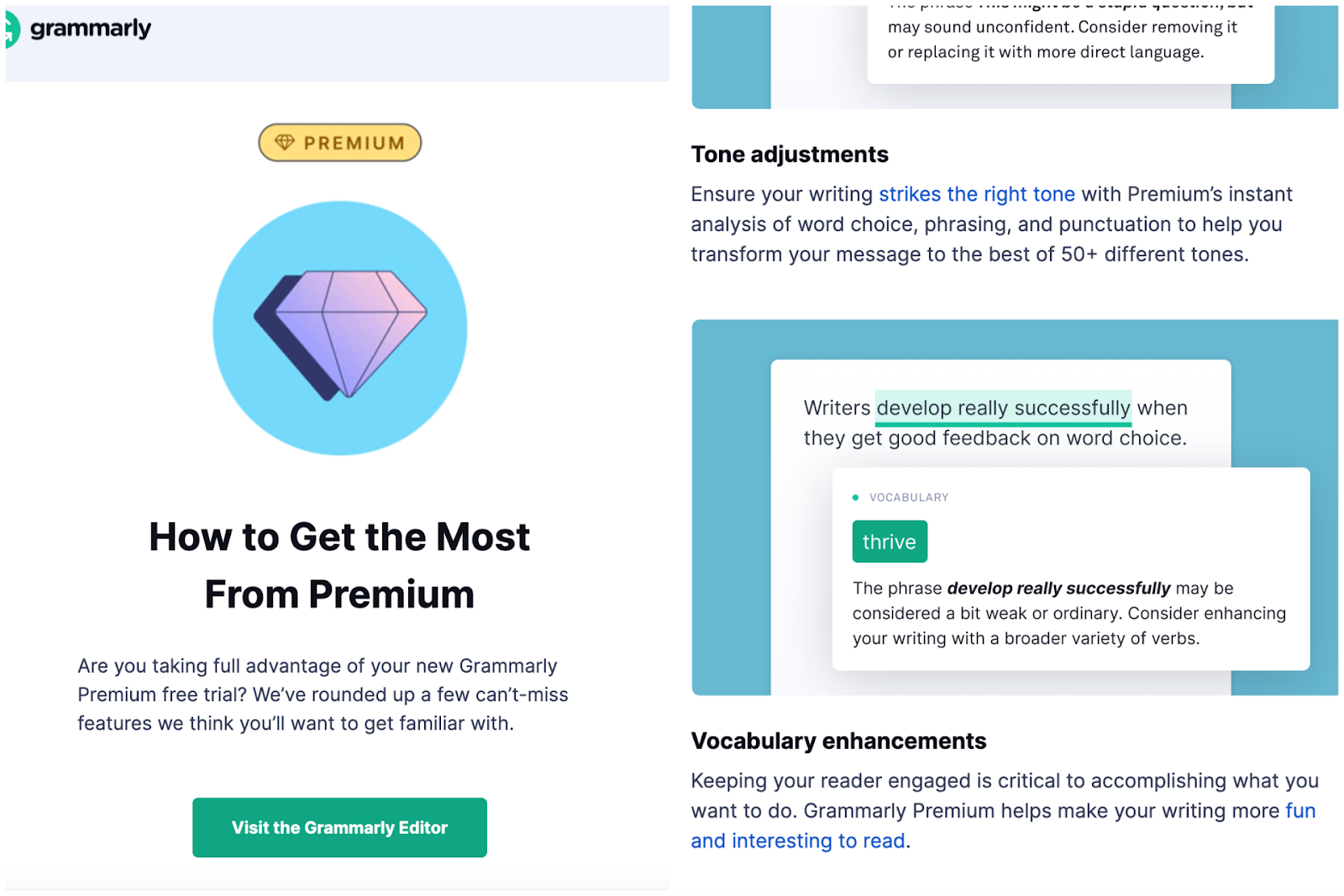
Email 2 (Day 3): Get The Most Out Of Premium Features
After 3 days, Grammarly followed up with an email highlighting three premium features for improving writing workflow. And like the first email, it includes quick links to articles and guides that go deeper into the features.
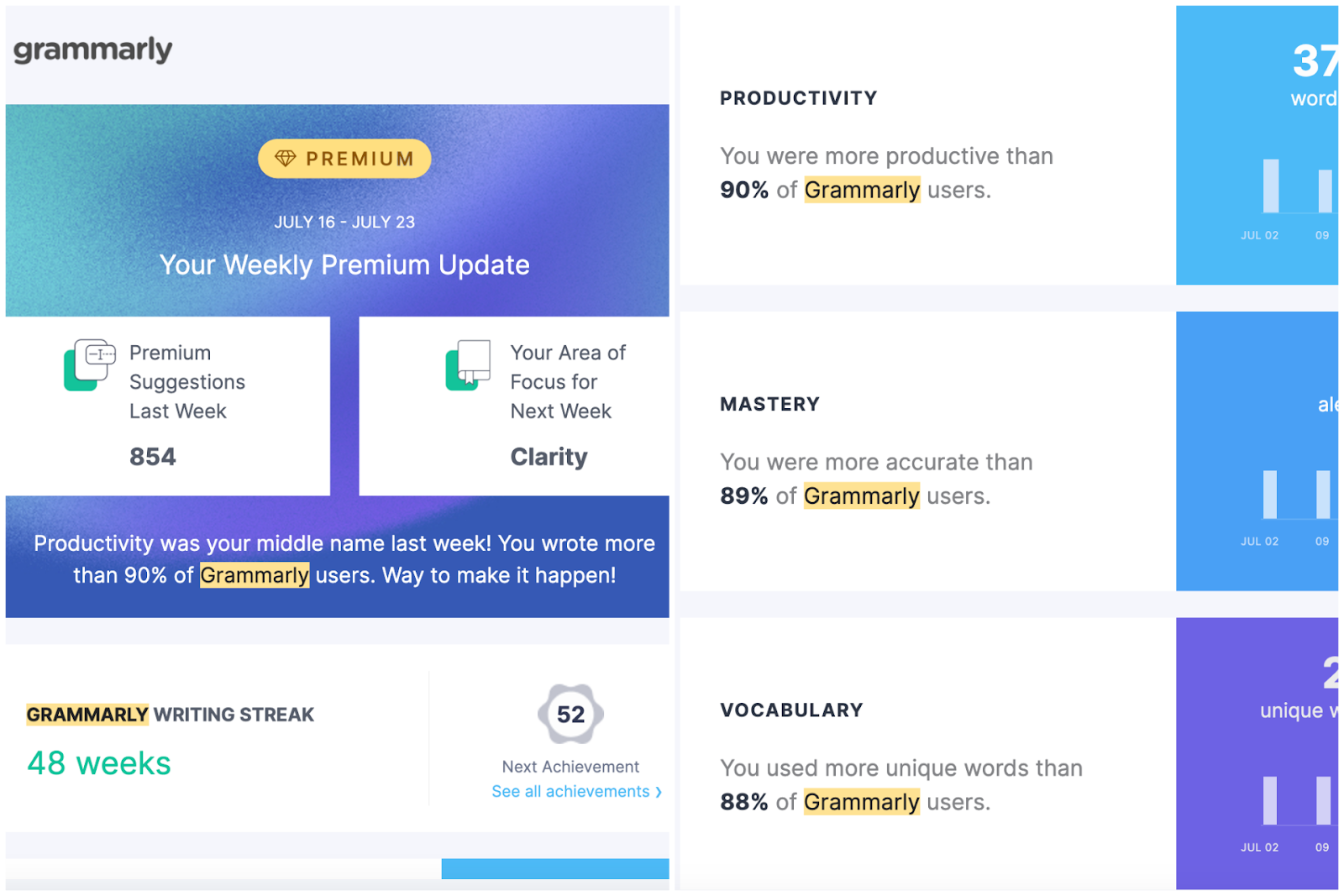
Email 3 (Day 7): Analytics and Insights
Grammarly creates a positive feedback loop between you and their product by showing your progress while using their tool.
The B2B takeaway: for a product-led trial, each email should drive one activation step. Track which features predict conversion, and send the emails that push users toward those features first.
Website Visitor Nurturing
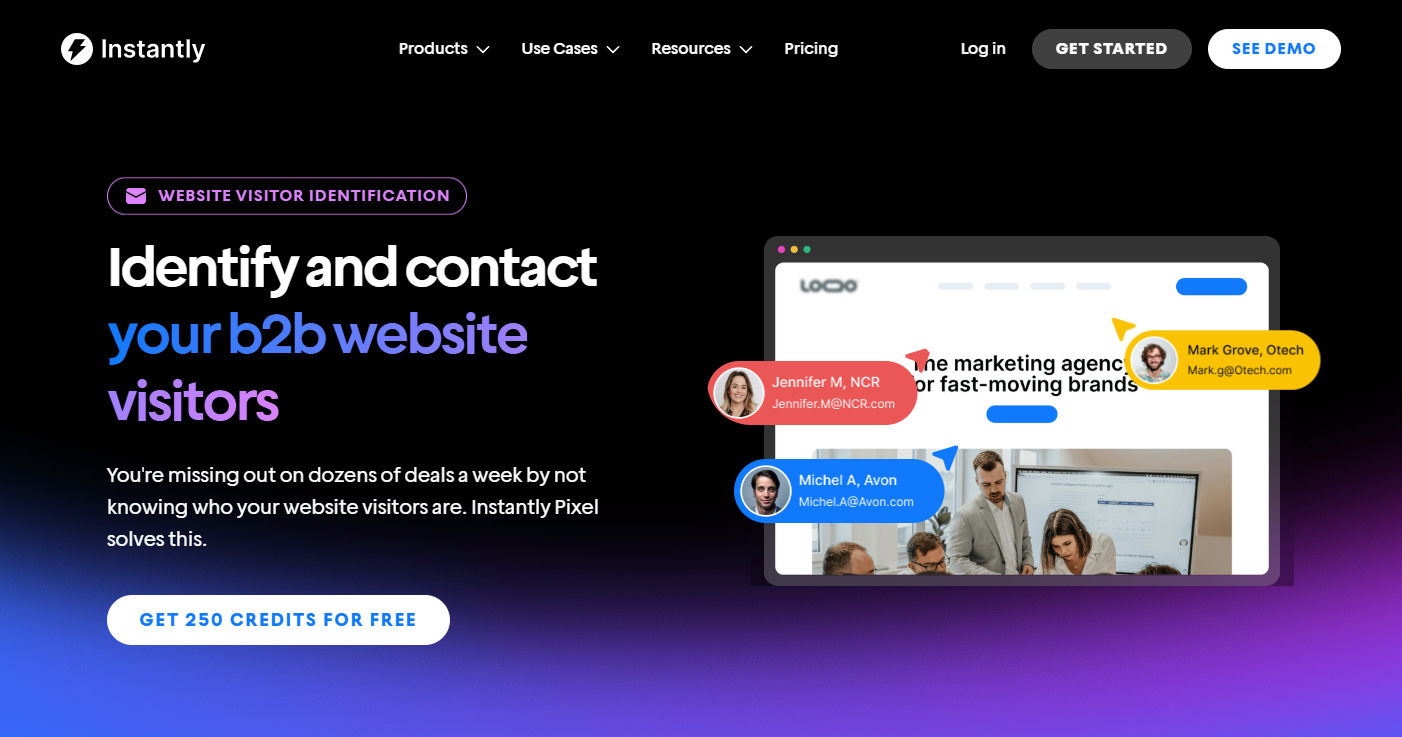
Site visitors who don’t engage with your site turn into statistics that don’t do much for revenue growth. You can nurture these site visitors if you have a website visitor identification tool. Instantly's Website Visitors add-on, a separate subscription, can push matching visitors into a campaign in real time once their emails are verified.
Instead of cold, you send warm emails. You can also personalize email copy based on the lead’s site activity. Let’s say you found leads that frequent a blog post about a {{service}}.
Email 1 (Day 1): Warm Outreach
Subject Line: {{first name}}, noticed your interest in {{service}}
Hey, {{First Name}},
I noticed you’ve been checking out our blog about {{service}}, and I wanted to reach out personally. We’ve helped companies like {{competitor}} solve {{pain point}} with our {{service}}, and they’ve seen {{benefits}}.
Would you be open to a quick chat or a walk through this week? I’d love to tailor the conversation on your specific needs!
Thanks in advance,
{{your name}}
Email 2 (Day 3): Share Value with a Resource
Subject Line: Here’s something to help with {{pain point}}
Hey {{first name}},
I wanted to follow up on my last email and share something I think you’ll find helpful.
Here’s a quick resource about how {{service}} can help businesses like {{competitors}} solve {{pain point}}: {{Insert Link to Case Study, eBook, Webinar, or Blog Post}}
I'd love to hear your thoughts if you want to learn more or have any questions. Let me know if a quick call would help!
Best,
{{your name}}
Email 3 (Day 7): Add Urgency With Exclusive Offer
Subject Line: {{first name}}, we got you an exclusive offer
Hey, {{first name}},
I wanted to personally invite you to {{a demo/webinar/consultation}} where we’ll walk through how {{service}} can help businesses like yours solve {{pain point}} and achieve {{benefit}}.
It’s a great opportunity to see how {{service}} works and ask specific questions about your team’s needs. We’re also offering {{exclusive offer}} exclusively to attendees who join.
Seats are limited, so if you’re interested, let me know, and I’ll save you a spot!
Here’s the link to register: [Insert Link]
Best,
{{your name}}
Only use "seats are limited" if it is true. Invented scarcity erodes trust with B2B buyers who compare notes inside a buying group.
How to Measure B2B Lead Nurturing
Track these numbers for each nurture sequence:
- Reply rate: the share of nurtured leads who respond. It shows whether the content is relevant.
- Meetings booked: the clearest sign nurturing is creating pipeline.
- Lead-to-opportunity rate: the share of nurtured leads that become qualified sales opportunities.
- Time to opportunity: how long a lead takes to become sales-ready. Good nurturing shortens it.
- Unsubscribe rate: a rising rate means you are sending too often or sending the wrong content for the stage.
For more tactics on improving these numbers, see these lead nurturing best practices.
Start Nurturing B2B Leads With Email
A B2B lead nurturing email campaign is one of the best ways to guide your leads through your sales funnel. Your role is to act as a guide. This isn’t a hard-selling tactic. The goal is to present leads with enough data to make informed decisions.
To recap, here are key points you might’ve missed:
- B2B lead nurturing is about providing value at every stage of the buying process
- Follow-ups and nurturing are not the same thing
- Nurturing depends on where and how you found your lead
If you want to automate B2B lead nurturing, you’ll need a tool that helps personalize each email so you can provide value no matter where leads are in the sales funnel.
That’s exactly what Instantly was built for. Try Instantly free for 14 days, no credit card required.
FAQs: B2B Lead Nurturing
How do you nurture B2B leads?
Nurture B2B leads by segmenting them by stage and source, sending each segment a short email sequence with content that answers its next question, and handing leads to sales once they reach a set score or ask for a call. Add touches on other channels, such as LinkedIn and webinars, and reach every member of the buying group, not just your first contact.
What are some lead nurturing strategies?
Common B2B lead nurturing strategies include segmentation, lead scoring, stage-based content, multi-threading across the buying group, multichannel touches, and a clear sales handoff. Most teams start with segmentation and one email sequence, then add scoring once they have enough engaged leads to rank.
How many emails should a B2B nurture sequence have?
Most B2B nurture sequences run 3 to 5 emails spaced a few days apart, each with one clear purpose. For cold outreach before nurturing begins, Instantly's 2026 benchmark report found 4 to 7 steps to be the best-performing sequence length.
What is the difference between lead generation and lead nurturing?
Lead generation finds and attracts potential buyers. Lead nurturing builds the relationship with those buyers once they show interest, until they are ready for a sales conversation. Generation fills the pipeline, nurturing moves it forward. See these B2B lead generation strategies for the first half.
What is a nurture email campaign?
A nurture email campaign is a sequence of emails sent to leads who have shown interest, designed to educate them and move them toward a purchase rather than to make an immediate sale. Each email delivers one useful piece of content, such as a case study or tip, and ends with a low-pressure next step.
Read Next



