.svg)
%20(1).svg)


Updated April 20, 2026
TL;DR: Proposal emails lose deals when objections surface after you hit send. The four deal-killing objections (price concerns, timing constraints, value fit, and vendor trust) are predictable, and you can address each one directly in your email before the prospect raises them. This guide gives you exact templates for each category. For founders managing replies and follow-ups at scale, Instantly's Unibox centralizes every response, and the AI Reply Agent handles objections in under five minutes without adding headcount.
Most sales proposals fail because of unaddressed fears, and the reason has nothing to do with your actual price. When a prospect reads your email and silently decides it's too expensive, too complex, or too risky, they don't tell you. They stop responding. By the time you send a follow-up, the deal is already cold.
You can pre-empt these concerns without complicating your proposal, but you need a different structure than most founders use. This guide breaks down the five most common objections, provides exact copy frameworks for each, and shows you how to layer proof and follow-up automation so the proposal works even when you're offline.
Why objection-handling must happen before the reply
The best way to handle an objection is to prevent it from forming. When you anticipate a concern and address it in the proposal copy, the prospect reads the email feeling understood rather than sold to, which builds the trust needed to move forward. Linkedselling's research on pre-emptive objections confirms this principle: your sales success rate increases because you eliminate back-and-forth cycles before they start.
This contrasts sharply with the reactive model, where founders wait for a "no" and then scramble to address concerns in follow-up messages. By that point, objections left unaddressed have had time to compound, and the prospect's confidence in you has dropped.
Dimension | Reactive approach | Pre-emptive approach |
|---|---|---|
Timing | After proposal is sent | Within the proposal itself |
Trust impact | Defensive replies damage rapport | Confident framing builds credibility |
The cost of unaddressed objections
For a bootstrapped founder running founder-led sales, a stalled proposal costs you hours of research, writing, and outreach that return nothing. Nusii's guide on proposal objections frames it clearly: at the heart of most objections is a trust deficit. The prospect doesn't yet trust you with their money, their time, or their real concerns. Every silent "no" is a data point showing your proposal didn't close that gap.
Pre-emptive strategy for proposal emails
A pre-emptive proposal doesn't just describe what you offer. It anticipates the four or five questions a skeptical prospect has in their head and answers them in sequence, before they click away.
An effective proposal addresses multiple categories of doubt in sequence. Consider organizing sections around outcome, cost impact, implementation details, feature clarity, and proof points. Bidsketch's guide on client objections makes a critical point: you can address objections inside the proposal itself by explaining your process and acknowledging your limits, and doing so honestly is more persuasive than pretending the limits don't exist.
5 deal-killers and their common triggers
Nusii's research on proposal objections identifies four primary categories: price, need, time, and features. A fifth, vendor risk, appears consistently in B2B contexts where a prospect is evaluating a smaller or early-stage vendor. Each has a predictable trigger and a specific email copy pattern that neutralizes it.
Neutralizing cost objections in proposals
The cost objection almost never means "I can't afford it." Nusii's breakdown of price objections identifies the real concern: the prospect doesn't see a clear return on the investment. They're looking at the number and can't connect it to an outcome they care about.
Leadforensics recommends acknowledging the concern directly and shifting the frame immediately from cost to long-term value. Do this inside the email, not in a reactive follow-up.
Template:
"Your investment for this engagement is $X per month. I've included a breakdown below that shows how this compares to typical client outcomes in your industry. The math should be clear before we speak."
Use "pipeline per dollar" framing throughout. Write the ROI calculation into the email body rather than leaving it for the prospect to estimate. For context on the deliverability factors that affect reply rates, email deliverability for sequences covers warmup, health monitoring, and compliance in one guide.
Present price after proof, not before it. A compelling case snippet first gives the prospect a reference point for what the cost buys before they process the number.
Handling 'no time' objections
Time objections are often code for "I'm not sure the setup effort is worth it." Compare the time a prospect currently spends on the problem versus the learning curve to adopt your solution. If setup takes less time than one manual task they run weekly, the objection loses its force.
Tell them the exact time commitment. "Initial setup takes under 30 minutes" is more credible than "onboarding is easy," and it gives the prospect a concrete number to evaluate.
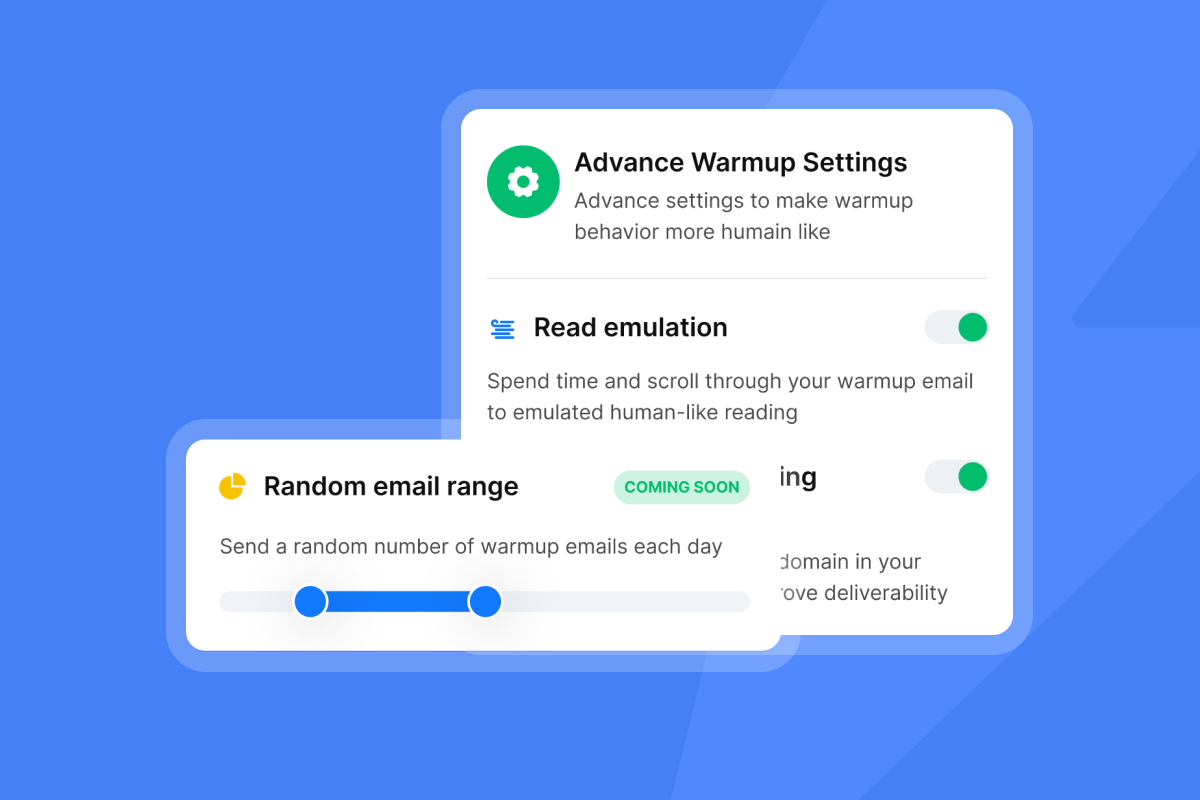
Instantly's automated email warmup covers every domain at no extra cost across all plans. The slow ramp process starts at 10–15 emails per inbox per day and increases gradually by 10–20 percent, keeping sending behavior human-like and protecting your domain health. For scaling warmup across multiple domains, Instantly automates inbox rotation, read emulation, and automated inbox placement tests so you know emails are landing in the primary inbox before you scale volume.
You can include a simplified version of this ramp plan directly in your proposal email to show prospects exactly what the first 30 days look like.
"I use Instantly for cold emailing for my company, and I really appreciate the deliverability it offers. The initial setup was very good." - Laura R. on G2
Feature gaps and integration needs
Feature objections aren't about the feature. They're about the fear of buying something that won't work with the stack the prospect already relies on. Bidsketch's framework makes an important distinction: addressing a limitation in your proposal isn't the same as apologizing for it. Stating a limit clearly shows confidence and saves both parties from a poor-fit deal.
Template:
"Worth noting: we don't have native [LinkedIn outreach / direct CRM bidirectional sync] built in today. Here's how customers in your situation handle it: [specific workaround in 2 sentences]. If that doesn't fit your workflow, I'd rather know now than after you've spent time on setup."
Instantly connects to HubSpot, Salesforce, Zapier, and Make, and the API v2 covers custom automation for teams that need more control. For teams building proposal-to-client workflows using automation, this Make-based workflow video demonstrates how to read replies and generate personalized follow-up proposals automatically.
Use positive framing, not defensive language. "We handle X via Y" is stronger than "We don't have X but..." State the workaround plainly and move on. When you present a limitation confidently, you signal that you've seen this concern before and have a working answer for it.
"I really like the unlimited email accounts feature because it allows me to scale outreach safely and efficiently without hitting the sending limits... Instantly also has an inbox placement feature that helps test if emails land in the inbox or spam." - Pradeep T. on G2
Addressing vendor longevity risks
This is the "what if you disappear" objection, and it hits hardest for bootstrapped or early-stage vendors. Layer proof next to the section it supports, not at the end of the proposal. A case snippet about fast ROI belongs next to the pricing section. A quote about reliable setup belongs next to the onboarding section. Testimonials placed contextually feel like evidence. Placed generically at the bottom, they feel like a sales tactic.
Small-team case snippets outperform enterprise logos for this persona. "15 demos in 10 days with a 2-person team and one warmed domain" is more credible to a bootstrapped founder than a Fortune 500 logo, because you're showing conditions that match theirs. For proven structures behind campaigns that close deals, this $6,500 client walkthrough shows the actual copy and sequence structure used to win that deal.

Your public changelog builds more trust than any marketing claim. If you ship regularly, show it. Include one or two recent feature releases with dates in your proposal email to signal active development.
Lock-in fear is a real barrier for founders who've been burned by annual contracts. Address it directly: state your month-to-month options, what happens to data on cancellation, and where to find the off-ramp.
Instantly's flat-fee pricing model covers unlimited email accounts and warmup on every Outreach tier with no per-seat penalty. The Growth plan starts at $47 per month and Hypergrowth at $97 per month. For a 25-account outreach setup, switching to Instantly's flat fee saves $3,576 per year on outreach costs alone, even before factoring in deliverability gains.
Proving your proposal's ROI
ROI uncertainty is the objection behind the objection in most B2B proposals. The prospect agrees the problem is real, but they're not sure your solution solves it reliably enough to justify the spend. The framework that works: show where they are now, where they could be, and what separates those two states. Salesflo's research on objection handling applies this current-state-versus-desired-state model directly to proposal copy.
Template:
"Here's the math framework our customers use. If your average deal size is $5,000 and your close rate from booked meetings is 20 percent, each booked meeting represents $1,000 in expected pipeline. For warmed lists with proper hygiene, expect 5 to 10 percent reply rates in B2B outreach. Calculate your cost per meeting using your actual monthly spend and projected meeting volume, then model payback based on your sales cycle and close rate."
If you don't have case studies yet, use process-based proof. Describe the specific inputs (domain age, send volume, list verification rate) that produce the output (reply rate, meetings booked). When you let a prospect evaluate your method, they trust the projected outcome more than an unsupported percentage. A 30-day pilot with defined success metrics converts skeptical prospects faster than a full annual commitment ask. Define success in the email: "At the end of 30 days, you should have X meetings booked and a reply rate of at least Y percent. If not, here's what we do next."
For the copywriting structure behind high-reply-rate emails, the cold email anatomy masterclass covers sequence structure and follow-up timing in detail.
Structuring your proposal email for objection neutralization
A proposal email that handles all five objections needs a specific order to work. Prospects read with a mental checklist: "Is this worth my time? Can I afford it? Does it fit my stack? Is this company reliable? Will it actually work?"
First impression for conversions
The opening paragraph determines whether the prospect reads the rest. Lead with the outcome they want, not with your company background.
Bad (company-focused): "We are a platform that helps companies with email outreach..."
Good (outcome-focused): "Here's how [Company Name] books [X] meetings per month from cold email with a 2-person team and no SDR."
Bidsketch's client objection guide reinforces this: you can make an explicit guarantee that ensures an objection can't form by addressing the specific fear before the prospect has time to voice it. The leads not responding video covers the specific copy mistakes that cause proposals to get ignored, including weak hooks and vague value statements.
Map your objection response flow
A three-step process for handling concerns: pause to listen fully, acknowledge the objection back to the prospect to show you've understood it, and then ask a clarifying question that uncovers the real concern. Apply this to your email structure by building in each step sequentially.
Use the flow below as the backbone of your proposal:
- Acknowledge: "You're probably wondering about [specific concern]..."
- Pivot: "Here's what a customer with the same question found..."
- Provide: "The specific answer is [X], and here's how it works..."
- Confirm: "If that works for you, the next step is [single clear action]."
For 600 email templates covering different industries and objection types, the Instantly Help Center provides ready-to-use copy you can adapt into this structure.
Build trust: layering proposal proof
One of the most common mistakes in objection handling is jumping to features and benefits before acknowledging the underlying concern, according to Mindtickle's research on sales objections. In an email, this translates to stacking testimonials and feature lists before addressing what the prospect actually fears.
The better approach is contextual proof placement. Each testimonial or metric should appear next to the section it directly supports. AI reply suggestions inside Instantly can help you draft context-specific proof language for different objection types when personalizing follow-up emails at scale.
Secure your next meeting fast
Silence kills more deals than "no." Prospects who are interested but uncertain go quiet while they "think about it," and the deal decays while intent is still high.
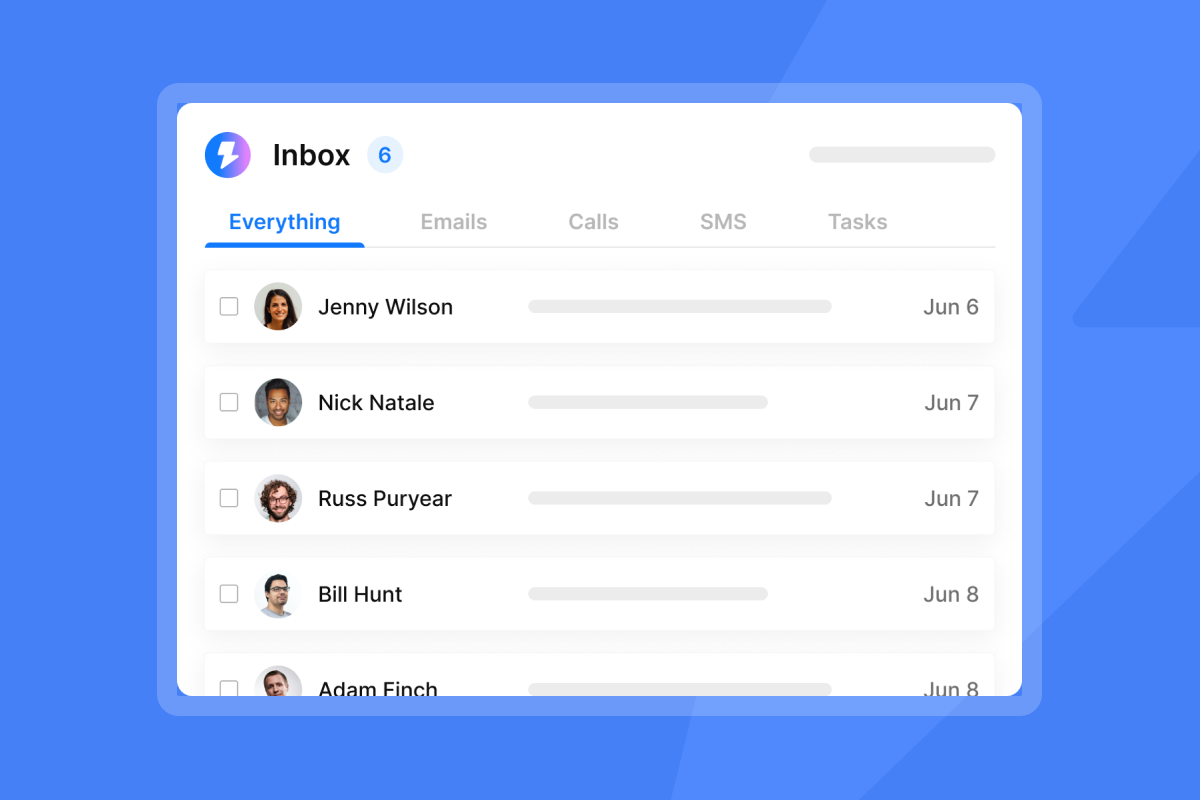
Instantly's Unibox consolidates every reply across all sending accounts and uses AI Custom Reply Labels to automatically categorize responses as "Interested," "Objection," "Not interested," or "Meeting booked." The AI Reply Agent handles follow-ups in under five minutes, 24/7, and connects to Calendly to book meetings directly without scheduling back-and-forth. When a conversation needs human review, it surfaces in Slack and the Unibox simultaneously.
Pre-emptive playbook: handle deal-killing doubts
Prioritize key proposal objections
Use the checklist below before sending any proposal email.
Checklist item | Done? |
|---|---|
Budget addressed: Investment stated clearly with ROI math included | |
Timeline stated: Specific setup time and 30-day ramp plan included | |
Feature gap acknowledged: Any missing feature named with workaround provided | |
Vendor risk mitigated: Case snippet, changelog link, and cancellation terms included | |
ROI quantified: Current state vs. desired state with specific metrics shown | |
Social proof placed contextually: Testimonials near the section they support | |
Tone confident, not defensive: Positive framing used throughout | |
Next step specific: One clear, low-friction action at the end |
Mailchimp's sales objectives guide reinforces the logic behind this checklist: demonstrating a deep understanding of the buyer's situation pre-emptively builds trust faster than any single feature claim. Each item resolved inside the proposal is one fewer follow-up exchange before the deal advances. The step-by-step client acquisition guide provides additional context on list quality and sequence structure that feeds this checklist.
Mistakes in pre-emptive email handling
Mindtickle's breakdown of objection handling mistakes identifies three patterns that consistently undermine proposal emails.
- Being defensive: When you over-explain a limitation, it signals uncertainty. State the limit, provide the solution, move on.
- Making assumptions: If you address the wrong objection, you do more harm than addressing none. Use discovery call notes or prospect research to target the specific concern, not a generic template.
- Providing generic responses: Overcoming objections isn't about reading off a script. Personalize the case snippet, the ROI math, and the workaround to the prospect's industry and company size.
Theimagingchannel's analysis of unstated objections adds a fourth pattern: silent objections are the most dangerous. If a prospect goes quiet after reading your proposal, the silence usually signals an unresolved concern the email didn't address. The pre-emptive framework reduces this risk by covering all five categories before the prospect has time to form a silent "no."
Don't overuse social proof in emails
Bidsketch's guide on client objections makes a point that most founders miss: two or three specific, contextually placed testimonials outperform ten generic quotes stacked at the bottom of an email. The test for any piece of proof you add is whether it directly addresses a concern the prospect has at that exact point in the email. If it doesn't, cut it.
Your goal isn't to overwhelm the prospect with evidence. It's to give them exactly what they need to move past each doubt and take the next step. When you do this cleanly for all five objections, you close more deals than when you try to win through volume. The cold email follow-up subject lines guide covers re-engagement copy for any objections that surface after the initial send.
Try Instantly free and let automation handle follow-ups while you focus on live conversations.
FAQs
How do you write a business proposal email that handles objections before the prospect replies?
Structure the email to address the four core objection categories (no money, onboarding time, feature gaps, and vendor trust) in the body before the prospect raises them, using the pattern: state the concern plainly, provide a specific resolution, and include contextual proof next to each section. Lead with outcome, then cost with ROI math consolidated under the no-money objection, then setup specifics, then feature transparency.
What are the most common objections in a business proposal email?
According to Nusii's proposal objections research, the four primary objection categories are price, need, time, and features, with vendor reliability as a fifth in B2B contexts. Budget and ROI uncertainty are the most frequent deal-killers for early-stage SaaS proposals.
How should you respond to a business proposal rejection email?
Acknowledge the concern specifically, pivot to a case snippet or outcome relevant to their situation, and propose a lower-commitment next step such as a 30-day pilot or a 20-minute call. Do not defend the original proposal.
How do you handle "we need to think about it" in a proposal follow-up?
Reply with a single clarifying question ("What's the main thing that needs to be clearer before you can move forward?") and set a near-term follow-up. Instantly's AI Reply Agent handles this pattern automatically, sending a follow-up under five minutes after the reply and booking a call if the prospect is ready.
When should you walk away from a proposal instead of handling the objection?
Walk away when the prospect's stated need fundamentally doesn't match your solution after clarification, or when you can't access anyone with budget authority after multiple attempts across the sequence. HubSpot's objection handling resources recommend letting prospects down gently when budget is genuinely misaligned with what you can deliver, rather than continuing to push.
Read next
- Email deliverability for sequences: warmup, health monitoring and compliance
- Cold email subject lines for follow-ups: how to re-engage without being pushy
- Subject line testing at scale: a governance framework for sales leaders
Key terms glossary
Pre-emptive objection handling: Addressing prospect concerns within the proposal email itself before the prospect raises them, rather than responding reactively after a rejection.
Pipeline per dollar: The ratio of pipeline value generated to total outreach spend, used to evaluate the ROI of cold email and proposal campaigns rather than tracking vanity metrics.
Unibox: Instantly's centralized inbox that consolidates replies from all sending accounts in one view, with AI Custom Reply Labels that automatically categorize responses as "Interested," "Objection," "Meeting booked," or other statuses.
AI Reply Agent: Instantly's automated reply handler that reads incoming emails, drafts personalized responses, handles objections, and books meetings via Calendly in under five minutes, 24/7, with Human-in-the-Loop or Autopilot mode.
Flat-fee pricing: A pricing model where the total cost stays fixed regardless of the number of users, accounts, or inboxes added, contrasting with per-seat pricing where each additional user adds a recurring cost.
Sender reputation: The trust score email providers assign to a domain and IP based on sending behavior, bounce rates, spam complaints, and engagement, required for consistent primary inbox placement.
Slow ramp warmup: The process of gradually increasing daily send volume from a new domain, starting at two emails per day and increasing incrementally, to build sender reputation before scaling outreach.



