


An email cadence is the strategic use of timing and sending frequency in an outreach campaign. Every segment should have a unique cadence. For example, you could have a faster cadence for interested leads and a more spread-out cadence for people who just opened your emails.
This process helps you optimize sending volume, improve deliverability, and ensure emails land at the right place and time. If you want to skip all the manual tracking and data entry involved, Instantly has all the features needed to automate and auto-optimize email cadence.
However, no matter what tool you use, you must understand the fundamentals to create tailored email cadences for every campaign. Here’s everything that you need to know to get started.
What is a Cold Email Cadence
Email cadence is a continuous process that involves consistently A/B testing campaigns to find your optimal sending frequency. Understanding what the optimal email cadence is for your specific audience segments helps you:
- Know when to send a follow-up and what type of follow-up to send.
- Identify what time of day your leads are more likely to open your emails.
- Reduce the risk of being flagged as spam.
- Improve personalization by adjusting cadence based on engagement.
- Build a predictable pipeline where follow-ups feel intentional for every lead.
Why a One-Size-Fits-All Email Cadence Won’t Work
Every lead interacts with cold emails differently. Some might respond after your initial cold email, while others might need two or three follow-ups across multiple channels. A cold email cadence has to account for these differences by balancing persistence with timing.
If you treat cold outreach the same way you would a newsletter or customer update, you risk missing opportunities. Newsletters thrive on predictable schedules, but cold emails work best when the cadence adapts to prospect behavior and intent signals.
Segmentation is key. Prospects don’t have the same interest, decision-making power, or urgency. By adjusting cadence for different segments, whether new leads, decision makers, or re-engagement lists, you increase the chances of starting conversations that convert.
How to Find the Optimal Cold Email Cadence For Your Campaign
Finding the right cadence takes experimentation. Multiple A/B tests are necessary to identify what works best for your audience. This means monitoring key metrics such as open rates, reply rates, unsubscribe rates, and overall engagement.
You should also track sending patterns, including the time of day, day of the week, and the number of follow-ups, to see where responses are strongest. Here’s a good four-step workflow you can follow:
- Test: Start a baseline cadence (for example: Day 1, Day 3, Day 7, Day 14) and run it across a segment of your leads. Make small variations in timing, subject lines, and copy.
- Measure: Collect data on open rates, click-through rates, replies, and unsubscribes. Pay close attention to where drop-offs or spikes in engagement occur.
- Adjust: Use data to refine follow-up timing and frequency. If unsubscribes rise after a certain touchpoint, shorten that follow-up. If replies spike at a certain time of day, lean into that schedule.
- Repeat: Continue A/B testing on new segments and campaigns. Optimal cadence is not static; it changes as your audience, offer, and industry trends evolve.
How Instantly Automates Cold Email Cadence Optimization
G2 Rating: 4.8/5 ⭐ from 3,861 reviews
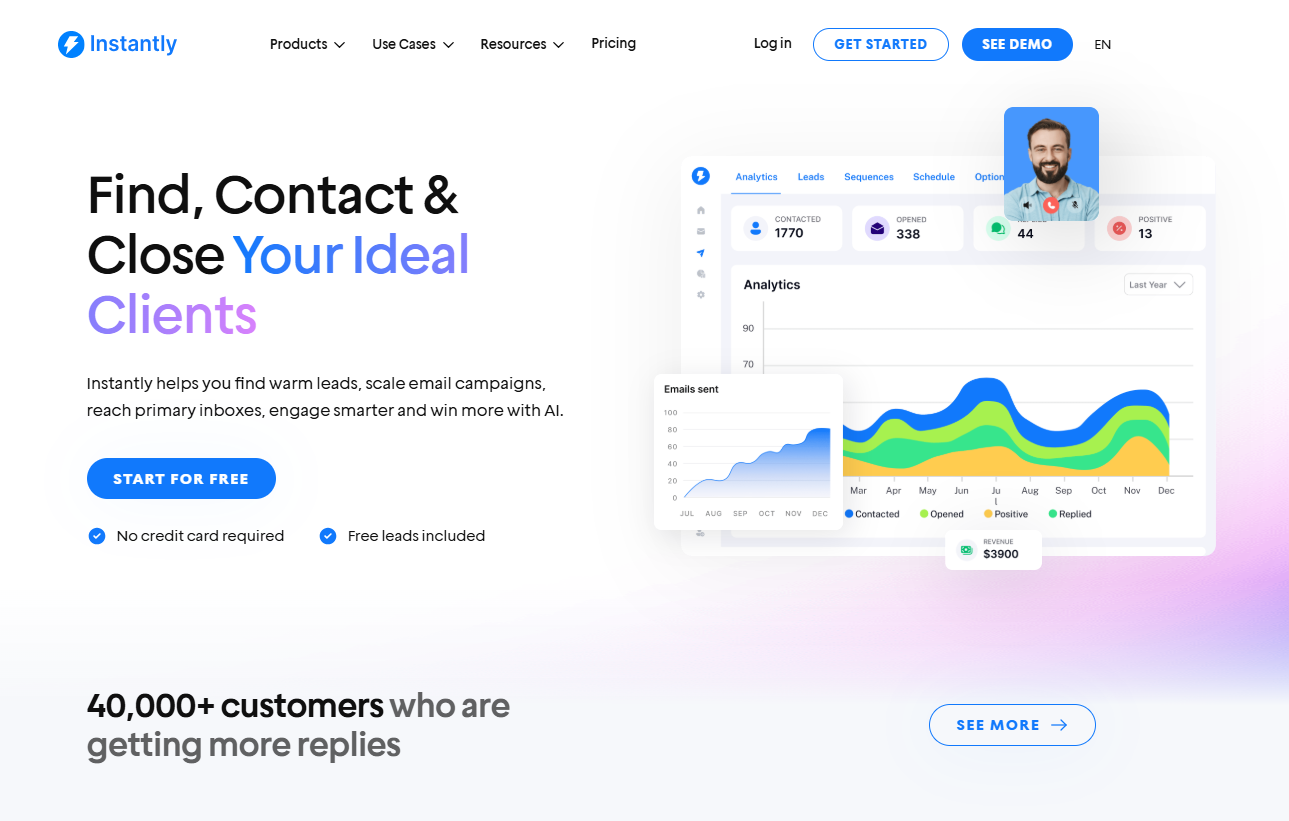
Optimizing your cold sales email cadence takes hours of manual testing, tracking, and adjusting. To give you an easier time of things, Instantly combines AI with deliverability controls, automated timing, and intent data to optimize your email cadence in real time.
These features work in the background to continuously optimize your cold email cadence. Instead of testing every variable, Instantly adjusts based on engagement signals, deliverability data, and timing benchmarks to scale outreach while maintaining peak performance.
AI-Driven Campaign Optimization (Instantly Copilot)
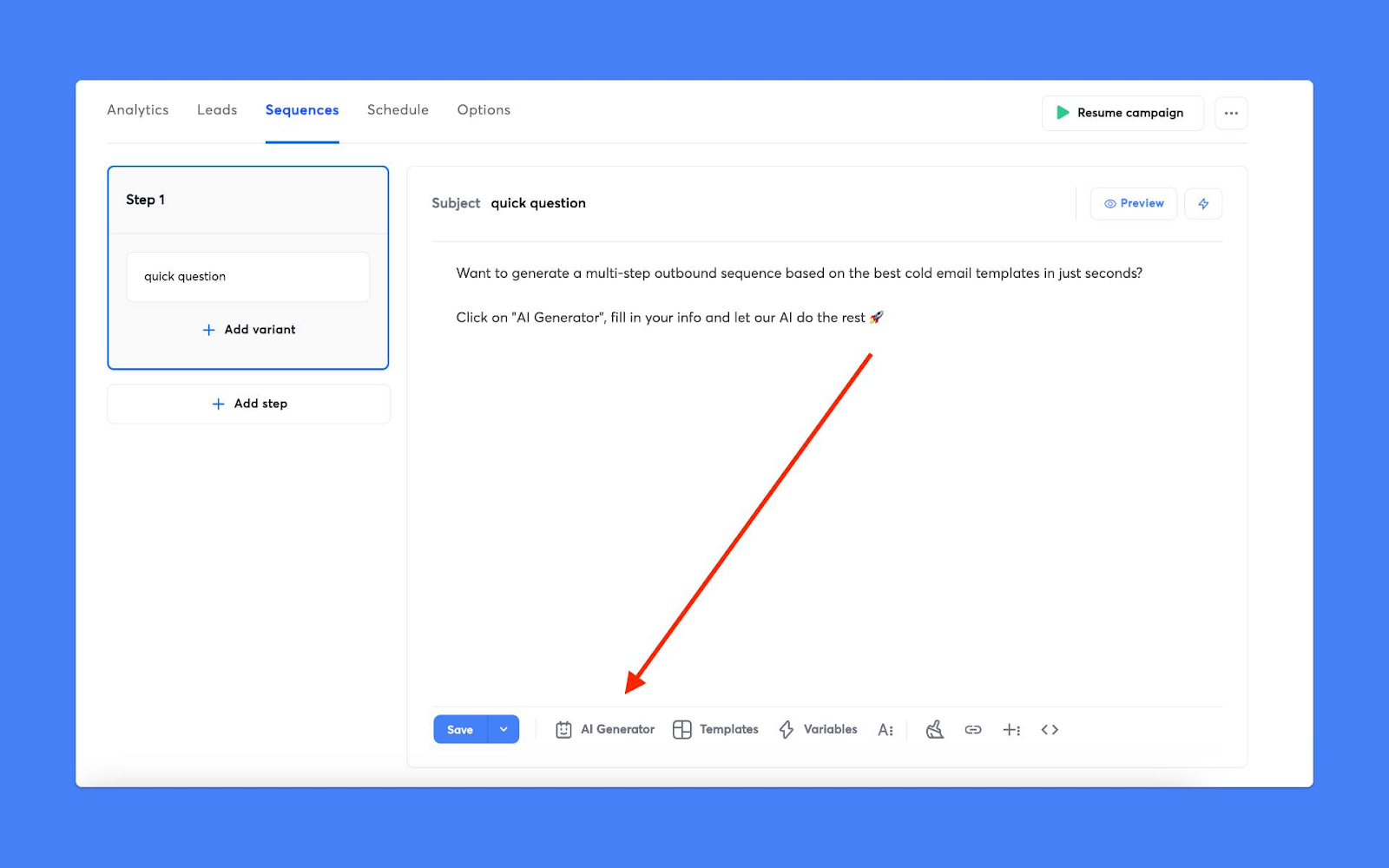
Instantly’s Copilot acts as your personal AI assistant. It can generate complete outreach campaigns, write full cold email sequences, and suggest new campaign ideas tailored to your business.
For users on the Hyper Growth plan or above, the AI Sequence Generator creates custom content specific to your niche and offer.
Advanced Deliverability Features
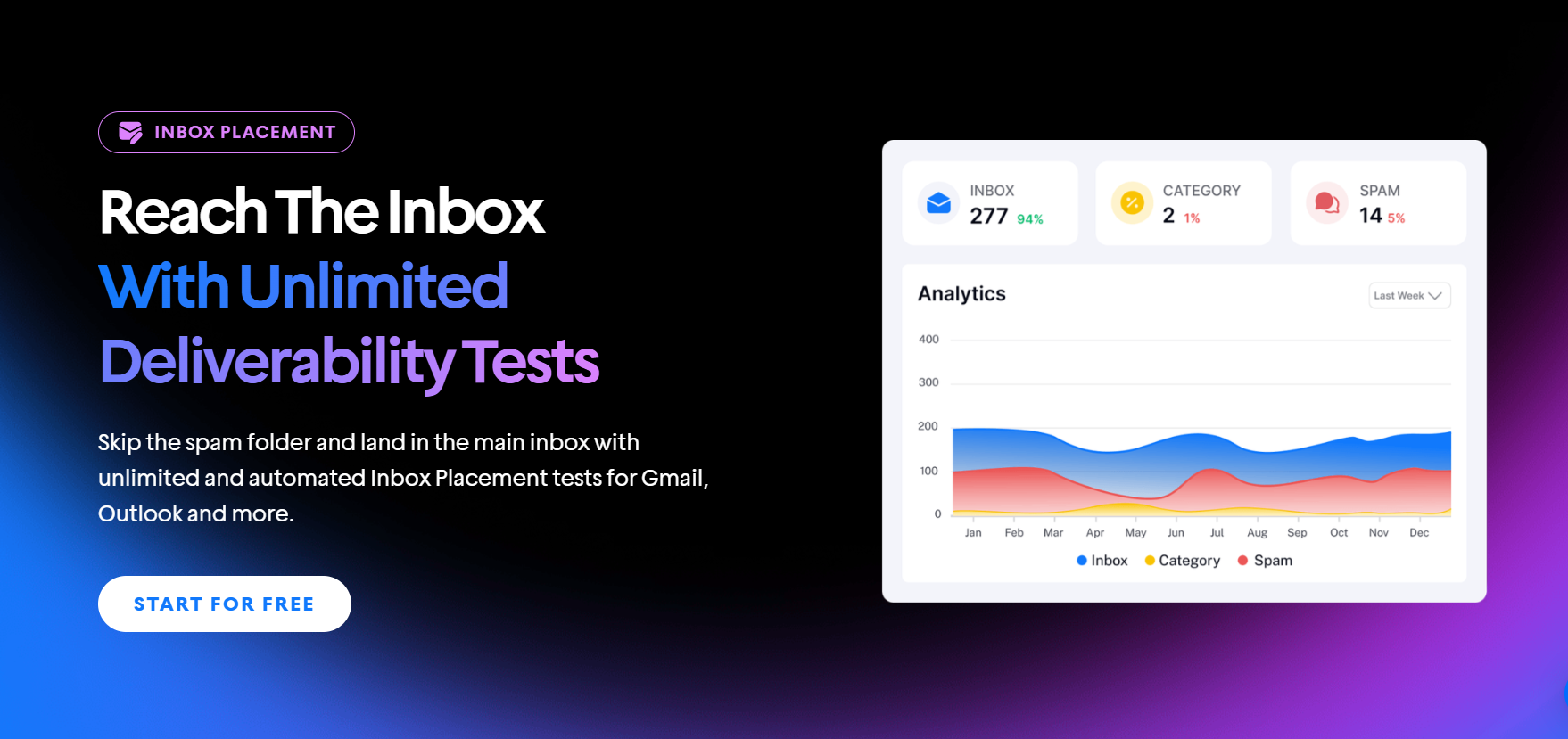
Deliverability is one of the most significant factors in cadence success. Instantly’s AI Lead Filtering identifies those less likely to respond, giving you options to skip them, send to them later, or sequence them differently.
This prevents wasted sends and protects your sender's reputation. Delivery optimization settings also automatically fine-tune email timing and formatting so your campaigns land in the inbox instead of spam.
Automated Timing Controls
Timing is everything in cold outreach. Instantly allows you to set Outreach Preferences that control delivery windows, daily send limits, and spacing between campaigns.
Built-in defaults like 9–14 minute gaps between emails mimic natural sending for better inbox placement.
Cold Email Cadence Industry Benchmarks Vs Your Own
While the best way to find your ideal cadence is to test what works for your specific audience segment, benchmarks provide a helpful reference point.
Comparing your sequence against standards can help you see whether you are on the right track or if adjustments are needed.
Industry Benchmarks for Cold Email Cadence
Here are some good industry benchmark figures for cold email cadence (and outreach generally) that you can use for reference:
- The average reply/response rate for cold B2B emails is around 5% to 9%, with top performers hitting 10% to 15%+ when targeting well and following up.
- Profit Outreach suggests spacing initial cold email touches 3-5 business days apart to balance persistence and respect.
- A MarketingProfs study suggests cadences lasting 6-8 days with 1-2 days spacing between touches had reply contact rates.
How to Use Your Own Email Cadence Benchmarks to Improve Campaign
Benchmarks provide valuable context, but the most important data comes from your cold email campaign metrics.
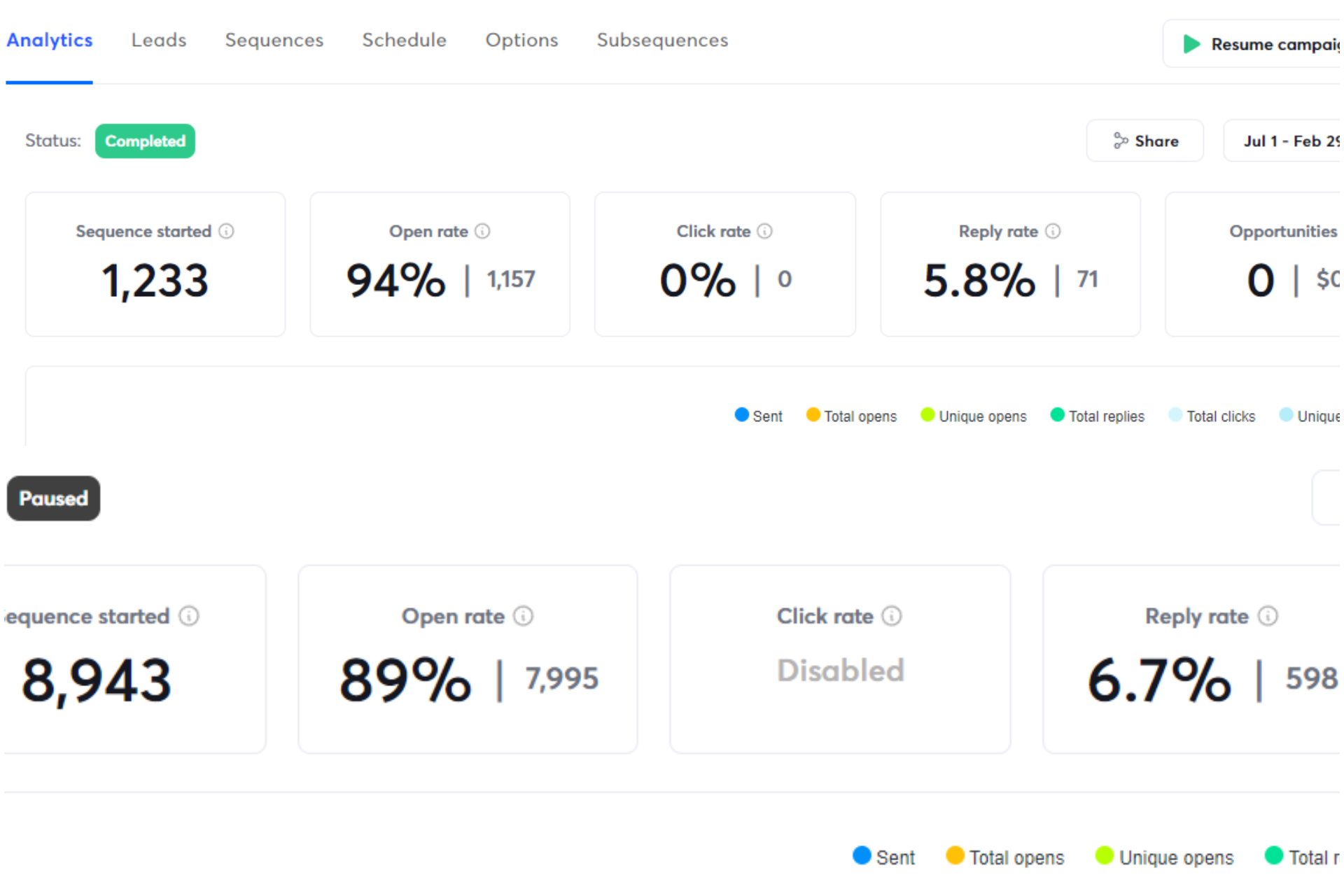
You can create personalized benchmarks reflecting how your audience engages with your emails by tracking your open rates, reply rates, and follow-up timing.
- Reply rate: If your reply rate is below 5%, you may need to adjust your copy, targeting, or follow-up cadence.
- Open rate: If your open rate is far below 25%-30%, the issue may be subject lines, deliverability, or list quality.
- Spacing: Use spacing benchmarks (3-5 days, or 1-2 days in some cases) as a baseline, then test shorter or longer intervals depending on your audience.
- Targets vs. ceilings: Use these numbers as baseline targets, not limits. You can outperform industry averages with well-targeted lists, strong copy, and optimized follow-ups.
Key Takeaways
Understanding how to optimize your email cadence helps you improve deliverability, open, and reply rates across the board. However, it’s an iterative process that needs consistent monitoring and analysis.
Instantly has all the tools you need to streamline and automate the process. Ready to find your best-performing email cadence? Start your free Instantly trial.


