


Updated April 13, 2026
TL;DR:Building trust in outbound sales doesn't require big logos or generic corporate claims, specific data, early customer proof, and a clear founder story are far more effective. Speed and deep personalization are the key competitive advantages available to smaller senders, which means using AI to scale research while keeping copy human and tightly focused on the buyer's actual pain points. A custom domain with proper authentication is non-negotiable for landing in the primary inbox and being taken seriously by prospects. Proposal emails should be kept short, 50 to 125 words, leading with the buyer's problem and ending with a single, low-friction call to action. To protect domain reputation as volume grows, sends should be capped at 30 per inbox per day, with built-in warmup tools used throughout.
Fortune 500 logos aren't required to win deals. What wins deals is a proposal email that makes one specific buyer feel like the product was built for their exact problem, not another vendor pitch clogging their inbox. Most startup founders lose the deal before the first conversation because their emails lead with the company name instead of the buyer's pain.
Writing a proposal email when nobody knows the company requires a different playbook. Brand authority isn't available to lean on. Instead, the work depends on extreme relevance, transparent ROI framing, and a flawless sender setup. This guide breaks down the exact structure, subject lines, and templates founders use to book meetings with cold prospects from a standing start.
Why startup proposal emails fail (and what works instead)
A startup proposal email is a short, direct message to a cold or warm prospect that initiates a business relationship or requests a meeting. It's not a 10-page document. It's a trigger that says "I understand your problem and I have a solution worth 15 minutes of your time."
The goal is one thing: a reply that leads to a meeting.
Most startup proposal emails fail because founders lead with their product, their company name, or their feature list. Buyers don't care about any of that until they believe you understand their specific problem better than they do. According to Instantly's cold email benchmark report, the platform-wide average reply rate is 3.43%, with top performers exceeding 10%. Relevance and research explain almost the entire gap between average and top performers, not brand name recognition.
Why startups lack credibility and how buyers assess you
The "unknown sender" barrier is real. Buyers are 31% more likely to reject brands they personally don't recognize, and their primary concern is risk: wasted time, a vendor that disappears, or a product that doesn't deliver.
When a buyer opens your email and sees a name they've never heard of, their default decision is delete. Your proposal email has to interrupt that reflex within the first two sentences by proving you've done real homework on their business, not just merged their first name into a template. Buyers evaluate unknown senders on five signals:
- Custom domain: A Gmail or Yahoo address signals a hobby project, not a business.
- Error-free copy: Typos and grammatical errors communicate carelessness.
- Specific research: Reference their actual product, team, or recent news to show genuine intent.
- Clear sender identity: Include a real name, real title, and company website in the signature.
- Professional tone without jargon: Direct and human beats polished and distant.
Google and Yahoo's 2024 sender requirements made the custom domain requirement even more critical. Both providers now require bulk senders to implement SPF, DKIM, and DMARC authentication and maintain spam complaint rates below 0.3%. Sending from an unauthenticated domain doesn't just hurt your credibility with buyers. It gets your emails filtered before they're ever read.
Establish trust for startup proposals
The fastest way to build trust without a brand is to replace vague claims with specific evidence. Every sentence in your proposal email should answer one question: "Why should I believe this person understands my problem?"
Leverage early client testimonials
You don't need a recognizable company name to use social proof. You need a specific outcome tied to a real situation. Instead of "We work with several startups in your industry," use "We helped an early-stage SaaS team refine their outbound sequence and increase their reply rate within their first month of testing."
The company name doesn't matter, but the metric does. As noted in cold email guidance for early-stage startups, your early beta customers can become your most powerful proof points because the result is recent, the context is lean, and the outcome is honest. Add one piece of specificity: the time frame, the number, or the before-and-after state.
Your founder story for email credibility
A brief founder story works because it explains "why this product exists" in a way no marketing copy can replicate. Keep it to one sentence: "I spent four years in HR operations watching companies lose candidates to slow follow-up, so I built [Product] to fix that." That sentence establishes expertise, names the problem, and signals you care about the outcome. According to founder cold email frameworks, the most effective founder pitches are concise, relatable, and grounded in a real operational pain the builder lived through.
Prove impact with real data and specific research
If you have beta data, use it. If you have nothing yet, use industry data that proves the problem is real. You can reference that new or poorly warmed domains can see significant inbox placement penalties versus mature, well-maintained ones, a figure that quantifies the cost of inaction for any buyer evaluating outbound tooling.
When you have no recognizable clients, your research becomes your credibility. Show you understand the buyer's business model, their ICP, and the specific bottleneck you're solving. Here's the difference between a claim any vendor could make and a claim grounded in the buyer's specific reality:
Generic value proposition | Specific startup value proposition |
|---|---|
"We help companies improve sales" | "Industry data shows cold outreach averages 3.43% reply rate. Teams hitting higher rates personalize the opening line and cap sends at 30 per inbox per day to protect deliverability." |
"Our software saves time" | "Most teams in your space are managing replies across five inboxes with no unified view, so interested leads fall through after 48 hours." |
"We have great features" | "We ran A/Z testing across three copy variants and found the problem-first opening consistently outperforms feature-first by a wide margin." |
Blueprint for a winning startup proposal
The structure of your email matters as much as the words inside it. Buyers make a delete decision in under three seconds, so your opening lines carry the entire weight of the first impression.
Standout subject lines for startups
Your subject line is a door knock. It needs to create enough curiosity or signal enough relevance that the buyer opens the email to find out more. Data from outreach research shows that all-lowercase subject lines have the highest open rates, so avoid capitalization unless you're using a proper noun. Here are five subject lines built for unknown senders:
quick question about [their product] onboardingsaw you're hiring SDRs - thought this might help[Competitor] just launched X - here's a counter-move3 reasons [Their Company] might be losing demo bookingshow [similar company type] improved reply rates in 30 days
For more subject line formulas, the Instantly subject line formula guide covers seven proven patterns that drive opens and replies, and the cold email subject line checklist helps you validate lines before launch.
Start with their problem, not your name
Your opening sentence should reference the buyer's world, not yours. The moment you open with "Hi, I'm [Name] from [Company]," you've signaled that this email is about you, not them. Four opening approaches that work for unknown senders:
- Problem hook: "Most [job title] I speak to say [specific pain] eats at least a full day every week."
- Observation hook: "Noticed [Company] is scaling the sales team. The bottleneck usually shows up as inbox chaos within the first few months."
- Trigger hook: "Saw [Company] just raised a seed round. The first 90 days of outbound usually determine whether the pipeline holds."
- Metric hook: "Teams like yours often see reply rates drop when they scale inboxes without adjusting their warmup protocol."
All of these open on the buyer's context. Your company name belongs in the second or third sentence, after the hook has earned the right to be there.
Structuring your proof-based pitch
After your opening hook, follow this four-part structure:
- Claim: Name the specific problem you solve.
- Evidence: Drop one number, one before-and-after, or one named result.
- Takeaway: Tell them what that means for their situation specifically.
- CTA: One ask, one sentence.
The Instantly cold email copywriting framework used to generate 400+ replies monthly follows this same logic: short, direct, evidence-first, with a single action at the end. Use Instantly's AI Sequence Writer to draft multiple pitch variations in seconds and test which evidence angle resonates best.
Compel action: book the meeting
The worst CTA in a cold proposal email is "Let me know if you're interested" because it asks the buyer to do work. The best CTAs remove friction and narrow the ask to one simple action:
- "Would Thursday at 10am or Friday at 2pm work for a 15-minute call?"
- "I'm running discovery calls this week. No pitch - just 15 minutes. Would Tuesday work?"
- "If this sounds relevant, I can send over a short case study first. Just reply 'yes.'"
Keep the ask small. A reply is a win. A booked call is a big win. Don't try to close the deal in the first email.
When to disclose pricing in your offer
For solicited proposals (the buyer asked you to send something), include pricing upfront. They asked because they're evaluating options and your price is part of that evaluation. For unsolicited cold outreach, pricing guidance from sales professionals is consistent: wait until you've established the value first.
The exception is when your pricing serves as a qualification filter for company size or budget, which protects your time and theirs. For example, if your entry plan starts at $5,000 per month and you're prospecting companies with under 10 employees, mention the price range early. If a prospect replies "we only have $500/month budgeted," you've both avoided wasting time on a mismatched conversation.
The clearest signal to introduce pricing is when the buyer asks about next steps or implementation. Questions like "how would this work for our team?" or "what's your process look like?" indicate they're mentally moving past whether they need a solution and into how they'd use yours. That's when pricing becomes relevant context rather than a barrier. Wait for that shift in the conversation before leading with numbers.
When you do introduce pricing, frame it against the cost of the problem. The formula is: [Cost of problem] / [Price of solution] = ROI framing. For example: "Research shows follow-ups increase reply rates by 22%. If manual follow-ups are slipping and you're missing opportunities as a result, automation that costs $97/month might recover its value within the first few deals." When a buyer replies "that's outside our budget," ask what they're currently using to solve the problem. That question opens the door to understanding whether the objection is budget or priority.
Win deals with speed and tailored offers
Speed is a structural advantage startups have over larger vendors. You can reply to an inbound inquiry in five minutes. A reply that fast signals a team that cares and a product that's actively supported.
Why fast follow-ups win proposals
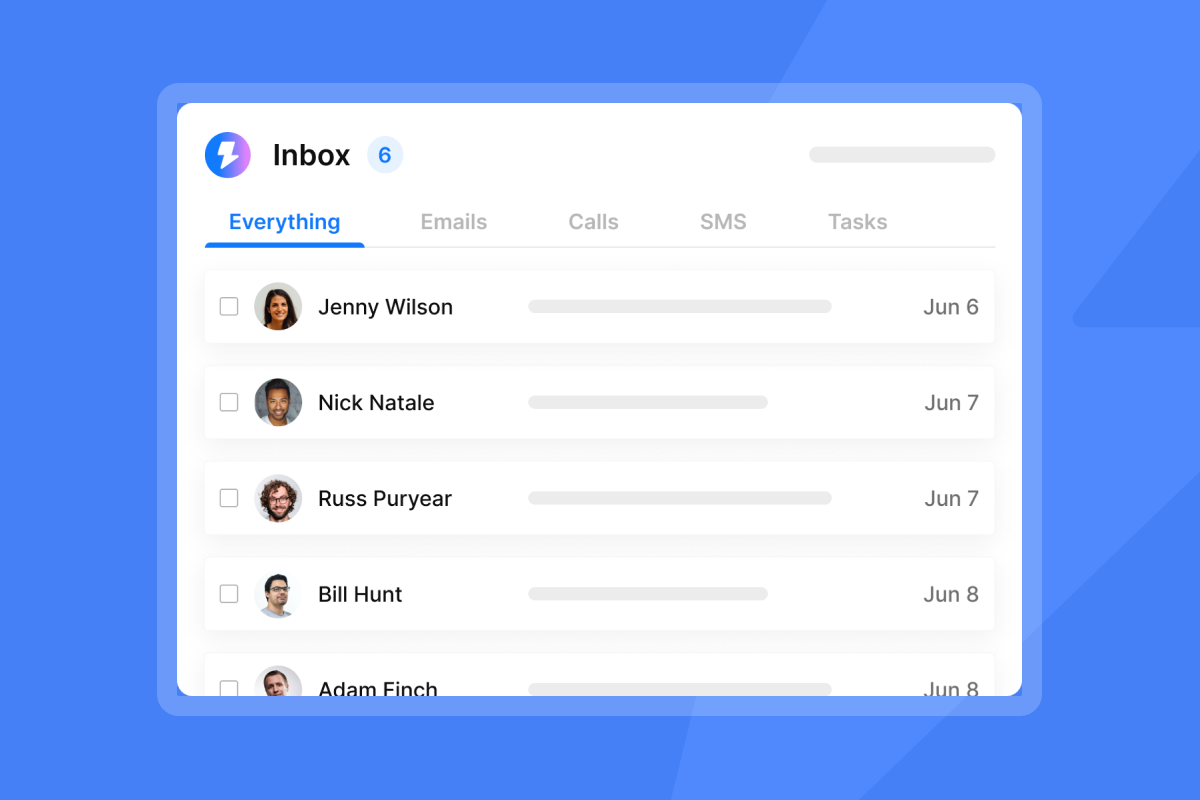
Instantly's Unibox centralizes all your outbound replies in one place so you can see every interested lead the moment they respond and reply within minutes rather than hours.
"I appreciate Instantly for its intelligent handling of domain and mailbox rotation as well as provider matching, which is critical for ensuring that my emails land directly in the primary inbox instead of getting caught in spam filters." - Richard E. on G2
According to Instantly's benchmark data, 58% of all replies come from the first email in a sequence, with the remaining 42% spread across follow-ups. That means your first email has to be strong, and your follow-up sequence has to be consistent to capture the full range of interested leads.
Crafting genuine proposal personalization
Deep personalization means referencing something specific to the buyer's business that a template can't auto-fill. It goes beyond "[First Name]" and "I saw your LinkedIn post." According to MarketingProfs B2B cold email data, writing like a human and opening with something grounded in the prospect's world is what separates emails that get replies from those that get deleted. If a line in your email could appear in 10,000 other emails unchanged, cut it.
Use Instantly's AI Sequence Writer to scale the research and drafting process, but ensure the final output reads like a human wrote it for one specific person.
Win deals with direct founder access
One of the most underused advantages of founder-led sales is the access you can offer. An enterprise vendor assigns a junior SDR to handle early-stage inquiries. You, as the founder, are the product builder, the decision-maker, and the person who will personally onboard them. Position founder access as a premium benefit, not a sign of a small team. For example: "You'll be on a first-name basis with the person who built this, not stuck in a support ticket queue."
Startup proposal email templates that convert
These templates follow the claim-evidence-takeaway structure and are designed for founders with limited social proof. Each template type includes multiple variations you can A/Z test. Use them as starting points and adjust the specifics to match your product and buyer.
Template 1: The specific result approach
Variation 1 (problem-first)
Subject: quick question about [Company]'s outbound stack
Hi [First Name],
Most [industry] teams scaling outbound hit the same wall early: deliverability drops when they add more inboxes, and reply rates fall because the copy is generic.
We help [ICP] fix both. Properly warming inboxes and keeping emails under 80 words are two changes that consistently improve reply rates when teams scale up.
Would a 15-minute call this week make sense? Thursday or Friday works best for me.
[Your Name]
[Company] | [Website]
Variation 2 (metric-first)
Subject: [Company] outbound - a quick idea
Hi [First Name],
Most cold outreach campaigns in [their industry] average around a 3-5% reply rate. The teams hitting 10%+ are doing one thing differently: they personalize the first sentence and send under 30 emails per inbox per day.
[Your Product] automates the first part and enforces the second. Happy to show you how in 15 minutes.
Does Thursday afternoon work?
[Your Name]
Template 2: The founder's "why" pitch
Variation 1 (origin story)
Subject: why I built this (and why it might matter to [Company])
Hi [First Name],
I spent three years doing outbound for [type of company] and watched every team I worked with lose deals to the same problem: follow-ups arrived too late because replies were buried across five inboxes.
I built [Product] to fix that. One inbox. All replies. Respond in under five minutes.
Is slow reply time a problem for your team right now? If so, would a quick demo be useful?
[Your Name]
Founder, [Company]
Variation 2 (industry expertise lead)
Subject: [Company] <> [Your Company]
Hi [First Name],
After watching [industry] teams struggle with unverified contact lists that drive up bounce rates, I built a tool that enriches and verifies leads before a single email goes out.
It focuses on list hygiene and verification to help keep your sender reputation clean.
Worth 15 minutes? I can show you the exact setup.
[Your Name]
Variation 3 (direct credibility claim)
Subject: built this because the follow-up problem kept coming up
Hi [First Name],
I kept seeing the same failure mode: a broken follow-up sequence that nobody caught for two weeks. That's why I built [Product], a system that shows you exactly which leads replied, which bounced, and which need a follow-up today.
I'll show you live if you're curious.
Tuesday at 11am, or Thursday at 3pm?
[Your Name]
Template 3: Test and learn proposal email
These work best when you're seeking beta users or design partners and have limited or no paying customers yet.
Variation 1 (beta partner ask)
Subject: looking for beta partners in [industry]
Hi [First Name],
I'm building [Product] for [specific use case]. We're in beta and working with a small group of companies to sharpen the product before a full launch.
What that means for you: early access, direct input into the roadmap, and a case study featuring your team if the results are strong.
Would this be worth a 20-minute call? Happy to share what we're building first.
[Your Name]
Founder, [Company]
Variation 2 (design partner framing)
Subject: design partner slot open - [industry] focus
Hi [First Name],
We're opening a few design partner spots for [specific ICP]. You get full platform access, direct calls with me, and early access to features based on your feedback.
Our focus is [specific problem]. Based on [something specific about their company], I think there's a direct fit.
Interested in learning more? I can send a 2-minute Loom if a call feels too early.
[Your Name]
Variation 3 (honest early-stage pitch)
Subject: honest pitch (we're early, but the results are real)
Hi [First Name],
We launched [Product] recently. We're still building the case study page.
What we do have is a tool that solves [specific problem] and a team that takes every support issue seriously. One early user saw meaningful improvement in their reply rate within the first month of consistent use.
If [specific pain] is on your radar, I'd love to show you what we've built. 15 minutes?
[Your Name]
For A/Z testing which variation earns the best reply rate, use Instantly's built-in A/Z testing to run multiple copy variants simultaneously and let the data pick the winner.
"What stands out to me most is the amazing AI reply agent. It significantly simplifies our tasks by generating very accurate messages that I only need to review, thereby enhancing our efficiency in engaging with long-term leads across various prospects." - Anne S. on G2
Proposal email mistakes that cost meetings
Avoiding the "new startup" apology
The most common credibility mistake founders make is apologizing for their size. Phrases like "I know we're small" or "We're just getting started" signal insecurity and give the buyer a reason to deprioritize you. Confidence isn't faking it but choosing what you lead with: your results, your research, and your offer, never your headcount. Back that confidence with one real data point and it becomes more persuasive than a long list of enterprise logos.
Why surface-level personalization fails
"I saw your post on LinkedIn" is not personalization. It's a signal that you used a template with a variable. Deep personalization means referencing something that required actual research: a specific product feature they recently launched, a hiring trend in their job listings that signals a pain point, or a podcast episode where they described a specific challenge. As founder cold email guidance makes clear, if the first sentence could apply to 10,000 other people, it's getting binned.
Use Instantly's SuperSearch and AI enrichment to identify and qualify the right prospects first. You then spend your research time only on accounts that are a genuine fit.
Sending robotic proposal emails
AI drafting tools are useful for speed but dangerous when used without editorial judgment. MarketingProfs research on B2B cold email strategy is clear: write like a human, open with something grounded in the prospect's world, and avoid gimmicks. Read your draft out loud. If you wouldn't say it to someone across a desk, rewrite it.
Overstating your startup's value
The fastest way to destroy early trust is to make a promise you can't keep. "We'll double your pipeline in 30 days" is a guarantee, not a pitch. Teach constraints instead: be specific about what your product does right now, at this stage. "In beta, we've helped three teams reduce their follow-up response time from 48 hours to under 4 hours" is more credible than any growth promise. Honesty at this stage builds the kind of trust that converts beta users into long-term customers and referrers.
Post-send proposal email best practices
How long should a startup proposal email be?
Keep it short. Analysis of 34 million cold emails found that emails between 20-39 words get the highest average reply rate, with the broader sweet spot for conversion sitting in the 50-125 word range, enough to make a case without testing patience. For unknown senders, shorter is almost always better.
Use this checklist before you hit send:
- Custom domain (not Gmail or Yahoo)
- Subject line under 50 characters, lowercase
- Opening line references the buyer's specific situation
- One claim backed by one specific data point
- 50-125 words total
- Single CTA with two time options
- Real name and company website in signature
- SPF, DKIM, and DMARC authentication on your sending domain
- Inbox warmed for 14 days before first send
- No more than 30 emails per inbox per day
Pitching without customer testimonials
If you have zero customers, you're selling the problem, the logic, and the risk reversal. Use industry data to quantify the cost of the problem you're solving. The cold email statistics from Martal and Instantly's benchmark data give you concrete figures to frame the size of the pain. Walk through exactly how your solution addresses the problem step by step, and offer a free trial, a pilot with no contract, or a results-based arrangement. At its core, a cold message is simply a signal: "Can I help you?" The offer of a risk-free test removes the main objection for unknown senders.
Non-desperate follow-up methods
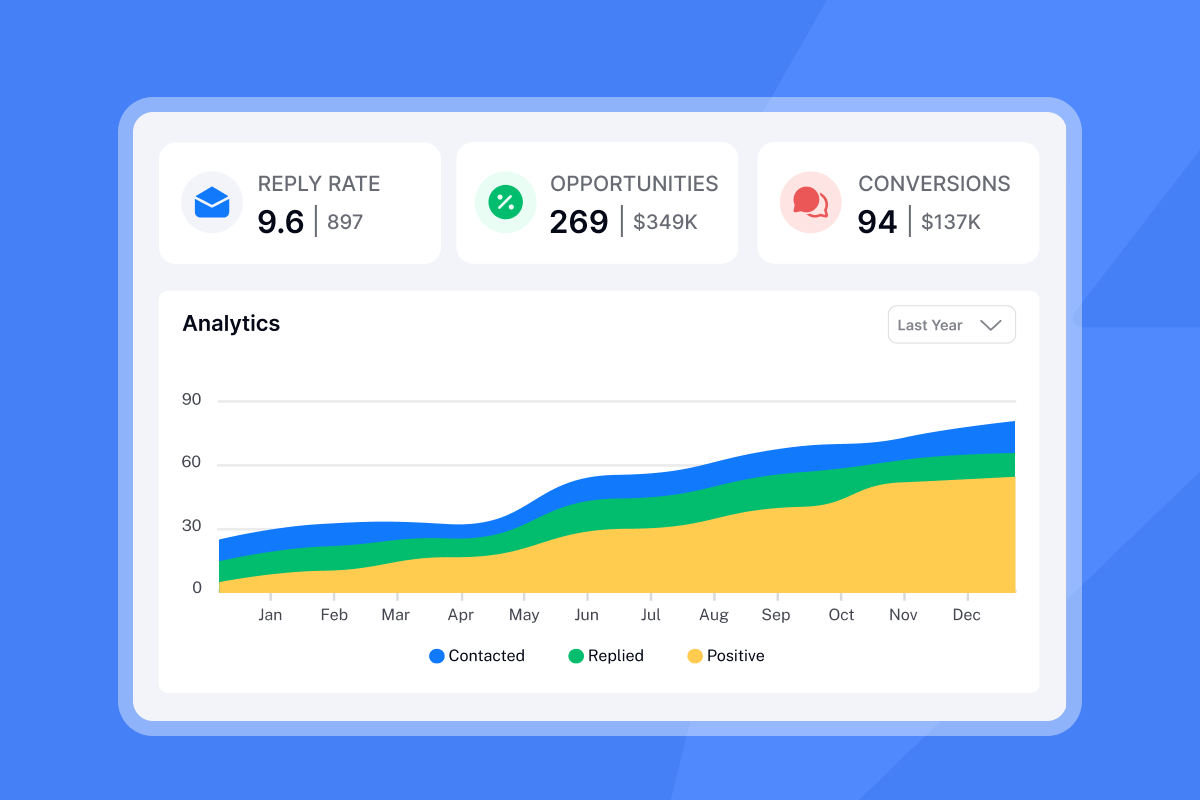
Research and practitioner experience consistently suggest that follow-ups perform better when they add a new angle or piece of evidence rather than repeating the original ask. According to Instantly's benchmark data, 58% of replies come from the first email, but a consistent follow-up sequence captures the remaining 42% of leads who weren't ready to respond on the first touch.
A three-touch follow-up plan that works:
- Day 4: Add a new data point or a short case reference you didn't include in the original email.
- Day 10: Share a specific insight about their business or industry that shows continued research.
- Day 18: Send a graceful close: "I'll leave this with you. If [problem] becomes a priority, feel free to reach out anytime."
After three follow-ups, it's practical to pause and move on to other prospects. For managing follow-up sequences across multiple prospects, the Instantly cold email strategy guide outlines how to set up sequences with the right delay intervals and step logic so no follow-up falls through the cracks.
"I really appreciate the deliverability it offers. I like the 'interested leads' feature because I get notified when somebody is interested, so I don't have to check it manually." - Laura R. on G2
For a library of tested templates, the Instantly help center has 600 templates for cold emails you can adapt for your specific pitch. To test which proposal structure converts best, the A/Z testing guide shows how to run variant tests on subject lines, opening hooks, and CTAs to identify your highest-performing proposal format.
Instantly gives founders the tools that matter most for outbound: unlimited email accounts on a flat fee starting at $47/month, built-in warmup across a private deliverability network of 4.2M+ accounts, and the AI Sequence Writer to draft, test, and iterate on proposal emails without per-seat pricing friction. For a lean team where every dollar needs to show pipeline, the full stack (Outreach + SuperSearch + CRM) runs at $141/month and covers the entire motion from lead to meeting.
Try Instantly free and use the A/Z testing and AI Sequence Writer to find the proposal email that books your first three meetings.
FAQs
How long should a startup proposal email be?
Aim for 50-125 words. Analysis of 40 million emails shows the 75-100 word range achieves a 51% response rate, and Instantly's benchmark data confirms campaigns under 80 words perform best.
Should I disclose pricing in a cold proposal email?
For solicited proposals, include pricing because the buyer is actively evaluating options. For unsolicited cold outreach, established sales guidance recommends establishing value first, with the exception being when pricing acts as a qualification filter.
How many follow-ups should I send after a proposal email?
Send three follow-ups maximum on day 4, day 10, and day 18, each adding a new angle or data point rather than repeating the original ask. After three touches, close gracefully and move on.
Do I need a custom domain to send cold proposal emails?
Yes. Google and Yahoo require SPF, DKIM, and DMARC authentication for bulk senders, and sending from a Gmail or Yahoo address signals an unprofessional setup and increases the likelihood of being filtered before your email is read.
How many cold emails can I send per inbox per day?
Cap sends at 30 emails per inbox per day and ramp up gradually during the first 4-6 weeks of warmup. Scaling beyond 30 per inbox per day increases bounce risk and can trigger spam filters.
Read Next
Cold email personalization strategies
How to improve email deliverability and avoid spam
A/B testing guide for conversion rates
Key terms glossary
Sender reputation: Email providers (Gmail, Outlook) assign you a sender reputation score based on your sending history, bounce rate, spam complaints, and authentication. A strong sender reputation is required to land in the primary inbox.
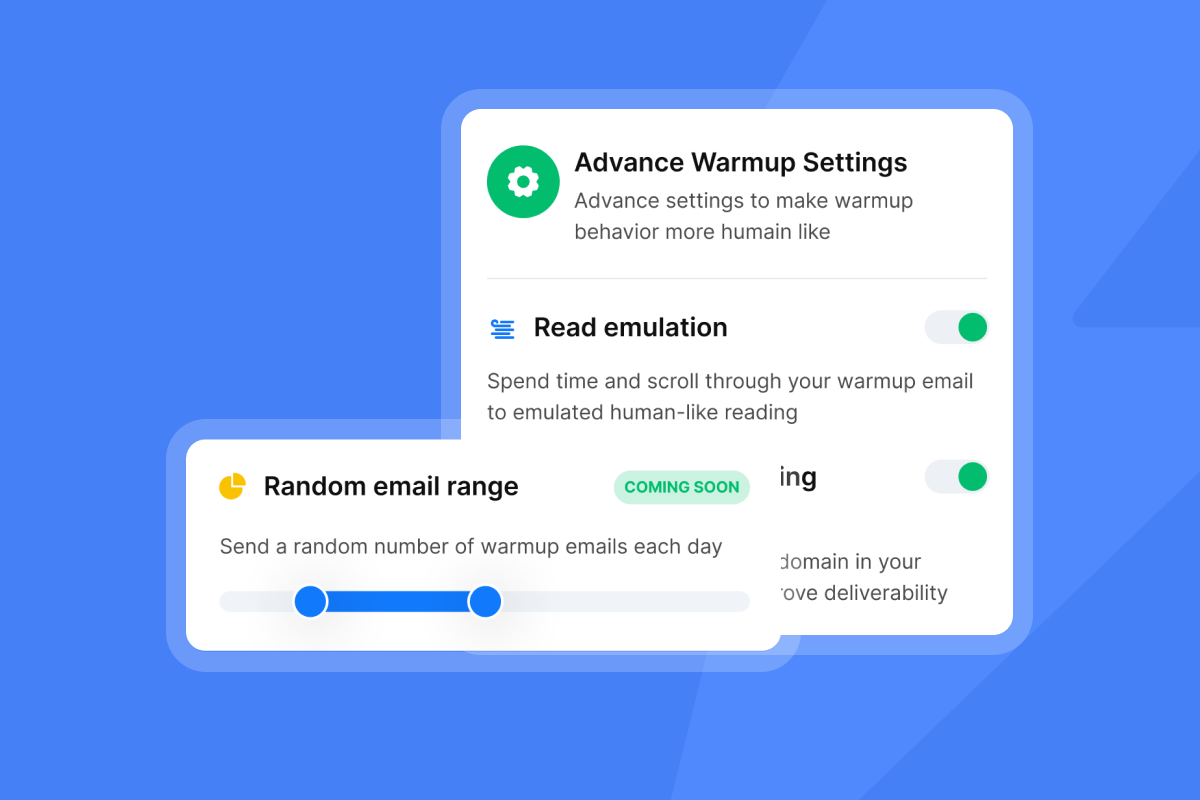
Warmup: You gradually increase daily send volume from a new inbox over 4-6 weeks so email providers recognize you as a legitimate sender, not a spam operation.
Primary inbox: The main inbox tab in Gmail and equivalent providers, as opposed to the Promotions or Spam folders. Landing here is the goal of every cold outreach campaign.
Reply rate: The percentage of emails sent that receive a response. The platform-wide average is 3.43%, with top performers exceeding 10%.
A/Z testing: You run multiple variations of a subject line or email body simultaneously to find which version gets the highest reply rate. Use this to validate proposal email copy before you scale.
Unibox: Instantly's Unibox pulls responses from all your connected email accounts into one view so you respond to interested leads within minutes.
List hygiene: You verify and clean your contact list before sending to remove invalid emails, role addresses, and opted-out contacts. Dirty lists drive bounces above the 1% threshold and trigger deliverability problems.
Spin syntax: A formatting technique that auto-rotates phrases within an email to create natural variation across sends and avoid spam filter pattern detection. For example, {Hello|Hi|Hey} randomly selects one greeting per send.


