


Updated April 16, 2026
TL;DR: B2B email list enrichment appends firmographic, technographic, and contact-level data to raw lists so your sequences reach the right people and land in the primary inbox. With B2B contact data reportedly decaying at significant rates annually, unenriched lists can produce hard bounces that damage domain reputation. Enriching with verified company size, job title, industry, and intent signals lets your team segment precisely, personalize at scale, and maintain bounce rates that protect deliverability. Consolidating enrichment and outreach in one platform cuts the per-seat cost trap entirely.
Personalization does not matter if your email never reaches the primary inbox. Deliverability starts with list enrichment, and most sales teams get this backwards. They invest hours crafting copy while sending it to a list where a significant share of contacts no longer exist at that address.
Scaling cold email requires a predictable system. B2B list enrichment provides the exact firmographic and contact data needed to route emails to the primary inbox, standardize rep workflows, and convert replies into pipeline.
What is B2B email list enrichment?
B2B email list enrichment appends missing business data to raw contact records. You start with a list of names, companies, or email addresses, and enrichment fills in the gaps: job title, company revenue, employee count, industry, technology stack, and verified contact details. The result is a complete record your reps can act on without manual research.
A well-enriched list tells your team exactly who the contact is, what company they work at, what that company buys, and whether the email address will actually deliver. That combination drives targeting precision and protects your sender reputation at the same time. The Ultimate Guide to Cold Email Deliverability from Instantly walks through how each failure point compounds the others when enrichment is skipped.
Essential data for your B2B lists
Build every enriched contact record with at minimum these fields:
- Verified email address: Confirmed deliverable via real-time SMTP check, not just pattern matching.
- Job title and seniority level: Needed to route leads to the right rep and sequence.
- Company name and industry: Allows filtering by vertical for relevant messaging.
- Employee count and revenue range: Qualifies the account against your ICP before a rep spends time on it.
- Location: Enables territory routing and send-window optimization by time zone.
- Technology stack (technographics): Shows which tools the company already uses, revealing intent and competitive positioning.
The risks of unenriched B2B lists
Bad data causes hard bounces, and hard bounces are the fastest way to destroy a domain. When you send to an invalid address, the receiving mail server permanently rejects the message. Enough of those signals and your domain lands on a blacklist, meaning even your valid contacts stop seeing your emails in the primary inbox.
B2B contact data decays at roughly 2.1% per month, reaching 22.5% annually according to industry research. Some sources suggest decay can be significantly higher in high-turnover industries like technology, where organizational restructuring accelerates contact obsolescence. Keep hard bounces below 2% to protect primary inbox placement. Higher bounce rates can signal list quality problems that may compound across campaigns.
Unenriched lists also produce generic outreach. Without job title or company size data, your reps cannot segment sequences by persona or adjust the value proposition to the account's situation. Generic copy to a dirty list fails on both deliverability and reply rate simultaneously.
Data quality: enrich vs. verify?
You need both processes working together, not one or the other.
Enrichment adds missing context to a contact record: company size, job title, industry, technographics, and intent signals. It answers the question "who is this person and do they fit my ICP?"
Verification confirms that a specific email address is live and deliverable. It answers the question "will this message reach a real inbox?"
Enrich first to fill gaps and filter out poor-fit accounts, then verify to remove dead addresses before a single email sends. Running enrichment without verification still exposes you to bounce risk. Running verification without enrichment leaves your reps flying blind on segmentation.
Key firmographic and technographic insights
Firmographic and technographic data turn a raw list into a precision instrument. Understanding what each data type does operationally determines how you build your account lists and route leads to the right reps.
Company firmographics (industry, revenue, employee count)
Firmographic data defines the company: what it does, how big it is, and how much revenue it generates. These three attributes let you qualify accounts at scale without a rep touching each record.
Revenue range data is especially useful for pricing conversations. A rep who knows the prospect company's revenue band walks into the sequence with a clear sense of deal size and priority tier, which feeds directly into CRM routing and AE handoff quality. Employee count filters out both early-stage startups and enterprise accounts that fall outside your ICP before enrichment even runs.
Identify key contacts by job level
Targeting the right seniority level helps optimize sales cycles. A sequence aimed at individual contributors when your buyer is a VP of Sales can waste send volume and reduce campaign effectiveness. Enriched job-level data tells you whether you are talking to a decision maker, an influencer, or a practitioner so you can route the contact to the right rep and sequence.
The cold email research and data collection masterclass from Instantly covers how targeting decision makers versus ICs produces fundamentally different conversion paths. Decision makers need ROI framing and business impact. Practitioners need feature-level specifics. Both require separate sequences built on enriched seniority data.
Enrichment vendors typically fall into three categories, each with a different cost structure and operational fit: all-in-one platforms that combine a lead database, enrichment, and outreach under one subscription; standalone enterprise data providers built for large procurement workflows; and API-first services for RevOps teams building custom enrichment pipelines.
Standalone data providers like ZoomInfo and Clearbit (now Breeze Intelligence, a HubSpot add-on that moved to the HubSpot Credits framework in June 2025, with data enrichment available on paid HubSpot plans without consuming credits) focus exclusively on data depth and are built for enterprise procurement workflows.
Standalone data providers like ZoomInfo and Clearbit (now Breeze Intelligence, a credit-based HubSpot add-on starting at $45/month for 100 credits on top of a paid HubSpot plan) focus exclusively on data depth and are built for enterprise procurement workflows.
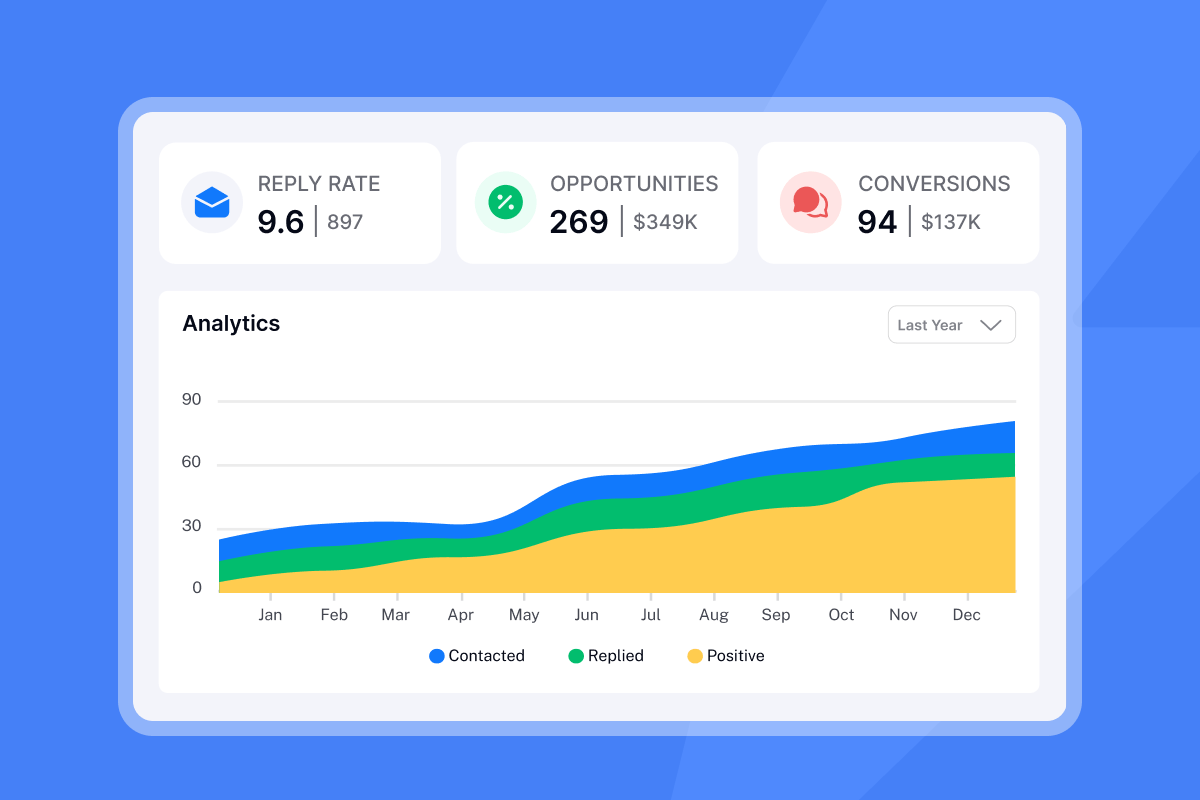
Prioritize leads with engagement data
Standalone data providers like ZoomInfo and Clearbit (now Breeze Intelligence, a HubSpot add-on that moved to the HubSpot Credits framework in June 2025, with data enrichment available on paid HubSpot plans without consuming credits) focus exclusively on data depth and are built for enterprise procurement workflows.
Combining firmographic filters with intent signals lets reps prioritize the top-of-list accounts rather than working through a flat sequence in upload order. The result is more meetings booked from the same contact volume because effort concentrates where conversion probability is highest.
How enrichment improves targeting and personalization
Clean, enriched data makes team-level standardization possible. When every rep works from the same enriched record structure, the sequences are consistent, the personalization is accurate, and the reporting reconciles with CRM data.
Micro-segmentation starts with enrichment. Once your records have complete firmographic and technographic fields, you can build targeted lists by combining attributes like company size, industry vertical, technology stack, and hiring signals into distinct segments. Each segment gets its own sequence with messaging calibrated to that account profile.
The custom variables and personalization guide from Instantly shows how dynamic fields built from enriched records produce reply rates that a generic blast cannot approach. Reps spend their time on conversations, not research.
Crafting high-converting email sequences
Enriched fields feed directly into email sequence variables. Job title, company name, employee count, industry, and technology stack all become dynamic placeholders your reps populate once at the sequence level rather than researching manually for each contact.
Our cold email copywriting framework recommends leading with a signal you read from the account data: a recent hire, a funding round, or a tool they just adopted. That specificity is only possible when your list is enriched. The personalization masterclass covers how to build these signals into scalable templates without making copy feel automated.
Impact on reply rates and cost per meeting
Reply rates separate good targeting from guesswork. Campaigns built on enriched, segmented lists consistently outperform generic blasts because the message lands with the right persona at the right account size.
Cost per meeting booked tells the real story. If your enriched list of 1,000 contacts produces a 5% reply rate (50 replies) and 20% of replies convert to meetings (10 meetings), you spent $141/month on the Instantly starter stack for 10 meetings, or $14.10 per meeting. A per-seat model charging $49/user/month for 5 reps runs $245/month for the same 10 meetings, or $24.50 per meeting, a 74% cost increase with no deliverability advantage.
"I like how easy Instantly makes scaling outbound reach without sacrificing deliverability or personalization... Instantly makes it easy to tailor messaging at scale using dynamic fields and flexible sequences, allowing me to adjust copy based on persona, account type, or campaign goal while keeping things automated." - Steven M. on G2
The right platform depends on three variables: data accuracy at your ICP's company size, the pricing model relative to your team size, and whether enrichment and sending live in the same system or require a handoff.
Enterprise and mid-market tools compared
ZoomInfo and Clearbit (Breeze Intelligence) are built for large procurement teams with deep integration requirements. ZoomInfo's database depth is significant, but independent testing puts email accuracy at 75-85%, meaning 15 to 25 out of 100 emails bounce on unfiltered exports. Annual contracts start at $15,000 with a 3-seat minimum, making total cost of ownership difficult to justify for a 5-15 rep outbound team.
Apollo and Lusha serve the mid-market well. Apollo's first paid plan runs at $49/user/month on annual billing and includes a built-in email sequencer alongside its prospecting database. Lusha starts at $22.45/user/month on the Pro plan and includes Lusha Engage, a built-in email sequencing tool available to all users. Both are per-seat models, which means a 10-rep SDR team multiplies the monthly line item significantly. Apollo also caps mailboxes per account, which creates friction as sending volume grows.
Selecting your enrichment partner
ZoomInfo and Clearbit (Breeze Intelligence) are built for large procurement teams with deep integration requirements. ZoomInfo's database depth is significant, though enterprise platforms at this scale typically require substantial annual contracts that can be difficult to justify for a 5-15 rep outbound team.
Apollo and Lusha serve the mid-market well. Both offer prospecting databases with email sequencing capabilities and operate on per-seat pricing models, which means a 10-rep SDR team multiplies the monthly line item significantly.
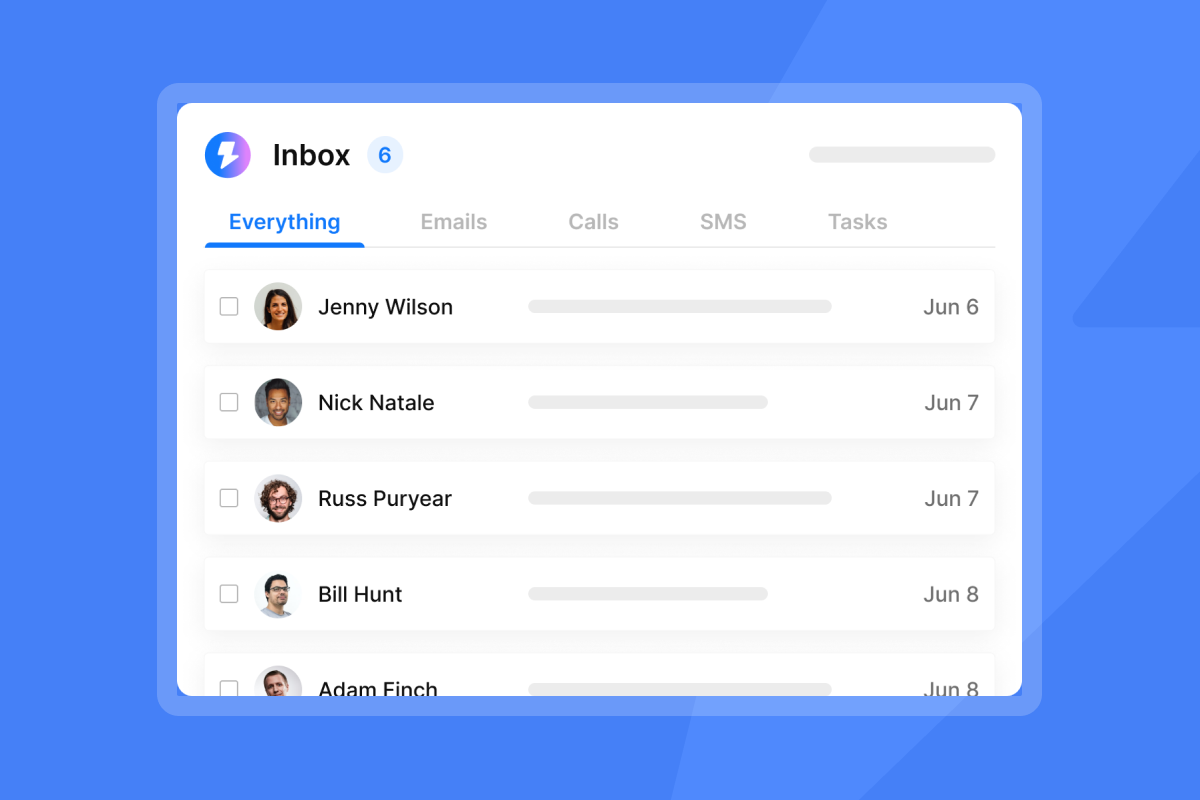
Our Growth plan starts at $47/month with 1,500-2,000 credits and no per-seat multiplier as your SDR team grows. Because SuperSearch sits in the same platform as Outreach, enriched leads move directly into sequences without a CSV export or API integration step.
"It's a great all-in-one tool for cold email. You can generate lists, enrich them, and create multiple campaigns without putting your main domain at risk." - Bogdan P. on G2
CSV export or API
Enrichment at scale requires automation. Manual research can yield higher data quality per contact in isolated cases, but it does not scale for a team of SDRs working a 500-contact list every week.
Real-time, batch, and CRM enrichment
Real-time enrichment fires on a trigger event: a form submission, a CRM record creation, or a Slack notification. It enriches one contact at a time and is ideal for inbound leads where speed to contact matters.
Batch enrichment processes hundreds or thousands of records in a single upload. You send a CSV or an array of contacts and results return in bulk. This is the right model for outbound list building, pre-campaign data cleanup, and re-enrichment schedules.
Once enriched fields are confirmed, they must map cleanly to your CRM schema. A contact enriched with "employee count: 150" needs to land in the correct numeric field in HubSpot or Salesforce, not a text field that breaks your segmentation logic. We support HubSpot and Salesforce via OutboundSync and native connectors, with field mapping configuration available during setup. The email tracking integrations guide covers structuring data syncs so CRM records stay current without manual updates.
Real-time enrichment fires on trigger events such as form submissions or CRM record creation. It enriches contacts as they enter your system and is ideal for inbound leads where speed to contact matters.
Batch enrichment processes multiple records in a single upload. You send a CSV or an array of contacts and results return in bulk. This is the right model for outbound list building, pre-campaign data cleanup, and re-enrichment schedules.
Data hygiene is an ongoing process, not a one-time event before a campaign launch. A list enriched in January will have a measurably higher bounce rate by April because contacts change roles, companies fold, and email addresses expire continuously.
Pre-send data quality checks
Before sending a large campaign, test a sample of your enriched data. Export 100-200 records and manually verify a portion against LinkedIn or company websites, then calculate the accuracy percentage. If the sample accuracy falls below your threshold, the full list carries bounce risk and needs re-verification before launch.
This also tells you whether your enrichment provider performs SMTP checks (real-time deliverability confirmation) or pattern matching (guessing the email format from the domain). The difference matters significantly for primary inbox placement. The AI Prompts and Enrichment feature uses LLM-assisted enrichment to fill gaps where standard data providers return incomplete records, reducing the volume of manually handled contacts significantly. Records missing required segmentation fields should either be excluded from the campaign, routed to a generic fallback sequence, or flagged for manual review if the account is high-priority.
Monitor and maintain list health
Set a standing re-enrichment schedule tied to your outbound cadence. Active pipeline and key accounts should be re-enriched quarterly, and full CRM databases should be refreshed at least quarterly to keep pace with data decay. Always re-verify any list dormant for more than 60 days before re-launching. Data decay at 22.5% annually means a list enriched 90 days ago is already approaching a meaningful threshold in high-turnover industries.
After launching a campaign on an enriched list, monitor bounce rates in your analytics dashboard throughout the first campaign week. Keep hard bounces below 2%. Rates between 1-2% warrant pausing the campaign, re-verifying the flagged records, and resuming at a lower daily send cap. Rates above 2% indicate a systemic data quality problem that requires a full list re-enrichment before continuing. Our email deliverability guide for sequences covers the full recovery protocol, including re-warming after a bounce-driven pause.
Under GDPR, cold emailing B2B contacts in the EU is lawful under two conditions: explicit consent or legitimate interest. Most B2B cold email campaigns rely on legitimate interest. It is not a default loophole. It requires documented justification that your business need genuinely outweighs the individual's privacy rights, along with a clear opt-out path on every email. GDPR requires you to process unsubscribe requests without undue delay. The Instantly email tracking privacy and compliance guide covers the full mechanics of GDPR and CCPA as they apply to outbound sequences.
In the US, the CAN-SPAM Act requires you to honor opt-out requests within 10 business days of receipt, maintain a functioning unsubscribe mechanism, and include a valid physical address on every commercial email.
We publish our DPA and sub-processor listing and explicitly list data categories that customers must not upload. Review this before loading any sensitive or regulated contact data into the platform.
Ready to run your first enriched list through SuperSearch before your next campaign launches? Start for free at Instantly.ai and use the waterfall enrichment workflow inside the app.
FAQs
What is B2B email list enrichment?
Active outbound lists and key accounts should be re-enriched quarterly, and your full CRM database should be refreshed at least quarterly, because B2B contact data decays at approximately 22.5% annually (2.1% per month). High-turnover industries like technology may require more frequent verification for active campaigns.
How often should you re-enrich a B2B contact list?
Re-enrich active outbound lists every 90 days and your full CRM database at least twice per year, because B2B contact data decays at approximately 22.5% annually (2.1% per month). High-turnover industries like technology justify monthly verification for active campaigns.
How does Instantly SuperSearch differ from standalone enrichment tools?
We combine a 450M+ lead database, waterfall enrichment across 5+ providers, and LLM-assisted filtering in the same platform as Outreach, eliminating the CSV handoff between a data tool and a sending tool. Our Growth plan at $47/month includes 1,500-2,000 credits with no per-seat cost multiplier as your SDR team grows.
Key terms
Firmographic data: Company-level attributes including industry, revenue range, employee count, and location used to qualify accounts against an ICP.
Technographic data: The technology stack a company currently uses, sourced from web crawlers and user-reported data, used to identify buying intent and competitive positioning.
Waterfall enrichment: A sequential query method that pings multiple data providers in order and returns the first verified match, increasing contact-find rates over single-provider lookups.
Bounce rate: The percentage of sent emails that fail to deliver, either temporarily (soft bounce) or permanently (hard bounce). Rates above 2% indicate list quality problems that damage sender reputation.
Sender reputation: A score assigned to your sending domain and IP address by mailbox providers based on bounce rates, spam complaints, engagement, and list hygiene. Low sender reputation routes emails to spam or blocks delivery entirely.
Legitimate interest (GDPR): A legal basis for processing personal data without explicit consent when the controller has a genuine business purpose that does not override the data subject's rights, used as the standard justification for B2B cold email in the EU.


