


Updated on 22 May 2026
TL;DR: B2B email lists cost between$300 and $1,000+ per thousand addresses (CPM), with per-contact pricing ranging from $0.03 to $5.00+ depending on targeting depth. The upfront cost is rarely your biggest expense. B2B contact data decays at roughly 2.1% monthly, meaning a static list loses nearly a quarter of its value within a year. The real metric to track is cost-per-meeting: total list plus infrastructure spend divided by meetings booked. Platforms that combine a verified lead database with unlimited sending accounts and built-in warmup typically produce a lower cost-per-meeting than buying raw lists and bolting them onto a separate tool stack.
The cheapest B2B email lists are often the most expensive. A low cost-per-contact almost always means high bounce rates and burned sending domains, and both outcomes destroy the pipeline coverage you paid for in the first place.
Buying a B2B email list requires more than a simple price comparison. You need to understand the pricing models, uncover the fees vendors rarely advertise upfront, and calculate your true cost-per-meeting. This guide breaks down exactly how B2B lists are priced and how to measure whether your investment is actually working.
Key B2B list provider pricing structures
Vendors charge for contact records using four main models. Each model changes your risk profile, your flexibility, and your total cost of ownership. Knowing which model a vendor uses before you sign tells you a lot about where hidden costs will appear.
Evaluating B2B email list contact costs
Cost per contact is the most common way to compare B2B data vendors, but the number alone is meaningless without context. B2B lists typically cost between $300 and $1,000+ per thousand addresses (CPM), while consumer lists run $100 to $400 CPM. Highly targeted records filtered by job title, industry, revenue band, and technology stack can exceed $5.00 per contact.
B2B data costs more than consumer data for a straightforward reason: verified business contact information is harder to source, faster to decay, and more valuable to a specific buyer. Low-quality lists can produce high bounce rates that damage your sending domain and blacklist your infrastructure.
One-time purchases and subscription plans
One-time purchases give you a raw CSV file to upload to your outreach platform. You own the data, but you also own every risk. Vendors often set purchase minimums that inflate the upfront cost, so a small team needing 2,000 contacts may be forced to buy 10,000 to meet the threshold. The bigger risk is static data decay: job title and function changes affect 65.8% of contacts within 12 months, making a one-time list a depreciating asset from the moment you download it.
Subscription plans spread the cost over time and typically include fresher data. Monthly plans give you flexibility to cancel if data quality disappoints. Annual plans offer 10 to 20% savings but introduce billing traps. ZoomInfo contracts typically include 10 to 20% price increases at renewal, so a $25,000 first-year contract becomes $30,000 by year three without any additional seats or features. Always read the auto-renewal clause before signing an annual commitment.
How credit pricing models work
Credits are the most flexible model and increasingly the standard for mid-market platforms. You buy a pool of credits, spend them to reveal verified contact records, and top up when needed. The key variable is what one credit actually gets you, since vendors define this differently.
Instantly.ai's SuperSearch lead database uses a credit model starting at $47 per month for 1,500 to 2,000 credits on the Growth plan, dropping to $37.60 per month on annual billing (20% annual discount). At roughly 1.5 credits per lead, that translates to approximately 1,000 to 1,300 verified contacts per month, putting the effective cost at around $0.04 to $0.05 per lead. Credits only get spent on verified leads, so you're not burning budget on records that bounce.
Uncover hidden B2B email list costs
The price per contact is the number vendors lead with. It's rarely the number that determines your actual ROI.
Average cost per contact by vendor
The table below covers the main vendor tiers in the B2B data market as of Q1 2026. Pricing reflects published rates and does not account for negotiated enterprise discounts.
Provider type | Pricing model | Est. cost per contact | Key features |
|---|---|---|---|
Instantly SuperSearch | Credits (monthly/annual) | $0.04 to $0.10 | 450M+ leads, waterfall enrichment, integrated sending |
ZoomInfo | Annual seat license | $1.00 to $3.00+ | Intent data, technographics, deep CRM sync |
Per seat (monthly/annual) | $0.05 to $0.20 | 275M+ contacts, multichannel sequences, free tier | |
UpLead | Credits (monthly/annual) | $0.25 to $0.58 | 95%+ accuracy guarantee, real-time verification |
Lusha | Credits (monthly/free) | $0.12 to $1.29+ | Browser extension, LinkedIn enrichment, team plans |
Data freshness and decay
Data freshness is the cost factor vendors rarely quantify upfront. B2B contact data decays 22.5% to 70.3% annually. A 10,000-contact list purchased in January could have thousands of stale records by December.
Ask any vendor when their data was last verified and what their bounce rate guarantee covers in practice. Providers using real-time verification, checking records at the moment you export rather than when they were scraped, significantly reduce this decay risk.
How to calculate cost-per-meeting from list purchases
Focusing on cost-per-lead rather than cost-per-meeting is the most common budgeting mistake in B2B outreach. A lead that never converts to a meeting costs you everything you paid for it, plus the sending infrastructure, the SDR time, and any domain health it damaged along the way.
Step 1: Evaluate B2B contact quality
Data quality shows up in two numbers: bounce rate and reply rate. Keep bounce rates under 2% to protect your sender reputation and avoid domain blacklisting. Before committing to a list purchase, request a sample of 200 to 500 records and run them through an email verification tool. If more than 2 in 100 comes back invalid, the list quality doesn't justify the spend regardless of the per-contact price.
High-quality B2B data providers can deliver significantly better conversion outcomes than budget alternatives. The gap in accuracy means many cheap contacts may never reach a real inbox, effectively doubling your true cost-per-contact before a single email is sent.
Step 2: Verify deliverability and reply metrics
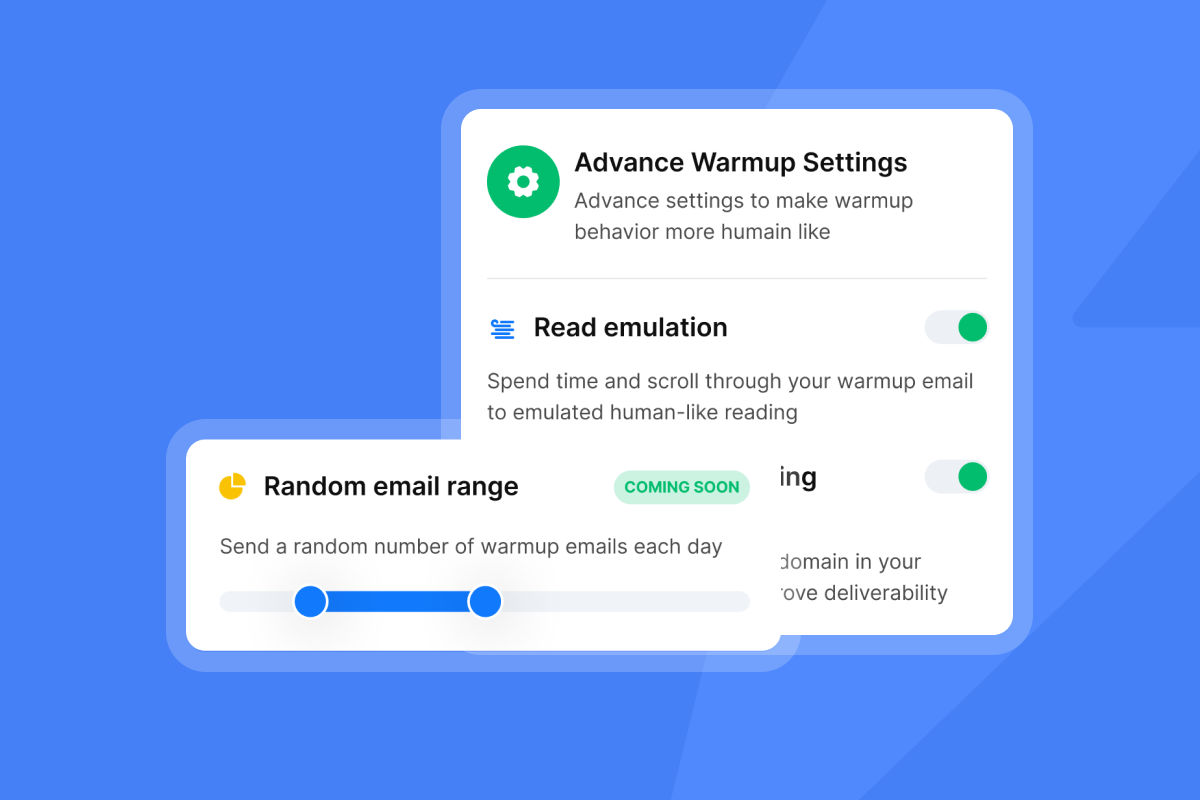
No vendor can guarantee inbox placement, and anyone who claims otherwise is overstating what they control. We treat deliverability as a system, not a feature, because it depends on domain age, warmup history, sending volume, list hygiene, authentication setup (SPF, DKIM, DMARC), and how mailbox providers classify your sending behavior over time.
Our cold email deliverability guide covers how warmup and IP rotation work together to protect inbox placement. The email deliverability guide for sequences details the authentication, warmup, and monitoring steps you need before loading any list into a campaign. For a practical infrastructure look at scale, this video on sending 100,000 cold emails daily shows the math behind domain and inbox distribution.
Step 3: Uncover your true meeting cost
Use this formula to calculate your actual cost-per-meeting:
Cost-per-meeting = (list cost + sending infrastructure cost + SDR labor cost) / meetings booked
For example, a team spending $47 on a SuperSearch Growth plan, $47 on an Outreach Growth plan, and allocating 20 SDR hours at $45 per hour across a 1,000-contact campaign could see results like this:
- List cost: $47
- Sending infrastructure: $47
- Labor (20 hours at $45): $900
- Total campaign cost: $994
- Meetings booked (example: 15): cost-per-meeting = $66
A strong cost-per-meeting ranges from $50 to $100 for most B2B deal sizes, with a 4:1 return representing a solid baseline for cold outreach.
Evaluate your meeting cost-effectiveness
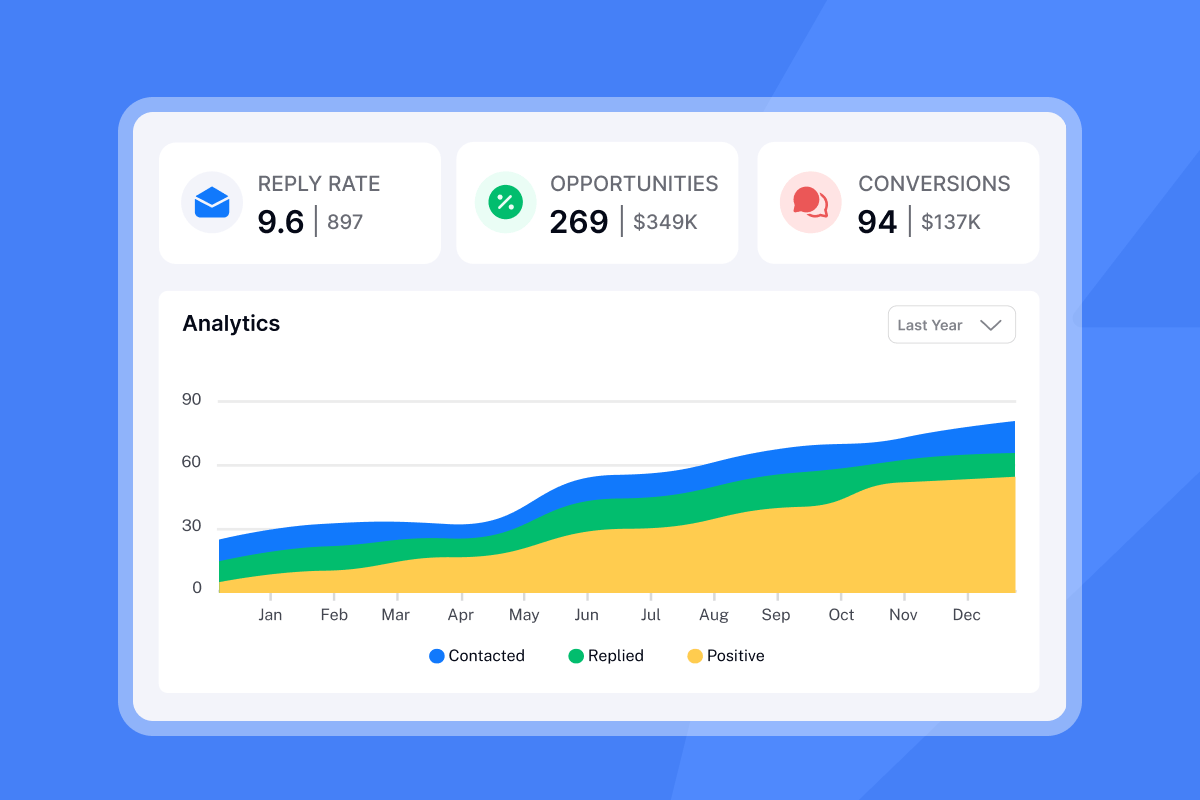
Tracking reply rate and meetings booked at the campaign level, not just the individual rep level, gives you the data to validate or cut your list investment quickly. Instantly's analytics dashboard shows opens, replies, bounces, and meetings set across all active campaigns, so you can identify which list segment or targeting filter is producing the best return and reallocate credits accordingly.
"Clean analytics, open rates, replies, bounces, all in one view. Simple enough for new SDRs, powerful enough for a full outreach team. Highly recommend." - Salam Karam on Trustpilot
Is your B2B email list purchase worth it?
Your list purchase ROI closes only when you can trace revenue back to a specific campaign: ROI = (revenue from closed-won deals minus total outreach costs) / total outreach costs. As our email sequence ROI guide notes, the median B2B sales cycle is 2.1 months, with SaaS deals often running longer. Measure cohorts at least three months after launch to capture the full cycle.
Step-by-step ROI calculation template
Use this framework at the start of each list-based campaign:
- Define total campaign cost: Add list spend + sending platform + SDR hours at fully loaded rate.
- Set a meeting target: Use historical reply-to-meeting conversion based on past campaigns and list quality.
- Calculate expected cost-per-meeting: Total cost divided by meeting target.
- Set the pipeline threshold: Multiply expected meetings by your meeting-to-SQL rate and average deal size.
- Measure at 30 and 90 days: Compare actual meetings booked to target at 30 days, and closed revenue to pipeline threshold at 90 days.
- Cut or scale: If bounce rates exceed 1% at 30 days, pause, re-verify the list, and resume at a lower send cap before spending more on data.
Calculate customer acquisition cost
List spend is one input into your broader customer acquisition cost (CAC). Add your sending platform cost, SDR salary allocation, and any enrichment fees to get your true outreach CAC. The fully loaded cost of one in-house SDR can reach $110,000 to $150,000 annually when you include benefits, tools, management time, ramp, and turnover, translating to roughly $9,200 to $12,500 per month, so every unproductive send is an opportunity cost on top of the list price itself.
Match your targeting depth to your deal size. Overpaying for executive-level data on a $5,000 ACV product kills your ROI before the first email goes out.
List sourcing: purchase or develop internally?
Manual list building looks cheaper than purchasing data until you run the labor math. An SDR spending 10 hours per week researching prospects at a fully loaded cost of $45 per hour burns $450 weekly, roughly $1,800 per month, to build a list that a credit-based database produces in an afternoon. Beyond the direct labor cost, manual prospecting pulls SDRs away from actual selling conversations.
Evaluating B2B email list quality and justifying the investment
Three signals tell you whether a list is worth buying before you commit:
- Bounce rate on a sample: Request 500 records and verify them independently. A bounce rate above 2% on the sample predicts expensive deliverability problems at scale.
- Data freshness date: Ask when records were last verified, not when they were originally scraped.
- Targeting specificity: Generic industry lists have lower accuracy than lists built from specific filters like job title, headcount range, and technology stack.
When your SDRs load pre-verified contacts directly from a database into their sending sequences, you eliminate the manual export-import cycle, reduce bounce risk from stale data, and free up time for reply handling and follow-up.
"Instantly offers a comprehensive feature set for lead list extraction and enhancement with LinkedIn data that other tools don't have, making it cost-efficient and easy to use." - Verified user review of Instantly
Build your list for compliance
Data privacy compliance is a cost factor that rarely appears on a vendor's pricing page. The CCPA's B2B exemption expired in January 2023, meaning business contact information for California residents is now fully protected under CCPA, with penalties starting at $2,663 per violation. CAN-SPAM applies to every commercial email with fines up to $53,088 per violating email.
Under GDPR, B2B cold email is permitted under legitimate interest (Article 6(1)(f)), provided your message is relevant to the recipient's professional role, you disclose your data source, and you include a clear opt-out. Buying a list from a vendor that cannot demonstrate where their data was sourced exposes you to regulatory risk regardless of how clean the email addresses appear. Our email tracking privacy and compliance guide covers GDPR and CCPA obligations in detail.
Negotiating volume rates for B2B lists
Data prices are negotiable in almost every case. Coming to a negotiation with a clear usage estimate and a willingness to commit to an annual plan gives you leverage most buyers don't use.
Three tactics consistently produce better terms without sacrificing data quality:
- Request a pilot before committing: Ask for 500 to 1,000 sample records in your exact target segment, verify them independently, and use the bounce rate results as your negotiating evidence.
- Negotiate credits, not just price: If a vendor won't move on price, ask for additional credits, extended term length without price escalation, or rollover policies on unused monthly allocations.
- Time your purchase: Many vendors offer end-of-quarter flexibility as they close their own revenue targets. Initiating conversations in the last two weeks of a fiscal quarter often surfaces discounts that aren't available mid-quarter.
Annual billing on Instantly's SuperSearch Growth plan saves 20% compared to monthly rates ($37.60/mo vs $47/mo). Note: other Credits tiers such as Nano, Supersonic, and Hyper save 10% annually. For enterprise-tier data vendors, the annual-versus-monthly gap can reach 20% or more, but annual commitments with automatic renewal clauses can also become billing traps if data quality declines. Always negotiate a data quality SLA into any annual contract, with a defined bounce rate threshold and a remedy clause if the vendor's data falls below it.
Pay only for verified, usable B2B contacts
Buying more contacts than your team can work through in a quarter is a common and expensive mistake. If your team can send at 30 emails per inbox per day across five inboxes, your practical monthly throughput is roughly 4,500 emails. Contacts beyond that sit in a file, decaying.
Buy in tranches rather than bulk. Start with 1,000 to 2,000 contacts, run the campaign, measure your cost-per-meeting, then buy the next segment if the economics hold. This approach also protects your domain health, since ramping volume gradually across new contacts is a core strategy for scaling safely without triggering mailbox provider filters.
Our credit model charges when you perform specific actions: SuperSearch lead exports, lead verification (0.25 credits per lead), AI enrichment (0.5+ credits per action), AI Reply Agent responses (5 credits per reply), and AI sales agent features. That means you can build target lists, refine your filters, and validate your segment size before spending credits on exports. On the Growth plan at $47 per month, you get 1,500 to 2,000 credits to allocate across your highest-priority segments.
"It's a place where you can buy emails, warmup + send outreach. Up until now it always goes to primary inbox (no spam) so it's great!" - Diellor H. on G2
Run a 30-day proof of concept before committing to a large list purchase or annual data subscription. Define your success threshold upfront: a cost-per-meeting below $100 and a bounce rate below 1% at the end of 30 days. If both numbers hold, scale. If not, diagnose whether the problem is list quality, email copy, or targeting before spending more on data. This video on running signal-based cold email shows how to layer intent signals onto list targeting to improve conversion before you scale spend.
Watch for auto-renewal clauses. Legacy data vendors frequently include automatic annual renewal clauses with 30 to 60 day cancellation windows. Miss the window and you're committed to another year at the current price, which may have increased. Review every contract for renewal terms, price escalation clauses, and cancellation procedures before signing. Monthly billing cycles give you the flexibility to adjust or exit each period without a penalty clause.
Try Instantly free and access 450 million verified B2B leads through SuperSearchwhile scaling your outreach with unlimited email accounts, a deliverability network of 4.2M+ accounts, and built-in warmup.
Read next
- Cold email ROI calculator: how to measure revenue impact and cost-per-meeting
- Email deliverability for sequences: warmup, health monitoring, and compliance
- Email sequence ROI calculator: measure cost-per-meeting and revenue impact
FAQs
How much does a B2B email list cost per contact?
Per-contact pricing ranges from $0.03 to $5.00+ depending on targeting depth, with highly specific lists filtered by job title, revenue, and technology stack at the top of that range. Integrated credit-based platforms like Instantly SuperSearch bring the effective cost down to roughly $0.04 to $0.10 per verified contact at the Growth tier.
Do unused credits expire on B2B data platforms?
Expiration policies vary significantly by vendor and you should confirm them in writing before purchase. Always ask whether unused credits carry forward each billing cycle, since strict expiration policies can significantly inflate your true cost-per-contact if you don't exhaust your allocation each month.
What should I do if bounce rates exceed 1% after a list purchase?
Pause sending immediately, run remaining contacts through an independent verification tool, and remove all hard bounces before resuming at a lower daily send volume. If bounce rates stay above 1% after re-verification, dispute the list quality with your vendor using your verification report as documentation and request replacement records or a credit.
How do I evaluate the total cost of ownership for a B2B data platform?
Add the monthly data subscription cost, sending platform cost, and SDR labor allocation per campaign, then divide by meetings booked to get your cost-per-meeting. Factor in data freshness, bounce guarantee terms, and credit expiration policies as part of the total cost, not just the headline price per contact.
Key terms
Cost-per-meeting: Total campaign cost (list + infrastructure + labor) divided by meetings booked. The primary metric for evaluating list ROI.
Data decay: The rate at which B2B contact records become inaccurate due to job changes and company exits. Industry estimates range from 22.5% to 70.3% annually.
CPM (cost per thousand): The price for 1,000 email addresses. B2B CPM ranges from $300 to $1,000+, compared to $100 to $400 for consumer lists.
Legitimate Interest Assessment (LIA): A documented evaluation required under GDPR before using legitimate interest as the legal basis for B2B cold email in EU markets.
Waterfall enrichment: A data enrichment method that queries multiple provider sources in sequence to find verified contact details, stopping when a confirmed record is found. Used in platforms like Instantly SuperSearch to improve email accuracy before credits are spent.


