.svg)
%20(1).svg)


Updated October 31, 2025
TL;DR: Boost cold email reply rates from 1% to 5% in 60 days by executing a structured plan: warm up inboxes for 30 days, maintain strict list hygiene (under 0.5% bounce rate), craft personalized copy under 100 words, and run A/B tests. Instantly's unlimited email accounts, built-in warmup within a 4.2M+ account deliverability network, and AI Reply Agent let agencies execute this blueprint safely, turning more replies into booked meetings without per-seat costs.
Are your cold emails landing in spam or worse, getting ignored? We cover this in detail in our cold email marketing guide. Imagine consistently hitting 5% reply rates for your clients in just 60 days. The secret is not sending more emails. It is getting more replies through a systematic approach to deliverability, personalization, and follow-ups.
This 60-day blueprint provides a clear roadmap for agency operators to increase reply rates from 1% to 5% or higher. We detail essential steps for inbox placement, list hygiene, compelling copy, and efficient reply management, showing how Instantly's platform helps you achieve these results safely and at scale.
Why are your cold emails getting ignored?
Low reply rates often stem from three fixable issues: poor deliverability, weak targeting, and generic copy.
Common reasons for low reply rates
Poor targeting and generic copy:
- Sending to prospects who are not a good fit wastes sends and damages reputation.
- Generic messages without personalization beyond the name signal you did not research the prospect.
Weak subject lines and unclear CTAs:
- Vague or clickbait subject lines get ignored or flagged as spam.
- Multiple or confusing CTAs lead to no action.
Deliverability failures:
- Emails that land in spam due to poor sender reputation never get read.
- High bounce rates (above 2%) and spam complaints above 0.3% trigger mailbox provider filters.
No follow-up sequence:
- Most prospects need 3-5 touchpoints. Sending one email and stopping leaves pipeline on the table.
The cost of poor deliverability and low engagement
Poor deliverability is a technical issue that directly threatens client retention and profitability. When emails miss the primary inbox, campaigns yield response rates under 1%, wasting hours of setup work and damaging domain reputation.
This creates a downward spiral where each send further damages your sender reputation. Low engagement also impacts your ability to scale. When reply rates hover at 1%, you need to send exponentially more emails to hit meeting goals, which increases costs and risks more deliverability damage.
Watch our guide to deliverability in 2025 in the masterclass below:
The 60-day cold email reply rate blueprint: An overview
This blueprint divides the 60 days into two distinct phases. Each phase builds on the previous one to create a repeatable system for 5%+ reply rates.
Phase 1: Foundation and deliverability (Days 1-30)
The first 30 days focus on building infrastructure that ensures your emails reach the primary inbox. This phase includes warming up email accounts, verifying your lead lists, configuring proper send windows, and monitoring initial deliverability signals.
Phase 2: Optimization and engagement (Days 31-60)
Once deliverability is stable, shift focus to reply generation. Days 31-60 are dedicated to crafting compelling subject lines, writing concise email bodies, implementing follow-up sequences, and running continuous A/B tests.
Watch how to run A/Z testing with Instantly in just a few clicks:
| Day Range | Phase | Key Actions | Target Metrics |
|---|---|---|---|
| 1-7 | Warmup | Start inbox warmup at 5 sends/day. Verify lead list. | Bounce rate <1%, 0 spam complaints |
| 8-15 | Warmup | Ramp to 15 sends/day. Monitor inbox placement. | Bounce rate <0.5%, placement >80% |
| 16-30 | Warmup | Ramp to 30 sends/day. Set send windows (8:30am-5pm). | Bounce rate <0.5%, placement >85% |
| 31-45 | Optimize | A/B test subject lines. Personalize first line. Cap body at 100 words. | Open rate >50%, reply rate 3-4% |
| 46-60 | Scale | Launch 3-5 follow-up sequence. A/B test CTAs and send times. | Reply rate >5%, meetings booked >1% |
Phase 1: Build a strong foundation for deliverability (Days 1-30)
Deliverability determines whether prospects ever see your message. The first 30 days are non-negotiable groundwork.
Day 1-30: Warm up your email accounts
Start every new inbox with a slow ramp warmup plan. Plan at least 2 weeks for new inboxes, 4 weeks for brand new domains.
- Use Instantly's built-in warmup: Connect your inbox to Instantly's 4.2M+ account deliverability network.
- Ramp gradually: Week one send 5/day, week two send 15/day, week four send 30/day.
- Monitor bounce rate: Keep it below 1% throughout warmup.
Target: 30 sends/day per inbox by day 30, <1% bounce rate.
Why it works: Gradual warmup builds sender reputation with mailbox providers. Realistic engagement signals show that your domain is legitimate.
"From the very first day, it was never difficult for me as a newcomer to understand how it works, what the process is, and how to use the AI features." - G2 review
Day 1-15: Master list hygiene and verification
Clean data is the difference between 1% and 5% reply rates. Bad B2B data kills deliverability through high bounce rates and spam placement.
- Use waterfall enrichment: Instantly's SuperSearch queries 5+ data providers in sequence, then verifies results.
- Verify before sending: Deduplicate and fix typos before importing contacts.
- Monitor weekly: Track bounce rates and remove invalid addresses immediately.
Target: Bounce rate below 0.5% on initial sends.
Why it works: Verified contacts protect sender reputation and drive predictable pipeline. Waterfall enrichment boosts coverage and accuracy by checking multiple sources.
See how to use Instantly's SuperSearch to get validated leads data on demand:
Day 1-30: Set up optimal send windows and pacing
Timing and volume control are critical to avoiding spam filters.
- Schedule during business hours: Send between 8:30 a.m. and 5 p.m. local time.
- Cap daily volume: Never exceed 30 emails per inbox per day.
- Spread sends evenly: Distribute throughout the day, not in one burst.
Target: Consistent send volume with zero spam filter triggers.
Why it works: Mimicking human sending patterns keeps mailbox providers happy. Gradual pacing signals normal user behavior, not automated blasts.
Instantly's deliverability advantage: Unlimited email accounts on flat-fee pricing let you distribute sends across multiple inboxes without per-seat penalties. Automated Inbox Placement tests monitor where your emails land and alert you to placement dips. On the Light Speed plan, SISR with dedicated IP pools further improves deliverability.
"Good deliverability, easy spin tax, can add in lots of personalization clean and simple UI, one click email responses using tags, smooth Zapier integration, and powerful tracking with subsequences." - Trustpilot review

Phase 2: Optimize copy and engagement for replies (Days 31-60)
With deliverability stable, shift focus to generating conversations. Days 31-60 are about message craft and iteration.
Day 31-45: Craft compelling, personalized subject lines
Subject lines determine open rates. The subject line is the first impression and a significant factor in whether an email is opened.
- A/B test variants: Use Instantly's A/Z testing to run 2-3 subject line variants simultaneously.
- Keep them short: Aim for 4-7 words, clear and curiosity-provoking.
- Personalize smartly: Personalized subject lines can result in twice as many replies as generic ones.
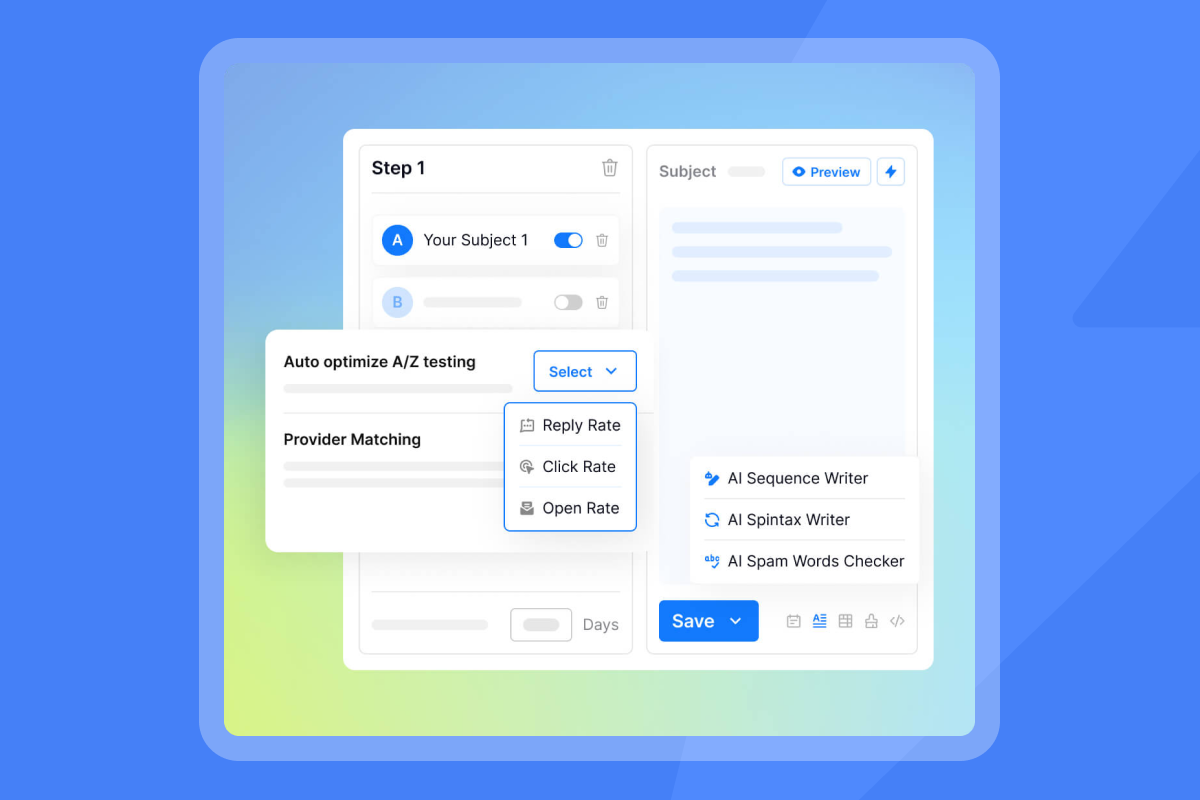
Target: Open rates above 50%.
Why it works: Short, intriguing subject lines grab attention without being clickbait. Personalization signals that you did research.
Test question-based subject lines versus statements. Experiment with referencing the prospect's company or a recent achievement.
Day 31-45: Write concise and value-driven email bodies
Email body copy must respect the prospect's time. Emails around 50-125 words often receive higher reply rates.
- Personalize the opening: Reference a detail about their company, role, or recent activity using CRM field merge tags.
- Focus on one ask: One problem, one solution, one clear CTA.
- Keep it under 100 words: Concise copy increases clarity and engagement.
Target: Reply rate 3-4% by day 45.
Why it works: Personalized email bodies lead to higher response rates than generic emails. Concise, conversational copy focused on the prospect increases engagement.
"The platform is super intuitive, easy to set up, and makes it simple to manage multiple domains and inboxes at scale. Deliverability is great and the analytics give us exactly what we need to optimize campaigns quickly." - G2 review
Day 46-60: Implement better follow-up sequences
Most replies come after the first email. A typical sequence includes 3-7 touchpoints spaced out over 1-4 weeks.
- Build a 3-5 email sequence: Space follow-ups 2-4 days apart.
- Vary content: Offer value (case study, insight, tip) rather than repeating the same ask.
- Use automation: Instantly's campaign builder manages sequences and timing automatically.
Target: Increase overall campaign reply rate by 2-3 percentage points.
Why it works: Persistence without being pushy gives prospects multiple chances to engage. Different angles address different objections.
One agency founder used Instantly to send over 700,000 emails over 4.5 years, securing 200+ clients and generating over $750,000 in closed revenue.
Day 46-60: Triage replies efficiently with AI
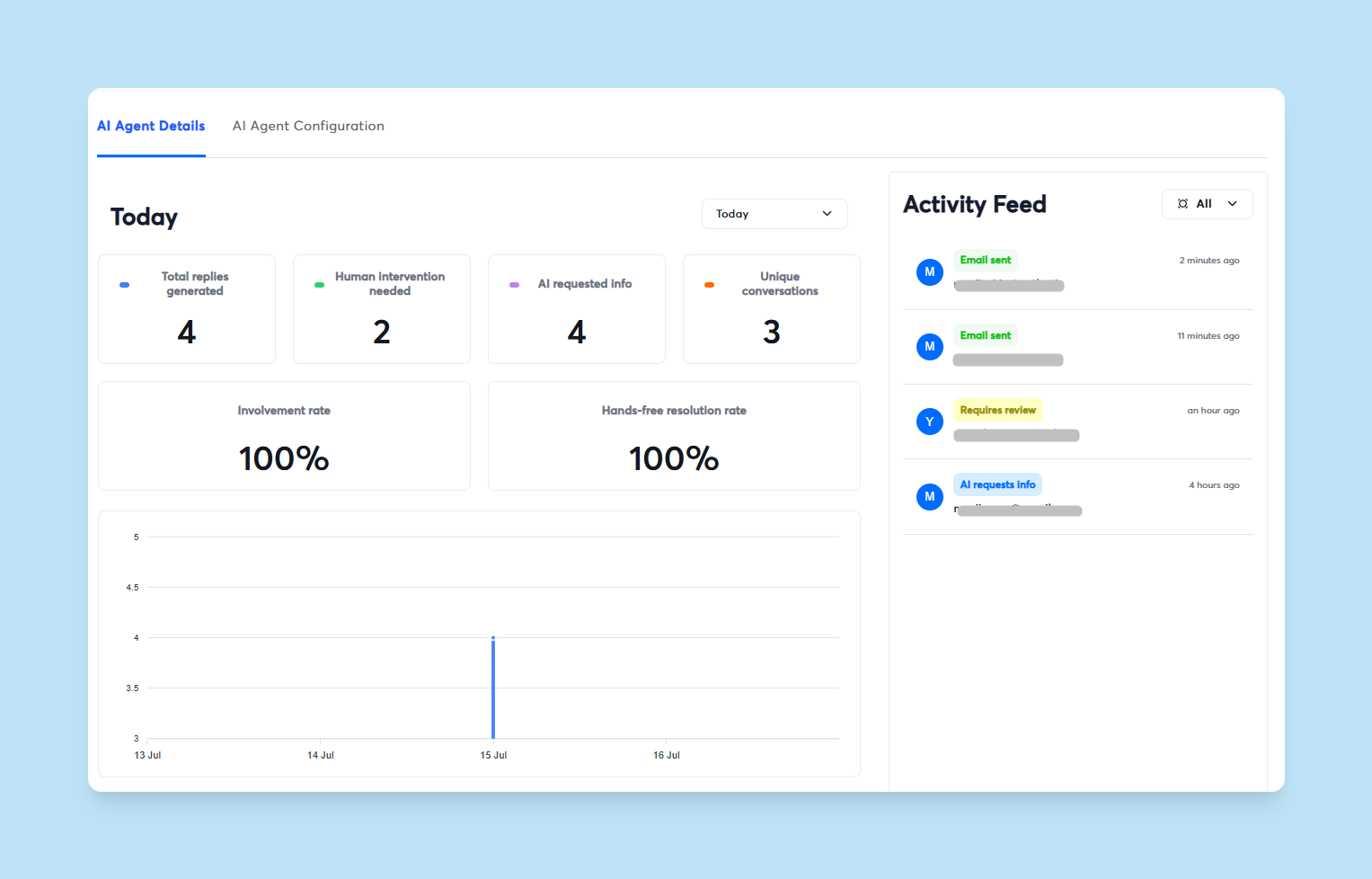
As reply volume increases, manual triage becomes a bottleneck. Instantly's AI Reply Agent handles lead replies automatically, classifying them as Interested, Not Interested, or Out of Office.
- Configure AI Reply Agent: Set up Human-in-the-Loop review or full Autopilot mode.
- Integrate with Unibox: Centralize all replies in one dashboard for faster response.
- Monitor classifications: Review AI decisions weekly to refine accuracy.
Target: Reduce reply triage time by 80%.
Why it works: Automation frees your team to focus on live conversations and closing deals. Quick response times improve conversion rates.
Watch my deep dive workshop to see how to use Instantly's AI Reply Agent:
Day 46-60: A/B test everything for continuous improvement
Data-driven iteration separates 1% from 5% performers. A/B testing allows you to test different elements to determine what performs best.
- Test systematically: Run subject lines, body copy, CTAs, and send times on segments of 100-200 contacts.
- Implement winners: Apply winning variants to larger lists.
- Keep testing: Small improvements compound over 60 days.
Target: Identify winning variants that improve reply rates by 1-2 percentage points.
Why it works: Continuous testing reveals what resonates with your specific audience. Testing removes guesswork and replaces it with evidence.
Instantly's A/Z testing automates variant rotation and tracks performance, letting you test up to 26 subject lines or body variants in a single campaign.
"Few features I like the most about Instantly are as below. 1. Inbox placement test 2. Their email tracking system. 3. Lead reply automatic drafted with the help of AI. 4. AI Spam word checker. Also their customer support is also good." - G2 review
Measuring success: Key metrics for your 60-day blueprint
Tracking the right metrics tells you whether you are on pace to hit 5% reply rates and where to adjust.
| Metric | Target | Why It Matters |
|---|---|---|
| Bounce rate | <0.5% | Protects sender reputation and domain health |
| Inbox placement | 80-85%+ | Ensures emails reach primary inbox, not spam |
| Open rate | >50% | Indicates subject line effectiveness |
| Reply rate | 5%+ by day 60 | Core success measure for engagement |
| Spam complaint rate | <0.1% | Prevents blacklisting and reputation damage |
| Meetings booked | >1% of sends | Measures true ROI and pipeline impact |
See exactly how well the Instantly AI Reply Agent helps drive these metrics with our in-depth auto-resolution dashboard:
Reply rate benchmarks and goals
The average cold email reply rate ranges from 1% to 5%. Top performers achieve 10-15% on focused campaigns with verified contacts and strong inbox placement.
- Week 1-2: Expect 1-2% reply rates as you ramp.
- Week 3-4: Target 3-4% as deliverability stabilizes.
- Week 5-8: Aim for 5%+ as copy optimizations and follow-ups compound.
A 5% response rate is a solid benchmark for cold outreach in 2025.
Monitoring deliverability and sender reputation
Track these daily using Instantly's Inbox Placement tests:
- Delivery rate: Above 98%
- Bounce rate: Below 2%, ideally under 0.5%
- Spam complaint rate: Under 0.1%, never above 0.3%
- Inbox placement: 80-85% or higher
Deliverability variance happens even after warmup. Use Instantly's automated Rules & Alerts to trigger pauses when thresholds are breached.
Tracking booked meetings and cost per meeting
Reply rate is a means, not an end. Track meetings booked and cost per meeting to measure true ROI.
Meetings booked: Aim for at least 1% of sent emails to convert into meetings by day 60.
Cost per meeting: Calculate total platform costs plus time investment divided by meetings booked. Agencies should target sustainable economics that allow profitable scaling.
Common pitfalls and how to avoid them
Watch for these pitfalls:
- Ignoring deliverability signals: If inbox placement drops below 80%, pause campaigns immediately. Clean your list and re-warm for 3-5 days before resuming at lower volume. Use Instantly's automated Rules & Alerts to trigger pauses when thresholds are breached.
- Over-sending or poor list quality: Never exceed 30 emails per inbox per day. Verify contacts before import and clean your list quarterly. Focus on hyper-segmentation over volume.
- Vague messaging and weak CTAs: One email, one ask. Keep body copy under 100 words and personalize the first line with a specific detail about the prospect's company or recent activity.
Your 60-day cold email checklist
Days 1-7:
- Connect inboxes to Instantly's warmup network
- Verify lead list (target <0.5% bounce rate)
- Start warmup at 5 sends/day
Days 8-15:
- Ramp warmup to 15 sends/day
- Run first Inbox Placement test
- Set send windows (8:30am-5pm local time)
Days 16-30:
- Ramp warmup to 30 sends/day
- Monitor bounce rate (<0.5%) and inbox placement (>80%)
- Configure Rules & Alerts for auto-pausing
Days 31-45:
- A/B test 2-3 subject line variants
- Personalize first line of email body
- Cap body copy at 100 words
- Track open rate (target >50%) and reply rate (target 3-4%)
Days 46-60:
- Launch 3-5 follow-up sequence
- A/B test CTAs and send times
- Configure AI Reply Agent for triage
- Track reply rate (target 5%+) and meetings booked (target 1%+)
Your next 60 days: From setup to 5% replies
The 60-day blueprint transforms cold email from guesswork into a repeatable system. Warm inboxes for 30 days, maintain strict list hygiene, craft concise copy, and run strategic A/B tests. Instantly provides the infrastructure to execute this plan safely at scale.
Ready to boost your reply rates without per-seat penalties? Try Instantly free and apply this 60-day blueprint to your campaigns.
FAQs
What is a good cold email reply rate?
A 5% response rate is solid for cold outreach in 2025. See how our email outreach software can help you improve results. Top performers hit 10-15% with focused targeting.
How often should I warm up my email accounts?
Plan at least 2 weeks for new inboxes, 4 weeks for brand new domains. Run continuous background warmup during active campaigns.
Can AI help improve my reply rates?
Yes. AI-powered personalization can boost replies by analyzing firmographics and recent activity. Instantly's AI Reply Agent also handles lead replies automatically, freeing your team for live conversations.
How many emails should I send per day?
Cap at 30 emails per inbox per day during active campaigns. Spread sends across business hours to mimic human behavior.
Key terms glossary
Sender reputation: A score mailbox providers assign to your domain based on engagement, bounces, and spam complaints. High reputation ensures primary inbox placement.
List hygiene: The practice of verifying, deduplicating, and cleaning email lists to maintain low bounce rates and protect sender reputation.
Spin syntax: A method for creating multiple variations of email copy using placeholders and conditional logic, ensuring each recipient gets a unique message.
A/Z testing: Instantly's automated testing feature that runs up to 26 variants of subject lines or body copy simultaneously, tracking performance by variant.
Unibox: Instantly's unified inbox that centralizes all campaign replies into one dashboard for faster triage and response.



