.svg)
%20(1).svg)


Updated April 20, 2026
TL;DR: If you want to know how to write a business proposal email that gets replies, lead with financial impact, not features. A winning body follows three sections under 125 words total: Problem-Specific Context (quantify financial pain in 15-25 words), Tailored Solution (four sentences, ROI-focused only), and Risk Mitigation (remove objections, offer a low-friction next step). This structure respects a founder's time and drives decisions fast. Use Instantly's AI Sequence Writer to draft and scale this framework across unlimited sending accounts so you spend time on conversations, not copy.
Average cold email reply rates sit at 3.43% across B2B outreach, down from 5.1% the year prior. The reason has nothing to do with your product and everything to do with structure.
Knowing how to write a business proposal email that converts means stripping out everything that doesn't serve the buyer's decision. Most founders list every feature, explain their company's history, and bury the ask in paragraph four. Buyers scan for one thing: financial impact. If they can't find it fast, they archive and move on.
This guide gives you a concrete, copy-pasteable framework, the anatomy of a cold email that converts, and practical deliverability rules to make sure your message lands in the primary inbox.
Why the 3-section framework works for busy founders
How busy founders read proposals
Decision-makers at early-stage companies don't read email top to bottom. They scan subject lines for relevance, look for a dollar amount or a quantified business impact, and make a keep-or-delete call within the first two sentences. If neither of those signals appear early, the email is gone.
We confirmed this pattern in our Cold Email Copywriting Masterclass: the opener is the "why you reach out," and it must be buyer-centric from word one. Your reader is looking for their world reflected back at them, not a company intro.
Two situations where you should NOT send a proposal email:
- The buyer requested a scoping call first. Send a calendar link, not a wall of text. Jumping to a written proposal before the call signals you ignored their preferred process.
- You haven't identified a specific pain point yet. A proposal without a quantified problem is a brochure. Use a discovery email to surface one data point before you pitch.
Lost deals from email overwhelm
The five most common mistakes that kill proposal reply rates are:
- Feature dumping: Pitching product features in cold emails cuts reply rates by up to 57%. Lead with the prospect's problem, not your product.
- Vague CTAs: "Let me know if you're interested" places the burden on the prospect. One specific, easy-to-execute ask is all you need.
- Excessive length: Our cold email strategy guide shows that emails over 100 words drop sharply in reply rate. The sweet spot is 75-125 words, which delivers 5-15% higher reply rates than longer formats.
- Hidden pricing: Ambiguity about cost or next steps erodes trust before the conversation starts.
- No authentication setup: Emails that skip SPF, DKIM, and DMARC don't reach the inbox. Google, Yahoo, and Microsoft enforce bulk sender rules requiring spam complaints under 0.3% and bounces under 2%.
Framework overview: context, solution, risk mitigation
Some sales coaches argue for long-form storytelling in proposals, and they're not wrong in every context. A warm, high-ACV enterprise deal can carry more narrative weight. For cold or semi-warm outreach from a bootstrapped team, length kills momentum because the buyer has no existing trust to spend.
This three-section framework resolves that tension by giving each section a strict job and a strict word limit. Context earns attention. Solution earns interest. Risk mitigation earns the reply.
Section | Purpose | Ideal length | What to include |
|---|---|---|---|
Context | Quantify the financial pain and establish urgency | 1-2 brief sentences | Industry benchmark + company-specific gap (e.g., "Your peers average X; you're at Y") |
Solution | Present measurable ROI, not features | 1-2 concise sentences | One outcome + one proof point + one clear value prop |
Risk mitigation | Remove friction and lower the decision cost | 1 short sentence | Transparent pricing, social proof, or an easy next step |
Section 1: Problem-specific context (why now)
Context that converts prospects
Your opening line has one job: make the prospect think "this person understands my situation." Three tactics that get you there:
- Reference a recent business signal. A funding announcement, a new job posting in a specific department, or a product launch tells you exactly what pressure the company is under right now.
- Name the industry benchmark. Prospects respond to gaps between where their peers are and where they are. Use a specific metric, not a vague claim.
- Ask a single diagnostic question. A question that invites reflection confirms the problem is real without sounding presumptuous, and it opens a dialogue instead of forcing a close.
The Triple-A Method for cold email copywriting (Acknowledge, Agitate, Ask) maps directly to this: acknowledge their world, agitate the financial gap, and ask one small question.
Optimal context length for impact
Keep the context section to 15-25 words, or one to two short sentences. Any longer and you start sounding like a case study introduction rather than a conversation starter. The goal is to create enough tension that the reader leans into the solution sentence.
Ensure problem-solution fit
Quantifying financial pain is the step most founders skip, and it's the one that changes reply rates most. Here are three ways to calculate it by industry:
- SaaS: "Your signup-to-activation rate in EMEA is running below benchmark. At your current trial volume, that gap represents roughly $X in ARR that churns before it converts."
- Agency: "Teams your size spend around 19 hours a week on unbillable admin work. Multiply that by your blended billable rate and the annual cost becomes clear."
- E-commerce: "The industry average for cart abandonment is 70%. At $500K monthly revenue, that gap represents around $4.2 million in abandoned cart value annually."
These numbers come from public benchmarks plus one company-specific signal. You don't need proprietary data. You need math the prospect can verify in 30 seconds.
From pain point to your solution
The transition from context to offer matters as much as the content itself. Use phrases that maintain momentum without sounding like a pivot:
- "We've seen this exact pattern with [X similar companies]..."
- "One fix that's worked for teams in your position is..."
- "That's the problem [Company Name] solves directly."
Avoid weak transitions like "I wanted to reach out because..." or "I was hoping to connect..." They signal a seller mindset, not a problem-solving one.
Section 2: The specific offer (driving agreement)
Show your proposal's ROI math
The offer section is not a feature list. It's a one-to-two-sentence business case. Three SMART outcome examples you can adapt:
- Pipeline velocity: "We help teams cut sequence setup from five disconnected tools to one platform, which compresses time-to-first-meeting for most teams within the first two weeks."
- CAC reduction: "Teams that shift to flat-fee unlimited-account sending reduce per-meeting acquisition costs significantly because they stop paying per-seat taxes on scale."
- Revenue recovered: "One 8-person SaaS team booked 15 demos in 10 days after adding automated follow-ups and tightening their list hygiene."
Every outcome must have a time frame, a metric, and a reference to a real result or a verifiable benchmark. Hypotheticals without proof points lower trust.
The 4-sentence offer rule
Keep the offer to four sentences. This constraint forces you to strip out anything not directly tied to the buyer's measurable outcome. If a sentence doesn't answer "what does this mean for my pipeline or my costs," cut it.
Our Cold Email Copywriting Masterclass makes this constraint explicit: your value proposition should fit inside one sentence, supported by one proof point, and concluded with one clear next action.
Example: All-in-one engine for bootstrapped teams
For a bootstrapped SaaS founder pitching outreach services, the offer section might look like this:
"We collapsed five disconnected tools into one flat-fee platform that handles lead sourcing, sending, warmup, and reply management. A team of two manages 1,000 contacts a month from a single dashboard, with no per-seat charges and no per-inbox fees."
Our Growth plan costs $47/month and includes unlimited email accounts plus built-in warmup. Compare that to platforms that charge per seat and cap the number of inboxes per user: the cost difference at scale becomes the offer's ROI argument.
"I really appreciate Instantly basically cultivates all the tools I need in one place for cold email, which saves me from spending a lot on different tools." - Leon S. on G2
Bridge your offer to risk mitigation
The cleanest transition from offer to de-risking is a single acknowledgment line: "I know switching tools mid-campaign carries real risk, so here's what we do to make this easy." This sets up the final section without sounding defensive.

Section 3: De-risk your proposal for ROI
Anticipating founder-specific fears
The biggest fear at this stage isn't price. It's wasted time: burning a domain, spending three weeks on setup, and walking away with zero meetings. Address that fear directly rather than letting it sit unanswered.
Five deliverability best practices that belong in or alongside any proposal involving email outreach:
- Set up SPF, DKIM, and DMARC on every sending domain before a single email goes out. These authentication records are non-negotiable for Google, Yahoo, and Microsoft inbox placement.
- Warm new domains gradually, starting at 5-10 emails per day and ramping over four to six weeks. Never scale past 30 emails per inbox per day.
- Keep bounces under 2% and spam complaints under 0.3%. Both metrics are now enforced by major inbox providers.
- Use custom tracking domains to avoid shared tracking pixels that trigger spam filters. Spreading sends across multiple IP addresses protects sender reputation at scale.
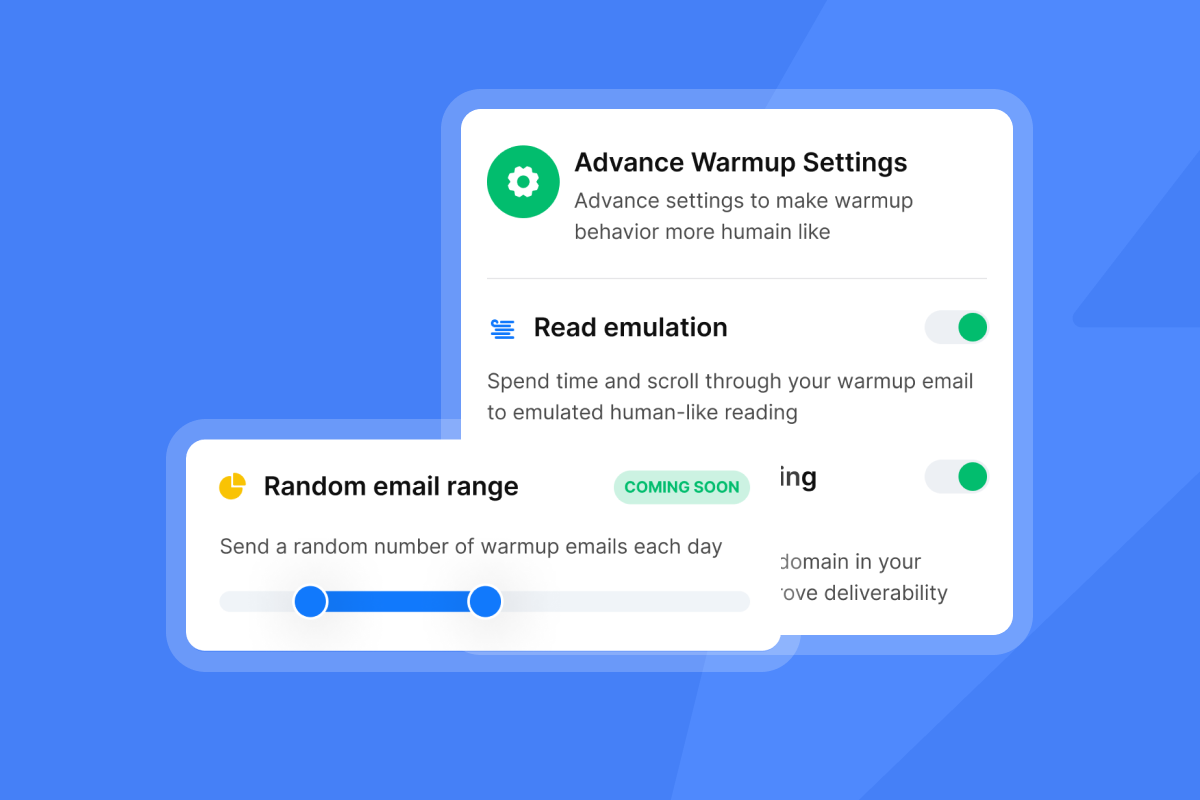
- Run inbox placement tests before every campaign launch. Instantly's automated Inbox Placement tests flag deliverability issues before they affect live sends, so you catch problems in staging, not in production.
"I appreciate Instantly for its intelligent handling of domain and mailbox rotation as well as provider matching, which is critical for ensuring that my emails land directly in the primary inbox instead of getting caught in spam filters." - Richard E. on G2
We run a deliverability network of 4.2M+ accounts for warmup and engagement signaling. That network backs the warmup feature on all plans, not just as a checkbox on the pricing page.
Addressing setup time and ROI proof
Three ROI metrics worth defining before the first send:
- CAC payback period. Divide your total outreach cost (tool fees plus time) by the average contract value of deals sourced from cold email. Track this monthly and compare it against your baseline to measure improvement.
- Pipeline per dollar. Divide total pipeline value created by total spend. Research from Leads at Scale shows companies average $36 in returns for every dollar spent on cold email campaigns, making it one of the highest-ROI acquisition channels available to bootstrapped teams.
- Time-to-first-meeting. Track from campaign launch to first booked call. A clean list, warmed domains, and a tested three-section copy structure compress this window meaningfully for most teams in their first four weeks.
Propose a low-risk next step
The CTA must cost the prospect almost nothing in time or commitment. Three examples for different scenarios:
- Cold, unsolicited: "Worth a 15-minute call this week to see if the numbers work for your situation?"
- Warm, inbound inquiry: "I can walk you through the exact setup in 20 minutes. Does Thursday at 10am or 2pm work?"
- Follow-up after no response: "Still worth a quick chat, or not the right fit right now?" (The second option respects their time and gives them a graceful exit.)
Copy-paste templates for three scenarios
These three templates apply the framework. Swap in your own proof points and metrics.
Cold (unsolicited):
Subject: Quick question about [Company]'s pipeline
Hi [Name], Saw your Q3 expansion into EMEA. Most teams your size hit list quality issues before the region scales. Our platform helps sales teams add verified contacts to their pipeline with no setup fee and a 14-day trial. Worth a 15-min chat to see if the numbers work for your situation?
Warm (solicited):
Subject: Re: Your question about outreach
Hi [Name], Thanks for reaching out. Founder-led sales teams typically lose significant pipeline to manual follow-up gaps. Our platform automated that process for similar teams and reduced their cost-per-meeting. Would a 20-min walkthrough help?
Follow-up:
Subject: One more thing about [Company]'s pipeline...
Hi [Name], Quick follow-up. [New insight or updated social proof.] Still worth a quick chat, or not a fit right now?
Adjust one variable based on what matters to your recipient: infrastructure proof ("connects to your CRM via API, no manual data entry") or operational efficiency ("two people manage 1,000 contacts/month"). The framework stays identical. Only the proof point in the solution section changes, as outlined in our cold email strategy guide.
How long should your proposal email be?
Subject line length
Keep subject lines between 30 and 50 characters, which is four to seven words. Mobile devices display 30-35 characters before truncation, so your main message must land inside the first 33 characters. Test length and phrasing at scale with A/Z testing before committing to a winner. Our cold email subject line myths guide confirms that reply rate, not open rate, is the metric worth optimizing for. Run every subject line through the pre-send checklist to catch spam triggers before launch.
When A/Z testing subject lines, aim for at least 250 contacts per variant as a floor, with 500+ per variant for high-confidence results, as detailed in our subject line testing governance guide.
Adding a 4th email: When follow-ups pay off
Four emails total (one initial plus three follow-ups) is the safe and effective default. The initial email carries most of the weight, but follow-ups generate a meaningful share of total replies, so skipping them leaves pipeline on the table.
Best practices for follow-up structure:
- Follow-up 1 (day 3): Add a new insight or proof point. Don't just resend the original.
- Follow-up 2 (day 7): Shift to a different angle (ROI vs. risk, or social proof vs. benchmark).
- Follow-up 3 (day 14): Short breakup email with a graceful opt-out option.
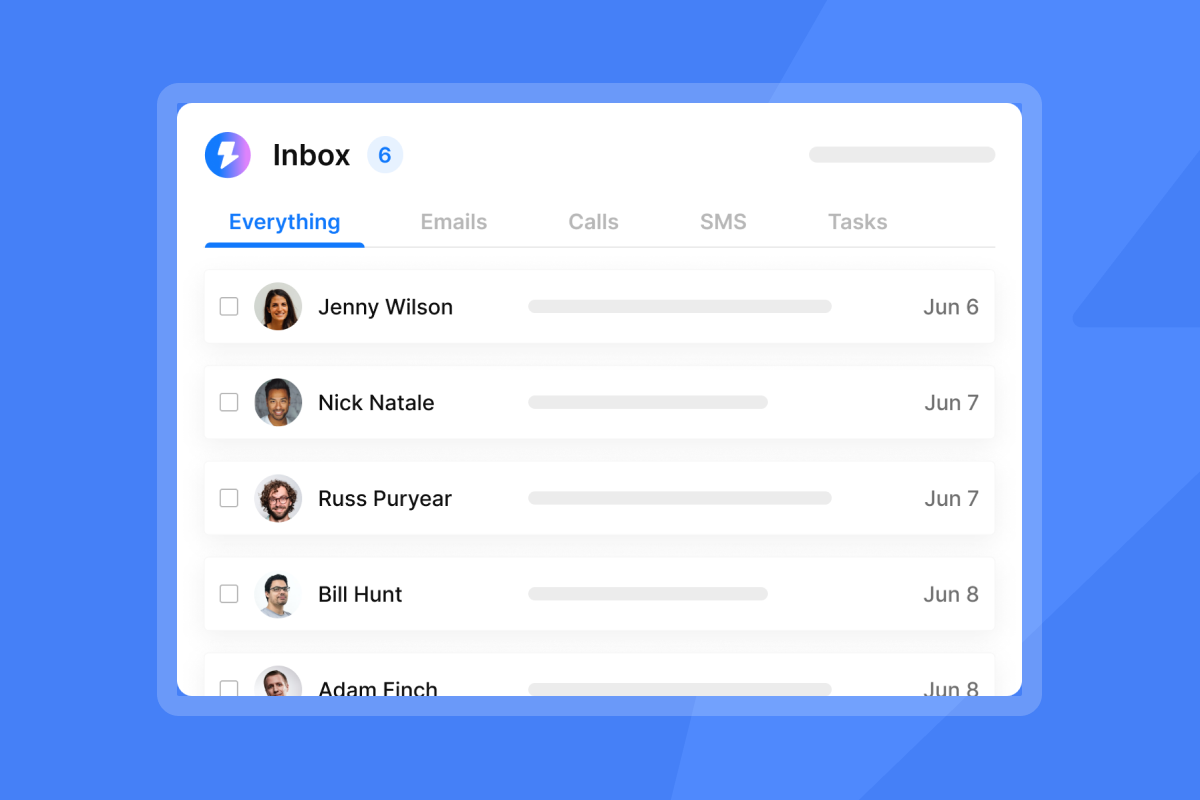
Instantly's automated follow-up sequences keep all follow-ups in the same thread by default, which preserves context for the reader and improves reply attribution in your analytics.
"The email sequencing capability allows for automated mass emailing, which would be unfeasible manually. Unibox is exceptional as it consolidates replies in one place from 100+ email accounts." - Daksh K. on G2
Mistakes causing low proposal reply rates
Why feature dumps and weak transitions kill replies
The disconnect between features and buyer needs is the single biggest structural failure in proposal emails. Your prospect doesn't care that your platform has 450M+ contacts unless they first understand that their current list is too small to hit their pipeline target.
Bad transition: "I wanted to reach out to introduce our platform..."
Better: "Teams with your growth rate typically run into list quality issues around month three. Here's what closes that gap."
The difference is causal. The first is a formality. The second creates a reason to keep reading.
Every sentence added to the offer section above four introduces a new objection without resolving the previous one. Buyers don't need more information. They need more confidence, and confidence comes from proof points, not paragraphs. Skipping risk mitigation entirely carries the same cost. If a prospect's last cold email tool burned their domain, that experience is sitting in the back of their mind when they read yours. Acknowledging that fear directly and explaining your safeguards removes the objection before it's raised.
"I use Instantly for cold emails and it handles multiple emails efficiently, saving me time. I really like the personalized emails and how easy it is to use." - Prachi B. on G2
Proposal email quick-start checklist
Use this before every send:
- Subject line is 30-50 characters and front-loads the main message inside the first 33 characters
- Opening sentence references a specific, verifiable business signal about the prospect
- Financial pain is quantified with a number and a time frame
- Solution section is four sentences or fewer and includes one proof point
- Risk mitigation addresses the most likely objection for this specific buyer
- CTA asks for one action only and requires less than two minutes to complete
- Total email body is under 125 words
- SPF, DKIM, and DMARC are set up, domain has completed at least 14 days of warmup, and daily send is capped at 30 per inbox
You can draft and scale all of this inside Instantly. The AI Sequence Writer builds the three-section structure automatically, and unlimited sending accounts mean you scale volume without per-seat costs.
"I like that Instantly is intuitive and everything is done in one place, from lead sourcing to writing campaigns to reaching out to them." - Nouredinne K. on G2
Try Instantly free and let automation handle follow-ups while you focus on live conversations.
FAQs
What is a good reply rate for a cold proposal email?
5-10% is solid for B2B cold outreach, and 10-15% is excellent for tightly targeted lists, per Instantly's 2026 benchmark data. The market average sits at 3.43%, so crossing 5% with a clean list and the three-section framework is a realistic target within your first four-week ramp.
How many follow-up emails should I send after a proposal?
Send three follow-ups after the initial email, for four touchpoints total. The initial email carries the majority of replies, with the rest coming across follow-ups, so skipping them leaves meaningful pipeline on the table.
Does attaching a PDF proposal hurt deliverability?
Yes. Cold emails in plain text consistently outperform HTML-heavy formats or attachment-based emails because large files and rich formatting trigger spam filters. Share any detailed document via a link in a follow-up after you get a reply.
How long should the subject line be for a mobile-optimized proposal email?
Keep it between 30 and 50 characters (four to seven words) and put your core message inside the first 33 characters, since mobile clients truncate beyond that point. Our A/Z testing guidance recommends at least 250 contacts per variant as a minimum, with 500+ for high-confidence results.
What sending volume is safe for a new domain?
Start at 5-10 emails per day and ramp over four to six weeks, with a hard cap of 30 emails per inbox per day, as outlined in Instantly's secondary sending domains guide. Exceeding 30 per inbox increases bounce risk and flags your domain to inbox providers before your sender reputation is established.
Key terms glossary
Primary inbox: The main folder in Gmail, Outlook, or Apple Mail where emails land when sender reputation and authentication are healthy. Research shows emails in the primary inbox get 2-3x higher open rates than identical emails in the Promotions tab, making inbox placement a direct revenue lever, not just a technical metric.
Sender reputation: A score assigned to your domain and IP address by inbox providers based on bounce rates, spam complaints, engagement history, and authentication records. A reputation below the provider's threshold routes your emails to spam regardless of copy quality.
Pipeline per dollar: Total pipeline value created divided by total outreach spend, including tool costs and time. Research from Leads at Scale shows companies average $36 in returns for every dollar spent on cold email, making it one of the strongest ROI channels for bootstrapped teams.
Spin syntax: A formatting technique that inserts randomized word or phrase variants into email templates (e.g., {Hey|Hi|Hello}) to create variations across sends.



