.svg)
%20(1).svg)


Updated June 2, 2026
TL;DR
79% of B2B software purchases require CFO approval, making C-suite targeting a non-negotiable part of any enterprise pipeline strategy. Poor data is the biggest silent killer: B2B contact databases often deliver inconsistent accuracy, and contact lists naturally decay over time as executives change roles. Verified data from Instantly.ai SuperSearch (450M+ B2B leads with waterfall enrichment) combined with built-in warmup addresses the two biggest reasons executive campaigns fail: bad data and poor inbox placement. Messaging must map to role-specific metrics: CFOs care about ROI and risk, CEOs care about growth and market share, and CTOs care about infrastructure reliability and security.
If you run outbound for a B2B sales team or agency, this guide is for you.
Most sales teams and agencies obsess over crafting the perfect executive pitch while ignoring a bigger problem: their emails land in spam before any C-suite decision-maker ever sees them. Learning how to reach C-suite decision-makers requires a system combining accurate contact data, strict deliverability protection, and buyer-centric messaging aligned to each executive's specific priorities.
Why C-suite targeting requires a different approach
Executive outreach is not standard prospecting with a fancier subject line. The buying dynamics, the gatekeeping layers, and the stakes of getting it wrong are all fundamentally different. Understanding those differences is what separates teams that book C-suite meetings from teams that burn their domains trying.
Executive vendor selection criteria
According to G2, 79% of B2B software purchases now require CFO approval regardless of who initiated the purchase, and 26% of buyers identify C-suite executives as the ultimate decision-making authority. If your outreach only reaches a mid-level manager, you're building a relationship with someone who can say no but rarely yes.
The top-down cascade strategy addresses this directly. When a C-level executive sponsors a conversation, the rest of the team follows. You deal with fewer stakeholders, maintain a direct relationship with the budget holder, and reduce the layers of objection that extend sales cycles. Executive time is scarce, which means your outreach window is narrow, and message relevance determines whether you earn a reply or get ignored. The Instantly cold email strategy guide is clear on this: one specific ask, one relevant insight, and nothing else.
Working with gatekeepers for C-suite access
Most teams treat executive assistants (EAs) as obstacles when they should treat them as allies. An EA who understands your value can brief the executive directly, schedule time on a packed calendar, and position you for the right moment. Treat every EA interaction as a relationship investment. Be transparent about who you are, what you want, and why it matters to their executive. Provide a one-paragraph summary they can forward internally.
How to identify the right C-level decision-maker
Not every deal needs the CEO. Knowing which executive controls the budget and owns the outcome for your specific solution saves time and protects your sender reputation by reducing irrelevant sends.
CEO: pinpointing growth priorities
CEOs focus on revenue growth, market share, profit margin, and customer satisfaction. If your product opens a new revenue channel or reduces churn, lead with that angle rather than feature lists.
CFO: budget allocation strategy
CFOs are responsible for financial health, risk management, capital allocation, and compliance. Show them ROI calculations, payback periods, and reduced financial exposure to anchor your value in the metrics they already track.
CTO: data security and compliance
CTOs track infrastructure stability, deployment speed, service availability, and tech debt reduction. If your solution reduces attack surface, improves uptime, or accelerates development cycles, lead with those outcomes.
CMO: MarTech stack decisions
CMOs measure customer acquisition cost (CAC), lifetime value (LTV), return on marketing investment (ROMI), and pipeline contribution. Show how your product reduces CAC or improves SQL quality.
COO: optimizing sales execution
COOs focus on operational efficiency and process improvement. Position your solution around measurable efficiency gains and faster execution cycles tied to revenue growth relative to operational investment.
Finding accurate executive contact data
The most well-crafted executive email is worthless if it bounces. B2B contact lists naturally decay as executives change roles, and data quality varies widely across providers. Top-tier providers keep bounce rates below 1%, a standard worth holding any data vendor to before you send.
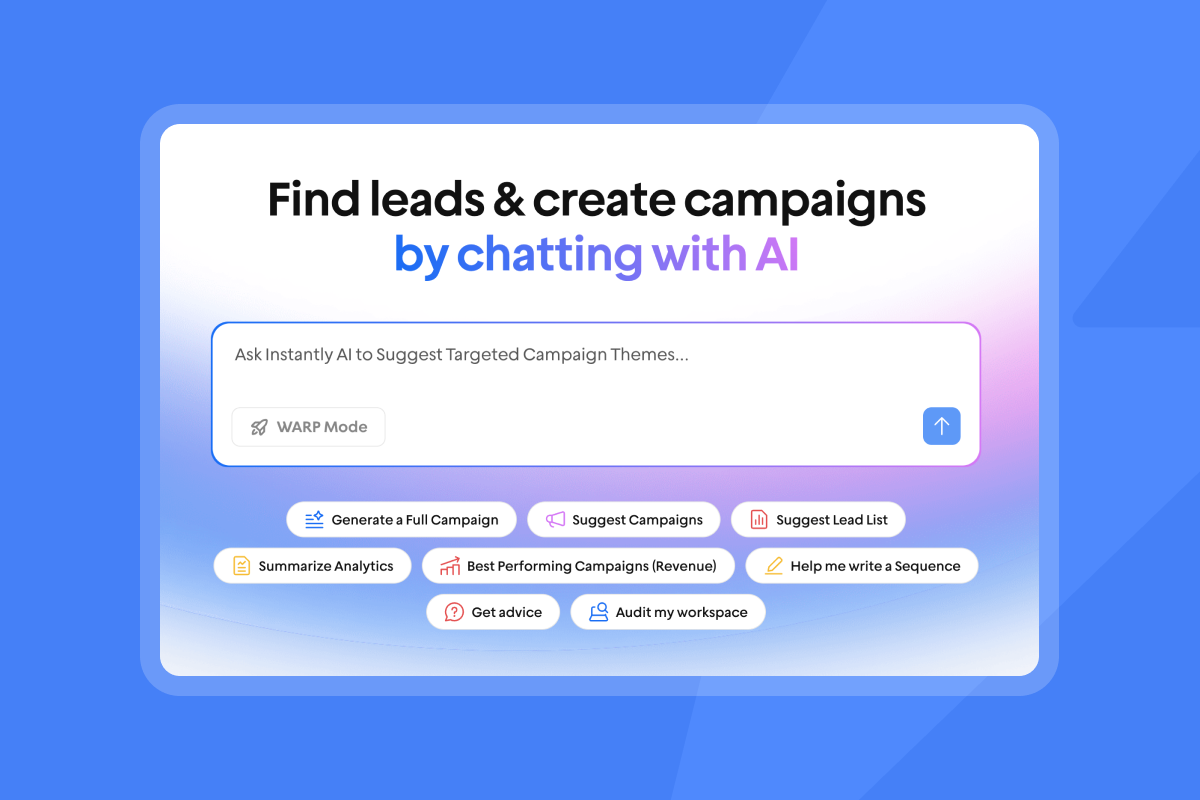
Instantly SuperSearch gives you access to 450M+ B2B leads with waterfall enrichment across five or more providers, LLM-assisted enrichment, and a credit-based model where you pay only for verified contacts. You can filter by seniority level and job title to target C-suite executives, then export into your outreach sequence without switching tools. The SuperSearch help documentation walks through the full filtering and export workflow.
Sales Navigator C-suite filters
LinkedIn Sales Navigator lets you filter by seniority level (C-suite), company size, industry, and geography. Use Navigator to build your target list and send InMail directly within the platform, then verify emails before sending at scale. While Navigator includes InMail messaging, use it primarily for research and connection building rather than cold outreach at scale.
Pinpointing executive budget holders
Company websites, press releases, and investor updates often list executives by name and title. Annual reports and 10-K filings identify CFOs and their stated financial priorities, which doubles as research for personalized outreach messaging.
CFO contact data in financial reports
Publicly traded companies publish executive names in SEC filings, annual reports, and earnings call transcripts. These sources also reveal the CFO's current strategic priorities, making your outreach far more targeted than a generic pitch.
Speaker rosters for C-suite targeting
Industry conference speaker lists are underused sources of executive names, titles, and companies. Executives who speak publicly leave a clear trail of stated priorities and industry positions, giving you the research foundation for targeted, well-researched outreach.
LinkedIn strategies for C-suite engagement
LinkedIn remains the highest-signal channel for executive outreach because it lets you build context before you ever send an email. The cold email personalization guide from Instantly covers how to use research and context to make your first touch count.
Profile and connection best practices
Before reaching out, your profile must demonstrate credibility. Write a clear value proposition in your headline and use your About section to list three to five specific, metric-led achievements that demonstrate credibility to executive readers. Connection requests to C-suite targets should reference something specific: a recent article they published, a conference they spoke at, or a shared connection. Generic requests get ignored or rejected, which limits your future reach on the platform.
Crafting InMails for C-suite
InMail for C-suite follows the same rules as cold email: short, specific, and focused on their outcome rather than your product. Reference something specific, state your purpose in the first sentence, and close with a single low-friction ask. Keep it under 100 words.

Master C-suite referrals for higher conversion
A warm introduction from a trusted peer is the fastest path to a C-suite meeting. It pre-establishes credibility and bypasses months of cold outreach. The cold outreach masterclass from Instantly calls this the "master key" concept: the right introduction opens doors that cold outreach struggles to push through.
Identifying mutual C-suite links
LinkedIn's mutual connection feature shows shared contacts immediately. Before sending a cold email to a CFO, check whether any of your current customers or advisors have a direct connection. Warm introductions convert at higher rates than cold sequences because the relationship context already exists before you reach out.
Securing intros from investor circles
Venture capital and private equity firms regularly connect portfolio companies with strategic partners. Building relationships with a few active investors gives you warm introduction access to dozens of C-level executives in their portfolios.
Partner and event referral tactics
Your existing technology partners serve the same executive buyers you target. A co-selling or referral agreement with a trusted partner extends your credibility to their existing buyer relationships, because their endorsement signals trustworthiness before you ever reach out. Industry events, roundtables, and executive dinners create similar dynamics: when you follow up after meeting an executive in person, the shared context gives your outreach a foundation that cold outreach alone cannot establish.
High-impact messages for senior leadership
Executive emails are different from standard cold outreach. Longer is not better. Generic is not safe. A message that speaks directly to the executive's current pressure performs, and a polished template that ignores their context fails. The cold email copywriting guide from Instantly covers subject lines, body copy, and CTAs with a detailed breakdown of structure.
Align messaging to business outcomes
Lead with a specific business outcome, not a feature. "Reduce churn by improving onboarding handoffs" is a business outcome. "Our platform has 47 integrations" is a feature. Executives evaluate solutions based on what changes, not what a product contains.
Write clear, concise executive messages
Keep your email under 150 words for C-suite targets. Three elements work: a personalized hook referencing something specific, a value statement on the outcome you deliver, and a single call to action. Where appropriate, present key points as bullet points rather than dense paragraphs, as executives scan for relevant information quickly and scannable formatting reduces the time it takes them to reach your ask.
Instantly's AI Sequence Writer helps your team draft and refine messages aligned to these criteria at scale, without requiring every rep to start from a blank page. The 600-template library also provides a customizable starting point across a broad range of cold outreach use cases.
Build C-suite trust with proof
Reference trusted third-party validators in your outreach. Analysts like Gartner, Forrester, and IDC carry weight with CFOs and CTOs who are trained to demand credible evidence before engaging vendors. A specific data point from a recognized source in your first email signals that you do serious work.
Subject lines that grab executive attention
Aim for six to ten words in your subject line and keep character count under 50. Reference the executive's company, industry, or a specific metric. Avoid spam triggers like "free," "guarantee," or excessive punctuation. The cold email subject line checklist covers the full pre-send QA process for protecting sender reputation.
Multi-channel orchestration for C-suite outreach
A single cold email rarely books a C-suite meeting. A coordinated sequence across email, LinkedIn, and phone creates multiple touchpoints needed to break through without crossing into harassment territory.
Watch the 2026 cold email rules video for how to structure multi-channel plays in the current inbox environment.
Optimal C-suite email cadence
For C-suite targets, consider capping your sequence at four emails spread across 30 to 45 days, with enough spacing between each touchpoint to build familiarity without appearing aggressive. Research supports extending sequences to four to seven properly spaced emails to improve reply rates, so use four as a starting point and add touchpoints only if spacing and relevance remain strong. Give each email enough room to land before sending the next touchpoint, whether that is a follow-up email, a LinkedIn message, or a phone call.
Crafting effective C-suite voicemails
Phone follow-ups after email touchpoints add a human dimension to your outreach. Keep voicemails under 30 seconds. State your name, company, one clear value point, and your callback number. Do not summarize the entire pitch.
Personalized gifting for C-suite engagement
When email and LinkedIn alone are not breaking through, a personalized gift tied to the executive's public interests can create a conversation opening. Consider these approaches:
- A research-led physical gift paired with a handwritten note: Choose a relevant industry book, report, or small item that references a specific business challenge the executive has discussed publicly, in an interview, earnings call, or LinkedIn post, and connect your choice directly to that context in your note.
- A trigger-based gift tied to a company milestone: When an executive announces a funding round, product launch, or industry award, send a small congratulatory gift with a short note that links the milestone to the outcome you help deliver.
Activating C-suite event triggers
Monitor for trigger events that create a natural opening for outreach: funding announcements, executive role changes, new product launches, earnings calls, or major industry news. A timely email referencing a trigger event converts at a higher rate because it addresses what the executive is actively thinking about.
C-suite outreach mechanics
These questions cover the most common decisions teams face when building C-suite outreach campaigns, from sequence length and data quality to timing and stakeholder selection.
C-suite touchpoint strategy
The right number depends on the seniority level and deal scope. For economic buyers such as CFOs and CEOs, fewer touches tend to work better, concentrated at the beginning and end of the buying process with concise, high-impact messaging focused on strategic outcomes. For enterprise-level targets such as VPs, sequences often stretch across 12 to 15 touchpoints over 60 to 90 days at lower frequency with an educational focus. Weaving LinkedIn touchpoints and phone calls between email sends strengthens multi-channel presence, with the frequency of each channel scaled to match the overall sequence length and the seniority of your target.
Direct C-suite access: risk vs. reward
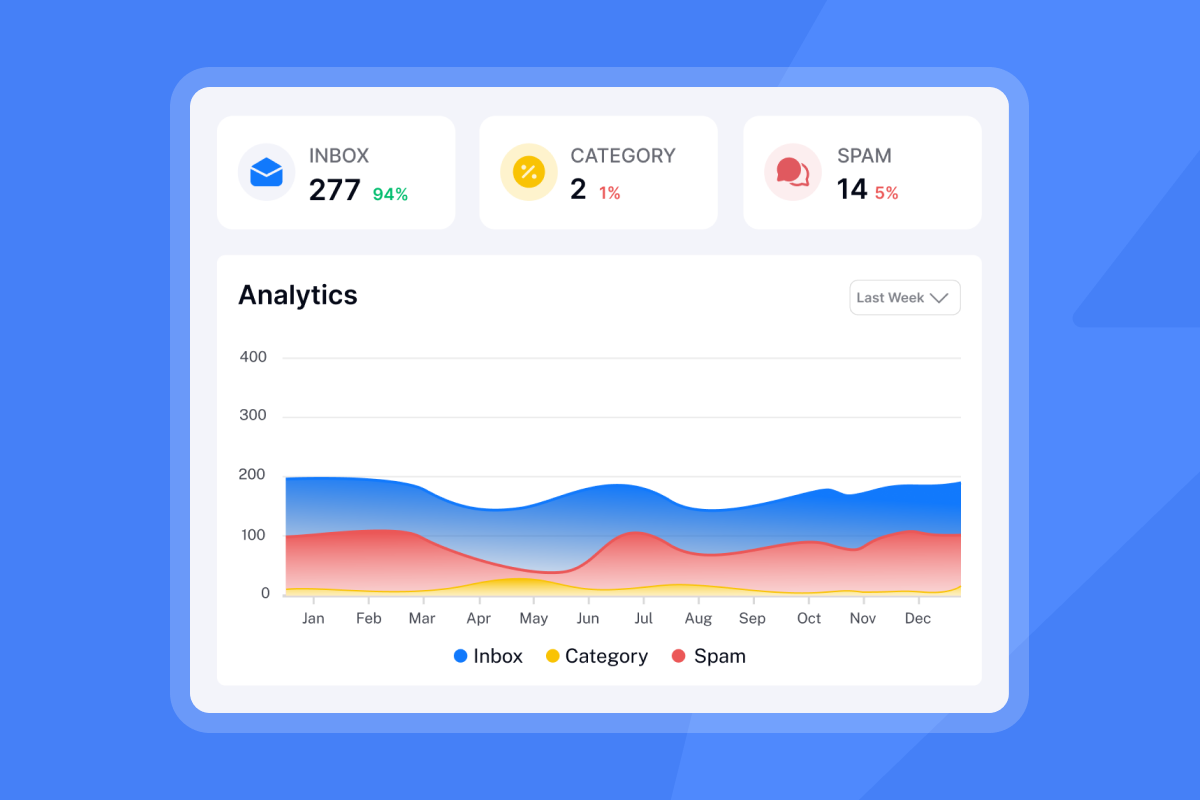
Direct C-suite outreach carries real risk if your data is inaccurate or your messaging is generic. With nearly half of all global email traffic flagged as spam by filters, and B2B contact lists naturally decaying as executives change roles, reaching a C-suite inbox requires verified data and a clean sending infrastructure. Instantly's inbox placement monitoring gives you a real-time view of where your emails land before you scale a campaign.
The email deliverability for sequences guide details exactly what to check before launching any C-suite campaign.
Optimal times for C-suite outreach
The best time to send is Tuesday through Thursday, 8 to 10 AM or 2 to 4 PM in the recipient's timezone. Avoid Mondays when inbox volume from the weekend is highest. Wednesdays produce the highest reply rates at 7.2%, making them the best days to send if you're only running one batch per week.
Partnering with executive assistants
Treat every EA interaction as a relationship investment. Be transparent about who you are and why your message is relevant to their executive. Provide a one-paragraph summary they can forward internally. EAs who trust you become advocates who put your name on the calendar.
When to engage C-suite vs. VPs
Start with a VP or Director when your solution solves a specific department-level problem or when VPs hold real budget authority in your target account. For larger deals where the CFO or CEO controls the budget decision, the top-down cascade approach typically reduces friction and shortens time to a signed contract. The cold email in 2026 masterclass covers this targeting framework in detail.
Deliverability is the foundation. Personalization is the tool. Verified data is the starting point. Here's what that looks like in practice from a user running executive outreach across sub-niches:
"I love that Instantly lets me reach the right people directly... I can contact CEOs, founders, and managers in the construction niche, and they actually reply and show interest in our lifting equipment. The multi-inbox management, warm-up, and personalization tools make it easy to run campaigns across different sub-niches." - Victor on G2
And on the deliverability side:
"I appreciate Instantly for its intelligent handling of domain and mailbox rotation as well as provider matching, which is critical for ensuring that my emails land directly in the primary inbox instead of getting caught in spam filters." - Richard E. on G2
Get data quality, deliverability, and messaging right, and C-suite outreach becomes a repeatable system rather than a luck-based exercise.
Building that system starts with clean data and a sending infrastructure that protects your domain at every step. Try Instantly free and use SuperSearch to find verified C-suite contacts, then build your cadence inside the Sequence Builder with AI-assisted copy and automated inbox placement monitoring. You're closer to that first C-suite meeting than you think when you build your outreach on verified data.
FAQs
How many emails should I send in a C-suite sequence?
Start with four emails as a working baseline. Research supports extending to four to seven properly spaced emails to improve reply rates, so treat four as a starting point rather than a hard ceiling: add touchpoints only if each one carries distinct value and maintains appropriate spacing. The right total depends on deal scope and seniority level. See the cadence guidance in the multi-channel section above for the full framework.
What data accuracy rate should I require for executive contact data?
Require verified contacts with bounce rates below 1%. Data quality varies widely across providers, which means lower-quality sources can damage your sender reputation with high bounce rates. Look for waterfall enrichment across five or more providers, which checks each contact record against multiple sources in sequence and uses the best available result to improve verified accuracy.
What percentage of B2B software purchases require CFO approval?
79% of B2B software purchases now require CFO approval regardless of who initiated the budget request, and C-suite executives hold ultimate decision authority in 26% of deals.
When is it better to start with a VP instead of C-suite?
Start with a VP or Director when your deal is department-level in scope and VPs hold real budget authority at your target account. For larger deals where the CFO or CEO controls budget decisions, the top-down cascade approach reduces stakeholder friction and shortens the sales cycle.
Key terms glossary
Top-down cascade strategy: An account-based prospecting approach where you engage the C-suite executive first to gain organizational sponsorship, then work down through the team. Securing executive buy-in early reduces stakeholder friction and accelerates the overall sales cycle.
SISR (Server and IP Sharding and Rotation): A deliverability architecture available on Instantly's Light Speed plan and above that distributes sending across dedicated, private server clusters and IP pools. This protects your sender reputation by preventing any single IP from accumulating too many send signals from one campaign.
Waterfall enrichment: A data validation method that checks contact records across multiple providers in sequence, using the best available result from each source. Instantly SuperSearch uses five or more providers in this process to improve verified accuracy.
Sender reputation: The combined trust score that email providers assign to your sending domain and IP based on engagement signals including reply rates, bounce rates, and spam complaints. A damaged sender reputation causes emails to land in spam or be blocked before delivery.
Read next
- Guide For Agencies: How to send 1,000+ personalized cold emails per week: Learn how to personalize executive outreach at scale without manual research on every contact.
- Creating A Lead Generation Process Tailored To Your Business: A step-by-step framework for building a repeatable B2B lead generation process aligned to your sales motion, from sourcing verified contacts to converting pipeline into revenue.
- Scaling email warm-up: Ensuring deliverability: A practical guide to scaling your email warmup process, covering how to build sender reputation, monitor inbox placement, and protect your domain before sending to executive contacts.
