.svg)
%20(1).svg)


Updated April 22, 2026
TL;DR B2B email lists give you a starting point, not a pipeline. They decay at roughly 22.5% annually, miss internal buying committees, reveal nothing about budget timing or competitive context, and carry real compliance risk under GDPR and CAN-SPAM. Providers often claim 90 to 95% accuracy while independent testing shows the industry average is closer to 50% for unverified single-source databases. To protect your domain and hit quota, you need verified data, built-in warmup, and controlled sending limits working together, not a raw list sent at volume.
Your B2B email list loses roughly 22.5% of its validity every year. The reason has nothing to do with your outreach strategy or your copy. Contacts change jobs, companies restructure, and inbox providers reassign abandoned addresses to spam traps while your list sits unchanged. When your reps blast that data at scale, bounce rates spike, domain reputation erodes, and deliverability crashes follow. The problem is not the email. It is the assumption that a purchased list is ready to use.
What core data do B2B lists provide?
A solid B2B email list gives your team a structured starting point. Understanding what it does well makes it easier to see exactly where it falls short.
Contact-level firmographic data
Standard purchased B2B lists include first name, last name, job title, company name, company domain, industry code (SIC or NAICS), employee count range, and revenue range. Premium providers layer on direct-dial phone numbers and basic technographic data. This structured firmographic data is genuinely useful for building initial segments and prioritizing high-fit accounts.
Modern providers increasingly combine continuously refreshed contact data with buyer intent signals, technographic insights, and native CRM integrations. That capability exists in some tools but is typically not included in static list exports.
Department and role data gaps
Job titles are unreliable signals of purchasing authority. Lists tell you what someone is called, not what they actually control. A Director at one company can approve significant spend independently. At another with a different structure, the same title sits three approvals deep. Targeting by title alone means your reps frequently land with influencers rather than economic buyers.
Our guide to email deliverability for sequences explains why clean targeting by role and authority, not just title, is foundational to inbox placement and reply rates.
Email list health and deliverability risk
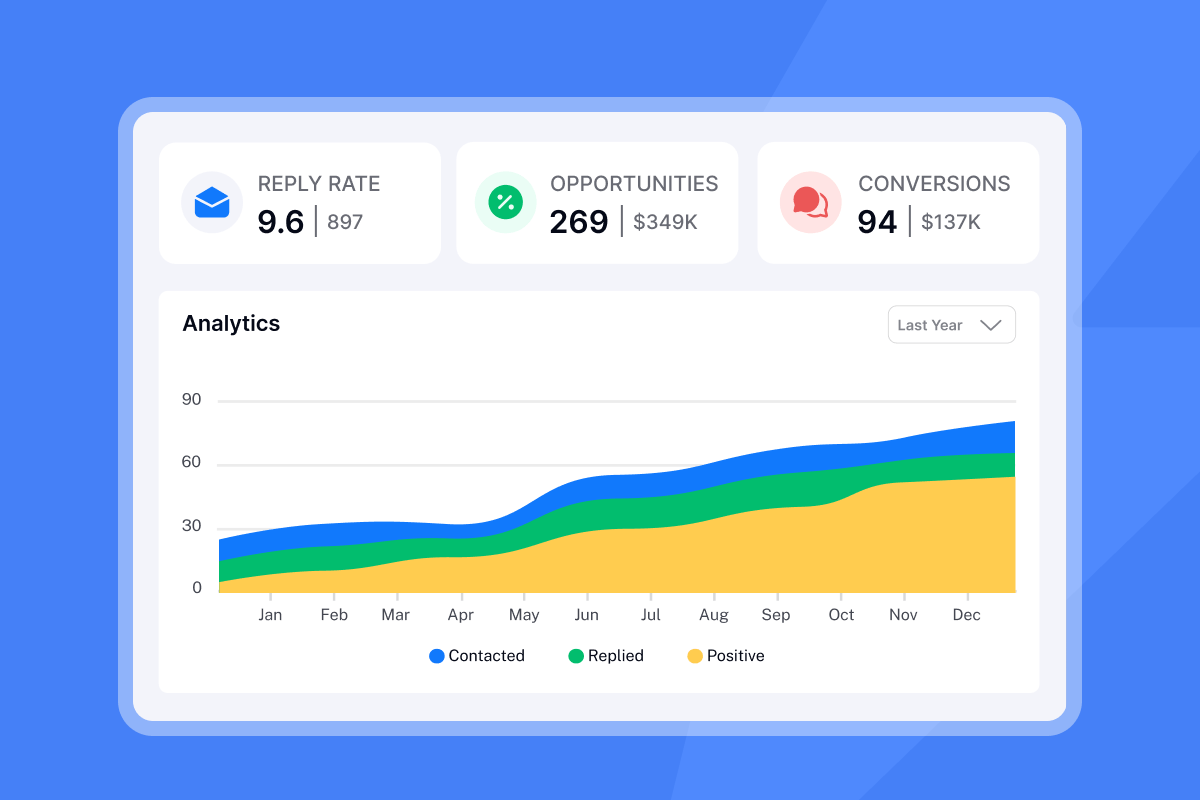
This is where static lists create the most damage. Two categories of bad addresses destroy sender reputation: spam traps and invalid emails.
Spam traps are addresses used specifically to catch senders who use outdated or scraped data. Braze defines two main types:
- Pristine spam traps: Addresses that have never belonged to a real person. They exist solely to be scraped and purchased, then used to identify bad senders.
- Recycled spam traps: Real addresses that were abandoned, left dormant for 6 to 12 months, and then repurposed by inbox providers to catch senders who skip list hygiene.
According to Validity, attempting to send emails to a pristine spam trap is the quickest way to get labeled as a spammer and get your email messages blocked. With recycled spam traps, research shows it takes more time to determine the sender's nature, so penalties do not happen immediately. The consequence varies by trap type, but the risk is real. Deliverability research shows that bounce rates above 2% draw scrutiny from inbox providers, while rates above 5% often trigger blacklisting. A purchased list with no validation can push you past that threshold on your first campaign.
The Instantly Inbox Placement tool runs automated tests to show you exactly where your emails land before you scale. The Inbox Placement automated tests guide walks through how to run these checks and interpret the results.
Internal decision-making complexity lists miss
A list tells you who works at a company. It cannot tell you who holds the budget, who will block the deal, or who the champion is that can push it through.
Pinpointing the real decision-makers
Flowla's research on buying committees reports that B2B buying groups now average 13 stakeholders, up from 6 just a few years ago. Software purchases typically involve 6 to 10 committee members, and deals above $250,000 require an average of 19 external stakeholders. A list with one contact per account misses most of the room where decisions actually get made.
Why lists miss internal power plays
Static data shows you an organizational chart, not the internal dynamics that determine outcomes. Influ2's buying committee research confirms that deals loop, stall, and restart as different people join and share opinions. A CFO cares about ROI. An IT lead cares about security. An end user cares about ease of use. Generic outreach sent to the wrong person, or the right person with the wrong message, fails regardless of data quality.
No list reveals who inside an account is championing a change versus protecting the status quo. An advocate can pull a deal forward from a mid-level role. A detractor at the executive level can kill it silently. This human layer is invisible to any database and only surfaces through engagement, conversation, and multi-threaded outreach.
When do prospects actually have budget?
Timing is the dimension static B2B lists cannot provide at all.
Company-specific budget timelines
A company that fits your ideal customer profile perfectly might have just renewed their annual vendor contract last month, making their next budget window 11 months away. Your list has no record of that. Fiscal year calendars, renewal dates, and budget approval cycles are internal data that no list vendor can reliably capture or keep current.
Identifying immediate project needs
New executive hires, funding announcements, headcount expansion in a relevant department, and technology stack changes all signal active project budgets. These are real-time events. RevenueBase's data decay analysis notes that email decay accelerated to 3.6% per month in late 2024, nearly double the historical rate of 1.5 to 2%. A contact who was the right person six months ago may have moved roles or left entirely.
Without intent signals, you are guessing whether someone is actively evaluating, casually researching, or fully committed to their current vendor.
What lists miss about individual messaging preferences
A list gives you enough data to send an email. It does not give you enough data to write a relevant one.
Prospects' preferred contact methods
Data providers compile public and firmographic information. They do not capture whether a specific VP prefers short email threads, replies only on LinkedIn, or ignores cold outreach entirely. That behavioral preference is private and only revealed through direct engagement. Sending high volumes to prospects who prefer other channels produces low reply rates and trains inbox providers to filter your domain.
What engagement data misses
Open rate data is increasingly unreliable as a signal. As our guide on email open tracking accuracy explains, Apple Mail Privacy Protection and security bot prefetching inflate open counts while image blocking suppresses them. Building strategy on open data from a purchased list compounds an already noisy signal.
No B2B list captures existing relationships. If a rep has a warm introduction to a VP through a mutual contact, that connection is worth more than any data point in the list. Lists provide cold context. They cannot substitute for relationship intelligence.

Strategic gaps: competitors and positioning
Identifying switching barriers
Lists tell you what category of tool a company currently uses, if technographic data is included. They rarely tell you whether that vendor relationship is strong, contractually locked, or dissatisfied. A target account might be locked into a multi-year contract with no evaluation window for 18 months regardless of how relevant your pitch is. Switching barriers, renewal timing, and existing user sentiment require active research, sales rep notes, and intent data to surface.
Do lists reveal buyer pain and urgency?
Not reliably. A company with 200 employees in your target industry might be thriving with their current stack, or they might be actively shopping for a replacement. Standard list data cannot distinguish between these two states. The video on why leads aren't responding walks through the structural reasons cold outreach fails and how to diagnose the real cause beyond assuming the message is the problem.
Enrich B2B lists with deeper research
A purchased list is raw material. What you build with it depends entirely on the enrichment, validation, and infrastructure you apply.
Account-based insights for precision targeting
Instantly's SuperSearch database contains 450 million plus B2B leads with LLM-assisted enrichment that processes signals across five or more data providers to return the most current contact information available. Combined with Instantly's deliverability network of 4.2 million plus accounts, you can target the subset showing active research behavior in your category rather than every company with 50 to 200 employees in a given industry. This narrows the list, raises relevance, and improves reply rates.
Identify prospect intent and engagement
Intent signals that static lists cannot capture include recent funding rounds, new executive hires, technology stack changes, and job postings in relevant departments. These signals indicate active evaluation windows where outreach timing is favorable. The video on signal-based cold email covers how to layer intent signals onto contact data to identify accounts where a message is likely to land well, rather than guessing based on title alone.
Instantly's Copilot feature uses AI-assisted enrichment to identify and surface these patterns without requiring manual research for each account, and the secondary domains strategy guide explains how to distribute enriched contact lists across multiple sending domains while keeping any single domain's volume within safe thresholds.
Setting realistic expectations with leadership
B2B email list quality vs. size
Data providers commonly market 90 to 95% accuracy. Independent testing tells a different story: the industry average across unverified single-source databases is closer to 50% accuracy. Independent benchmarks across major providers reportedly show real-world email accuracy in the 80 to 90% range, which remains below most vendor marketing claims.
The practical implication: a list of 10,000 contacts at 50% accuracy contains roughly 5,000 usable addresses and 5,000 that will bounce, hit spam traps, or reach people who left the company. At $0.005 to $0.01 per address for email validation, validating that list costs $50 to $100. Domain blacklisting recovery costs vary widely based on severity but consistently far exceed that preventive investment when you factor in lost sending capacity, ramp-up time, and pipeline stalled during recovery.
Scenario | Estimated cost |
|---|---|
Validate 10,000 contacts (typical range) | $50-$100 |
Domain blacklisting recovery (ops time + ramp delay) | Substantially higher |
Warmup period for a new domain | Pipeline delayed during ramp |
Always validate before sending. A reliable provider should deliver 90%+ valid on a fresh sample. Below 85% is a warning sign that will translate directly into deliverability problems.
Understanding B2B list reach limits
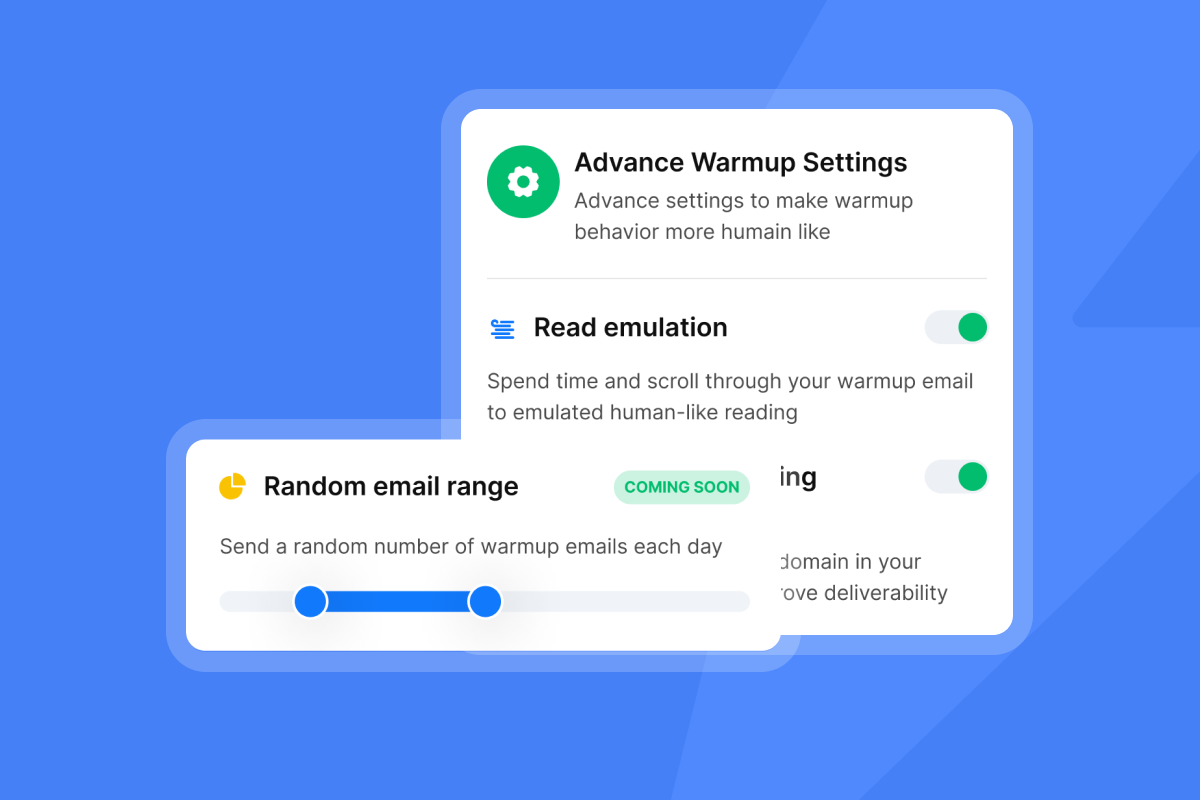
Safe sending limits protect domain reputation. Following Instantly's recommended sending guidelines, here is a practical ramp schedule that keeps bounce rates under the critical 2% threshold:
Phase | Daily sends per inbox | Action required |
|---|---|---|
Week 1-2 (new domain) | 10-20 emails/day | Monitor bounce rate daily |
Week 3 | 20-30 emails/day | Check inbox placement weekly |
Week 4+ (established) | Up to 30 emails/day | Recommended cap per inbox |
Scaling beyond 30/day | Multiple warmed inboxes across separate domains | Add inboxes, not volume per inbox |
Reaching 2,000 sends per day requires spreading volume across multiple warmed domains and inboxes. Instantly includes unlimited email accounts on all plans, so you can operate 50 or more inboxes within the per-inbox cap without adding per-seat costs. Instantly's sending infrastructure distributes volume to maintain healthy domain reputation at scale.
Follow-up emails count toward your daily total. Plan your sequence steps accordingly.
"I love that Instantly lets me reach the right people directly... The multi-inbox management, warm-up, and personalization tools make it easy to run campaigns across different industries and niches." - Victor. on G2
The email deliverability for sequences guide covers the full warmup and health monitoring system in detail, including how to set up automated alerts when metrics start moving toward dangerous thresholds.
Account for multi-channel data costs
Present leadership with the true cost stack: list purchase or SuperSearch credits, email validation, domain and mailbox setup, and the warmup period before full volume. With per-seat platforms, that cost compounds as you add reps. With flat-fee models, the sending infrastructure cost stays fixed. Our guide on email tracking software pricing models breaks down the TCO difference between seat-based and flat-fee structures, with formulas for calculating cost per meeting booked.
Build a list system that converts
A verified B2B email list is a necessary input, not a finished pipeline. Layer SuperSearch enrichment on top to filter for accounts showing active intent, validate contacts before each campaign launch, ramp sending within per-inbox limits, and monitor inbox placement before you scale. That combination, verified data plus deliverability infrastructure plus governed testing, is what separates teams that hit quota from teams that burn their domain and start over.
A verified B2B email list is a necessary input, not a finished pipeline. Layer SuperSearch enrichment on top to filter for accounts showing active intent, validate contacts before each campaign launch, ramp sending within per-inbox limits, and monitor inbox placement before you scale. That combination, verified data plus deliverability infrastructure plus governed testing, is what separates teams that hit quota from teams that burn their domain and start over.
Use A/Z testing at scale to continuously identify what messaging resonates with each segment, and track outcomes at the reply and meeting level rather than relying on inflated open metrics. Start a free trial to access SuperSearch and built-in deliverability tools, or book a demo of Instantly's B2B email infrastructure to see how the unlimited sending-account infrastructure works before you commit.
FAQs
Do B2B lists show buyer intent?
No. Standard B2B email lists capture firmographic and contact data only. Real-time intent signals such as research activity, technology changes, and funding events require separate intent data providers or enrichment tools like Instantly SuperSearch.
How often should you update a B2B email list?
Validate your list every 90 days at minimum. Given a monthly decay rate of 2.1% to 3.6%, a list unused for six months can lose 15 to 20% of its valid contacts, pushing bounce rates well above the 2% danger threshold.
What are the accuracy limitations of B2B email lists?
Providers claim 90 to 95% accuracy. Independent testing shows the industry average is closer to 50% for unverified single-source databases, with premium providers achieving 80 to 90% on independent benchmarks. Always validate before sending.
What GDPR rules apply to purchased B2B email lists?
Under GDPR, you need a legitimate interest legal basis plus a working opt-out mechanism and a completed Legitimate Interest Assessment before sending. You cannot transfer compliance liability to the list vendor.
What CAN-SPAM rules apply to cold B2B email?
You must include an opt-out link, your physical mailing address, and accurate "From" headers in every message, and you must honor unsubscribe requests within 10 business days. The legal requirements for follow-up emails guide covers the full compliance checklist for sequences.
How long does email list warmup take?
Plan 4 to 6 weeks to ramp a new domain from 10 to 30 sends per day. Instantly's built-in warmup automates the daily volume increase and monitors health scores so you can focus on copy and targeting.
- Email deliverability for sequences: warmup, health monitoring, and compliance
- Email tracking privacy and compliance: GDPR, CCPA, and data protection obligations
- Subject line testing at scale: a governance framework for sales leaders
- How to build a verified B2B email list for cold outreach
- Email tracking privacy and compliance: GDPR, CCPA, and data protection obligations
- Subject line testing at scale: a governance framework for sales leaders
Key terms glossary
Sender reputation: A domain and IP score that inbox providers use to decide whether to deliver, filter, or block your emails. Bounces, spam complaints, and spam trap hits all lower this score.
Spam trap: An email address used to identify senders with poor list hygiene. Pristine traps were never real addresses. Recycled traps were real addresses abandoned and repurposed after 6 to 12 months of inactivity.
Warmup: The process of gradually increasing daily sends from a new domain or inbox to build sender reputation before launching full-volume campaigns. The recommended ramp runs from 10 emails per day in the first week up to 30 per day by week three or four.
Hard bounce: A permanent delivery failure caused by an invalid address, nonexistent domain, or blocked inbox. Each hard bounce hurts sender reputation. Rates above 2% draw inbox provider scrutiny.
List decay: The rate at which contacts in a B2B database become invalid due to job changes, email address updates, or company restructuring. The industry average is 22.5% annually, with recent data showing monthly decay as high as 3.6%.
Inbox placement: Whether your email arrives in the recipient's primary inbox, promotions tab, spam folder, or is blocked entirely. Inbox placement rate is the upstream metric that determines whether opens, replies, and meetings are even possible.
Buying committee: The full group of stakeholders involved in a B2B purchase decision, averaging 13 people per deal. A single contact on a list typically represents one role in this group, not the full decision-making structure.
LLM-assisted enrichment: Using large language model processing to identify intent signals, match contact records across data sources, and surface trigger events like funding, hiring, or technology changes at scale. Instantly SuperSearch applies this across five or more providers to return the most current contact information available.



