.svg)
%20(1).svg)


Updated May 15, 2026
TL;DR
Executive intent signals are behavioral actions (website visits, content downloads, leadership changes, funding events) that indicate a decision-maker is actively researching a solution like yours. Demographic fit tells you who belongs in your ICP. Intent signals tell you who is ready to hear from you right now. Layering both cuts wasted rep time, lowers bounce rates, and protects domain health. Instantly.ai combines a 450M+ verified lead database with Unibox reply management and A/Z testing so your team acts on intent data inside one platform without per-seat penalties.
A massive list of CEO emails is a liability, not an asset. When reps email every executive on a cold list without filtering for intent, they scale their spam rate faster than their pipeline. Cold email reply rates have declined from 8.5% in 2019 to around 3.43% in 2026, and teams ignoring behavioral signals are driving most of that drop.
This guide breaks down how to identify true executive intent signals, layer them with verified contact data, and build a composable outreach playbook that protects your domain health and turns behavioral data into booked meetings.
Prioritizing executive contacts by intent
Most reps prioritize by title. They pull a list of CEOs in a target industry, load it into a sequence, and send. The result is predictable: low reply rates, high bounces, and a damaged sender reputation that takes weeks to repair. You do not need a bigger list. You need a smarter filter.
Intent data: behavioral vs. demographic
Demographic data describes who a prospect is. Behavioral intent data describes what they are doing right now. Both matter, but they answer different questions.
Data type | Examples | Value for sales | Action to take |
|---|---|---|---|
Demographic / firmographic | Job title, company size, industry | Confirms ICP fit | Build your target account list |
Behavioral intent | Pricing page visit, content download, email clicks | Signals active research | Prioritize and sequence now |
Technographic | Current tools in their stack | Reveals switching potential | Personalize to displacement angle |
Milestone / contextual | New CRO hired, funding round, hiring surge | Creates an outreach hook | Trigger time-sensitive outreach |
Demographic fit is necessary but not sufficient. Just because someone matches your ICP does not mean they want to buy from you right now. Behavioral signals tell you when to reach out.
The high cost of ignoring intent signals
Sending to unverified or low-intent contacts does more than waste rep time. It destroys your domain reputation. Validity's 2025 Email Deliverability Benchmark Report shows that senders maintaining hard bounce rates below 1% consistently achieve stronger inbox placement than those above 2%. Google's sender guidelines treat sustained bouncing above 2% as a spam signal that suppresses all email from that domain, and once ISPs start filtering your domain, every campaign suffers, not just the one that triggered the problem.
For a complete warmup and health monitoring system, Instantly's guide to email deliverability for sequences covers the full protection stack.
Engagement signals for qualified leads
A qualified lead based on intent is not just someone who opened your email once. Qualification requires a pattern of signals that, taken together, indicate active evaluation. The threshold you set depends on your sales cycle, but the signals that matter most are repeated visits to high-value pages, content downloads that map to a purchase decision, and company-level milestones that create urgency.
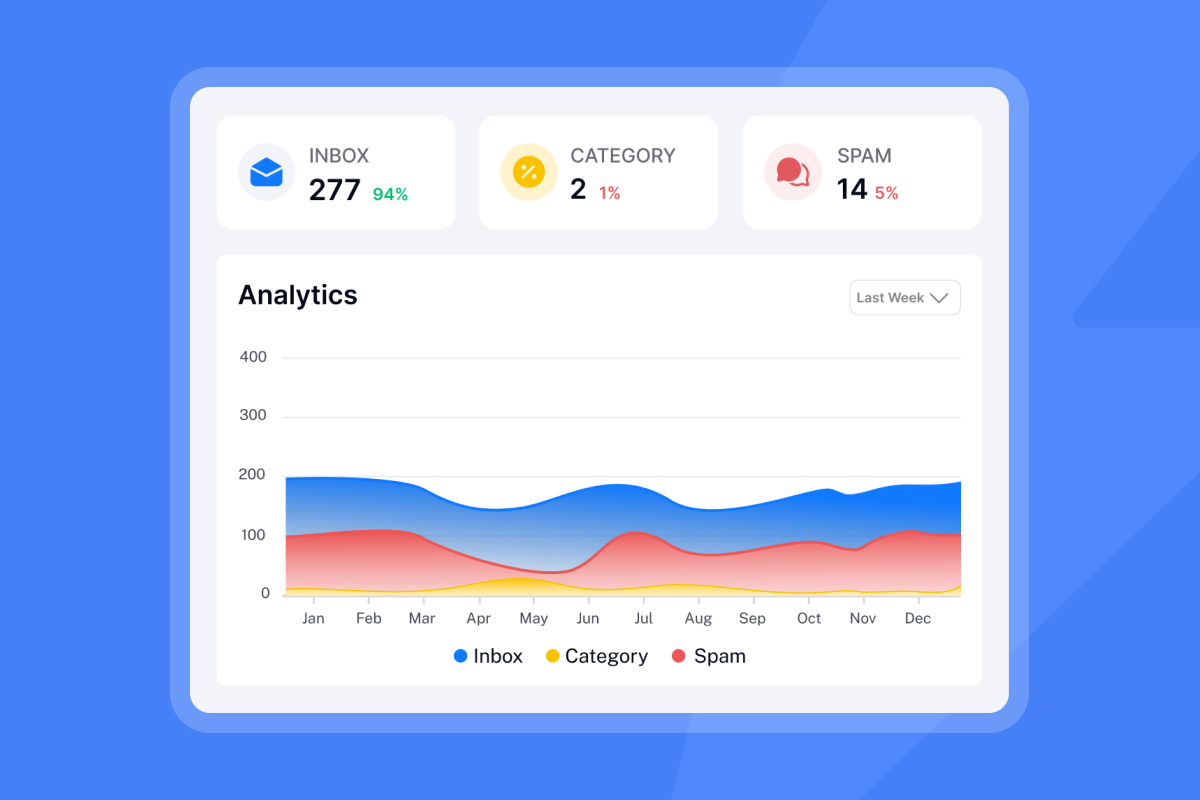
What engagement signals reveal executive buying intent
Behavioral signals fall into five categories. Understanding each one helps you assign point values accurately and avoid acting on noise.
Website behavior and page depth signals
Pricing page visits, time on product pages, and return visits within a short window are the strongest first-party intent signals you can collect. A contact who reads your homepage once is curious. A contact from a target account who visits your pricing page twice in one week is evaluating. Track both depth and time: a brief visit under 30 seconds is a weak signal on its own, while sustained time on the page, particularly 30 seconds or more combined with a return visit, is a stronger indicator of active evaluation.
How content consumption signals buying intent
Whitepaper downloads and webinar registrations often signal funnel stage. A prospect who downloads a top-of-funnel guide is typically researching the problem. A prospect who downloads a buyer's guide or ROI calculator is often comparing options. Case study views indicate a prospect is building confidence in your solution and are a useful mid-funnel signal, but treat them as a supporting indicator rather than a precise stage marker. Whitepaper downloads, webinar registrations, and case study views can indicate where a prospect is in their research, but the same content type can appear at different stages depending on the prospect's context and the specific piece they consumed.
Forrester research found that 74% of B2B buyers conduct more than half of their research online before making a purchase decision, and a Gartner study confirms B2B buyers now spend only 17% of their total buying time in direct contact with all vendors combined. Your content is where decisions form, so track who consumes it and what they download.
Watch the Instantly video on signal-based outreach at scale to see how teams apply behavioral triggers in outreach campaigns.
Deciphering email intent signals
Previous campaign engagement is an underused signal. Multiple clicks on pricing or case study links, and replies to earlier sequences all indicate interest even if the prospect has not taken a direct next step. Email click tracking reveals real engagement because open rates have become unreliable: Apple MPP and security bots inflate counts, making them a poor basis for intent scoring. Clicks and replies are the metrics that hold up under scrutiny, and Instantly's guide on email open tracking accuracy explains exactly why you should weight them far above opens.
Tracking executive and company milestones
Company-level events create buying windows that close fast. A new CRO hire is one of the strongest buying windows in B2B sales because new leaders arrive with a mandate to assess their stack, reset strategy, and spend against new priorities. Funding rounds indicate that companies are actively scaling and looking to invest in supporting tools, and timing your outreach between weeks 3 and 12 after the announcement covers both the planning phase (weeks 3-4, when press activity winds down and warm outreach lands) and the execution phase (weeks 5-12, when decision-makers are actively evaluating vendors and deploying fresh budget). Hiring surges in functions your product supports are a direct proxy for expansion.
These signals are available through third-party intent providers and enrichment tools. The Signals filter in SuperSearch inside Instantly lets you filter the 450M+ contact database by recent company news and milestones without leaving the Instantly platform to run your initial filter, so you build targeted lists around these events.
Identifying social interest signals
Engagement with your company's posts, reactions to industry content, and follows of relevant thought leaders indicate that a prospect is building awareness and comparing options. These signals are weaker on their own but meaningful when layered with website or email data. Track LinkedIn profile views of your executives, shares of your content, and comments on posts related to your solution category. When a target executive engages with multiple pieces of your content over several weeks, that pattern strengthens their intent score. Tools that monitor social engagement can feed these signals into your scoring system, but treat social activity as a secondary indicator that confirms stronger signals like website visits or email clicks rather than a primary trigger for outreach on its own.
Layering intent data with verified email research
Intent data only works if the contact information attached to it is clean. A perfectly timed outreach to a bounced email address still counts as a hard bounce.
Validating email deliverability before outreach
List hygiene is the foundation. Cap bounces at or below 1% to protect your sender reputation, and verify any list sourced from third-party providers, scraped directories, or stale CRM records before loading it into a sequence. The secondary sending domains guide explains how to protect your primary domain by warming secondary domains for outreach volume.
Unifying CRM and engagement for intent
Your intent data sits scattered across too many platforms: your marketing automation tool, your CRM, third-party enrichment providers, and your email platform. When these systems do not sync, reps act on stale signals or miss high-intent contacts entirely. Syncing CRM, calendar, and workflows into a unified stack removes data silos and gives reps a complete picture before they reach out.
Prioritize contacts with buying intent
Once your data is clean and unified, rank contacts by intent score and pull the highest-scoring executives into active sequences first.
Instantly's SuperSearch gives you access to 450M+ verified B2B contacts with LLM-assisted enrichment and waterfall validation across multiple data providers. Use the Signals filter to build lists of executives who match your ICP and show recent company activity without leaving the Instantly platform to run your initial filter. Watch the Instantly video on the next phase of cold email to see how signal-first list building changes campaign performance.
Developing your exec engagement playbook
Standardizing how your team scores and acts on intent data separates a repeatable system from one rep's personal process.
Designing your intent scoring system
Assign point values based on the strength and recency of each signal, and calibrate weights using your closed-won deals. What did those prospects do before they became customers? Start with five to seven signals and adjust based on your actual win data.
Signal type | Example point value | Recommended action |
|---|---|---|
Pricing page visit (1 visit) | +8 to +25 | Monitor and watch for repeat visits before acting |
Pricing page visit (2+ in same week) | +40 to +60 | Move to high-intent list |
Buyer's guide or ROI calculator download | +6 to +20 | Trigger personalized outreach |
Webinar registration | +4 to +20 | Add to nurture sequence |
Email click on pricing or case study | +5 to +15 | Flag for SDR follow-up |
New CRO / VP Sales hired | +30 | Trigger time-sensitive outreach |
Funding round announced | +25 | Assign to AE for outreach |
Hiring surge in relevant function | +10 to +20 | Add to active sequence |
Competitor research activity (G2, review sites) | +15 to +25 | Send displacement-focused message |
A practical routing structure: contacts scoring in the highest band go directly to your sales team with a Slack alert, mid-range scores enter a marketing nurture sequence, and contacts below your minimum threshold stay in a monitored cold pool until their signals strengthen.
Pinpointing intent by buyer stage
Map your signals to funnel position before you write a single email. Top-of-funnel signals (content downloads, webinar registrations) warrant educational outreach. Middle-of-funnel signals (pricing page, demo requests) call for direct, outcome-focused messaging. Bottom-of-funnel signals (multiple product page visits, competitive research, direct meeting requests) justify an immediate personal touchpoint from an AE. The Instantly cold email strategy guide covers how to match message type to buyer stage in detail.
Defining executive readiness criteria
Set a clear score floor before an SDR reaches out, because without one, reps default to the whole list and the problem restarts. A practical baseline requires multiple distinct signal types, a verified email address with no previous hard bounce, and recent activity within your signal expiry window. Adjust the threshold based on your deal size and sales cycle length.
Prioritizing executives by urgency and fit
Use a two-axis matrix. The X-axis tracks ICP fit score (firmographic and demographic alignment). The Y-axis tracks intent score (behavioral signal total). The top-right quadrant (high fit, high intent) gets immediate personal outreach. High fit, low intent goes into a nurture sequence. Low fit, high intent gets monitored but not contacted. Low fit, low intent stays cold. B2B buying cycles involve multiple stakeholders and touchpoints before a decision is made, so reps who prioritize high-intent prospects focus their time and attention on buyers who are actively evaluating rather than ones who are not yet in-market.
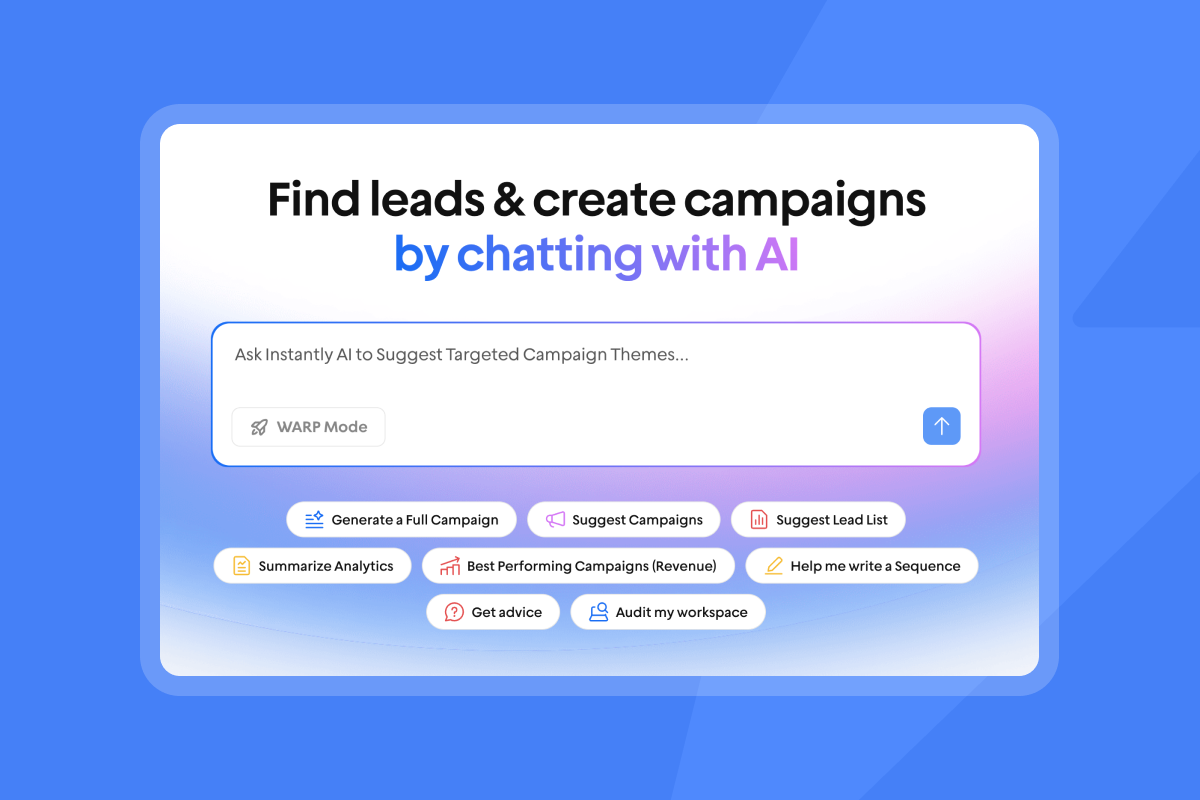

Collecting and monitoring executive intent data
Intent data comes from multiple sources: your own website, your email platform, and third-party providers. Each source carries a different reliability level and a different collection cost. Understanding where your signals come from helps you weight them accurately and act on the strongest ones first.
Your website and email intent data
First-party data is the most reliable and the most underused. Your website behavior data shows you exactly which companies are actively researching. Your email engagement data (clicks, replies) adds another layer. Both are free to collect if you have the right tracking setup in place. The Instantly email click tracking guide explains how to build a click-based intent score for each contact beyond inflated open rates.
Evaluating third-party intent providers
Third-party intent data broadens your signal coverage to include research activity your prospects conduct outside your owned properties. When evaluating providers, look for:
- Data lineage: Where does the data come from and how is it collected?
- Recency: How often is it updated?
- CRM integration: Can it push directly into your outreach platform?
- Transparent pricing: Are credits and costs clearly defined?
Avoid providers that cannot explain their data collection methodology or offer no way to verify contact accuracy before import. The email list pricing guide breaks down cost models from $0.03 to $5+ per contact and shows how to calculate true ROI before you buy.
Operationalizing intent data in CRM
You cannot drive meetings with data stuck in a spreadsheet. Intent data only generates pipeline when reps can see it in the tools they use daily. Push enriched, scored contacts directly into your outreach platform with the appropriate sequence pre-assigned based on score band.
Instantly's Unibox centralizes replies from all connected inboxes into a single dashboard. Every response shows the campaign it came from and the full conversation history, so SDRs triage by intent without switching between accounts. The turning leads into meetings guide covers how to handle replies efficiently once intent-triggered sequences generate responses.
"I use Instantly for cold emailing for my company, and I really appreciate the deliverability it offers. I like the 'interested leads' feature because I get notified when somebody is interested, so I don't have to check it manually." - Laura R. on G2
Avoiding intent data quality risks
Stale data is almost as harmful as bad data. Intent signals decay quickly. Review your high-priority segments regularly and remove contacts whose signals have aged out before your reps act on them. Also confirm that any third-party data you collect complies with GDPR and CCPA requirements before import. The email tracking privacy and compliance guide covers your obligations in detail.
How to book meetings with high-intent executives
Identifying intent is only half the work. Turning a high-intent signal into a booked meeting depends on timing, message relevance, and a clean handoff between your marketing and sales motions. The steps below cover each variable in sequence.
When to engage high-intent executives
Send windows matter as much as targeting. Morning send windows tend to see stronger engagement for many B2B audiences, but optimal timing varies by industry, role, and list. Test send windows against your own reply data to find what works for your ICP rather than relying on a universal benchmark. Keep daily sends at or below 30 per inbox to protect sender reputation. If your bounce rate reaches 1.5%, investigate the list source and run re-verification before sending further. If it climbs above 2%, pause the campaign entirely, re-verify the full list, and resume conservatively once the source of the problem is confirmed. Google's sender guidelines recommend cutting back on volume when bounce rates rise, so resume conservatively and monitor closely rather than returning immediately to your previous send cap.
Personalizing messaging based on behavior
Reference the specific intent signal in your opening line. A contact who visited your pricing page twice in one week needs a different message than one who just joined a new company. The signal tells you what they are evaluating, and your message should confirm you understand their situation and offer a clear next step tied to it.
The cold email copywriting framework covers the exact structure for connecting signal-based hooks to outcome-focused copy, and the cold email subject line checklist provides a full pre-send QA process.
"I love that Instantly lets me reach the right people directly... I can contact CEOs, founders, and managers in the construction niche, and they actually reply and show interest in our lifting equipment. The multi-inbox management, warm-up, and personalization tools make it easy to run campaigns across different sub-niches." - Victor on G2
Smooth handoffs from sales to marketing
When a contact downloads a buyer's guide, the right response depends on their qualification criteria, not the content type alone. A contact who matches your ICP and already holds a high intent score should route directly to the assigned SDR for a personalized sequence. A contact who meets your firmographic criteria but shows weak behavioral signals stays in an automated drip campaign adjusted to their activity until they cross your intent score threshold. Agreeing on handoff criteria with your marketing ops team before campaigns launch prevents double-touches and conflicting messages.
Protecting domain health and deliverability
Warmup is non-negotiable for new domains because mailbox providers need to see gradual sending patterns before they trust your infrastructure. Inbox placement tests tell you whether your emails land in the primary inbox or get filtered before you send to live prospects.
Instantly's automated Inbox Placement tests run checks across mailbox providers so you catch deliverability problems before they affect campaign performance. The warmup network of 4.2M+ accounts builds sender trust on every new inbox you add. On the Light Speed plan, SISR (Server and IP Sharding and Rotation) adds dedicated private IP pools for teams sending at high volume.
"I appreciate Instantly for its intelligent handling of domain and mailbox rotation as well as provider matching, which is critical for ensuring that my emails land directly in the primary inbox instead of getting caught in spam filters." - Richard E. on G2
How to measure and refine your executive intent signals
Acting on intent data is the first step. Improving it over time is what separates a system that scales from one that stalls. The sections below cover how to track the metrics that connect to revenue, calibrate your scoring model against closed-won data, and use A/Z testing to validate which signal-based hooks drive replies for your ICP.
Measuring true buying intent signals
Track the metrics that connect to revenue. Reply rate should hit 5% or higher on intent-targeted segments. Meetings booked per 100 emails sent realistically land at 1 to 2 per 100, depending on deal type and offer clarity. Track both by signal category so you learn which intent triggers produce the best pipeline.
The subject line testing governance framework covers how to run statistically valid tests at scale, including minimum send volumes per variant and how to read results without drawing false conclusions.
Scoring executive readiness signals
Calibrate your intent score weights against your closed-won data on a regular cadence, and revisit the model whenever your pipeline mix, ICP, or product offering changes. For calibration to hold up, you need enough closed-won and closed-lost examples to reveal patterns rather than noise. The larger your sample, the more confident you can be that a signal weight reflects real buying behavior rather than coincidence. Pull your closed deals and compare the signals those prospects showed before they converted, using as large a sample as your pipeline allows, but check your sample size first.
A widely cited rule of thumb in lead scoring is to aim for at least 1,000 leads and 100 conversions before treating pattern analysis as reliable. Below that threshold, signal weights may reflect coincidence in a small dataset rather than genuine buying behavior, so build your calibration process as your closed-deal volume grows. If pricing page visits consistently appear in the 90 days before a deal closes, increase the point weight. If any signal type, regardless of category, rarely appears in your closed-won data, reduce its weight or remove it from your model. Let your own pipeline data determine which signals carry weight, not assumptions about signal categories.
Refining executive intent scoring
A/Z testing lets you validate which intent-based message hooks drive replies at the signal level. Instantly supports up to 26 email copy variants per sequence step. Test different intent-based hooks one at a time to isolate which signal resonates: set up a single A/Z test with a control variant plus one signal-type hook per additional variant (a funding round reference in variant B, a pricing page visit reference in variant C, a new hire angle in variant D), keeping all other copy elements identical so the only variable is the signal reference. After 1,000+ sends per variant, the reply rate data tells you which signal resonates most with your ICP at each funnel stage. Running multiple signal-type tests simultaneously can introduce interaction effects that make results harder to interpret, so sequence your tests when possible.
Watch the Instantly video studying 1,000,000 cold emails to see which copy patterns produce replies across a large sample and use the results as benchmarks for your own variant tests.
How to prioritize executives using intent signals
Scoring and collecting intent data is only useful if your team knows how to act on it consistently. The sections below cover which signals justify immediate outreach, how to fix gaps in your contact and intent data, how to prevent signals from going stale, and how to segment your campaigns by intent tier so reps always work the highest-value contacts first.
What intent signals trigger outreach?
Act immediately on three signal types:
- Pricing page visits (2+ in one week): The prospect is actively evaluating, so reach out while the signal is fresh.
- New CRO or VP Sales hire: This is a high-converting buying window. New leaders typically assess their tech and data stack between weeks 3 and 8 (days 21-56), after they have diagnosed the revenue machine and built trust with their team. Reach out during this window when they are moving from diagnosis to decision-making and have the context to evaluate what their stack is missing.
- Funding round announced: Companies that just closed a round are actively allocating budget. The optimal window for outreach is weeks 3-12 after the announcement, when leadership moves from press interviews (weeks 1-2) into planning and execution phases where they actively evaluate vendors.
Fixing intent and contact data gaps
Run a data audit quarterly. Pull your bounce rate by list source. If any source produces bounces above 1%, pause campaigns from that source and re-verify the entire list before reactivating. Add enrichment to contacts missing job title, company size, or industry fields, because contacts missing key demographic fields produce less reliable ICP fit scores, which reduces the accuracy of the combined behavioral and demographic scoring model. Watch the new rules of cold email video to see how standards for list quality and deliverability have shifted and which practices teams need to retire.
Preventing stale executive intent signals
Speed to lead is critical when behavioral signals drive outreach because a website visit or content download has a short half-life. Build automations that move high-scoring contacts into active sequences within 24 to 48 hours of the signal firing. Set up Slack alerts for contacts that cross your high-intent score threshold so SDRs respond the same day. Watch the 10 years of cold email advice video to see how practitioners have moved from volume-first approaches to signal-first ones, with practical frameworks you can adapt for your team.
Optimizing cold outreach with intent
Build separate campaign segments in Instantly for each intent tier. High-intent contacts get a short, direct sequence with strong personalization tied to their specific signal. Mid-intent contacts get a longer educational sequence with softer asks. Low-intent contacts stay in a monitoring pool and enter active sequences automatically when their score crosses the threshold.
The Signals filter in SuperSearch lets you filter the 450M+ database by recent signals so you can narrow your list to executives who match your ICP and show recent company activity.
Your reps are not the constraint. Bad targeting is. Give them intent-filtered lists, verified contact data, and message variants tested against real signal types, and the meetings follow. Try Instantly free and use SuperSearch with the Signals filter to build your first intent-based executive list today.
FAQs
What are executive intent signals?
Executive intent signals are behavioral actions taken by a decision-maker that indicate active interest in a solution category, such as pricing page visits, content downloads, email link clicks, or company milestones like funding rounds and new leadership hires. They differ from demographic fit data by revealing which contacts are ready to engage right now, not just who belongs in your ICP.
How many intent signals do I need before contacting an executive?
Consider requiring a combination of signals before triggering outreach rather than acting on any single data point in isolation. A single pricing page visit is a weak signal on its own, but a pricing page visit combined with a recent leadership change and a content download creates a stronger case for a personalized sequence.
What bounce rate damages my domain reputation?
Validity's 2025 benchmarks show that hard bounce rates above 1% weaken inbox placement compared to senders staying below that threshold. Keep bounces at or below 1% by verifying contacts before loading them into any sequence.
How does A/Z testing help with intent-based outreach?
A/Z testing lets you run up to 26 copy or subject line variants simultaneously in Instantly to identify which intent-based hook (funding round mention, pricing page reference, new hire angle) drives the highest reply rate for your ICP. After 1,000+ sends per variant, the data tells you which signal resonates and you standardize that hook across your team's sequences.
How do I keep intent data from going stale?
Set appropriate signal expiry windows for high-intent behavioral signals and use automations to move contacts out of high-priority segments when their signals age out. Route your highest-scoring contacts into active sequences within 24 to 48 hours of the trigger to act while the signal is still relevant.
Key terms glossary
Executive intent signals: Behavioral data points indicating that a decision-maker is actively researching a purchase, including pricing page visits, content downloads, email clicks, and company milestones.
Sender reputation: A domain and IP-level score that mailbox providers use to determine whether your email lands in the primary inbox or gets filtered to spam, calculated from bounce rates, spam complaint rates, and engagement patterns.
List hygiene: The practice of verifying, cleaning, and updating your contact database to remove invalid addresses, reduce bounce rates, and maintain domain health before and during campaigns.
Unibox: Instantly's centralized inbox that consolidates replies from all connected email accounts into a single dashboard, showing campaign source and full conversation history for each contact.
SuperSearch: Instantly's B2B lead database of 450M+ verified contacts with LLM-assisted enrichment, waterfall validation across multiple providers, and a Signals filter for intent-based targeting by company news and milestones.
A/Z testing: Instantly's feature for running up to 26 email copy or subject line variants simultaneously within a sequence step to identify the highest-performing message through live send data.
Primary inbox: The main inbox folder in Gmail and Outlook where emails land when sender reputation and authentication signals confirm legitimate sending practices.
Read next
- Guide For Agencies: How to send 1,000+ personalized cold emails per week: How agencies build and manage high-volume cold email campaigns while keeping personalization sharp and deliverability intact.
- A Step-by-Step Outbound Lead Generation Strategy for Consistent 5% Reply Rates: A repeatable outbound system covering list building, sequencing, and the targeting decisions that drive consistent reply rates.
- What’s a Good Cold Email Reply Rate? Instantly’s Benchmarks: Instantly’s reply rate benchmarks across industries, with context on what separates above-average performance from campaigns that need a rethink.



