.svg)
%20(1).svg)


Updated April 20, 2026
TL;DR: A generic proposal email loses deals you already earned. The templates below are organized by deal type (SaaS upsells, services, partnerships, enterprise) with "When to Use" and "Intended Outcome" notes so you can drop in the right structure immediately. For SaaS, focus on ROI and usage data. For services, tailor your pitch to the client's specific needs and business impact. For partnerships, emphasize the value exchange and shared goals. For enterprise, address compliance and stakeholders from line one. Pair these templates with domain warmup, list hygiene, and automated follow-up sequences to get consistent inbox delivery and replies.
Most founders obsess over the design of their proposal PDF while ignoring the email that delivers it. The email determines whether the attachment gets opened, whether the follow-up lands, and whether the deal progresses. This guide provides business proposal email templates organized by deal type, plus the deliverability and AI systems to send them at scale.
Square brackets indicate merge fields you replace with actual data before sending.
Customize proposals for higher reply rates
A business proposal email has one job: get a specific person to take a specific next step. It's not a summary of your deck. It's a short, clear argument that says "here is your problem, here is my solution, here is what we do next."
Keep the email to 200-300 words for most deal types. Longer emails invite the "I'll read this later" response that never comes.
Converting proposal email elements
Every high-converting proposal email shares a common structure. The cold email copywriting framework we use to generate 400+ replies monthly follows the same logic:
- Subject line: Specific, short (30-45 characters), and tied to a measurable outcome.
- Opening line: One sentence that shows you understand their specific situation. Replace "I hope this finds you well" with "I noticed [Company] is hiring new SDRs" or another concrete signal you researched them.
- Problem statement: Frame the problem in terms your prospect cares about.
- Solution outline: Keep your approach brief and clear.
- Proof: Add supporting evidence like a data point, customer result, or relevant credential.
- CTA: A single, low-friction next step.
Weak vs. strong CTAs:
Weak CTA | Strong CTA |
|---|---|
"Let me know your thoughts." | "Can you take 10 minutes Thursday at 2pm to walk through the proposal?" |
"Please review when you have time." | "Reply with your top concern before Friday and I'll address it directly." |
"Feel free to reach out." | "I'll send a 5-minute Loom walkthrough Wednesday. Would that help?" |
"Looking forward to your response." | "Which fits your timeline better: Q2 kickoff or Q3 pilot?" |
Maximize SaaS LTV: upsell email templates
For SaaS upsells, the conversation is already warm. Your contact knows your product. The goal is to connect an existing behavior or gap to the next tier of value.
Template 1: Upsell advanced features
When to use: When usage data shows a customer hitting a plan limit or repeatedly triggering a feature they don't have access to.
Intended outcome: Book a 20- to 30-minute call to demo the advanced tier and confirm upgrade intent.
Subject: [First name], you're hitting [Feature] limits
Hi [First name],
I noticed [Company] has been hitting the [Feature] cap multiple times this month. That usually means the team has validated the workflow and is ready for more volume.
Upgrading to [Plan Name] removes that cap and adds [Key Benefit 1] and [Key Benefit 2], which typically saves teams at your stage around [X hours/week] on [specific task].
[Customer Name] at [Similar Company] saw a [X]% reduction in [metric] within 60 days of upgrading.
Would 15 minutes this week work to walk through what that looks like for your team?
[Your name]
Template 2: How to propose usage upgrades
When to use: When a customer is 70-80% of the way to a plan limit but hasn't triggered a hard cap yet. Proactive outreach before they feel friction.
Intended outcome: Agreement to upgrade before the limit is hit, with minimal objection.
Subject: Getting ahead of your [Metric] growth
Hi [First name],
Your team is using about [X]% of your [Metric] allocation, which puts you on track to hit the limit around [Date]. I'd rather flag this now than have it interrupt a campaign mid-run.
Moving to [Plan Name] at [Price] keeps everything running without interruption and also gives you access to [Bonus Feature] starting immediately.
I can apply the change today. Want me to go ahead, or would you prefer to talk through it first?
[Your name]
Template 3: Grow customer lifetime value
When to use: Quarterly business review or annual renewal window. The customer is healthy but not using a high-value feature set.
Intended outcome: Identify an expansion opportunity tied to a business goal they've already stated.
Subject: [Company]'s Q[X] results + one more opportunity
Hi [First name],
Looking at your Q[X] results: [Metric 1], [Metric 2], [Metric 3]. Solid progress.
One area where I see room to grow: [Feature Set] isn't active on your account yet, and it directly addresses [stated goal from previous conversation].
Customers who activate this see [Specific Outcome] on average. Given your current trajectory, this could mean [Business Impact].
I've put together a short overview. Would you like me to send it over, or would a quick call be more useful?
[Your name]
Make your SaaS offer stand out
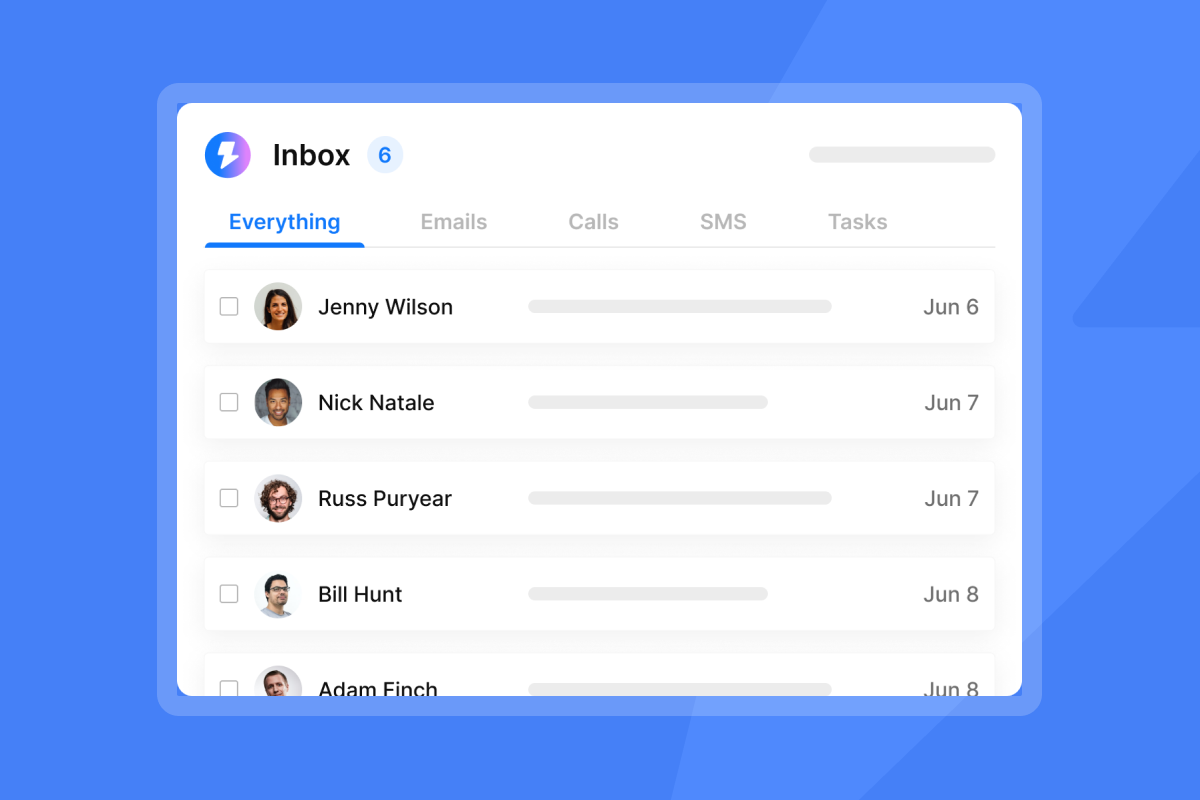
Track upsell email performance inside our Unibox, Instantly's reply management platform that consolidates all replies into one pipeline view. Label conversations by stage ("Proposal Sent," "Pricing Question," "Ready to Close"), assign follow-up tasks, and quickly identify which accounts have gone quiet after receiving your proposal. This matters for upsells because timing is everything. If a customer hits a feature limit on Monday and you follow up on Friday, the window closes.
"I really appreciate... Instantly basically cultivates all the tools I need in one place for cold email, which saves me from spending a lot on different tools." - Leon S. on G2
Speed up your service offer emails
Service proposals need to quantify the cost of the problem before introducing the price of the solution. Buyers who understand what inaction costs in dollars or hours are far easier to close because the ROI math is already done for them.
Template 1: Initial project proposal email
When to use: First proposal after a discovery call or inbound inquiry from a new potential client.
Intended outcome: Get the prospect to open the attached proposal document and respond with feedback or questions.
Subject: [Project Name] proposal for [Company]
Hi [First name],
Thank you for the conversation on [Date]. Based on what you shared, the core challenge is [1-sentence problem summary], which is costing [Company] roughly [Estimated Cost or Time Lost].
Attached is a proposal covering:
- Scope and deliverables
- Timeline: [X weeks/months]
- Investment: [Price Range or "see page 3"]
- Next steps if we move forward
My recommendation is [Specific Approach] because [One Reason Tied to Their Situation].
I'd like to walk through it with you on [Day] or [Day]. Which works better?
[Your name]
Template 2: Recurring revenue service proposals
When to use: Proposing a retainer or subscription model to an existing project client or a warm prospect who needs ongoing support.
Intended outcome: Confirm interest in the retainer approach and alignment on the structure before diving into detailed terms.
Subject: Monthly retainer structure for [Company]
Hi [First name],
After [Project/Discovery Context], I want to propose a structure that gives [Company] consistent support without the stop-start cycles of project work.
Here's what a monthly retainer would look like:
- Deliverables: [X, Y, Z per month]
- Investment: [Price/month]
- Minimum commitment: [X months]
- What stays flexible: [Describe scope flexibility]
Clients on this model typically see [Specific Outcome] within [Timeframe] because momentum compounds month over month.
Can we schedule a call this week to walk through fit?
[Your name]
Template 3: Client phased engagement proposal
When to use: When pitching a phased engagement where the client needs to see the full arc from current state to target outcome before committing to phase one.
Goal: Secure buy-in for Phase 1 while establishing clarity on the full roadmap through phases 2 and 3.
Subject: From [Current State] to [Target Outcome]: a phased plan
Hi [First name],
Based on our conversations, here's how I'd structure the path from where [Company] is today to [Target Outcome]:
Phase 1 ([Timeframe]): [Goal, Deliverables, Price]
Phase 2 ([Timeframe]): [Goal, Deliverables, Price]
Phase 3 ([Timeframe]): [Goal, Deliverables, Price]
Starting with Phase 1 gets you [Specific Early Win] without locking into the full scope. Most clients confirm Phase 2 after seeing those results.
The attached proposal has the full breakdown. Want to schedule 20 minutes to review it together before [Date]?
[Your name]

Ready-to-send strategic alliance email scripts
Partnership proposals require a different frame. The other party evaluates mutual benefit, not vendor pricing. Lead with what they gain, state what you contribute, and put the revenue split in the email body.
Template 1: Email for integration proposals
When to use: Proposing a technical integration with a complementary SaaS product where both platforms benefit from the connection.
Intended outcome: Start a conversation about integration possibilities.
Subject: [Your Product] + [Their Product] integration idea
Hi [First name],
I'm [Name] from [Company]. We serve [Audience], and a large chunk of them also use [Their Product] daily.
A native integration between our platforms would let our shared users [Specific Workflow Improvement], which solves a gap we hear about regularly in support and reviews.
From your side, it creates a new distribution channel into [Your Audience Size/Type].
I've outlined a basic technical spec and go-to-market approach in the attached doc. Would you be the right person to explore this with, or should I connect with someone else on your team?
[Your name]
Template 2: Activating affiliate and referral channels
When to use: Inviting a creator, consultant, or community owner to join your affiliate or referral program.
Intended outcome: Agreement to join the program and receive their first referral link.
Subject: Revenue share idea for [Their Name/Brand]
Hi [First name],
I follow your work on [Platform/Topic]. Your audience of [Audience Description] overlaps closely with the people who get the most value from [Your Product].
We run an affiliate program that pays [Commission Structure, e.g., "40% recurring for the life of the customer"]. Based on your current audience size and engagement, a conservative estimate puts that at [Rough Revenue Estimate] over 12 months.
No minimum commitments. No exclusivity requirements. You'd get a custom link, co-branded assets, and a direct contact on our team for any questions.
Want me to send the program details?
[Your name]
Template 3: Launching a joint venture
When to use: Proposing a co-created product, event, or market initiative with a complementary brand where both parties contribute resources and share revenue.
Subject: Joint project idea: [One-line description]
Hi [First name],
I've been thinking about a specific opportunity where [Your Company] and [Their Company] could build something together for [Shared Audience].
The concept: [2-sentence description of the joint venture]. Based on [Your Audience Size] and [Their Audience Size], a conservative launch could generate [Revenue or Lead Estimate] split [X/Y]%.
I have a short one-pager covering the structure, economics, and what each side contributes. Would you want to see it before we schedule time to talk?
[Your name]
Crafting goal-specific partner pitches
Every partnership email should answer three questions immediately: what does the other party gain, what do you contribute, and how does revenue or value get split? Put the revenue split, audience size, and estimated upside in the email body, not buried in the attachment. Vague language like "mutually beneficial partnership" wastes the reader's time and signals you haven't done the math.
Crafting enterprise proposal emails
Enterprise deals involve multiple stakeholders, longer timelines, and stricter security requirements. Your proposal email must address the CFO's budget concern, IT's security checklist, and the end user's workflow need in one message, often before you've met any of them.
Template 1: Multi-stakeholder RFP response
When to use: Responding to a formal RFP (Request for Proposal) or when two or more stakeholders will read your proposal email.
Intended outcome: Confirm a review meeting with all stakeholders.
Subject: [Company] RFP response: [Your Company]
Hi [First name],
Thank you for including [Your Company] in this process. Attached is our response to the RFP issued on [Date].
To address the priorities you outlined:
- Security and compliance: [One sentence on certifications, DPA, sub-processors]
- Implementation timeline: [Specific weeks/milestones]
- Pricing: [Plan name and price, or "see section 4 of the attached"]
- References: [Two relevant customer names or case study links]
I'd recommend a review call to walk through the technical sections with your team. I can accommodate [Name from IT], [Name from Legal], and [Name from Finance] in one session if that's easier.
I'm available [Day] or [Day]. What works for your group?
[Your name]
Template 2: Structuring custom deal terms
When to use: When standard pricing doesn't fit and you're proposing a custom contract structure, volume discount, or phased commitment.
Subject: Custom terms for [Company]: [Your Company]
Hi [First name],
Based on our conversations about [Company]'s requirements, standard pricing isn't the right fit. Here's what I'd propose instead:
- Commitment: [Volume or Term]
- Pricing: [Custom Price or Discount vs. List]
- Key inclusions: [Feature 1, Feature 2, SLA terms]
- Exclusions: [What's not in scope]
- Contract term: [Length and renewal structure]
This structure gives [Company] cost predictability and gives us the commitment needed to resource your account at the level you need.
Can we confirm these commercial terms before I pass this to legal for drafting?
[Your name]
Template 3: From pilot to enterprise deal
When to use: Transitioning a successful pilot or proof-of-concept into a full enterprise contract.
Intended outcome: Signed enterprise agreement following pilot validation.
Subject: [Company] pilot results + enterprise proposal
Hi [First name],
The [X-week] pilot hit [Specific Results]. The team used [Feature] [X times] and reported [Qualitative Outcome].
Based on that performance, I've put together the enterprise proposal for full rollout across [Number of seats/accounts/departments].
Key terms:
- Scope: [Description]
- Pricing: [Price, noting any pilot discount applied]
- Onboarding: [Timeline]
- Success milestones: [Implementation checkpoints]
Given your Q[X] budget cycle, I'd recommend moving to contract review this week. Want to get [Legal/Procurement] looped in now?
[Your name]
Customizing for enterprise: essential checklist
Before you send any enterprise proposal email, confirm:
- Named stakeholders are addressed or CCd correctly
- Security and compliance language is included (DPA, certifications, data handling)
- Pricing details are clearly documented to avoid confusion across stakeholders
- Implementation timeline is explicit, not vague ("Q3" is not a date)
- A clear escalation path is stated if the primary contact is unavailable
- Follow-up plan is documented for non-response scenarios
Personalize templates for higher reply rates
Using [First name] is the floor, not the ceiling. Personalizing subject lines can boost open rates by up to 50%, and personalized subject lines produce 26% higher unique open rates compared to generic ones.
Personalize key proposal template fields
Go beyond the name. For each recipient, add one of these before you send:
- Reference a specific LinkedIn post, interview, or company announcement from the last 30 days.
- Name a product change or pricing update you noticed on their site.
- Mention a hiring signal: "I saw you're scaling your sales team."
- Reference a mutual connection or shared community if relevant.
The opening line should not read like a mass email. As the cold email personalization masterclass from our channel explains, even one tailored sentence at the start dramatically improves engagement because it signals you did actual research. "I noticed you're hiring new SDRs" is specific. "I hope this finds you well" is deleted.
Tailor proposal language by audience
The same deal requires a different tone depending on who reads it:
Reader | Tone | Lead with | Avoid |
|---|---|---|---|
Startup founder | Direct, peer-to-peer | Time to first result | Over-formality |
Corporate VP | Formal, risk-aware | ROI and compliance | Jargon and over-informality |
Technical lead | Specific, detailed | Integration and architecture | Vague outcomes |
Procurement | Clear, structured | Contract terms and SLAs | Vague claims |
When to add or remove template sections
Tailor template sections to fit each opportunity's context and the relationship you have with the buyer.
Automate personalization and reply handling
Our AI Sequence Writer drafts full proposal sequences from a short brief, and our AI Reply Agent handles inbound responses in under 5 minutes, routing replies by intent and drafting responses for your review. Configure it in human-in-the-loop mode (you approve each reply) or autopilot mode for standard responses.
"What stands out to me most is the amazing AI reply agent. It significantly simplifies our tasks by generating very accurate messages that I only need to review, thereby enhancing our efficiency in engaging with long-term leads." - Verified user review of Instantly
How to write winning business proposal emails
Proposal email word count guide
Keep your proposal email to 200-300 words for most deal types, which gives you enough space for a problem statement, a solution summary, one proof point, and a CTA. More complex contexts may require additional detail, but only include it when it directly removes a buying objection. Write short paragraphs of one to three sentences each, as a wall of text signals you haven't distilled your value proposition.
Attaching vs. linking your proposal doc
Method | Pros | Cons |
|---|---|---|
PDF attachment | Familiar format, no login required | Adds file size to email |
Trackable link (e.g., DocSend) | Can show document engagement | Requires additional click |
Inline summary only | Reader sees content immediately | Provides limited detail |
The safest approach for cold proposal emails is an inline summary with a trackable link to the full document. Attachments in cold outreach raise spam filter flags. For warm proposals after a discovery call, ask permission first, then send a PDF in the reply thread or link to a case study page on your site.
What to send in your follow-up email
Research on cold email sequencing shows 55% of replies come from follow-ups rather than the initial email, and 3-day intervals produce a 31% reply rate increase compared to shorter gaps. A strong proposal follow-up cadence looks like this:
- Day 1: Initial proposal email
- Day 3-4: First follow-up - add value or context that wasn't in the initial email
- Day 7-8: Second follow-up - consider addressing potential concerns or adding new information
- Day 12-14: Breakup email - low-pressure "closing the loop" note that leaves a future door open
Automate this sequence in Instantly so each follow-up sends in the same thread, maintaining context. Keep individual inbox send volume capped at 30 emails per day to protect your sender reputation. Pair this with our inbox placement tests to confirm you're landing in the primary inbox before scaling.
For a full walkthrough of building sequences that convert, the cold email follow-up masterclass from our channel covers timing, tone, and structure across a full cadence.
Ensuring deliverability:
Your proposal copy is useless if it hits the spam folder. Three non-negotiable steps before any proposal campaign:
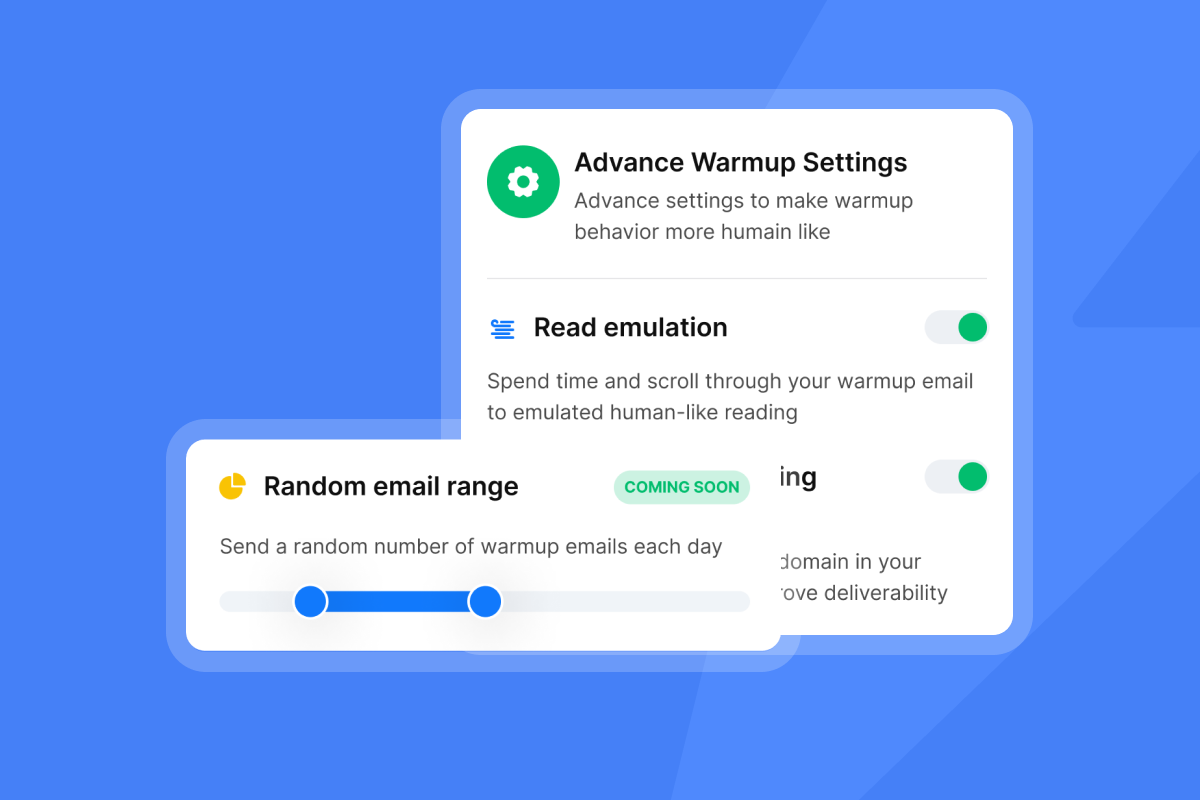
- Warm your domain for 30 days minimum. Newly registered domains are flagged as suspicious by spam filters, and emails from them face high rejection rates. Our built-in warmup runs automatically across a network of 4.2M+ accounts, building sender reputation before your first send.
- Keep hard bounce rate under 1%. Exceed this threshold and mailbox providers flag your list quality, which damages domain health. Verify every list before importing. For a full guide to keeping sequences out of spam, our post on email deliverability best practices for cold campaigns covers authentication, warmup, and monitoring in detail.
- Use secondary sending domains for cold outreach. Never run cold outreach from your primary business domain. The secondary sending domain strategy separates your outreach reputation from your company's core email infrastructure. Warm proposals to existing contacts are lower risk, but cold prospecting should always run from a secondary domain.
Crafting high-converting proposal subject lines
Keep subject lines between 30 and 45 characters, which maps to roughly 4-6 words. Short subject lines perform better on mobile and avoid truncation in the inbox.
Subject line examples by scenario:
Scenario | Subject line |
|---|---|
New client, solicited proposal | "Proposal for [Project Name]: [Company]" |
Follow-up, no response | "Still worth 10 minutes?" |
Specific project | "[Deliverable] ready for [Company]" |
Partnership | "[Your Brand] + [Their Brand]" |
Enterprise RFP | "[Company] RFP response: [Your Co]" |
Use our A/Z testing feature to run up to 26 subject line variants simultaneously. The auto-optimize function analyzes performance and deactivates underperforming variants so you scale what works without manual pruning. The subject line testing governance framework covers how to run tests at scale, and the pre-send subject line checklist helps you catch spam triggers before launch. For subject lines that have booked meetings with seven-figure clients, this high-converting subject lines breakdown covers six proven formats in under five minutes.
"I use Instantly for cold emailing, and it helps me in getting clients. I like the AI features, which are useful for diagnosis." - Mark G. on G2
Stop losing deals to spam folders and missed follow-ups. Copy the template that fits your deal type, add one personalized opener, and automate the follow-up sequence in Instantly. All replies land in one inbox, tracked and labeled, so you close more without tool sprawl.
"This tool brings everything you need for cold email outreach into one place, making the process both simple and highly scalable." - Ishan S, on G2
Try Instantly free and automate your proposal follow-up sequence while you focus on the conversations that close.
Read Next
- How to Write Cold Emails That Get Responses
- Cold email subject lines for follow-ups
- Email tracking myths debunked
FAQs
How long should a business proposal email be?
Keep it to 200-300 words for most deal types, covering one problem statement, one solution summary, one proof point, and one CTA. Enterprise proposals requiring compliance or multi-stakeholder context can extend to 400 words.
What subject line works best for a proposal email?
Subject lines between 30-45 characters (4-6 words) tied to a specific outcome or project name consistently outperform generic alternatives, and personalized subject lines produce 29% higher unique open rates. For a follow-up, "Still worth 10 minutes?" outperforms "Following up on my previous email" because it is specific and low-friction.
How many follow-up emails should I send after a proposal?
Most replies come from follow-ups rather than the initial proposal email, with 55% of replies arriving after the first send. Space follow-ups across 1-2 weeks, and make the final email a low-pressure "closing the loop" note that keeps the door open.
Should I attach the proposal PDF or send a link?
For cold outreach, use a trackable link rather than an attachment, as PDF attachments can trigger spam filters. For warm proposals after a discovery call, a PDF attachment is standard and expected.
How do I prevent my proposal emails from going to spam?
Warm your sending domain for at least 30 days, keep hard bounce rate under 1%, and run cold outreach from secondary sending domains rather than your primary business domain. Our built-in warmup network handles reputation building automatically across 4.2M+ accounts.
Key terms glossary
A/Z testing: Running multiple subject line or email body variants simultaneously to identify which version generates the highest reply rate before scaling.
Domain warmup: The process of gradually increasing email send volume from a new domain over 30+ days to build sender reputation with mailbox providers before launching full campaigns.
Hard bounce: A permanent delivery failure caused by an invalid or non-existent email address. Keep this metric under 1% per campaign to protect domain health.
Sender reputation: A score mailbox providers assign to your sending domain based on bounce rates, spam complaints, engagement, and sending behavior. A damaged sender reputation results in spam folder placement regardless of copy quality.
Unibox: Our centralized reply management feature that consolidates all inbound responses across multiple sending accounts into a single pipeline view with labels and task assignment.
AI Reply Agent: Our automated reply handling feature that routes, drafts, and sends responses to inbound emails in under 5 minutes, configurable in Human-in-the-Loop or Autopilot mode.
SISR: Server and IP Sharding and Rotation. Included on our Light Speed plan, this assigns dedicated private server and IP blocks to your campaigns, protecting deliverability if one IP pool is flagged. It's the right tool for high-volume senders who need an extra layer of inbox protection.



