.svg)
%20(1).svg)


Updated June 9, 2026
TL;DR:
AI sales agent security compliance is not just a legal checkbox. The gaps show up fast when you dig into data sourcing, opt-out handling, and audit trails. To stay protected, you need a vendor with a countersigned DPA, documented sub-processors, built-in opt-out automation, and verifiable security certifications from your vendor. Instantly.ai gives you the contractual and consent layer of this: a public DPA, a transparent sub-processor list, and native consent management built into every campaign. This guide gives you the full checklist and the questions to ask before you sign anything, and pairs with our AI-powered outbound sales automation guide for the broader outreach playbook.
Cold email works. But the legal and reputational cost of doing it wrong has never been higher. European data protection authorities issued €1.2 billion in GDPR penalties in 2025, and according to the DLA Piper GDPR Fines and Data Breach Survey, data protection authorities recorded an average of more than 400 personal data breach notifications per day between late January 2025 and January 2026, a 22% year-on-year increase in breach notifications. CAN-SPAM violations now carry fines of up to $53,088 per email as of January 2025. And since January 2023, the CCPA/CPRA B2B exemption expired, meaning California-resident business contacts now carry the same data rights as consumers.
If you run a sales team using AI agents for prospecting and outreach, your exposure is real. This guide walks through every compliance layer you need to evaluate, from GDPR legitimate interest to SOC 2 certification, and shows you exactly how to assess a vendor before you hand them your contact data.
The legal basis for processing personal data in cold email
Before you pick a tool, you need to understand what makes your outreach legally defensible. GDPR does not ban cold email to business contacts, but it does require a documented legal basis for every processing activity. That documentation is not a formality, it is the foundation of your defense if a recipient files a complaint or if a data protection authority audits your campaigns. Without a written legal basis that maps to one of the six lawful grounds under Article 6, your entire outreach operation is exposed, regardless of which vendor you use or how strong your tech stack is.
Legitimate interest: the B2B standard
For most B2B cold outreach, the legal basis is legitimate interest under GDPR Article 6(1)(f). This means you can reach out without prior consent, but only if three conditions are met: you have a specific business reason for contacting this person, email is a reasonable channel to reach them, and your interest does not override their rights and expectations.
This basis requires strict adherence to all three conditions. You need a written Legitimate Interest Assessment (LIA) for each outbound campaign. GDPR Article 5(1)(c) also enforces data minimization: you should collect only what is necessary for outreach, which for cold prospecting means name, work email, job title, and company. Nothing from a prospect's personal life, no personal devices, no private social accounts.
Recipients also hold enforceable rights: access to their data, correction, deletion, and the right to object. You must respond to these requests, and you must report data breaches within 72 hours. Since GDPR took effect in May 2018, over 1,600 companies have been fined for violations, with penalties reaching up to €20 million or 4% of global annual revenue.
CCPA/CPRA: the B2B exemption is gone
If any of your contacts are California residents, the rules tightened on January 1, 2023. The CCPA/CPRA B2B exemption expired, and employees, contractors, and business contacts now carry the same core privacy rights as consumers under CPRA's expanded requirements. You must process opt-out requests within 15 business days and deletion requests within 45 calendar days. Unintentional violations cost $2,500 per violation and intentional ones cost $7,500.
CAN-SPAM and CASL
For US recipients, CAN-SPAM requires a visible opt-out mechanism in every outbound email, a physical mailing address, and no deceptive subject lines. Violations run up to $53,088 per email. For Canadian recipients, CASL requires express or implied consent before sending, with penalties up to $10 million per violation.
A 2025 Washington State Supreme Court ruling in Brown v. Old Navy also expanded liability: false or misleading subject lines violate the state's Commercial Electronic Mail Act, with a $500 statutory penalty per recipient. Common practices like "Today Only" promotions that get extended can now create substantial exposure.
What to look for in an AI sales agent compliance checklist
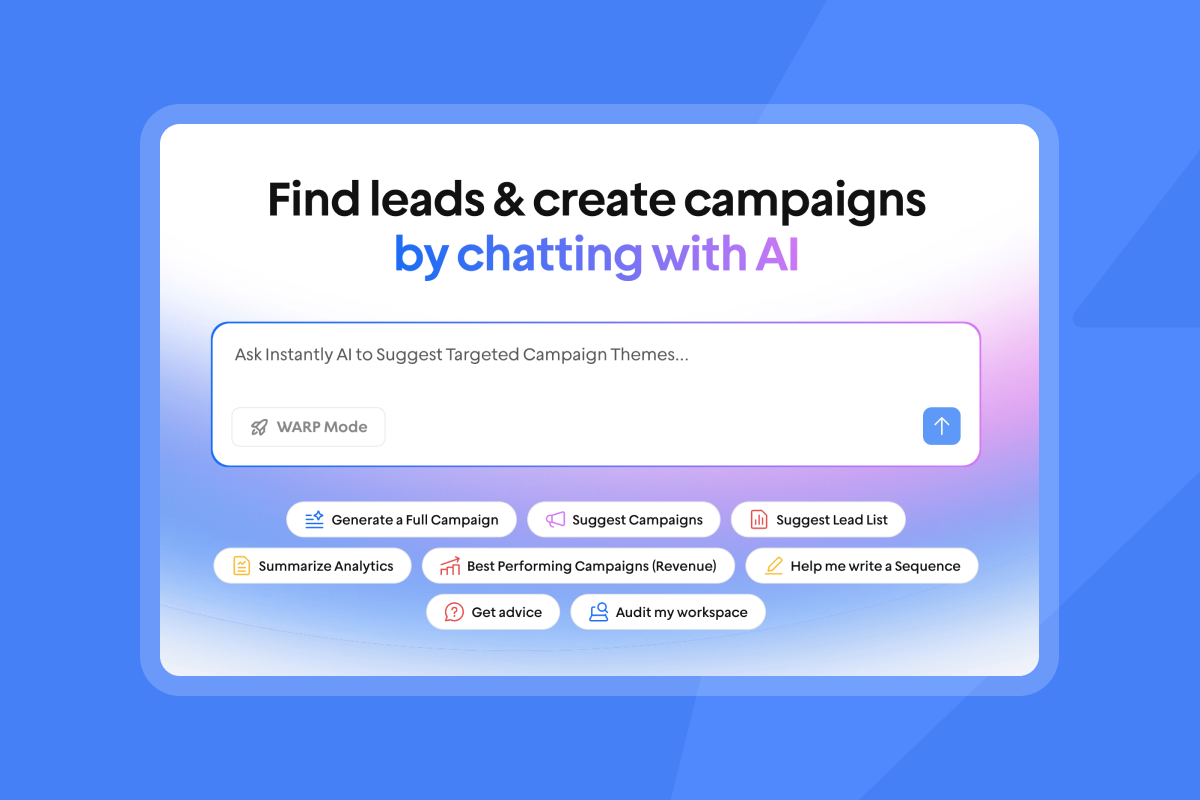
Legal compliance alone is not enough. The vendor's technical and contractual posture must hold up under the same scrutiny. If you're evaluating an AI BDR platform instead, our AI BDR security and compliance guide covers the same checklist from that angle. When you evaluate an AI sales agent platform, you need to verify four areas: certifications that prove operational security, encryption standards that protect data at rest and in transit, contractual agreements that restrict how your data is used, and transparency around sub-processors who touch your contact records, and once you choose one, our AI sales agent implementation guide walks through the rollout.
SOC 2 certification: what it actually verifies
SOC 2 is the standard that enterprise buyers use to verify a vendor's security posture. The framework, defined by the American Institute of Certified Public Accountants, covers five Trust Services Criteria: Security (required for every report), Availability, Processing Integrity, Confidentiality, and Privacy.
There are two report types. A Type I assesses the design of controls at a specific point in time. A Type II assesses both design and operating effectiveness over 6 to 12 months. SOC 2 Type II carries more weight in regulated environments and is the standard you should require from any vendor handling your contact data.
Encryption standards you should require
Any vendor handling contact data and email activity should use TLS 1.2 or TLS 1.3 for data in transit. Older versions of TLS represent a known security risk and are no longer acceptable under modern compliance standards. For data at rest, AES-256 is the benchmark, offering stronger protection than the 128-bit and 192-bit variants.
When you evaluate a vendor, ask directly: is data encrypted by default, or does it require configuration? Default, end-to-end encryption should be a baseline requirement, not a paid add-on. Vendors who cannot answer this question clearly are telling you something important about their security culture.
Data Processing Agreements and sub-processor transparency
A countersigned DPA is non-negotiable. It should restrict the vendor from using your data for anything beyond the agreed services, prohibit unauthorized sharing or repurposing, and clearly specify which regulations apply and how changes will be handled during the contract term.
Instantly operates under a public DPA through Foo Monk LLC, which covers processing terms, sub-processor listing, audit rights, and explicit restrictions on data categories you must not upload, including PHI/HIPAA data, payment card data, and biometric data. The sub-processor list is publicly available and includes AWS (USA) as primary infrastructure, with a documented notification process for updates.

How to evaluate contact data sourcing and consent
Even a fully certified vendor cannot protect you if the underlying contact data was not collected lawfully. Sourcing and consent practices are where most compliance gaps actually originate. Before you upload a single contact to any platform, you need documented proof that the data was acquired under a valid legal basis and that you can honor deletion and opt-out requests across every system where that data lives.
Data lineage: where did these contacts come from?
Every contact in your CRM or outreach tool needs a documented origin: where the data came from, when it was collected, and what legal basis applies. Without source lineage, you cannot confirm whether you have fully removed a contact's data after a deletion request, which is a GDPR compliance gap.
Instantly's SuperSearch database covers 450M+ B2B leads with waterfall enrichment across five or more providers and LLM-assisted enrichment. This is a lead sourcing tool, not a consent database, so the legal basis for contacting those leads still rests on your Legitimate Interest Assessment, not implied consent from the data provider. When assessing any vendor's lead database, ask: what are the data sources, when were records last verified, and do they provide documentation you can include in your LIA?
Best practices for recording consent and opt-outs
Consent under GDPR must be freely given, specific, informed, and unambiguous. For B2B cold outreach running on legitimate interest, you do not need prior consent, but you do need a clean opt-out process. CAN-SPAM, GDPR, and CCPA all require an opt-out mechanism in every outbound email, and it must be visible and functional.
The best systems automate opt-out recording so that when a recipient unsubscribes, they are added to a global block list, removed from active sequences, and logged with a timestamp. Manual opt-out tracking is fragile at scale and will fail an audit.
How Instantly automates consent tracking and opt-out management
Instantly builds opt-out management directly into every campaign. You can insert an unsubscribe link in all drip campaigns with a single click, and you can customize the opt-out link text. When a lead opts out, the global block list automatically prevents them from being re-added to any campaign across your account.
For audit trail purposes, the Unibox tracks all reply and engagement history in a centralized inbox. The HubSpot and Salesforce integration via OutboundSync automatically logs email activity to CRM contact records, creating timestamped activity logs that support compliance audits and feed your reporting and analytics without manual logging. The Website Visitor ID compliance onboarding documentation also covers the legal requirements for that specific feature.
The AI Reply Agent operates in either Human-in-the-Loop or Autopilot mode, so you control whether auto-responses go out without review. For teams with compliance requirements around outbound communications, Human-in-the-Loop gives you a review gate before any AI-generated reply reaches a prospect.
Watch the AI Sales Agent walkthrough to see how lead sourcing, outreach, follow-up, and meeting booking work together inside the platform.
"The most helpful part is the detailed reporting. It shows clear data like open rates, replies, and bounce rates, which I can easily use for analysis... It makes performance tracking very transparent and data-driven." - Anjali T. on G2
The vendor security evaluation checklist
Use this checklist before signing a contract with any AI sales agent vendor. Review each item and document the vendor's answer in writing. Every item maps to a specific compliance risk.
Legal and contractual requirements:
- DPA available: Vendor provides a countersigned Data Processing Agreement that names the legal entity, data processing scope, and sub-processors.
- Sub-processor list: Publicly available or provided on request, with a documented notification process for changes.
- Data residency: You know where your data is stored and whether it crosses jurisdictions that trigger regulatory exposure.
- Data restriction clauses: Contract prohibits the vendor from using your data for model training, third-party sharing, or unauthorized repurposing.
- Regulation scope: Agreement specifies which regulations apply (GDPR, CCPA, CAN-SPAM, CASL) and how regulatory changes during the contract term are handled.
Technical security requirements:
- SOC 2 or documented security program: Vendor holds a current SOC 2 Type II report,
- ISO 27001:is actively pursuing one, or provides an equivalent documented security program with third-party validation.
- ISO 27001 or equivalent: Vendor holds ISO 27001 certification, is actively pursuing it, or can demonstrate an equivalent information security management framework with documented controls.
- Encryption at rest: Data stored using AES-256 or equivalent by default, not as a configuration option.
- Encryption in transit: All data transmitted over TLS 1.2 or TLS 1.3 minimum.
- 2FA/MFA: Platform requires two-factor authentication via authenticator app or email for all user accounts.
- Access controls: Role-based permissions and audit logs for internal access to your data.
- Penetration testing: Vendor conducts regular third-party penetration tests and will share findings under NDA.
- Incident response: Documented breach notification process with timelines that meet GDPR's 72-hour requirement.
Consent and data management requirements:
- Opt-out automation: Unsubscribe link available in all outbound emails, with automatic global block list updates when triggered.
- Data lineage documentation: Vendor can provide source documentation for leads in their database.
- Deletion request process: Clear process for handling data subject access requests and deletion requests within required timeframes.
- Data minimization: Platform does not collect or store personal data beyond what is necessary for the agreed service scope.
- CRM activity logging: Email activity automatically logged to CRM with timestamps for audit purposes.
Operational requirements:
- Status page: Public uptime and incident monitoring page available.
- Support response times: Documented SLA or response time commitments, especially for account-level issues during live campaigns.
- Security documentation: Vendor provides security briefs, sub-processor lists, and audit reports to enterprise buyers under NDA.
Red flags that signal a vendor with poor data practices
Not every vendor will answer compliance questions directly, and separating myths from reality matters when you evaluate their claims. Watch for these patterns during evaluation:
- Vague answers to direct questions: If you ask where your data is stored and get a marketing response instead of a data residency answer, that is a problem. Good vendors answer clearly and provide documentation.
- No public DPA or sub-processor list: Legitimate vendors publish these. Obscurity here creates legal exposure for you, not the vendor.
- Default encryption requires configuration: Encryption should be on by default, not an upsell or an admin setting you discover after onboarding.
- No audit trail for opt-outs: If the vendor cannot show you timestamped opt-out records, you cannot defend a deletion request in an audit.
- AI agents that use your data for training: Many AI vendors do not disclose this clearly. It must be explicitly prohibited in the contract, not buried in terms of service.
- No security validation: Self-attestations and compliance badges from third-party aggregators are not the same as third-party validation. Ask for a current SOC 2 report, an equivalent audit, or documented evidence that a formal program is actively in progress.
- Public cloud only, no data residency options: This limits your control, increases exposure, and may be non-compliant with your industry's data policies.
For deliverability specifically, the SEG Detection help doc covers how Instantly handles Secure Email Gateway environments, and the email deliverability checklist walks through the technical controls that keep sender reputation protected.
The Instantly.ai demo walkthrough by co-founder Raul Kaevand covers the platform setup end to end.
"As a non-technical person, it is so easy to setup cold email campaign, the people at instantly the do a full done-for-you email box setup so u dont have to worry about SPF, DKIM, DMARC all that jazz. And they ensure subdomain tracking and deliverbility." - Haris on Trustpilot
How Instantly handles the full compliance stack
Instantly's compliance posture is built around documented transparency rather than vague assurances, and Instantly's AI agents run inside that framework. Here are the key pieces:
- DPA: Instantly publishes its DPA publicly, operated by Foo Monk LLC, with explicit data category restrictions, sub-processor listing, and audit rights.
- Sub-processors: Instantly lists all sub-processors publicly at the sub-processors page, with AWS (USA) as primary infrastructure and a documented notification process for any changes.
- Security and 2FA: Instantly supports two-factor authentication via authenticator apps and email, and maintains GDPR-aligned processing terms documented in its public DPA.
- Opt-out automation: Instantly provides a global block list built into the campaign layer, automatically preventing opted-out contacts from being re-enrolled in future campaigns.
- CRM audit trail: The Unibox centralizes all reply history, and the OutboundSync integration logs email activity to HubSpot and Salesforce with timestamps.
- AI agent controls: The AI Reply Agent supports Human-in-the-Loop mode for teams that require review gates before automated replies go out. The AI Sales Agent handles autonomous lead sourcing and outreach execution.
- Status transparency: Instantly publishes its status page publicly with component-level uptime monitoring.
Run the checklist before you sign anything
Data privacy violations damage brand trust and trigger five-figure fines per contact, a risk worth weighing against your outreach gains using an ROI calculator. Pick a vendor who treats data transparency as a product feature, not an afterthought. Run the checklist above against every vendor you evaluate, ask for security validation documentation (SOC 2, an equivalent audit, or a documented program in progress), the DPA, the sub-processor list, and a demonstration of opt-out automation before you sign anything.
Ready to run compliant AI-powered outreach? Try Instantly free and review the DPA, sub-processor list, and compliance documentation before your first campaign goes live.
FAQs
Does GDPR require consent before sending cold B2B emails?
No, GDPR does not require prior consent for B2B cold email if you can document legitimate interest as your legal basis under Article 6(1)(f). You still need a written Legitimate Interest Assessment for each campaign, and every email must include a clear opt-out mechanism.
What is the difference between SOC 2 Type I and Type II?
A SOC 2 Type I report assesses the design of security controls at a single point in time, while a Type II report assesses both design and operating effectiveness over 6 to 12 months. Type II carries more weight in enterprise vendor reviews and is the standard you should require.
Has the CCPA B2B exemption expired?
Yes. The CCPA/CPRA B2B exemption expired on January 1, 2023, and California-resident business contacts now hold the same core privacy rights as consumers, including rights to access, deletion, and opting out of data sale or sharing. You must process deletion requests within 45 calendar days.
How does Instantly handle opt-out requests from prospects?
Instantly lets you insert an unsubscribe link in every outbound email with a single click, and when a prospect opts out, they are automatically added to a global block list that prevents re-enrollment in any future campaign. The action is logged with a timestamp to support compliance audits.
What certifications should I require from an AI sales agent vendor?
Ask for SOC 2 Type II or an equivalent documented security program for operational security, ISO 27001 or an equivalent information security framework, and a countersigned GDPR-compliant DPA with a public sub-processor list. Where a vendor does not yet hold a formal certification, ask for evidence that a program is actively in progress and request the DPA and sub-processor list regardless - our AI sales agent buyer's guide covers the rest of the vendor evaluation checklist. Instantly provides a public DPA, a transparent sub-processor list, and compliance documentation available for review before you sign.
Key terms glossary
SOC 2 Type II: A security audit report that assesses both the design and operating effectiveness of a vendor's controls over 6 to 12 months, covering Security, Availability, Processing Integrity, Confidentiality, and Privacy. Security is the only required criterion. The other four are optional.
Data Processing Agreement (DPA): A contract between a data controller and processor that defines how personal data will be handled, stored, and protected under GDPR or other applicable privacy regulations. A countersigned DPA is a legal requirement when using third-party vendors to process personal data.
Legitimate Interest Assessment (LIA): A written evaluation documenting why processing personal data without consent is necessary, proportionate, and does not override individual rights under GDPR Article 6(1)(f). B2B cold email typically relies on this basis rather than explicit consent.
Sub-processor: A third-party vendor that a primary data processor engages to handle specific processing activities, such as cloud hosting or email delivery infrastructure. Under GDPR, the primary processor remains accountable for sub-processor compliance.
Data lineage: The documented record of where contact data originated, when it was collected, what legal basis applies, and how it has been processed or transferred. Clear data lineage is required to fulfill deletion requests and pass a GDPR audit.
Global block list: A list of contacts who have opted out of email communication that is applied automatically across all campaigns and sequences in an account. Maintaining a real-time global block list is a core requirement for CAN-SPAM, GDPR, and CCPA compliance.
Read next
- Email Deliverability Best Practices to Boost Inbox Placement: A step-by-step guide to warming inboxes, maintaining sender reputation, and keeping bounces below 1 percent.
- AI Agents for Sales: Smarter Outreach, Better Results: How AI sales agents handle lead sourcing, sequencing, and reply management so your team focuses on live conversations.
- Inbox Placement Testing Explained for Modern Outbound Teams: What inbox placement tests measure, how to run them before a campaign goes live, and what to do when results show a problem.



