.svg)
%20(1).svg)


Updated June 19, 2026
TL;DR:
AI SDRs handle routine outreach tasks well, but they fail at the nuanced work that closes high-value deals. Sarcasm, non-linear objections, and multi-turn context push LLMs past their functional limits. Fully autonomous outreach without human oversight raises your spam complaint rate, erodes domain health, and risks your pipeline. The right model is hybrid: AI handles volume and triage, a human rep reviews flagged drafts and takes over for complex threads. Instantly.ai's AI Reply Agent in Human-in-the-Loop mode gives sales teams both scale and the oversight needed to protect sender reputation.
Most B2B companies adopting fully autonomous AI SDRs are learning an expensive lesson: AI scales your volume and your mistakes equally. The pitch from vendors selling "autonomous AI sales teams" sounds compelling, but an AI sales agent is an exceptional assistant and a poor solo operator. That distinction matters because your domain reputation and pipeline coverage are on the line. If you're weighing options, a breakdown of the best AI SDR tools is a useful starting point.
This guide covers exactly where AI SDRs break down, why fully hands-off automation creates compounding risk, and how a strict human-in-the-loop framework, like the one built into Instantly's AI sales development agent, protects deliverability while still letting you scale.
Evaluating AI SDR performance and functional limits
Salesforce State of Sales research confirms that sales reps spend 60% of their time on non-selling tasks, including admin, data entry, internal meetings, and prospect research. WifiTalents' AI in sales data reports that AI chatbots already handle up to 80% of routine sales inquiries. The opportunity is real, and so is the ceiling.
High-impact AI SDR use cases
Here's where AI genuinely performs well and where it requires human backup.
High Fit (AI handles well):
- Initial lead qualification based on firmographic or behavioral signals
- Meeting scheduling and calendar link delivery after positive replies
- Routine follow-ups to non-responders within a defined sequence
- Basic data enrichment from structured sources
- Out-of-office detection and pause logic
- Reply classification for clear positive and negative intents
Low Fit (human required): AI wins on speed and volume. Human reps win on emotional intelligence, cultural nuance, and situations that deviate from a predictable pattern. Anything requiring relationship-building, trust, or judgment belongs in the human column. Watch this AI Sales Agent setup overview from the Instantly team to see exactly where the automation layer starts and the human layer should begin.
Key AI SDR performance constraints
AI and human SDRs differ at a structural level across six key dimensions, which is why knowing the must-have features in any AI SDR platform matters before you buy.
Dimension | AI SDR | Human SDR |
|---|---|---|
Volume | High (hundreds of accounts) | Low (30-50 accounts) |
Speed | Instant response | Slower at scale, depends on rep capacity and workload |
Judgment | Pattern-based | Contextual and adaptive |
Data handling | Structured inputs | Intuitive and inferential |
Emotional intelligence | Simulated via pattern matching | Built from lived experience |
Multi-turn context | Can degrade over exchanges | Improves when rep reads the full thread before responding |
AI wins on volume and speed. Humans win on judgment, nuance, and EQ. Combine both to get scale without sacrificing quality in high-stakes threads.
Limitation 1: Why AI struggles with tone and intent
This is the most underestimated failure mode in AI-driven outreach. AI models are built on logical pipelines, and sarcasm, cultural tone shifts, and non-linear objections break that logic in ways that compound at scale.
Why AI misses hidden buying signals
A phrase like "Oh great, another cold email" contains the word "great," and a sentiment model trained on general data can flag it as a positive signal. ArXiv paper 2412.04509 found that LLMs underperform compared to specially trained transformer encoder models on sarcasm detection, with the speculated cause being that LLMs are built on logical pipelines that contradict sarcasm's nonsequential nature. A separate study found that LLMs trained on general tweet datasets, covering a broad range of topics, achieved around 60% accuracy on sarcastic tweets. That figure reflects a domain-generalization gap, not a general LLM baseline.
In B2B email, this misread carries high stakes. "We don't have budget now, but call me in Q3" and "We don't have budget, stop emailing me" look similar in raw text. An AI that misclassifies the second as a positive timing signal sends another follow-up and generates a spam complaint. That complaint damages your sender reputation, and enough complaints trigger automated negative scoring at ESPs that compounds into blacklisting. LabelYourData's NLP limitations breakdown lists implicit language understanding, including sarcasm and irony, as one of the primary failure modes in production sentiment analysis.
Failure cases in outreach automation
Tone misreads are one failure mode. Hallucinations are another, and they carry higher stakes. When an AI model confidently generates false information, it doesn't flag itself as wrong. It sends the message.
Common AI hallucinations in B2B sales
AI hallucinations happen when a model generates authoritative-sounding content that's factually false. Documented types include: inventing product capabilities, fabricating security certifications, misquoting integrations, inflating benchmarks, and generating invented case studies. According to InfluencersTime's AI hallucination analysis, these errors are dangerous because they read as credible, not like obvious mistakes. A single hallucinated compliance claim to a CISO can kill a deal and damage credibility across that account's network.
Fully autonomous AI SDRs often deliver shallow personalization: generic references with no connection to the prospect's actual business problem. Industry guidance is direct on this point. AI should automate your research, not write your emails. Shallow openers like "I noticed your company is doing amazing things in the [industry] space" perform worse than no personalization at all, because experienced buyers recognize the template immediately.
Setting up effective human QA loops
The fix isn't removing AI from the reply workflow. It's adding a structured review layer before anything sends. That means defining exactly who reviews what, when, and under which conditions.
Framework for human-in-the-loop verification
A working human-in-the-loop (HITL) framework has three layers. First, the AI drafts replies based on intent classification from inbound messages. Second, those drafts are held in a centralized review queue rather than sent automatically. Third, a human rep reviews each draft, edits for tone or accuracy, and approves or rejects before the message goes out. This isn't a bottleneck. It's a quality gate that protects domain health and ensures your brand voice stays consistent across every thread.
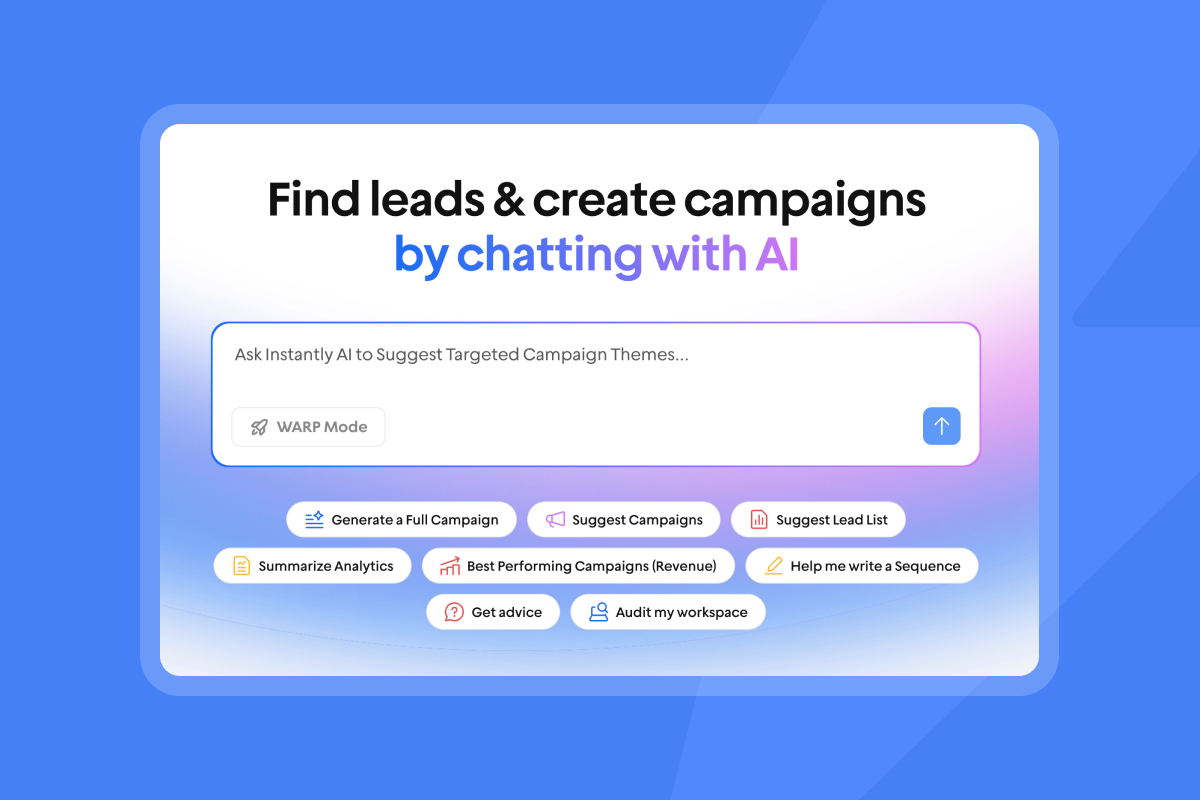
Instantly's AI Reply Agent HITL mode operates exactly this way. The agent reads inbound replies, drafts a response in under five minutes, and surfaces it in the Unibox and via Slack for your team to review before it sends. This training phase is where the AI's classification accuracy calibrates to your specific reply patterns and use case. After an initial training period of HITL operation, your team will be able to identify which reply types the AI handles accurately and which ones consistently require edits or overrides before sending. The AI reply management playbook covers how to structure this initial period.
Limitation 2: Why AI can't build relationships
High-ticket B2B sales run on relationships. Rapport builds across multiple interactions through demonstrated understanding of a prospect's specific context, not through volume. AI can replicate the mechanics of outreach but not the substance of trust.
Defining metrics beyond surface engagement
A 45% open rate on a cold sequence tells you nothing about whether a single prospect is ready to buy. The metrics that matter are pipeline coverage, meetings set, and conversion from SQL to closed-won. AI SDRs that optimize for open rates without monitoring downstream pipeline quality create a false sense of momentum that doesn't reconcile with CRM data at the end of the month.
Identifying triggers for manual outreach
Not every thread needs a human. But some threads carry enough risk that AI involvement without oversight becomes a liability. The difference comes down to deal complexity, contact seniority, and what's actually being discussed.
Comparing AI vs. human nuance in complex deal cycles
In a straightforward deal with a single decision-maker and a clear budget, AI can handle initial qualification, follow-up sequencing, and basic objection routing. In a complex deal cycle with multiple stakeholders, security reviews, and custom contract terms, every touchpoint carries reputational weight. A poorly worded AI reply to a CFO or a CISO creates an immediate credibility problem that's difficult to recover from in the same deal cycle. Human judgment is required whenever the thread involves executive contacts, pricing or legal terms, or genuine buying intent that needs converting, not just managing.
Define clear escalation triggers for your team before you deploy any AI in the reply workflow. These situations consistently require a human to take over:
- Pricing or contract terms come up in a reply, where an AI-generated response risks misquoting figures or inventing terms that don't exist
- A security questionnaire or compliance review comes up, where AI-generated responses risk fabricating certifications or compliance claims that don't exist and create legal exposure
- A prospect requests a meeting or demo
- A reply includes a competitor comparison, where an AI-generated response risks making inaccurate claims about competing products or pricing that could create legal exposure or damage credibility
- An executive contact replies, where an AI-generated response risks a tone misread or hallucinated claim that creates an immediate credibility problem at the most consequential point in the thread
Tactics for manual SDR intervention
When a trigger fires, the handoff needs to be immediate. Instantly's Unibox reply triage guide shows how Unibox centralizes all replies across every sending account into a single view, so a human rep can pick up a thread in real time rather than hunting down which inbox a prospect replied to.

Limitation 3: Where AI fails at handling objections and high-stakes pushback
Objection handling is where fully autonomous AI SDRs most visibly break down. The failure isn't just bad replies. It's misclassified replies that send the wrong follow-up at the wrong time, or no follow-up at all when there should be one.
Addressing AI reply labeling gaps
Dev.to research on automation trust found that AI classification accuracy drops on ambiguous inputs compared to structured queries. In practice, AI agents process queries cleanly when context is specific and explicit. When input is vague, the error rate climbs. At the volume AI SDRs operate, even a modest error rate compounds across thousands of threads.
Misclassifications happen when an inbound reply contains mixed or ambiguous intent, where the AI reads one signal and acts on it while missing the other. A reply that combines a timing objection with a question, or a soft rejection with an implicit buying signal, is the kind of input where AI classification error rates climb.
The wrong label on either means the wrong next action, or no action at all. These represent potential lost pipeline. The AI Blocklist Triggers documentation in Instantly's help center gives teams control over which reply patterns trigger automatic removal versus which ones route to human review. That configurable logic is the difference between an AI agent that scales safely and one that routes the wrong reply to the wrong action without flagging the error for review. Our AI BDR lead qualification guide covers how to build that safety net into your own workflow.
When AI fails at multi-turn dialogue
In longer email threads, AI models can start losing context. A prospect who said "not this quarter" in email two and then follows up with a question in email four is showing renewed interest. Context handling varies by system and by how much prior thread history the model is given at inference. Instantly's AI Reply Agent flags replies for review when it detects missing or unclear context, which is the correct behavior when the system isn't certain. The risk isn't that AI always misses thread context. It's that when it does, it doesn't always know it has, and that's when the wrong reply goes out.
Current LLM architectures can struggle to maintain conversational state across asynchronous email threads the way a human rep naturally does. While technical solutions like storing conversation history and including it in each API call can help, human review is one reliable layer for high-stakes conversations, but not the only one. Storing each message and agent response in memory and passing the full history into each API call eliminates most context-loss failures at the system level. For teams running high-stakes threads, combining both, technical context storage and human review of flagged drafts, gives you the strongest coverage.
Why high-value deals require oversight and escalation protocols
Build a simple escalation protocol into your team's workflow:
- AI drafts reply based on the inbound message
- Confidence threshold check: if classification is ambiguous, the draft flags for human review
- Human rep reviews the context and evaluates the AI draft
- Edit or approve the AI draft, or write a custom reply if the thread requires it
- Log human edits and overrides in a shared record so your team can spot patterns in where the AI consistently misses and adjust your escalation triggers or HITL policy accordingly.
According to InfluencersTime's hallucination liability research, fabricated compliance claims, invented integration details, and false feature descriptions have generated legal exposure and destroyed trust with high-value accounts. For threads involving a contact seniority level or deal size that your team flags as high-risk, adding a human review step before any outbound message sends is a sound practice, not a universal requirement. ACV-based routing and approval workflows are well-documented in contract and sales ops tooling, and the same logic applies here: set a threshold, document it, and apply it consistently. The AI Reply Agent help doc covers how the agent surfaces escalations via Slack so no flagged thread gets missed.
Building a hybrid AI + human workflow
The limitations covered above don't argue against AI in outreach. They argue for a clear division of responsibility. The hybrid model works when you define which tasks AI owns, which tasks humans own, and where the handoff happens. Start with oversight touchpoints. For a full breakdown of task ownership by stage, see our guide on how to automate your SDR workflow.
Core human oversight touchpoints
These situations require human review without exception:
- Reply classification on vague inputs: AI error rates climb sharply on unclear intent
- Longer threads with multiple exchanges: context can degrade without a human reading the full thread
- Any mention of pricing, legal, or compliance: hallucination risk in these areas is documented, including fabricated certifications, misquoted figures, and invented compliance claims that have generated legal exposure in B2B sales contexts
- Senior executive contacts: the reputational cost of a bad reply is too high
- New campaigns during the initial training period: HITL mode is the right starting point for new users, giving your team the opportunity to fine-tune AI responses and build confidence in its judgment before moving to Autopilot
Technical guardrails AI can't replace
No AI system compensates for broken technical infrastructure. SPF, DKIM, and DMARC are DNS-level authentication protocols that exist entirely outside what any AI model can control. These records require IT or marketing ops to write and maintain at the domain registrar level. Instantly's SPF, DKIM, DMARC guide covers the full setup process, and Monday.com's authentication guide provides solid reference material for the technical configuration.
Domain warmup is the other foundational system. New sending domains need to build reputation gradually, ramping from 5 to 15 to 30 sends per inbox per day and holding at 30. Do not scale past 30 per inbox per day. Instantly's built-in warmup network covers 4.2M+ real accounts and handles warmup automatically across unlimited email accounts on all plans. For teams running high-volume campaigns, the Light Speed plan's SISR system assigns your campaigns dedicated server and IP blocks and automatically rotates out any IP showing degraded reputation before it impacts deliverability.
Scaling operations despite AI SDR performance gaps
A hybrid model solves the quality problem. It doesn't automatically solve the scale problem. If you're still deciding whether full automation fits your team, this AI SDR qualification guide walks through how to tell. To grow volume without compounding errors, you need clear metrics, documented usage policies, and a weekly review rhythm that catches failure signals before they damage your domain or drain your pipeline.
The AI SDR reality check for execs
When a CFO asks what the AI SDR investment is producing, the answer needs to be measurable and honest, and transparent AI sales agent pricing models make that case easier to build. Open rates don't justify the cost. Meetings set and pipeline coverage do. Use this cost-per-meeting formula monthly:
CPM = (Software Cost + Infrastructure Cost + Data Cost) / Total Meetings Booked
Instantly Credits pricing makes the software cost calculable: the AI Reply Agent runs at 5 credits per reply. Track CPM against your monthly meetings target to confirm the hybrid model delivers ROI. The AI Sales Agent Software page covers full platform pricing and setup details.
Setting clear AI SDR usage policies
Write a one-page policy that covers:
- Which campaign types can run in Autopilot mode
- Which reply types always require human review before sending
- The escalation threshold (deal size, contact seniority, topic) that triggers full manual takeover
- Who owns the weekly audit of bounce rates, opt-outs, and misclassifications
- Send cap per inbox per day**:** Keep sends at or below 30 per inbox per day. This cap protects domain health regardless of what your provider technically allows.
- Google Workspace: Has a higher account-level daily limit, but that ceiling is not a send target. Do not use it as one.
- Microsoft 365: Imposes per-mailbox sending limits that vary by account type and configuration. Check your plan's current documentation before setting a cap.
- How to set your cap: Base it on your provider, your domain age, and where you are in your warmup ramp.
- **Team-wide discipline:**Domain reputation is earned through consistent sending behavior across your whole team. Sporadic volume bursts, inconsistent send windows, or reps operating outside defined policies each create signals that compound into deliverability problems. Individual AI settings matter, but they operate within the envelope that team-wide sending discipline creates.
KPIs for tracking AI SDR limitations
Monitor these metrics weekly:
- Bounce rate: Keep this at or below 1%. If it crosses 1%, pause sends and run the hygiene checklist before resuming. Industry averages sit between 2% and 3%, and anything above 5% is a red flag. Letting bounce rate drift above 1% while continuing to send compounds damage to your sender reputation faster than any single campaign can recover from
- Reply rate: The 2026 average for cold email is 3.43%, with top-quartile campaigns hitting 5.5% and elite campaigns exceeding 10%, according to Instantly's Cold Email Benchmark Report. A 3-5% range is realistic for a well-run campaign. Hitting 5% puts you above average, not at the floor. Below 3%, review copy variants and list quality
- AI classification accuracy: Note how often your team edits or rewrites AI drafts before approving them. A rising pattern of edits on a specific reply type is a signal that your escalation triggers or HITL policy may need adjusting, not a formal metric tracked in Unibox but a useful operational indicator your team can log manually
- Spam complaint rate: Any uptick triggers an immediate audit of reply handling and opt-out compliance
- CPM trend: Rising cost per meeting signals AI errors, data quality issues, or copy performance problems
Addressing core AI SDR limitations for sales teams
Metrics and policies keep the hybrid model running. But there's a deeper layer worth addressing before you scale: the structural gaps between what an AI SDR is built to handle and what human reps naturally handle. Most teams discover these gaps mid-campaign. Identifying them in advance makes the difference between a system that scales cleanly and one that quietly leaks pipeline.
Where AI SDRs fall short of humans
CRM data quality is the most overlooked dependency in AI-driven outreach. SpuriQ research found that 27% of working time is lost dealing with stale contact records, including bounced emails, disconnected numbers, and accounts nobody has updated in months. AI agents multiply that problem because unverified or decayed contact data feeds directly into misclassification and hallucination risk. If the AI receives stale company context, the personalization it generates will be wrong, and a wrong opening line destroys credibility immediately.
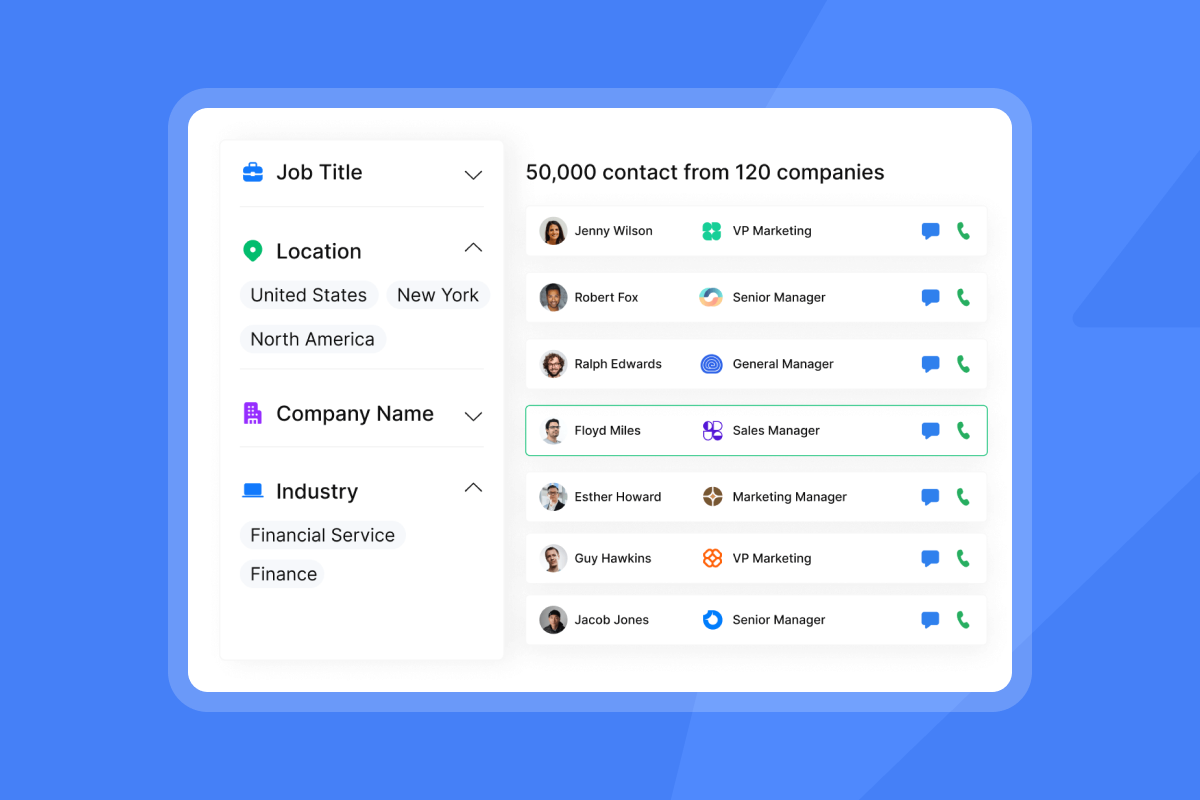
Instantly's SuperSearch pulls from 450M+ B2B leads with waterfall enrichment across five or more providers, giving your AI campaigns clean, verified contact data as the starting point. Garbage in produces garbage out. Verified data in gives the AI the best possible foundation. For a deeper look at common AI agent errors before you scale, the AI Sales Agent mistakes guide is worth reviewing before any campaign moves past initial testing.
Identifying AI SDR failure triggers
Watch for these red flags in your weekly metrics review:
- Spike in bounce rate above 1%: pause sends immediately and run the hygiene checklist. A spike indicates data decay or inadequate list verification before import. Do not resume until the list is re-verified and the rate returns to or below 1%
- Sustained drop in reply rate: likely a copy quality or list quality issue that AI is amplifying
- Rise in spam complaints: audit reply handling and opt-out compliance immediately
- Higher frequency of human edits to AI drafts: may indicate AI configuration needs adjustment
- CPM trending upward: diagnose whether the root cause is data quality, copy performance, or AI errors in classification.
AI SDRs are a volume and triage engine, not a replacement for judgment, and Instantly's AI agents are built around exactly that division of labor. The teams getting consistent pipeline from AI-driven outreach are the ones who treat it as a system with defined inputs, clear handoff points, and a human review layer for anything that carries reputational or deal risk. Keep bounces at or below 1%. If that threshold breaks, pause and run the hygiene checklist before your next send. Monitor classification accuracy weekly. Define your escalation triggers before you scale. Run HITL mode until the data tells you which reply types are safe to automate. That's the model. It's not complicated, but it does require discipline to maintain.
Ready to set up a hybrid outreach system with built-in deliverability protection? Start your 14-day free trial of Instantly with unlimited email accounts and built-in warmup included. No credit card required.
FAQs
Can AI SDRs completely replace human sales reps?
No. AI handles volume, speed, and pattern recognition well across routine triage, initial follow-ups, and meeting scheduling. The documented gaps are in emotional context, cultural nuance, and ethical judgment calls. In high-stakes threads, those gaps matter. Human reps remain essential for threads where judgment, trust, relationship building, or deal complexity is involved.
What is the biggest risk of using fully autonomous AI SDRs?
The biggest risk is domain deliverability damage. Unmonitored, high-volume sending with misclassified replies generates spam complaints, which trigger automated negative scoring at ESPs and compound into blacklisting. Once your sender domain is flagged, every campaign suffers regardless of copy quality or list hygiene.
How does a human-in-the-loop system work?
The AI Reply Agent, which lives inside Unibox, reads the inbound message, applies AI Custom Reply Labels to categorize the response type, and drafts a reply. If the AI is confident in its classification, it can send without human approval. If it detects missing context or unclear intent, it flags the draft for review rather than sending. Flagged drafts surface in Unibox. Unibox surfaces every reply with full conversation history regardless of which sending account received it, so the reviewing rep has the full thread available, not just the latest message. From there they can edit the draft for tone or accuracy and confirm it before the message sends. This is how Instantly's AI Reply Agent HITL mode operates.
What technical setup does AI-driven outreach still require from a human team?
SPF, DKIM, and DMARC are DNS-level authentication protocols that require IT or marketing ops to configure manually. AI cannot write DNS records or manage domain infrastructure. Domain warmup is built into Instantly across all plans. On Light Speed and above, SISR is automatically enabled with no additional configuration. Instantly handles server and IP assignment, rotation, and monitoring as part of the plan.
Key terms glossary
Primary-inbox placement: The process of ensuring your outreach emails land in the prospect's main inbox rather than the spam or promotions folder. Determined by domain reputation, authentication setup, and sending behavior.
Domain health: A measure of your sending domain's reputation with email service providers, determined by bounce rates, spam complaints, and technical authentication records including SPF, DKIM, and DMARC.
Reply triage: The process of categorizing incoming replies (positive, negative, out of office, objection, timing) to determine the appropriate next action, whether that's an AI draft, a human takeover, or a pipeline status update in the CRM.
Read next
- Cold email sequence guide: how to structure outreach that books meetings: covers how to structure a multi-step sequence, set send windows, and pace follow-ups so your outreach builds momentum without burning contacts.
- Email warmup guide: how to build sender reputation before you scale: walks through the 30-day ramp from 5 to 30 sends per inbox per day, with the domain health checks that tell you when it's safe to increase volume.
- How to send cold emails + 5 templates that get replies: breaks down the structure of a high-performing cold email with five ready-to-use templates you can adapt for your sequence immediately.



