.svg)
%20(1).svg)


Updated August 3, 2026
TL;DR: Outbound vs inbound sales is not a binary choice. Inbound captures existing demand but depends on marketing spend and algorithm stability. Outbound creates pipeline on demand but requires technical deliverability infrastructure to execute reliably. B2B firms running both motions consistently outperform single-motion teams on revenue growth. The practical edge goes to sales leaders who use inbound intent signals to trigger targeted outbound sequences and build that outbound infrastructure on flat-fee platforms rather than per-seat models that scale costs against you as the team grows.
Most sales leaders already know they need both inbound and outbound sales. The harder question is where to allocate SDR time, which motion to fix when pipeline drops, and what infrastructure to put under each motion so your team can execute without constant babysitting. This guide breaks down the operational differences, CAC benchmarks, staffing requirements, and technical setup for both motions, then gives you a practical framework for running them together.
Comparing modern sales engagement frameworks
Inbound and outbound are not opposing philosophies. They are two different demand capture models, each with a distinct mechanical profile that determines when it performs and when it fails.
Inbound is a pull motion. Prospects discover you through content, search, paid ads, or social media and arrive with pre-formed intent. Outbound is a push motion. Your team identifies ICP-fit accounts, sources verified contacts, builds sequences, and initiates contact directly. The hybrid GTM motion combines both, using inbound intent signals to trigger targeted outbound sequences to warm accounts before they evaluate competitors.
Understanding inbound lead sources
Inbound leads arrive through organic search, paid ads, content marketing, and social media. Each channel depends on variables your sales team cannot control: algorithm updates, ad auction costs, and content production timelines. A strong content program takes considerable time to generate consistent MQL volume. When any channel underperforms, your pipeline drops and your SDRs have no short-term lever to compensate.
How outbound sales drives pipeline
Outbound creates pipeline by targeting accounts that fit your ICP, regardless of whether they have shown prior intent. You define which accounts to target, how many sequences to run, and when to accelerate. This control makes outbound the most direct tool for filling specific pipeline gaps, entering new markets, or working a defined ABM account list.
Instantly.ai's 2026 Cold Email Benchmark Report (data from January 1 to December 18, 2025) puts the platform-wide average reply rate at 3.43%. Top-quartile senders reach 5.5%+, and the top 10% exceed 10.7%. These results come from systems: proper domain setup, verified lists, 4 to 7 step sequences, and first-touch emails under 80 words.
Key differences between outbound and inbound sales
The table below summarizes the structural differences that matter most for pipeline planning and budget allocation.
Metric | Inbound | Outbound |
|---|---|---|
Lead sourcing | Prospects find you via SEO, ads, content | You find prospects via ICP filters and verified data |
Time to first meetings | Months to years depending on content investment and channel mix | Weeks after domains are warmed and infrastructure is ready |
B2B CAC benchmark (SaaS) | Lower on average. Varies by channel mix and content investment | Higher on average. Varies by deal size, rep cost, and tooling model |
Staffing model | AEs and inbound SDRs to qualify rapid flows | Outbound SDRs for list building, sequencing, and personalization |
Predictability | Volatile, dependent on external channels | Highly predictable: X emails sent, Y replies, Z meetings |
Sourcing prospects: inbound vs outbound
With inbound, leads self-select by visiting your site, downloading a resource, or requesting a demo. You capture their data through forms and route them into your CRM. The quality ceiling is high because intent is genuine, but you get the accounts that find you, not the accounts you most want to close.
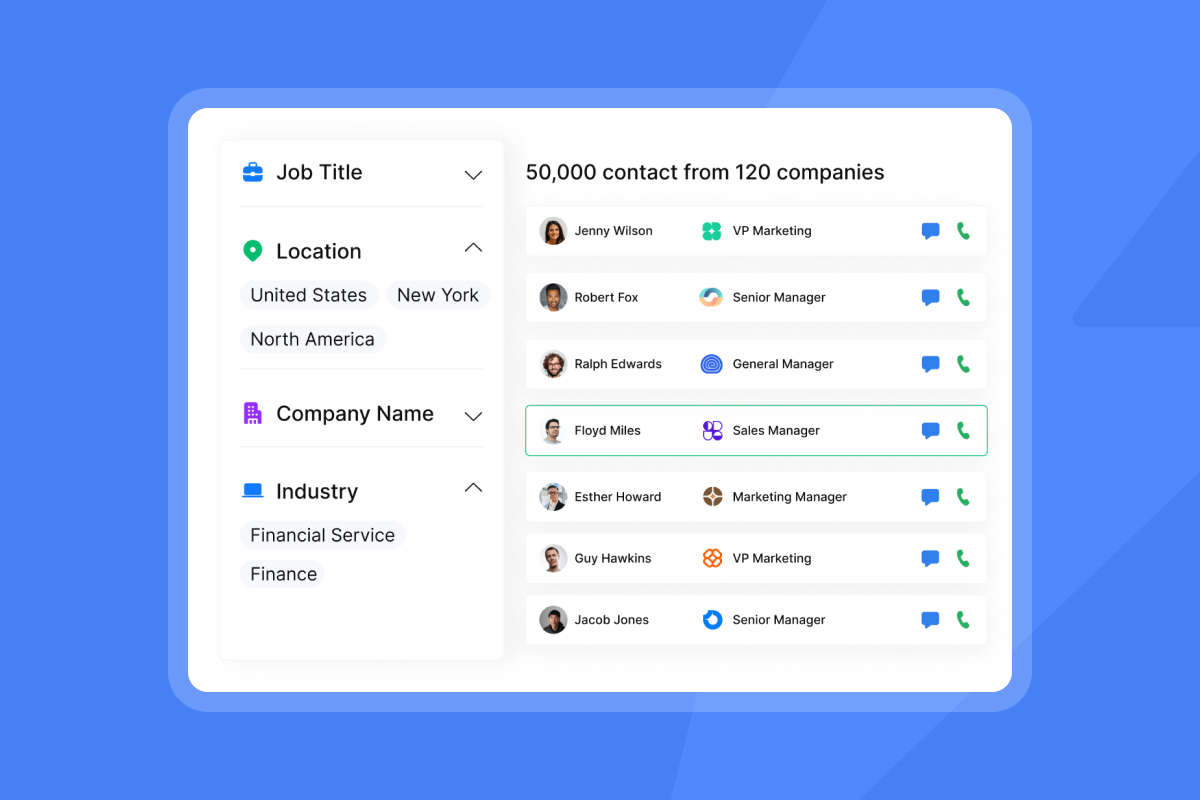
With outbound, you build the list. You define the ICP, apply filters for industry, company size, job title, funding stage, and tech stack, and pull verified contacts that match. Instantly's SuperSearch gives you direct access to 450M+ verified B2B contacts with buyer intent signals, including social activity, competitor mentions, and growth signals like recent funding rounds, pushing contacts directly into a campaign without leaving the platform.
"The leads are great, the database is huge, and our sales team loves it." - Rishabh S. on G2
Predicting time to revenue
Inbound deals tend to move faster through the sales cycle because intent is already established before the first sales conversation. A prospect who has read your benchmark report and watched a product walkthrough is closer to a buying decision than one receiving a first cold email.
Outbound cycles run longer because the first contact creates awareness rather than confirming it. Mid-market outbound deals run longer depending on ACV and buying complexity. The offset is targeting precision: outbound lets you focus on larger ACV accounts that justify the longer cycle, and you control exactly which accounts enter the pipeline.
Investment levels and payback speed
For inbound, B2B SaaS inbound CAC is generally lower than outbound, though paid ads push it meaningfully higher than organic-only baselines. These figures assume functioning content and SEO assets that required considerable prior marketing investment to build.
For outbound, full SDR cycle costs including salary, benefits, tooling, and overhead push B2B SaaS outbound CAC higher than inbound baselines. At the segment level, SMB SaaS CAC runs lower, mid-market higher, and enterprise CAC runs substantially higher, driven by long sales cycles and multi-stakeholder buying committees. The key variable is tooling cost: outbound CAC at the infrastructure level improves substantially when your platform charges a flat fee rather than compounding per-seat rates. More on this in the tech stack section.
Staffing for inbound vs outbound sales
Inbound requires AEs and inbound SDRs who prioritize speed above all else. Contacting a lead quickly after inquiry increases conversion compared to delayed follow-up, which means inbound SDRs need speed and qualification depth as core skills.
Outbound requires a different profile: SDRs who research accounts, write personalized first lines, manage sequence hygiene, and interpret reply data. Staffing outbound with inbound-trained reps without retooling their process is one of the most common reasons new outbound motions fail in the first quarter.
Predicting outcomes at scale
Outbound is mathematically predictable. You send a defined number of verified-contact emails per month and project replies and meetings against that volume. Consistently stable sending patterns produce 15 to 20% higher reply rates than erratic send volumes, which means the system rewards process discipline more than raw send volume.
Inbound is structurally harder to forecast. An algorithm update or a competitor launching aggressive content can cut your inbound MQL volume in a single month with no warning, making it a poor standalone model for teams with tight quarterly pipeline targets.

Critical considerations for outbound sales success
Launching outbound at scale requires two things in place: a sequence framework and a technical deliverability foundation. Getting either wrong wastes the investment in the other.
How outbound builds rapid pipeline
Instantly's 2026 Cold Email Benchmark Report identifies 4 to 7 sequence steps as the optimal range for maximizing reply rates. Step 1 generates 58% of all replies. Follow-up steps combined contribute the remaining 42%. Most teams over-sequence past 7 steps and see diminishing returns.
Sales leader's toolkit: Outbound sequence template
This 4-step template is built around Instantly's 2026 benchmark finding that 4 to 7 steps is the optimal sequence range and that step 1 generates 58% of all replies. The specific day intervals are a recommended starting cadence, not a direct benchmark output.
- Day 1 (First touch): Under 80 words. One specific observation about the prospect's company, one direct question. No pitch.
- Day 3 (Value add): Reference the first email, add one proof point (case study or metric). Still no hard ask.
- Day 7 (Soft ask): "Would a 15-minute call on [specific outcome] be useful?" Offer two time slots.
- Day 14 (Final bump): "Closing the loop on this. Still relevant?" Keep it to 2 sentences.
Instantly's 600 cold email templates library and AI Sequence Writer generate full sequences from your ICP inputs in minutes.
Mitigating cold outreach compliance risks
Technical deliverability is a system, not a setting. Your emails land in the primary inbox or spam folder based on four infrastructure variables.
Authentication records: Configure SPF, DKIM, and DMARC records before sending a single cold email. Google and Yahoo, now enforce bulk sender rules requiring spam complaint rates below 0.1%, with a hard ceiling at 0.3%. While a 2% bounce rate is the maximum acceptable threshold for maintaining healthy sender reputation (an industry best practice, not an official provider requirement), keep your actual bounce rate as low as possible. Let DKIM and SPF authenticate for at least 48 hours before enabling DMARC.
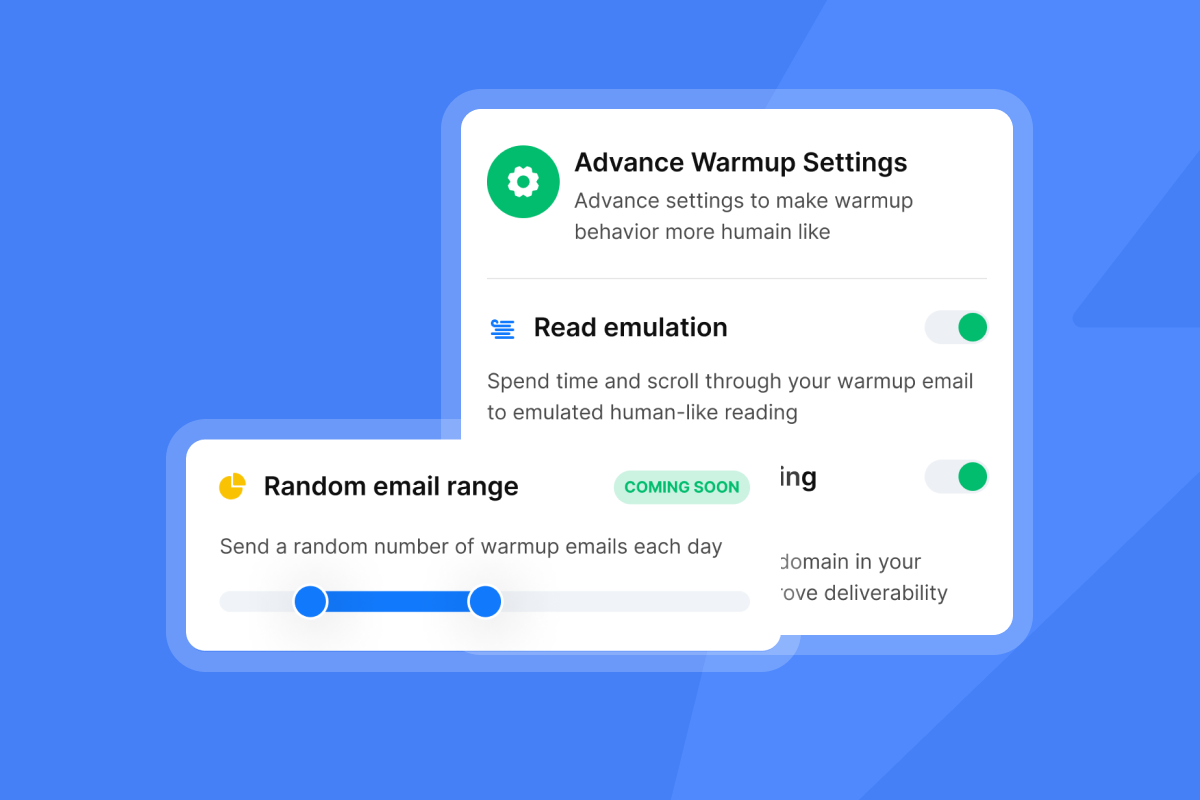
Domain warmup: New domains need a minimum 2-week warmup period before running live campaigns. A full ramp from 5 to 30 emails per day takes 4 to 6 weeks. Instantly's warmup network includes 4.2M+ accounts that simulate real two-way sending activity to build sender reputation before you contact real prospects.
Send volume discipline: Cap cold email sends at 30 per inbox per day.
List hygiene: Verify contacts before sending. Instantly's BounceShield (also known as BounceProtect) automatically skips high-risk recipients, and campaigns auto-pause at a 5% bounce rate after 200 sends. Proper authentication combined with clean lists is the highest-impact lever for primary inbox placement.
Analyzing inbound sales for pipeline growth
Inbound generates pipeline more slowly but often with higher initial conversion rates. Managing it well means building the infrastructure to qualify and route leads before momentum is lost.
Standardizing inbound lead handoffs
The most common inbound failure is slow follow-up. Fast follow-up is the highest-impact lever for inbound conversion, yet most B2B teams take far too long to respond. Set a response SLA that prioritizes demo requests above content downloads, and use automation to close the gap. Instantly's Automations builder triggers HubSpot contact creation and sequence enrollment the moment an inbound lead meets your criteria, without manual intervention.
Addressing inbound lead volatility
Inbound is a feast-or-famine channel. A strong content month drives a surge of MQLs. A slow cycle or a budget cut leaves your SDR team without enough leads to fill call blocks. This volatility makes your quarterly planning difficult and puts quota at risk in any month where marketing underperforms. A parallel outbound motion that runs continuously provides a floor of meetings-set activity independent of inbound volume, keeping targets achievable even when inbound dips.
Optimal conditions for deploying outbound sequences
Outbound performs best in three scenarios: entering new markets, targeting named accounts that will never self-select inbound, and filling acute pipeline gaps quickly.
When to launch cold outreach
Launch outbound in three specific situations: when you are entering a market where your brand has no presence and organic discovery will take considerable time, when you are targeting enterprise accounts where decision-makers do not fill out demo forms, and when your inbound pipeline drops materially and you need booked meetings in the near term rather than waiting to rebuild inbound momentum.
Precision targeting for key accounts
SuperSearch's Signals filter surfaces buyer intent data across four categories: social activity, buying intent (Reddit pain points, competitor mentions, churn risk), growth signals (funding, expansion, new tech adoption), and company activity (leadership changes, pricing changes). Set your ICP filters, apply a Signals filter for relevant intent triggers, verify the contacts, and export directly to a campaign sequence.
Solving urgent pipeline coverage gaps
Instantly's Campaign Builder lets you attach multiple sending accounts to a single campaign through Inbox Rotation, distributing sending load across all connected inboxes automatically. You can set up A/Z testing with up to 26 subject and body variants (available on Hypergrowth $97/mo and above), configure smart send windows, and launch to a verified contact list once your accounts are warmed. If you want to skip the warmup wait, Instantly's pre-warmed accounts come ready to use from day one.
When to prioritize inbound over cold outreach
Inbound is the right primary motion when your ACV is low enough to require high lead volume without proportional SDR headcount, when you are building long-term brand authority, or when your product has a self-serve or product-led growth component.
Strengthening brand trust over time
Inbound content builds compounding authority. A well-optimized article or case study continues to generate qualified traffic and MQLs long after publication without additional spend. For enterprise sales teams, this prior brand exposure also reduces the cold outbound ask: a prospect who has read your benchmark report arrives at the first outbound touchpoint with existing awareness, which improves reply rates and shortens the qualification call.
Lowering CAC for sustainable growth
At scale, organic inbound leads carry zero direct ad spend. An SDR qualifying a lead from organic search costs only the rep's time and the CRM seat. Over a 3-year horizon, a mature inbound program consistently drives down blended CAC, particularly for products with strong organic search intent and a well-built content library.
Automating rapid transactional pipelines
For products with ACVs under $5K and a self-serve signup flow, inbound combined with automated onboarding sequences handles the full acquisition cycle without SDR involvement. Product-led growth models use free trials or freemium tiers as the conversion mechanism, reserving SDR involvement for expansion conversations with high-usage free accounts.
Optimizing your hybrid pipeline model
The hybrid GTM motion is not a budget split. It is a feedback loop where inbound intent signals improve outbound targeting, and outbound conversations surface the content topics that improve inbound conversion rates.
Accelerating SQLs with outbound
The fastest path from MQL to SQL in a hybrid motion is targeting decision-makers at accounts that have already shown light inbound interest. A company where three people have visited your pricing page but no one has submitted a demo form is a warm outbound target. Your reply rate on that outbound email will outperform a cold contact because the company context creates a natural opening and prior brand exposure removes the first conversion barrier.
Converting buyer intent into pipeline
Instantly's Website Visitors pixel identifies companies visiting your website and pushes them into a CRM pipeline. When a prospect visits a high-intent page (pricing, comparison, or features) but does not convert, you can use SuperSearch to find the relevant decision-maker at that company, verify the contact, and trigger an automated outbound sequence through Automations.
A practical HubSpot recipe: when a known company visits your pricing page, use Instantly's Automations to create a HubSpot contact and tag the account as a high-intent outbound target. The outbound SDR receives a task notification and uses the pre-built sequence template for pricing-page visitors. This converts passive inbound traffic into active outbound pipeline without adding headcount.
Standardizing SDR time across sales
A common failure in hybrid teams is letting SDRs self-allocate between inbound qualification and outbound prospecting without a governance model. This leads to inbound bias (easier calls, lower rejection rate) at the cost of outbound pipeline. A practical starting point: weight SDR time toward outbound prospecting (list building, sequence management, personalization) with a smaller portion reserved for qualifying inbound leads. This ratio maintains consistent outbound activity even in high-inbound months.
How to decide where to allocate your sales budget
Budget allocation follows the data from your current pipeline. Without accurate attribution, you are making a political decision rather than an economic one.
Map lead sources to pipeline volume
Start with a closed-won attribution audit. Filter your CRM for all deals closed in the last 12 months and segment by original lead source: inbound organic, inbound paid, outbound cold email, partner/referral. Calculate total closed-won revenue per channel and divide by total spend per channel including SDR time at loaded cost. Most B2B teams find inbound drives higher volume of smaller deals, while outbound drives fewer but larger deals, which is the data that justifies running both motions.
Calculate cost-per-meeting by channel
Cost-per-meeting (CPM) measures the fully loaded cost to generate one held sales meeting with a decision-maker in your ICP. Calculate it by dividing total channel spend over 90 days (labor at loaded cost, tooling, data, domain costs) by the number of qualified meetings held in the same period. Use held meetings rather than booked meetings to avoid materially overstating pipeline. CPM varies considerably depending on deal size, industry, and whether you run in-house or outsourced, with enterprise segments and outsourced pay-per-meeting models typically running higher.
Align sales motion to deal complexity
Your ACV threshold determines which motion should lead. For low-ACV deals, weight your motion toward inbound because the conversion economics favor self-service or short-cycle inbound. For mid-market deals, run both motions in closer balance. For high-ACV deals, shift your weight toward outbound because enterprise buyers do not fill out demo forms the way SMB prospects do.
Evaluate channel ROI for adjustments
Run a 90-day channel review. Pull CPM by source, compare to your ACV, and reallocate budget toward channels where the economics are strongest. Pair this with a deliverability health check: if your outbound reply rate is below 3.43% (the platform average from Instantly's benchmark report), the issue is usually list quality or domain health rather than messaging. Fix the infrastructure before cutting the channel budget.
Solving common conflicts in sales motion design
The most common organizational conflict in hybrid teams is the inbound vs. outbound budget debate between sales and marketing. Both camps are right about different things. The answer is not to pick a winner but to build a shared accountability model.
Comparing ROI for inbound vs outbound
Inbound builds the brand foundation that makes your outbound more effective, and outbound harvests the market that inbound has primed. The ROI comparison only becomes meaningful when you calculate it by ACV band. At low ACVs, inbound wins on CAC. At high ACVs, outbound wins on deal size and targeting precision. Run both, measure by segment, and allocate by the data.
Strategies for a combined sales motion
Set a single pipeline-contribution target that both teams own instead of separate MQL (marketing) and SQL (sales) quotas. Marketing gets credit for closed-won deals that originated from inbound. Sales gets credit for deals they sourced through outbound. Operationally, this means a shared definition of a qualified meeting, a shared CRM pipeline view, and a weekly pipeline review that attributes revenue accurately to its source.
Expected ramp time by motion
Use the table below to set realistic expectations for SDR performance and QA checkpoints across the first 90 days of a new outbound motion. The 30-60-90 framework is a widely used SDR onboarding model: month 1 focuses on learning, month 2 on ramping toward partial quota, and month 3 on approaching full quota.
Timeline | Sequence governance | QA checks | Reporting metrics |
|---|---|---|---|
Days 1 to 30 | ICP finalized, first sequence live, sending accounts in warmup | Domain health score above 90%, bounce rate below 2% | Emails sent, open rate, reply rate |
Days 31 to 60 | Multiple sequences live, A/Z testing active, ramp to 15 to 30 sends per inbox | Reply classification accuracy, unsubscribe rate below 0.5% | Meetings booked, cost-per-meeting, step-level reply distribution |
Days 61 to 90 | Full account load per SDR, Unibox active for reply triage | Deliverability AI Agent alerts reviewed weekly, HubSpot sync verified | SQLs sourced, pipeline contribution, closed-won attribution |
Required tech stack for each motion
The inbound tech stack typically centers on a CRM (HubSpot), a marketing automation platform, and an ad management tool. The per-seat cost structure is manageable because tool usage concentrates among a small marketing team.
The outbound tech stack is where per-seat billing causes the most damage as teams grow. The table below shows how pricing compounds on a 10-rep SDR team.
Platform | Pricing model | Monthly cost (10 reps) |
|---|---|---|
Instantly Hypergrowth | Flat fee, unlimited accounts | $97/month total |
Apollo Organization | Per seat | $1,490/month ($149/seat, min 3 seats) |
Lemlist Multichannel | Per seat | $1,090/month ($109/seat) |
Instantly charges one flat fee for unlimited sending accounts across all tiers. A 10-rep team on Hypergrowth at $97/month pays the same rate when they hire rep 11. Apollo carries strong data depth and multichannel reach, and Instantly connects to HubSpot natively and to 15+ additional platforms through Automations, so you access the same pipeline workflows on a flat fee that does not scale against you as the team grows. See the Outreach plans comparison for a full feature breakdown by tier.
"I really like that Instantly continues to evolve beyond just being another cold email platform... SuperSearch makes prospecting simple, and email verification helps maintain data quality." - Verified user on G2
Start your hybrid outbound motion
The hybrid motion works because it addresses the core weakness of each standalone approach. Inbound gives you warm leads but depends on variables you cannot control. Outbound gives you targeting precision and predictable volume but requires technical infrastructure to execute reliably. Running both means your pipeline has a stable floor of outbound meetings while your inbound content builds long-term brand authority that makes every outbound touchpoint more effective.
Most teams fail hybrid execution because they treat the two motions as separate budgets competing for the same resources. The better model is a feedback loop where inbound intent signals improve outbound targeting and outbound conversations surface the content topics that improve inbound conversion rates. Set a single pipeline-contribution target that both teams own, measure cost-per-meeting by channel every 90 days, and reallocate budget toward channels where the economics are strongest.
If you are ready to add predictable outbound pipeline without per-seat penalties, start Instantly's 14-day free trial with no credit card required.
For benchmarking your current sequence performance, download Instantly's 2026 Cold Email Benchmark Report to compare your reply rates against the top 10% of B2B senders.
FAQs
What is the main difference between outbound and inbound sales?
Inbound sales captures demand from prospects who find you through search, content, or ads. Outbound sales creates demand by identifying ICP-fit accounts and initiating direct contact through email or phone.
When does outbound sales become more important than inbound?
Outbound becomes essential when your ACV is high enough that enterprise buyers rarely self-select inbound, and when inbound volume drops and you need booked meetings in the near term rather than waiting to rebuild inbound momentum.
Do hybrid GTM motions outperform single-motion teams on revenue growth?
B2B firms running both inbound and outbound motions consistently outperform single-motion teams on revenue growth. Inbound builds the brand foundation that makes outbound more effective, and outbound harvests the market inbound has primed.
What is the average reply rate for cold outbound email in B2B?
Instantly's 2026 Cold Email Benchmark Report (data: January 1 to December 18, 2025) puts the platform-wide average at 3.43%. Top-quartile senders reach 5.5%+, and the top 10% exceed 10.7%.
How do I calculate cost-per-meeting for outbound?
Divide your total outbound spend (labor, tooling, data, domain costs) over 90 days by the number of qualified meetings held in the same period, using held meetings rather than booked meetings to avoid materially overstating pipeline. CPM varies considerably by deal size, industry, and whether you run in-house or outsourced.
Key terms glossary
Outbound sales: A push motion where your sales team identifies ICP-fit accounts, sources verified contacts, and initiates direct outreach through email or phone to create pipeline on demand.
Inbound sales: A pull motion where prospects discover you through content, search, or paid ads and arrive with pre-formed intent that your team qualifies and converts.
Hybrid GTM motion: A combined go-to-market strategy that uses inbound intent signals (page visits, downloads, form fills) to trigger targeted outbound sequences to decision-makers at warm accounts.
CAC (Customer Acquisition Cost): The fully loaded cost to acquire one new customer, calculated by dividing total sales and marketing spend by the number of new customers won in the same period.
Cost-per-meeting (CPM): The fully loaded cost to generate one held sales meeting with a qualified decision-maker, calculated by dividing total channel spend by qualified meetings held over 90 days.
Domain warmup: A 4 to 6 week process where new sending domains gradually ramp email volume from 5 to 30 sends per day, building sender reputation through simulated two-way conversations before live campaigns launch.
Primary inbox placement: The percentage of your cold emails that land in the recipient's main inbox folder rather than spam, promotions, or other filtered categories.
Read next
- Outbound sales software pricing: understanding what you're actually paying for: A breakdown of how per-seat, flat-fee, and credit-based pricing models affect your total outbound tooling cost as your team scales.
- Best outbound sales software for B2B GTM teams: Instantly's 2026 guide: A side-by-side comparison of leading outbound platforms across deliverability, data quality, pricing, and CRM integration.
- AI BDR for small and startup sales teams: scaling outbound without headcount: How lean sales teams use AI agents to handle prospecting, sequencing, and reply triage without adding SDR headcount.


