.svg)
%20(1).svg)


Updated August 3, 2026
TL;DR: AI prospecting is a multi-layered intelligence system spanning four operational layers: data enrichment, sequence orchestration, multi-inbox execution, and autonomous agents. You can't treat it as a set-and-forget tool. According to Instantly.ai's 2026 benchmark report, which analyzed billions of interactions from January through December 2025, the platform average reply rate is 3.43%, with top-quartile senders reaching 5.5%+. To reach those numbers, you need strict deliverability guardrails (max 30 emails per inbox per day), human review at the strategic stages of your workflow, and automated monitoring that catches domain health issues before they crash a live campaign.
Most sales leaders look at AI prospecting as a way to send more emails faster, but scaling volume without a deliverability system is the fastest way to land your domains on global blacklists. The real opportunity is building a four-layer GTM infrastructure that combines signal-based targeting, dynamic personalization, and automated deliverability management so your team generates pipeline predictably, without destroying the sender reputation it took months to build. The clearest sign a team has moved from scattered tools to real ai sales automation software is that these differences stop being visible to reps day to day.
Demystifying AI prospecting for B2B leaders
AI prospecting is an intelligence layer across your entire outbound motion, not a single tool, and it runs on AI agents at every stage. It connects four operational layers that work together from the moment you identify a prospect to the moment a reply lands in your rep's inbox.
- Data layer: Signal-based targeting and waterfall enrichment identify verified contacts based on real-time buying signals, not static job-title lists.
- Orchestration layer: Dynamic sequence builders generate multi-step email series, route leads based on reply intent, and apply spin syntax to vary copy at scale.
- Execution layer: Multi-inbox sending infrastructure manages domain warmup, volume pacing, and deliverability monitoring to protect sender reputation.
- Agent layer: Autonomous agents handle lead sourcing, reply classification, and response drafting so your reps focus on live conversations, not inbox triage.
Seeing that four-layer breakdown in action is easier when you compare it directly against a traditional manual workflow.
AI vs. manual outreach workflows
The operational differences between traditional and AI-driven prospecting are most visible at scale. Manual approaches break down the moment your team tries to manage more than one sequence per rep, because every step compounds the research and admin burden. Most AI sales prospecting software on the market address one or two of these pillars well and leave the rest to a separate stack.
Dimension | Traditional manual prospecting | AI-driven prospecting |
|---|---|---|
Lead research | Manual search, hours per list | Signal-based filters, minutes per list |
Personalization | Template copy with manual edits | Dynamic Spintax and AI-generated variants |
Reply handling | Manual triage, hours of delay | Auto-classification in under 5 minutes |
Deliverability monitoring | Manual inbox checks | Automated 24/7 AI monitoring |
Scaling cost | Per-seat fees compound with headcount | Flat-fee unlimited accounts |
Bounce protection | Manual list cleaning | BounceShield (also known as BounceProtect) plus auto-pause at 5% bounce threshold |
Where AI prospecting reaches its limits
AI prospecting has a hard ceiling: it handles repetitive, rule-based tasks well, but strategic decisions need human judgment. AI excels at reply classification, sequence triggering, bounce detection, and data enrichment. List validation, copy approval for key accounts, complex objection handling, and final pipeline qualification all need a person in the loop, while Instantly's AI agents handle the rest.
When you skip that governance layer, AI copy sounds robotic, misclassified replies burn warm leads, and over-automated volume triggers spam filters that take weeks to recover from. The AI Reply Agent on Instantly addresses this directly with both Autopilot and Human-in-the-Loop modes, so you control how much autonomy the agent has per campaign.
Four pillars of scalable AI prospecting
Each pillar addresses a different failure point in outbound. Start with the foundation: the quality of your contact data.
1. AI-driven contact data enrichment
The foundation of any AI prospecting system is accurate, signal-enriched contact data. Instantly's SuperSearch gives you access to 450M+ B2B contacts with a Signals filter that surfaces prospects based on real-time intent: funding rounds, leadership changes, hiring surges, Reddit pain points, and technology stack updates, all without leaving the platform.
SuperSearch surfaces verified contacts based on real-time signals, and the built-in lead verification step keeps bounce rates low before a single email sends. Waterfall enrichment runs automatically when a match isn't found in Instantly's own database, checking partner providers in sequence and charging zero credits if no match is found. Pre-verified contacts from SuperSearch skip the manual verification step, which keeps bounce rates low from day one.
2. Dynamic messaging for better conversion
Generic templates kill reply rates. AI prospecting solves this with Spintax, which rotates alternative words and phrases into each email using the {{RANDOM | option1 | option2}} format to prevent spam filters from detecting repetitive content patterns. Instantly's AI Spintax Writer auto-generates spin variants from your existing copy inside the Sequence Editor. The AI Spam Words Checker then evaluates the output using contextual AI analysis, not just keyword matching, so you catch deliverability risks before a campaign goes live.
3. Scaling sequences with AI governance
A well-governed sequence runs 4-7 steps, based on Instantly's 2026 benchmark report. First-touch emails generate 58% of all replies, so your opening message carries most of the weight. Follow-ups capture the remaining 42%, which means stopping at one or two steps leaves pipeline on the table.
Lead-priority sequencing controls which contacts receive outreach first. The default sends follow-ups before new-lead outreach. Flipping to "Prioritize new leads" (Hypergrowth and Light Speed) reverses this and lets you set a daily cap on new-lead volume. Sequence governance separates teams that hit quota from teams that burn domains, not the copy itself. The AI Sequence Writer generates a full multi-step sequence from your offer and audience inputs, capped at 100 workspace generations per month.
4. Streamlining prospect reply workflows
Reply handling is where most manual prospecting systems collapse under volume. Instantly's Unibox NLP classifies incoming replies automatically using sentiment and context detection across 50+ languages, routing them into custom labels like "Interested," "Not Now," or "Out of Office." The AI Reply Agent goes further, reading each reply, interpreting intent, and either sending a response within 5 minutes (Autopilot mode) or drafting one for your rep to approve (Human-in-the-Loop mode). The Slack integration posts real-time notifications to your team channel when the AI Reply Agent receives a lead reply, including a copy of that reply and an AI-drafted response preview, so reps can review, approve, or edit responses directly from Slack without switching tools.

Driving pipeline growth with AI prospecting
Three areas drive the biggest gains in pipeline output. The first is where most teams lose the most ground: inbox placement. This connects directly to how outbound sales software works: inbox placement is the layer most of these gains actually depend on.
AI solutions for inbox placement
Too many teams invest in personalized copy only to watch it land in spam. Inbox Placement testing, available as a standalone plan starting at $47/month, runs automated tests across major email providers and monitors blacklist status. You get real data on where your emails land before a campaign goes live, not after your reply rate drops.
Automated Inbox Placement tests run on a schedule and alert you when placement deteriorates, so your team catches deliverability issues in hours instead of days. This is especially important during rep onboarding, when new domains and accounts need active monitoring.
Adapting outreach to modern buyers
Signal-based targeting changes what counts as a relevant email. When you build a list around a prospect's recent funding announcement, hiring surge, or tech stack change, you are referencing something the buyer cares about right now. That specificity is what moves reply rates toward the top-quartile benchmark of 5.5%+ identified in Instantly's 2026 benchmark report.
Consistent, stable sending patterns also produce 15-20% higher reply rates compared to irregular volume spikes, according to the same report. This finding directly supports the case for team-level standardization: when every rep follows the same ramp plan, volume pacing, and sequence governance rules, the aggregate deliverability outcome improves for the whole workspace.
Managing team-wide deliverability
Always-on monitoring converts deliverability from a reactive firefight into a proactive system. The Deliverability AI Agent checks DNS health, blocklist status, warmup scores, bounce rates, provider balance, and campaign copy every 24 hours. When it detects a risk, it surfaces what is affected, why it matters, and a one-click fix, whether that means pausing a campaign, replacing a risky account, or rebalancing sending providers. It is included in Hypergrowth and above Outreach plans at no Instantly Credits cost.
"I use Instantly to manage cold email campaigns and prospect outreach. What I like most is how easy it is to set up campaigns, manage multiple email accounts, and monitor performance from a single dashboard. The interface is simple, and the automation features save a lot of time." - Rehan A. on G2
Managing deliverability in automated sequences
Deliverability management covers three operational areas. Domain warmup comes first, and it determines whether the other two areas matter at all. Deliverability and prioritizing sales leads with AI are related in practice, since a prospect who never sees the email can't be prioritized at all.
Standardizing domain warmup protocols
Every new sending domain needs a minimum of 2 weeks of warmup before it is eligible for campaigns, with a health score above 90% (the percentage of warmup emails landing in inbox versus spam over the trailing 7 days). In practice, reaching full sending volume safely takes 4-6 weeks of gradual ramp from 5-10 emails per day. Instantly's warmup pool spans 4.2M+ accounts that warm both SMTP and IMAP reputation simultaneously. Done-For-You and pre-warmed accounts arrive campaign-ready from day one.
Regulating AI prospecting send volume
Do not scale past 30 campaign emails per single inbox per day. Pushing past it, even on warmed accounts, degrades sender reputation in ways that take weeks to repair. Airmail accounts have a strict maximum of 20 emails per account per day and gradually ramp up to that limit, so add additional mailboxes to scale sending volume rather than pushing a single account harder.
The right way to scale is horizontal, not vertical. Add more warmed inboxes rather than increasing per-inbox volume. Inbox Rotation distributes sends automatically across all accounts assigned to a campaign, so a team running 10 inboxes at 30 emails each hits 300 sends per day with zero per-inbox strain.
Ensuring reliable primary inbox reach
SISR (Server & IP Sharding & Rotation) is the architecture behind Instantly's Light Speed plan at $358/month. It assigns your campaigns to dedicated, private server blocks and rotates IP addresses continuously. Instead of sharing a public IP pool with thousands of other senders, your outreach routes through monitored infrastructure where flagged IPs are swapped out before they affect campaign performance.
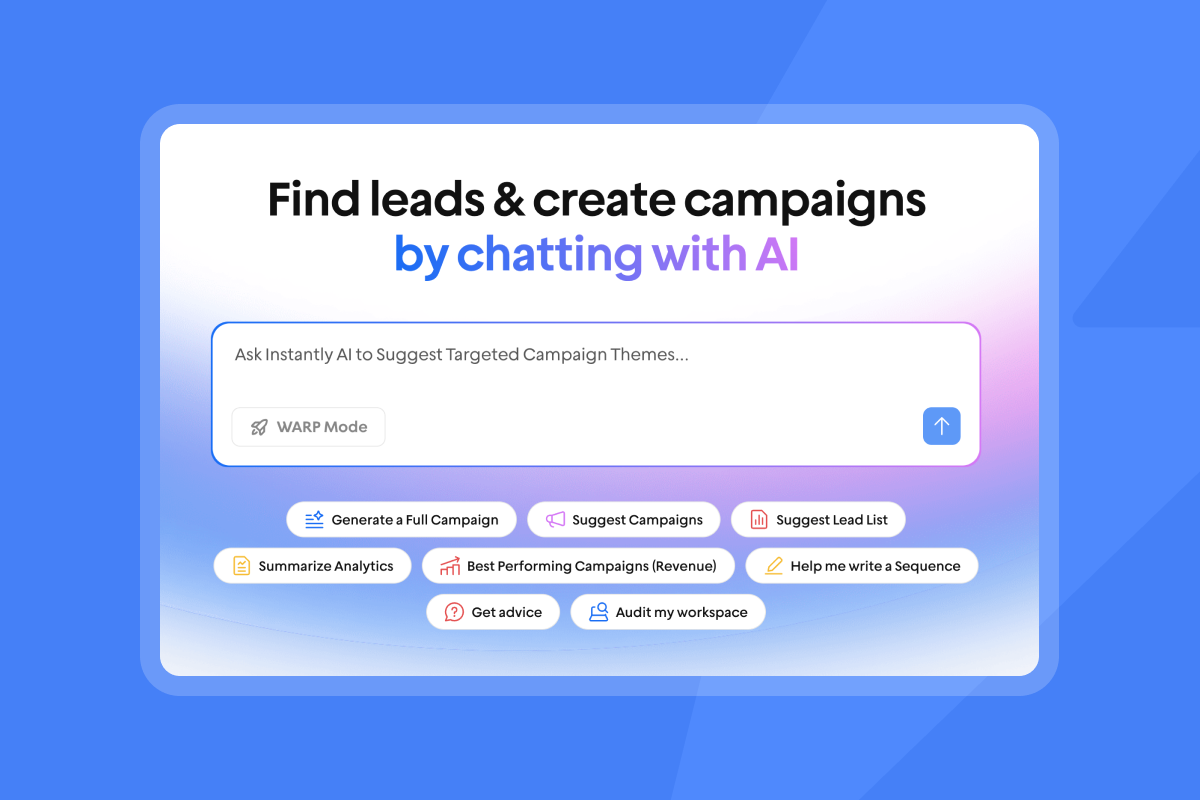
Must-have features for secure AI sales outreach
Five capabilities separate a secure AI outreach stack from one that creates compliance and deliverability risk. Data integrity comes first.
Ensuring AI prospecting data integrity
BounceShield (also known as BounceProtect) automatically skips known high-risk recipients based on real-time and historical bounce data. It runs by default on all plans and is the first line of defense against deliverability damage from bad list data. Campaigns auto-pause when bounce rate exceeds 5% after a minimum of 200 emails sent, which protects your domain before the damage compounds. Keep bounces below 2% (ideally much lower) to protect sender reputation and hold primary inbox placement, with anything approaching that threshold as a warning sign that list quality needs attention. CSV imports and HubSpot/Pipedrive lead imports require a separate lead verification step at 0.25 credits per lead before sending.
Admin controls for AI sequences
Global Blocklist prevents specific emails or entire domains from entering your campaigns at the import stage, not after a bad send. You can add entries manually or upload a CSV, and the blocklist is checked at the import stage, before any send occurs. Unsubscribe-based auto-blocklisting is available on all plans and adds leads to the blocklist automatically when they opt out. AI Blocklist Triggers (Hypergrowth and above) extend this further by adding leads based on account status or reply-content keyword matches, protecting your workspace from re-contacting opt-outs or angry replies.
Syncing AI insights to your CRM
The native HubSpot integration connects Instantly to your CRM so contacts, lists, and engagement events flow between systems without manual exports. HubSpot contact and deal changes can trigger Instantly workflows, and outreach outcomes like replies and campaign completions sync back to HubSpot in real time via the Automations builder. The Automations builder supports 15+ third-party platforms as bidirectional triggers and actions, including Pipedrive, Attio, Slack, and Airtable.
Avoiding hidden AI platform fees
Legacy sales engagement platforms charge per seat, so licensing costs compound quickly before you even account for inbox infrastructure. Instantly's flat-fee pricing includes unlimited email accounts on every Outreach plan. The Hypergrowth plan at $77.60/month (annual billing) or $97/month (monthly billing) gives that same 10-rep team up to 125,000 emails per month, unlimited warmup, and built-in deliverability tooling with no per-inbox surcharge.
AI agents (Copilot, AI Sales Agent, AI Reply Agent, and Lead Finder Agent) run on Instantly Credits, a separate subscription starting at $9/month with a free trial including 100 credits. The Deliverability AI Agent is included in Hypergrowth and above Outreach plans at no Credits cost. This separation keeps the credit economics transparent: you know exactly what each agent action costs before you run it.
Vendor onboarding and ramp-up times
A realistic implementation timeline runs 4-6 weeks from domain purchase to a live, data-generating campaign.
- Weeks 1-2: Purchase domains, configure DNS (MX, SPF, DKIM, DMARC), connect accounts, and enable warmup at 5-10 emails per day. Begin list preparation using SuperSearch signal filters.
- Weeks 2-4: Increase warmup to 20-30 emails per day, run Inbox Placement tests, build sequence copy, and set up HubSpot sync and Automations.
- Weeks 4-6: Launch campaigns at 30 emails per inbox per day, monitor health scores daily, and activate the AI Reply Agent in Human-in-the-Loop mode before switching to Autopilot.
"I have been using Instantly.ai since a long time now. Its a best tool in the market for automating you email reach outs and get proper analytics on your prospect's actions on the email they receive... Clear Analytics, warming of your email domains and AI Agent adds an extra layer of use for any sales people who want to run different email campaign." - Rahul Vithlani on Trustpilot
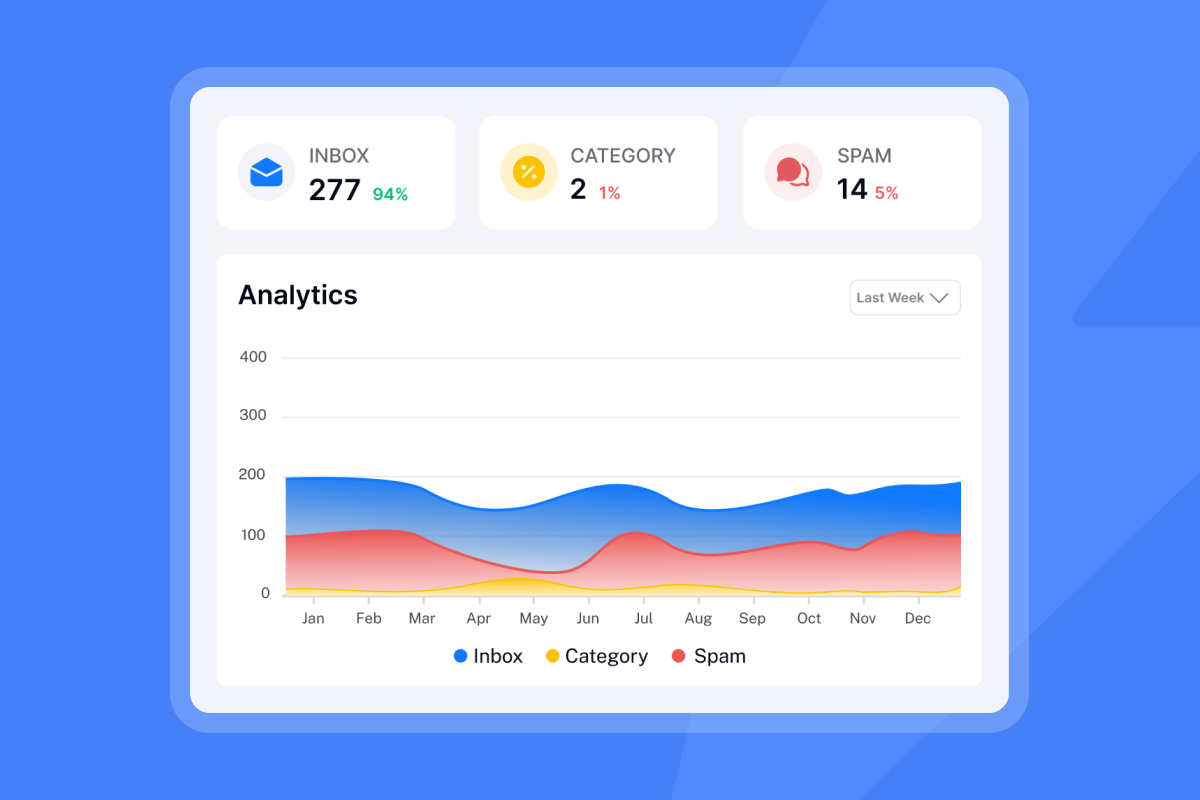
Proven metrics for AI driven outreach
Measurement starts with knowing what good looks like. The 2026 benchmark data gives your team a concrete anchor for each key metric.
Benchmarks for AI prospecting success
Instantly's 2026 benchmark report analyzed billions of cold email interactions from January through December 2025. The headline numbers every sales leader should anchor their team against:
- Platform average reply rate: 3.43%
- Top quartile: 5.5%+
- Top 10%: 10.7%+
- Optimal sequence length: 4-7 steps
- Best email length: under 80 words
- First-touch emails: generate 58% of all replies
- Consistent sending patterns: produce 15-20% higher replies versus irregular volume
If your team's reply rate sits below 3.43%, the issue is usually list quality, copy relevance, or deliverability health. Signal-based targeting and BounceShield (also known as BounceProtect) address all three directly.
How process governance boosts ROI
The cost-per-meeting calculation is where flat-fee pricing shows its value most clearly. The table below shows illustrative ranges based on Instantly's published plan pricing.
Stack | Monthly cost | Active contacts | Monthly sends |
|---|---|---|---|
Starter (Outreach Growth + Credits Growth + Growth CRM) | $141 | 1,000 | 5,000 |
Outreach Hypergrowth + Hyper Credits | $294 | 25,000 | 125,000 |
Light Speed + Hyper Credits | $555 | 100,000 | 500,000 |
Teams that standardize on horizontal scaling (more inboxes at 30 emails each) consistently produce better cost-per-meeting economics over a quarter than those pushing volume through fewer accounts at higher per-inbox rates.
Navigating the risks of automated prospecting
Knowing where AI prospecting creates risk helps you build the right governance layer before problems surface. Goal-setting is where that starts. Understanding how AI sales assistants automate prospect research is a useful starting point, since it's the layer with the clearest, lowest-risk automation wins.
Setting realistic AI prospecting goals
AI is an accelerator for a process that already works, not a fix for a broken one. If your list quality is poor, your copy is generic, or your domain is not warmed up, adding AI agents amplifies those problems rather than solving them - see our guide on AI sales agent mistakes to avoid for the most common failure patterns. Activate AI response handling only after you establish baseline deliverability and confirm your warmup health score is above 90%. The teams that see top-decile reply rates in the benchmark data use more specific data (real-time signals), tighter copy (under 80 words), and stronger process governance (consistent volume, verified lists, daily health checks).
Typical AI prospecting implementation timeline
The AI Sales Agent implementation guide maps a 30-day path from domain purchase to first live campaign. Expect 4-6 weeks before you have the deliverability track record and engagement data needed to confidently activate Autopilot mode on the AI Reply Agent. Apollo is built for enterprise buyers who need a broader sales intelligence suite with multichannel outreach, and Instantly syncs to the same CRMs on a flat fee, so every client you add costs you sending capacity rather than seats.
Can AI tools damage inbox placement?
Yes, if the copy triggers spam filters or the volume exceeds per-inbox limits. The AI Spam Words Checker evaluates your email copy in context before sending. The Deliverability AI Agent monitors 24/7 and can pause campaigns automatically when health scores drop. The high bounce auto-pause feature fires once bounce rate exceeds the 5% default threshold after a minimum of 200 emails sent, with a 7-day exemption from re-triggering after a resume. These are not optional safeguards. They are the minimum governance layer that separates AI prospecting that builds pipeline from AI prospecting that burns domains.
AI prospecting works when you treat it as a system, not a single feature. Building that system starts with properly warmed infrastructure, signal-based list quality, and a governance layer that keeps your team's sending inside safe parameters. Instantly's 14-day free trial gives you that full infrastructure to test against your own ICP, with no credit card required. Start your free trial and use the ramp template inside the app to reach your first live campaign in under 30 days.
FAQs
What is the safe daily sending limit for a single email account?
Do not scale past 30 campaign emails per single inbox per day. Airmail accounts cap at 20 campaign emails per day.
How long does it take to warm up a new domain before launching campaigns?
The minimum warmup period is 2 weeks, but 4-6 weeks is the recommended timeline to reach full sending volume safely and maintain a health score above 90%.
What is the maximum bounce rate allowed before campaigns pause automatically?
Instantly auto-pauses campaigns once the bounce rate exceeds 5% after a minimum of 200 emails sent. Keep your operational target below 2% (ideally much lower) to protect sender reputation.
What is the difference between the AI Reply Agent and Unibox NLP?
Unibox NLP classifies incoming replies into custom labels using sentiment detection across 50+ languages. The AI Reply Agent drafts and sends responses within 5 minutes, consuming 5 Instantly Credits per reply sent or edited.
How much does it cost to run AI agents on Instantly?
Copilot, AI Sales Agent, AI Reply Agent, and Lead Finder Agent all run on Instantly Credits, a separate subscription starting at $9/month with a free trial. The Deliverability AI Agent is included in Hypergrowth and above Outreach plans at no Credits cost.
Key terms glossary
SISR (Server & IP Sharding & Rotation): A deliverability architecture on Instantly's Light Speed plan that routes campaigns through dedicated private server blocks. It rotates IP addresses continuously to isolate sender reputation from shared infrastructure risk.
SuperSearch: Instantly's B2B contact database of 450M+ verified leads with waterfall enrichment across partner providers. The Signals filter targets prospects based on real-time intent including funding rounds, hiring surges, and competitor mentions.
Unibox NLP: Instantly's centralized inbox feature that auto-classifies incoming replies into custom labels using sentiment and context detection across 50+ languages. Custom label selection requires Hypergrowth or Light Speed.
BounceShield (also known as BounceProtect): Instantly's default bounce prevention system that automatically skips known high-risk recipients based on real-time bounce data. It keeps hard bounces below campaign thresholds before they trigger deliverability damage.
Deliverability AI Agent: An always-on monitoring agent included in Hypergrowth and above Outreach plans. It checks DNS health, blocklist status, warmup scores, and bounce rates every 24 hours, surfacing one-click fixes when risks appear.
Read next
- Apollo data enrichment review 2026: features, pricing, and data quality analysis: A breakdown of Apollo's contact database, enrichment accuracy, and pricing model so you can compare it against your current data stack.
- AI BDR for small and startup sales teams: scaling outbound without headcount: How lean teams use AI agents to run structured outbound sequences without adding SDR headcount.
- AI BDR and CRM integration: Connecting your sales stack for clean data flow: A practical guide to syncing AI outreach outcomes back to your CRM so pipeline data stays accurate and handoffs stay clean.


