.svg)
%20(1).svg)


Updated June 19, 2026
TL;DR: AI SDR platforms range from $100/mo to $5,000+/mo. Subscription cost alone does not determine ROI. A fully loaded human SDR costs $116,500 to $154,800 per year. A well-configured AI SDR stack can reach positive ROI faster than a human hire, but only when deliverability infrastructure is built in. Flat-fee models like Instantly.ai's (starting at $47/mo for outreach with unlimited accounts and warmup) eliminate per-seat scaling friction and keep billing predictable as your team grows.
Most sales leaders buy AI SDRs (Sales Development Representatives) to cut costs, but they end up paying more per meeting because of hidden infrastructure fees and spam folder placement. AI SDR pricing spans a wide range, and the subscription line on a vendor's homepage captures only one part of the true cost. Add domain setup, warmup, data verification, and API overages, and your actual monthly spend looks very different.
How AI SDR pricing is calculated
AI SDR pricing isn't a single number. Vendors bundle a base subscription with add-ons for contacts, API calls, lead data, and warmup. To compare platforms fairly, you need to add every line item: the outreach subscription, the lead database, deliverability infrastructure, CRM sync, and credit consumption from AI agents. Skipping any one of these produces an estimate that surprises you at the end of month one.
AI SDR vs. human SDR ROI breakdown
A human SDR's fully loaded annual cost runs $116,500 to $154,800 when you account for all real inputs:
- Base salary: $51,000 to $93,000
- Variable compensation (offshore SDRs): $20,000 to $30,000
- Benefits and payroll taxes: ~$7,800 minimum, up to $14,200+ in high-tax states like California or New York
- Sales tools and data: $3,000 to $5,000 per SDR
- Manager overhead (prorated): $5,000 to $10,000 per SDR
- Recruiting and onboarding: $8,000 to $15,000 per hire
- Ramp productivity loss: $12,000 to $28,000
Turnover compounds the cost. SDR turnover is consistently high across the industry, and the expected replacement cost per seat runs $40,000 to $90,000+ per departure once recruiting, onboarding, and lost productivity are included. Add a 3-to-6-month ramp period where you pay full compensation and receive below-quota output, and a team of five SDRs can represent $510,000 to $725,000 in annual fully loaded cost before a single SQL (Sales-Qualified Lead) closes.
The math favors automation at scale, but only when the underlying AI sales agent deliverability system keeps emails out of spam.
Standard AI SDR pricing models
AI sales agent pricing models cluster into three tiers, and your tier choice determines how many hidden costs you'll encounter.
Tier | Monthly price | What's typically included |
|---|---|---|
Entry-level | $100 to $500 | Basic AI-assisted sequences, limited personalization, no built-in warmup |
Mid-market | $500 to $3,000 | AI-driven outreach, research, multi-channel support, some data included |
Enterprise | $2,000 to $5,000+ | Fully autonomous agents, phone, email, LinkedIn orchestration, custom integrations |
Entry-level tools often require you to source your own lead data and manage warmup externally, so the sticker price understates real cost. Enterprise platforms typically include more, but mandatory annual contracts and per-seat structures add friction as your team grows.
Estimated competitor pricing (reported, not confirmed by vendors):
Platform | Est. monthly cost | Pricing model |
|---|---|---|
Regie | $2,495/month (Force Multiplier Rep plan: $499/user/month, 5 seat minimum) | Flat per-org annual contract |
Artisan | $600/month (Employee plan, billed annually) | Annual contract |
11x | $3,750/month (Growth plan, up to 5 end users, billed annually) | Annual contract |
Instantly (Hypergrowth) | $97/month (billed monthly), $77.6/month (billed annually) | Flat-fee, unlimited accounts |
Note: Competitor pricing is estimated from publicly available information and may vary. Instantly pricing confirmed as of June 2026.
Evaluating AI SDR plans for predictable billing
Predictable billing means your outbound cost doesn't spike when you add a rep, run a higher-volume campaign, or use an AI agent more than expected. Before signing any contract, map every cost variable to your expected usage and model what happens when volume doubles.
User-based AI SDR subscription fees
Per-seat pricing penalizes growth. A 5-rep team that scales to 15 reps triples its software cost, even when each rep's output stays constant. The per-seat model also creates a disincentive to give reps access to the tools they need, so heads of sales end up managing license counts rather than pipeline coverage. If you're planning to grow your team, model the per-seat cost at your 12-month headcount target, not today's.
Costing AI SDRs by contact volume
Contact-based pricing charges you per lead uploaded or emailed. At low volumes, this feels fair, but at scale it restricts your total addressable market outreach and generates unpredictable monthly invoices. If your ICP shifts and you need to load a new segment, you pay again for contacts you've already paid to source, compounding the cost with each campaign pivot.
Fixed monthly AI SDR pricing
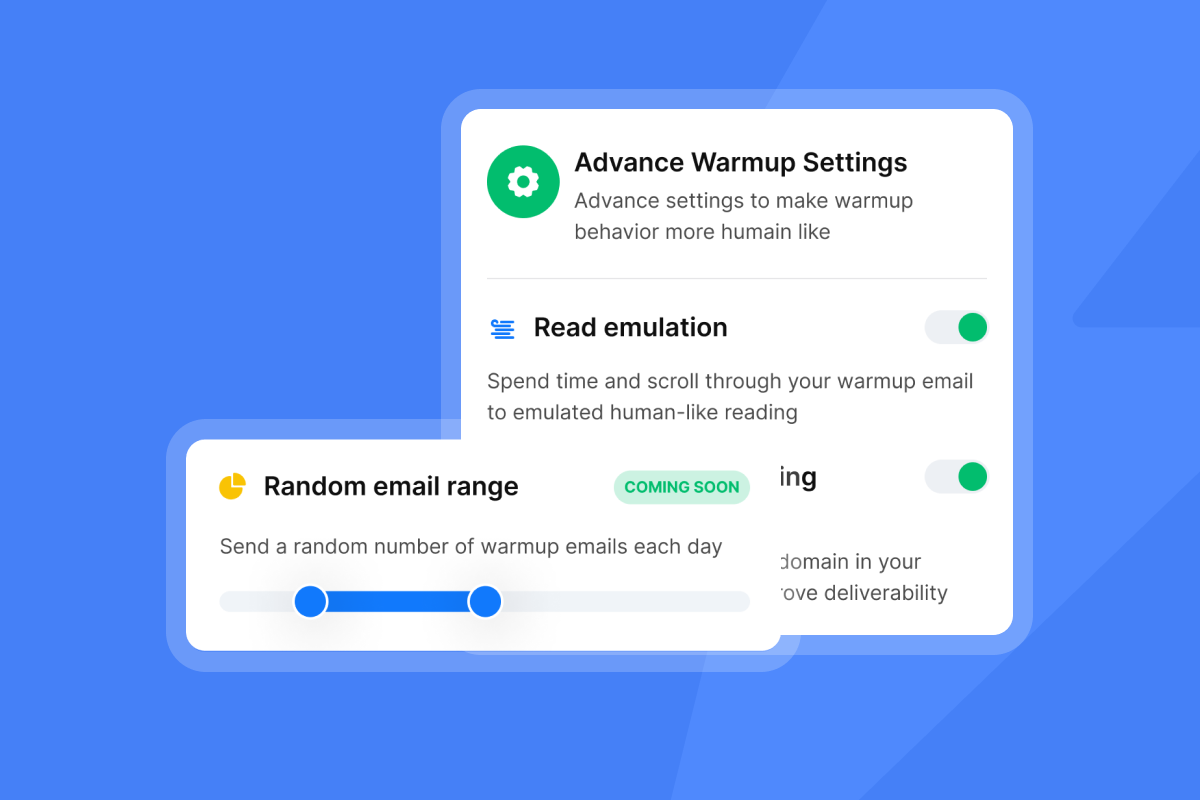
Flat-fee models give finance teams a predictable line item. Instantly's Outreach plans are built on this principle with unlimited email accounts and warmup across every tier.
- Growth: $47/mo (or $37.60/mo annual). Includes A/Z testing, AI Sequence Writer, AI Rephrase, AI Spam Words Checker, advanced warmup options, and send deliverability tests.
- Hypergrowth: $97/mo (or $77.60/mo annual). Adds premium support and higher volume capacity.
- Light Speed: $358/mo (or $286.30/mo annual). Adds SISR (Server and IP Sharding and Rotation) with dedicated private IP pools for maximum deliverability control.
The unlimited accounts structure is the critical differentiator. Most teams running outbound at scale use multiple sending domains to protect their primary domain's reputation, as detailed in Instantly's secondary sending domains guide. A flat-fee model means you add domains and accounts without per-account charges stacking up.
"What I like best about Instantly is its ability to scale cold email outreach effortlessly. The unlimited email accounts, 4.2M+ account deliverability network, warm-up features, and simple campaign setup make it easy to run high-volume, personalized outreach while maintaining good deliverability." - Vasim T. on G2
Managing AI SDR credit expenses
Credits power the AI layer that runs Instantly's AI agents. Instantly Credits are a separate subscription from the Outreach plans, forming a single pool that runs SuperSearch lead lookups,Copilot, AI Sales Agent (5 credits per generated lead), and AI Reply Agent (5 credits per reply).
The Instantly Credits tiers run as follows:
- Free Trial: $0 for 100 credits
- Nano: $9/mo ($8.10/mo annual) for 150 credits
- Growth: From $47/mo ($37.60/mo annual) for 1,500 to 2,000 credits
- Supersonic: From $97/mo ($87.30/mo annual) for 5,000 to 7,500 credits
- Hyper Credits: From $197/mo ($177.30/mo annual) for 10,000 to 200,000 credits
The single-pool model is built to give you one transparent meter to watch rather than separate invoices for lead data, AI writes, and reply handling. Budget 5 credits per inbound reply against your expected monthly reply volume and you have a clear credit forecast before the billing cycle closes. Full billing details live in the Billing and Usage Overview.
Spotting opaque charges in AI sales contracts
The subscription price is the visible cost. Hidden costs are what close the gap between projected ROI and actual outcome. Three categories generate most of the surprises: ramp and onboarding, deliverability infrastructure, and lead data.
Calculating AI SDR ramp costs
Before your tool sends a single email, you may pay for domain configuration, technical record setup, and CRM mapping. Even self-serve platforms require internal time investment: domain acquisition, SPF/DKIM/DMARC setup, warmup monitoring, and sequence building. If your vendor doesn't walk you through authentication setup as part of onboarding, that cost falls on your team.
Infrastructure fees for AI SDR tools
If your AI SDR subscription doesn't include built-in warmup, you're paying for it separately. Real-world infrastructure for a modest outbound operation includes:
- 50 Google inboxes at $3.00 each ($150/mo) via third-party Google-compatible inbox providers such as Puzzle Inbox. Standard Google Workspace pricing runs approximately $7 to $8/inbox putting the same 50 inboxes at $350 to $400/mo.
- 34 Outlook inboxes at approximately $0.35 each ($12/mo) via bulk reseller licensing. Retail Microsoft 365 Business Basic runs $6/user/mo direct from Microsoft.
- Sending domains at $10 to $15/year each (roughly $1 to $2/mo per domain)
Depending on your inbox provider, that's approximately $165 to $415 per month in sending infrastructure before you've paid for a single sequence or lead. Instantly's flat-fee subscription absorbs these infrastructure costs through its built-in warmup network. The rotating IP and sending algorithm documentation explains how IP rotation contributes to primary inbox placement, and the inbox placement testing tool gives you automated pre-send health checks before deliverability problems reach your domain reputation.
Data and contact verification fees
An SDR spending 10 hours per week on list research at a fully loaded rate burns a meaningful monthly cost building lists that a credit-based database produces in an afternoon. Standalone data vendors can run into considerable annual spend at the enterprise level, and mid-market options that combine a contact database with an enrichment layer add further cost before you've paid for outreach.
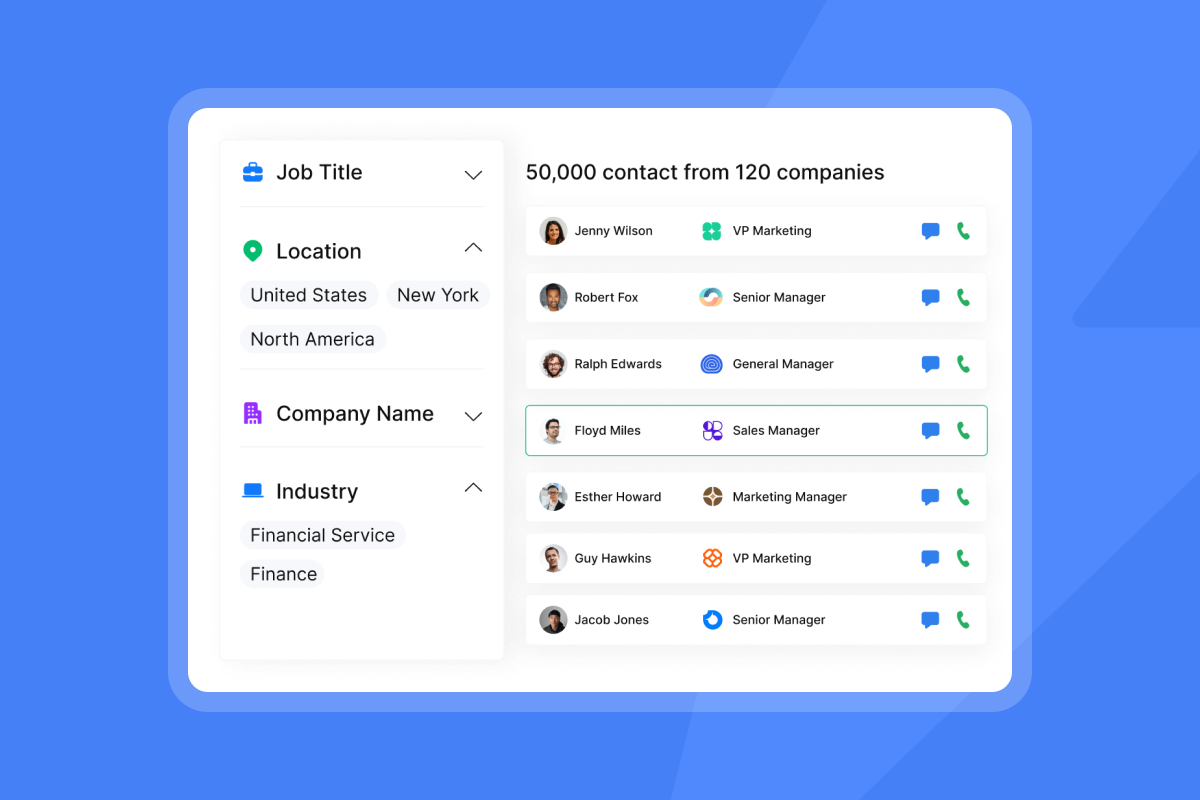
Instantly brings the effective cost per verified contact down materially through SuperSearch's waterfall enrichment across 5+ providers. The 450M+ B2B lead database handles verification at a fraction of standalone vendor costs, and the more tools you consolidate, the less reconciliation work your RevOps team handles each month.
Managing variable API usage costs
Some AI SDR vendors pass their OpenAI or Anthropic token costs to the buyer as usage-based overages, creating a billing structure where a high-personalization month produces a materially different invoice from a lighter one. Buyers often discover this after the first overage hits. Instantly's approach is a fixed credit pool with published per-action rates: 5 credits per AI Reply Agent response and 5 credits per AI Sales Agent lead generated. You can model monthly credit consumption before committing to a tier.

Efficiency gains: AI SDRs vs. manual prospecting
Automating your SDR workflow doesn't just cut cost. It expands what's operationally possible for your team. A human SDR is capped by working hours, list quality, and manual research time. An AI-assisted workflow removes those ceilings, letting a lean team run the volume that would otherwise require three to five additional hires.
True costs of manual prospecting
Manual prospecting creates a hard volume constraint relative to AI sales prospecting tools. An SDR manually identifying, verifying, and sequencing contacts can work through a limited number of new leads per day, typically in the range of 20 to 40 depending on ICP complexity and tooling, while an AI-assisted workflow using a pre-loaded verified database and automated sequences covers that same volume far faster, freeing rep time for live conversations and deal progression.
The time difference is quantifiable. An AI-built campaign can launch in approximately 30 days after domain setup and warmup complete, compared to 3 to 6 months of ramp time for a new human SDR before quota attainment.
Annual AI SDR investment breakdown
For a mid-market sales team, a realistic Instantly annual stack breaks down as follows:
- Outreach Hypergrowth: $97/mo ($1,164/year)
- Instantly Credits (Supersonic): $97/mo ($1,164/year)
- Growth CRM: $47/mo ($564/year)
- Domain registration (at $15/year per domain): variable by team size
A mid-tier stack combining Outreach Hypergrowth ($97/mo), Credits Supersonic ($97/mo), and Growth CRM ($47/mo) runs $241/mo ($2,892/year). An entry-level stack using Growth across all three tiers runs $141/mo ($1,692/year). Either figure compares to a single fully loaded SDR at $116,500 to $154,800 per year. The cost ratio makes building a business case for any CFO review straightforward.
Direct costs per booked meeting
Cold email consistently produces a lower cost per held meeting than a fully loaded in-house SDR, and the gap widens as team size and send volume grow.
Cost model | Typical monthly tool cost | Est. cost per meeting |
|---|---|---|
In-house SDR (fully loaded) | $8,500 to $12,083 | $708 to $1,208 (tool cost only, at 10 to 12 meetings/month) |
Enterprise AI SDR (11x) | From $3,750/month | ~$125+ (tool cost only, ~30 meetings/month) |
Mid-market AI SDR (Artisan) | $600/month (billed annually) | ~$20 (tool cost only, ~30 meetings/month) |
Flat-fee outbound (Instantly stack) | $141 to $241 | ~$5 to $8 (tool cost only, ~30 meetings/month) |
Note: Competitor costs are estimated from publicly available information. Instantly pricing confirmed as of June 2026.
How to calculate ROI for AI SDR investment
ROI calculations are only useful when grounded in real operating variables, not vendor marketing assumptions. Most vendor ROI calculators pre-fill reply rates and close rates at best-case levels. Use your own CRM data as the baseline. If you don't have cold email history yet, start with conservative inputs and tighten the model after your first 30-day pilot.
Performance KPIs for AI SDR ROI
Consider tracking these four metrics from day one of any campaign:
- Deliverability rate: Keep hard bounces below 1% and total bounces below 2%, and keep spam complaints below 0.3% for Gmail. A 17% failure rate on 100,000 emails means 17,000 missed customer interactions in a single send.
- Reply rate: The platform-wide average on Instantly sits at 3.43%, with top-quartile teams reaching 5.5% and elite performers exceeding 10%, per internal benchmark data.
- Positive reply classification accuracy: What percentage of flagged positive replies are genuinely interested leads. Misclassification wastes AE time on low-intent contacts, a gap that automating lead qualification with AI is designed to close.
- Meeting show rate: National average B2B show rates run 70% to 80%, with well-run programs reaching 85% to 90%.
Standardizing AI SDR ROI formulas
The core formula: annual ROI equals net revenue from AI-sourced meetings minus total tool cost, divided by total tool cost, multiplied by 100.
Here's how to run the numbers:
- Enter your monthly lead volume (contacts per month in active sequences).
- Apply your reply rate (use 3.43% as a conservative baseline, 5.5% for optimized campaigns).
- Apply meeting conversion rate (replies to booked meetings, typically 15% to 25%).
- Apply your show rate (60% to 70%).
- Multiply held meetings by your ACV and close rate to project monthly pipeline contribution.
- Subtract total tool stack cost to produce net monthly gain.
Example: A team sending 5,000 contacts per month at a 4% reply rate generates 200 replies. At 20% meeting conversion, that's 40 booked meetings. At 65% show, that's 26 held meetings. At a $30,000 ACV (Annual Contract Value) and a 20% close rate, that's approximately 5 new customers per month contributing $150,000 in pipeline. A $241/mo tool stack represents minimal cost relative to that output.
Projecting the AI SDR payback period
The payback period is the exact month when cumulative closed-won revenue from AI-sourced pipeline recovers your total tool investment plus setup costs. For most mid-market teams with clean CRM data and a defined ICP, payback typically arrives within a few months. Teams with poor data or an undefined ICP should allow more time.
Improving reply rate from 3.43% to 5.5% through better copy and tighter list hygiene increases meeting volume by approximately 60%, which cuts the payback period meaningfully when other variables hold constant. That's why deliverability and data quality are the two variables worth optimizing first.
Cost per SQL and pipeline coverage
Cost per SQL connects outbound activity directly to your pipeline coverage ratio (total pipeline value divided by quarterly revenue target). Divide total monthly tool cost by the number of SQLs generated that month. A team running an Instantly stack at ~$241/mo and generating 20 SQLs per month has a roughly $12 cost per SQL. A team on a $2,200/mo platform generating the same 20 SQLs has a roughly $110 cost per SQL. Tracking cost per SQL monthly gives you the one number your CFO wants to see when reviewing the outbound line item.
Justifying AI SDR costs to your CFO
The strongest finance case isn't "we'll book more meetings." It's "we will not need to hire two additional SDRs this quarter," backed by numbers that reconcile with CRM data.
Finance-ready AI SDR pricing summary
Translate every metric into CFO-friendly terms before the budget review:
- OpEx (Operating Expenditure) savings: Headcount avoidance. Two SDRs not hired equals $233,000 to $309,600 in annual cost avoidance (based on $116,500 to $154,800 fully loaded cost per SDR).
- Predictable cash flow: Monthly flat-fee pricing replaces variable headcount costs and commission structures.
- Cost per SQL: A specific dollar figure per sales-qualified lead, benchmarked against manual methods.
- Payback period: A defined month number when the tool cost is fully recovered from closed-won revenue. Present these figures from your actual CRM data, not from a vendor's ROI calculator. Reconciliation with CRM output is what makes the business case defensible.
Aligning AI SDR costs with ROI
Work backwards from your quarterly revenue goal. If you need $1.5M in pipeline per quarter at a $30,000 average deal size, you need 50 opportunities. At a 30% close rate on SQLs, you need roughly 167 SQLs. At a $12 cost per SQL using an Instantly stack, that's approximately $2,000 in tool spend to generate a quarter's worth of opportunities. The math holds up at CFO level.
Comparing pilot and full rollout costs
Start with a 30-day proof of concept before committing to a full rollout. A single paid month gives you enough data to model a full rollout cost with confidence before committing to an annual plan.
Define three success thresholds before the pilot starts: a minimum reply rate that meets your goals (consider 3.5%+ as a baseline), a minimum meetings booked count tied to your pipeline goal, and a bounce rate ceiling (target hard bounces below 1% and total bounces below 2%). If all three are met inside the trial window, the full rollout decision is data-backed. Watch the Instantly demo walkthrough by co-founder to see campaign setup end to end before you configure your pilot.
Avoiding procurement pitfalls in AI deals
Most AI SDR platforms are priced to look affordable at the point of signature. The real cost appears later, in auto-renewal windows, usage overages, data lock-in, and exit friction, the kind of shortfalls covered in our honest assessment of AI SDR limitations. The checks below take less than an hour before you sign and can save months of unwanted spend.
Mitigating AI SDR contract lock-ins
Annual lock-ins with auto-renewal clauses that activate 30 to 60 days before the end date are the most common billing trap in this category. Start monthly, validate results, then negotiate annual rates from a position of proven ROI. Require termination for convenience with reasonable notice, and confirm that auto-renewal requires your affirmative consent rather than silence.
Identifying usage-based overages
Before signing any contract with a credit or usage component, you should model three scenarios with your finance partner: expected monthly usage, a 2x spike month during a campaign launch or end-of-quarter push, and a low-activity month. Identify exactly what happens at each scenario, including the per-unit overage rate and whether auto-upgrade to the next tier happens with or without your approval.
Spotting hidden AI SDR costs
Run this checklist on every AI SDR evaluation:
- CRM sync fees: Is HubSpot integration included, or an add-on?
- Domain and mailbox setup: Who pays for authentication, domain registration, and warmup time?
- Data verification: Is list hygiene included or billed separately per contact?
- API access: Is the developer API in the base plan or a separate tier?
- Onboarding fees: Is there a one-time setup fee, and is it refundable?
Evaluating vendor exit clauses
Before signing, confirm data export rights (format and timeline), transition support duration after termination, and whether your contact and campaign data stays accessible during a migration window. Require at least one full data export per contract term at no additional cost, and specify a post-termination window (typically 30 to 90 days) during which the vendor must maintain data accessibility. Contracts without clear data portability terms represent a hidden switching cost that compounds with every month of data accumulation.
The math in this guide only holds if your emails reach the primary inbox. Run a live pilot before committing to a hire or a platform. Try Instantly free for 14 days. No credit card required.
FAQs
What are market rates for AI SDR platforms?
AI SDR platforms range from $100 to $500/mo at entry level, $500 to $3,000/mo at mid-market, and $2,000 to $5,000+/mo at enterprise. Flat-fee outbound engines like Instantly start at $47/mo for unlimited accounts and built-in warmup across every tier.
Does per-seat or per-contact pricing deliver better ROI?
Per-contact pricing gives more predictability at low volumes but penalizes high-volume outreach across multiple segments. Per-seat pricing scales your cost with headcount rather than output, making it more expensive as your team grows past 5 to 10 reps.
What is the typical AI SDR payback period?
For mid-market teams with clean CRM data and a defined ICP, payback typically arrives within a few months. Teams with poor data quality or an undefined ICP should expect longer timelines.
How do you structure a 30-day AI SDR pilot?
Define three success thresholds before day one: a minimum reply rate of 3.43%+ (the confirmed Instantly platform average), a minimum meetings booked count tied to your pipeline goal, and a bounce rate ceiling of 1%. Review all three by the end of the pilot window and make your rollout decision on actual campaign data rather than projections.
How does poor deliverability affect AI SDR ROI?
A 17% email failure rate on 100,000 sends means 17,000 missed customer interactions in a single campaign. Hard bounces above 1% or total bounces above 2% degrade domain health, triggering a re-warmup cycle that pauses campaigns at the exact moment they should be generating pipeline.
Key terms glossary
AI SDR: An automated sales development tool that handles prospecting, sequence execution, and reply handling in place of or alongside a human SDR. Cost is calculated as a system, not a single subscription line.
Bounce rate: The percentage of sent emails that fail to deliver. Keep hard bounces below 1% and total bounces below 2% to protect domain health. Rates above those thresholds trigger re-warmup cycles that pause active campaigns.
Cost per SQL: Total monthly tool spend divided by the number of sales-qualified leads generated that month. The single most CFO-friendly number for justifying outbound investment.
Credits: Instantly Credits are a separate subscription that powers SuperSearch, Copilot, AI Sales Agent (5 credits per generated lead), and AI Reply Agent (5 credits per reply). One pool, one meter to watch.
Deliverability rate: The percentage of sent emails that reach the recipient's primary inbox rather than spam or promotions. The foundational metric that determines whether all other ROI numbers hold.
Domain warmup: The process of gradually increasing send volume from a new domain so inbox providers build a positive sending history before full-volume campaigns run. Skipping warmup is the most common cause of early deliverability failure.
Fully loaded cost: The true annual cost of a human SDR including base salary, variable compensation, benefits, payroll taxes, tools, manager overhead, recruiting, onboarding, and ramp productivity loss.
ICP (Ideal Customer Profile): A specific definition of the company type, size, role, and buying signals your sequences target. A poorly defined ICP is one of the two main reasons payback periods extend beyond 5 months.
List hygiene: The process of verifying, deduplicating, and removing invalid or low-quality contacts before they enter a sequence. Poor hygiene drives bounces, which degrade domain reputation.
Payback period: The month at which cumulative closed-won revenue from AI-sourced pipeline recovers your total tool investment and setup costs. For mid-market teams with clean data and a defined ICP, payback typically arrives within a few months.
Primary inbox placement: Delivery to the main inbox tab rather than spam or promotions folders. The variable that determines whether your reply rate is 5% or effectively zero.
Reply rate: The percentage of delivered emails that receive a response. The Instantly platform-wide average is 3.43%. Top-quartile teams reach 5.5%. Elite performers exceed 10%.
SISR (Server and IP Sharding and Rotation): A dedicated private server and IP rotation setup available on Instantly's Light Speed plan. Provides maximum deliverability control for high-volume senders.
Sender reputation: A score assigned by inbox providers based on your domain's sending history, bounce rate, spam complaint rate, and engagement signals. Reputation determines inbox placement at scale.
SQL (Sales-Qualified Lead): A prospect who has met defined criteria indicating genuine purchase intent and has been accepted by the sales team for active follow-up.
Warmup network: A shared infrastructure of real inboxes that send, open, and reply to each other's emails to build domain reputation before live campaigns run. Built into all Instantly Outreach plans.
Read next:
- Cold Email ROI Calculator: How to Measure Revenue Impact and Cost Per Meeting: Use your own CRM inputs to calculate cost per meeting, pipeline contribution, and payback period for your outbound stack.
- What is an AI SDR? The complete guide to AI-powered sales development: Covers how AI SDRs work, where they fit alongside human reps, and what to evaluate before buying.
- Cold email deliverability guide: warmup, domain health, and inbox placement: A practical guide to domain setup, warmup sequencing, and the checks that keep your emails out of spam.



