.svg)
%20(1).svg)


Updated August 12, 2026.
TL;DR: Sales leaders looking for the best B2B data enrichment tools in 2026 must prioritize verified accuracy and deliverability over raw database size. This guide ranks the top eight enrichment platforms, comparing their data sourcing methods, pricing transparency, and CRM integrations. Instantly SuperSearch addresses this directly by combining a 450M+ contact database with a seven-provider waterfall enrichment model and built-in real-time verification. This ensures your SDRs (Sales Development Representatives) only email active, verified addresses, protecting your sender reputation and improving your overall reply rates.
Buying the largest database is the fastest way to ruin your domain reputation. In 2026, data volume is cheap, but verified accuracy is what keeps your inboxes alive. B2B contact data decays steadily, which means a prospect list can contain outdated addresses by the time your team works through it. For a Head of Sales managing 5 to 15 SDRs, that translates directly into bounced emails, spam flags, and damaged domain health before a single conversation starts.
This guide ranks the best B2B data enrichment tools for 2026, evaluating each on verified accuracy, pricing transparency, CRM integration depth, and setup speed so you can make a confident buying decision without walking into a billing trap.
What is B2B data enrichment and why sales teams need it
B2B data enrichment is the process of appending or updating contact and company information in your CRM or prospect lists using verified external data sources. This includes email addresses, phone numbers, job titles, firmographics, and buying intent signals. Static databases are no longer sufficient because the B2B market shifts constantly: people change jobs, companies restructure, and email addresses go dead every month.
How data decay damages deliverability and reply rates
B2B contact data decays continuously. A list built several months ago can already contain a large number of dead or inactive addresses. Single-source databases, which pull from one static index and refresh quarterly at best, cannot keep pace with that rate of change.
Bounce rates above 2% put your sender reputation at risk with Gmail and Microsoft, and once your domain is flagged, recovery takes weeks of reduced sending while you rebuild trust. This is the core of the Deliverability-as-a-System framework: verified data feeds clean sends, clean sends maintain sender reputation, and strong sender reputation keeps your campaigns in the primary inbox.
Instantly's 2026 Cold Email Benchmark Report analyzed billions of email interactions (data covering January 1 to December 18, 2025) and found a platform average reply rate of 3.43%. Top-quartile senders reach 5.5%+, and the top 10% achieve 10.7%+. Consistent, stable sending patterns produce 15% to 20% higher reply rates compared to irregular senders. That gap closes when campaigns start with clean, verified data, because your daily cap of 30 emails per inbox per day matters far less if half those addresses are invalid.
Streamlining CRM data syncing
When you skip automated enrichment, reps fill the gap manually: scraping LinkedIn, copying details from browser extensions, or uploading unverified CSVs. Each of those behaviors introduces errors and compliance risk. Automated enrichment pipes verified contacts directly into your CRM through native integrations, keeping data consistent across the team and removing the temptation to use unsafe workarounds. Instantly's duplicate lead detection and CRM import tools handle deduplication automatically, so reps work from clean, validated lists on every campaign.
Criteria used to rank 2026 enrichment software
Each tool is evaluated on four criteria:
- Data quality and verification method: real-time API vs. static database
- Pricing transparency and contract terms: month-to-month vs. annual lock-in
- CRM and outreach integration depth: native vs. third-party connectors
- Setup speed and support quality: self-serve vs. enterprise onboarding
The goal is to find a tool your team adopts quickly and trusts to protect your sender reputation.
Verifying lead accuracy at scale
The most important distinction between enrichment tools in 2026 is how they verify contacts. Static scraping pulls addresses from indexed pages and stores them in a snapshot. If someone changed jobs six months ago, you still get their old address. Real-time verification APIs check whether the email server actively accepts mail for that address at the moment of lookup.
Benchmarking lead source quantity
Waterfall enrichment queries multiple databases sequentially, checking provider one, then two, then three, until it finds a verified result. A seven-provider waterfall raises coverage beyond what any single provider can return, because each subsequent provider only catches leads the previous ones missed.
Cost per record and contract terms
| Platform | Pricing model | Contract terms | Verification method |
|---|---|---|---|
| Instantly | Flat-fee credits, Growth plan ($47/mo, or $37.60/mo annual) | Month-to-month available | Real-time seven-provider waterfall |
| Apollo.io | Per-seat (Basic: $49/mo annual, $65/mo monthly. Professional: $79/mo annual, $99/mo monthly. Organization: $119/mo annual, $149/mo monthly) | Annual or monthly | Database + email validation |
| ZoomInfo | Per-seat (pricing not publicly listed) | Annual lock-in | Database enrichment |
| Lusha | Plan-based with seat limits and credit allowances (Starter: $37.45/mo annual, $49.90/mo monthly [1 seat]. Pro: $48.95/mo annual, $69.90/mo monthly [2 seats]. Premium: $259.95/mo annual, $399.90/mo monthly [5 seats]) | Monthly available | Confidence scoring verification |
| Clearbit/Breeze | HubSpot Credits bundled with seat-based HubSpot subscriptions, additional volume via capacity packs (auto-upgrade on overage) | Monthly available | Firmographic/static enrichment |
| Clay | Actions + data credits (Launch: $167/mo annual, $185/mo monthly. Growth: $446/mo annual, $495/mo monthly. Enterprise: custom) | Monthly available | 150+ database waterfall |
| Cognism | Quote-based only | Annual required | Diamond (phone-verified) or Platinum (email-enriched, not SMTP-verified) |
| Kaspr | Per-seat with credit allowances (Starter: $49/user/mo annual, $65/user/mo monthly. Business: $79/user/mo annual, $99/user/mo monthly. Enterprise: custom) | Monthly available | LinkedIn-sourced |

1. Instantly: scaling outreach with verified leads
Instantly is the top choice for sales teams that need deliverability protection and predictable flat-fee pricing built into the same platform as their outreach. With a database of 450M+ B2B contacts and a seven-provider waterfall enrichment model (BetterContact, ContactOut, Findymail, IcyPeas, LeadMagic, Prospeo, and Wiza), SuperSearch checks each provider in sequence until it finds a verified result. Leads sourced directly in SuperSearch arrive pre-verified, which means they do not consume additional verification credits.
The platform also includes Signals filters that surface buyer-intent data: Reddit-sourced pain points, competitor mentions, funding events, and leadership changes, with approximately 5.8 million new signals per week matched against the full database.
Driving sales pipeline efficiency
Instantly's built-in verification tool processes raw lead lists at 0.25 credits per lead, classifying each address as valid, invalid, or risky. This step removes invalid addresses before your campaign launches, which reduces the risk of crossing the 2% bounce threshold. For a 1,000-lead imported list, the verification cost is a fraction of a dollar against the risk of damaging a domain you have spent weeks warming up.
Instantly's Deliverability AI Agent (Hypergrowth and above) monitors DNS health, blocklist status, warmup scores, and bounce rates, surfacing issues before they affect your campaigns.
Transparent plans and seat costs
Instantly uses a flat-fee model with no per-seat multipliers. The Outreach Growth plan runs $47/mo (or $37.60/mo on annual billing) and includes unlimited email accounts and unlimited warmup. The Growth plan includes A/Z testing. Teams that need the full 26-variant capability can access that on the Hypergrowth plan ($97/mo) and above.
The SuperSearch (Instantly Credits) Growth plan also runs $47/mo and includes credits for lead lookups and verification. A team of 10 SDRs pays the same $47 as a team of 2 on the seat cost, which contrasts sharply with Apollo's per-seat model that scales directly against headcount growth. Note that Growth's email-send cap means high-volume teams may still need to upgrade to Hypergrowth ($97/mo) based on throughput rather than headcount. A 14-day free trial with no credit card required is available, including 250 uploaded contacts, so you can test SuperSearch against your actual ICP (Ideal Customer Profile) before committing.
Automated CRM workflow integration and reality check
Instantly connects natively to HubSpot and Clay. The Automations handle bidirectional sync: a lead reply in Instantly can create a HubSpot contact, note, and task automatically without a Zapier intermediary. Clay users at the Explorer tier or above can push enriched leads directly into Instantly campaigns via the native Clay connector. For additional tools, the Zapier integration and Pipedrive import cover broader stack connections.
"Instantly has a overall clean UI compared to it's competitors which is quite easy to understand... The other added benefit of using it is it's google workspace and hubspot integration which fits well with my overall workflow of sourcing leads from apollo then using clay in enrichment while syncing with hubspot." - Harsh. on G2
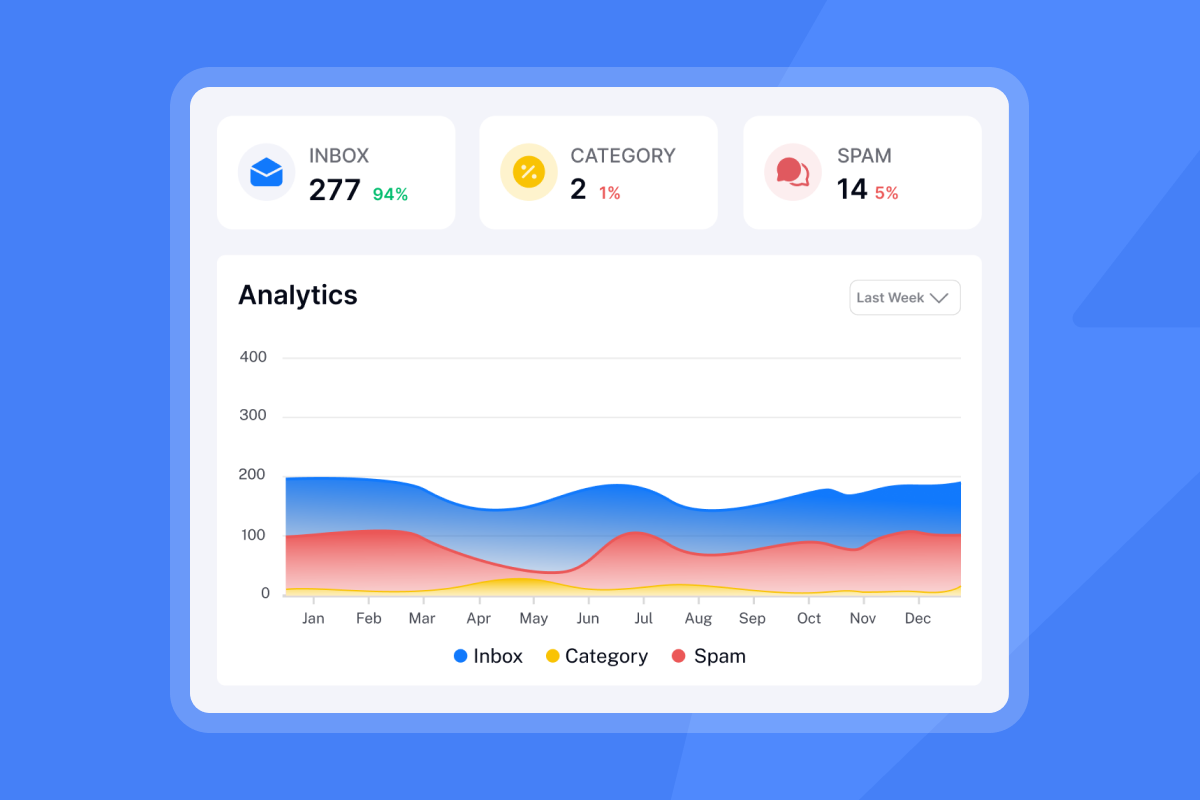
2. Apollo.io: best for combined database and sequencing
Apollo.io combines a large contact database with built-in email sequencing and intent data, making it a broad sales intelligence suite rather than a pure enrichment tool.
Apollo carries deeper compliance tooling for enterprise buyers, particularly around data consent and audit trails. Instantly's DPA (Data Processing Agreement), GDPR/CCPA operational support, and waterfall-verified accuracy cover the same audit-readiness requirements without per-seat pricing that scales against you. Apollo offers tiered pricing plans with per-seat costs on annual and monthly billing. At $79/seat/month on the Professional plan (annual billing), a team of eight SDRs runs $7,584/year in base subscription costs before credit overages. Teams running volume outreach risk exhausting their annual credit allocation early, particularly where phone lookups are part of the daily workflow, adding unplanned cost on top of the base subscription. Instantly's Outreach Growth plan at $47/month covers the entire team at unlimited seats.
3. ZoomInfo: best for enterprise account coverage in North America
ZoomInfo is the legacy enterprise standard for large teams running multi-channel outreach. Its database is one of the largest in the enterprise market, covering contacts and direct dial numbers across North American markets, alongside its GTM Context Graph intelligence layer. For enterprise teams that need complete account coverage across North American markets, its depth is real.
That said, a larger database does not solve data decay. Instantly's seven-provider waterfall verifies contacts in real time, which means freshness is built into every lookup rather than depending on quarterly refresh cycles. ZoomInfo does not publish pricing publicly. Annual contracts are mandatory, and a dedicated sales conversation is required before any figures are shared.
4. Lusha: best for calling-led workflows
Lusha focuses on direct dials and verified contact details, primarily through a Chrome extension for individual rep use. It covers the basics for teams that need quick mobile number lookups and ad-hoc prospecting without complex setup.
Lusha assigns confidence scores (A+ or A ratings) to email addresses to indicate likely accuracy, rather than running real-time server-level verification. SuperSearch's seven-provider waterfall cross-checks multiple providers sequentially to improve verified accuracy, making it the stronger choice for high-volume email outreach where deliverability protection is the priority. Lusha offers a free tier and paid monthly plans with credit allowances, integrates natively with HubSpot, and works well for calling-led workflows. Its database coverage outside the United States is limited. Its Engage module supports automated email sequences natively within the platform, without requiring a third-party integration.
5. Clearbit: best for firmographic enrichment
Clearbit, now part of HubSpot and rebranded as Breeze Intelligence, specializes in firmographic and company-level data enrichment. It is particularly strong for inbound-led teams that want to enrich website visitors with company data and trigger sales workflows automatically.
Clearbit provides deep company-level data: revenue, headcount, technology stack, and industry classification. For teams that score and route inbound leads based on ICP fit, this is a strong capability. Instantly offers a Website Visitors pixel that identifies US visitors and pushes them directly into your CRM at $97/month (Hyper plan), covering a similar use case while pairing it with the full outreach and verification stack. Breeze Intelligence draws on HubSpot Credits, which are bundled with seat-based HubSpot subscriptions and topped up via capacity packs. For SDR-led outbound teams running high-volume cold campaigns, Clearbit's credit costs are difficult to justify against tools that provide both contact verification and outreach in a single platform.
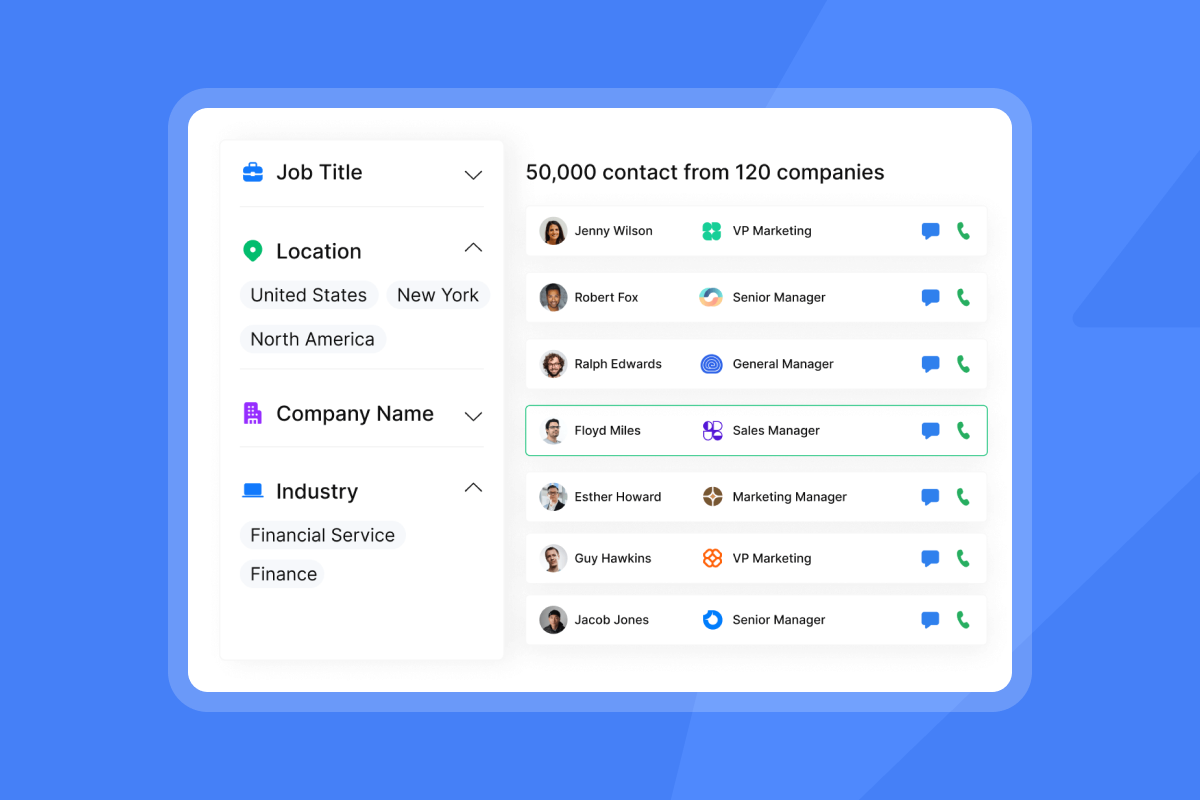
6. Clay: best for scaling verified data
Clay is a data orchestration platform built for technical GTM teams who want to build custom enrichment workflows. It runs a multi-source waterfall pulling from 150+ databases and is highly flexible for teams with RevOps or engineering resources to configure it.
For technical ops teams that need maximum control over data sourcing logic, Clay's orchestration is strong. Instantly provides a native, built-in waterfall enrichment model that requires zero complex setup. For teams that want both, the native Clay-Instantly integration lets you use Clay for enrichment and Instantly for verified sending, combining both platforms without building a custom pipeline. Clay's spreadsheet-like interface carries a steep learning curve, making rep-level standardization harder to enforce and audit compared to a guided UI.
7. Cognism: best for enterprise data hygiene
Cognism focuses on GDPR-compliant B2B data for European markets. Its Diamond data tier is phone-verified rather than algorithmically scored, while its Platinum tier covers email-enriched contacts at a lower verification standard. For enterprise teams running high-volume cold calling into EU markets, Cognism's accuracy on mobile numbers sets the standard.
Instantly's global database and built-in email verification support compliant, high-volume email outreach worldwide. For email-led outbound into global markets, Instantly's waterfall delivers strong accuracy without Cognism's price premium or annual contract requirement. Cognism's pricing is entirely quote-based with no public figures, annual contracts are required, and configuration typically requires a dedicated RevOps resource. For teams under 50 SDRs without a European calling motion, Cognism's value proposition does not justify the cost or operational complexity.
8. Kaspr: best for LinkedIn-sourced contacts
Kaspr is a LinkedIn-focused enrichment tool that surfaces contact data through a Chrome extension while reps browse profiles. It suits individual SDRs or small teams that need quick lookups during active LinkedIn prospecting.
Kaspr extracts contact details from LinkedIn profiles in real time, making it accurate for currently active LinkedIn users. The limitation is its single-source approach: it only returns data for contacts with a LinkedIn presence. Instantly SuperSearch lets sales leaders build and verify bulk prospect lists using advanced firmographic and intent filters, without risking the LinkedIn account restrictions that can follow from aggressive browser extension use. Kaspr offers a free plan with 5 phone credits, 5 direct email credits, and 15 B2B email credits per month. Paid plans are Starter ($49/user/mo annual, $65/user/mo monthly) and Business ($79/user/mo annual, $99/user/mo monthly), with Enterprise available on custom pricing. It integrates with HubSpot and works well as a lightweight complement to a primary enrichment platform. For SDRs who need to build a 500-contact list quickly, manual one-by-one lookups create a bottleneck that bulk SuperSearch filters solve in minutes.
Matching enrichment features to team workflows
Choosing the right tool comes down to team size, outreach motion, and configuration overhead.
Match database features to team size
Small teams with 1 to 3 SDRs benefit from a tool that requires no dedicated RevOps resource to configure and covers both enrichment and outreach in one place. Instantly's flat-fee model and guided SuperSearch interface fit that profile. Larger teams of 10+ reps benefit from admin controls, role-based team reporting on CRM plans, and standardized sequence governance that lets a sales leader audit rep activity and enforce list hygiene without micromanaging individual campaigns.
Assess vendor data sourcing methods
Ask every vendor: is your verification static or real-time? Single-source tools pull from one database snapshot. Waterfall enrichment queries multiple providers sequentially and stops when it finds a verified result. The difference in accuracy directly impacts campaign performance: higher accuracy means fewer bounces, better sender reputation, and sustained inbox placement over time.
Run a 30-day pilot for accuracy
Pilot any enrichment tool using a cost-per-meeting framework. Take 500 enriched contacts, run a properly warmed campaign capped at 30 emails per inbox per day, and track how many convert to booked meetings. Divide your monthly enrichment cost by meetings generated to get your actual cost per meeting.
Review billing cycles and exit clauses
Annual lock-ins from legacy vendors like ZoomInfo and Cognism remove your ability to respond when a tool underperforms. Month-to-month flexibility from vendors like Instantly, Lusha, Clearbit/Breeze, and Kaspr means you can change direction without a legal negotiation. Before signing any annual contract, ask for the exit clause terms in writing, and check G2 review patterns on billing and support to see how other sales leaders rate the vendor's transparency when things go wrong.
Ready to test waterfall enrichment against your current data source? Start your Instantly 14-day free trial (no credit card required) and run SuperSearch on your first 100 contacts to see verified accuracy in action. To understand what top performers do differently with their sequences and send windows, the 2026 Cold Email Benchmark Report covers the data behind the 10.7% reply rate that the top 10% of senders achieve.
FAQs
Does verified data actually improve inbox placement?
Yes. Verified data helps keep bounce rates low, which prevents email providers from flagging your sending domain as a spam source. Instantly's guidance is to stay below 2%, and staying under 1% gives your domain a meaningful buffer. Real-time verification removes invalid addresses before they reach your sending queue, which is one of the most direct ways to reduce bounce risk.
What is the typical cost per enriched contact?
With Instantly Credits, waterfall enrichment costs 1 credit per lookup when a contact is found in Instantly's own database, 2 to 4 credits when a partner provider returns the match, and 0 credits when no provider finds a result. Lead verification costs 0.25 credits per address when you bring your own list. On the Credits Growth plan at $47/month, you receive 1,500 to 2,000 credits to allocate across lookups and verification.
Can enrichment tools integrate with Instantly?
Yes. Instantly integrates natively with HubSpot and Clay, and connects to additional tools including Pipedrive, Zapier, and Make via Automations.
How often should contact data be re-enriched?
Re-enrich your active lists every 90 days. B2B data decays continuously across active B2B markets as people change roles, companies restructure, and email addresses deactivate.
Key terms glossary
SuperSearch: Instantly's built-in database of 450M+ B2B contacts that uses a seven-provider waterfall enrichment model to find and verify the most accurate contact information available.
Waterfall enrichment: A data sourcing method that queries multiple databases sequentially, stopping when it finds a verified result, rather than relying on a single static index.
Sender reputation: A score assigned by email providers that determines whether your messages land in the primary inbox or the spam folder, directly tied to your domain's bounce rate and engagement history.
Data decay: The rate at which contact information becomes outdated because people change jobs, companies close, or email addresses deactivate.
Read next
- B2B data enrichment solutions: the complete guide to verified contact data for outbound sales: A full breakdown of how enrichment works, what to look for in a provider, and how to build a verified data pipeline that supports high-volume outbound.
- Do you need B2B data enrichment? A quick diagnostic for sales leaders: A short decision framework to help you identify whether your current data quality issues are costing you pipeline before you invest in a new tool.
- Apollo data enrichment review 2026: features, pricing, and data quality analysis: An objective look at Apollo's database size, verification method, per-seat pricing model, and where it fits for SDR teams evaluating alternatives.


