.svg)
%20(1).svg)


Updated August 11, 2026
TL;DR: If you lead a sales team at a growing company and your pipeline depends on cold email, choose a platform that scales accounts and deliverability, not headcount. Instantly.ai offers unlimited sending accounts on a flat fee, a deliverability network of 4.2M+ accounts, and built-in warmup so you scale outreach without compounding software costs. While suites like Apollo carry deeper data breadth, their per-seat pricing scales against you as you hire reps. Running Instantly's three Growth plans simultaneously (Outreach at $47/mo, Instantly Credits at $47/mo, and CRM at $47/mo) comes to $141/mo regardless of headcount, which keeps software costs predictable as your team grows, unless send volume outgrows the Growth tier's monthly cap.
For B2B sales teams at growing companies running outbound in 2026, the best sales software prioritizes flat-fee pricing, unlimited sending accounts, and built-in deliverability over per-seat enterprise suites. Most sales software is built to extract budget from enterprise CFOs, not to help a growing sales team book meetings without compounding costs. The per-seat pricing model that dominates the market means your tool costs compound every time you hire a rep, while your sending volume stays capped and your deliverability tools stay basic. For B2B sales teams at growing companies running outbound, that math destroys pipeline efficiency before the quarter starts.
This guide ranks the best outbound sales software for growing sales teams, comparing five platforms on deliverability systems, pricing transparency, and total cost of ownership so you can make an informed call without a three-month proof of concept.
Benefits of focused sales tools for growing teams
Bloated, multi-channel suites were designed for enterprise procurement cycles. A lean sales team needs something different: a tool that reps can run from day one, that protects domain health automatically, and that does not charge you more every time you promote someone to SDR.
Why simple tools outperform suites and accelerate rep productivity
Complex platforms with steep learning curves directly tax rep time. When your team spends the first two weeks of a new quarter learning to configure sequences or troubleshoot deliverability settings, that time does not come back. Focused outreach tools eliminate that cost by standardizing the workflow. Sales Development Representatives (SDRs) need tools they can use from day one without extensive training.
Instantly's AI Sequence Writer generates a full multi-step sequence from offer and audience inputs (capped at 100 generations per workspace per month), and the AI Spam Words Checker flags risky copy before a rep hits send. Both are included on the Growth plan ($47/mo). Compare that with a 40-feature enterprise suite that takes two weeks of training to learn, and the productivity gap becomes clear.
"I like that I can set up multiple campaigns at the same time, which is crucial since each service we provide requires a different campaign... The initial setup for Instantly is very easy, including setting up the tool, campaigns, and even sequences." - Rahul V. on G2
Unified inbox tools for rapid scaling
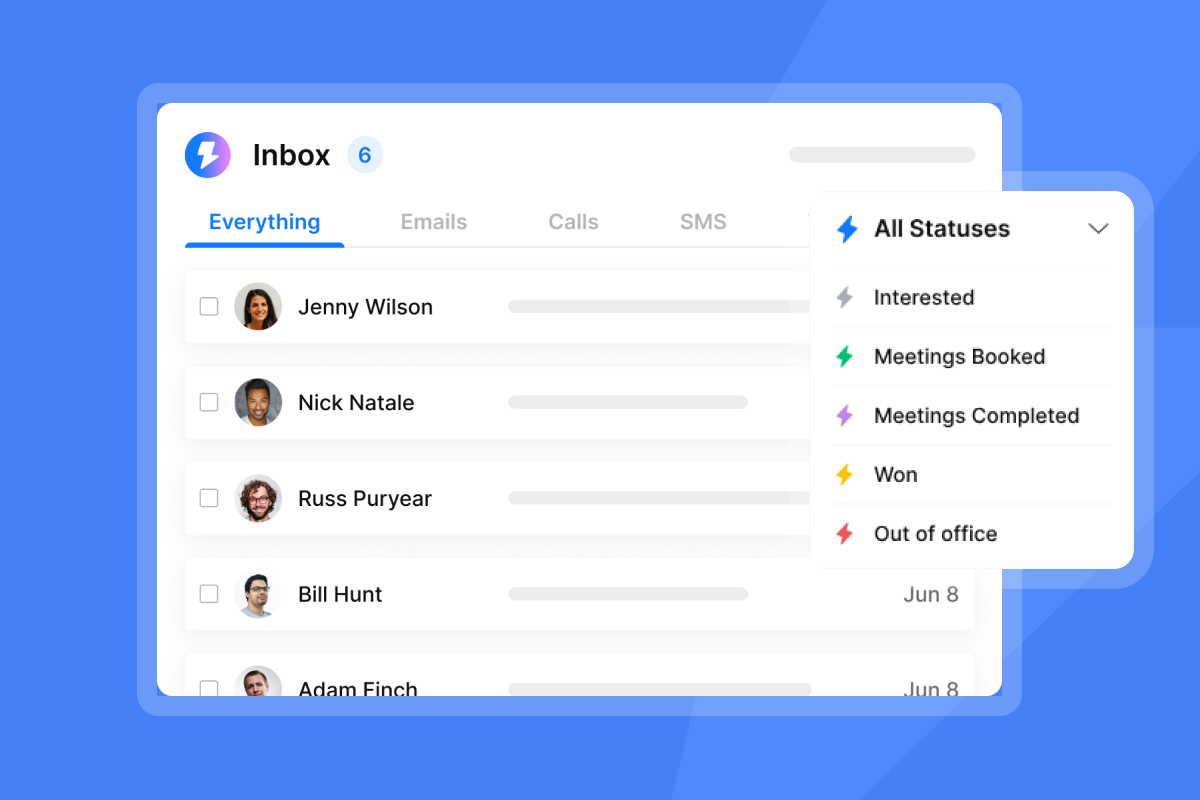
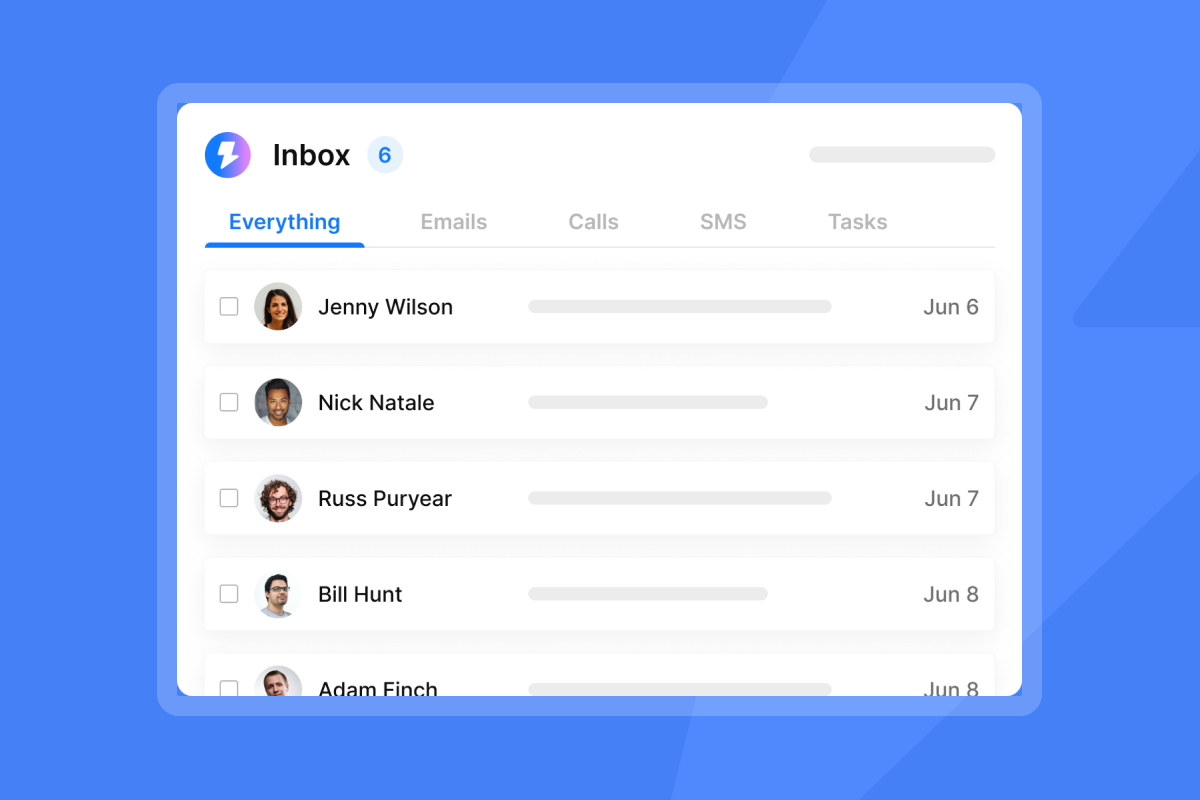
When you run outreach across multiple sending accounts, managing replies becomes a bottleneck if every account has its own inbox. Instantly's Unibox v2 centralizes all replies in one view, supports bulk actions, and retains records after campaign deletion. Reps see everything without switching tabs.
Scaling outreach without risk
Scaling from one domain to 10 only increases risk if you fail to distribute volume correctly across those domains. Instantly's Inbox Rotation splits sending across all accounts assigned to a campaign, and the SISR system (available on Light Speed) automatically rotates across dedicated private server infrastructure so flagged IPs are replaced without manual intervention.
How these outreach solutions were vetted
Each platform was evaluated against the criteria that matter to small sales teams: deliverability architecture, pricing transparency, CRM integrations, and verified user feedback on G2 and Trustpilot.
Required features for sales teams
Non-negotiable features for any platform on this list:
- Unlimited email accounts: No per-account fees that compound as you add domains.
- Automated warmup: New inboxes must build sender reputation before campaigns go live.
- Unified inbox: All replies visible in one place across all accounts.
- Native CRM integration: Direct connection to HubSpot or equivalent without a Zapier workaround.
- Bounce protection: Automatic detection and removal of high-risk recipients before send.
Testing for inbox placement success
Deliverability does not toggle on and off. Each platform was assessed for automated inbox placement testing (not just manual spot checks) and ongoing monitoring of blacklists, DNS health, and bounce rates. Instantly's automated Inbox Placement tests monitor 94 blacklists. The Deliverability AI Agent runs a full health audit every 24 hours and surfaces one-click fixes for issues found.
Key metrics for lean sales teams
The three numbers that matter most for a small team:
- Cost per meeting: Total monthly software cost divided by meetings booked.
- Time to first campaign: How long from signup to live send.
- Reply rate: Measured against the 2026 Cold Email Benchmark Report platform average of 3.43%.

Top 5 outbound sales platforms for small teams
The platforms below cover the most common choices for small outbound teams, each assessed on pricing structure, deliverability, and data access.
|
Platform |
Pricing model |
Primary motion |
Lead database included |
|---|---|---|---|
Instantly |
Flat fee |
Email-first |
Yes (450M+ B2B contacts, SuperSearch) |
Lemlist |
Per seat |
Email + LinkedIn |
Yes (650M+ B2B contacts included on all plans) |
Reply.io |
Per seat |
Multi-channel |
Limited |
Smartlead |
Volume tiers |
Email-first |
Yes (300M+ verified B2B contacts, metered by verified-email allowance per tier) |
Apollo |
Per seat |
Data + Email |
Yes (240M+ verified B2B contacts, direct dials available, credit-metered) |
Platform 1: Instantly, the reliable scaling engine
Instantly's flat-fee pricing is the structural differentiator for small teams. The Growth plan at $47/mo covers unlimited email accounts and warmup with no per-seat penalty as you add reps. Running three Growth plans simultaneously (Outreach at $47/mo, Instantly Credits at $47/mo, and CRM at $47/mo) comes to $141/mo regardless of team size, unless send volume outgrows the Growth tier's monthly cap.
The SuperSearch database covers 450M+ B2B contacts with waterfall enrichment that checks Instantly's own database first, then sequences through seven partner providers (BetterContact, ContactOut, Findymail, IcyPeas, LeadMagic, Prospeo, Wiza) until it finds a verified contact or exhausts all sources. This eliminates the need for a separate data subscription and a separate enrichment tool. The system helps you find contacts matching your Ideal Customer Profile (ICP) without switching between multiple databases.
The AI agents cover autonomous lead sourcing, reply handling, and deliverability monitoring. The AI Reply Agent responds to leads in under 5 minutes and runs on Instantly Credits (separate subscription from $9/mo). The Deliverability AI Agent is included in Hypergrowth and above at no extra credits cost.
"What stands out most is the deliverability and domain health performance... Warmup, domain rotation, inbox tracking, and campaign logic all feel like they're designed by operators who actually run outbound at scale." - Luisa R. on G2
Platform 2: Lemlist, strong personalization with per-seat cost
Reviewers praise Lemlist's personalization tools (image variables, liquid syntax, video thumbnails), and their interface handles LinkedIn steps alongside email. Instantly covers text-level personalization through Spintax and the AI Spintax Writer on a flat fee, so you get variation at scale without seat taxes scaling against you as your team grows.
Lemlist's Email plan runs at $69/mo (billed monthly) and covers unlimited users, which keeps email-only costs flat. If your team needs LinkedIn automation, SMS, or a built-in dialer, you move to Multichannel at $109/user/mo (billed monthly). A 5-person team on Multichannel pays $545/mo. At 10 reps, that reaches $1,090/mo. Instantly's flat-fee Hypergrowth plan stays at $97/mo regardless of headcount. This Lemlist vs Instantly breakdown covers pricing models, AI capabilities, and deliverability architecture for teams deciding between the two platforms.
Platform 3: Reply.io, multi-channel reach with complex setup
Reply.io covers email, LinkedIn, calls, and SMS in one platform. The multi-channel workflow appeals to teams wanting a single touchpoint for all outreach, but setup takes longer, with reviewers citing a steep configuration curve before campaigns go live. Instantly focuses on email and delivers that single motion faster: DNS propagation plus warmup means campaigns can launch within 24-48 hours using pre-warmed accounts, which is a meaningful difference when you need pipeline moving this quarter.
Reply.io's Email Volume plan starts at $49/user/mo (billed annually) for 1,000 active contacts per month, scaling to $59/user/mo for 2,000, $69/user/mo for 3,000, and $89/user/mo for 5,000. From the 10,000 active contacts tier upward, pricing shifts to unlimited users, starting at $159/mo for 10,000 contacts, $259/mo for 25,000, and $459/mo for 50,000. Active contacts are defined as unique contacts receiving at least one first-step email plus unlimited follow-ups within the month.
LinkedIn automation and calls add $69/account/mo and $29/account/mo, respectively, on that plan. Teams that need those channels included move to Multichannel at $89/user/mo (annual) or $99/user/mo (monthly), where the per-seat cost compounds as you hire. A 5-person team on Multichannel pays $445/mo annually. At 10 reps, that reaches $890/mo. CSM onboarding is included on annual plans only, not monthly. Instantly's flat-fee Hypergrowth plan stays at $97/mo regardless of headcount, with each subscription type cancelable independently and no annual lock-in required to access core outreach features.
Platform 4: Smartlead, solid cold email with maturing data layer
Smartlead is a credible peer for cold email outreach. Their infrastructure handles multi-account sending well, and volume-based pricing starts at $39/mo (monthly) or $32.50/mo (billed annually), which is accessible for small teams. Smartlead's SmartProspect feature provides an integrated lead database, though it is newer and less mature than Instantly's SuperSearch. Reviews comparing the two tools generally position Smartlead as strong on email deliverability and Instantly as stronger on integrated data depth and AI agent coverage.
Instantly's SuperSearch combines lead sourcing, waterfall enrichment across seven named providers, verification, and outreach in one platform, which reduces the number of tools your team needs to manage.
Platform 5: Apollo, deep database with per-seat scaling
Apollo carries genuine data depth. The platform offers strong intent signals, firmographic filters, and email sequencing across multiple channel. For small teams, the main constraint is cost structure. Apollo's per-seat model means your software bill grows in direct proportion to headcount, before you've confirmed the platform fits your ICP or domain setup.
The per-seat cost compounds fast. On monthly billing, a 5-person team on Apollo Professional pays $495/mo ($5,940/year). At 15 people, that reaches $1,485/mo ($17,820/year). On annual billing, a 5-person team pays $395/mo ($4,740/year). At 15 people, that figure reaches $1,185/mo ($14,220/year). Either way, the cost scales directly with headcount. You can connect Instantly to HubSpot natively via the Automations builder and use SuperSearch data without absorbing that seat-cost multiplication.
Operational standards for high-velocity SDRs
These five operational areas determine whether a small team can send at volume without damaging domain health or losing pipeline visibility.
Preventing blacklists and bounce issues
You need four DNS records before any cold email campaign goes live: MX, SPF, DKIM, and DMARC.
- MX: Routes inbound mail to your provider. Required before Instantly can receive replies or run warmup on the account.
- SPF, DKIM, and DMARC: Sender Policy Framework (SPF), DomainKeys Identified Mail (DKIM), and Domain-based Message Authentication, Reporting, and Conformance (DMARC) authenticate your sending domain. Instantly's DNS setup guide covers exact configuration, including the 48-hour minimum window between DKIM/SPF authentication and DMARC activation.
- Custom Tracking Domain (CTD): Replaces shared tracking URLs with your own domain to isolate sender reputation. CNAME setup points Host
instto Targetprox.itrackly.comwith 24-72 hour propagation.
Cap daily sends at 30 campaign emails per inbox. Distribute additional volume across more inboxes rather than pushing individual accounts harder. This architecture protects sender reputation by preventing any single domain from triggering spam filters through high-volume sending patterns.
Unified inbox tools for faster triage
Instantly's Unibox NLP auto-classifies replies using sentiment detection across 50+ languages. Hypergrowth and Light Speed plans include custom labels for team-specific classification rules. The Out-of-Office Resume feature detects out-of-office auto-replies via NLP, extracts the stated return date, pauses the lead, and auto-resumes sending on that date. It is included on all plans at no extra cost.
Auditable outreach best practices
GDPR and CCPA compliance for outbound hinges on three operational controls: verified consent posture on contact sourcing, an active unsubscribe mechanism in every email, and a Global Blocklist that prevents re-contacting opted-out leads. Instantly's Global Blocklist blocks entire domains or addresses at import, not just at send time, which keeps the database clean from the start.
Instantly publishes its Data Processing Agreement publicly and covers GDPR and CCPA operational requirements.
Measuring rep productivity and pipeline
Instantly's Account Analytics uses a "Combined Score" metric (weighted open rate plus reply rate) to give reps a single health signal per account. A score above 30 is a positive indicator once an account has reached 100+ contacts sent. Instantly fixes reporting to UTC, so align your team's reporting windows accordingly.
Connect Instantly to HubSpot via the native HubSpot integration. Automations trigger HubSpot contact creation, deal updates, and task generation when a lead replies or completes a campaign, keeping CRM data current without manual entry.
Real-time prospect data validation
Keep bounce rates below 2%. Instantly's BounceShield automatically skips known high-risk recipients based on real-time and historical bounce data. The high bounce auto-pause feature triggers at a 5% bounce rate (configurable) after a minimum of 200 sends and pauses the campaign automatically.
SuperSearch-sourced leads arrive pre-verified. CSV imports and CRM-synced contacts do not, so run lead verification (0.25 credits per lead) on imported lists before including them in live campaigns.
Scalable subscription plans for small sales units
Pricing structure affects more than the monthly invoice. It determines whether your software costs stay predictable as headcount grows.
Flat-fee vs. per-seat cost analysis
The compounding cost problem with per-seat pricing becomes visible when you model it across a growing team:
Team size | Apollo Professional ($99/seat/mo) | Instantly Hypergrowth (flat $97/mo) | Monthly savings |
|---|---|---|---|
3 reps | $297/mo | $97/mo | $200/mo |
5 reps | $495/mo | $97/mo | $398/mo |
10 reps | $990/mo | $97/mo | $893/mo |
15 reps | $1,485/mo | $97/mo | $1,388/mo |
20 reps | $1,980/mo | $97/mo | $1,883/mo |
25 reps | $2,475/mo | $97/mo | $2,378/mo |
The Instantly figure stays constant regardless of headcount, and that gap grows more meaningful as team size moves toward 20-25 reps. See the full Instantly plan breakdown for contact and send-volume limits per tier.
Evaluating contract term flexibility
Annual contracts lock you in before you have validated the platform's performance against your specific ICP and domain infrastructure. Instantly offers monthly plans across all subscription types (Outreach, Instantly Credits, CRM, Website Visitors), with each subscription cancelable independently from the billing settings. Monthly flexibility lets you run a 30-day validation before committing to an annual discount.
Identifying predatory contract clauses
Watch for three specific traps when evaluating any outbound platform:
- Auto-renewal without reminder: Some tools renew annual contracts silently 30-60 days before the stated end date.
- Credit overages billed retroactively: Platforms that do not surface credit consumption in real time can generate surprise invoices at cycle end.
- Data loss on cancellation: Confirm whether campaign history, lead lists, and reply data remain accessible after you cancel.
What reply rates should your SDRs actually target?
Setting the right reply rate targets requires benchmark context, not guesswork. Here is what the data shows and what it means for your team.
Average response rates by platform
According to Instantly's 2026 Cold Email Benchmark Report (covering data from January 1 through December 18, 2025), the platform average reply rate is 3.43%. Top-quartile senders reach 5.5% and above. The top 10% of senders exceed 10.7%. These figures come from billions of cold email interactions across thousands of active workspaces, so they reflect real sending conditions at scale.
Target metrics for high-volume SDRs
A 5-person team running 30 campaign emails per inbox per day across 10 inboxes generates 300 sends per day. Across a standard 5-day sending week, that is 1,500 sends per week. At the platform average 3.43% reply rate, that is approximately 51 replies per week. At the top-quartile 5.5%, that climbs to 82 replies. A 15-person team running the same 30-email-per-inbox cap across 30 inboxes generates 900 sends per day, or 4,500 per week. At the platform average 3.43% reply rate, that is approximately 154 replies per week. At the top-quartile 5.5%, that reaches 247. The benchmark report also notes that consistent, stable sending patterns produce 15-20% higher reply rates, which means process discipline at the team level compounds directly into pipeline.
First-touch emails generate 58% of all replies. Follow-ups account for the remaining 42%, which means skipping follow-ups leaves a meaningful portion of reply volume on the table.
Tactics to boost email response rates
- Keep emails under 80 words: The benchmark report identifies under-80-word emails as the optimal length for maximum reply rates.
- Use 4-7 steps in a sequence: Fewer steps leave follow-up reply volume uncaptured. More than seven steps show diminishing returns.
- Launch campaigns on Monday: Benchmark data identifies Monday as the best day to start a campaign.
- Send on Wednesday for highest single-day reply volume: Wednesday shows the highest reply rate of any weekday in the 2025 dataset.
Common pitfalls when selecting sales tools
Four recurring issues cost small teams time, budget, or domain reputation. Knowing what to look for before you sign saves both.
Avoiding predatory subscription terms
Any vendor that requires an annual commitment before a monthly trial should be approached with caution. Look specifically for a clear monthly cancel option, a published cancellation flow with data export steps, and no penalty for canceling one subscription module while keeping others active. Instantly covers each of these: subscriptions cancel independently from Settings > Billing, and cancellation ends the specific plan without affecting other active subscriptions.
Inaccurate data and vanity metrics
Open rate inflation is a well-documented problem across outbound platforms. Rely on reply rates and meetings booked as your primary performance signals. Instantly's Account Analytics surfaces both, and the Combined Score weights them to give a more accurate picture of account health than raw open percentages.
Instantly's waterfall enrichment checks seven providers in sequence, reducing the chance of an empty match compared to single-provider databases. SuperSearch-sourced leads arrive pre-verified, which keeps your bounce rate closer to the 2% threshold that protects domain reputation.
Poor deliverability and inbox health
Shared IP pools are a structural deliverability risk. When any sender on a shared pool triggers a spam complaint, every sender on that pool absorbs some of the reputational damage. Instantly's private deliverability network of 4.2M+ real accounts isolates warmup activity from shared infrastructure. On Light Speed, SISR adds dedicated private IP rotation so your sending traffic stays entirely separate from other customers' domains.
Signs of poor onboarding assistance
A platform that requires a paid implementation partner or a certified consultant to get your first campaign live is not built for lean teams. Instantly's 14-day free trial (no credit card required) includes 250 uploaded contacts and 1,000 emails so you can run a real campaign before committing. DNS propagation takes 24-48 hours, and with pre-warmed accounts (a $10/mo per-account add-on), campaigns can go live on day one.
Start your 14-day free trial of Instantly.ai with no credit card required and connect your first domain today.
Download the 2026 Cold Email Benchmark Report to set your team's reply rate targets based on data from billions of real sends.
FAQs
What's the best outbound tool for a 5-person SDR team?
Instantly's Growth plan ($47/mo) paired with a SuperSearch Credits subscription ($47/mo) and Growth CRM ($47/mo) gives a 5-person team unlimited sending accounts, 450M+ B2B contacts, and centralized reply management at $141/mo total. That cost does not increase when you add a sixth or seventh rep, unless send volume outgrows the Growth tier's monthly cap.
How long does it take to launch a first campaign?
DNS propagation (SPF, DKIM, DMARC, and Custom Tracking Domain) takes 24-48 hours after configuration, and new domains require a 4-6 week warmup period before reaching full sending volume. Instantly's pre-warmed accounts ($10/mo per account) skip the warmup wait and can send from day one.
How do you balance tool features and usability?
Choose a platform your reps will actually open every day, because a tool with 40 features that requires two weeks of training loses to a tool with 15 features your team uses correctly within 48 hours. Prioritize the core workflow (find lead, build sequence, send, triage reply, log to CRM) and count the clicks each step requires before signing.
How do you protect domain reputation at scale?
Follow this three-step checklist before scaling any domain. First, configure SPF, DKIM, and DMARC records and verify propagation. Second, set up a Custom Tracking Domain to replace shared tracking URLs with your own. Third, cap daily campaign sends at 30 emails per inbox and distribute additional volume across new sending accounts rather than pushing existing ones past that threshold.
Which CRM integrations are non-negotiable?
Instantly connects natively to HubSpot. For bidirectional workflows (where HubSpot contact and deal changes trigger Instantly actions, and Instantly replies trigger HubSpot contact creation, task generation, and note logging) use the Automations builder to configure workflow triggers when leads reply or complete campaigns. Clay handles advanced data enrichment workflows for teams running intent-signal-based prospecting at volume.
Key terms glossary
BounceShield: Instantly's pre-send filtering layer. It analyzes bounce data in real-time and automatically skips known high-risk recipients based on logs and data from millions of emails sent, reducing bounce rate and protecting sender reputation.
Combined Score: A weighted metric inside Instantly's Account Analytics that combines open rate and reply rate into a single account health signal. A score above 30 is a positive indicator once an account has reached 100+ contacts sent.
Custom Tracking Domain (CTD): A CNAME record that replaces shared tracking URLs with your own domain. It isolates your sender reputation from shared infrastructure and is configured by pointing Host inst to Target prox.itrackly.com.
DKIM (DomainKeys Identified Mail): A DNS record that attaches a cryptographic signature to outgoing emails, allowing receiving mail servers to verify the message was not altered in transit.
DMARC (Domain-based Message Authentication, Reporting, and Conformance): A DNS policy record that instructs receiving mail servers on how to handle messages that fail SPF or DKIM checks. Activate DMARC at least 48 hours after SPF and DKIM are confirmed.
Domain warmup: The process of gradually increasing daily send volume from a new inbox, typically starting at 5-10 emails per day and ramping over 4-6 weeks, so receiving mail servers build a positive sending history before full campaign volume begins.
Global Blocklist: An Instantly feature that prevents re-contacting opted-out leads or entire domains. Blocks are applied at import, keeping the contact database clean before campaigns run.
ICP (Ideal Customer Profile): A definition of the company type and contact role most likely to buy your product, used to filter lead databases and build targeted prospect lists.
Inbox Rotation: An Instantly feature that distributes outgoing campaign emails across all sending accounts assigned to a campaign, preventing any single inbox from absorbing excessive volume.
Reply rate: The percentage of sent emails that receive a reply. According to Instantly's 2026 Cold Email Benchmark Report, the platform average is 3.43%, top-quartile senders reach 5.5%+, and the top 10% exceed 10.7%.
SDR (Sales Development Representative): A sales role focused on outbound prospecting and booking meetings, typically handing qualified leads off to Account Executives for closing.
Sender reputation: A score assigned to a sending domain and IP address by mail providers, based on factors including bounce rates, spam complaint rates, and sending consistency. Protecting sender reputation is the primary goal of warmup and list hygiene practices.
SISR (Server and IP Sharding and Rotation): An Instantly infrastructure feature available on the Light Speed plan that automatically rotates sending traffic across dedicated private servers and IPs, isolating your domain from shared infrastructure.
SPF (Sender Policy Framework): A DNS record that lists the mail servers authorized to send email on behalf of your domain, helping receiving servers detect spoofed messages.
Spintax: A syntax format that generates multiple variations of an email by randomly selecting words or phrases from defined options, reducing send pattern repetitiveness across large campaigns.
SQL (Sales Qualified Lead): A prospect that has met a defined threshold of intent or fit and has been accepted by the sales team for active pursuit, typically after an SDR-booked meeting.
SuperSearch: Instantly's B2B lead finder covering 450M+ B2B contacts, with built-in waterfall enrichment that sequences through seven partner data providers to find and verify a contact before returning an empty result. Leads sourced through SuperSearch ship pre-verified.
Unibox: Instantly's unified reply inbox that centralizes replies from all sending accounts in one view, with AI sentiment classification, bulk actions, and reply record retention after campaign deletion.
Unibox NLP: The natural language processing layer inside Unibox that auto-classifies incoming replies (for example, "Interested," "Not Now," "Wrong Person") across 50+ languages without requiring manual review.
Waterfall enrichment: A lead enrichment method that checks multiple data providers in sequence, moving to the next provider only if the previous one returns no result, improving match rates compared to single-provider lookups.
Read next
- Outbound sales software: what it is, how it works, and how to choose: A full breakdown of how outbound sales tools work, what separates email-first platforms from multi-channel suites, and the criteria small teams should use to pick one.
- AI BDR for small and startup sales teams: scaling outbound without headcount: How AI-powered business development tools handle prospecting, sequencing, and reply management so lean teams can run outbound without adding SDR headcount.
- Best AI SDR tools for outbound B2B sales in 2026: top platforms compared: A side-by-side comparison of the leading AI SDR platforms for B2B outbound, covering pricing, deliverability, and automation depth.


