


Updated March 012, 2026
TL;DR: Cold email is not dying, but the era of mass-blasting generic emails is over. Google and Yahoo's sender guidelines now enforce strict spam rate thresholds, and average B2B reply rates have dropped to around 4-5% as inboxes get smarter. Agencies that survive the next 24 months will combine AI-driven hyper-personalization, automated deliverability management, and flat-fee infrastructure built for unlimited scale. This article covers five key trends shaping the industry in 2026-2027 and what each one means for your outreach operation.
Cold email is not dead. But lazy cold email is on life support. Every week another LinkedIn post declares the channel finished, and every week agencies running disciplined, AI-augmented outreach keep booking meetings. The gap between them is not effort. It is infrastructure and relevance, and purpose-built cold email software is what separates the two outcomes.
Google raised the bar sharply. Google's bulk sender requirements set a hard threshold: keep spam rates below 0.1% to avoid negative inbox impacts, and stay under 0.3% or face outright rejection.Yahoo enforces similar standardsfor authentication and one-click unsubscribe. Agencies that thrived on blasting 10,000 cold emails with a basic {{firstName}} variable now feel the squeeze. The ones who adapted early are generating more pipeline with fewer sends.
This guide covers five trends reshaping cold outreach from 2026 through 2027, what each means for your agency, and how to build a stack that does not collapse under the weight of the new rules.
The shift from volume to relevance in cold outreach
Average B2B reply rates have dropped from 6.8% in 2023 to around 4–6% in 2025. The direction is clear, and it is not reversing.
The agencies still hitting 10–15% reply rates are not sending more emails. They are sending smarter: to smaller, higher-intent lists, with messaging that clearly demonstrates they understood the prospect's business before writing a single word. The difference is visible in the first sentence. Recipients know within seconds whether an email was written for them or fired at a list of ten thousand.
The new operating standard is what practitioners are calling "relevant scale." High volume is only viable when personalization depth and list hygiene are equally high. Spray-and-pray has not just become less effective, it has become actively damaging, training spam filters and burning domains that took months to warm.
Hitting that combination of volume, relevance, and clean data simultaneously is no longer something an SDR team can execute manually. It now requires AI infrastructure, not to replace the human judgment behind a great email, but to apply that judgment at a scale no human team can match alone.
Trend 1: AI-driven hyper-personalization replaces basic merge tags
The {{firstName}} variable once did its job. Inbox filters and prospect fatigue killed it. Every spam folder has already learned to recognize template-level personalization, and prospects have long since tuned out "Hi {{firstName}}, I noticed you work at {{companyName}}."
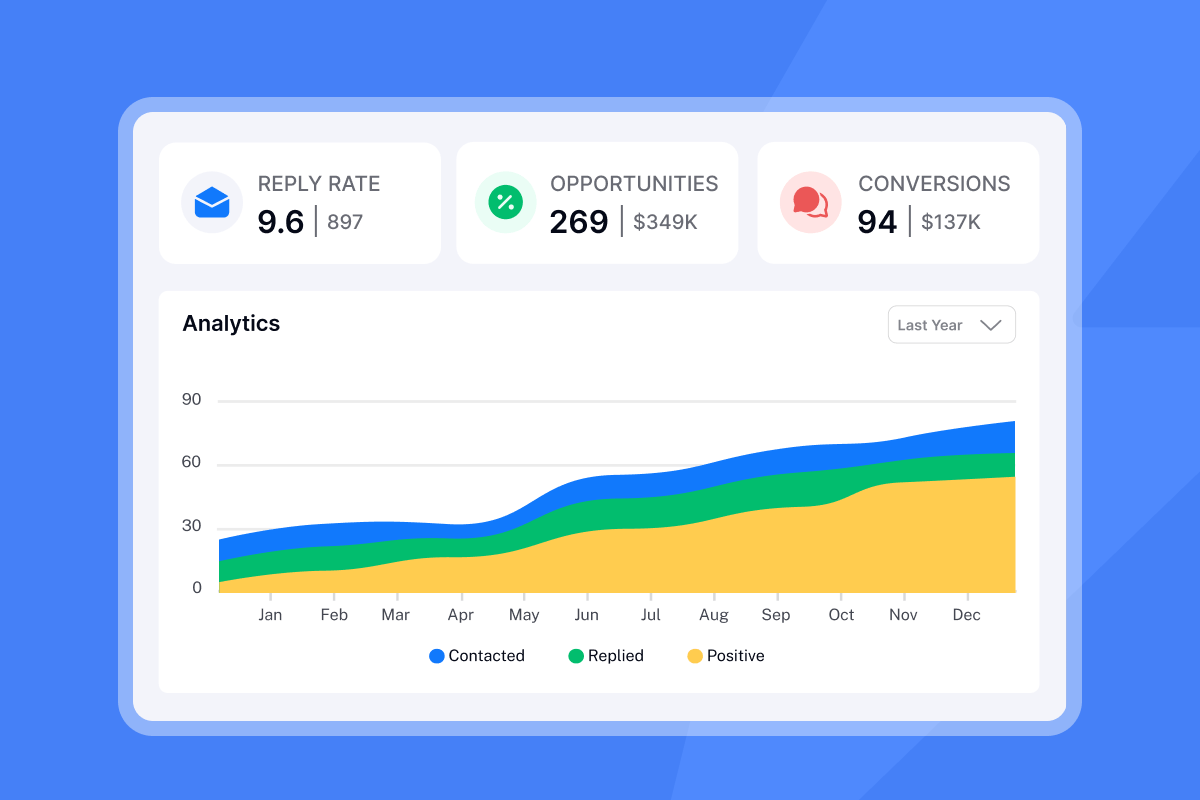
You reference something specific and timely in each email to achieve hyper-personalization: a recent funding round, a job posting that signals a strategic shift, a blog post the prospect published, or a LinkedIn comment they left on a competitor's content. The opener reads like a human did ten minutes of research. In 2026, AI does that research in seconds, at scale.
Instantly's AI Sequence Writer generates full multi-step sequences from a structured prompt. You provide your offer, your target audience, one or two case studies, and the number of steps you want. The AI outputs a sequence with optimized subject lines and variable injection points for custom openers, so each email feels like it was written for one person, even when it goes to a thousand.
The Instantly demo walkthrough from the co-founder shows how campaigns combine AI-written sequences with dynamic variable insertion across multiple inboxes.
Basic personalization inserts static data (name, company). Hyper-personalization uses context data (behavior, intent, timing) to write a unique opening line. One is a mail merge. The other is a research assistant that works 24 hours a day.
"What stands out to me most is the amazing AI reply agent. It significantly simplifies our tasks by generating very accurate messages that I only need to review, thereby enhancing our efficiency in engaging with long-term leads across various prospects." - Anne S. on G2
Your sequence structure also needs to hold up beneath the personalization layer. Instantly's cold email copywriting framework and 600 ready-to-use templates give you the scaffolding to build on.
Trend 2: Intent-based targeting and predictive list scoring
If you send a cold email to someone who is not actively thinking about your category, you are creating noise. Intent data changes that math by showing you who is already in-market before they fill out a form.
Intent data captures digital signals like website visits, content downloads, search behavior, and product research activity to identify which accounts are actively evaluating solutions in your category right now. Providers like Bombora and Demandbase aggregate this from thousands of B2B websites to give you a list of companies already researching topics relevant to your offer.
Combine intent data with specific buying signals like funding announcements, leadership changes, or new job postings for roles your product supports, and you create a targeting layer that most of your competitors are not using yet. A company that just raised a Series B and is hiring a VP of Sales is a dramatically better target for an outreach tool pitch than a stable, slow-moving enterprise.
The output of a good intent workflow is a shorter, hotter list. Fewer contacts means lower send volume, which protects deliverability. Higher relevance means better reply rates. That is the core of the "relevant scale" model.
Trend 3: Automated sender reputation management and deliverability
Your sender reputation decays when bounce rates climb, when spam complaints accumulate, or when your IP gets flagged by filters that monitor sending patterns. No amount of great copywriting fixes a burned domain.
For agencies managing 50+ inboxes across multiple client domains, the margin for error is thin, and manual warmup processes do not scale. The automated answer runs on three layers:
- Warmup: Every new inbox needs a gradual ramp. Instantly's deliverability guide recommends starting new inboxes with 20-30 total per inbox. Instantly's built-in warmup network uses 4.2m+ accounts to generate positive interactions that build sender trust with inbox providers before you send a single cold email.
- Inbox rotation: Distributing sends across multiple accounts keeps per-inbox volume safe. Instantly's rotating IP and sending algorithm handles this automatically. If you want to send 300 cold emails per day at 30 per inbox, you connect 10 sender accounts and Instantly rotates them without manual intervention.
- Health monitoring: Instantly's deliverability dashboard tracks your score, inbox vs. spam placement, and flags drops before they become disasters. The inbox placement feature sends test emails to seed accounts across Gmail, Outlook, and Yahoo and alerts you when placement rates fall below threshold.
"I appreciate Instantly for its intelligent handling of domain and mailbox rotation as well as provider matching, which is critical for ensuring that my emails land directly in the primary inbox instead of getting caught in spam filters." - Richard E. on G2
Understanding how email fingerprinting affects high-volume delivery is also critical as you scale. Small patterns in your HTML, subject lines, or sending cadence can be detected across campaigns and used to filter your mail, even if individual emails look clean. Scaling to multiple client campaigns also means scaling secondary sending domains in parallel, so no single domain carries the full load.
"Instantly has been a solid tool for managing cold email at scale. The warm-up feature works well, the interface is easy to use, and it helps protect inbox deliverability across multiple domains." - Bobur Dada on Trustpilot

Trend 4: The rise of autonomous AI agents for reply handling
Your first email gets the attention. Your reply handling is where deals die, because most agencies have no system for responding quickly, intelligently, and at scale. A prospect who responds on Tuesday and gets a follow-up on Friday is a lead that just went cold again.
AI reply agents change this. They read the inbound response, classify intent (interested, not now, wrong person, referral), draft a contextually accurate response, and queue it for human review or send it automatically based on rules you set. The human role shifts from typing responses to reviewing and approving them.
Instantly's AI reply suggestions inside the Unibox generate response drafts based on the thread context, and the Unibox aggregates all replies across every inbox and client campaign in one view. You do not need to log into 15 different Gmail accounts to manage conversations.
"I love how Instantly is incredibly easy to use... The Unibox feature is a time-saver, allowing me to quickly view responses by status or campaign and identify what's working and what isn't." - Heleen D. on Trustpilot
The next phase is fully autonomous agents that book calendar slots directly when a prospect says "yes, I'm interested." Platforms are building that capability now. If you build habits around AI-assisted reply handling today, you will be first to adopt fully automated booking when it ships. For a look at how AI wires into full outreach automation pipelines, this AI-powered cold email walkthrough shows how the architecture works end to end.
Trend 5: Omnichannel sequencing combining email and LinkedIn
You get higher reply rates when you coordinate email and LinkedIn touches in a single sequence than either channel achieves alone. Which channel carries the primary offer and which builds familiarity will depend on your audience and sequence structure, but the two work best when they reinforce each other.
The right sequence structure depends on your audience and how actively they use LinkedIn. A common starting point is a LinkedIn connection request or profile view first, followed by a cold email a few days later that references the interaction, with a LinkedIn message as a later touch if the email goes unanswered. But timing varies significantly, if your prospect is highly active on LinkedIn, following up within 3 days makes sense, while less active users may warrant waiting longer before switching to email. There's no single order that works universally; the sequence should be adapted to how your target audience actually behaves. Finally, you send a follow-up e-mail.
A prospect who has seen your name twice before reading your email is often more receptive than one encountering you cold for the first time. This works because it signals genuine interest across channels and matches how real sales relationships develop.
Building a profitable omnichannel campaign from scratch takes less time than most agencies expect. This 40-minute campaign tutorial walks through a complete AI agency cold email campaign setup, including the sequencing logic. For campaign setup inside Instantly specifically, this step-by-step launch guide covers the 2025 flow for getting your first campaign live correctly.
Keep LinkedIn touches light (view, connect, brief message) and let email carry the offer. LinkedIn is for presence. Email is for persuasion.
Comparing top cold email platforms for the future
The platform you choose in 2026 determines whether you scale profitably or whether pricing structures eat your margin before you hit target client volumes.
Feature | Instantly | Apollo | Woodpecker |
|---|---|---|---|
Pricing model | Flat fee (all tiers) | Per seat | Per seat / per contact |
Unlimited email accounts | Yes, all plans | Unlimited connections (volume limited by credits) | Yes |
Built-in warmup | Yes, all plans | Yes on paid plans | Included with premium plans |
AI writing tools | Yes | Yes | Yes (OpenAI integration) |
Agency client management | Unlimited clients, flat fee | Limited | Yes (agency panel, +$27 per client) |
Unified inbox | Yes (Unibox) | Partial | Partial |
Here is the core economic difference for agencies. Per-seat tools charge $50 to $150 per user per month. A team of 10 pays $500 to $1,500 per month in seat access alone, before adding warmup or lead data costs. Instantly's flat-fee model keeps that base cost fixed regardless of how many inboxes or team members you add. Woodpecker's agency panel charges an additional $27 per client, so costs scale with your client roster even before seat fees apply.
At the Hypergrowth tier ($97/month), Instantly includes unlimited email accounts, unlimited warmup, AI writing tools, and A/Z testing across all inboxes. That same configuration across a per-seat stack often runs $400 to $800 per month once you add separate warmup tools, seat charges, and AI writing costs. For agencies managing 50+ inboxes across 10+ client domains, the flat-fee vs. per-seat analysis is one of the clearest decisions in the stack.
"I really like the unlimited email accounts feature because it allows me to scale outreach safely and efficiently without hitting the sending limits, which is crucial for consistent lead generation." - Pradeep T. on G2
Measuring success: New metrics for the AI era
Open rates are a broken metric. Apple's Mail Privacy Protection inflated them artificially, and Gmail's image prefetching creates phantom opens that have nothing to do with prospect engagement. Optimizing for open rate in 2026 means optimizing for a number your tracking tool made up.
The KPIs that actually map to revenue are:
- Reply rate: 5-8% is solid for broad B2B campaigns. 10-15% is strong for tight, intent-filtered lists. Current benchmarks cluster around 5-9% for well-run campaigns.
- Positive reply rate: Of all replies, what percentage are interested rather than unsubscribes or objections? This tells you whether your targeting and messaging are aligned.
- Meeting booked rate: A strong meeting booking rate from cold email is around 2.2%. Most campaigns run 0.5-2%.
- Cost per meeting: Total platform cost divided by meetings booked. This is the number clients actually care about and the one that determines whether your agency retains them.
Stop reporting open rates to clients. Report positive replies, meetings booked, and cost per meeting instead. Those three numbers tell the full story and position you as a performance operator, not a volume vendor.
How to future-proof your agency's outreach strategy
The agencies that will still be growing in 2027 are building systems right now. Here is the checklist:
- Switch to flat-fee infrastructure. Per-seat pricing punishes growth. Every inbox you add to a per-seat tool increases costs. Every inbox you add to Instantly does not. Make this switch before your volume grows to the point where the math becomes painful.
- Implement AI personalization at the sequence level. Not just variable insertion, but AI-generated openers based on prospect research. Use Instantly's AI Sequence Writer to generate complete sequences from your offer details and case studies, then refine from there.
- Diversify and rotate domains. No single domain should carry your full campaign load. A healthy agency setup has multiple secondary domains per client campaign, all warming simultaneously. The Instantly cold email strategy guide covers the domain architecture in detail.
- Build a reply-handling workflow. Use AI reply suggestions to draft responses. Use the Unibox to triage by campaign and status. Set a same-day response target for interested replies.
- Add intent signals to your list-building process. Filter by hiring signals, funding events, or technology installs before importing to campaigns. Even one intent filter dramatically improves list quality.
- Track meetings booked and cost per meeting. Build a simple dashboard that shows these two numbers per client campaign. That data is your retention tool and your upsell argument.
"It's a great all-in-one tool for cold email. You can generate lists, enrich them, and create multiple campaigns without putting your main domain at risk." - Bogdan P. on G2
For the full platform walkthrough, this campaign configuration walkthrough walks through all the first steps you need to make.
We built Instantly as the infrastructure agencies rely on when cold email gets harder, not easier. Unlimited inboxes, AI personalization, automated warmup, and intent-filtered lists give you the stack that produces cost-per-meeting numbers that keep clients on retainer.
Ready to build this stack? Try Instantly free, run your first AI-written sequence with built-in warmup across unlimited inboxes. The ramp template is inside the app.
Frequently asked questions about cold email trends
Will AI replace SDRs in cold email?
Not in the next two years. AI handles research, personalization, and initial reply drafting efficiently, but human judgment still governs which opportunities to pursue and how to close them. By the time a buyer engages, they are often 60-90% through their decision process, which means human conversation at the right moment still closes the deal.
Is cold email still legal in 2026?
Yes. Cold email is legal in the US under CAN-SPAM, in the EU under GDPR with legitimate interest as the legal basis, and in Canada under CASL with the appropriate consent framework. CAN-SPAM permits opt-out emails but requires sender identification, clear subject lines, and a functional unsubscribe link. GDPR requires a Legitimate Interest Assessment, clear opt-out mechanisms, and respect for data subject rights. Always include an unsubscribe link and honor requests promptly.
How many cold emails can I send per inbox per day?
Instantly recommends capping at 30 cold emails per inbox per day. That is the safe limit for protecting sender reputation according to Instantly's deliverability guide, and safe limits vary based on domain age, warmup status, and engagement history. If you need higher total volume, add more inboxes and use inbox rotation rather than pushing a single account above that threshold.
What reply rate should I target in 2026?
Aim for 5-8% as your baseline for broad B2B campaigns. If your list is intent-filtered and tightly scoped, 10-15% is achievable. Below 3% is a signal to revisit list quality, personalization, or offer clarity before scaling volume.
How much does it cost to scale to 50 inboxes with Instantly?
Your cost does not change as you add inboxes, because every Instantly Outreach plan includes unlimited email accounts and warmup. The Hypergrowth plan at $97/month covers your full inbox count. Per-seat competitors at $50-$150 per user per month mean a 10-person team pays $500-$1,500 per month before adding warmup or data tools.
Key terms glossary
Hyper-personalization: Email content that uses behavioral, contextual, or intent-based data specific to each prospect, beyond static variables like first name or company name.
Sender reputation: The trust score inbox providers assign to your domain and IP based on spam complaints, bounce rates, authentication, and engagement history.
Intent data: Digital signals (website visits, content downloads, search behavior) that indicate a company is actively researching solutions in a given category right now.
Inbox rotation: Distributing campaign sends across multiple email accounts so no single inbox exceeds safe daily volume limits, protecting deliverability across the full send.
Spintax (spin syntax): A formatting method that generates multiple variations of words or phrases in a single email template, reducing fingerprint detection and improving inbox placement at scale.
Warmup: The gradual process of increasing send volume from a new inbox over 30+ days to build sender trust with inbox providers before launching cold campaigns.



